

Key Takeaways
Receive salvation as a gift, not a wage earned by religious effort.
A monk’s impossible task. In 1505, a thunderstorm helped drive Luther into a monastery, where he tried to earn certainty about his salvation through prayer, fasting, and exhaustive confession. The harder he searched for sins to confess, the more he found. His spiritual anguish, which he called Anfechtungen, made the effort feel hopeless rather than holy.
A different reading of Paul. While studying Romans, Luther came to understand God’s righteousness not as a standard people must achieve, but as a gift received through faith. This changed the meaning of spiritual effort: good works could express gratitude, but could not purchase salvation. The discovery relieved his personal crisis and gave the Reformation its theological center.
What's striking is how a theological claim begins as an answer to a lived problem: the inability to achieve perfect moral certainty. That pattern appears in many movements, where personal distress exposes a flaw in a larger system. Luther's account also resembles modern critiques of perfectionism: escalating self-monitoring can intensify, rather than settle, anxiety. Yet a spiritual framework should not be mistaken for a clinical diagnosis. The force of this story lies in the way Luther's experience reshaped his understanding of grace, not in proving that every religious discipline produces despair.
Challenge systems that turn spiritual fear into a revenue stream.
Fear became a market. The church taught that indulgences could reduce certain penalties associated with sin. The system was connected to a treasury of merit, understood as the surplus of holy merit available for the church to distribute. In practice, preachers such as Johannes Tetzel promoted indulgences in ways that made payment seem like a route to forgiveness or relief for the dead. Archbishop Albrecht supported the campaign partly to repay money borrowed for a church appointment.
A protest, not a staged revolution. Luther objected that indulgences misled ordinary believers and displaced repentance, charity, and trust in God. His Ninety-five Theses proposed an academic debate, and his letter to Albrecht raised concerns about the preaching. The familiar image of Luther dramatically hammering the theses onto a church door is uncertain. Their rapid spread owed much to printers who circulated them without his plan.
The episode resembles a principal-agent problem: local sellers had incentives to maximize income, while church leaders could benefit from the proceeds and remain distant from the claims made to buyers. That does not mean every indulgence was merely a scam, or that Luther's theological objection can be reduced to money. His deeper concern was that the transaction taught believers to trust a receipt rather than seek repentance. The distinction matters in any institution where a legitimate practice can be distorted by financial incentives and weak oversight.
Make institutions answer to evidence beyond their own authority.
The dispute widened. At first Luther challenged indulgence preaching while hoping the church would correct it. In the 1519 Leipzig debate with Johannes Eck, the argument widened to papal authority, church councils, and whether church decisions could be mistaken. Luther increasingly argued that Scripture, rather than institutional decree alone, had the final authority.
Conscience had an anchor. At the 1521 Diet of Worms, Luther was pressed to retract his books. He refused without being shown a convincing case from Scripture or clear reason. In the book's account, his appeal to conscience did not mean that personal preference outranked truth. He understood conscience as bound to God's Word. His stand challenged the idea that a powerful institution could settle disputed questions simply by demanding submission.
What's at stake is not merely which authority wins, but what makes authority legitimate. In political theory, institutions gain stability when their decisions can be questioned through shared procedures and reasons, rather than enforced by status alone. Luther's appeal to Scripture opened such a contest, though it did not solve the problem of disagreement over interpretation. A text does not interpret itself. The lasting lesson is therefore not that every dissenter is right, but that claims to authority need arguments that others can examine.
Put important ideas into the language ordinary people actually speak.
Print changed the audience. Luther's Latin theses were written for scholars, but printers quickly reproduced them, and German versions widened their reach. The technology let arguments travel beyond university and church officials, although Luther himself was surprised by how far the theses spread. Lucas Cranach's widely circulated portraits also helped make the monk recognizable to people who had never met him.
A Bible in German. At the Wartburg, Luther translated the New Testament from Greek into German in about eleven weeks, working mainly from Erasmus's Greek text. The translation aimed to sound natural aloud and to clarify meaning for ordinary readers. It became both a religious resource and a force in the development of a shared German literary language. Luther's larger project made Scripture more accessible, while his explanations continued to guide readers through it.
Luther's story is also a case study in media ecology: a new communication technology changes who can speak, how quickly claims travel, and which institutions can control discussion. Printing did not automatically produce universal literacy or equal access, but it lowered the cost of copying arguments and made suppression more difficult. Translation mattered just as much. People cannot debate ideas they cannot understand. The episode also cautions that communication tools carry no built-in moral direction. The same machinery can circulate careful teaching, polemic, or misinformation.
Remember that Luther's arguments needed Frederick's political shelter.
Protection made survival possible. Frederick the Wise, elector of Saxony, had built up Wittenberg and its university. He did not simply share every conclusion Luther reached, but he resisted demands to send him to Rome and later arranged his secret removal to Wartburg Castle after the Diet of Worms. Luther lived there under an assumed identity while the emperor's edict made him an outlaw.
Ideas needed institutions. Frederick's protection gave Luther time to write, translate, and organize. Political circumstances mattered too: imperial attention was divided among other conflicts, and rulers had local interests of their own. The book emphasizes the irony that Luther, who never met Frederick, depended on his decisions. The Reformation was not the achievement of a lone hero. It also relied on patrons, printers, allies, and political openings.
The story clarifies a general feature of dissent: courageous speech is rarely self-sustaining. It needs some combination of legal protection, institutional refuge, money, and allies. Frederick's role also complicates the image of a purely spiritual movement, since political calculations helped determine what could be said and where. Protection can preserve a challenge to power, but dependence on a patron may constrain it. The question is not whether movements need allies, but whether they can retain intellectual independence while relying on them.
Reform customs without making every disputed practice compulsory.
Freedom required patience. When Luther returned to Wittenberg in 1522, his colleagues had rapidly changed worship practices. Some had rejected images, altered Communion, and treated disagreement as sin. In eight sermons, now known as the Invocavit Sermons, Luther argued that some practices were matters of Christian freedom, not rules to impose on everyone. People needed time to understand changes, and reformers had to consider the consciences of those who were not ready.
The method mattered. Luther rejected both enforced conformity and a new compulsory anti-conformity. He believed persuasion through preaching was more faithful than using pressure or violence. His return restored order, but it also exposed a central tension: a movement that wins freedom for itself can start policing others in the name of reform.
This is a useful distinction between changing a rule and changing the habits or convictions that sustain it. Institutions can alter practice overnight, but people often need time to revise their understanding and identity. Luther's appeal to patience anticipates modern ideas about procedural legitimacy: people are more likely to accept change when they retain agency. Still, gradualism can also protect unjust arrangements. Patience is not automatically virtuous. Its value depends on whether it creates room for persuasion or serves as an excuse to defer necessary change.
Resist injustice without blessing violence as a shortcut to justice.
Grievance met prophecy. German peasants presented demands for fairer treatment and local choice of pastors in the Twelve Articles. Thomas Müntzer and other radical preachers gave some unrest a militant religious direction, and violence spread. Luther first condemned the rebellion and urged both rulers and peasants to seek peace. After reports of atrocities, including the killing of Count Helfenstein and others, he reversed course and called on rulers to crush the uprising with extreme force.
A damaging contradiction. The Peasants' War killed tens of thousands, and Müntzer was captured and executed. Luther feared social collapse, but his call for lethal repression remains morally troubling. The book distinguishes his rejection of rebellion from Müntzer's apocalyptic program, yet Luther's own language endorsed violence once he judged authority threatened.
The episode shows why moral consistency is tested most severely when a movement's ideals meet disorder. Müntzer's violent utopianism deserves condemnation, but it does not erase the peasants' real grievances or make state violence morally neutral. Luther's fear of social collapse helps explain his response, not justify it. Modern accounts of political violence distinguish explanation from endorsement for good reason. A leader who condemns coercion by opponents must also scrutinize coercion used by allies and authorities.
Treat family, work, and music as places faith belongs.
Faith left the cloister. Luther challenged the division between a supposedly spiritual elite and ordinary believers. He argued that Christians could serve God in family life and daily work, not only through priesthood or monastic vows. In 1525 he married Katharina von Bora, a former nun. Their household, children, guests, gardening, and practical work became part of his life and public example.
Music joined the congregation. Luther also wrote hymns and encouraged congregational singing, using familiar language and melodies to help people remember Christian teaching. He saw music as a gift suited to worship, not a distraction from it. These changes brought religious participation beyond clergy and formal ritual. His account of faith did not require escaping the material world; it treated ordinary life as capable of being lived in devotion.
This vision broadens the geography of religious life. Instead of locating meaning only in specialized institutions, it places ethical and spiritual significance in caregiving, labor, household management, and shared song. That shift can dignify work often treated as invisible, especially domestic work performed by women. At the same time, Luther's ideal should not obscure the unequal conditions of his era or the labor Katharina carried. A powerful claim about ordinary life is strongest when it also makes ordinary labor visible.
Honor Luther's legacy without excusing his late anti-Jewish writings.
A legacy with fractures. Luther's challenge to church authority helped create conditions for religious plurality, vernacular worship, and greater lay participation. Yet he did not consistently defend freedom for people whose beliefs he opposed. In 1523 he condemned Christian mistreatment of Jews. In 1543, in On the Jews and Their Lies, he urged destructive measures against Jewish communities and their religious life.
Influence is not innocence. The book notes that later Nazis selectively used Luther's most hateful passages while ignoring much of his other writing. That manipulation does not make Luther responsible for their crimes, but neither does it erase his own words. His legacy contains both an argument against monopolized religious authority and a stark failure to extend that principle to Jews.
The contradiction is not a footnote to Luther's legacy. It exposes the gap between a principle and its application: defending dissent for oneself does not guarantee respect for dissenters. Historical influence also differs from moral endorsement. Luther helped make pluralism possible without consistently embracing pluralism as a universal right. Keeping both truths in view avoids two distortions, turning him into a flawless founder or reducing his entire career to its ugliest writing.
Analysis
Metaxas tells Luther's life as a story of rediscovery, not simple rebellion. The monk begins inside the institution he will challenge, trying to meet its demands with unusual seriousness. His crisis over salvation leads him to a theological insight, and his protest over indulgences gradually becomes a dispute about who can define truth. The narrative's dramatic hinge is therefore not the famous church-door image, which the book itself questions, but the long escalation from private study to public authority.
The account is strongest when it joins conviction to contingency. Printing spreads Luther's words beyond his control. Frederick's protection gives him time to continue. Rivalries among princes and conflicts facing the emperor create openings. The Reformation emerges from theology, new communications, popular grievance, and political calculation together, not from one man's will alone. This is also why the story's repeated corrections of familiar legends matter: a less cinematic history reveals the networks and accidents behind a world-changing event.
The book's central interpretation, that Luther helped usher in modern individual responsibility and religious liberty, is compelling but requires qualification. Luther argued for conscience bound to Scripture, not a modern right to choose any belief. His principles nevertheless helped loosen an institution's monopoly on religious authority. The downstream consequences included pluralism, but also conflict and competing claims to truth. His own treatment of dissenters shows that he did not consistently accept the implications of the opening he made.
The most important tension is between a truth that must not be imposed by force and a reformer who sometimes endorsed force when he feared disorder. His attacks on Jews late in life make that tension especially painful. A trustworthy account must hold together the theological insight, the historical consequence, and the human failure. Luther's significance lies not in having solved the problem of authority, but in making it impossible for the West to ignore who gets to speak for truth, and by what means.
Review Summary
Martin Luther is a well-researched and engaging biography that debunks myths and provides historical context. Metaxas' writing style is praised for its readability, though some find it overly simplistic or biased. The book offers insights into Luther's theology and impact on the Reformation, but critics argue it exaggerates his influence on modern society. While thorough for general readers, it may lack depth for academics. Overall, reviewers appreciate Metaxas' storytelling and the book's timeliness for the Reformation's 500th anniversary, despite some reservations about its conclusions.
People Also Read










Glossary
Anfechtungen
spiritual assault and despairLuther's term for episodes of intense inner struggle, including despair, fear, and thoughts that seemed to accuse or overwhelm him. The word suggests fighting or fencing with hostile thoughts. In the book, these experiences are both psychological suffering and, in Luther's own understanding, spiritual conflict.
Cloaca experience
Luther's theological breakthroughThe name associated with Luther's realization, while studying Romans, that God's righteousness is received as a gift through faith rather than earned by human effort. Cloaca refers to the tower area where Luther studied, which also contained a latrine. The book treats the term as both a historical reference and Luther's characteristic earthy joke.
Treasury of merit
stored spiritual meritA medieval church teaching that the surplus merits of Christ and the saints formed a spiritual treasury from which the church could distribute benefits. Indulgences were connected to this doctrine. Luther challenged the claim that church officials could use this supposed reserve to reduce penalties for sin or affect the state of souls in purgatory.
Sola scriptura
Scripture as final authorityA Reformation principle meaning that Scripture, rather than the decisions of popes or church councils alone, is the ultimate standard for Christian teaching. Luther's position did not mean that every reader's interpretation was automatically correct. It meant that church authorities, like other Christians, had to answer to Scripture.
Sola fide
salvation received through faithA Reformation teaching that people are justified before God through faith, not by accumulating moral achievements or religious acts. In Luther's account, good works follow as expressions of gratitude, but they do not buy salvation. The principle directly opposed the idea that human effort could complete or earn God's saving grace.
Real Presence
Christ present in CommunionLuther's teaching that Christ is truly present in the bread and wine of Communion, while the elements remain bread and wine. He rejected the Catholic explanation of transubstantiation and also opposed interpretations that treated Christ's words as merely symbolic. The disagreement became a major division among Reformation leaders.
Schwärmer
radical religious enthusiastsLuther's dismissive term for reformers he viewed as fanatics, especially those who claimed direct spiritual revelation apart from Scripture or pushed rapid, coercive change. He applied it to figures associated with the Zwickau prophets, Karlstadt, and Müntzer, though their beliefs and actions differed substantially.
Theology of the Cross
God known through apparent weaknessLuther's emphasis that human reason and worldly power cannot climb their way to God. God is known through divine revelation, especially in Christ's suffering and crucifixion, which appear weak or foolish by worldly standards. The idea challenges systems that equate spiritual truth with intellectual mastery, wealth, or institutional power.
Augsburg Confession
Lutheran statement of faithA 1530 document drafted mainly by Philip Melanchthon and presented to Emperor Charles V at the Diet of Augsburg. It summarized the beliefs of the Lutheran territories, including their positions on Communion, clerical marriage, and the Mass. Luther advised from Coburg, since the emperor would not grant him safe passage.
FAQ
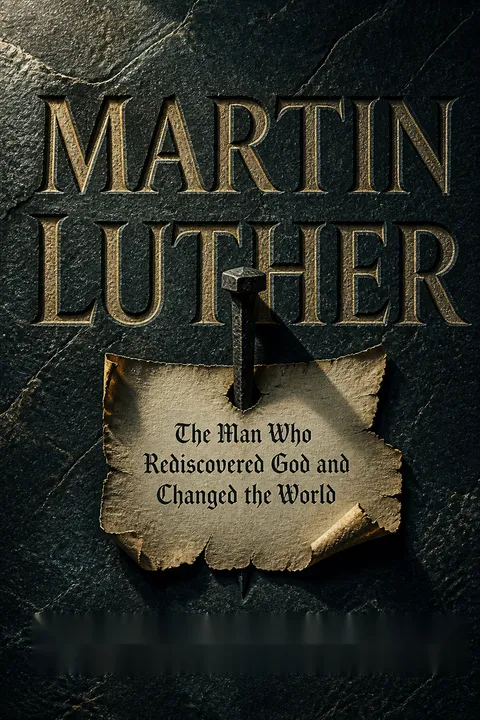
What's Martin Luther: The Man Who Rediscovered God and Changed the World about?
- Focus on Luther's Life: The book chronicles Martin Luther's transformation from a monk to a key figure in the Protestant Reformation, highlighting his theological breakthroughs and personal struggles.
- Impact on Christianity: It details how Luther's ideas challenged the Catholic Church's authority, leading to the establishment of Protestantism and significant changes in Christian thought and practice.
- Cultural and Historical Significance: The narrative explores the broader implications of Luther's work on Western civilization, including the rise of individual conscience and the questioning of authority.
Why should I read Martin Luther: The Man Who Rediscovered God and Changed the World?
- In-depth Historical Insight: The book offers a comprehensive look at a transformative period in history, valuable for those interested in the Reformation or religious history.
- Engaging Narrative Style: Eric Metaxas writes in a compelling and accessible manner, making complex theological concepts understandable and engaging readers emotionally.
- Relevance to Modern Issues: Themes of faith, freedom, and conscience resonate with contemporary discussions about religion and politics, providing insights into ongoing debates.
What are the key takeaways of Martin Luther: The Man Who Rediscovered God and Changed the World?
- Rediscovery of Faith: Luther's journey emphasizes personal faith and the relationship between the believer and God, highlighting humility and reliance on God's grace.
- Challenge to Authority: The book underscores Luther's role in challenging the established church and advocating for reform, emphasizing truth over conformity.
- Legacy of Pluralism: Luther's actions opened the door to religious pluralism, allowing for diverse interpretations of Christianity and laying the groundwork for modern religious freedom.
What are the best quotes from Martin Luther: The Man Who Rediscovered God and Changed the World and what do they mean?
- “Here I stand. I can do no other.”: Reflects Luther's unwavering commitment to his beliefs, even in the face of death, signifying the importance of standing firm in one's convictions.
- “The true treasure of the church is the most holy gospel of the glory and grace of God.”: Encapsulates Luther's belief that Christianity's essence lies in grace and salvation through faith, challenging the church's focus on material wealth.
- “A simple layman armed with Scripture is to be believed above a pope or a council without it.”: Underscores Luther's belief in the authority of Scripture over ecclesiastical hierarchy, promoting personal understanding of the Bible.
How did Martin Luther's background influence his beliefs as described in Martin Luther: The Man Who Rediscovered God and Changed the World?
- Early Life Experiences: Born into a well-off family, Luther's access to education and his father's strictness shaped his views on authority and obedience.
- Monastic Life: His time as a monk exposed him to the church's teachings and shortcomings, fueling his desire for reform and a deeper understanding of faith.
- Intellectual Influences: Education in philosophy and theology, particularly Humanism, encouraged him to question norms and prioritize Scripture over tradition.
What was the significance of the Ninety-five Theses in Martin Luther: The Man Who Rediscovered God and Changed the World?
- Catalyst for the Reformation: Posted in 1517, the Ninety-five Theses are seen as the spark that ignited the Protestant Reformation, challenging church practices.
- Public Debate: Intended to provoke scholarly debate, their widespread distribution led to a significant shift in public opinion about the church.
- Theological Foundation: The theses laid the groundwork for Luther's later writings, emphasizing faith and grace over works, marking a turning point in Christian thought.
How did Luther's views on grace evolve throughout Martin Luther: The Man Who Rediscovered God and Changed the World?
- Initial Struggles: Initially believed grace could be earned through works, reflecting this misunderstanding in his intense scrupulosity in confession.
- The Breakthrough Moment: His "tower experience" led to the realization that grace is a gift from God, received through faith, transforming his understanding of salvation.
- Emphasis on Faith: Later writings consistently emphasized that salvation is not earned but freely given by God, becoming a cornerstone of Protestant theology.
What role did Frederick the Wise play in Luther's story as outlined in Martin Luther: The Man Who Rediscovered God and Changed the World?
- Protection from Rome: As the elector of Saxony, Frederick provided crucial protection for Luther, refusing to hand him over to Roman authorities.
- Support for the University: Founded the University of Wittenberg, where Luther taught, supporting its growth and making it a center for Reformation thought.
- Religious and Political Influence: Frederick's status helped legitimize Luther's actions and ideas, providing safety and credibility during the Reformation's early years.
How did Luther's personal struggles influence his theology?
- Spiritual Turmoil: Intense spiritual anxiety and fear of damnation drove him to seek a deeper understanding of God's grace, shaping his teachings on justification by faith.
- Experience with Monasticism: Exposed to the church's demands, he rejected the idea that salvation could be earned through works, informing his belief in grace as a free gift.
- Crisis of Conscience: Confrontations with church authorities and excommunication deepened his commitment to principles like the authority of Scripture.
What role did the printing press play in Luther's movement?
- Dissemination of Ideas: Allowed Luther's writings, including the Ninety-Five Theses and Bible translations, to reach a wide audience quickly, spreading Reformation ideas.
- Public Engagement: Utilized pamphlets and treatises to engage the public in theological debates, making complex ideas accessible to the common person.
- Cultural Shift: Contributed to a shift towards literacy and individual interpretation of Scripture, empowering laypeople and diminishing church control over religious knowledge.
How did Luther's marriage impact his life and work?
- Personal Transformation: Marriage to Katharina von Bora marked a significant personal shift, allowing him to embrace love and companionship, enriching his understanding of relationships.
- Theological Implications: Challenged clerical celibacy, reinforcing his belief in the priesthood of all believers and providing a model for Christian marriage.
- Support System: Katharina managed their household, allowing Luther to focus on writing and preaching, exemplifying the balance between personal life and public duty.
What were the main challenges Luther faced after the Reformation began?
- Opposition from the Church: Faced fierce opposition from the Catholic Church, including excommunication and the threat of execution, as it sought to suppress his teachings.
- Radical Movements: Had to navigate the complexities of radical groups like the Anabaptists, maintaining theological integrity while addressing their challenges.
- Political Turmoil: Contended with shifting allegiances and potential violence as various princes and rulers took sides in the Reformation, complicating the political landscape.
About the Author
Other books by Eric Metaxas







Download PDF
Download EPUB
.epub digital book format is ideal for reading ebooks on phones, tablets, and e-readers.








