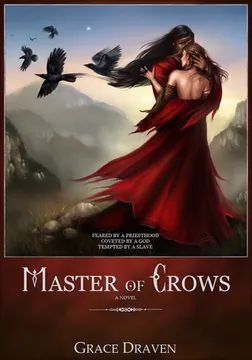


Plot Summary
The Star Over Neith
The assault leaves Silhara of Neith2 bloodied, shaking, and certain that the ancient god3 Corruption3 has returned. Its power offers him revenge on the Conclave priests who despise him, along with the chance to rule, but Silhara2 refuses to become anyone's servant. He can see Corruption's star hanging over the land, while his mute attendant4 Gurn4 cannot.
Knowing the priests will soon notice the god's3 return, Silhara2 writes to the Conclave for a translator1 skilled in forbidden languages. He needs old knowledge to find a way to kill a god,3 even if he must work beside the institution he has spent years rejecting. The orange grove that feeds him is already suffering from drought.
Silhara's first resistance is not a claim to virtue so much as a defense of self-command. Corruption's offer targets the humiliations that shaped him: poverty, exclusion, and the memory of being treated as disposable. His grove provides a concrete counterweight to fantasies of empire. It represents labor and survival, not dominion. By asking the Conclave for a translator, he accepts cooperation without surrendering his distrust, setting the novel's central tension between collective survival and the fear of being controlled.
Cumbria's Unwanted Apprentice
Martise1 travels to Neith with Cumbria,5 the High Bishop of Conclave,5 carrying the duty he has assigned her: observe Silhara2 and report what she learns. She is not simply a dependent relative, as Cumbria5 presents her. Since childhood, a spirit stone has held part of her soul and kept her enslaved to the Asher household. Her hope of freedom makes the dangerous assignment difficult to refuse.
At the ruined manor, Silhara2 recognizes Cumbria's5 hostility and distrusts the quiet woman brought as his apprentice.1 He agrees to keep Martise1 for four months, taking the bishop's5 money, while Cumbria5 departs without her. Martise1 is now isolated with the man she must investigate,2 and the god3 whose star hangs over his land.
Martise's decision begins as a bargain made under coercive conditions. She chooses danger, but the spirit stone has narrowed the alternatives available to her, so her apparent consent cannot be separated from captivity. The first meeting also establishes that both sides are concealing something: Cumbria disguises her status, while Silhara expects a spy. Their uneasy agreement makes the manor a testing ground where agency must be negotiated in small acts, not granted by authority.
Lessons in the Orchard
Silhara2 uses Cael,6 his enormous mage-finder hound,6 to confirm that Martise1 is Gifted, then tries to force her magic into action. A levitation lesson leaves her terrified above the hall floor, and a summoned demon drives her back to Gurn4 in distress. Instead of fleeing, she returns to chores, helps harvest oranges, and earns the mute servant's4 affection.
Silhara2 eventually gives her access to his library, where her skill with old languages proves more useful than his first estimate allowed. Their days divide between hard orchard labor and dusty manuscripts. Martise1 begins searching for a ritual that could destroy Corruption,3 while Silhara2 watches her closely and finds the supposedly timid apprentice1 harder to dismiss.
The household's work changes the terms of their relationship more convincingly than the dangerous lessons do. Martise earns a place through practical competence, while Silhara's insistence that everyone labor exposes the discipline beneath his theatrical reputation. Yet his magical tests reproduce the coercion she already knows from servitude. Her continued presence is not proof that his methods are harmless; it shows how stubbornly she pursues the freedom Cumbria has promised.
The Incomplete God-Killer
Among Silhara's2 books, Martise1 finds a Helenese account of thirteen ancient rulers who destroyed a false god through a blood-binding ritual. One southern king, Birdixan, appears to have sacrificed himself, but the crucial pages are missing. Silhara2 realizes he left them in Iwehvenn Keep, the lair of an Eater of Souls14 whose illusions conceal a dead and labyrinthine stronghold.
He could search alone, but cannot read the script quickly enough to identify the right pages. Martise1 understands that accompanying him may mean death, yet she accepts. They leave Neith before dawn with Gnat, Silhara's2 draft horse, weapons, supplies, and a concealment spell meant to hide them from the lich.14
The missing pages turn scholarship into a physical risk. Martise's expertise is not ornamental: without it, Silhara cannot distinguish useful knowledge from the keep's vast accumulation of death. His choice to take her also tests whether he regards her as a tool or a collaborator. He still frames the journey around her utility, but she makes the decision herself, accepting danger in pursuit of both the ritual and the freedom she hopes to earn.
Iwehvenn's Hungry Dead
Inside Iwehvenn, Silhara2 and Martise1 gather scattered pages while the lich14 hunts them through its shifting halls. A fall leaves Martise1 dangling over darkness, and Silhara2 uses the lethal spell Half-Death three times to carry them toward the courtyard. The strain leaves him bloodied and apparently lifeless.
Before Martise1 can drag him to safety, the lich14 catches her and begins feeding on her soul. Her terror and refusal to be consumed unleash an amber force she cannot control. It tears through the lich's14 web, frees the trapped spirits, and destroys the creature.14 Martise1 then channels her power through a kiss and touch, restoring Silhara's2 failing heartbeat. When he wakes, he asks what she is.
The rescue reverses the expected hierarchy. Silhara's expertise gets them into the keep and carries them out of immediate danger, but Martise's untrained power becomes decisive when his magic fails. Her refusal to be enslaved is not a polished heroic pose; it erupts from the same history that made her vulnerable to Cumbria. The freed spirits also make the victory communal: the lich's victims are no longer merely evidence of its cruelty, but lives released by Martise's resistance.
A Gift That Answers
Back at Neith, Silhara2 attempts to awaken Martise's1 power through a seer-bond, a magical sharing of thought and sensation. He draws too deeply, leaving her bleeding and nearly unconscious, then recognizes how much her strength can replenish his own. Soon afterward, Corruption3 enters Martise's1 room in a monstrous physical form.
Her Gift hurls the god3 against a wall, but the encounter makes clear that her power is difficult to command. Silhara2 draws it out again, and desire surges between them with the magic. They kiss passionately until he abruptly withdraws, suspecting Cumbria5 placed her at Neith to entrap him. Martise1 is left ashamed of her hope and frightened by the force neither of them fully understands.
The bond makes intimacy both literal and ethically unstable: Silhara can draw on Martise's power, and his need risks becoming exploitation even when she agrees to participate. Corruption's visit sharpens the contrast between two forms of influence. The god offers domination disguised as reward; Martise's power answers with protection, though it too can overwhelm her. Silhara's retreat protects him from a suspected trap, but it also makes Martise bear the emotional cost of his distrust.
Balian's Last Boast
At the Eastern Prime market, Martise1 meets Balian,9 the handsome stable worker who once seduced her and later mocked her appearance and enslavement.9 When she refuses his attempt to resume their affair, he insults her before Silhara.2 Silhara2 drives a knife through Balian's9 hand, then beats him in front of the market crowd and carves a small scar into his cheek.
Martise1 stops him from killing the man.9 That night, Silhara2 explains how, as a child, he watched a wealthy customer degrade his mother, a brothel worker, and later killed the man in revenge. Martise1 listens without recoiling. Their shared recognition of cruelty draws them closer, even as the ancient ritual remains unsolved.
The market makes public humiliation collide with private history. Silhara's violence answers Balian's contempt, but it also reveals how readily protection can become punishment when his own wounds are touched. Martise's plea prevents the fight from becoming an execution, a quiet assertion of moral judgment rather than submission. Later, her willingness to hear about Silhara's mother offers him something different from vengeance: attention without disgust, which begins to make trust possible.
Silhara Calls the Rain
As drought threatens the orange grove, Silhara2 sends Gurn4 to Eastern Prime for a houri, hoping paid intimacy will quiet his desire for Martise.1 Gurn4 returns with Anya,8 the beautiful Houri Prime,8 and Silhara2 uses magic to give her Martise's1 face. The illusion cannot make her Martise,1 and he abandons the encounter, leaving Anya8 with Gurn.4
The next day, storm clouds begin to pass Neith. Silhara2 draws them back with dangerous magic, enduring lightning and a burning tree to bring rain to the parched orchard. Afterward, he and Martise1 stop hiding their attraction and become lovers. The grove is watered, while Anya8 chooses to remain at Neith and enjoy Gurn's4 company.
The failed substitution exposes the difference between desire as consumption and attachment to a particular person. Silhara can alter Anya's appearance, but he cannot manufacture the mutual history that gives Martise meaning to him. His storm-working echoes that same danger on a larger scale: he can bend nature, but only by risking his life. The rain saves his livelihood; choosing Martise requires a different kind of surrender, one his magic cannot command.
The Life-Giver's Price
While they continue researching, Silhara2 discovers the truth about Martise's1 unusual Gift in forbidden books. She is a bide jiana, a life-giver whose power can strengthen another mage's magic but cannot produce spells of her own. Past crow mages enslaved women with this Gift and drained them for power.
Martise1 realizes that if Cumbria5 learns the truth, he could exploit her to control the Conclave. Silhara2 promises to teach her to conceal her power and says he will tell the bishop5 nothing. The revelation crushes Martise's1 hope that her Gift might make her independent, but their shared work and growing affection give her a reason to trust Silhara's2 restraint.
The revelation recasts a supposed blessing as a structural vulnerability. Martise has learned languages and spells, yet the institution that trained her never recognized the power she actually carried, because it values magic chiefly when it can be directed and owned. Silhara's promise matters, but it is not simple rescue: he holds knowledge that could make her useful to him too. The ethical test is whether he treats her capacity as hers, rather than as a resource awaiting a stronger wielder.
Blood Runs Through Neith
Kurman traders Mezdar and Peyan13 arrive with an invitation from Karduk,12 the mountain people's sarsin12 and Silhara's paternal kin.12 Before they leave, Martise1 sees the grove's trees running with blood, a manifestation of Corruption3 that drives away the crows.
In the mountains, Karduk12 links the old ritual's southern king, Birdixan, to Berdikhan, a banished Kurman ruler who tried to seize a god's3 power. Silhara's2 aunt11 Dercima11 recognizes the symbol beside the king's name as al Zafira, a constellation named for Berdikhan's life-giver consort.
Their history suggests that a life-giver was sacrificed to empower him. Silhara2 returns to Neith carrying the clue, and the knowledge that the old victory may have required the very betrayal he fears repeating.
The mountain visit expands the story's archive beyond the Conclave's books. Kurman memory supplies what institutional scholarship omitted, and Martise's knowledge of the language allows her to connect traditions that neither community could interpret alone. The story of Berdikhan is a warning about how heroic records conceal private costs. His act can be remembered as a victory while the woman who made it possible disappears into a constellation and a cautionary tale.
Corruption Wears Silhara
After the return to Neith, Corruption3 possesses Silhara2 and uses his body to attack Martise.1 He pins her against a wall and begins strangling her, but her Gift bursts free and throws him across the room. When Silhara2 regains himself, he confirms what Martise1 feared: Corruption3 has chosen him as its avatar.
He knows that the god3 will eventually take him by force, so he writes to the Conclave's Luminary7 and offers himself for the ritual. Martise1 heals his injuries, while Silhara2 understands that the ritual may require him to hold the god3 long enough for the priests to destroy it. His willingness to die is now tied to the history of Berdikhan and the power Martise1 carries.
Possession turns Silhara's private struggle into immediate bodily danger for Martise. His resistance to Corruption has not made him immune; the god can use his strength against the people he wants to protect. Martise's intervention again saves him, but the cost of that protection is becoming clearer. By offering himself to the Conclave, Silhara chooses a controlled death over the gradual loss of his will, while repeating the ritual pattern whose human cost has just been revealed.
A Farewell at Neith
The Luminary7 and several bishops come to Neith to consider Silhara's2 plan. Cumbria5 protests, but the Conclave votes to use Silhara2 as the vessel that will hold Corruption3 during the killing ritual. Martise1 returns to Asher with Cumbria,5 still bound by her spirit stone. Silhara2 tells her he does not love her, hiding his feelings so she will leave rather than join his sacrifice.
Before the ritual, he sends Gurn4 and Cael6 away under a magical geas, then removes Neith's protective wards to gather every reserve of power. When he gives himself to Corruption,3 the god3 retaliates by setting the orange grove ablaze. Silhara's2 home burns as his body becomes the god's3 vessel.
The farewell is built from acts of protection that look like rejection. Silhara's lie denies Martise the chance to negotiate with him, repeating the paternalistic logic of deciding what another person can bear. Yet his choice is also shaped by the ritual's grim precedent: he refuses to make Martise into another Zafira. The burning grove gives Corruption a precise way to punish him, attacking not an abstract kingdom but the modest life he built by hand.
Zafira Enters the Storm
At Asher, Bendewin10 recognizes the symbol from the old texts as al Zafira and explains that Zafira was a life-giver sacrificed by a power-hungry sarsin. Martise1 realizes Silhara2 has withheld the clue to spare her, then rides toward Ferrin's Tor with Gurn.4 She reaches the ritual as the Conclave priests bind their magic to Corruption3 and Silhara,2 trapped inside the god's3 dead world.
Martise1 enters that world through the magical bond and finds Silhara2 facing the leviathan form of the god.3 Rather than let him consume her as Berdikhan consumed Zafira, she offers her power willingly. Silhara2 combines it with the priests' attack, spears Corruption,3 chains its force, and destroys it. The god3 falls, and the pair collapse on the tor.
Martise's return transforms the ritual's inherited pattern. She does not merely repeat Zafira's sacrifice; she enters by choice, with knowledge of the danger, and Silhara treats her offered power as a shared act rather than a possession. The distinction cannot erase the cost, but it changes its ethical meaning. Victory also depends on combining forces the Conclave, Silhara, and Martise could not wield separately, making cooperation more than a tactical convenience.
Neith Opens Its Gates
After the ritual, Martise's1 Gift is gone. Silhara2 sends her back to Cumbria5 so the Conclave will not discover her role, and she returns to Asher believing their separation is final. Two months later, Cumbria5 sells her to a new master and transfers her spirit stone. The Luminary7 has secretly bought her, however, and Silhara2 has used the reward he received for saving the world to reclaim the stone.
Martise1 returns to Neith, where he gives it back and offers her the spell that will restore the trapped part of her soul. He has refused a grand estate in favor of rebuilding the burned grove. Martise1 can leave freely, but chooses a life with Silhara2 as his companion and beloved.
The ending resolves the opening's central problem through a change in who controls Martise's future. Her freedom is not a reward that Silhara can simply bestow; the spirit stone must be returned, and she must decide what to do with the liberty it restores. His refusal of a barony for Neith's renewal shows that survival means rebuilding a chosen home, not claiming a larger throne. Martise's decision to stay is meaningful precisely because she is no longer compelled to.
Analysis
Master of Crows makes freedom a material problem before it makes it a romantic one. Martise's1 spirit stone gives captivity a physical form, and her years of training have taught her to anticipate other people's needs before naming her own. Silhara2 appears to offer a contrasting model: he refuses the Conclave's authority and supports himself through exhausting work. Yet his power does not automatically make him ethical. He tests Martise1 cruelly, draws too deeply on her Gift, and at crucial moments decides what she should know or endure. The novel therefore treats care as a practice requiring restraint, not merely feeling.
The orange grove gives that question an economic and emotional setting. Silhara's2 trees are not decorative property or a symbol of noble inheritance. They are the crop that feeds two people and the result of years of labor after a childhood of hunger. Corruption's3 attack on the grove hurts because it destroys a small, earned life rather than a grand ambition. Silhara's2 refusal of a barony at the end follows the same logic: he wants a home he has chosen, rebuilt through work, rather than a larger title that would reproduce the hierarchies he resists.
The old ritual makes the danger of power legible across generations. Berdikhan's story survives as a story of victory, even though its hidden cost falls on a life-giver. Martise1 and Silhara2 inherit that pattern, but their climax changes its terms through consent and shared action. Her power is not valuable because it can be spent; it matters because she decides when and how to offer it. Even so, the victory costs her the Gift. The ending does not pretend sacrifice is painless. It makes freedom meaningful by giving Martise1 a real choice afterward, when she can leave and instead chooses the life she wants.
Review Summary
Master of Crows receives mostly positive reviews, averaging 3.91/5. Readers praise Grace Draven's immersive world-building, slow-burn romance, and well-developed characters. The unconventional pairing—a plain, intelligent heroine and a dark, powerful mage—is frequently highlighted as refreshing. Many love the enemies-to-lovers dynamic and rich prose. Common criticisms include the hero Silhara's harsh treatment of heroine Martise, occasional pacing issues, and some feeling the romance overshadows the fantasy plot. The spice level is moderate, and the satisfying standalone ending earns consistent praise.
People Also Read






Characters
Martise
Bound translatorMartise is an educated scribe and translator who has spent most of her life serving the household of Asher. Her reserved manner reflects the habits of a person trained to stay quiet and avoid drawing notice, not a lack of judgment or feeling. She is observant, practical, and capable of enduring unpleasant work without confusing endurance with consent. Her wish for freedom shapes her choices, but so does her concern for people who have treated her with dignity. At Neith, she is forced to balance a secret assignment against the growing trust she places in Silhara2 and Gurn4. Her strength is less about fearlessness than the ability to act while afraid.
Silhara
Outcast crow mageSilhara is a gifted sorcerer living in isolation at Neith, where he grows oranges and distills perfume to keep himself and Gurn4 fed. Born into poverty, he survived childhood violence and later endured the Conclave's suspicion of his power. His sharp humor and deliberate arrogance protect a fierce need for autonomy. He distrusts institutions that claim authority over him, yet his work against Corruption3 forces him to depend on knowledge and allies beyond his estate. Silhara's care is often expressed through practical acts, while his words can conceal or injure. He is drawn to people who challenge his assumptions, though allowing them close requires him to risk the control he prizes.
Corruption
Exiled godCorruption is an ancient god whose return appears first as a shifting star and an invasive voice. It offers power to the resentful and ambitious, then uses fear, deprivation, and possession to make resistance harder. Its influence reaches beyond the gifted: rivers, crops, animals, and whole communities suffer as it prepares the world for its rule. Corruption understands its targets' private injuries and turns those injuries into leverage. It is not a distant cosmic force but a manipulator that seeks a human vessel and treats living beings as instruments. Its promises expose how easily the desire for recognition can be redirected into submission.
Gurn
Neith's steadfast keeperGurn is Silhara's2 mute attendant, a huge, capable man who communicates through expressive hand signs. He keeps Neith's kitchen orderly, helps maintain the orchard, and treats Martise1 with warmth from her first days there. His relationship with Silhara2 feels closer to friendship than simple obedience, and he is willing to challenge his master's decisions. Gurn's humor and practical care make the ruined manor feel like a home rather than a lair. His silence does not make him passive: he reads people well and acts decisively when those he loves are in danger.
Cumbria
High Bishop of ConclaveCumbria is a powerful Conclave bishop and Martise's1 master at Asher. He is disciplined, politically alert, and accustomed to treating people as pieces in larger plans. He distrusts Silhara2 and wants information that could strengthen the Conclave's position, while presenting his choices to Martise1 as opportunities. His manner can be formally courteous, but his authority rests on the power to control her life and labor. Cumbria's combination of calculation and personal resentment makes him difficult to read: he may be capable of acting pragmatically, but rarely without considering who gains leverage.
Cael
Mage-finder houndCael is Silhara's2 enormous, scarred mage-finder, an aging dog whose appearance is more frightening than his attachment to the household. He can recognize magical presence and reacts fiercely to threats around Neith. Martise1 initially fears him, then earns his companionship through patience and daily proximity. Cael's devotion is expressed through following, guarding, and occasionally demanding attention, usually with little regard for his own odor. His instincts provide a physical measure of magical danger when human characters are still uncertain.
The Luminary
Conclave's pragmatic leaderThe Luminary leads the Conclave and has known Silhara2 since his youth. Unlike the bishops most invested in suspicion and hierarchy, he can distinguish personal animosity from the urgent needs of the wider world. His authority gives him the ability to convene a decision, but he does not treat power as proof that he is always right. He asks difficult questions before accepting Silhara's2 proposal and understands that the Conclave may need help from someone it does not trust.
Anya
Discerning Houri PrimeAnya is the Houri Prime at the Temple of the Moon, a beautiful and experienced companion whose warmth is not merely professional polish. She reads the emotional distance between people quickly and understands that appearance and skill cannot substitute for a particular person's affection. Her kindness toward Martise1 and easy rapport with Gurn4 reveal a playful, generous character beneath her cultivated elegance. Anya's presence makes desire look less like conquest and more like mutual attention.
Balian
Martise's former loverBalian once worked at Asher and became Martise's1 first lover. Handsome and self-regarding, he is more invested in status and sexual boasting than in the feelings of the women he pursues. He treats past intimacy as permission to belittle Martise1, revealing how little he understood her. His easy confidence depends on being admired and goes thin when someone challenges him.
Bendewin
Asher's Kurman cookBendewin is the cook at Asher and one of Martise's1 few steady sources of maternal care. Proud of her Kurman upbringing, she preserves customs and stories that the Conclave's formal education leaves out. She is blunt, protective, and willing to take practical risks for Martise1, while never pretending that kindness alone can undo the constraints of slavery. Her knowledge helps connect Martise's1 present danger to a history beyond the bishop's5 library.
Dercima
Silhara's formidable auntDercima is one of Karduk's12 consorts and Silhara's2 aunt. She is direct, politically perceptive, and confident enough to question Silhara2 when he evades an answer. Her affection does not make her indulgent; she expects him to examine his own motives rather than hide behind pride. Dercima carries knowledge of Kurman history and reads character with an unsentimental eye.
Karduk
Kurman mountain sarsinKarduk is the leader of Silhara's2 Kurman kin in the Dramorin Mountains. He is a keeper of tribal history and a host who uses conversation, shared food, and ritual hospitality to bring people into his community. His knowledge supplies context unavailable in Conclave records. Karduk's authority is grounded in relationships and memory as well as rank.
Mezdar and Peyan
Kurman trading kinsmenMezdar and Peyan are Kurman traders who visit Neith and guide Silhara2 and Martise1 into the mountain community. They carry news of Corruption's3 spreading damage and help bridge Silhara's2 isolated household with his father's people. Their hospitality also exposes Martise1 to customs that differ from the social order she has known.
The Eater of Souls
Lich of IwehvennThe Eater of Souls haunts Iwehvenn Keep, a dead stronghold whose beautiful appearance is an illusion. It traps travelers in a shifting maze, drains their spirits, and leaves their bodies scattered through its halls and gardens. Its power makes the expedition for the missing ritual pages more than a scholarly errand. The lich represents a form of predation that consumes life without the political promises Corruption3 uses.
Plot Devices
The spirit stone
A jewel-shaped soul shackleThe blue spirit stone holds part of Martise's1 soul and binds her to the Asher household. Its chain is both literal property and a daily reminder that her life is controlled by someone else. Cumbria5 uses the promise of freedom from the stone to recruit her for the dangerous assignment at Neith. Later, its transfer to another owner threatens to make her captivity permanent under a stranger. The stone gives the story a concrete measure of freedom: affection cannot release Martise1 from bondage unless the chain's power is addressed.
Corruption's star
A visible sign of divine returnThe wandering star marks Corruption's3 approach, though only the Gifted can see it clearly. Its position shifts over the horizon while its effects spread through the land, from Silhara's2 visions to poisoned rivers, failing crops, and the bloodlike appearance of Neith's grove. It is both warning and instrument of psychological pressure. The star allows the god3 to make its presence felt before it appears in bodily form, keeping the threat close even during the characters' ordinary work.
The Helenese ritual
A history with missing instructionsMartise1 finds an ancient account of rulers who destroyed a false god3 through a binding ritual, but Silhara's2 stolen copy lacks essential pages. Its incomplete instructions force them to enter Iwehvenn, then compare the Helenese text with Kurman oral history and the constellation symbol beside the southern king's name. The document joins scholarship to action: every translation changes what the characters believe the ritual requires. It also carries a warning that later generations may celebrate a victory while obscuring the price paid to achieve it.
The bide jiana Gift
Life force that empowers magesThe life-giver's Gift strengthens another mage's power rather than producing spells in its own right. Martise's1 Gift first erupts in self-defense at Iwehvenn, then helps restore Silhara2 and amplifies his magic. That usefulness makes it dangerous: past crow mages enslaved life-givers and drained them for power, and Cumbria5 could exploit the same possibility. The Gift becomes a test of consent. Its force can be shared willingly, but no magical benefit makes ownership of its bearer acceptable. This device contains a key revelation, so it is a spoiler.
Al Zafira
A constellation hiding a historyThe angular symbol beside Birdixan's name appears meaningless until Kurman knowledge identifies it as al Zafira, a pattern of stars associated with a life-giver in an old tribal story. The connection reveals that the Helenese king's account has changed a Kurman ruler's identity and concealed the role of his consort. Al Zafira ties the ritual's ancient precedent to Martise1 and Silhara's2 present choices, while showing how history can turn an exploitative act into a heroic legend. This identification is a key plot revelation, so it is a spoiler.
Download PDF
Download EPUB
.epub digital book format is ideal for reading ebooks on phones, tablets, and e-readers.








