Key Takeaways
1. A Mother's Unspoken Trauma Shaped a Childhood of Fear and Love
My mother’s migraines hold me prisoner for much of my childhood.
A daughter's early role. The author's childhood was dominated by her mother's mysterious migraines and volatile moods, forcing a four-year-old Mary Annette into the role of caregiver and silent observer. She learned to navigate a home environment constantly on guard against her mother's "fickle moods," finding solace and order by drawing under the kitchen table. This early dynamic established a complex bond, where the author became her mother's "secret confessor and her most trusted coconspirator," yet also her "whipping post."
Sister School stories. During these quiet, darkened afternoons, her mother, Bernice, poured out "Sister School stories" – tales of constant hunger, brutal beatings for stealing food, and the nuns' shaming words that branded Indigenous children as "dirty, lazy, barely human." These narratives, though perhaps "fantasies—with only shreds of truth—invented to protect not only me but also her own mind," instilled in the young Mary Annette a deep-seated fear and dread, shaping her understanding of her mother's inexplicable rage and obsessive cleaning habits. The phrase "dirty Indian" became an ingrained stain.
A coded bond. Bernice's "angst, mysterious headaches, nameless fear, shame, cruelty, and hypervigilance" defined their home life, making the author constantly wary. Yet, these shared stories created a "coded, unbreakable bond" between them, a "gauntlet" thrown down by her mother, "daring me and yet begging me to validate and avenge her life." This early exposure to her mother's unresolved trauma ignited the author's lifelong quest to understand her family's past and its profound impact.
2. Indian Boarding Schools: A Century of Forced Assimilation and Cultural Genocide
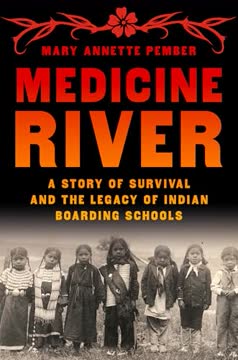
Like thousands of other Native American children, my mother, Bernice Rabideaux, was sent to an Indian boarding school.
Systematic destruction. For 150 years, a vast network of nearly five hundred Indian boarding schools in the United States, operated by both federal government and Christian missionaries, forcibly or coercively removed tens of thousands of Native children from their families. This system was a deliberate policy of "civilization by assimilation," intended to dispossess Indigenous peoples of their lands and resources by destroying their culture, language, and family structures. The federal government even supported these schools with Indian trust and treaty funds, meaning Indigenous people "literally funded our own abuse."
Justification for land theft. From President George Washington onward, federal Indian education policy was inextricably linked to land policy. The "Indian's lack of civilization" was the primary justification for taking their lands, with figures like Benjamin Franklin advocating to "extirpate the savage in order to make room for cultivators of the earth." Education was seen as a means to transform Indigenous people from "hunters and gatherers who required large swaths of land into farmers who relied on far smaller pieces of land."
Coercion and punishment. Families were coerced into sending their children under threats of incarceration, starvation, or withholding treaty annuities. The 1891 compulsory education law authorized agents to use force, and later, rations were withheld from families whose children didn't attend. Children as young as four were transported thousands of miles away, forbidden to speak their languages (punished with lye soap or food deprivation), had their traditional names changed, and their hair cut, all to erase "all traits of Indian culture."
3. The "Civilizing Mission" Was a Brutal System of Disease, Abuse, and Death
Conditions at the schools were often substandard. Food was inadequate and poor; even very young children were dangerously overworked.
Draconian conditions. The heyday of off-reservation federal boarding schools (1879-1930s) was marked by "draconian, unforgiving rules, brutal enforcement, and discipline such as whipping, beating, incarceration, and the withholding of food." The 1928 Meriam Report, a congressional examination, found that the labor of Indian children "would, it is believed, constitute a violation of child labor laws in most states." Children were malnourished and overworked, often performing tasks like refinishing floors with glass shards on their hands and knees.
Widespread disease and death. Communicable diseases like tuberculosis, diphtheria, and measles swept through crowded, unsanitary dormitories, leading to thousands of deaths. The Department of the Interior has identified 74 burial sites with nearly 1,000 student deaths, a number expected to rise. Preston McBride's research estimates as many as 40,000 Native children died while attending or shortly after returning home sick from boarding schools, with death rates routinely underreported.
- Between 1896 and 1906, nearly one-fifth of the Pine Ridge population died from tuberculosis.
- In 1925, the tuberculosis mortality rate for American Indians was nearly seven times greater than the general population.
Weaponizing disease. Government leaders were aware of the schools' role in spreading disease. Sick children were often sent home to die, becoming "deadly pathogen carriers" who infected their families and communities. This "administrative disappearance" of sick children, coupled with the eugenics-driven belief that Indigenous people were biologically inferior and susceptible to "Indian TB," amounted to a "final solution to the country's Indian problem," fueling the deaths of over 100,000 Indigenous people between 1860 and 1900.
4. Indigenous Resilience: Covert Resistance and the Birth of Pan-Indian Identity
But being children—and maybe also because they were Ojibwe children—they were stubborn in their search for joy and mischief.
Subtle acts of defiance. Despite the nuns' strict rules and punishments, including forbidding the Ojibwe language, children at St. Mary's found ways to resist. They used "pig Latin" to mock the nuns, knowing the German and French-speaking sisters wouldn't understand their "Oood-gay orning-may, ister-sey hithead-say." They found joy in ringing the Angelus bell, riding the rope upward, and sought out an Ojibwe artist hired by the nuns to learn "all about the old ways and teachings."
Forging new identities. Paradoxically, boarding schools, intended to destroy Indigenous identity, inadvertently fostered a new "common racial, pan-Indian identity." Students from different tribes bonded over shared adversity, using humor, storytelling, and traditional skills to transcend the daily attacks on their culture. At Flandreau Indian School, the author's mother met Indigenous people from across the U.S., experiencing a sense of equality and community absent in Odanah.
Turning the system to their advantage. Many boarding school survivors, like Zitkala-Sa and Luther Standing Bear, became "Red Progressives," using their acquired knowledge of settler systems to advocate for Indian rights and reforms. They lobbied for citizenship, challenged brutal punishments, and pushed for culturally relevant education. The Haskell Institute's 1926 celebration, with its "real" Indian dancing and buffalo feed, became a covert triumph, where Indigenous people "camped, visited, ate, and danced, embracing the opportunity to spend time with friends and relatives," proving they could be both American and Indian.
5. Historical Trauma's Deep Roots: Unpacking Generational Wounds and Health Disparities
Traumatized people chronically feel unsafe inside their bodies: The past is alive in the form of gnawing interior discomfort.
Trauma's physiological impact. The author's deep dive into trauma research revealed that early childhood trauma, like her mother witnessing parental violence and subsequent abandonment, can profoundly alter neurophysiology. The brain's "fear center" (limbic system and dorsal vagus nerve) can lead to a "freeze response," numbing senses and blocking memory, explaining her mother's disassociation and inability to recall violent details. This survival mechanism, aligning with the "most powerful person in the room," even if unsafe, had "dire implications" for her mother's future relationships.
Intergenerational wounding. The concept of historical trauma, applied to Indigenous peoples by Maria Yellow Horse Brave Heart, describes "cumulative emotional and psychological wounding across generations." This mass trauma, stemming from colonialism, slavery, and genocide, manifests in subsequent generations through physical and psychological symptoms. Epigenetics suggests that genes can carry "memories of trauma experienced by our ancestors," influencing responses to stress.
A colonial health deficit. Indigenous communities face disproportionately high rates of addiction, suicide, diabetes, and violence, making them "ground zero for adverse childhood experiences." These disparities are not due to "bad brains or bad genes" but are "consequences of colonization," poverty, and discrimination. Healing requires addressing these systemic issues, as "health and mental health services are rehabilitative by and large," unable to undo centuries of "colonial subjugation."
6. The Catholic Church's Complicity: Profiting from Indigenous Suffering and Evading Accountability
The church continues to block access to boarding and day school records in both the United States and Canada with the claim of protecting individual privacy.
Financial and political gain. The Catholic Church played a dominant role in the U.S. boarding school system, operating about 100 schools and benefiting significantly. They received "free title to Indian lands as well as trust and treaty funds to operate mission schools," actions that could be seen as "clear violations of the U.S. Constitution's establishment clause." The 1908 Supreme Court decision, Quick Bear v. Leupp, allowed Indigenous people to pay tuition at Catholic schools using their own trust and treaty funds, effectively making them "paying for our own forced assimilation."
Cover-ups and denials. The church has historically covered up sexual abuse by priests, often moving them between locations without informing communities. A database, Desolate Country, shows nearly half of Jesuit priests credibly accused of sexual abuse in the western U.S. worked in Indian boarding schools. Despite this, the U.S. Catholic Church has largely remained silent, with its highest authority, the USCCB, only issuing a formal apology in June 2024, which "minimized the institution's role in legitimizing centuries of colonialism."
Resistance to transparency. The Catholic Church continues to resist full transparency, blocking access to school enrollment and sacramental records, claiming privacy concerns. This stands in stark contrast to Canada's Truth and Reconciliation Commission, which led to a nearly $2 billion settlement and a papal apology. The church's actions, including its vast, secretive wealth built partly on Indigenous sacrifice, demonstrate a pattern of "brazen deniability" and a failure to take "full accountability for their actions."
7. The Author's Quest: Unraveling Family Secrets to Understand Intergenerational Trauma
If I were ever to truly understand her, I needed to take a deep dive into her personal past.
Poking into the past. The author's journalistic "poking" into her mother's life, initially met with resistance, became a "spiritual pilgrimage" to understand the roots of her mother's "cruelty and inexplicable behavior." This quest led her to archives, interviews with relatives, and a deeper understanding of the "traumatic impact of misguided U.S. assimilationist policies on generations of Indian people." The discovery of her mother's hidden trauma began to "give way" after her father's death, revealing a complex web of secrets.
Unveiling Joe's trauma. A pivotal conversation with Auntie Pat revealed the true story of her grandparents, Cele and Joe. Joe, a World War I veteran, suffered severe gas exposure and "shell shock" (PTSD) from the Meuse-Argonne offensive, leading to his alcoholism and violent abuse of Cele. This trauma, unaddressed and unrecognized, transformed him from a "brave, inspiring soldier" into an abusive husband, directly leading to Cele's desperate act of self-defense and the children's placement in the Sister School.
The cycle of abandonment. The most shocking revelation was that her mother, Bernice, had also abandoned a child, Bobby, Larry's younger brother, a secret she guarded fiercely. This mirrored Cele's abandonment of her children, a "tragically placed in an impossible situation with an impossible choice." The author realized her mother's "pathological behavior wasn't only about me and my pain and hurt," but a reenactment of her own unresolved trauma, a "freeze response" that rendered her "incapable of protecting others."
8. Indigenous Women's Fierce Survival: Defiance, Adaptation, and Unconventional Love
Joking aside, Ojibwe women are known for their fierceness. That’s how we survived.
Fierce and defiant. Ojibwe women, like the author's mother and grandmother, embodied a fierce spirit of survival. Bernice, despite the shame and humiliation of the Sister School, claimed her "power and dignity... through defiance, anger, and resentment," vowing to disprove the nuns' prejudices. Her grandmother, Cele, a "responsible woman" and chair of the local League of Women Voters, boldly challenged corrupt BIA practices, demonstrating an innate understanding of "due process" despite limited education.
Navigating a new world. Cele, after escaping Joe's violence, built a new life, becoming "famous for her cooking and hard work" and unapologetically independent. She rejected "stifling norms of white ladylike behavior," remaining "loud, and vulgar." Bernice, too, sought to conquer the white world "on its own terms," reinventing herself as a "businesswoman" and "inner-lectual," yet secretly disdaining the "small-minded, provincial hopes and dreams" of her white neighbors.
Love and protection. Both Cele and Bernice, in their own ways, sought love and safety, often turning to white men. Their choices, though "far more fraught" than the author's, ultimately brought them a "measure of acceptance, and even happiness." Despite their "confusing, broken ways," they protected their culture "as best we could, passing it along to our children whenever possible," ensuring the survival of Ojibwe ways even amidst assimilationist pressures.
9. Healing Requires Truth, Accountability, and a Return to Indigenous Ways
Before reconciling with the U.S. government we need to reconcile among ourselves first.
Beyond individual healing. The "healing question" often places the burden solely on Indigenous individuals and communities, overlooking the "broader nature of oppression and the structures that created hardship." Effective healing requires "several giant steps upstream," addressing structural violence, poverty, and lack of access to safe housing and healthcare, which are "barriers to healing from past traumatic experiences."
Culturally responsive interventions. Mainstream mental health services, often based on "evidence-based practices" (EBP), have been largely unsuccessful among Indigenous peoples due to "structural racism" embedded in their measures. Programs like Alaska's Calricaraq (Healthy Living), rooted in Yup'ik culture and traditional teachings, offer a different path. These interventions, guided by elders and "heart skills that can't be learned from books," focus on "transformative healing" through spirituality, ceremony, and community.
Accountability from institutions. True reconciliation demands "a thorough accounting of what happened from the perspective of those who were harmed." This includes the U.S. government honoring its treaties and legislation, and churches providing transparency, access to records, and reparations. The APA's apology for its role in "promoting, perpetuating, and failing to challenge racism" in boarding schools signals a growing recognition that Western mental health science "has much to learn from Indians."
10. The Jingle Dress: A Symbol of Healing, Resilience, and Ojibwe Identity
As the daughter of an Ojibwe woman and a white father, however, I am often torn by paradoxical desires to at once order and classify life while accepting and celebrating its great mystery.
A spiritual calling. The author's journey culminates in the unconscious act of building a jingle dress, a "dress of exploding sound" in Ojibwe. This project, undertaken without conscious decision, became a "complex project without any conscious memory of deciding to begin," a "vague directive from the universe" that would reveal its "greater purpose later." The jingle dress, originating from an Ojibwe father's dream to heal his daughter from the Spanish flu, symbolizes women's healing power and resilience.
Sewing salvation. The dress, with its 365 jingles, one for each day of the year, became a tangible representation of her family's story and her own healing. It was a way to process her mother's "trauma spirit," which "relentlessly demands my energy and attention." The act of sewing, a skill taught by her mother, became a "ceremony" to address the "confusing anger and fear she passed on to me," transforming her "pathological behavior" into a source of understanding and forgiveness.
Dancing for the ancestors. At the Bad River Manoomin Harvest festival, the author danced in her jingle dress, a celebration of being an Anishinaabekwe (Ojibwe woman). This dance, performed for her mother who could never have dreamed of such an act, was a powerful statement of survival and flourishing. Amidst the ruins of the Sister School, barely visible among the weeds, the drumbeats and the laughter of her people affirmed that their "joy in being human together has survived the white man's efforts to extinguish this essential part of Ojibwe nature."
Last updated: