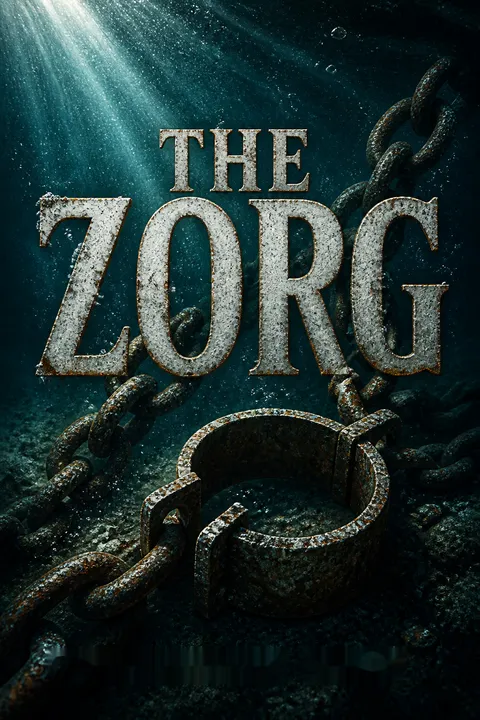


Key Takeaways
Correct the Zorg’s name before inheriting the story built around it
A small mark, lasting error. The ship at the center of this history was the Dutch Zorg, not a British vessel called the Zong. In eighteenth-century handwriting, the letter r was mistaken for an n. Once prominent writers repeated the error, the wrong name settled into public memory. The Dutch word Zorg means “care,” an especially grim irony for a ship carrying people treated as cargo.
Names shape the story. The correction matters because the Zorg was captured during war, passed between owners, and became the subject of an English insurance case. Kara uses archival documents to recover that chain and question a familiar account that obscured the ship’s origin and the people who profited from it.
What's striking is how a transcription error can become more than a spelling problem: it can simplify a complicated history into a familiar legend. Historical knowledge often travels through copied documents, summaries, and repeated retellings, so small mistakes acquire authority through repetition. The correction also restores the Dutch and international context of the trade. Still, correcting the label cannot by itself recover the captives’ own accounts. The book’s deeper task is to distinguish what documents establish from what their gaps leave unknowable.
Read Liverpool’s prosperity as part of the machinery of slavery
A city built into trade. By the late eighteenth century, Liverpool had become Britain’s leading slave-trading port. Its wet docks let large ships unload quickly, helping the city overtake older rivals. At its peak, Liverpool accounted for 82 percent of British slave voyages and about 40 percent of the European trade. Sugar made the system exceptionally profitable: imports from Jamaica in 1773 were worth five times the combined imports from Britain’s thirteen American colonies.
Profit spread widely. Merchants financed ships, but rope makers, insurers, sailors, dockworkers, and manufacturers also participated in or depended on the trade. William Gregson rose from dockside work to become a major investor and Liverpool mayor. The story therefore locates slavery not at society’s margins, but inside its commerce and civic life.
This account makes economic history tangible by connecting a city’s infrastructure to human coercion. A dock is not morally neutral when its speed and capacity help expand a trade in people. The same systems perspective is useful when examining modern supply chains: prosperity may be dispersed across many occupations even when direct violence is concentrated elsewhere. That connection should not imply that every worker had equal power or responsibility. The important question is how institutions normalize benefits while making the costs distant and easy to ignore.
Trace captivity inland before counting the ship’s cargo
The voyage began on land. Many Africans were captured far from the coast and marched south in coffles, or chained caravans. Some journeys reportedly exceeded a thousand miles. At markets such as Salaga, people were sold onward; others were traded through the Ashante and Fante networks before reaching European forts. One account estimates that about a third of a group marching from Salaga did not survive the journey to the coast.
The coast was not the beginning. At forts such as Anomabu, captives were confined, inspected, branded, and sold to ship captains. The Zorg’s passengers arrived through many routes and were held in dungeons before boarding. The narrative names two of them, Sia and Kojo, while making clear that their individual origins and biographies cannot be established from surviving records.
Tracing the route inland prevents a common distortion: treating the ocean crossing as the whole history of enslavement. The process involved capture, forced marches, confinement, sale, and then transport across the Atlantic. It also requires care about agency and responsibility. African intermediaries participated in the trade, but the European demand, forts, ships, and plantation markets shaped the system’s scale and rewards. A complete account can recognize local actors without using their involvement to excuse the merchants and states that made forced export immensely profitable.
Treat the Zorg’s 50-percent death toll as engineered risk, not fate
Overloaded from departure. The Zorg left São Tomé with 442 enslaved Africans, 17 crew members, and a passenger, although a ship of its size would typically carry roughly 220 to 250 captives and a crew of about 30. The crossing to Jamaica took 106 days, compared with an average of about 60. By late November, 62 captives and six crew members had died; disease, poor navigation, and inadequate staffing had weakened the ship.
Failures compounded. The crew did not reliably monitor provisions, and some water casks leaked. Captain Luke Collingwood became gravely ill. He appointed passenger Robert Stubbs to command instead of experienced first mate James Kelsall, who was later confined to quarters. More than half of the Africans aboard ultimately died. The book presents this disaster as a result of choices and mismanagement, not simply bad weather.
The ship’s numbers turn an abstract catastrophe into a systems failure. Excessive load, thin staffing, weak monitoring, and confused command amplified one another, much as failures do in complex organizations. Calling the outcome engineered does not mean every death was planned; disease and weather mattered. It means the conditions that made mass death likely were created and maintained for profit. The distinction is important: “accident” can describe a trigger while concealing the decisions that made a disaster so deadly.
A desperate voyage does not make deliberate killing necessary
A choice made on deck. After missing Jamaica, the crew said the ship lacked enough water to survive the return journey. On November 29, 1781, they began throwing women and children into the sea; the next day, men were taken from the hold and drowned. A total of 123 to 133 captives were deliberately killed, according to the surviving accounts. Others died from disease, deprivation, or suicide.
The evidence complicates the excuse. The crew had passed islands where they might have sought water, and the ship’s navigation had been poor. At the 1783 hearing, witness Robert Stubbs acknowledged that rain had been collected, yet further captives were thrown overboard afterward. The precise water supply and sequence remain disputed, but the evidence undermined the claim that killing was the only possible response.
The strongest ethical point here is not that hindsight makes every alternative certain. It is that claims of necessity deserve scrutiny when the people deciding whose lives count have a financial interest in the outcome. The crew’s choices were made within a violent system that already treated Africans as disposable. Risk analysis can clarify constraints, but it cannot erase unequal power or turn a person into an expendable unit. The uncertainty in the records makes careful qualification essential, not moral neutrality.
When courts call people property, profit can masquerade as necessity
A claim for lost cargo. The ship’s owner, William Gregson, sought insurance compensation for Africans thrown overboard. In the first hearing, the jury accepted the claim that the killings were necessary to save the remaining crew and captives. The legal question concerned “general average,” a maritime rule that can require insurers to cover cargo deliberately jettisoned to save a ship. The court treated the enslaved people as insured property.
Rain changed the case. At a hearing for a new trial, lawyers for the insurers challenged the navigation, the water calculations, and Stubbs’s credibility. They emphasized that the crew had collected rainwater and still drowned more captives. Chief Justice Mansfield ordered a retrial, citing the unexplained killings after the rain. Gregson abandoned the case, so no second jury delivered a final verdict.
The courtroom exposes how law can make exploitation appear administratively ordinary. Insurance language organized the dispute around value, loss, and necessity, while the dead were described as the owner’s financial injury. Yet legal procedure also created a space where evidence could destabilize that framing. This is a useful lesson about institutions: rules do not merely resolve disputes; they define what counts as a relevant fact. The hearing challenged the property logic, but it did not itself secure justice for the people killed.
Turn evidence into public pressure, and public pressure into political organization
A letter changed the audience. Twelve days after the first trial, an anonymous newspaper letter described the killings and condemned the idea that the crew should escape punishment. Olaudah Equiano read it and brought the case to Granville Sharp, who pressed for legal scrutiny and gathered the hearing record. The book argues that James Ramsay, an abolitionist clergyman, probably wrote the letter. Similar wording in his later work and connections to the sermon he attended support the claim, but the author’s attribution cannot be proved conclusively.
Disclosure built a campaign. Thomas Clarkson used accounts of the Zorg alongside testimony, investigations, printed pamphlets, petitions, visual imagery, and a sugar boycott. Abolitionists turned a hidden commercial crime into evidence the public and Parliament had to confront.
The chain from witness to newspaper, advocate, and organized movement shows that facts do not travel into policy on their own. They need credible messengers, accessible forms, and institutions that can amplify them. Equiano’s role is especially important: a Black writer and former captive made the report consequential by bringing it to Sharp. The proposed identification of Ramsay is a persuasive historical inference, not a settled fact. Holding that distinction preserves both the power of the story and the integrity of the evidence.
Abolishing the trade was not the same as freeing enslaved people
Two laws, two milestones. Britain abolished its transatlantic slave trade in 1807, after decades of campaigning, parliamentary conflict, and public organizing. The law did not free the people already enslaved in the colonies. That came with the Slavery Abolition Act of 1833, followed by a period in which many formerly enslaved people were required to work without wages as “apprentices.” Slave owners received compensation for the people they had claimed as property.
Progress was neither simple nor complete. The book traces how the Zorg case helped expose the trade’s violence, while also showing the longer campaign’s obstacles: proslavery lobbying, repeated parliamentary defeats, and war. The 1807 act was an important legal victory, but ending trafficking and ending slavery were separate struggles.
This distinction guards against a familiar mistake in political history: treating a landmark law as if it solved the whole injustice. Legal change can stop one mechanism while leaving the underlying hierarchy intact. The apprenticeship period and payments to enslavers make clear that emancipation was negotiated through power, not delivered as a clean moral conversion. At the same time, the long interval between the two acts underscores why sustained organizing matters. A victory deserves recognition without being mistaken for completion.
Mark the boundary between recovered evidence and imagined lives
The archive is uneven. No testimony from the Africans aboard the Zorg survives in the records described here. The account of the massacre depends largely on statements by European crew members, whose interests and credibility differed. James Kelsall’s affidavit identifies a pregnant woman, her baby, and a man who spoke English. Kara calls them Sia and Kojo for the narrative, but these are assigned names, not recovered identities.
Reconstruction has limits. The book uses other sailors’ and survivors’ descriptions to explain shipboard routines and conditions, while signaling that many specific scenes cannot be verified. This method makes the system’s violence legible without pretending the archive preserves what it erased. Readers should keep observed facts, plausible context, and imaginative reconstruction distinct.
This is a demanding but valuable form of historical storytelling. Narrative detail can help readers grasp a human experience that bare statistics flatten, yet it can also create an illusion of certainty. Explicitly naming the difference between archival evidence and reconstructed scenes gives readers tools to assess the account rather than simply consume it. The deeper problem is structural: the people most affected were least able to leave records that institutions preserved. That absence is not proof that their lives were unknowable in every respect, but it does set limits on what can responsibly be claimed.
Analysis
The book’s central achievement is to make a single ship legible as both a human catastrophe and a node in a large commercial system. Its narrative moves from Liverpool’s docks and African trading forts to the cramped hold, the Caribbean sale, and the English courtroom. That route reveals how violence was sustained by ordinary mechanisms: investment, insurance, staffing, navigation, and law. The reader sees not an isolated act by a uniquely monstrous captain, but an economy that made people purchasable, transportable, and compensable.
The account’s strongest historical insight is its emphasis on contingency. War put the Zorg in British hands; commercial calculation overloaded it; illness and navigational failures weakened command; Gregson’s insurance claim brought the massacre into court; and Equiano’s intervention helped move the case into public debate. These links explain how an event can become politically consequential without implying that abolition was inevitable or caused by one ship alone. The book’s own narrative is most convincing when it treats the Zorg as a catalyst within an existing abolitionist movement, not as its sole origin.
There is also a productive tension between vivid reconstruction and sparse evidence. The surviving records are largely produced by Europeans with commercial or legal interests. Naming the woman and man described by Kelsall gives narrative focus, but those names and much of their imagined experience are not recovered testimony. The book acknowledges this limit, and readers should retain it. Otherwise, vivid scenes can inadvertently seem more certain than the documents allow.
Finally, the legal proceedings expose a moral problem that persists beyond this case: institutions may recognize suffering only when it can be translated into property, liability, or public order. The hearings disrupted that vocabulary without fully escaping it. The story therefore matters not because one trial resolved slavery, but because evidence, advocacy, and political organization made a system’s hidden assumptions harder to defend.
Review Summary
The Zorg by Siddharth Kara receives overwhelmingly positive reviews (4.26/5) for its meticulous research into the 1781 slave ship disaster that helped spark abolition. Readers praise Kara's detailed account of how 132+ enslaved Africans were murdered during a catastrophic voyage, and the subsequent insurance trial that exposed slavery's horrors to the British public. While some found the extensive detail occasionally dry or overwhelming, most commend the book's unflinching examination of the slave trade's brutality and the activism it inspired, calling it essential, timely, and powerfully written history.
People Also Read




Glossary
Middle Passage
Forced Atlantic crossingThe transatlantic voyage that carried enslaved Africans from the African coast to the Americas. Captives were confined aboard ships for weeks or months, often shackled and crowded into poorly ventilated holds. In this book, the Zorg’s crossing from São Tomé to Jamaica takes 106 days, far longer than the roughly 60-day average described for comparable voyages.
coffle
Chained captive caravanA group of captives forced to travel together, usually under guard and linked by restraints. In the book’s account of routes from inland markets toward the Gold Coast, people marched for weeks or months with limited food and water. Those unable to continue could be abandoned, and many died before reaching the coast.
general average
Shared maritime cargo lossA maritime insurance principle under which merchants whose cargo survives a voyage share the cost of cargo deliberately discarded to save the ship during a peril. In the Zorg case, the ship’s owners argued that enslaved people thrown overboard should count as jettisoned cargo and be covered by insurance. The dispute turned on whether the killings were truly necessary.
scramble
Rapid group slave saleA method of selling newly arrived enslaved Africans in the Caribbean. Buyers entered together and seized the people they wanted, generally after a fixed price had been agreed. The process could separate relatives abruptly and treated captives as lots for purchase. The Zorg’s surviving Africans were prepared for sale at Black River, Jamaica.
barricado
Shipboard defensive barrierA tall wooden barrier erected across part of a slave ship’s deck, separating the captive area from the crew’s quarters. It typically had a guarded opening and could be used as a defensive position during an attempted uprising. On ships such as the Zorg, the barrier formed part of a system of armed surveillance and confinement.
Download PDF
Download EPUB
.epub digital book format is ideal for reading ebooks on phones, tablets, and e-readers.








