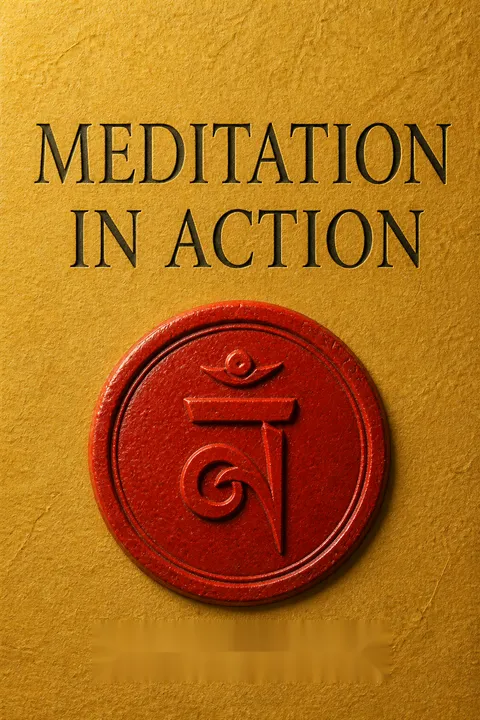


Key Takeaways
Test inherited ideas through experience, not spiritual costumes.
A prince becomes a seeker. Siddhartha leaves palace life and joins ascetics, trying their practices and learning from teachers. But the strangeness of a new life can feel like insight when it is only excitement. After years of practice, he sees that austerity and adopting a religious identity have not answered his questions. He leaves his teachers to investigate directly. Even an ordinary habit, such as eating lunch at a set time, can reveal how much behavior comes from convention rather than need.
Look for firsthand evidence. Trungpa presents the Buddha as a radical in a specific sense: he would not accept a conclusion simply because it was traditional or authoritative. Mindfulness makes it possible to examine assumptions, including the idea of a fixed self, rather than merely replacing one set of beliefs with another.
The book’s demand for firsthand inquiry is powerful because it treats spiritual life as something to test in experience, not a badge to wear. Yet personal conviction is not automatically reliable evidence. People can mistake intensity, novelty, or confirmation of what they already believe for discovery. The strongest reading is not that teachers and traditions are useless, but that they should help sharpen observation rather than dictate its conclusions. This keeps independent inquiry from turning into a new identity: the person who trusts only themselves.
Turn your actual confusion into material for awakening.
Nothing is wasted material. Bodhi means the awakened state of mind. Trungpa argues that its possibility is present even in people whose habits seem difficult or unworthy. The world of confusion, called samsara, is not something to discard before practice can begin. It is the ground from which insight can grow.
Work with what is here. The book compares troubling thoughts and impulses to manure: unpleasant material can nourish a field when it is examined and put to use. This is not permission to act out harmful impulses. A story makes the distinction: one friend interprets a teacher’s instruction to accept everything as permission to expand businesses associated with exploitation. He never examines himself and becomes more trapped. The other studies the material already present in his own mind.
This approach avoids the trap of treating shame as evidence that a person is unfit to practice. A difficult impulse can become information: what triggers it, what it promises, and what follows from it. But acceptance must be distinguished from approval. The book’s cautionary friend shows why. Without honest examination and ethical limits, the language of accepting everything can become a polished defense of whatever someone already wants to do. The useful question is not whether an impulse is allowed to exist, but what understanding and action it supports.
Let meditation happen inside life, not outside it.
Awakening is not an escape. After years of severe austerity, the Buddha accepts nourishing food and finds a comfortable place to sit. Trungpa uses this reversal to question the idea that transformation comes from punishing the body or forcing a special state. Meditation is not a project for becoming a superior person; it is a way of seeing the present situation more directly.
Use the world as practice. Traffic, conversation, and daily work do not have to stop before attention can begin. A person meditating beside a busy street cannot command the cars to disappear, but can notice the urge to demand perfect quiet. The book calls this working meditation: awareness is exercised in contact with ordinary circumstances, rather than protected from them.
The title’s central claim is practical: meditation matters in the way a person meets the day, not only in a quiet room. This rejects the fantasy that insight requires perfect conditions and gives ordinary interruptions a role in practice. Still, not every difficult environment is beneficial, and a noisy street is not equivalent to a genuinely unsafe situation. The principle is about reducing needless resistance to reality, not denying the value of rest, boundaries, or changing conditions that cause real harm.
Follow the breath, notice thought, and return without a fight.
Use a simple anchor. Trungpa describes shamatha, a basic meditation practice, as awareness of breathing rather than a contest to concentrate harder. Sit with the back upright, on the floor or a chair, and feel the breath moving in and out. The aim is not to control it or become absorbed in a special ritual. The breath provides a direct, changing event to notice.
Recognize thought as thought. If the mind starts planning a holiday, notice that a thought is forming, then return to the breath. Do not suppress the thought or follow its story. This small movement of noticing and returning trains attention without turning meditation into self-monitoring. The technique is a starting support, not a prize in itself; Trungpa says practice can change naturally, and specific instruction may depend on the person.
The instruction is modest by design. Instead of demanding a blank mind, it asks for a shift in relationship: a thought can be noticed without being mistaken for the whole of experience. That distinction is useful well beyond formal sitting, especially when plans or worries take over attention. The book is also right to resist one-size-fits-all claims about technique. A breath practice may not suit everyone in the same way, and the text itself treats personal guidance as important rather than promising a universal shortcut.
Practice generosity by loosening ownership, not merely giving things away.
Notice the hunger to possess. Dana, or generosity, begins here as a change in one’s relation to wanting, not simply the transfer of money or objects. Trungpa tells of a beggar woman who is asked to refuse food before receiving it. Her difficulty saying no reveals how deeply she depends on grasping. In another story, a poor brother gives away his single yak readily, while a wealthier brother, anxious about his herd, wants still more.
Give without turning it into a trophy. Material gifts matter, but so do attention, knowledge, and instruction. Giving becomes a transcendent action, a paramita, when it is not performed to earn status or spiritual reward. Teaching also requires discernment: sharing what is useful to another person is different from using them as an audience.
The distinction between giving and possessiveness clarifies why generosity can feel difficult even when a gift costs little. It also catches a subtler form of self-interest: generosity performed to build a reputation for being generous. At the same time, inward freedom from attachment should not be confused with a substitute for material help. Food, money, and practical support can meet real needs. The book’s deeper point is that the giver’s attitude matters too, not that tangible aid is unimportant.
Make patience clear-eyed participation, not passive endurance.
See the whole situation. Ksanti, or patience, is not simply enduring pain with a pleasant expression. Trungpa defines it as forbearance guided by clarity: seeing what is happening and what response fits. This requires energy and awareness of the present, rather than automatic reaction based on old grievances or imagined outcomes.
Change your footing first. Two barefoot travelers disagree about how to cross a rough road. One imagines covering the entire road in leather; the other proposes covering their own feet. The story illustrates the limits of trying to arrange every external condition before finding steadiness. Likewise, when noise irritates a meditator, the practice is to notice the irritation and include the sound in the situation, not to demand that the world become silent.
This version of patience is active because it asks for accurate perception before response, not mere suppression. It can interrupt the escalation that follows from trying to control every inconvenience. The distinction matters, however: adapting one’s response is not always wiser than changing the situation. In relationships or institutions where harm is occurring, patience should not become a rule that silences objection. Clear-eyed participation includes recognizing when a boundary, complaint, or exit is the fitting action.
Treat a teacher as a doorway, not the owner of truth.
A teacher creates conditions. In the book, transmission, also called abhisheka, does not mean that a teacher can hand over personal realization. The teacher helps establish a situation in which the student can recognize something directly. The student still has to be open and attentive; the insight cannot simply be delivered like information.
Read the story as a process. Naropa is a celebrated scholar who leaves the university to seek the yogi Tilopa. Trungpa recounts twelve years of following him, including severe trials, before Tilopa’s final gesture is associated with Naropa’s realization of mahamudra. The point is not that one dramatic blow transfers wisdom. The entire relationship and its accumulated experiences create the conditions for recognition. The story should not be mistaken for an instruction to imitate hardship.
This account gives teaching a useful middle position: neither unquestioned authority nor the fantasy that all learning can happen alone. A teacher can provide structure, feedback, and a perspective that unsettles familiar habits, while the learner remains responsible for understanding. The Naropa story also needs careful handling. Its trials belong to a traditional narrative, not a reliable test of a teacher’s legitimacy. Humiliation or danger does not prove wisdom, and the book’s own central claim is that realization cannot be transferred by force.
Build wisdom by studying, digesting, and testing what you learn.
Wisdom must enter daily life. Prajna, or wisdom, is not merely command of Buddhist vocabulary. It is clear knowing of a situation without making the self the center of every judgment. Trungpa pairs prajna with upaya, skillful means for responding effectively: without clear seeing, clever action can still serve confusion.
Move through three kinds of learning. The book names töpa, sampa, and gompa: study, contemplation, and meditation. Reading can inspire a theory, but reflection is needed to connect it to experience. Meditation then deepens that understanding. Trungpa’s example is deliberately ordinary: someone absorbed in a grand spiritual discussion may find it hard to respond calmly when milk boils over. Wisdom is real only when it can meet both the grand question and the kitchen.
This sequence is a strong antidote to collecting spiritual ideas as a form of achievement. Study supplies concepts, contemplation checks how they fit experience, and practice tests whether they change perception and conduct. The boiling milk example exposes a common failure: insight can feel convincing in abstraction yet disappear under minor pressure. The process is not anti-intellectual, though. Concepts can guide attention and make patterns discussable. Their value depends on whether they remain open to revision through lived experience.
Let compassion respond without appointing yourself the world's rescuer.
Compassion is not self-display. In Trungpa’s account, after awakening the Buddha is tempted by Mara, a figure representing the ego’s fears and desires. Rather than treat Mara as an enemy to crush, he meets the disturbance without resistance, through maitri, or loving-kindness. The story presents compassion as an open response, not a performance of moral superiority.
Release the rescuer role. The Buddha initially considers whether anyone could understand what he has seen and nearly remains silent. Teaching becomes possible when he lets go of the ambition to save everyone and responds to the situations that arise. The book describes genuine compassion as spontaneous, without a self-image built around being helpful. Generosity is one concrete way this warmth becomes action.
The shift from wanting to be a savior to meeting the person actually present is a sharp critique of help that secretly serves the helper’s identity. It encourages attention to what another person needs, rather than imposing a preferred solution. Spontaneity, however, is not a guarantee of sound judgment. Good intentions still need feedback, humility, and attention to consequences. The insight is most useful when selflessness means less self-importance, not less accountability for the effects of one’s actions.
Analysis
Meditation in Action is a sequence of talks organized around a recurring problem: people want spiritual transformation, but often turn the search itself into another way to protect or decorate the self. Trungpa’s answer is not to reject ordinary life, inherited ideas, or difficult emotions. It is to examine them closely enough that they stop functioning as unquestioned instructions. Siddhartha’s departure from royal comfort matters less as an endorsement of renunciation than as a story about learning through experience, then discovering that austerity can become another costume.
The book’s most useful tension is that concepts are both obstacles and tools. A theory can harden into a substitute for seeing, yet concepts and teachers can also orient inquiry. Likewise, ego is treated as a process to investigate, not a villain that must be eliminated before practice begins. This makes the teaching unusually resistant to spiritual perfectionism. A person need not first become calm, pure, or detached. The material for practice is already present, including confusion and wanting.
Its practical center is attention: feel the breath, recognize thought, return, and carry this quality into noise, work, and relationships. Generosity and patience then become tests of perception, not moral decorations. The reader is asked to see whether practice changes the grip of possession or the reflex to make other people conform.
The approach has limits if taken as a complete guide to every problem. Acceptance can be misread as passivity, and stories of demanding teacher relationships can be misused to excuse coercion. Trungpa’s own distinctions help resist those readings: patience includes intelligence, and transmission cannot be forced into someone. A strong reading therefore combines openness with discernment. The book does not ask readers to approve every situation; it asks them to stop confusing their preferred picture of reality with reality itself, then respond from what they can actually see.
Review Summary
Meditation in Action receives mostly positive reviews, with readers appreciating its accessibility and practical approach to meditation. Many find it insightful and perspective-shifting, praising Trungpa's ability to explain complex concepts simply. Some readers note the book's historical significance in introducing Buddhism to the West. Critics mention the book's scattered organization and Trungpa's controversial personal life. Overall, readers value the book for its wisdom on applying meditation to daily life, though some find it challenging to follow.
People Also Read








Glossary
bodhi
awakened state of mindBodhi means the awakened state of mind. In the book, it is not a spiritual possession bestowed from outside, nor a status earned by adopting a religious identity. Its possibility is present in ordinary people and can be cultivated by examining experience directly, including confusing or difficult aspects of one’s character.
samsara
world of confusionSamsara is the confused world of ordinary experience, shaped by patterns of desire, aversion, and mistaken assumptions. Trungpa does not present it as material that must be discarded before awakening is possible. When it is studied rather than blindly followed or forcibly rejected, samsara can become the ground and material for insight.
abhisheka
transmission through a teacherAbhisheka is a term used for transmission in the Vajrayana tradition. In this book, it does not mean that a teacher transfers personal realization into a student. The teacher creates a setting that may help the student become receptive and recognize something directly. The insight is discovered by the student, not handed over as information.
paramita
transcendent actionA paramita is a transcendent action associated with the bodhisattva path. The term is often translated as a perfection, but Trungpa emphasizes going beyond self-centered motives rather than achieving flawlessness. Generosity, discipline, patience, energy, and wisdom are presented as actions that become transformative when they are not organized around personal reward.
dana
generosity without graspingDana means generosity. Trungpa treats it as more than giving money or possessions: it involves loosening the urge to own, hoard, or turn giving into a source of status. Dana can also mean sharing attention, experience, or teaching, with care for whether the gift is useful to its recipient.
ksanti
patient clarityKsanti is patience understood as clear, intelligent forbearance. It is not simply enduring discomfort or hiding anger behind a calm appearance. It involves seeing the situation as a whole, noticing one’s reactions, and having the energy to respond appropriately rather than acting from habit or demanding that every circumstance change.
prajna
clear situational knowingPrajna is wisdom as direct knowing of a situation, not merely technical or religious knowledge. Trungpa describes it as broad and penetrating, while emphasizing that it is not centered on the self as the possessor of knowledge. Prajna helps distinguish a response suited to the present from one driven by assumptions or self-interest.
upaya
skillful meansUpaya means skillful means: the ability to respond effectively to a particular situation. Trungpa pairs it with prajna, or clear seeing. Skill without wisdom can remain self-serving or miss what is happening; wisdom helps skillful action fit the actual circumstances rather than a fixed plan.
shamatha
breath-awareness practiceShamatha is a meditation practice associated here with awareness of breathing. Trungpa cautions against treating it as forceful concentration or an attempt to suppress thought. The practitioner feels the breath, notices when attention follows a thought, and returns to breathing. The practice establishes a simple discipline for seeing the present moment.
vipassana
insight meditationVipassana means insight meditation. In the book, it refers to the practice of seeing experience more directly and recognizing how the sense of a solid self is constructed. A technique such as awareness of breathing can provide a starting point; as perception opens, the technique becomes less central and insight extends into experience more broadly.
nowness
direct present awarenessNowness is Trungpa’s term for direct awareness of the present moment, before experience is filtered through fixed expectations or ideas. Awareness of a particular breath is a practical entry point because each breath occurs distinctly. Nowness is not a special future state to achieve, but a way of meeting what is happening now.
töpa, sampa, gompa
study, contemplation, meditationThese three Tibetan terms describe stages in cultivating wisdom. Töpa means studying a subject; sampa means contemplating and digesting it in relation to experience; gompa means meditation, including the development of samadhi. The sequence joins intellectual learning with reflection and practice, so understanding does not remain a collection of ideas detached from daily life.
FAQ
1. What is "Meditation in Action" by Chögyam Trungpa about?
- Integration of Meditation and Life: The book explores how meditation is not just a formal practice but can be integrated into every aspect of daily life, making spiritual practice inseparable from ordinary activities.
- Buddhist Path in the Modern World: Trungpa presents the Buddhist path, especially the Mahayana approach, in a way that is accessible and relevant to Western readers, emphasizing practical application over abstract theory.
- Transcending Duality: The text discusses moving beyond the duality of spiritual versus worldly life, showing how awakening can arise from engaging with everyday experiences.
- Emphasis on Direct Experience: Trungpa encourages readers to rely on firsthand experience rather than blind faith or rigid adherence to tradition, advocating for a revolutionary, self-discovering attitude.
2. Why should I read "Meditation in Action" by Chögyam Trungpa?
- Practical Spirituality: The book offers concrete advice on how to bring meditation and mindfulness into daily life, making it valuable for anyone seeking practical spiritual guidance.
- Accessible Introduction to Buddhism: Trungpa’s clear, direct language demystifies Buddhist concepts, making them approachable for beginners and meaningful for experienced practitioners.
- Universal Relevance: The teachings address common human challenges—such as ego, desire, and suffering—making the insights applicable regardless of religious background.
- Transformative Perspective: Readers are encouraged to see obstacles and negative emotions as opportunities for growth, shifting the way they relate to themselves and the world.
3. What are the key takeaways from "Meditation in Action" by Chögyam Trungpa?
- Meditation as Everyday Practice: Meditation is not confined to the cushion; it is a way of being present and open in every moment of life.
- Ego and Selflessness: The book explains how clinging to ego creates suffering, and how selflessness and openness lead to wisdom and compassion.
- Transcending Concepts: Trungpa teaches that concepts and theories, while useful, must eventually be transcended through direct experience and intuitive understanding.
- Six Paramitas: The text explores the six paramitas (generosity, discipline, patience, energy, meditation, and wisdom) as practical methods for cultivating the awakened state.
4. How does Chögyam Trungpa define meditation in "Meditation in Action"?
- Not Just Concentration: Meditation is not merely about focusing or suppressing thoughts, but about developing awareness and acceptance of whatever arises.
- Nowness and Presence: Trungpa emphasizes the importance of "nowness"—being fully present in the current moment without striving for a future goal.
- Extrovert Meditation: He introduces the idea of "working meditation," where meditation is practiced in action, not just in stillness or isolation.
- Letting Go of Ambition: True meditation involves letting go of the ambition to achieve a higher state and instead becoming one with reality as it is.
5. What is the significance of the Buddha’s life story in "Meditation in Action"?
- Firsthand Experience Over Imitation: Trungpa uses the Buddha’s journey to illustrate the importance of direct, personal experience rather than blind conformity to tradition or asceticism.
- Overcoming Excitement and Novelty: The Buddha’s initial excitement and eventual disillusionment with ascetic practices highlight the need to move beyond superficial enthusiasm to genuine understanding.
- Revolutionary Attitude: The Buddha’s refusal to accept anything he hadn’t discovered for himself is presented as a model for spiritual inquiry.
- Compassionate Action: The story shows that true compassion arises not from a sense of duty or superiority, but from selfless engagement with the world.
6. How does "Meditation in Action" by Chögyam Trungpa address the concept of ego?
- Ego as Illusion: Trungpa explains that the ego is a collection of concepts, emotions, and inherited patterns, not a solid, independent entity.
- Ego’s Role in Suffering: Clinging to ego leads to confusion, fear, and the inability to see things as they are.
- Ego as Starting Point: Rather than trying to destroy ego at the outset, Trungpa advises using and wearing it out through practice, allowing it to naturally dissolve.
- Wisdom and Ego: The realization of one’s ignorance is itself the beginning of wisdom, showing that ego and wisdom are not entirely separate.
7. What are the six paramitas (transcendent actions) in "Meditation in Action," and how are they practiced?
- Generosity (Dana): Letting go of possessiveness and the desire to own, both materially and psychologically, and being open to giving without expectation.
- Discipline (Sila): Acting in accordance with awareness and the present moment, not out of imposed rules or moralizing, but from simplicity and authenticity.
- Patience (Ksanti): Developing forbearance and openness to situations, not by suppressing discomfort but by seeing the situation clearly and responding with intelligence.
- Energy (Virya): Engaging with life and practice with enthusiasm and perseverance, without being driven by ambition or restlessness.
- Meditation (Dhyana): Practicing awareness and presence, both in formal sitting and in daily activities, without striving for a particular result.
- Wisdom (Prajna): Cultivating direct, non-conceptual knowledge of reality, integrating study, contemplation, and meditation.
8. How does Chögyam Trungpa suggest working with negative emotions and experiences in "Meditation in Action"?
- Manure as Metaphor: Trungpa uses the metaphor of manure to illustrate that negative emotions and experiences are not to be discarded but used as fertilizer for spiritual growth.
- Respecting One’s Character: He advises accepting and examining one’s own qualities, even those considered faults, as the starting point for awakening.
- Transforming Obstacles: By acknowledging and working with difficulties, rather than suppressing or rejecting them, one can transform them into wisdom and compassion.
- No Need for Perfection: The path does not require eradicating all negativity before starting; instead, one uses what is present as material for practice.
9. What is the role of the teacher or guru in "Meditation in Action" by Chögyam Trungpa?
- Transmission, Not Imparting: The teacher does not give realization but creates the right environment for the student to discover their own innate wisdom.
- Creating the Situation: Through various means—words, silence, or even unconventional actions—the teacher helps the student open to direct experience.
- Mutual Openness: True transmission occurs when both teacher and student are open, resulting in a moment of shared understanding or "meeting of two minds."
- Gratitude and Surrender: Approaching the teacher with gratitude and a willingness to surrender ego is seen as essential for genuine learning.
10. How does "Meditation in Action" by Chögyam Trungpa distinguish between different types of meditation?
- Devotional vs. Awareness-Based: Trungpa contrasts meditation aimed at communicating with a higher being (devotional, inward) with meditation focused on awareness of what is (extrovert, present-moment).
- No Centralization: In awareness-based meditation, there is no central focus on the heart or chakras; instead, the emphasis is on openness and presence.
- Letting Go of Goals: The awareness-based approach avoids striving for higher states or spiritual achievements, focusing instead on direct experience.
- Integration with Life: Meditation is not separate from daily life; it is a way of relating to every moment, not just a formal practice.
11. What practical advice does Chögyam Trungpa give for meditation practice in "Meditation in Action"?
- Simple Technique: Begin with awareness of breathing, sitting comfortably with a straight back, and letting thoughts arise and pass without suppression or involvement.
- No Striving for Peace: Avoid making deliberate efforts to control the mind or achieve a special state; instead, cultivate acceptance of whatever arises.
- Natural and Unforced: Meditation should feel natural and spontaneous, not solemn or ritualistic.
- Returning to the Present: Whenever distracted, gently return attention to the breath and the present moment, using thoughts as reminders rather than obstacles.
12. What are the best quotes from "Meditation in Action" by Chögyam Trungpa, and what do they mean?
- "The Dharma is good at the beginning, the Dharma is good in the middle and the Dharma is good at the end."
- This highlights the timeless and ever-relevant nature of the Buddhist teachings, applicable at every stage of the path.
- "You see, you are your own best friend, your own closest friend, you are the best company for yourself."
- Trungpa emphasizes self-acceptance and the importance of honest self-examination as the foundation for spiritual growth.
- "Meditation is dealing with purpose itself. It is not that meditation is for something, but it is dealing with the aim."
- This quote points to the radical idea that meditation is not a means to an end, but a way of relating to purpose and meaning directly.
- "There is already communication before we say anything, even if we are only saying 'Hello,' or 'How are you?'"
- Trungpa reminds us that true communication and connection arise from presence and authenticity, not just words.
- "If one is able to accept it in a relaxed way, a quiet way, that is already the first step in producing a climate of peace and an atmosphere of quiet."
- This underscores the
About the Author


Download PDF
Download EPUB
.epub digital book format is ideal for reading ebooks on phones, tablets, and e-readers.








