

Key Takeaways
Trace the 2008 crash to policy-created credit, not an unregulated market
Start with the credit system. Woods argues that the crisis was not proof that free markets had failed. It grew from government policies and institutions that distorted credit, especially the Federal Reserve’s influence over money and interest rates. The book draws on the Austrian School, an economic tradition associated with Ludwig von Mises and F. A. Hayek that studies how monetary changes affect investment and production over time. Woods does not deny that private lenders and investors made reckless choices. His question is what made those choices seem profitable and how public guarantees shifted their risks onto others.
Look past the scapegoats. The book challenges explanations that stop at greed, deregulation, or a single housing law. It argues that politicians, regulators, and central bankers helped create the conditions for excess, then used the crisis to justify more intervention. Its central warning is political as much as economic: a government failure can be misdiagnosed as a market failure, inviting policies that deepen the original problem.
The book’s most useful move is to ask what incentives and institutions made widespread risk-taking rational for individual actors. That question is stronger than simply blaming greed, which explains little about why a particular boom formed when it did. At the same time, locating the cause in public policy does not settle how much responsibility belongs to monetary policy, housing programs, financial engineering, or private governance failures. These forces can reinforce one another. The argument is best read as a challenge to monocausal accounts, not as proof that private markets reliably prevent bubbles or that every state intervention produces instability.
Cheap Fed credit turned housing policy into a nationwide speculation machine
Follow the mortgage pipeline. From 1998 to 2006, home prices rose dramatically, with the book reporting a 150 percent increase in median prices across U.S. cities. Fannie Mae and Freddie Mac helped banks sell mortgages, freeing up funds for new loans. Woods argues that their government-granted privileges and expected federal rescue let them attract capital on unusually favorable terms. By 2008, the two enterprises were involved in about half of U.S. mortgages and nearly three-quarters of new ones.
Add the other incentives. Federal efforts to expand homeownership, looser lending standards, tax advantages for buying with a mortgage, and speculation all directed resources toward housing. Woods identifies the Fed’s exceptionally cheap credit as the decisive fuel. Its federal funds rate target reached 1 percent for a year in 2003-04. Rising prices encouraged buyers to expect further gains, while adjustable-rate and no-down-payment loans made walking away easier when prices fell.
This account connects policy design to a concrete chain of incentives: easier funding supports more lending, rising prices validate optimistic expectations, and the resulting collateral values appear to justify still more credit. That feedback loop is a useful model well beyond housing. The chapter also resists the habit of treating subprime borrowers as the sole source of failure. Its broad attribution to government pressure is more debatable: housing policy, regulatory enforcement, private securitization, ratings, and lender compensation each deserve separate scrutiny. A system-level explanation gains strength when it distinguishes these mechanisms rather than treating them as a single political plan.
Treat interest rates as signals, not knobs for permanent prosperity
Rates coordinate time. In Woods’s account, interest rates reflect the balance between saving and borrowing. When people save more, lower rates can signal that resources are available for long-term investment. When a central bank pushes rates down without a matching increase in saving, businesses may mistake cheap loans for evidence that the economy can support more projects than it really can.
The resulting error. The book calls investments built on this false signal malinvestment: projects that appear profitable under artificially easy credit but cannot all be sustained with available resources and consumer demand. Its builder analogy makes the problem plain: someone who mistakenly believes he has more bricks than he owns designs a larger house, then discovers he cannot finish it. The bust exposes and unwinds these errors. Woods argues that prolonging cheap credit delays adjustment and can magnify the eventual losses.
The theory offers a memorable account of why a boom can look healthy while becoming fragile: investment decisions depend on information, and policy can distort the price that communicates the scarcity of funding. This is a powerful warning against assuming that low borrowing costs automatically mean plentiful real resources. Yet an interest rate is not a pure signal of household saving. It also responds to risk, expectations, and monetary conditions, and modern economies contain many kinds of credit. The framework illuminates one possible route to crisis, but it does not by itself establish that every boom is unsustainable or identify the right rate in real time.
Bailouts insure recklessness and make the next rescue harder to refuse
Who bears the loss? Moral hazard is the increased willingness to take risks when decision-makers expect someone else to absorb the costs. Woods argues that repeated rescues, deposit guarantees, and the belief that large firms are too big to fail weakened the discipline that losses would otherwise impose. The book points to the 2008 rescues of Bear Stearns and AIG, the takeover of Fannie and Freddie, and the contrasting decision to let Lehman Brothers fail. The shifting rules made it harder for firms and investors to know where the government’s protection began.
Rescue can delay repair. Woods also argues that public support kept weak institutions and bad investments alive, slowing the movement of capital toward stronger uses. He opposes treating the rescue of a large company as automatically necessary, and warns that taxpayers may ultimately pay through borrowing, taxes, or money creation.
The incentive problem is real: if gains remain private while losses are routinely transferred to the public, risk-taking becomes harder to price and restrain. The book’s argument also highlights the damage caused by unpredictable rescue criteria. But a credible policy against bailouts needs more than a promise to stand aside. Large financial firms can be connected through payment systems, short-term funding, and shared exposures, so disorderly failure can harm people who did not choose the risks. The practical alternative is not necessarily rescue or collapse. It is a system that can restructure essential functions while imposing losses on owners and creditors.
Let failed firms release workers and assets for better uses
Bankruptcy reallocates ownership. Woods presents bankruptcy as a way to move assets from managers who have misused them to owners more capable of putting them to productive use. A firm’s buildings, equipment, and employees do not vanish when it fails. The book uses Lehman Brothers and Washington Mutual to argue that other institutions acquired useful parts of each business while less viable parts were allowed to disappear.
Preserve the distinction. In this view, keeping an institution alive is not the same as preserving the services people need. A failing company may be consuming labor and capital that healthier businesses could use. Woods therefore rejects the assumption that a firm’s size alone justifies a bailout. He also argues that rescue programs can create uncertainty by changing which companies receive support, making investors less willing to judge risks on ordinary commercial grounds.
The distinction between a company and the functions it performs is valuable. Bankruptcy can preserve useful assets while changing who controls them, and that is a more precise goal than preserving every incumbent institution. The argument is less complete when it treats reallocation as swift or painless. Specialized contracts, networks, and institutional knowledge can be difficult to transfer, and workers may bear costs even when assets find new owners. A sound resolution policy therefore needs to protect continuity of critical services without guaranteeing the survival of shareholders or managers. That distinction makes the case for market discipline more credible, not less.
The 1920-21 rebound challenges claims that stimulus is the only exit
Compare the recoveries. After a severe U.S. downturn in 1920-21, Woods says the federal government and the Federal Reserve did relatively little to stimulate demand, and the economy recovered quickly. He contrasts this with Japan’s response to its 1990s slump: repeated public-works programs, low interest rates, government lending, and support for failing firms. In the book’s account, those interventions helped leave Japan with prolonged stagnation and heavy public debt.
Rethink the Depression story. Woods also challenges the familiar story that Herbert Hoover largely stood aside and Franklin Roosevelt’s New Deal ended the Great Depression. He argues that Hoover intervened extensively, that New Deal policies obstructed adjustment, and that wartime production did not equal rising consumer prosperity. His historical comparisons support the broader claim that attempts to prop up prices and failing firms can delay recovery.
Historical comparisons can test policy assumptions, and the 1920-21 episode is a useful reminder that recovery does not always follow the modern script of large stimulus programs. Still, one recovery cannot establish that nonintervention caused the rebound. The episodes differed in institutions, labor markets, global conditions, and the depth and duration of disruption. The book’s interpretation of the New Deal and wartime output is also contested among economists and historians. The strongest lesson is methodological: compare outcomes, but do not treat a striking historical case as a controlled experiment.
Treat money creation as redistribution, not wealth creation
Money is not the goods. Woods distinguishes money from the real resources it can command. He uses the word inflation primarily for an increase in the money supply, which he argues tends to push prices upward. New money enters the economy through particular institutions and recipients first. Those recipients can spend before prices fully adjust, while people who receive it later face higher costs. In this way, monetary expansion changes who can claim existing goods, even when it creates no additional goods.
Trace the banking mechanism. The book explains how the Fed buys assets and adds reserves to banks. Under fractional-reserve banking, banks hold only part of deposits in reserve and lend the rest, creating additional deposit money. Woods argues that this system can amplify credit expansion and encourage leverage. He favors monetary competition and commodity money, such as gold or silver, as limits on political discretion.
The distributional point is important: new money does not arrive everywhere at once, so its effects depend on who receives it and when. That perspective adds more than the familiar statement that inflation reduces purchasing power. The book’s simplified banking example helps readers see how deposits and loans interact, but actual money creation is affected by bank capital, borrower demand, regulation, and central bank policy, not just a fixed reserve multiplier. Commodity money can constrain some forms of discretion, yet it introduces its own institutional and supply questions. The useful test is not whether a currency is old or modern, but how its rules distribute power and risk.
Build recovery around production and savings, not consumption targets
Spending follows production. Woods argues that consumer spending is not a magic source of wealth. People can buy goods because they have earned income by contributing to production. Saving, in turn, can provide resources for investment in equipment and more productive processes. He uses the simple example of a person who must store food before spending time making a tool: newly printed claims cannot substitute for the food needed while the tool is being built.
Question stimulus arithmetic. The book criticizes policies that encourage people or governments to spend more simply to raise measured activity. It argues that public projects can take labor and resources away from private uses, and that GDP’s focus on final goods can obscure the production stages behind them. The point is not that consumer demand never matters. It is that spending alone cannot create the real resources, skills, or output needed for lasting prosperity.
This emphasis on real capacity helps separate accounting activity from improvements in living standards. A bridge that is useful and well chosen can add value, but the act of funding a project does not prove that it is worth its cost. Likewise, saving is not automatically productive if funds sit idle or investment opportunities are poor. The book is persuasive when it asks what is produced and what resources are displaced. Its dismissal of demand management is less convincing as a universal rule, since falling incomes and spending can reinforce one another during a downturn. The central distinction is between purposeful expenditure and spending treated as an end in itself.
Do not call a system free while the state controls its money
Change the rules, not just the rescue. Woods’s proposed response goes beyond tighter supervision. He calls for ending bailouts, dismantling Fannie Mae and Freddie Mac, reducing government spending, and allowing interest rates to move with market conditions. He also urges Americans to question the Federal Reserve’s role and argues for competition among forms of money, including commodity-backed or privately issued alternatives.
The institutional claim. In the book’s view, a system cannot be called free-market when government controls the money supply, influences the price of credit, protects selected financial institutions, and requires acceptance of its currency. Woods presents monetary competition as a way to limit political control and give people alternatives. These proposals rest on a broad principle: remove privileges that transfer risk to the public, rather than layering new rules onto a system that continues to reward risk-taking.
The call to scrutinize money and credit is a strong challenge to the idea that markets operate independently of public institutions. It also raises practical questions that the book does not fully resolve: how competing currencies would handle payments, bank failures, and sudden demand for liquidity, and whether users could assess issuers reliably. A commodity constraint may limit one form of political abuse without guaranteeing stable prices or sound banking. The deeper contribution is to make institutional design visible. The debate should compare specific rules and failure modes, rather than treating either central-bank management or an imagined market without institutions as self-evidently safe.
Analysis
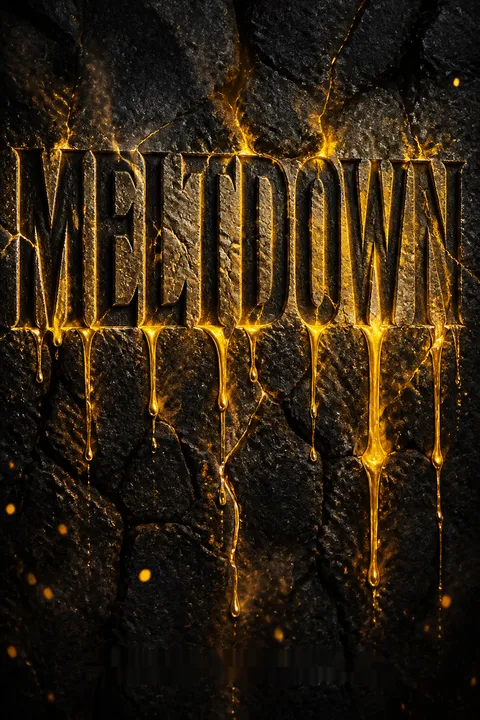
Meltdown is a polemical introduction to Austrian business cycle theory, organized as a crisis investigation. Its narrative begins with the 2008 collapse, tracks the policy choices that Woods believes inflated housing and credit, then turns to the theory of how artificially low rates misdirect investment. Historical episodes and monetary proposals complete the case. The book is effective because it gives readers a mechanism, not merely a list of villains: credit can make projects appear viable without supplying the real resources needed to finish them. Its strongest analytical contribution is to insist that prices, guarantees, and institutional privileges shape behavior before a crash, and that emergency policy can alter incentives long after the immediate panic.
Its main vulnerability is the distance between a coherent mechanism and a comprehensive explanation of a particular crisis. The account assigns decisive weight to Federal Reserve policy and government housing initiatives, while treating private securitization, compensation systems, ratings failures, global capital flows, and regulatory fragmentation as supporting factors. Those elements interact, and assigning relative causal weight requires evidence beyond the theory itself. The book sometimes presents policy failure as if market correction were comparatively clean. Yet a financial system can transmit losses across payment, credit, and employment networks, creating costs that are not captured by the fate of one firm or its owners.
The historical chapters are valuable as challenges to conventional narratives, but the 1920-21 recovery, Japan’s stagnation, the New Deal, and wartime output are not interchangeable experiments. Their differences matter. Likewise, a commodity standard can constrain money creation but does not eliminate financial instability or political choices about banking rules. Woods is most persuasive when asking readers to test rescue policies against incentives and real resource constraints. He is less persuasive when his preferred explanation becomes an all-purpose verdict. Read as a corrective lens, the book sharpens debate; read as a complete diagnosis, it narrows it too quickly.
Review Summary
Meltdown by Thomas Woods presents an Austrian economics perspective on the 2008 financial crisis, blaming government intervention and Federal Reserve policies for creating artificial booms and busts. The book argues against Keynesian economics and advocates for free-market solutions. Readers generally found the book informative and accessible, though some criticized its tone as overly sarcastic. While praised for its clear explanations of complex economic concepts, some reviewers felt it oversimplified issues and presented a one-sided view. Overall, it's considered a good introduction to Austrian economics applied to recent economic events.
People Also Read







Glossary
Austrian business cycle theory
Credit-driven boom and bustAn explanation of economic cycles associated with Ludwig von Mises and F. A. Hayek. It argues that when a central bank pushes interest rates below levels supported by saving, businesses receive misleading signals and begin investment projects the economy cannot sustain. The boom is followed by a bust as scarce resources and weak consumer demand expose those errors.
malinvestment
Unsustainable investmentInvestment directed into projects that appear profitable under distorted conditions, especially artificially cheap credit, but cannot be supported by available resources or consumer demand. In Woods’s account, the problem is not simply that an entrepreneur guessed wrong. Credit expansion can encourage many businesses to make similar errors at once, producing a broad and costly correction.
moral hazard
Risk shifted to othersA tendency to take greater risks when the person making a decision expects another party to bear some of the resulting costs. Woods applies the term to institutions that anticipate government support, deposit guarantees, or rescue because they are considered too important to fail. Those protections can weaken the discipline that potential losses would otherwise impose.
fractional-reserve banking
Lending beyond reservesA banking arrangement in which a bank keeps only part of its deposit liabilities available as reserves and lends the remainder. When loans create new deposits, the banking system can expand the amount of money people use for payments. Woods argues that central bank support can make this credit expansion easier and can increase the system’s exposure to runs and misallocated investment.
fiat money
Currency without commodity backingMoney that is not itself a commodity and cannot be redeemed for a specified quantity of a commodity such as gold or silver. Woods argues that fiat money gives governments and central banks greater discretion to expand the money supply. The book contrasts it with commodity money, while also discussing how government rules helped establish the current monetary system.
Greenspan put
Expected Fed market rescueThe market belief that Federal Reserve action would support asset prices or financial firms when conditions deteriorated, associated in the book with Alan Greenspan’s tenure. The term borrows from a put option, which gives its holder the right to sell an asset at a set price. Woods argues that expecting this protection can encourage excessive risk-taking.
growth deflation
Falling prices from rising outputA decline in prices that occurs as production and productivity increase faster than the money supply. Woods uses the term to distinguish this process from falling prices caused by economic contraction. In his account, growth deflation can raise purchasing power and living standards rather than cause a depression, because more goods are available relative to the money used to buy them.
About the Author
Other books by Thomas E. Woods Jr.

Download PDF
Download EPUB
.epub digital book format is ideal for reading ebooks on phones, tablets, and e-readers.








