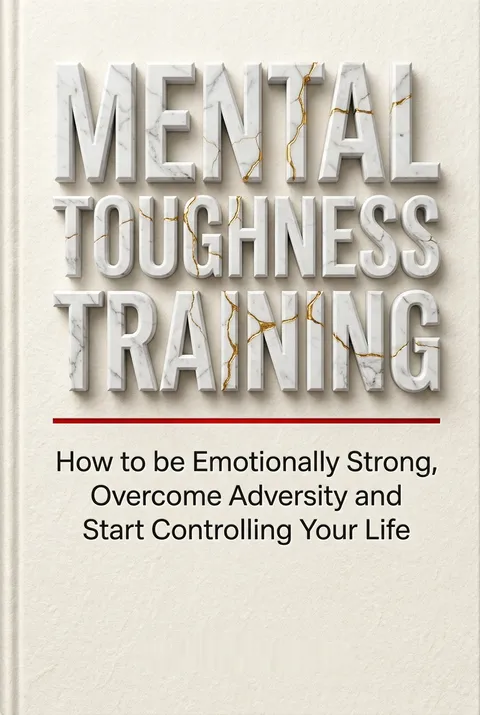


Key Takeaways
Build toughness by feeling emotions fully, then choosing your next move.
Strength is not suppression. Tuhovsky defines emotional strength as being able to acknowledge a feeling, make room for it, and process it without letting it dictate every action. Anger, grief, and fear are not personal failures. The book treats them as signals from a system shaped to help people respond to danger, loss, and relationships. Trouble begins when feelings are denied and pushed aside, because avoidance can leave the original problem untouched and add new costs.
Practice the whole response. When distress arrives, notice it, express it safely, and use a method that helps you work through it. The book suggests conversation, writing, exercise, music, or professional support. Its central distinction is between accepting an emotion and obeying it: feeling angry does not require an angry decision.
The distinction between emotional acceptance and behavioral permission is essential. It echoes a central idea in modern emotion regulation: feelings can be noticed without being treated as commands. That makes room for both self-compassion and responsibility. The book is persuasive when it warns against chronic avoidance, but its language can make emotional processing sound like a predictable release valve. Some feelings persist, recur, or need clinical care. Strength is not measured by how quickly distress fades, but by whether a person can respond safely and seek appropriate help.
Read emotions as signals, not as proof that your life is broken.
Separate signal from verdict. The book presents emotions as feedback about how events affect a person, not as a final judgment on the person or their future. Fear may point to perceived danger; sadness may accompany loss; frustration may draw attention to a problem. These reactions matter, but the feeling alone does not prove that a situation is hopeless or that the person is doomed to repeat it.
Name what is happening. In the Emotional Observation Exercise, a person briefly records the feeling and any physical sensations without criticizing themselves. For example, they might note feeling nervous and disappointed, with uncertainty about what comes next. This small act turns a vague emotional storm into something more observable, and may reveal which situations repeatedly trigger it.
Naming a feeling can create useful distance: it shifts attention from being overwhelmed to noticing what is happening. This resembles mindfulness practices that encourage observation without judgment. The signal metaphor is also practical because it invites curiosity instead of shame. Its limit is that emotions are not always accurate readings of present circumstances. Fear can outlast danger, and low mood can color interpretations. A signal deserves attention, not automatic obedience. Checking it against evidence and context keeps emotional awareness from becoming either dismissal or unquestioned certainty.
Buy seconds before reacting: breathe, separate facts, and choose one useful action.
Interrupt the rush. In a charged moment, the book recommends slowing down with deliberate breathing, relaxed posture, and measured speech. Those physical choices can help reduce the chance that an immediate emotional surge determines the next response. A special forces soldier told the author that constant worry wastes energy needed for the task at hand. The point is not that trained soldiers feel nothing; they still feel fear and stress, but must keep functioning.
Widen the view. The book calls one perspective-shifting method dissociation: mentally replay an event from an outside vantage point, then imagine zooming farther out to see its broader context. Once calmer, identify what happened, what remains uncertain, and what action is needed. The aim is not to erase emotion, but to stop it from narrowing the decision to the first impulse.
The pause is a compact decision tool: it creates a gap between an internal reaction and an outward act. Slow breathing and perspective-taking are also used in broader approaches to stress management. The zooming image may help with everyday embarrassment or rumination, but it is not a universal solution. For someone with trauma, deliberately revisiting a memory can intensify distress. A safer principle is to use perspective-taking only when it feels tolerable, and to seek trained support when memories are overwhelming.
Keep an emotional log to expose triggers and change repeated reactions.
Turn memory into evidence. The book suggests a short daily review of the one to three events that affected a person most. Record what happened, who was present, what feelings arose, and how you responded. The author encourages honest notes about behavior, including moments when someone raised their voice or avoided speaking up. The purpose is not to prosecute the past, but to see patterns that are hard to notice while moving through the day.
Use patterns to plan. Repeated notes may show that a certain setting, person, or kind of pressure reliably brings out anxiety or anger. Once a trigger is visible, a person can prepare a different response, reduce exposure where possible, or address the underlying problem. The book calls its regular review an emotional audit, a way to check both recent moods and the reactions that shaped them.
A brief record can correct the mind's tendency to remember emotionally intense moments while overlooking ordinary patterns. It also creates a feedback loop: observe, test a response, and review what happened. That approach resembles self-monitoring used in behavioral interventions. The log works best when it stays descriptive rather than becoming a daily trial. Too much analysis can feed rumination, especially if a person repeatedly revisits distress without gaining new understanding. A useful entry should point toward a question or next step, not simply preserve the discomfort.
Guard your emotional fuel with recovery, movement, and fewer avoidable drains.
Treat energy as a resource. Tuhovsky argues that worry and stress can consume attention and leave people more reactive when tired. He recommends the basics: nutritious food, enough sleep for the individual, physical activity, and time for enjoyable rest. His term active relaxation means doing something deliberately restorative, such as reading, taking a bath, or meditating, rather than waiting for recovery to happen by accident.
Notice what costs you. Track which environments, activities, and relationships tend to leave you depleted or more settled. Avoid unnecessary stressors when possible, while recognizing that some difficult situations cannot be escaped and need to be managed. The book also encourages adding small sources of pleasure to daily life, from a comfortable room to time outdoors. These are not cures for every problem, but they can make coping less difficult.
This emphasis on energy adds a useful practical dimension to emotional management. Sleep, movement, and restorative pauses affect how much attention and patience a person can bring to a hard moment. It is also useful to distinguish a temporary drain from a harmful pattern that requires a boundary or larger change. The book sometimes presents people as energy givers or takers without strong evidence for that label. The feeling of depletion is still worth noticing, but it should prompt investigation of the interaction, workload, and context rather than a fixed judgment about someone.
Turn pain into direction only after giving grief room to be grief.
Do not rush the loss. For devastating events, the book advises first taking a breath, accepting what has happened, and handling immediate responsibilities with help from others. Grief may return repeatedly; the author does not treat recovery as a single decision. He tells of a father who lost two children to murder and, with his surviving family, later created a charity supporting bereaved people. Their work gave their experience a purpose, but it came after profound suffering, not instead of it.
Look for agency carefully. Once there is room to process, a person can ask what can be learned, changed, or built from the experience. This might mean seeking support, preventing a repeat problem, or helping others. The book also tells of a former housemate whose recurring financial and work troubles were linked to repeated choices, not simply bad luck. That example urges honest self-review, while leaving room for hardships no individual can control.
The bereaved father's story makes a powerful case for meaning-making: an experience can contribute to something valuable without becoming good in retrospect. That distinction protects against the familiar pressure to be grateful for trauma or to turn every wound into achievement. The housemate story adds an important counterpoint about personal agency, but individual choices do not explain every setback. Poverty, illness, discrimination, and chance can constrain options. A balanced response asks both what can be changed and what deserves compassion rather than blame.
Give your mood something to anticipate, and evidence of what you've survived.
Build reasons to look forward. The book argues that a steadier emotional baseline needs more than avoiding bad events. Choose hobbies, relationships, or goals that make ordinary days feel worth inhabiting. A friend who loved racing as a child tried local karting as an adult and found that it restored a sense of enjoyment; the new interest also encouraged him to try climbing.
Keep proof of capability. The author describes David Goggins's cookie jar, a container holding notes about past challenges overcome and achievements earned. Reading a note during a low moment can remind someone of concrete evidence that they have handled difficulty before. A gratitude journal serves a related but distinct purpose: record several things from the day that are worth appreciating, even if they are small. These practices do not erase pain; they broaden attention beyond it.
Pleasure and accomplishment offer different kinds of support. A hobby provides immediate enjoyment, while a record of past effort can counter the belief that a difficult moment is permanent or unprecedented. Together they help build a life that is not organized solely around crisis. Still, a gratitude list should not become a test of positivity. On a painful day, noticing one ordinary comfort can be enough. The point is to widen attention, not to argue someone out of grief or imply that hardship reflects a failure to appreciate what they have.
Use other people for support without outsourcing your self-trust.
Let support be practical. The book treats social connection as a resource for handling difficult feelings: trusted people can listen, help with tasks, share perspective, or simply sit alongside someone in pain. It invokes Harry Harlow's experiments in which socially isolated monkeys showed serious distress, using them to underline the costs of isolation. The author also emphasizes reciprocity: a supportive network is strengthened when its members show up for one another.
Practice being alone, too. Quiet time can help a person reflect, develop interests, and learn to organize life without constant outside approval. The author describes a special forces selection process in which candidates received neither praise nor scolding, testing whether they could keep going without external feedback. The practical lesson is balance: seek help when needed, while building the confidence to make ordinary decisions without an audience.
Support and self-reliance are often framed as opposites, but the book's strongest version treats them as complementary capacities. People can borrow perspective and practical help while retaining responsibility for their choices. That balance also resists two common traps: isolation disguised as strength, and dependence on reassurance for every decision. The comparison to Harlow's monkeys is evocative, though animal isolation experiments cannot establish that human relationships work in exactly the same way. The broader point stands: connection matters, and its form should fit the person's needs and circumstances.
Practice emotional intelligence to communicate clearly and lead without intimidation.
Read beyond the words. The book links emotional intelligence with noticing one's own feelings and reactions, as well as attending to other people's language, behavior, and concerns. In a workplace, that may help a manager recognize tension before it disrupts a team. In a personal relationship, it can make difficult feedback easier to hear. Calm delivery matters because aggression can push people into defensiveness instead of helping them understand the message.
Use insight responsibly. Understanding what matters to another person can improve negotiation, teamwork, and support. The author presents this as useful in business, from recognizing a customer's needs to explaining why a decision serves a colleague's goals. But emotional insight is not a license to manipulate. Its most durable value lies in communicating honestly, adjusting to the other person's perspective, and making room for disagreement.
Emotional awareness becomes especially valuable when it improves coordination rather than merely helping someone win an interaction. A leader who can notice tension and respond without humiliation may preserve trust while still addressing a problem. The book's business examples make the instrumental benefits clear, but there is a meaningful ethical line between understanding another person's priorities and exploiting them. Emotional intelligence is not simply social fluency; it also requires respect for the other person's agency, including the possibility that a persuasive case will not change their mind.
Analysis
This book is best understood as a practical guide to emotional self-management, organized around a repeating cycle: notice a feeling, accept its presence, pause before acting, and decide what response serves the situation. Its strongest contribution is the refusal to equate toughness with emotional numbness. The examples of soldiers, grief, workplace conflict, and ordinary self-observation make that distinction tangible. So do the exercises: brief emotion notes, daily reviews, breathing, and deliberate perspective-taking give readers something concrete to try.
The book also expands emotional resilience beyond individual willpower. Sleep, exercise, enjoyable activities, a livable home, supportive relationships, and self-reliance all shape a person's capacity to respond well. This ecological view is useful because it avoids treating every emotional struggle as a character defect. The stories of the bereaved father and the struggling housemate offer contrasting lessons: suffering can be given a constructive direction, and some repeated problems can be changed through more considered choices.
The argument is less reliable when it turns broad interpretations into confident biological explanations or presents anecdotes as general proof. Emotions are not always accurate feedback, and they cannot simply be removed from important decisions. They can supply relevant information, while also being shaped by stress, memory, and context. Likewise, the advice to revisit fears or traumatic memories needs caution. Self-directed visualization may help some people, but distressing memories can call for professional guidance rather than a tougher personal effort.
The most useful reading, then, is neither that feelings should rule nor that they should be subdued. Feelings are data, not verdicts. A person can listen to them, test what they imply, and choose a response that accounts for both inner experience and external facts. Emotional strength is less a permanent state than a practiced capacity: recovering attention, asking for help, changing what can be changed, and allowing pain to take the time it takes.
Glossary
Emotional Observation Exercise
Names feelings without judgmentA brief practice for noticing an emotion and recording it in neutral language, including relevant physical sensations. The person treats the notes like a description of symptoms, rather than a verdict about character. The aim is to make the feeling easier to understand, identify possible triggers, and create space for a deliberate response.
Dissociation
Creates perspective from memoryIn this book, dissociation means mentally replaying an emotional memory from an imagined outside viewpoint, then widening the scene to include its surroundings and larger context. The author presents it as a way to reduce the memory's immediate emotional intensity. This usage describes a visualization technique, not a clinical diagnosis or a guarantee of relief.
Emotional audit
Reviews moods and reactionsA regular review of recent emotional states and important events. The person notes what happened, possible triggers, feelings, and observable behavior, then considers whether the response was useful. The practice is intended to reveal recurring patterns and guide adjustments in how situations are handled.
Active relaxation
Rest through chosen activityA period spent doing an activity specifically because it is restorative or enjoyable. The book's examples include reading, meditation, and taking a bath. It differs from passive distraction in its intention: the person sets aside time to recover and engage in something that feels calming or pleasurable.
cookie jar
Stores reminders of resilienceA practice attributed in the book to David Goggins. A person writes down challenges they have overcome and achievements they value, then keeps the notes in a container. During a difficult moment, they can read one or more notes to recall evidence of past effort and capability.
Neuro-linguistic programming
Links language, body, and mindOften abbreviated as NLP, this is the approach the book describes as linking mental state, language, and bodily state. The author uses it to explain techniques such as changing posture or imagining an event from a different perspective. The book presents these methods as practical tools; the term should not be mistaken for proof that every claim associated with NLP is established.
Harry Harlow's isolation experiment
Examined effects of isolationThe book refers to experiments by psychologist Harry Harlow in which young monkeys were kept socially isolated and later showed severe distress and difficulty interacting. Tuhovsky uses the example to illustrate the importance of social connection. The experiment is a historical animal study, so its findings should not be treated as a direct measure of human experience.


Download PDF
Download EPUB
.epub digital book format is ideal for reading ebooks on phones, tablets, and e-readers.








