

Key Takeaways
Treat conversation as a learnable craft, not inherited charisma
Skill grows with practice. Tuhovsky frames communication as a capability people can develop, not a gift reserved for naturally charming personalities. His own story begins with feeling socially awkward and struggling to build friendships at work. He also points to social-skills training, including role-play, as evidence that people can learn new ways to interact. The practical implication is to stop treating an uncomfortable exchange as proof that you are simply bad with people. Identify the behavior that tripped you up, then practice a better one.
Start with small experiments. Ask a trusted friend for honest feedback, rehearse a difficult conversation, or try one new listening habit at a time. Progress comes through repeated attempts, not a sudden transformation into somebody else.
The book's most useful premise is its separation of personality from behavior. A person can be quiet, unconventional, or anxious and still learn to listen carefully, ask considerate questions, and speak clearly. That makes improvement more concrete than advice to simply become confident. The caution is that communication norms are not neutral: what counts as eye contact, warmth, or fluency varies by person and setting. Skill-building is most helpful when it expands choice and connection, rather than pressuring people to imitate one narrow image of social success.
Choose a listening stance that fits what the other person needs
Listening has different jobs. The book calls these approaches listening positions. Critical listening evaluates facts, while empathetic listening attends to feelings. Reductive listening seeks the essential information quickly; expansive listening gives someone room to work through a thought. Active listening deliberately shows understanding through attention, questions, and summaries. Passive listening takes less effort and can suit a low-stakes story the speaker mainly wants to tell.
Match the moment. A friend describing a painful breakup may need patient, empathetic, expansive listening, not a quick analysis of the legal details. A colleague giving urgent instructions may need concise, fact-focused attention. The book cites a communication expert's estimate that people retain only about a quarter of what they hear, and recommends practicing attention by noticing and labeling sounds around you.
This framework corrects the idea that good listening is one fixed performance. A listener who rushes to solve a personal problem can miss its emotional point, while a listener who explores every detail during a time-critical task may get in the way. The positions help turn a vague feeling of conversational mismatch into a useful question: what kind of attention is appropriate here? The framework is a guide, not a diagnosis. When uncertain, asking whether someone wants advice, practical help, or simply space to talk can prevent a well-meant misread.
Build confidence by focusing on the person, not your imagined audience
Judgment is not fully controllable. People form opinions, but no conversational technique can make everyone approve. Tuhovsky recommends building self-trust through useful skills and more balanced self-talk, rather than trying to perform a flawless persona. He rejects the idea that pretending to be confident is a reliable substitute for genuine ease.
Move attention outward. When anxiety turns a conversation into a running review of how you look or sound, become curious about the other person instead. Rejection also deserves a wider interpretation: the author recounts being turned down for a date and assuming it meant he was unattractive. He later learned the woman was dealing with an existing relationship. Her decision had more context than he could see, and did not define his worth.
The shift from self-monitoring to curiosity is powerful because it gives attention a job other than rehearsing possible embarrassment. The rejection story also illustrates a useful discipline: distinguish what happened from the explanation attached to it. That does not make rejection painless, and the book acknowledges that it can feel physically painful. Nor should genuine mistreatment be reframed as harmless misunderstanding. The approach works best when it supports resilience without asking someone to deny real exclusion, discrimination, or hurt.
Use empathy to make disclosure safer, not to take over
Empathy means entering another perspective. In conversation, it involves attending to the other person's feelings and point of view, rather than only processing the facts. Tuhovsky advises listening without judgment, resisting unsolicited advice, and allowing someone to finish what they need to say. He draws on Carl Rogers's term Unconditional Positive Regard: accepting a person without requiring agreement with every choice or action.
Keep the focus where it belongs. When someone shares a difficult experience, a quick story about a similar event in your own life can accidentally take over the conversation. The author describes doing this to a friend who had lost out on an apartment, then realizing that his own anecdote had crowded out the friend's disappointment. Empathy may mean a simple acknowledgment, a gentle question, or silence.
The distinction between accepting a person and endorsing every action is essential. It allows warmth without erasing boundaries, and it keeps support from becoming either judgment or automatic approval. The advice to avoid making another person's disclosure about the listener also has a practical benefit: it gives the speaker control over how much to share. Empathy is not limitless emotional absorption, however. The book recognizes that intense conversations can be draining, so care for another person should include awareness of one's capacity and a respectful pause when needed.
Let thoughts pass before they become interruptions, gossip, or complaints
Not every thought earns airtime. Tuhovsky describes common interruption impulses: correcting a small error, arguing over a point, adding a personal story, making a joke, or offering advice nobody requested. A thought can be noted and revisited after the speaker finishes. A friend can also use a pre-agreed signal to help someone notice when they are taking over.
Protect trust with restraint. Gossip can damage another person's reputation and make the speaker seem unsafe to confide in. Chronic complaining, one-upmanship, and reflexive negativity can similarly turn a conversation into a drain. The book's example of a guest who repeatedly tried to outdo others' travel and sports stories shows how sharing can become competition. A brief pause can help distinguish a useful contribution from a bid for attention.
Restraint is not the same as passivity. It preserves room for other people while leaving space to disagree, offer useful information, or set a boundary when the moment calls for it. The book's strongest insight here is that conversational harm often comes from ordinary impulses, not dramatic cruelty: the correction, the punchline, the extra complaint. Still, silence should not become a rule that protects comfort at the expense of truth. The relevant test is whether speaking serves the conversation or merely relieves the speaker's urge to speak.
Use small talk as a bridge, then follow what genuinely interests people
Casual talk creates an opening. The book argues that small talk is not mainly an exchange of important information. It signals friendliness and makes further contact easier, especially when joining an established group. The author calls the recurring feeling of being socially out of place Outsider Syndrome, and suggests breaking its cycle through brief, sustained interactions rather than waiting to be invited in.
Use FORD as a starting map. The FORD Method points to Family, Occupation, Recreation, and Dreams as broad topics. They are prompts, not a checklist for interrogating someone. Ask about a subject naturally, respond to the answer, and let the other person's enthusiasm guide the next step. If a colleague mentions an unusual trip, returning to that story over lunch can create a genuine connection.
The book makes a persuasive case for treating small talk as social infrastructure: low-stakes contact can establish enough familiarity for more meaningful exchange. FORD is useful because it replaces the panic of having nothing to say with a few broad routes into conversation. Its limits matter too. Family, work, and ambition can be painful or private subjects, so apparent universality should never become an assumption of consent. The other person's response is the best cue to whether a topic is an invitation or a signal to change course.
Ask questions that invite thought, and share enough to make them reciprocal
A question can open or corner. Personal questions are easier to answer when the asker first shares something of their own. The book describes Arthur Aron's closeness-generating procedure, in which pairs of strangers answered increasingly personal questions; the pairs reported a stronger sense of connection than those given small-talk questions. The principle is gradual depth, not jumping straight into someone's private life.
Listen for the next question. Repeating the last few words of someone's answer as a gentle prompt can encourage them to elaborate. For factual discussions, ask one clear question at a time, avoid leading language, and allow a pause while the other person thinks. If the goal is to explore a disagreement, questions about how someone reached a conclusion can invite reflection more effectively than declaring them wrong.
Questions are not automatically generous. They can communicate interest, but a rapid series can feel like an interview, and a personal question can feel intrusive when trust is thin. Reciprocal disclosure and gradual depth help keep curiosity from becoming extraction. The book's examples also point to a useful distinction between questions that gather information and questions that help someone examine an idea. In either case, the listener should remain open to an answer they did not expect, rather than using questions as a disguised route to a predetermined conclusion.
Make persuasion credible without treating people as levers
Arguments travel through relationships. Drawing on Robert Cialdini, the book highlights authority, likeability, reciprocity, and consensus as influences on persuasion. It also recommends making a case in a clear sequence: explain why the issue matters, state the position, offer evidence and an example, then address objections. For instance, a workplace proposal is stronger when it links a policy concern to specific cases and consequences rather than relying on indignation alone.
Influence carries duties. Tuhovsky distinguishes everyday attempts to affect another person's choices from coercion or deception. He advises against manufacturing conflict, exploiting someone with less knowledge, or arguing merely to display persuasive skill. In a disagreement, questions and respectful listening can preserve the other person's ability to consider the case and decide for themselves.
The framework is useful because it admits that evidence is not the only thing shaping whether people listen. Credibility and trust affect whether a claim receives a fair hearing. But those same influences can be abused: social proof can be selective, expertise can be overstated, and a favor can create pressure rather than goodwill. The book's ethical guardrails are therefore not an optional add-on. Persuasion is strongest when the listener can inspect the reasons, challenge the evidence, and refuse without being punished.
Keep conflict focused on the problem, then repair what the exchange damaged
Lower the temperature. During a heated discussion, state the outcome you want, keep your voice steady, and address the issue at hand rather than attacking the person. Tuhovsky warns against stockpiling, the practice of dragging old grievances into a current disagreement. If someone is too angry to engage, a pause or a later meeting may be more useful than another argument. Verbal abuse is a reason to leave, not a cue to argue harder.
Repair requires responsibility. To reconnect after a falling-out, the author advises approaching without a hidden demand that the other person admit defeat. An apology should name the harm, explain without making excuses, and say what will change. For long-distance relationships, the book's Maintenance Behavior Model emphasizes practices such as openness, reassurance, positivity, and shared activities.
Conflict advice is most valuable when it distinguishes discomfort from danger. A disagreement may be productive, but intimidation and abuse are not simply communication problems to solve with better phrasing. The book's focus on one issue at a time and specific repair steps helps prevent a dispute from becoming a referendum on someone's whole character. Reconciliation also cannot be guaranteed by a well-written message. The other person retains the choice to decline contact, and respecting that choice is part of a genuine attempt to repair.
State what you need with facts, boundaries, and a workable next step
Make the request concrete. In a complaint, describe the product or service problem rather than insulting the employee. State the remedy sought, refer to relevant policies or evidence, and calmly repeat the request if it is brushed aside. Tuhovsky calls this the broken record technique. If the first person cannot resolve the issue, ask for a manager and agree on a deadline for follow-up.
Prepare for high-stakes conversations. With an authority figure, the book advises respectful disagreement rather than automatic deference. In interviews, it recommends concise answers, specific examples, and preparation for common questions. The author suggests keeping responses under a minute and reducing filler words. For instance, a candidate should connect a stated strength to a real result, not rely on a broad claim that they are hardworking.
These techniques turn self-advocacy from a mood into a sequence: describe what happened, state what would resolve it, and identify the next step. That structure can reduce the temptation to either apologize for having a legitimate concern or escalate into personal attack. The broken record technique is useful when a request is being evaded, but persistence should remain proportionate to the stakes. A clear boundary, escalation route, or decision to leave may serve better than repeating a request indefinitely.
Adapt your delivery to the channel and the listener's access needs
Make the message easier to receive. Phone calls lack facial expressions, so the book recommends verbal signals that show attention, checking whether the person has time, and staying on topic. When speaking with a non-native English speaker, use clear sentences, avoid unnecessary slang, and rephrase if needed rather than simply repeating the same wording. When speaking with someone who has hearing loss, face them, keep your mouth visible, reduce crosstalk, and ask how to make the conversation easier.
Practice in real time. Tuhovsky's week-long social-media break initially made him feel isolated, but it prompted him to call a friend and meet for coffee. The conversation felt richer than brief messages. The book also recommends vocal practice for clearer articulation, relaxed breathing, and varied intonation.
Communication is collaborative: clarity depends not only on what a speaker intends, but on what another person can actually hear, see, and process. This makes accessibility a shared responsibility rather than a burden placed entirely on the listener. The digital-detox story adds a practical point: online contact can keep people in touch, yet it may not provide the same conversational cues as a live exchange. The goal need not be rejecting technology. It is choosing a channel that fits the relationship, the task, and the people involved.
Analysis
This is a practical handbook, not a single theory of conversation. Its structure moves from foundational habits, such as listening and empathy, to specific situations including complaints, interviews, phone calls, and disagreements. That breadth is its chief strength: readers can find a useful action for a real interaction rather than being left with abstract encouragement. The author's anecdotes, particularly his own early awkwardness and his account of interrupting a friend, make improvement feel ordinary and revisable.
The book's underlying model is relational. Successful communication depends not just on polished speech, but on attention, timing, trust, and the ability to notice what another person needs from an exchange. Its most durable advice follows this logic: listen before advising, ask rather than assume, make requests specific, and leave room for another person's choice. The named tools, including FORD and the broken record technique, are memorable because they reduce hesitation at moments when people often freeze.
The book also contains tensions worth keeping in view. It sometimes treats broad social tendencies as universal rules, and its advice on attractiveness, gendered voice preferences, and persuasive influence can sound more certain than the situations warrant. Communication norms vary across cultures, disabilities, personalities, and power relationships. Further, techniques that build rapport can become manipulative when used to secure compliance rather than mutual understanding. The book's repeated emphasis on respect and ethical limits is therefore central, not decorative.
The strongest way to use this material is as a menu, not a script. A conversational skill should be judged by whether it helps both people understand one another and act with more clarity. A good question can invite, but it can also intrude. Silence can show attention, but it can also conceal avoidance. Effective communication is not perfect performance. It is the ongoing work of adjusting one's approach while taking the other person's agency seriously.
Review Summary
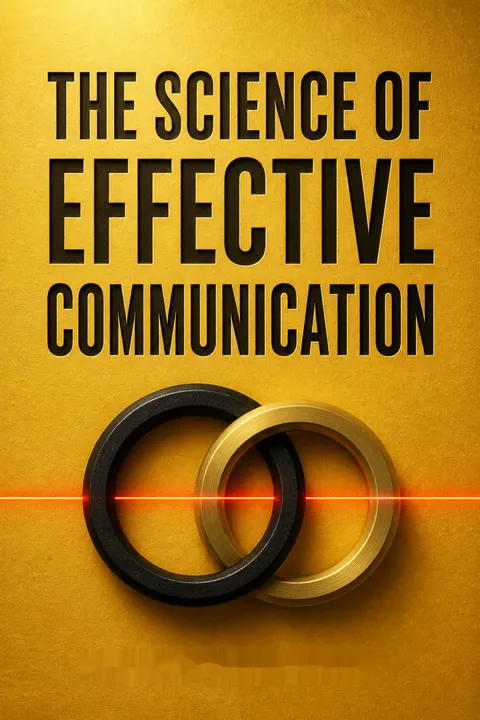
The Science of Effective Communication by Ian Tuhovsky receives mostly positive reviews. Readers appreciate its practical advice, clear writing style, and actionable tips for improving communication skills. Many find it helpful for enhancing social interactions, professional relationships, and self-confidence. The book covers topics like active listening, small talk, body language, and handling difficult conversations. Some readers consider it a modern, more relatable version of classic communication books. While a few critics find it basic or uncharismatic, most reviewers recommend it as a valuable resource for personal growth.
People Also Read








Glossary
listening positions
Ways of directing attentionThe book's term for different orientations a listener can take during a conversation. It contrasts critical with empathetic listening, reductive with expansive listening, and active with passive listening. These are not mutually exclusive categories: a person may, for example, listen actively while focusing empathetically on feelings and expansively on the speaker's full account.
Unconditional Positive Regard
Acceptance without required agreementA concept associated with psychologist Carl Rogers that the book applies to empathetic conversation. It means approaching another person with acceptance rather than judgment, while not requiring agreement with every action or tolerating threatening behavior. The aim is to create a receptive environment in which a person can express themselves and consider their own problems.
Outsider Syndrome
Feeling socially out of placeThe book's label for the common feeling of being different or excluded within a group. It describes a self-reinforcing pattern: someone feels like an outsider and withdraws, others interpret the distance as disinterest, and the separation becomes harder to change. The author recommends repeated, low-pressure contact as one way to interrupt that pattern.
FORD Method
Four conversation starting pointsA conversation prompt organized around Family, Occupation, Recreation, and Dreams. The book presents these topics as broad starting points for finding common ground, not as a fixed sequence of questions. Their value depends on responding naturally to what the other person says, avoiding an interview-like barrage, and changing topics if someone appears uncomfortable.
closeness-generating procedure
Questions that build connectionThe book's reference to Arthur Aron's study in which pairs of strangers answered personal questions designed to encourage connection. It contrasts those questions with ordinary small-talk prompts and reports that the pairs using more personal questions felt greater closeness. The practical lesson is to move gradually toward meaningful questions when rapport and comfort make them appropriate.
Maintenance Behavior (MB) Model
Practices that sustain relationshipsA model the book uses to describe behaviors that help maintain long-distance relationships. It includes assurances, openness, conflict management, shared activities, positivity, advice when wanted, and support from wider social networks. These practices help people remain involved in each other's lives despite physical distance, but the appropriate frequency and form of contact must be worked out between the people involved.
broken record technique
Calmly repeating a clear requestA complaint-handling method in which someone states the remedy they want, acknowledges the other person's response, and repeats the request calmly if it is not addressed. The book recommends keeping the wording clear and respectful, such as restating a request for a refund or a manager. The technique aims to maintain focus without raising the emotional temperature.
stockpiling
Dragging old grievances into conflictThe book's term for introducing past disputes during an argument about a current issue. This tactic can derail discussion by adding unresolved complaints that neither person was prepared to address. The recommended response is to return to the immediate problem, rather than follow each diversion, and to arrange a separate discussion if earlier issues also need attention.
FAQ
1. What is "The Science of Effective Communication" by Ian Tuhovsky about?
- Comprehensive guide to conversation: The book is a practical manual for improving social skills, small talk, charisma, and the ability to talk to anyone in various situations.
- Focus on actionable strategies: It provides step-by-step advice, exercises, and real-life examples to help readers develop effective communication habits.
- Covers a wide range of scenarios: Topics include listening, voice improvement, digital detox, empathy, handling negativity, persuasion, and more.
- Emphasis on self-development: The book encourages readers to reflect on their own habits and make conscious changes to become better communicators.
2. Why should I read "The Science of Effective Communication" by Ian Tuhovsky?
- Boosts personal and professional success: The book argues that strong communication skills are essential for career advancement, better relationships, and increased self-esteem.
- Addresses common communication challenges: It tackles issues like social anxiety, fear of judgment, feeling like an outsider, and handling difficult conversations.
- Evidence-based and practical: Tuhovsky combines psychological research with practical exercises, making the advice both credible and easy to implement.
- Applicable to everyone: Whether you’re introverted, extroverted, or somewhere in between, the book offers tools for all personality types and situations.
3. What are the key takeaways from "The Science of Effective Communication"?
- Listening is foundational: Active, empathetic, and expansive listening are crucial for meaningful conversations and building rapport.
- Self-awareness matters: Recognizing your own communication habits, fears, and triggers is the first step to improvement.
- Practical tools and frameworks: Methods like the FORD technique (Family, Occupation, Recreation, Dreams) help keep conversations alive and engaging.
- Ethical influence: The book teaches how to persuade and influence others respectfully, without manipulation or harm.
4. How does Ian Tuhovsky define and teach effective listening in "The Science of Effective Communication"?
- Different listening positions: The book explains critical vs. empathetic, reductive vs. expansive, and active vs. passive listening, and when to use each.
- Active listening is key: Tuhovsky emphasizes truly paying attention, summarizing, and asking questions rather than just waiting for your turn to speak.
- Practical exercises: Readers are encouraged to practice focusing on different “streams” of sound and to reflect on their listening habits.
- Troubleshooting conversations: If a conversation feels off, the book suggests evaluating your listening position and adjusting accordingly.
5. What is the FORD method in "The Science of Effective Communication" and how can it help keep conversations alive?
- FORD stands for Family, Occupation, Recreation, Dreams: These are universal topics that can be used to start or revive any conversation.
- Natural conversation flow: The method encourages moving from safe topics (family, occupation) to more personal ones (recreation, dreams) as rapport builds.
- Avoids awkward silences: By having these topics in mind, you’re less likely to run out of things to say.
- Encourages deeper connections: Asking about dreams and interests helps conversations become more meaningful and memorable.
6. How does "The Science of Effective Communication" by Ian Tuhovsky address overcoming fear of judgment and social anxiety?
- Build self-confidence: The book provides strategies for challenging negative self-talk and building confidence through skill development and self-acceptance.
- Shift focus outward: Tuhovsky suggests focusing on learning about others rather than worrying about how you’re perceived.
- Reframe rejection: The book teaches readers to interpret rejection in multiple ways, reducing its emotional impact.
- Authenticity over faking confidence: Research cited in the book shows that people can quickly sense real vs. fake confidence, so genuine self-acceptance is key.
7. What advice does Ian Tuhovsky give on using empathy in conversations in "The Science of Effective Communication"?
- Adopt an empathetic stance: Enter the other person’s frame of reference and focus on their feelings, not just facts.
- Show unconditional positive regard: Accept others without judgment, creating a safe space for open communication.
- Listen without interrupting: Allow people to “empty the tank” and avoid giving unsolicited advice unless asked.
- Handle shocking disclosures with care: Respond honestly but avoid making your own emotions the center of the conversation.
8. How does "The Science of Effective Communication" help readers handle negativity and difficult conversations?
- Identify negative habits: The book lists common negative behaviors (complaining, one-upping, excessive pessimism) and their impact on relationships.
- Promote positivity: Tuhovsky encourages starting conversations on a positive note and being mindful of your reputation.
- Conflict resolution skills: The book provides step-by-step advice for handling arguments, heated discussions, and making effective apologies.
- Know when to walk away: Readers are taught to recognize when a conversation is unproductive or harmful and how to exit gracefully.
9. What are some practical techniques from "The Science of Effective Communication" for improving your voice and nonverbal communication?
- Voice exercises: The book includes tips on enunciation, breathing from the diaphragm, varying pitch, and controlling intonation.
- Nonverbal cues: Tuhovsky highlights the importance of body language, facial expressions, and matching your nonverbal signals to your words.
- Sex differences and attraction: The book discusses how voice pitch and tone can influence perceptions of confidence and attractiveness.
- Practice and feedback: Readers are encouraged to record themselves, seek feedback, and consider voice coaching if needed.
10. How does "The Science of Effective Communication" by Ian Tuhovsky address digital communication and the importance of face-to-face interaction?
- Digital detox benefits: The book argues that excessive online communication can erode real-life social skills and increase loneliness.
- Face-to-face is richer: In-person conversations allow for better listening, nonverbal cues, and deeper connections.
- Practical suggestions: Tuhovsky recommends reducing unnecessary emails, using video calls over text, and making time for in-person meetings.
- Social media pitfalls: The book warns against comparing yourself to others online and encourages authentic, offline relationships.
11. What ethical guidelines for persuasion and influence does Ian Tuhovsky provide in "The Science of Effective Communication"?
- Respect others’ autonomy: Persuasion should never cross into manipulation or harm; always respect the other person’s right to choose.
- Be transparent and fair: Avoid playing people against each other or exploiting those at a disadvantage.
- Use social influence responsibly: Techniques like authority, likeability, reciprocity, and consensus should be used ethically.
- Lying and omissions: The book discusses when, if ever, it’s acceptable to lie, emphasizing honesty and the potential consequences of deception.
12. What are the best quotes from "The Science of Effective Communication" by Ian Tuhovsky and what do they mean?
- “Great conversation isn’t just about what you say, but when you say it.” – Emphasizes the importance of timing and listening, not just speaking.
- “If you start to view every conversation partner as a potential teacher, your social interactions will become much more enjoyable.” – Encourages curiosity and openness in every interaction.
- “Good communication, just like a good relationship, is rooted in authenticity.” – Stresses the value of being genuine over trying to impress or manipulate.
- “The golden rule here is that if in doubt, don’t keep talking.” – Reminds readers that sometimes silence or restraint is the best conversational strategy.
- “Self-development, combined with lots of practice, is enough to make most people into capable conversationalists.” – Reinforces the book’s core message that communication skills can be learned and improved by anyone.
About the Author
Other books by Ian Tuhovsky



Download PDF
Download EPUB
.epub digital book format is ideal for reading ebooks on phones, tablets, and e-readers.








