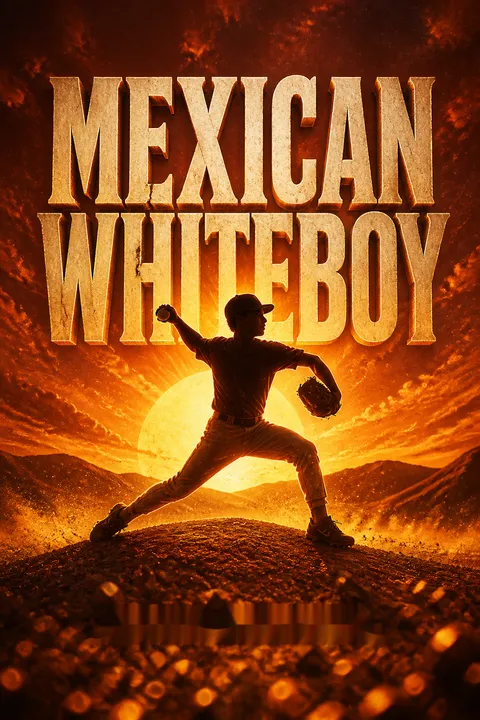


Plot Summary
A Summer Between Borders
Sixteen-year-old Danny Lopez arrives in National City to spend the summer with his cousin Sofia, leaving behind his private school and the white North County world where he already feels marked as Mexican. In National City, where his father Javier grew up, Danny feels too pale and too quiet to belong.
He has a private plan: save enough for a ticket to Ensenada and find the father who left three years earlier. At the cul-de-sac, Sofia introduces him to her friends, while Danny watches neighborhood boys play stickball and notices a light-skinned girl caring for a small child. He says little, digs his nails into his wrist, and studies the people around him as if belonging might be learned by observation.
Danny arrives with a destination, but his deeper problem is that he treats identity as something he can earn by changing his surroundings. National City seems to promise access to his father and Mexican roots, yet his silence and self-punishment follow him there. His baseball ability offers a more immediate language: unlike family jokes or Spanish, a pitch can be understood without translation. The summer begins as a search for a person, but it is also a test of whether Danny can inhabit a place without performing a version of himself.
The Bat Leaves His Hands
At the neighborhood home run derby, Danny first declines to swing, then sends three tennis balls over the Rodriguez house and beyond, stunning the boys who had dismissed him. Uno, the powerful neighborhood catcher and derby favorite, grows angry as Danny threatens his standing.
A wild pitch makes Danny dive away; the next jams him so badly that his bat flies from his hands and strikes Manny, Uno's developmentally disabled younger stepbrother. Manny's nose breaks, his lip splits, and a front tooth snaps. While the boys rush to help, Uno blames Danny and punches him hard enough to send him to the pavement. Sofia intervenes, and Liberty, the girl Danny noticed earlier, watches over him as he loses consciousness.
The derby turns athletic talent into public status, and that transformation unsettles Uno before he can admit why. Danny's silence makes him difficult to read, while his effortless power suddenly makes him a rival. Manny's injury is accidental, but the violence that follows is not: Uno converts fear for his brother into a demand for control. Danny's first public success therefore carries a cost. It wins him attention, but also exposes how quickly admiration and humiliation can become entangled in a community where reputation is constantly negotiated.
Two Fathers, Two Prices
Danny spends days recovering from stitches and hiding in Sofia's room. He remembers failing to make Leucadia Prep's baseball team because his pitches scattered under pressure, and he resents his mother Wendy for building a new life with Randy. When Wendy offers Danny and his sister Julia a summer in San Francisco with her boyfriend, Danny chooses to stay with Uncle Tommy's family; Julia goes with their mother.
Meanwhile, Uno's father, Senior, offers him a place in Oxnard if he can save five hundred dollars. Uno wants to leave his volatile home, where stepfather Ernesto's drunken scoldings and his mother's demands leave him feeling trapped. Unable to find work, Uno sees the derby winnings as his best chance to earn the deposit.
The boys' plans are both attempts to escape a family wound, but they imagine escape differently. Danny hopes that reaching Javier will restore a missing connection; Uno hopes money can purchase a clean start with Senior. Both plans depend on fathers who are physically absent from daily life, yet emotionally powerful enough to shape every decision. Their contrasting homes also complicate easy judgments about safety: Danny has material comfort but feels abandoned, while Uno's household is economically precarious and openly volatile.
The Fair's Fastest Arm
At the Del Mar Fair, Uncle Ray corners Uno and presses Danny to accuse him of causing the injury. Danny instead says the collision happened during the game, sparing Uno a confrontation with Ray. The choice surprises the neighborhood and gives Danny his first reason to speak up in National City.
At the fair, Danny learns the watched girl's name is Liberty and hears that she came from Rosarito to live near an American father who provides money but little contact. After drinking too much jungle juice, Danny is coaxed to the pitching booth. His first pitch registers eighty-five miles per hour; he follows with a curve and a fastball clocked at ninety-two. The crowd erupts, and Uno recognizes that Danny's arm can earn them money.
Danny's defense of Uno is not forgiveness so much as a refusal to let Ray's violence decide what happened. It gives him a small measure of agency after weeks of shrinking from attention. At the pitching booth, his talent becomes undeniable in public, but the event also foreshadows the pressure that will later disrupt his control. Liberty's story mirrors Danny's in reverse: each has a parent across a border, and each is trying to build a life in a language and place that do not yet feel fully theirs.
A Catcher Returns
Danny begins throwing daily at Las Palmas Park, the neglected field where Javier once played. Uno finds him there, tells him how he quit organized baseball after his father shamed him for crying over a broken nose, and asks to catch. Danny answers the story with a fastball that nearly injures Uno's hand; Uno accepts the hit as deserved, and the two begin working together.
Uno proposes traveling hustles: Danny will pitch, while Uno finds opponents and handles the bets. At Morse High, their first challenge is against Carmelo, a strong hitter. Danny's control collapses under pressure, Carmelo puts a pitch into play, and Uno loses the money they staked. Danny apologizes, but Uno leaves believing his plan for Oxnard may fail.
Their partnership begins not with easy trust but with an exchange of vulnerabilities and a test of boundaries. Uno admits that a father's contempt drove him from baseball; Danny answers through the very instrument that makes him valuable, the pitch. The failed bet then exposes the difference between talent and usable talent. Alone, Danny can place every ball; watched, he loses command. His failure is psychological rather than mechanical, which makes the problem harder to solve and gives the partnership its real purpose.
Power Under the Tracks
After the Morse High loss, Uno takes Danny to railroad tracks where he tests wishes by throwing rocks at a crossing sign. Danny hits the same spot five times while wishing to see his father in Mexico, and Uno explains that the train's force helps him imagine strength beyond his own. The two return to baseball with a different understanding of pressure.
At a rough field in Logan Heights, Danny faces Marzel, a hitter known for being dangerous when challenged. Uno reminds him to stop trying to force every pitch. Danny clears his mind and strikes Marzel out. When Marzel shoves Danny afterward, Uno knocks him down and gets Danny out of the field. The win gives them their first successful hustle and proves the pair can protect each other.
The railroad scene gives Danny a concrete way to interrupt his habit of monitoring himself. The train's force becomes a shared image of power that does not depend on ego or approval. The sign game also reveals their different hopes: Danny wants reunion, Uno wants relocation. On the field, the same idea helps Danny move from anxious control to practiced action. Uno's defense of Danny completes the shift from adversaries to teammates, though their bond remains shaped by risk and the unequal rewards they imagine.
Senior Sees the Hurt
Danny and Uno begin winning hustles across San Diego, and their earnings grow as Danny's pitches return to form. After one challenge in Balboa Park, the Padres-cap-wearing man who has watched Danny at several fields joins them for lunch with Senior. Senior recounts how he caught a young burglar entering his home, learned the boy was stealing because he feared becoming a father, and chose compassion over revenge.
He uses the story to challenge Uno's fixation on money and to argue that a person's actions have reasons beneath them. Then Senior recognizes the grief Danny carries about his missing father, even though Danny has not explained it. For the first time, an adult sees the pain Danny has kept hidden.
Senior's story does not erase the burglar's wrongdoing; it places the act inside a human circumstance and responds without pretending punishment is the only form of justice. That distinction matters to Uno, who has learned to treat money as both proof of worth and a route out. For Danny, Senior's insight is startling because it bypasses his silence. The scene suggests that being understood does not require perfect self-disclosure, though it may require another person to look past the behavior others see.
The Bet Turns Violent
Danny returns to Morse High with sharper control and strikes Carmelo out, prompting Carmelo to demand another round and recruit more money from his teammates. Danny wins again, but Uno sees the opponents moving toward the cash and warns Danny to run after the final pitch. Danny stays to help. Carmelo's group grabs the money and attacks them; Uno fights back while Danny is knocked down.
The Padres-cap man rushes onto the field, tackles several attackers, and gives the boys time to escape. On the bus, Uno admits he feared Danny would be badly hurt and gives him half the recovered money. His share brings him close to the amount Senior required, while Danny recognizes that Uno's future matters as much as his own.
The hustle has shifted from playful deception to a genuine threat, exposing the cost of treating other people's pride as a source of income. Danny's instinct to stay is loyalty, but it also ignores Uno's warning and puts them both in danger. The rescue is a practical consequence of the mysterious observer's presence, while the recovered cash makes Uno's departure feel achievable. Their bus ride afterward gives the money a different meaning: it is no longer merely a wager but evidence of shared effort.
A Green Lollipop
At a house party, Danny watches his friends trade personal truths and dares, including Uno's fierce devotion to Manny and Sofia's complicated feelings about her absent mother. When the group asks Danny about Liberty, she arrives before he can answer.
A dare sends them outside together, where Danny admits in English that he feels caught between his Mexican family and his white upbringing. Liberty cannot understand his words, just as he cannot understand her Spanish, but she offers him a green lollipop and leans briefly against his shoulder.
Later, when Danny and Uno leave, Liberty follows Danny and kisses him. He kisses her back. The moment gives Danny affection that does not depend on his baseball success or his ability to explain himself.
The party makes intimacy public and performative, then lets Danny and Liberty step outside that pressure. Their language barrier prevents the usual exchange of polished explanations, but it does not prevent care. The lollipop and brief touch become meaningful precisely because neither can translate the other into a familiar script. Danny's confession is still unheard, yet speaking it changes something for him. Their connection offers a fragile alternative to the belief that belonging requires fluency or sameness.
The Home Truths Arrive
Near the end of summer, Wendy calls from San Francisco and admits that the spacious life with Randy has left her lonely; she plans to return to San Diego with Julia. When Danny presses Sofia for the truth about Javier, Sofia tells him she believes he hit Wendy before the beach incident that led to his arrest. The news changes Danny's longing into fear that he may inherit his father's violence.
At the same time, Uno prepares to tell his mother that he will move to Oxnard, but she announces she is pregnant and hopes the baby will be Ernesto's first healthy son. Uno swallows his news and goes outside to handle chores. Both boys receive new information about family, but neither can yet make it fit into a simple plan.
The revelations complicate the boys' fantasies of family repair. Danny learns that the father he idealized may have hurt the mother he blamed, while Uno discovers that his mother is investing hope in a new child and a new version of the household. Neither truth cancels love, but each makes loyalty more difficult to navigate. The parallel is psychologically sharp: both boys have been treating departure as an answer, yet family obligations and buried histories travel with them.
Ray Repeats the Pattern
While riding with Uncle Ray, Danny watches a confrontation with a cyclist escalate after the man strikes Ray's side mirror. Ray drives into him, then joins Rico and Tim in beating him when he approaches the truck. Ray backs over the man's legs before speeding away. Danny sees his father's rage in Ray's face and cannot stop replaying the violence afterward.
When Ray later tells Uncle Tommy what happened, he admits he struck the man but leaves out the beating and the second pass of the truck. Tommy rebukes him for exposing Danny to the family's old habits. The incident forces Danny to confront not only what Javier may have done, but how violence has been normalized among the men around him.
Danny's fear is no longer an abstract inheritance. He has watched an adult convert a minor insult into overwhelming violence, then edit the story to make it bearable. Ray's partial confession shows how family loyalty can protect someone from consequences while also concealing the truth from those most affected. Danny's identification of Javier in Ray's face reveals the danger of confusing resemblance with destiny. The scene intensifies his need to decide what kind of person he will be.
Here I Come
After the attack, Danny returns to Las Palmas for another practice with Uno, but his thoughts about Javier make him distant. Uno chooses to stay on the field and keep catching rather than force Danny to explain himself. Later, he and Sofia talk at the unlit park, where Sofia wonders why childhood confidence fades and whether her good grades could lead somewhere beyond National City.
Uno encourages her to consider college, and she responds by turning their conversation into a playful ride down the slide. They kiss. Sofia has also told Uno that Danny does not know the whole story about his father, but asks him not to reveal anything. Their affection and trust deepen just as Danny approaches the truth he has been pursuing all summer.
Sofia's question about the future opens a space beyond the boys' usual measures of worth: money, toughness, and athletic distinction. Uno answers with encouragement rather than certainty, suggesting a gentler side of his ambition. Their kiss grows from recognition, not conquest. Meanwhile, Sofia's warning that Danny's family history remains incomplete gives the next encounter its emotional weight. The friends are becoming capable of imagining futures, even while they cannot control the facts that will shape them.
The Scout Was Watching
At Petco Park, Danny and Uno watch their first major league game, and Danny briefly imagines himself on the mound. When the familiar Padres-cap man appears selling hot dogs, Danny follows him backstage and learns he is not a scout. Javier asked him to watch over Danny while he was away.
The man explains that he and Javier became friends in prison after Javier defended him from an attack. He then confirms what Danny's family concealed: Javier never went to Mexico and remains incarcerated. Danny returns to his seat numb, then cuts his arm in the bathroom because he cannot feel the pain inside. Sofia finds him, stops the bleeding, and stays beside him until he sleeps.
The reveal collapses the story Danny has been telling himself through his letters: Javier was not freely choosing distance, and the imagined reunion in Ensenada was built on a lie. The scout's quiet watchfulness offers evidence that Javier remained concerned for his son, but cannot substitute for direct contact. Danny's self-injury makes emotional numbness physically legible; Sofia's presence interrupts the act without resolving the grief. He is left with truth, care, and no easy explanation for either.
Kyle Gets the Last Hit
For their final hustle, Uno brings Danny to Leucadia Prep and challenges Kyle Sorenson, the celebrated hitter Danny once studied from outside the fence. Danny pitches with calm precision, earning strikes while Kyle fouls off pitch after pitch. When Kyle finally makes contact, Uno doubles the bet, and Danny keeps throwing. Kyle drives the next fastball into the field, then crushes a curve over the fence.
Barker takes Uno's money and insults him. Danny steps in and punches Barker, choosing action rather than retreat, then leaves with Uno before the confrontation grows. Kyle tells Danny he has real ability and that Coach Sullivan may call him. Danny loses the cash, but no longer treats baseball as the only proof that he matters.
Kyle's survival at the plate preserves the complexity of the climax: Danny can be exceptional without controlling the result. The home run costs the pair money, while Barker's racism redirects the scene from athletic judgment to a test of solidarity. Danny's punch is not simply a triumph over prejudice; it echoes the violence he fears in his family. The important difference is his awareness that he is choosing in the moment. Baseball remains a source of joy, but it can no longer carry the whole burden of his identity.
Sunrise Over the Plant
On Danny's last night in National City, he shares dinner with Uno, Sofia, and Liberty. He insists that his choice to fight Barker does not make him Uncle Ray; he is trying to act as himself. Sofia reveals she will spend a semester with Wendy and Julia, while Uno explains that Senior has offered him roofing work in Oxnard despite his shortfall in savings.
Liberty kisses Danny goodbye, and he returns the kiss. Later, Uno takes Danny to the train tracks and reveals he has found Javier's prison and visiting hours. Danny decides to go the next morning, though the visit itself remains ahead of the story. Instead of leaving the tracks, the friends stay to watch dawn brighten the recycling plant, then prepare for one final bus ride.
The ending offers movement without pretending that every wound has closed. Danny chooses to visit Javier, but the book stops before reconciliation can be guaranteed. Uno's path also remains labor rather than miracle: a roof job may help him leave, but it does not erase the conditions he hopes to escape. The sunrise makes the industrial landscape newly visible without making it beautiful by conventional standards. The boys can value where they are while still wanting to go elsewhere.
Analysis
Mexican WhiteBoy follows two boys who confuse escape with transformation, then gradually learn that leaving and changing are different tasks. Danny believes that finding Javier will settle his identity, while Uno believes that earning five hundred dollars will move him into a new life. Their goals are concrete, but neither boy fully understands the family histories beneath them. The novel makes that gap painful through withheld information: Danny idealizes a father who is absent for reasons he cannot imagine, while Uno hears Senior's advice without knowing how to make it practical.
Baseball gives Danny an unusually clear structure. The mound has rules, a target, and an immediate result. Yet his control disappears when the game becomes a judgment of his worth. His improvement begins when he stops treating every pitch as a referendum on whether he deserves attention. Uno, meanwhile, turns a neighborhood game into a livelihood, but the hustles expose how easily play becomes exploitation and how quickly pride can turn dangerous. Their partnership works because each supplies what the other lacks: Danny's arm and Uno's social nerve, followed by a deeper willingness to protect one another.
Race shapes who is watched, who is presumed capable, and who is allowed to feel at home. Danny experiences being too brown at school and not Mexican enough among relatives; Liberty faces language and migration barriers from the opposite direction. The novel refuses to make identity a simple matter of appearance or ancestry. It emerges through acts of care, knowledge, and choice, including Danny's decision to defend Uno and his growing insistence that he is not destined to repeat his father's violence.
The ending offers neither a repaired family nor a guaranteed baseball future. Danny plans to visit Javier, and Uno has a possible route to Oxnard, but both outcomes remain uncertain. What changes is their capacity to imagine a future without mistaking a wish for a promise. The sunrise over the recycling plant does not erase National City's poverty. It lets the boys see their home, and each other, with a little more room for possibility.
Review Summary
Mexican WhiteBoy is a compelling coming-of-age novel about Danny, a biracial teen struggling with identity and baseball. Readers praise de la Peña's authentic portrayal of racial and cultural conflicts, complex characters, and realistic dialogue. The book explores themes of family, friendship, and self-discovery through Danny's summer with his Mexican relatives. While some found the baseball focus excessive, many appreciated the emotional depth and relatable struggles. The novel received mostly positive reviews for its engaging storytelling and honest examination of identity issues.
People Also Read

Characters
Danny Lopez
The guarded young pitcherDanny is sixteen, half Mexican and half white, academically gifted, and physically awkward off the baseball field. He measures himself against a missing father and feels out of place in both his private school and his Mexican family. His extraordinary arm gives him a rare sense of command, but pressure makes his pitches scatter and exposes how tightly he monitors himself. Danny's quiet is not emptiness; it is a defense against shame, confusion, and the fear that speaking will reveal what he does not know. Baseball, family, and first love each offer him different ways to be seen, while his central struggle is learning that he need not become a replica of anyone else.
Uno
The restless neighborhood catcherUno is a strong, charismatic teenager whose humor and swagger help him command attention in National City. He is devoted to Manny and drawn to baseball, but anger and repeated trouble threaten the future he wants. Senior's offer of a home in Oxnard gives him a concrete goal, and the need to raise money makes him an inventive hustler. His friendship with Danny grows from rivalry into a working partnership built on risk, loyalty, and mutual recognition. Uno's confidence often masks uncertainty about whether he can change, or whether the life around him has already chosen his limits.
Sofia
Danny's fierce cousinSofia is Danny's cousin and his first guide to National City's social world. She is funny, protective, and comfortable challenging the boys around her, but her bravado does not mean she has a settled future. Her loyalty to Danny leads her to defend him and help him navigate a family he loves but does not fully understand. Sofia is also close to Uno, with whom she shares a history of teasing and attraction. Beneath her confident performance, she wonders what possibilities exist beyond the neighborhood and whether she can claim them for herself.
Liberty
The quiet Rosarito newcomerLiberty is a Mexican teenager newly arrived from Rosarito, living in the United States with limited support from her American father. She speaks Spanish more comfortably than English and is often discussed by others before they know her. Her reserve can be mistaken for mystery, but she is observant and willing to make the first move when she cares about someone. Danny is drawn to her partly because she seems to share his distance from a parent and his uncertain place between cultures. Her presence makes communication less about fluency and more about attention.
Senior
Uno's reformed fatherSenior is Uno's biological father, a former gang member who now works for the city and has built a new household in Oxnard. He is polished, religious, and fond of turning experience into lessons, sometimes with more certainty than tact. His monthly visits matter deeply to Uno, though they also expose how little the two know about one another's daily lives. Senior wants to offer his son a different future, but his long speeches and demands for money can make love feel like a test. His complicated past gives him hard-earned insight into the possibility of change.
Javier Lopez
Danny's absent fatherJavier is Danny's Mexican father, once a baseball player and a quiet presence in his son's childhood. His departure leaves Danny with fragments: memories of walks, hawks, baseball lessons, and an unfinished explanation. Danny's family rarely speaks plainly about him, so the boy fills the silence with hopes and assumptions. Javier's influence is most visible in Danny's longing to resemble him and in the fear that he may share his worst traits. To Danny, his father is at once an intimate memory and an unanswered question.
Wendy
Danny's searching motherWendy is Danny and Julia's mother. After her marriage to Javier ends, she searches for stability through new relationships, including Randy, and tries to offer her children choices she believes will help them. Her efforts can make Danny feel displaced, especially when she moves quickly toward a new life without understanding his attachment to his father. Wendy is not simply careless; she is a woman trying to recover a future while carrying pain she has not fully explained to her children. Her love is real, even when her decisions leave them confused.
Manny
Uno's beloved stepbrotherManny is Uno's developmentally disabled younger stepbrother. He cheers at the neighborhood derby and delights in Uno's antics, offering affection without concern for reputation or status. His injury during the game triggers the fight between Uno and Danny, but Manny himself does not blame Danny. Uno's protectiveness toward him reveals a tenderness often hidden by his swagger.
Tommy
Danny's teasing uncleTommy is Danny's uncle and Sofia's father. He gives Danny a place to stay and uses jokes to ease tension in the household. He is affectionate but sometimes avoids difficult truths, particularly when family loyalty conflicts with honesty. His bond with his brothers carries both warmth and frustration.
Ray
The volatile protective uncleRay is Danny's uncle and Tommy's brother, a construction worker whose fierce loyalty can tip quickly into aggression. He wants to protect Danny and expects family members to stand up for one another, but his own impulsiveness makes that protection dangerous. Danny recognizes similarities between Ray and Javier, which complicates his admiration and fear.
Loretta
Uno's conflicted motherLoretta is Uno's mother. She manages a strained household and often tells Uno to obey Ernesto rather than escalate conflict. Her divided loyalties leave Uno feeling overlooked, even though she cares for him. She is practical under pressure, but her attention to immediate household needs makes it hard for her to hear his plans.
Ernesto
Uno's controlling stepfatherErnesto is Uno's stepfather and the adult who sets many of the household rules. When drinking, he berates Uno over chores and insists on his authority. His harshness contributes to Uno's desire to leave, while his role as provider gives him power in a home with few resources.
Julia
Danny's younger sisterJulia is Danny's sister, a dancer who is more willing than he is to follow Wendy into a new life. She is sensitive to the family changes around her, and Danny's protectiveness shows most clearly when he reaches for her hand during a painful announcement. Her choices remind Danny that siblings can respond to the same upheaval differently.
Carmelo
The confident high school hitterCarmelo plays baseball at Morse High and has enough power to make Danny's first paid challenge look easy. He enjoys the confidence and attention that come with being a strong hitter. When the hustles turn against him, his pride draws teammates into a conflict that becomes more dangerous than a game.
The Padres-cap man
The watchful baseball workerThe quiet man in a Padres cap appears around Danny's practices and challenges, watching without explaining himself. His presence unsettles Danny and intrigues Uno, who suspects he may be a scout. He works at Petco Park and knows more about Danny's family than the boys initially realize.
Kyle Sorenson
Leucadia's celebrated hitterKyle is Leucadia Prep's star baseball player, a powerful hitter surrounded by coaches, teammates, and professional attention. Danny studies him from the outside, treating his success as a model for what greatness looks like. Kyle's confidence comes from years of public praise, but he remains a formidable player rather than a symbol Danny can simply surpass.
Coach Sullivan
The demanding baseball coachCoach Sullivan evaluates Danny during tryouts and rejects him because his fastball lacks control. He represents the institutional standard Danny wants to meet, as well as the authority that once kept him outside the team.
Cecilia
Tommy's steady wifeCecilia is Tommy's wife and a warm presence in the household where Danny stays. Her affection for Tommy and care for the family help make the apartment feel lived in rather than temporary.
Carmen
Sofia's outspoken friendCarmen is one of Sofia's closest friends, quick with jokes and willing to bring Danny into group outings. She helps connect the neighborhood's social circle and treats its teasing as a form of welcome.
Chico
Uno's hustling friendChico is one of Uno's friends and a regular at the derbies and neighborhood gatherings. He helps organize bets and rides, joining the joking that keeps the group competitive and close.
Raul
The joking neighborhood playerRaul plays in the derbies and moves easily among the neighborhood boys. His humor often punctures boasts, while his willingness to back a bet shows how quickly the group's teasing turns into real stakes.
Barker
The racist Leucadia teammateBarker is a Leucadia player whose racist insults expose the prejudice beneath the school's polished surface. His taunts make Danny's final decision to defend Uno immediate and personal.
Plot Devices
Danny's pitching
Talent under pressureDanny's exceptional fastball gives him a way to be noticed, but his control vanishes when he feels watched or judged. The contrast between solo practice and public performance drives his early failure and the hustles with Uno. Their work teaches him to clear his mind rather than force every pitch. Baseball is not only a career hope; it is the arena where Danny tests whether ability can survive scrutiny without becoming his only source of worth.
Danny's letters
A father imagined at distanceDanny writes to Javier about baseball, Liberty, and the life he hopes to share with him. Because Javier does not answer, the letters become less a conversation than a record of Danny's assumptions and wishes. They show how he turns silence into a story that feels safer than uncertainty. The eventual truth about Javier changes the meaning of the letters, but does not make Danny's longing false.
The railroad sign game
Wishes made physicalUno throws rocks at a crossing sign and treats successful hits as evidence that a wish may come true. He uses the ritual to imagine leaving National City, while Danny aims at seeing his father. The game turns vague hope into a visible act of concentration, and Danny's repeated accuracy offers an early image of the control he struggles to find on a baseball mound. The sign cannot guarantee the future, but it lets the boys speak their desires aloud.
The train beneath the bridge
Borrowed strengthUno brings Danny beneath the railroad bridge as a train passes overhead. He imagines its force as something he can carry into a fight, while Danny absorbs the same sensation as a way to quiet his own thoughts. The train becomes a shared physical metaphor for power larger than individual fear. Danny later uses the memory to pitch without overthinking, while the story leaves open whether such power is spiritual, psychological, or simply the force of a train felt through wood and bone.
FAQ
Synopsis & Basic Details
What is Mexican WhiteBoy about?
- Identity and Belonging: The novel follows sixteen-year-old Danny Lopez, who feels caught between his white mother's world in affluent Leucadia and his Mexican father's family in working-class National City. Spending the summer with his cousin Sofia, Danny grapples with his mixed heritage, inability to speak Spanish, and the mysterious absence of his father.
- Baseball as Escape: Danny, a gifted but wild pitcher, finds solace and self-expression on the baseball field. He forms an unlikely bond with local kid Uno, and they team up to hustle other players, using Danny's talent to earn money, which becomes a vehicle for their individual dreams of escape and self-discovery.
- Uncovering Family Secrets: As the summer progresses, Danny confronts painful truths about his family, particularly the real reason for his father's absence. His journey is one of navigating complex relationships, challenging his own perceptions, and ultimately beginning to reconcile his dual identity and find his place.
Why should I read Mexican WhiteBoy?
- Deep Identity Exploration: The book offers a raw and honest look at the complexities of mixed-race identity, particularly the feeling of being "not enough" for either culture, a theme explored through Danny's internal struggles and external interactions.
- Authentic Character Voices: Matt de la Peña creates compelling, multi-layered characters like Danny and Uno, whose distinct voices, struggles, and bond feel incredibly real, drawing readers into their world and emotional journeys.
- Powerful Thematic Resonance: Beyond identity, the novel tackles themes of poverty, family loyalty, masculinity, communication barriers, and the search for self-worth, all woven together through vivid prose and the unifying metaphor of baseball.
What is the background of Mexican WhiteBoy?
- Setting Contrast: The story is primarily set in National City, a predominantly Mexican-American working-class community near the U.S.-Mexico border, starkly contrasting with the affluent, mostly white environment of Leucadia where Danny lives and attends private school. This geographical and cultural divide is central to Danny's internal conflict.
- Author's Experience: Matt de la Peña draws on his own background as a Mexican-American growing up in a working-class area and his experience as a college basketball player, lending authenticity to the cultural dynamics, sports scenes, and themes of navigating different social worlds.
- Focus on Marginalization: The narrative implicitly touches upon the socio-economic realities and marginalization faced by communities like National City, highlighting issues of limited opportunity, systemic barriers, and the struggle for dignity and respect, as seen through characters like Uno and his family.
What are the most memorable quotes in Mexican WhiteBoy?
- "I'm a white boy among Mexicans, and a Mexican among white boys.": This internal thought of Danny's encapsulates his central identity crisis, highlighting the feeling of being an outsider in both worlds he inhabits and the core conflict driving his summer journey.
- "It ain't about you no more... It's about your right arm, man. Your talent.": Uno's advice to Danny during a hustle, urging him to get out of his own head and let his natural ability take over, becomes a metaphor for Danny learning to trust himself and his inherent worth beyond external validation or internal anxieties.
- "You got a piece of God in you, too, son. I can feel it... you got the biggest piece I seen in forever.": Senior's unexpected words to Danny offer profound validation and a sense of inherent value, cutting through Danny's self-doubt and connecting his personal struggle to something larger and spiritual.
What writing style, narrative choices, and literary techniques does Matt de la Peña use?
- First-Person Perspective (Alternating): The novel primarily uses a close third-person perspective that often feels like first-person, deeply embedding the reader in Danny's internal thoughts and feelings. It occasionally shifts to Uno's perspective, offering contrasting viewpoints and enriching the narrative's emotional depth.
- Vivid, Sensory Language: De la Peña employs rich descriptions that capture the sights, sounds, and smells of National City and the intensity of baseball, making the setting and action feel immediate and authentic ("smell of copper" from blood, "muted gunshot sound" of a hit ball, "ratty tentacles of yellow material" on a rug).
- Symbolism and Metaphor: The author extensively uses symbolism (baseball, the train, the recycling plant, the hawk, the act of digging) and metaphors (pitching as control, the mound as a throne, money as an illusion) to explore complex themes of identity, power, and self-worth beneath the surface plot.
Hidden Details & Subtle Connections
What are some minor details that add significant meaning?
- Danny's Digging Habit: Danny's unconscious habit of digging his fingernails into his arm, often until he draws blood, is a subtle physical manifestation of his internal pain, anxiety, and need to feel "real" when overwhelmed by his identity struggles or emotional numbness ("digging nails into forearm," "digs into his arm some more until Uncle Ray notices").
- The Padres Scout's Presence: The recurring appearance of the Mexican man in the Padres cap, initially perceived by Danny and Uno as a baseball scout, is a subtle thread that foreshadows a deeper connection to Danny's past and culminates in a significant revelation about his father's true location and circumstances.
- The Recycling Plant: The giant recycling plant across from Carmen's apartment, initially described as an "ugly water tower" or "mechanical giant," becomes a symbol of transformation and finding beauty or meaning in unexpected places, particularly during the final sunrise scene with Uno.
What are some subtle foreshadowing and callbacks?
- Uncle Ray's Temper Echoes Dad: Uncle Ray's volatile temper and history of violence, noted by Sofia and witnessed by Danny during the incident with Uno and later the hit-and-run, subtly foreshadow the darker aspects of Danny's father's past and the potential for inherited traits ("The bulging veins in his forehead are the same veins he used to see in his dad's forehead. The same crazed eyes.").
- The Hawk Motif: Danny's memory of his dad pointing out hawks and his recurring dream about a hawk family subtly foreshadow his father's eventual reveal as being confined (like a caged bird) and highlights Danny's deep-seated longing for his paternal family unit.
- Uno's Baseball Injury Story: Uno's recounting of his nose-breaking injury during Little League and his father's harsh reaction subtly foreshadows the potential for violence and emotional pain within family dynamics, mirroring some of the later revelations about Danny's own father.
What are some unexpected character connections?
- The Padres Scout and Danny's Father: The most significant unexpected connection is the reveal that the recurring Padres scout is not a scout at all, but a former fellow inmate of Danny's father who promised to look out for Danny, linking Danny's present life in National City directly to his father's hidden past in prison.
- Uno and Danny's Shared Family Pain: Despite their different backgrounds, Uno and Danny are connected by the pain of absent or troubled fathers and complex family dynamics (Uno's biological dad vs. stepdad, Danny's absent/imprisoned dad), creating a foundation for their bond and mutual understanding.
- Liberty's Parallel Journey: Liberty's story of coming from Mexico to live in the US, sponsored by her absent white father, mirrors Danny's mixed heritage and search for belonging, creating a subtle parallel between their experiences despite their language barrier.
Who are the most significant supporting characters?
- Uno: Uno is arguably a co-protagonist, driving much of the plot through the hustles and providing a crucial counterpoint and support system for Danny's internal journey. His own struggles with identity, family, and ambition are central to the narrative.
- Sofia: Danny's cousin Sofia serves as his primary link to the National City community and his Mexican heritage. She is fiercely protective, understanding, and acts as an emotional anchor and translator (both literally and figuratively) for Danny.
- Uncle Ray: Uncle Ray embodies the complexities of the Lopez family's history and the potential for both fierce loyalty and destructive behavior. His actions and words, particularly the hit-and-run and the revelation about Danny's father, significantly impact Danny's understanding of his family and himself.
Psychological, Emotional, & Relational Analysis
What are some unspoken motivations of the characters?
- Danny's Silence: Danny's decision to speak as little as possible is initially a reaction to feeling like an outsider and a way to cope with his emotional pain and confusion after his father left ("He made a pact with himself. No more words."). It's an unspoken attempt to control his environment and perhaps punish his mother.
- Uno's Drive to Leave: Uno's intense desire to earn money and move to Oxnard with his biological father is driven by a deep need to escape his difficult home life with his stepdad Ernesto and prove his worth, both to himself and his father ("He's gonna move up to Oxnard. With his old man. He's gonna figure out a way to get that money.").
- Wendy's Search for "All Better": Danny's mother's series of relationships with men, culminating in her move to San Francisco with Randy, is motivated by an unspoken, perhaps unconscious, search for external validation and a partner who can "make it all better" after the trauma of her relationship with Danny's father.
What psychological complexities do the characters exhibit?
- Danny's Identity Dissociation: Danny experiences a form of dissociation regarding his identity, feeling like a "fake Mexican" and struggling to reconcile his two halves. This manifests in physical self-harm and a feeling of being "stuck" or numb when overwhelmed ("He's Mexican, because his family's Mexican, but he's not really Mexican. His skin is dark... but his insides are as pale as the cream she mixes in.").
- Uno's Performance vs. Self: Uno projects an image of confidence and swagger ("OG swagger," "main attraction") but internally grapples with insecurity, particularly regarding his mixed race ("only black kid in the neighborhood"), his intelligence ("wonders if he has a learning disability"), and his worthiness of his father's love and offer.
- Intergenerational Trauma: The novel subtly explores how trauma and difficult experiences (like imprisonment, violence, abandonment) can impact subsequent generations, influencing behavior and relationships, as seen in the parallels between Danny's father, Uncle Ray, and potentially Danny himself.
What are the major emotional turning points?
- The Home Run Derby Fight: The fight between Uno and Danny after the home run derby is a pivotal emotional turning point, forcing their initial rivalry into a physical confrontation that ultimately leads to understanding and the formation of their bond.
- Overhearing Sofia and Uncle Tommy: Danny overhearing the conversation about his father's violence towards his mother is a devastating emotional turning point, shattering his idealized image of his dad and forcing him to confront a painful family secret that explains much of his past.
- The Padres Game Revelation: The encounter with the "scout" at the Padres game and the revelation that Danny's father is in prison is the climax of Danny's emotional journey regarding his dad, replacing years of hopeful longing with a stark, painful truth that forces him to re-evaluate everything he thought he knew.
How do relationship dynamics evolve?
- Danny and Uno's Rivalry to Brotherhood: Their relationship transforms from initial rivalry and conflict (the fight) to a deep bond of mutual respect, support, and almost brotherhood, forged through shared experiences, hustles, and vulnerability (Uno's story, Danny's pitching struggles, the fight at Morse High).
- Danny's Perception of His Father: Danny's relationship with his absent father evolves from idealized longing and hope for reconnection (the letters) to confusion and pain upon learning the truth about his violence and imprisonment, culminating in a complex mix of emotions as he prepares to visit him.
- Danny's Connection with Sofia: Sofia acts as a constant, supportive presence, bridging the gap between Danny and his Mexican family. Their relationship deepens as she helps him navigate the community, shares family secrets, and provides emotional support during his most difficult moments.
Interpretation & Debate
Which parts of the story remain ambiguous or open-ended?
- The Future of Danny's Baseball Career: While Danny's talent is undeniable and he gains confidence, the novel leaves his future in professional baseball open-ended. The encounter with Kyle and Coach Sullivan suggests potential, but his return to Leucadia and the focus on his personal growth leave the ultimate trajectory of his baseball dreams uncertain.
- The Depth of Liberty and Danny's Connection: Due to the language barrier, the true depth and nature of Danny and Liberty's connection remain somewhat ambiguous. Their interactions are filled with unspoken understanding and attraction, but the limitations of their communication leave their potential relationship open to interpretation regarding its future viability.
- The Impact of the Prison Visit: The novel ends just as Danny is about to visit his father in prison. The outcome of this meeting and its long-term impact on their relationship and Danny's healing process are left entirely to the reader's imagination.
What are some debatable, controversial scenes or moments in Mexican WhiteBoy?
- Uncle Ray's Violent Actions: Uncle Ray's involvement in the hit-and-run incident is a controversial moment, highlighting the presence of violence and questionable morality within the family structure. It sparks debate about family loyalty, justice, and the cycle of violence.
- The Revelation of Danny's Father's Violence: The reveal that Danny's father hit his mother is a difficult and potentially controversial truth, challenging the reader's perception of the absent father figure and raising questions about domestic violence and its impact on families.
- Barker's Racist Remarks: Barker's overtly racist comments towards Danny and Uno during the final hustle are controversial and confrontational, forcing a direct engagement with prejudice and sparking the physical altercation that follows.
Mexican WhiteBoy Ending Explained: How It Ends & What It Means
- The Truth About Dad: The ending reveals that Danny's father is not in Mexico but has been in prison for the past three years, a truth guarded by his family. The recurring "scout" is a former inmate who promised to watch over Danny, connecting Danny's life in National City directly to his father's incarceration.
- Acceptance and Moving Forward: Danny processes the painful truth about his father's past (violence towards his mother, imprisonment) and begins to accept the complexity of his family and his own identity. He decides to visit his father in prison, signifying a step towards confronting the past and seeking understanding rather than clinging to an idealized image.
- Finding Self-Worth: The final scenes emphasize Danny's internal shift. He finds strength and self-worth not just in baseball talent, but in standing up for himself and others (punching Barker), connecting with friends (Uno, Sofia, Liberty), and accepting his multifaceted identity. The sunrise scene with Uno symbolizes a new perspective and hope for the future, embracing the beauty and complexity of his reality.
Download PDF
Download EPUB
.epub digital book format is ideal for reading ebooks on phones, tablets, and e-readers.








