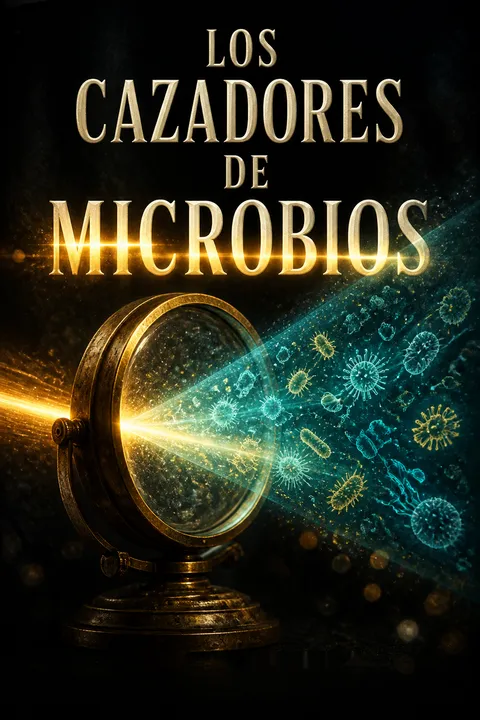


Key Takeaways
Make unseen worlds visible before deciding what they mean
A lens changed reality. Antony van Leeuwenhoek, a Delft shopkeeper with no university education, spent years grinding tiny lenses finer than those available elsewhere. He aimed them at whatever caught his eye, from insects to teeth, and eventually found living organisms in a drop of water. He checked his observations repeatedly, knowing that a dirty lens or an eager observer could invent a discovery. His descriptions astonished the Royal Society, which initially doubted his reports until its members replicated his work.
Curiosity needed discipline. Leeuwenhoek saw microbes in mouths and water but did not claim they caused disease. Finding an organism in a sick body, he understood, was not the same as proving it caused the illness. He kept most of his lens-making methods to himself and never trained a successor, but his careful observing opened a world that later investigators could study.
What's striking is that better instruments do not simply add detail. They can reorganize what people consider real, and therefore what questions seem worth asking. Leeuwenhoek's restraint matters as much as his discovery: he observed microbes without forcing them into a medical explanation he could not support. Modern imaging technologies create a similar temptation to mistake visibility for understanding. A picture may reveal a pattern, but causal claims still require independent tests. His example joins curiosity to epistemic modesty: look closely, repeat the observation, and be precise about what it does not yet establish.
Make explanations earn belief through controls and repeatable tests
Life needed an explanation. In the eighteenth century, many educated people believed that small organisms could appear spontaneously in broth or decay. Lazzaro Spallanzani tested the claim with flasks of seed-and-water mixtures. He boiled some briefly, others for an hour, and sealed some by melting their glass necks. Organisms appeared in corked flasks, where contamination could enter, but not in the sealed flasks boiled long enough. The result challenged the popular idea of spontaneous generation, meaning life arising from nonliving matter.
Controls exposed loopholes. Critics argued that heat had destroyed some necessary force or altered the air. Louis Pasteur later used flasks with curved necks: air could enter, while dust and its microbes settled in the bend. The broth stayed clear until it contacted the trapped dust. The sequence illustrates why an experiment must rule out rival explanations, not merely produce a result that fits a favored one.
These experiments anticipate a central principle of modern experimental design: a useful comparison changes one relevant condition while holding others steady. Spallanzani's sealed and corked flasks made contamination visible as a competing explanation; Pasteur's curved neck improved the test by allowing air without letting dust reach the broth. The episode also cautions against treating a celebrated result as final. Critics identified a genuine concern about heating, and later work showed that some microbes withstand boiling. Strong evidence is not evidence without limits. It is a conclusion whose boundaries are tested and stated.
Separate a disease's agent from coincidence with pure cultures
Koch made causation testable. Robert Koch, a country doctor working with a modest microscope, studied anthrax in dead cattle and sheep. He found rod-shaped microbes in diseased blood, then showed that they multiplied in a mouse and could transmit the same disease to another animal. He also observed that the bacteria could form durable spores, helping explain how anthrax persisted in fields.
Isolation sharpened the proof. Koch developed ways to grow one microbial type apart from others. A pure culture is a growth containing a single kind of microorganism, rather than a mixture. On solid surfaces such as potato or gelatin, microbes stayed where they landed and formed distinct colonies. Koch used these methods to identify the tuberculosis bacterium, which grew slowly on a specially prepared blood-serum jelly. The methods helped distinguish a likely cause from an organism merely present during illness.
Koch's most enduring contribution here is methodological, not just a list of microbes. Isolating an organism makes it possible to test whether that organism can reproduce a disease, instead of assuming that presence equals cause. This resembles causal inference in other fields, where researchers try to separate a suspected factor from the many conditions traveling alongside it. The logic is powerful, but biological causation can still be conditional: the same exposure may not affect every host in the same way. The book's strongest cases combine isolation, transmission, and observation of the resulting illness rather than relying on any single clue.
Trace the route of infection, not just the microbe
A pathogen needs a pathway. Theobald Smith investigated Texas fever after cattlemen suspected ticks. He compared fields with southern cattle, cattle whose ticks had been removed, and ticks without the southern cattle. Northern cattle became ill where ticks were present, even without sick southern animals. Smith traced the transmission to young ticks, whose mothers had acquired the disease organism. His findings explained why fields became dangerous only after a delay.
Maps and experiments converged. David Bruce showed that tsetse flies transmitted nagana in animals and sleeping sickness in people. Ronald Ross found malaria parasites developing inside mosquitoes, and Battista Grassi showed that a particular mosquito transmitted human malaria. Walter Reed's team established that mosquitoes, not contaminated clothing, carried yellow fever. Together, these episodes shift attention from identifying a germ to discovering how it travels between hosts.
The transmission route can be as important as the organism itself because it reveals where prevention can intervene. Smith's field comparisons and Grassi's mapping of malaria show how ecological patterns generate testable hypotheses, while Reed's work turns that logic toward public health. This is a useful model for problems beyond infection: a harmful outcome may depend on a chain of contacts, environments, and carriers, not a single culprit. Yet a map can suggest a route without proving it. The investigators' strongest conclusions came when geography was paired with controlled exposure or direct observation of transmission.
Turn microbial knowledge into prevention, then verify the results
Practical problems opened doors. Pasteur studied fermentation after a beet-sugar distiller asked why some vats produced alcohol while others turned sour. He connected yeast with alcohol production and other microbes with spoilage. To protect wine, he found that gently heating it after fermentation could prevent unwanted organisms from ruining it. This process became known as pasteurization: heating a liquid to reduce harmful or spoilage microbes without boiling it.
A cure requires more than confidence. Pasteur also helped rescue France's silkworm industry, though his first method for selecting healthy eggs failed because he had mistaken a sign of disease for its full cause. He revised his approach after further experiments. Later, he weakened disease-causing organisms to make vaccines, including against chicken cholera, anthrax, and rabies. The book celebrates these advances but also records failed or inconsistent anthrax vaccinations, a reminder that a striking demonstration is not a guarantee of reliable production.
Pasteur's work shows how scientific questions often become tractable when tied to a practical failure: spoiled wine, sick silkworms, or dying livestock. That application can draw funding and attention, while producing knowledge useful beyond the original problem. The silkworm episode is especially valuable because the initial mistake did not end the inquiry; it revealed that a visible marker and a causal agent are not interchangeable. The tension is that urgency encourages early deployment. Practical value is real, but claims about a vaccine or process should be checked across conditions, especially when production errors can turn a protective intervention into a hazard.
Target the poison when the microbe is not the whole threat
Some microbes kill at a distance. Frederick Loeffler found diphtheria bacteria concentrated in the throat, while the illness damaged the rest of the body. He proposed that the bacteria released a poison. Emile Roux tested this by growing the bacteria in broth, filtering out the organisms, and injecting the remaining liquid into animals. The animals developed symptoms similar to those caused by the living bacteria. The filtered poison was called a toxin.
Blood supplied a countermeasure. Emil Behring found that serum from animals made immune to diphtheria could neutralize the toxin. An antitoxin is a substance in immune serum that blocks a specific toxin's effects. Behring's work led to treatment of sick children, while Roux helped produce serum from horses at a larger scale. The book also notes that the treatment was not a perfect cure and that early evidence had limitations, including the difficulty of comparing outcomes across outbreaks.
Separating the microbe from its toxin changes the therapeutic question. Instead of asking only how to kill the organism, investigators can ask how to interrupt the damage it causes. This distinction remains useful across medicine, where symptoms may be driven by a pathogen, its products, or the body's response. The story also shows why laboratory success cannot automatically settle clinical effectiveness. Animal experiments establish plausibility, but human outcomes depend on timing, severity, and other conditions. The book's account of early antitoxin use is compelling partly because it preserves that uncertainty rather than making a new treatment look instantly flawless.
Treat immunity as a team effort, not a single champion
Cells can engulf invaders. Elie Metchnikoff watched mobile cells in transparent starfish larvae gather around particles and consume them. He proposed that similar cells help defend animals against microbes. He called these cells phagocytes, meaning cells that engulf and digest material. Experiments with water fleas gave him clearer evidence: their wandering cells sometimes surrounded and consumed dangerous yeast spores; when they failed, the spores multiplied and killed the flea.
One explanation was not enough. Metchnikoff argued fiercely that phagocytes were central to immunity, while researchers such as Behring emphasized protective substances in blood serum. The debate generated useful experiments, including work showing that both cells and serum can affect microbes. The book portrays Metchnikoff as imaginative and often too quick to generalize from one animal to another. His observations mattered, but they did not explain every case of resistance or vulnerability.
Metchnikoff's achievement lies partly in expanding the scale of explanation: immunity was not only a property of fluids, but also an active cellular process. In contemporary systems thinking, that is a productive shift from a single-cause account toward interacting defenses. The historical quarrel is equally instructive. Each camp had evidence, yet loyalty to one mechanism made it harder to see how several mechanisms might cooperate. The caution is not that bold hypotheses are foolish. It is that an elegant observation in a transparent water flea cannot, by itself, settle the complexity of human immunity.
Design treatments to strike pathogens selectively, then track the harm
A dye suggested a strategy. Paul Ehrlich noticed that some dyes concentrated in particular tissues. He imagined a drug that would leave the patient largely unharmed while targeting a disease-causing organism. He called this ideal a magic bullet. After testing hundreds of compounds, Ehrlich and his collaborators found compound 606, later called Salvarsan, which attacked the syphilis organism in rabbits and was then used to treat people.
Success came with danger. Ehrlich's approach depended on large teams, specialist chemistry, and repeated animal tests. The treatment helped many patients, but reports also described severe reactions and deaths. Ehrlich tried to understand and reduce these harms, without a complete explanation of why the drug injured some patients. The episode captures both the promise of selective treatment and the cost of assuming that a compound safe in experimental animals will be safe in every human body.
Ehrlich's idea of selective action is a powerful design goal: a treatment should exploit a difference between a pathogen and its host. The book makes clear that this goal is not the same as a guarantee. Living organisms vary, and a drug's effects can depend on dose, metabolism, and individual susceptibility. That makes safety monitoring part of discovery, not an administrative step after the exciting result. Ehrlich's willingness to study adverse outcomes strengthens the account, even as his confidence sometimes outruns the evidence. The lasting lesson is to pursue precision while treating unexpected harm as data that can change the theory.
Build science with collaborators, while confronting its human costs
Breakthroughs were rarely solitary. Leeuwenhoek depended on a skeptical scientific audience; Koch's assistant team helped refine microbial methods; Pasteur relied heavily on Roux, Chamberland, and his wife. Ross's malaria work built on Patrick Manson's hypothesis, while Grassi supplied crucial evidence about human malaria. Their arguments over credit reveal how scientific knowledge can be collaborative even when recognition is contested.
The work also placed people at risk. Walter Reed's team tested mosquito transmission of yellow fever through volunteers, including soldiers and Spanish immigrants, some of whom received payment. One investigator, Jesse Lazear, died after a mosquito bite during the work. Bruce's campaign against sleeping sickness also involved ordering communities away from lakeshore settlements, a policy later shown to need revision when animal hosts were identified. Discovery could save lives, but its methods and public consequences demanded ethical scrutiny.
The book's heroes are not isolated geniuses so much as members of fragile networks: spouses, assistants, farmers, patients, and critics all shape what can be learned. That collaborative view counters the familiar myth that science advances through a single flash of insight. It also makes power visible. Volunteers, patients, and displaced communities bear risks that laboratories and institutions may not share equally. Historical courage deserves recognition without turning risk into a virtue in itself. Ethical review, informed consent, and community participation are not obstacles to discovery; they are safeguards against treating people as mere experimental materials.
Analysis
Microbe Hunters is a story-driven history of science organized around investigators rather than a textbook's orderly catalogue of discoveries. Its plot repeatedly turns on a striking pattern: someone notices an anomaly, imagines a cause, then risks embarrassment, animals, health, or reputation to test it. Leeuwenhoek makes the invisible observable. Spallanzani and Pasteur challenge spontaneous generation. Koch develops methods for isolating organisms and connecting them to disease. Smith, Bruce, Ross, Grassi, and Reed follow pathogens through animals, insects, and landscapes. Roux, Behring, Metchnikoff, and Ehrlich pursue ways to block microbial harm.
The book's central insight is that scientific progress needs both imagination and resistance to imagination. A hypothesis can begin as a hunch, but it becomes knowledge only when experiments expose it to failure. That is why de Kruif's stories of mistakes are essential, not incidental. Pasteur's silkworm errors, Metchnikoff's sweeping claims, and Ehrlich's dangerous treatments show how conviction can drive investigation while also distorting judgment. Koch's restraint and Leeuwenhoek's refusal to infer disease causation from mere presence provide counterweights.
The narrative is also consciously dramatic. De Kruif gives investigators vivid personalities, conflicts, and reversals, making technical procedures memorable. That style conveys the emotional labor of discovery, though it can exaggerate lone-hero narratives and underplay the institutional, technical, and collective conditions that make experiments possible. The text itself repeatedly reveals the labor of assistants, spouses, farmers, and volunteers, even when its rhetoric centers a famous scientist. Readers should treat the book as an engaging historical account, not a current guide to infectious disease. It was first published in 1926, and some claims reflect its period. Its deeper value survives those limits: medical knowledge is provisional, causal claims require more than correlation, and interventions carry consequences beyond the laboratory. The microbe hunters did not win a final war against nature. They learned to identify particular threats and interrupt particular routes of harm, with evidence, ingenuity, collaboration, and an often uncomfortable human cost.
Review Summary
Microbe Hunters is highly praised for its engaging storytelling and ability to inspire readers about microbiology. Many reviewers found it captivating and educational, crediting it for sparking their interest in science. The book's vivid portrayal of scientists and their discoveries is commended, though some note dated language. Readers appreciate its accessibility to non-scientists and its portrayal of the scientific process. While a few found the style overwhelming, most consider it a must-read for those interested in microbiology and medical history.
People Also Read




Glossary
Spontaneous generation
life from nonliving matterThe historical belief that living organisms could arise directly from nonliving material, such as microbes appearing in broth without parents. Spallanzani and Pasteur challenged the belief with experiments showing that organisms appeared when contamination could reach a prepared liquid, but not when access by microbes was prevented.
Pure culture
one microbial kind isolatedA growth containing one kind of microorganism, separated from other organisms that might contaminate or obscure it. Koch's use of solid surfaces such as potato and gelatin allowed individual microbes to grow into distinct colonies, helping investigators study one organism at a time and test its relation to disease.
Pasteurization
gentle heating to limit microbesA process of heating a liquid after fermentation to reduce unwanted microbes and prevent spoilage. Pasteur developed it while studying diseased wines. The heating was gentler than boiling and was intended to preserve the product while killing organisms that could make it turn sour, bitter, or otherwise unusable.
Attenuation
weakening a disease organismThe reduction of a microorganism's ability to cause severe disease while retaining enough of its effects to stimulate protection. Pasteur used weakened organisms in vaccine experiments, including work on chicken cholera and anthrax. His rabies work used progressively less virulent dried nervous tissue to protect exposed animals and people.
Phagocyte
cell that engulfs materialA mobile cell that can surround, engulf, and digest particles or microorganisms. Metchnikoff applied the term to wandering cells he observed in animals such as starfish larvae and water fleas. He argued that these cells help defend the body by consuming invading microbes, an idea that became an important part of immunology.
Antitoxin
toxin-neutralizing immune substanceA protective substance in the serum of an immunized animal that counteracts a particular microbial toxin. Behring showed that serum from animals made resistant to diphtheria could protect other animals from the toxin and could help treat illness. The treatment addressed the poison released by bacteria, not simply the bacteria themselves.
Magic bullet
drug aimed at a pathogenEhrlich's ideal of a chemical treatment that would attack a disease-causing organism while causing little or no harm to the patient. His experiments with dyes and arsenic compounds led to Salvarsan, used against syphilis. The treatment was a major advance, but harmful reactions showed that selective action was not perfectly predictable.
Salvarsan
arsenic-based syphilis treatmentThe name given to Ehrlich's compound 606, an arsenic-containing drug developed to attack the organism that causes syphilis. It produced striking recoveries and became an important treatment, but some patients suffered severe reactions, and some died. The drug's promise and risks illustrate both the reach and the limits of early chemical therapy.
Download PDF
Download EPUB
.epub digital book format is ideal for reading ebooks on phones, tablets, and e-readers.








