Plot Summary
Return to Unfinished Business
Gray Lexly, still haunted by scars and trauma from his battle with Death Lord Deimos, returns to Astra Academy hoping for normalcy. But the past lingers: his body bears wounds that arcanist magic cannot heal, and his mind is plagued by memories of near-death. The Academy, a place of magical learning and camaraderie, is both a sanctuary and a reminder of unfinished business. Gray's relationships—with his twin Sorin, the reserved Nini, and his mimic eldrin Twain—anchor him, but the sense of lurking danger remains. The Academy's halls are alive with anticipation for a new term, yet Gray's optimism is shadowed by the knowledge that the abyssal hells and their threats are never far behind.
Bonds and Scars
As Gray settles back into school life, the bonds between classmates are tested and deepened. Sorin's poetic optimism contrasts with Gray's cynicism, while Nini's quiet strength and tragic past draw her closer to the twins. The group's dynamic is complicated by rivalries—especially with the proud Knovak and the combative Raaza—and by the presence of other students like the ambitious Ashlyn and enigmatic Exie. Beneath the surface, everyone carries wounds: Gray's physical scars, Nini's guilt, Sorin's insecurities. Their eldrin—magical creatures reflecting their arcanists' souls—mirror these complexities. The students prepare for a camping trip, hoping for adventure, but the journey will test their resilience and unity.
Gates and Departures
The class embarks on a month-long expedition, traveling through the Gates of Crossing—magical portals that connect distant places. The journey is both literal and symbolic: a passage from the safety of the Academy into the unpredictable world beyond. The students, guided by Captain Leon and Professor Helmith, are tasked with building a schoolhouse for a remote village, learning survival skills, and facing the unknown. The gates themselves evoke memories of past dangers, especially for Gray, who recalls the abyssal gate that nearly destroyed him. The sense of foreboding grows as the group leaves behind the familiar, stepping into lands marked by arcane veins and ancient mysteries.
Shadows in the Water
As the students arrive at the coastal village of Red Cape, the natural world feels subtly wrong. The ocean, usually a source of comfort for islanders like Gray, now harbors shadows and strange movements. During a boat ride, Gray glimpses a monstrous shape beneath the waves—a premonition of the abyssal hells' reach. The group's camaraderie is tested by fear and uncertainty, and Gray's anxiety intensifies. The magical landscape, altered by arcane veins, hints at deeper corruption. The students' task of gathering occult ore becomes a race against time, as the land itself seems to pulse with hidden danger, and the boundary between the mundane and the monstrous grows thin.
Arcane Veins and Ore
The students compete to collect occult ore, magical crystals that can enchant both land and people. The contest reveals their strengths and weaknesses: Ashlyn's determination, Raaza's cunning, Nasbit's quiet intelligence, and Gray's improvisational magic. Professor Helmith's lessons on cultivation and enchantment underscore the importance of using power responsibly. Yet, beneath the surface, the land's transformation by arcane veins is a warning—magic can both heal and corrupt. Gray and Ashlyn's partnership deepens, but their search uncovers more than ore: they find a fragment of the shattered abyssal gate, pulsing with dangerous energy. The past's consequences are not so easily buried.
Fragments of the Past
The discovery of a gate fragment triggers a series of supernatural events. Gray, haunted by guilt for the gate's destruction, realizes the fragments are not inert—they are conduits for abyssal magic, drawing monsters from the hells into the world. The group faces undead horrors in the woods and graveyard, each encounter more harrowing than the last. Professor Helmith's wisdom and courage are tested as she helps Gray contain the threat, but the fragments' power is growing. The realization dawns: Gray's very presence activates the shards, making him both a target and a catalyst. The line between victim and unwitting accomplice blurs.
Monsters in the Mist
The students' struggle against abyssal monsters escalates. In the graveyard, Gray, Nini, and Helmith confront corpses animated by the gate fragments' magic. The battles are both physical and psychological: Nini's reaper magic is tested, Gray's mimicry is pushed to its limits, and Helmith's protective instincts are strained. The monsters are not mere obstacles—they are echoes of the abyssal hells' hunger, and each victory comes at a cost. The group's unity is forged in adversity, but the sense of being hunted persists. The fragments' influence spreads, and the students realize that the abyssal hells are not just a distant threat—they are seeping into the world, one soul at a time.
The Dreamer's Dread
Gray's dreams become battlegrounds. Death Lord Deimos, once banished, now haunts Gray's sleep, whispering threats and promises. The boundary between dream and reality blurs as Deimos seeks to possess Gray through the gate fragments embedded in his flesh. The struggle is both magical and existential: Gray fights to retain his identity, even as Deimos exploits his fears and guilt. Professor Helmith intervenes, using her dream magic to shield Gray, but the cost is high. The dreamscape becomes a theater of hope and despair, where the only weapons are willpower and the bonds of friendship. The abyssal hells' true horror is revealed—not just monsters, but the erosion of self.
Cotillion Schemes
Amidst the chaos, life at Astra Academy continues. The upcoming Kross Cotillion—a grand social event—becomes a focal point for ambition, rivalry, and longing. Students vie for invitations, plot alliances, and navigate the treacherous waters of adolescent romance. Gray's feelings for Ashlyn deepen, but her betrothal to another arcanist complicates matters. Exie's manipulations, Sorin's earnestness, and Knovak's social climbing add layers of intrigue. The cotillion is more than a dance—it is a stage for proving worth, forging connections, and confronting the expectations of family and society. Yet, beneath the glittering surface, the abyssal threat looms, ready to shatter illusions of safety.
The Kraken's Arrival
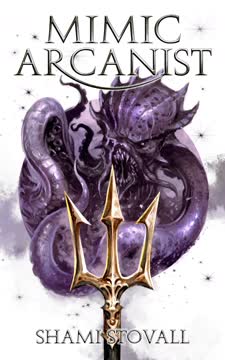
The cotillion's festivities are violently interrupted by the emergence of a midnight depths kraken—an abyssal monster summoned by a gate fragment hidden in the bay. Chaos erupts as the creature attacks, destroying the amphitheater and endangering all present. Gray, Ashlyn, and their friends are thrust into a desperate battle, using every scrap of magic and ingenuity to save lives. The confrontation is a crucible: Gray's mimicry, Ashlyn's dragon magic, and the courage of their classmates are tested to the breaking point. The attack exposes the fragility of order and the ever-present danger of the abyssal hells. In the aftermath, nothing will be the same.
Possession and Betrayal
In the chaos following the kraken's defeat, Gray is possessed by Deimos through the gate fragments in his body. The Death Lord's will hijacks Gray's actions, turning him into a weapon against his friends and the Academy. Twain, Knovak, and others struggle to intervene, but Deimos's power is overwhelming. The Academy's defenses are breached as Deimos seeks to reclaim his trident and the remaining gate fragments, aiming to open a new path for his return. The battle is not just external—it is a war for Gray's soul, fought in the liminal space between self and other, hope and despair.
The Battle for Control
The climax unfolds in the Academy's depths. Professor Helmith, risking her life, confronts Deimos-possessed Gray. The struggle is brutal: Ren is gravely wounded, Helmith is impaled, and Gray's body is ravaged by abyssal magic. Yet, in the dreamscape, Helmith's hope and Gray's resistance combine to imprison Deimos's soul fragment. Ushi, Helmith's eldrin, achieves her true form—a living embodiment of hope and dreams—turning the tide. The cost is high: Helmith is left near death, and Gray is forever changed. The battle is won not by brute force, but by the refusal to surrender to despair, and the willingness to sacrifice for others.
Hope in the Abyss
In the aftermath, Gray awakens in the infirmary, the gate fragments extracted from his body by a relickeeper arcanist. Vivigöl, Deimos's trident, now answers to Gray, a symbol of both victory and lingering danger. The Academy reels from the attack, but the bonds between students are stronger than ever. Helmith's survival and Ushi's transformation offer hope, but the threat of the abyssal hells remains. Gray's connection to the abyssal dragon persists—a thread of magic that cannot be severed. The lesson is clear: the fight against darkness is ongoing, and hope must be continually renewed.
Aftermath and Awakening
As the Academy recovers, Gray, Sorin, and their friends reflect on what they have endured. Relationships are mended—Nini and Sorin reconcile, Exie reveals unexpected depth, and even rivals find common ground. The scars of battle, both physical and emotional, remain, but so does the determination to move forward. The students return to their studies, wiser and more united. The Academy, under Headmaster Venrover's vigilant eye, strengthens its defenses. Gray's journey is far from over, but he is no longer alone. The ties of friendship, love, and hope bind him to the world, even as the abyssal hells whisper from the shadows.
Ties That Bind
The story closes with a sense of hard-won peace. Gray, forever marked by his encounters with the abyss, embraces his role as both protector and student. The lessons of the past—about power, responsibility, and the necessity of hope—resonate through the Academy. The threat of the abyssal hells is not vanquished, but it is contained, for now. The bonds between characters—twins, friends, rivals, and mentors—are the true magic that endures. As Gray looks to the future, he knows that the fight against darkness is eternal, but so is the possibility of light. The journey continues, shaped by the ties that bind.
Characters
Gray Lexly
Gray is the eldest twin, a mimic arcanist whose magic allows him to copy the abilities of other eldrin. Scarred physically and emotionally by his battle with Death Lord Deimos, Gray is defined by resilience, self-doubt, and a deep sense of responsibility. His relationships—with his twin Sorin, the steadfast Nini, and his eldrin Twain—anchor him, but he is often isolated by his trauma and the unique burden of his magic. Gray's journey is one of reluctant heroism: he is thrust into danger not by choice, but by circumstance, and must continually fight to retain his identity against forces that seek to possess or destroy him. His development is marked by growing self-acceptance, the forging of deep friendships, and the realization that hope and connection are his greatest strengths.
Sorin Lexly
Sorin, Gray's younger twin, is a knightmare arcanist whose magic is rooted in courage and protection. Larger and more physically imposing than Gray, Sorin is gentle, poetic, and unfailingly optimistic. He serves as Gray's anchor, offering support and encouragement even in the darkest moments. Sorin's kindness sometimes borders on naivety, making him vulnerable to manipulation, but his loyalty and integrity are unwavering. His relationship with Nini is a source of both joy and complication, reflecting his desire to heal and be healed. Sorin's arc is one of quiet strength: he learns to balance idealism with realism, and to stand firm in the face of adversity.
Nini Wanderlin
Nini is a reaper arcanist, bonded to the spectral Waste. Her magic is tied to death and blood, and her past is marked by tragedy—she accidentally killed her brother, a trauma that shapes her self-perception. Nini is introverted, sensitive, and deeply empathetic, often serving as the emotional glue of the group. Her relationship with Sorin is tentative but profound, offering both of them a chance at redemption and acceptance. Nini's arc is one of self-forgiveness: she learns to see herself as more than her mistakes, and to wield her dark magic in service of life rather than destruction.
Twain
Twain is Gray's mimic eldrin, a magical creature capable of transforming into the forms of other eldrin. Twain is playful, sarcastic, and fiercely protective of Gray, often serving as both comic relief and emotional support. His mimicry is both a gift and a curse: it allows for versatility, but also marks him (and Gray) as outsiders. Twain's development mirrors Gray's—he must learn to accept his unique nature, and to find strength in adaptability. Twain's loyalty is unwavering, and his bond with Gray is the emotional heart of the story.
Ashlyn Kross
Ashlyn is a typhoon dragon arcanist, the daughter of a powerful noble family. Driven, competitive, and fiercely intelligent, she is both a rival and a romantic interest for Gray. Ashlyn's life is constrained by family expectations—her arranged betrothal is a source of pain and rebellion. Her relationship with Gray is marked by mutual respect, attraction, and frustration. Ashlyn's arc is one of self-determination: she must choose between duty and desire, and learn to assert her own will in a world that seeks to define her.
Exie
Exie is an erlking arcanist, outwardly confident and beautiful, but inwardly insecure. She uses her charm and illusions to navigate the social hierarchies of the Academy, often at the expense of others. Exie's relationship with Sorin is complex—she seeks his protection and validation, but is ultimately searching for genuine connection. Her arc is one of self-discovery: beneath the façade, Exie longs for acceptance and love, and must learn to trust others with her true self.
Knovak
Knovak is a unicorn arcanist from a wealthy merchant family, desperate to be accepted by the nobility. He is proud, competitive, and often abrasive, but his bravado masks deep insecurity. Knovak's rivalry with Gray is both comic and poignant, reflecting his struggle to find his place. His relationship with his unicorn, Starling, is a source of comfort and pride. Knovak's arc is one of humility: he learns that true nobility is found in character, not birthright.
Raaza
Raaza is a kitsune arcanist, marked by physical and emotional scars. He is intense, focused on combat and mastery, and often dismissive of softer emotions. Raaza's drive is rooted in past trauma—he seeks strength to protect himself and others. His relationship with his kitsune, Miko, is both grounding and challenging. Raaza's arc is one of balance: he must learn to temper strength with compassion, and to accept help from others.
Professor Helmith
Professor Helmith is an ethereal whelk arcanist, renowned for her knowledge of mystical creatures and her protective instincts. She serves as a mentor and surrogate parent to Gray and his friends, guiding them through both magical and personal challenges. Helmith's magic is rooted in dreams and hope, and her true form transformation is a testament to her unwavering belief in the possibility of redemption. Her arc is one of sacrifice: she risks everything to protect her students, embodying the story's central theme that hope is the greatest magic.
Death Lord Deimos
Deimos is a Death Lord, a being of immense power and malice, seeking to return from the abyssal hells. His magic is insidious, capable of possessing and corrupting others through the gate fragments. Deimos is both a literal and symbolic threat: he represents the dangers of unchecked ambition, the hunger for power, and the corrosive effects of despair. His psychological warfare against Gray is as damaging as his physical attacks. Deimos's arc is one of relentless pursuit: he will stop at nothing to reclaim his place in the world, but is ultimately undone by the hope and unity of his adversaries.
Plot Devices
Gate Fragments and Possession
The shattered pieces of the abyssal gate serve as both literal and symbolic plot devices. Scattered across the world, they are inert to most, but become active in Gray's presence, drawing monsters from the abyssal hells and allowing Deimos to possess Gray. The fragments are a metaphor for unresolved trauma and the lingering effects of past violence—they cannot be ignored or buried, only confronted and contained. Their activation is foreshadowed by Gray's nightmares and the land's corruption, and their ultimate resolution requires both magical and emotional healing.
Mimicry and Identity
Gray's mimicry is both a gift and a curse, allowing him to adapt but also threatening his sense of self. The ability to copy others' magic raises questions of authenticity, belonging, and the fear of being consumed by external forces (embodied by Deimos's possession). Twain's transformations echo Gray's own struggles with identity. The narrative structure uses mimicry as a lens for exploring psychological themes: the danger of losing oneself, the power of adaptation, and the necessity of self-acceptance.
Dreams and the Battle for the Soul
The recurring motif of dreams—both nightmares and magical dreamscapes—serves as a stage for the story's deepest conflicts. Deimos's attempts to possess Gray are fought as much in the mind as in the world, with Professor Helmith's dream magic providing both sanctuary and weapon. The dream sequences allow for psychological exploration, foreshadowing, and the dramatization of internal struggles. The ultimate victory over Deimos is achieved not through brute force, but through hope, willpower, and the refusal to surrender one's soul.
Social Rituals and Coming of Age
The Kross Cotillion and other social rituals provide a backdrop for character development, rivalry, and the negotiation of identity. The cotillion is both a literal dance and a metaphor for the games of power, romance, and ambition that define adolescence. The event's disruption by the kraken attack is a narrative turning point, shattering illusions of safety and forcing the characters to confront the reality of their world. The cotillion's aftermath marks a transition from innocence to experience.
True Forms and Transformation
The concept of true forms—magical transformations achieved through virtue or quest—serves as a metaphor for maturation and self-actualization. Characters' struggles to achieve their true forms mirror their psychological journeys: hope, courage, and self-acceptance are as important as magical power. The narrative structure uses true forms to foreshadow character arcs and to provide moments of catharsis and revelation.
Analysis
Mimic Arcanist is a coming-of-age fantasy that uses the trappings of magical school, eldritch horror, and social intrigue to explore themes of identity, trauma, and hope. At its core, the novel is about the struggle to define oneself in the face of overwhelming external forces—be they monsters from the abyss, the expectations of family and society, or the scars of past violence. Gray's journey is emblematic of the adolescent search for belonging and meaning: his mimicry is both a superpower and a source of alienation, and his battles with Deimos are as much about resisting despair as they are about defeating evil. The story's structure—alternating between action, psychological conflict, and moments of quiet connection—mirrors the rhythms of healing and growth. The use of gate fragments as plot devices is particularly effective, symbolizing the way trauma lingers and must be actively confronted. The novel's ultimate message is one of hope: that even in the face of darkness, the bonds of friendship, love, and self-acceptance can forge a path forward. The lessons of Mimic Arcanist are timeless—power must be tempered by responsibility, and the greatest magic is the refusal to surrender to despair.
Last updated: