

Key Takeaways
Treat pain as real, but question whether tissue damage tells the whole story.
A different explanation. At nineteen, Sachs was told that a spinal abnormality could limit her life and that surgery might not end her pain. Decades later, she describes running and traveling despite the same finding on her scans. Her experience led her to Mindbody medicine, which considers how brain, nervous system, emotions, and physical sensations interact. Sachs uses tension myoneural syndrome, or TMS, for chronic symptoms she believes are driven by this interaction.
Not imaginary, not universal. The book’s central claim is that symptoms can be physically real even when emotional processes help sustain them. It does not mean every chronic condition has this cause, or that medical assessment is unnecessary. Sachs advises readers to seek appropriate evaluation before treating symptoms as mindbody-related.
The distinction between real pain and pain caused solely by tissue damage is important. Contemporary pain science also treats pain as an experience shaped by biological, psychological, and social inputs, rather than a simple readout of injury. That broader view can reduce shame and invite more treatment options. The caution is that a useful model can become another overconfident diagnosis: emotional factors may contribute without being the sole cause, and a mindbody explanation should not be inferred from symptoms alone.
A scan can reveal a real variation without identifying the cause of pain.
Images need context. Sachs calls some scan findings normal abnormalities: genuine differences that may not explain a person’s symptoms. She points to a review of imaging in people without back pain. In that research, bulging discs appeared in about 30 percent of people in their twenties and 84 percent of those in their eighties. A visible finding, then, does not by itself establish that it is the source of pain.
Ask what fits. Sachs’s own spinal diagnosis shaped a frightening prognosis, although the finding remained while her pain improved. Her point is not that scans are useless, but that their meaning depends on symptoms, examination, and medical judgment. A structural explanation may matter; it should not be assumed simply because an image looks abnormal.
This is a valuable corrective to treating a scan as a complete story. Incidental findings can create fear, narrow attention, and encourage people to see themselves as damaged. At the same time, imaging can identify urgent or actionable problems, and its relevance depends on the clinical picture. The useful question is not whether scans are trustworthy or misleading in general, but whether a particular finding explains the person’s symptoms and changes care.
Look beyond symptoms to the stress and conflict shaping the nervous system.
The protective loop. Sachs proposes that chronic symptoms can arise when the nervous system treats unresolved emotional distress as danger. She uses the emotional reservoir as a metaphor for accumulated grief, anger, shame, fear, trauma, and everyday strain. When the reservoir feels full, the brain may produce pain or other symptoms that capture attention and prompt a person to slow down. In this account, symptoms function as protection from feelings that seem harder to face.
A model to explore. Sachs connects this idea to ordinary experiences such as a headache after a stressful day or a stomach reaction during fear. She argues that emotional and physical responses can remain connected when symptoms become chronic. This is her framework for understanding illness, not proof that every condition or flare has an emotional origin.
The reservoir image makes an abstract interaction easy to notice: ordinary demands, old experiences, and current symptoms can reinforce one another. It also encourages curiosity about stress rather than blame. Its weakness is that a metaphor can sound more mechanistic than the evidence warrants. Emotional repression is difficult to measure, and symptoms may have multiple interacting causes. The model is most useful as a question to investigate alongside medical explanations, not as a verdict about what caused someone’s illness.
Give difficult feelings a private, structured outlet instead of endlessly suppressing them.
Write beneath the surface. JournalSpeak is Sachs’s focused expressive-writing practice for exploring feelings she believes have been pushed out of awareness. It differs from a diary or gratitude list: the aim is to write honestly about emotionally charged experiences, including thoughts that feel embarrassing, angry, or contradictory. Sachs begins with three lists: childhood or past stressors, current daily pressures, and personality patterns such as perfectionism or people-pleasing. The writer chooses an item and explores what it brings up.
Stay curious. Sachs describes discovering anger and grief beneath a socially acceptable account of motherhood. That example illustrates the method, not a required conclusion. The practice is private, and Sachs recommends discarding the writing afterward if that helps the writer feel safe. Its purpose is to make feelings expressible, not to force a particular memory or interpretation.
Structured expressive writing can turn vague distress into specific observations, and the privacy of the page may make candor easier than conversation. Sachs’s account also highlights how socially approved roles can conceal ambivalence. Still, emotional intensity is not automatically therapeutic, and writing does not establish a symptom’s cause. People with overwhelming trauma or worsening distress may need professional support and a gentler pace rather than solitary excavation.
Build a modest daily ritual and measure change across four weeks.
Make practice repeatable. Sachs recommends a daily 30-minute routine: 20 minutes of JournalSpeak followed by 10 minutes of self-affirming meditation. She suggests choosing a private place and dependable time, preparing materials, and setting boundaries so the practice is possible. If a full session is not feasible on a difficult day, she encourages doing what time allows rather than abandoning the routine entirely.
Test, do not demand. Her 28-Day Challenge begins with a record of symptoms, their severity, life stressors, and a brief description of mental state. Participants practice daily, then make a fresh record at the end and compare. Sachs says the challenge is meant to reveal possible change and build momentum, not guarantee recovery in a month. The exercise gives progress a measure beyond memory and expectation.
The challenge turns an expansive promise into a bounded experiment. Recording symptoms before and after can help counter selective memory, while a small routine lowers the practical barrier to participation. But a one-person comparison cannot show that journaling caused any change, and symptom ratings are affected by expectations and daily variation. Tracking function, mood, and medical changes alongside pain scores would give a fuller picture without turning the exercise into a test of personal worth.
Notice avoidance, but do not mistake every flare for proof of progress.
Resistance has many disguises. Sachs describes avoidance as procrastination, scrolling, overwork, or other familiar ways of not approaching difficult feelings. She also says that fatigue, symptom spikes, or symptoms shifting location can act as resistance to emotional work. Her term symptom imperative refers to symptoms changing or appearing in a new form, sometimes after an earlier symptom eases. She advises readers to notice these patterns rather than panic or immediately give up.
Keep interpretation open. The book encourages compassion instead of self-accusation when practice feels difficult. But a new, severe, or changing symptom is not reliable evidence that emotional work is succeeding. It may require medical assessment. The practical lesson is to observe avoidance and symptom patterns without treating every uncomfortable reaction as a psychological signal.
Resistance is a useful lens when it helps someone notice habits that block reflection. The risk comes when the same lens explains every contrary outcome: pain worsening becomes confirmation, while improvement confirms the theory too. That makes the claim difficult to test and could delay care. A sounder use is modest: consider avoidance as one possibility, record what happens, and seek clinical advice for new or concerning symptoms.
Make room for feelings, name them, stay present, and let release come.
A guide for emotions. Sachs calls her four-part framework ANSR: Allow, Name, Stay, Release. It describes how to meet a difficult feeling rather than suppress it or demand that it disappear. Allow means letting an experience enter awareness. Name means putting words to it, often through JournalSpeak. Stay means remaining with the feeling without reflexively fleeing into distraction. Release is the easing that may follow, not an outcome to force.
Use it in the moment. Sachs applies the sequence both to old memories and current conflicts. A feeling can be acknowledged without requiring a confrontation, breakup, or immediate life decision. She argues that writing slows thought enough for a person to recognize conflicting feelings and respond with greater awareness. The framework is a practice for emotional attention, not a substitute for therapy when needed.
The sequence separates emotional awareness from impulsive action. That distinction is useful: anger can be acknowledged without being acted out, and grief can be experienced without being solved on demand. The framework also resembles acceptance-based approaches that emphasize noticing experience rather than struggling to control it. A possible limit is that sustained attention to distress may overwhelm some people. Pacing, grounding, and support can matter as much as willingness.
Replace self-attack and urgency with acceptance that leaves room for change.
Reduce the added burden. Sachs argues that self-criticism, perfectionism, and desperation to recover add stress to an already difficult experience. Self-compassion means responding to one’s own suffering with the care one might offer someone else. Acceptance, in her account, means recognizing the present situation without pretending to like it or giving up on change. Together, these practices can make it easier to keep working without turning a setback into evidence of failure.
Choose a kinder response. Sachs suggests noticing the inner critic, pausing, and deliberately speaking to oneself with less blame. She also encourages boundaries, especially for people who routinely put others’ needs first. The goal is not to become indifferent or abandon responsibilities. It is to stop treating every imperfect moment or slow recovery as proof of personal inadequacy.
Self-compassion is not indulgence; it can support persistence by reducing the shame that often follows difficulty. Acceptance likewise helps distinguish what can be changed from what cannot be controlled right now. The nuance is that acceptance should not be confused with tolerating unsafe relationships, ignoring practical problems, or abandoning treatment. It is a way to meet the current facts with less internal punishment while still making deliberate choices.
Listen to the younger self beneath reactions that feel larger than today.
A trigger can carry history. Sachs describes becoming intensely distressed when her son was excluded from a party. She realized that the reaction connected to her own painful memories of feeling left out as a child. In her inner child practice, the adult self imagines a younger version and asks what life feels like from that child’s perspective. The task is to listen without correcting, reassuring too quickly, or dismissing the feeling.
Offer attention, not a verdict. Sachs says that hearing the younger self can clarify why present-day events feel so charged. The practice also invites a more compassionate response to oneself. It need not establish that a childhood event caused a symptom, nor does it require vivid imagery. The value is in recognizing old emotional patterns and responding to them with care rather than letting them silently dictate behavior.
The inner child idea can be understood as a vivid way of accessing autobiographical memory and learned emotional expectations. Asking what a younger self experienced may soften self-judgment and reveal why a current event feels unusually threatening. The metaphor need not be treated literally to be useful. It also requires care: memories can be incomplete, and a compelling emotional interpretation is not the same as verified history.
Use mindbody therapy as an option, not a substitute for medical care.
Evidence suggests possibility. Sachs cites a pilot randomized trial of psychophysiologic symptom relief therapy for chronic back pain. She reports that 63.6 percent of participants in the intervention group said they were pain-free at a 26-week follow-up. She also cites studies involving long COVID and irritable bowel symptoms, while the long COVID study she discusses was non-randomized. These findings support further study of psychological approaches; they do not establish that every chronic illness is caused by emotional distress.
Keep care collaborative. The book explicitly advises readers to consult physicians and rule out conditions that need medical treatment. Mindbody practices can be considered alongside appropriate care, not as a reason to stop medication, avoid testing, or dismiss a new symptom. A clinician can help distinguish a potentially useful psychological intervention from an unsafe assumption about what is causing illness.
The research gives the book a stronger footing than testimonials alone, especially where controlled trials examine chronic back pain. Yet a pilot study, a self-reported outcome, and a non-randomized long COVID study answer different questions and have different evidentiary strength. They support further investigation, not a universal cure claim. The safest reading preserves both ideas: psychological treatment may meaningfully help some people, and medical evaluation remains essential.
Analysis
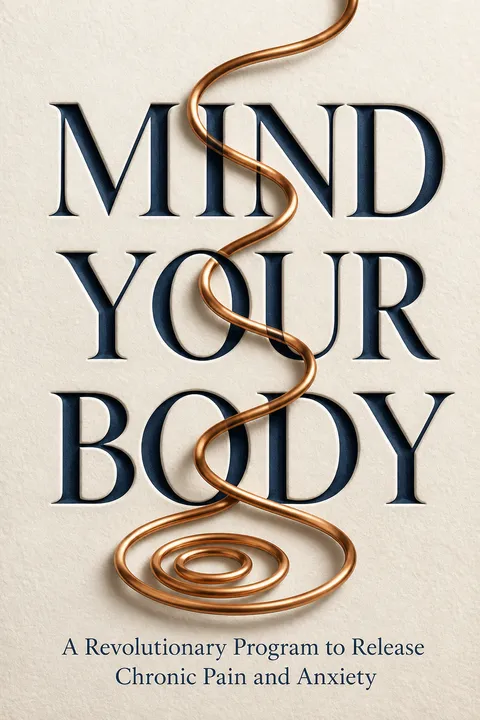
Mind Your Body is part memoir, part self-help manual, and part case-story collection. Its narrative engine is Sachs’s shift from a frightening spinal prognosis at nineteen to a life she describes as active and unrestricted. That personal reversal gives emotional force to her argument: persistent symptoms may involve learned threat responses and unresolved emotional strain, not only visible tissue damage. The book then turns that claim into a program built around expressive writing, meditation, emotional awareness, acceptance, and self-compassion.
Its strongest contribution is not the claim that emotions explain every chronic condition. It is the invitation to widen the frame. Patients can be harmed by being told symptoms are imaginary, but they can also be harmed when an incidental scan finding is treated as a complete explanation. A biopsychosocial perspective makes room for bodily processes, expectations, relationships, stress, and behavior to interact. Sachs’s stories show how illness can also reshape identity, family roles, and a person’s sense of agency.
The central limitation is the certainty with which the book sometimes attributes a broad range of conditions to nervous system dysregulation and repressed feelings. The case histories are compelling reports, not controlled evidence that each person’s symptoms had the same cause. Research cited in the book supports psychological approaches for some conditions, but findings from a pilot trial or a non-randomized intervention cannot justify a general cure promise. The idea that flares or new symptoms signal resistance is particularly risky if it encourages readers to reinterpret warning signs without medical input.
A careful reader can keep the practical tools while rejecting that false choice. Emotional writing may help someone identify stress, conflict, and needs that have gone unspoken. Meditation and self-compassion may make that exploration more tolerable. These practices can complement evidence-based medical care; they should not replace evaluation or treatment. The book is most persuasive as an agency-restoring invitation to investigate mind and body together, rather than as a universal theory of chronic illness.
Review Summary
Mind Your Body by Nicole Sachs has received overwhelmingly positive reviews, with readers praising its revolutionary approach to chronic pain management. Many report significant improvements in their conditions using Sachs' JournalSpeak method. The book is lauded for its compassionate tone, scientific explanations, and practical advice. While some readers found the writing style repetitive or overly enthusiastic, most appreciated the hope and tools provided for healing. Critics note the book's claims may seem too good to be true, but many readers attest to its life-changing impact.
People Also Read









Glossary
Mindbody medicine
Mind and body togetherAn approach that considers how physical processes, emotions, stress, trauma, and social context interact in health and symptoms. Sachs uses it to investigate whether nervous system responses and emotional experiences may help sustain some chronic conditions, particularly when medical assessment has not identified a clear cause or treatment.
Tension myoneural syndrome (TMS)
A proposed symptom patternJohn Sarno’s term, as used by Sachs, for chronic pain and other symptoms she attributes to brain and nervous system responses to emotional stress and repressed feelings. The book treats TMS as an umbrella for varied symptoms, but its use does not establish that any particular person’s condition has this cause.
emotional reservoir
Metaphor for accumulated feelingsSachs’s metaphor for the buildup of unacknowledged emotions, past trauma, daily frustrations, and internal conflict. In her model, when this imagined reservoir feels full, the nervous system may respond with symptoms that divert attention and encourage rest. JournalSpeak is presented as a way to identify and express what has accumulated.
JournalSpeak
Focused emotional writingSachs’s structured expressive-writing practice for exploring emotionally charged experiences and feelings that may be difficult to acknowledge. Writers often begin with lists covering past stressors, daily life, and personality patterns, then write freely about a selected topic. The method emphasizes candor and privacy rather than recording events, positive thinking, or gratitude.
ANSR
A process for meeting emotionsSachs’s framework for responding to difficult emotional experiences: Allow, Name, Stay, Release. The sequence means permitting a feeling into awareness, putting words to it, remaining present rather than immediately escaping, and allowing any easing to occur without forcing it. Sachs applies it to both remembered experiences and current stress.
symptom imperative
Symptoms changing or shiftingA term coined by Sarno for the appearance of different symptoms or the movement of symptoms from one location to another. Sachs describes this as something that can occur during a mindbody recovery process. A change in symptoms does not, by itself, establish that the cause is psychological or that a person is improving.
struggle imperative
Worries replacing old worriesSachs’s term for a pattern in which one worry or perceived problem loses intensity and another takes its place. She suggests that attention can shift from physical symptoms to concerns such as relationships, work, or appearance. Recognizing the pattern may help someone observe habitual worry without treating each new concern as an emergency.
normal abnormality
Finding without clear symptomsSarno’s phrase for a structural variation that appears on a medical scan but may also be present in people without pain. Sachs uses the concept to caution against assuming that a visible feature, such as a bulging disc, explains symptoms. Whether a finding matters clinically depends on the individual assessment.
psychophysiologic symptom relief therapy
Psychological treatment for symptomsThe name used for an intervention cited in the book’s discussion of chronic back pain research. The approach combines education about psychophysiological symptoms with psychological practices, including attention to emotional history. The study described is evidence about a particular intervention and population, not proof that all chronic symptoms share one cause.
FAQ
What is Mind Your Body: A Revolutionary Program to Release Chronic Pain and Anxiety by Nicole J. Sachs about?
- Mindbody Medicine Focus: The book explores how chronic pain, anxiety, and other persistent symptoms often originate from repressed emotions and a dysregulated nervous system, rather than structural physical problems.
- Personal and Clinical Insights: Nicole J. Sachs shares her own healing journey and 25 years of clinical experience, blending neuroscience, psychology, and practical tools.
- Core Healing Program: The program centers on JournalSpeak, a targeted journaling method, combined with meditation and mindset work to retrain the brain and nervous system for healing.
Why should I read Mind Your Body by Nicole J. Sachs?
- Hope for Chronic Sufferers: The book offers a hopeful, evidence-based alternative for those who feel stuck with chronic pain or anxiety, challenging the belief that these conditions are incurable.
- Practical, Actionable Tools: Readers gain access to concrete methods like JournalSpeak, meditation, and the ANSR framework to facilitate emotional processing and nervous system regulation.
- Inspiring Recovery Stories: Sachs includes compelling case studies, including her own, to illustrate the transformative power of the Mindbody approach.
What are the key takeaways from Mind Your Body by Nicole J. Sachs?
- Emotional Roots of Pain: Chronic symptoms often stem from unresolved emotions and trauma, not just physical injury or disease.
- Healing Requires Emotional Work: Consistent emotional excavation through JournalSpeak and meditation is essential for lasting relief.
- Mindset and Self-Compassion Matter: Belief in the process, patience, and self-kindness are crucial for overcoming resistance and achieving recovery.
What is Mindbody medicine as described in Mind Your Body by Nicole J. Sachs?
- Definition and Origins: Mindbody medicine recognizes that many chronic physical symptoms are caused by repressed emotions and nervous system dysregulation, a concept pioneered by Dr. John Sarno.
- Brain’s Protective Mechanism: The brain, especially the amygdala, may trigger physical symptoms as a way to protect you from overwhelming emotional pain.
- Not Imaginary, But Neurological: Sachs clarifies that pain is real and not “in your head,” but the solution lies in addressing the brain’s misinterpretation of emotional threats.
What is Tension Myoneural Syndrome (TMS) and how does it relate to Mind Your Body by Nicole J. Sachs?
- TMS Defined: Tension Myoneural Syndrome (TMS) is a term for chronic pain and symptoms caused by emotional tension and nervous system dysregulation, not structural damage.
- Central to Mindbody Approach: Sachs builds on Dr. Sarno’s TMS framework, showing how emotional repression leads to physical symptoms.
- Symptom Imperative: The phenomenon where symptoms shift or change location during healing is explained as the nervous system recalibrating, further supporting the TMS model.
What is the emotional reservoir concept in Mind Your Body by Nicole J. Sachs?
- Metaphorical Reservoir: The emotional reservoir is a metaphor for the accumulation of repressed emotions, stress, and trauma stored in the body.
- Overflow Triggers Symptoms: When the reservoir overflows, the nervous system perceives danger and triggers physical symptoms to protect you from emotional overwhelm.
- Healing Through Release: Safely lowering the reservoir by processing emotions is key to disabling pain signals and restoring nervous system balance.
What is JournalSpeak and how does it work in Mind Your Body by Nicole J. Sachs?
- Targeted Expressive Writing: JournalSpeak is a daily 20-minute free-writing practice focused on expressing repressed core emotions honestly and without censorship.
- Inner Child Perspective: The practice encourages writing from the inner child’s voice, allowing “ugly” or difficult feelings to surface safely.
- Release and Privacy: After each session, writings are discarded to symbolically release negative emotions and protect privacy, reinforcing emotional cleansing.
How does meditation complement JournalSpeak in Nicole J. Sachs’s Mind Your Body program?
- Nervous System Calming: Meditation, practiced for 10 minutes after JournalSpeak, helps recenter and soothe the nervous system, making emotional release more effective.
- Scientifically Supported: Research cited in the book shows meditation improves mood, sleep, memory, and emotional regulation—key factors in managing chronic pain and anxiety.
- Flexible and Accessible: Sachs encourages any meditation style, emphasizing that the practice is a safe haven for self-forgiveness and nervous system reset.
What is the ANSR framework in Mind Your Body by Nicole J. Sachs and how does it aid healing?
- Allow: Open yourself to feeling and acknowledging all emotions without resistance, creating space for healing.
- Name: Use JournalSpeak to articulate and process your feelings, helping the nervous system recognize that emotions are not dangerous.
- Stay and Release: Stay present with your feelings instead of fleeing; release happens naturally as a result, leading to symptom reduction and emotional freedom.
How does mindset influence healing in Mind Your Body by Nicole J. Sachs?
- Perception Shapes Reality: Your beliefs about safety and pain directly affect your nervous system’s response; fear amplifies symptoms, while curiosity and belief promote healing.
- Importance of Belief: Sachs stresses that believing in the Mindbody approach, or at least suspending disbelief, is foundational for creating new neural pathways and supporting recovery.
- Acceptance and Patience: Embracing discomfort and being patient with yourself are essential mindset shifts for lasting change.
How does Mind Your Body by Nicole J. Sachs address resistance and setbacks during the healing process?
- Resistance as Protection: Resistance often appears as excuses, exhaustion, skepticism, or symptom flare-ups, reflecting the nervous system’s attempt to keep you “safe.”
- Consistency Overcomes Resistance: Daily, consistent practice of JournalSpeak and meditation is key to retraining the brain’s protective reflexes.
- Setbacks Are Normal: Healing is not linear; setbacks and symptom imperatives are signs of progress, not failure, and require patience and self-compassion.
What are some key success stories and examples from Mind Your Body by Nicole J. Sachs?
- Diverse Recoveries: The book features stories like Lieke’s recovery from long COVID, Gigi’s healing from POTS and interstitial cystitis, and Sonja’s overcoming of complex regional pain syndrome.
- Transformation Through JournalSpeak: Each story demonstrates how targeted journaling and mindset shifts led to dramatic reductions or complete cessation of chronic symptoms.
- Proof and Inspiration: These real-life accounts serve as motivation and evidence that healing is possible for a wide range of diagnoses and ages when the Mindbody connection is addressed.
Download PDF
Download EPUB
.epub digital book format is ideal for reading ebooks on phones, tablets, and e-readers.








