

Key Takeaways
Read equality claims against who still controls institutions
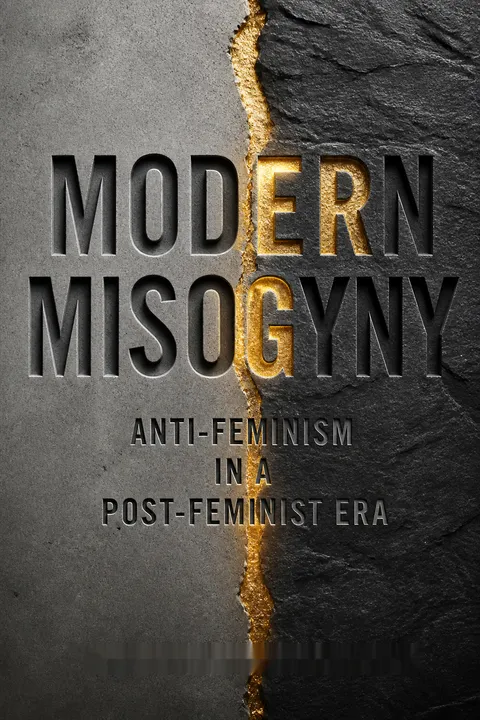
Progress is not completion. Modern misogyny is the book’s name for sexism that survives behind claims that equality has already arrived. Women’s gains in education, employment, and law are real, but they do not show that unequal power has disappeared. The argument is that discrimination has become harder to spot: it can appear as a compliment, a personal preference, or a supposedly isolated incident rather than an institutional pattern.
Look beyond the headline numbers. A woman may be welcomed into a workplace yet still face unequal pay, sexual harassment, or penalties for acting like a leader. The book draws on social psychology, experiments, interviews, and media analysis to connect individual encounters with broader cultural and political structures. Its central challenge is simple: do not mistake visible progress for proof that the conditions producing inequality have been dismantled.
The distinction between access and power is analytically useful. Counting women in schools or workplaces measures entry, not necessarily authority, security, or influence over the rules. This resembles a broader problem in institutional analysis: formal inclusion can coexist with informal barriers that shape who is heard and rewarded. The book is strongest when it links a small interaction to a larger pattern without treating every negative encounter as proof of discrimination. That discipline matters. Structural explanations should illuminate repeated inequalities, while still leaving room to investigate the particulars of any one case.
Treat purchasing power as a poor substitute for political power
Choice gets privatized. Post-feminism describes a culture that borrows feminist language such as choice and empowerment, then redirects it from collective social change toward individual lifestyle and consumer decisions. A woman is told she can express herself by buying products, improving her appearance, or choosing a personal path, while the institutions shaping her options fade from view.
Responsibility moves inward. Interviews with young women in Australia and the United Kingdom found many describing success as a matter of individual effort, even amid serious constraints. Popular culture makes a similar move: in the television show Undercover Boss, a CEO may help a few struggling employees with gifts, while the conditions affecting the larger workforce remain unchanged. In this logic, a structural problem becomes a private challenge, and failure appears to belong to the individual.
Consumer choice can be a genuine form of agency, so the useful question is not whether a choice is authentic, but what choices can accomplish. Buying a product may express identity without changing wages, care arrangements, or access to power. This distinction echoes the difference between consumer sovereignty and political voice: a customer can exit a market, but workers and citizens often need collective leverage to change its terms. The account is most persuasive when it shows how individual agency and structural constraint can coexist, rather than treating every personal choice as false consciousness.
When fear rises, old gender scripts can return with alarming speed
Crisis narrows the story. After the September 11 attacks, media accounts often cast men as rescuers and women as grieving dependents, despite women serving among first responders and men also losing spouses. Widows who stayed within the expected role were treated sympathetically. The Jersey Girls, a group of widows who publicly questioned the government’s response, were pushed aside when they became critics rather than passive mourners.
Fear rewards familiarity. Terror management theory explains how reminders of death can increase attachment to familiar cultural beliefs and distrust of dissent. In one survey cited in the book, shortly after the attacks, 80 percent of respondents supported indefinite detention for noncitizens considered a security threat. The author argues that the crisis also made traditional gender roles feel reassuring, while civil liberties and equality were treated as expendable concerns.
The chapter’s compelling insight is that a crisis does not simply reveal social values. It can intensify the appeal of familiar roles and make dissent feel dangerous. This helps explain why public narratives often simplify complex events into recognizable heroes and victims. Yet the theory is an explanation of tendencies, not a complete account of any person’s response. Economic interests, political leadership, and media routines also shape what becomes normal. The framework is most useful when paired with attention to those institutions, rather than used to reduce political decisions to a universal fear reflex.
A feminist critique of male dominance is not hatred of men
The stereotype outruns the evidence. The book challenges the claim that feminists dislike men by comparing actual attitudes with the caricature. In one study of U.S. college students, self-identified feminists reported less hostility toward men than nonfeminists. A study across 16 countries found that hostility toward men was higher in more gender-unequal societies, suggesting resentment tracks unequal power more closely than feminist identification.
Labels can discredit complaints. In an experiment described by Anderson, participants judged a woman’s identical account of being passed over for promotion as less credible when she was identified as a feminist. The label made her seem more like a complainer. This framing shifts attention from the alleged discrimination to the character of the person naming it, making a systemic critique sound like a personal feud.
Separating opposition to a hierarchy from hostility toward its beneficiaries is essential in debates about inequality. Otherwise, any challenge to an unfair arrangement can be reframed as an attack on individuals, and the arrangement itself escapes scrutiny. The evidence summarized here also shows why labels matter: people assess claims through social expectations about who is reasonable. At the same time, studies of college samples cannot establish how every feminist thinks or how every audience responds. Their value is narrower and still important: the popular stereotype is not a reliable substitute for measurement.
Before declaring boys displaced, count who still gets the spotlight
Visibility contradicts the panic. The book tests claims that media and schools have turned against boys. In the cited research, women make up 27 percent of major characters in top-grossing films, while male characters dominate children’s cartoons, textbooks, and educational software. Women also tend to disappear from screen roles as they age, while older men gain status and leadership roles.
Attention is not the same as advantage. Studies reviewed by Anderson find that teachers give boys more classroom attention, both positive and negative, and that many educational materials position boys as active, central figures. The book does not deny that boys can struggle academically. It argues that some boys learn to treat school achievement as feminine and lose standing among male peers for doing well. Male entitlement and overconfidence may also contribute to disengagement.
The center stage problem offers a useful way to understand why a brief focus on girls can be mistaken for a takeover by girls. Familiarity with being the norm can make equal attention feel like lost status. Still, averages can conceal real local problems, and boys’ academic difficulties deserve serious attention rather than dismissal. A sound diagnosis asks which boys are struggling, in what settings, and for what reasons. That approach avoids the false choice between supporting boys and addressing persistent disadvantages facing girls, while also making room to examine race and class within each group.
Praise can police women as effectively as open hostility
Sexism has a velvet glove. Ambivalent sexism includes hostile sexism, which openly resents women who challenge traditional roles, and benevolent sexism, which praises women as pure, caring, or in need of protection. The second form can sound kind while suggesting that women are less capable and belong in dependent roles. Together, the two forms reward conformity and punish resistance.
Success can trigger a penalty. In an experiment reviewed in the book, students rated a clearly successful woman in a male-dominated job as less likable and more hostile than a similarly successful man. Other research found that a working mother could gain warmth in observers’ eyes but lose perceived competence, a tradeoff not imposed on fathers. Women may be accepted as capable, but their competence can make them seem socially unacceptable.
The warmth and competence distinction helps explain why bias can persist even when people report liking women. Positive regard is not necessarily respect, and protection can become a rationale for exclusion. This is a useful corrective to definitions of prejudice that look only for open hostility. A caution is equally important: kindness, assistance, or praise is not automatically sexist. The relevant evidence lies in patterned expectations and unequal consequences, such as whether the same behavior earns men status but costs women approval. That shift from presumed intent to observable effect makes the framework more precise.
Treat victim-blaming as gender policing, not a neutral judgment
The victim becomes the suspect. Rape myths falsely suggest that women invite assault through their clothing, behavior, or location, or that only certain kinds of women are raped. The book describes how news reports can hide perpetrators by using passive phrasing, while labels such as accuser can place a survivor under suspicion. Research reviewed by Anderson finds that belief in rape myths is a strong predictor of judgments in rape cases.
Protection is unequally granted. Women in the military who reported assault sometimes faced inadequate investigations or punishment rather than support. The book also explains that Black women have historically been denied the assumptions of sexual innocence and protection more often granted to white women. The result is not merely disbelief in an individual case. It is a system of judgment that treats women’s departure from prescribed roles as evidence against them.
This account connects language, institutional procedure, and social stereotypes: each can shift responsibility away from a perpetrator and onto a person reporting harm. The connection is especially important because judgments about credibility often appear neutral while drawing on assumptions about how a respectable victim should behave. The intersectional point also prevents a universal story about women from erasing racial differences in who is considered vulnerable or believable. Care is needed to distinguish criticism of a procedure from conclusions about any specific allegation. Fair process and serious attention to patterned victim-blaming are compatible commitments.
Being called empowered does not make objectification liberating
Sex appeal is sold as agency. Post-feminist culture presents sexual display as a personal choice that proves women are free to define themselves. Anderson argues that this can confuse being an agent of one’s own desire with being styled for someone else’s approval. Pole-dancing marketed as empowerment, sexualized music videos, and beauty practices shaped by pornography all illustrate how a narrow ideal of being desirable can be repackaged as liberation.
The market sets the reward. Research on magazine advertisements found that women remained more likely than men to appear dependent or psychologically withdrawn, and some degrading portrayals had become more common. The author also emphasizes that sexual norms are raced and classed: a supposedly playful sexual image can carry different histories and risks for women whose bodies have long been stereotyped or exploited.
The distinction between personal choice and social meaning is valuable because the same act can feel empowering to one person and reinforce a limiting norm in its wider circulation. A choice does not become meaningless simply because markets profit from it, but market incentives can make some forms of self-expression far more visible and rewarded than others. The crucial question is whether women gain control over desire, safety, and resources, or are mainly offered new ways to perform desirability. That question preserves individual agency while taking cultural pressure seriously.
A feminist identity can strengthen agency, body image, and fairer relationships
Identity can provide a lens. The book distinguishes feminist attitudes from feminist identity. Some women support equality but avoid the feminist label; the author reports that identifying as a feminist is more consistently associated with self-efficacy and positive body attitudes than holding feminist views alone. A review of 26 studies found links between feminist identity, less preoccupation with thinness, and lower scores on eating-disorder measures.
Equality can improve intimacy. Studies reviewed by Anderson found feminist women were no less likely to have romantic relationships, and women with feminist partners reported greater relationship quality, equality, stability, and sexual satisfaction. Women’s and gender studies courses were associated with increased agency and activism, and one study found more positive attitudes toward men after a course. These findings are mostly correlational, so they show association rather than proving that feminism caused each benefit.
A political identity can function as both an interpretive tool and a source of belonging: it helps people name unfair treatment without treating it as a personal defect. The relational findings also challenge the assumption that equality makes intimacy colder. Shared expectations can reduce ambiguity about labor, respect, and sexual agency. The methodological caveat matters, however. Women who already feel confident may be more likely to adopt a feminist identity, and course outcomes depend on context and instruction. The evidence supports potential benefits, not a universal guarantee or a single path to well-being.
Turn private frustration into organized solidarity across class and borders
Solidarity changes the unit of action. The book’s closing argument is that consumer choice and personal resilience cannot replace organized efforts to change shared conditions. A garment bought as a symbol of freedom may be made by women working long hours for extremely low pay. That connection becomes hard to see when empowerment is defined only by the buyer’s individual choice.
Collective action is already visible. Anderson points to antiwar organizing, fast-food workers striking for better wages, SlutWalk protests against rape victim-blaming, and feminist participation in immigration and reproductive-justice campaigns. These examples link gender to labor, race, sexuality, and citizenship. The point is not that every movement is automatically inclusive or successful. It is that people can build leverage and mutual understanding by organizing around the structures that shape their separate experiences.
The global supply-chain example makes solidarity concrete: one group’s consumer freedom can rest on another group’s constrained labor. This is a powerful challenge to accounts of empowerment that stop at individual preference. Organizing can reveal those connections and create bargaining power that isolated consumers or workers lack. Yet solidarity cannot be assumed simply because participants share a gender. Differences in race, class, sexuality, and national position shape both interests and risks. Durable coalitions therefore require listening and negotiation, not a single movement claiming to speak for every woman.
Analysis
Anderson’s core contribution is to connect everyday judgments with political arrangements. The book moves from consumer culture and post-9/11 media narratives to experiments on hiring, schooling, stereotypes, and relationships. Its argument is not that overt sexism has vanished, but that equality rhetoric can make discrimination harder to name: women are offered individual choice while collective demands are portrayed as unnecessary, unattractive, or hostile to men. The strongest sections show mechanisms, not merely attitudes. A successful woman is penalized for violating expectations; a feminist claimant is considered less credible; a supposedly protective compliment can lower perceived competence. These examples make subtle bias observable and explain how it reproduces itself without requiring conscious animus.
The empirical approach also gives the book important limits. Its cited studies vary in sample size, context, and design, and many are based on U.S. or predominantly white college samples. Experimental tasks can isolate the effect of a label or description, but they cannot fully reproduce institutional histories or predict every real-world outcome. Much of the evidence establishes association rather than causation, particularly in the discussion of feminist identity and well-being. In addition, claims about media, politics, and education reflect the period of publication and should not be treated as current measurements without updated evidence.
These limits sharpen rather than cancel the central insight. Formal access, personal choice, and positive sentiment are weak measures of equality if authority, credibility, safety, and material resources remain unevenly distributed. The book’s most durable practical method is therefore diagnostic: ask who benefits from a norm, whose behavior is treated as ordinary, and whether the same action carries different consequences for different groups. It also resists a simplistic division between men and women by showing how women can reproduce gender hierarchy and how men can be constrained by masculine expectations. Its case for feminism is ultimately both analytical and civic: identify the structure, test the claim, and organize where individual remedies cannot change shared conditions.
Review Summary
Modern Misogyny receives overwhelmingly positive reviews, praised for its informative content and debunking of anti-feminist myths. Readers appreciate the extensive research and evidence provided to support arguments. The book is seen as valuable for understanding modern misogyny, feminism, and gender issues. Some reviewers note its usefulness for academics and as a introductory text. A few critics question the intended audience and argue some conclusions may be tenuous. Overall, readers find it enlightening and well-supported, recommending it for those interested in feminist perspectives.
People Also Read





Glossary
Modern misogyny
Subtle sexism after progressAnderson’s term for contemporary sexism that persists under claims that women have already achieved equality. It includes both overt discrimination and less obvious practices, stereotypes, and cultural messages that can appear complimentary or fair-minded. Its central pattern is to acknowledge women’s gains while treating continued collective action as unnecessary.
Post-feminism
Equality presumed completeA cultural outlook that treats feminism’s main work as finished and collective feminist action as outdated. It borrows terms such as choice and empowerment but often applies them to personal lifestyle or consumer decisions rather than social change. The outlook can make structural inequality appear to be an individual problem or a matter of personal preference.
Benign bigotry
Everyday prejudice that seems harmlessAnderson’s term for subtle prejudice expressed through seemingly innocent comments, slights, overgeneralizations, or even positive stereotypes. It can be unintentional and difficult for both the person expressing it and the person targeted to recognize. Its apparent kindness does not prevent it from limiting individuality or reinforcing unequal expectations.
Disarticulation
Making collective action seem unthinkableA process described in the book in which cultural messages weaken the perceived need and possibility of people joining together for social change. Feminists are cast as angry, unattractive, or unreasonable, while activism is framed as unnecessary because equality supposedly already exists. This discourages solidarity and makes dissent harder to voice.
Terror management theory
Worldview defense under death remindersA psychological theory that people respond to awareness of mortality by strengthening attachment to cultural beliefs and institutions that give life meaning. When those beliefs feel threatened, people may reject dissenters or favor leaders and familiar norms that seem protective. Anderson uses the theory to interpret post-9/11 shifts toward traditional gender roles and intolerance of criticism.
Center stage problem
Threat felt when attention shiftsA concept used to explain why members of a dominant group may perceive a brief focus on a marginalized group as an unfair loss of status. When people are accustomed to being treated as the norm, increased attention to others can feel like displacement. The resulting response may be an effort to restore the previous hierarchy.
Ambivalent sexism
Hostility and protective praiseA framework describing two complementary forms of sexist attitudes toward women. Hostile sexism punishes women who challenge traditional roles, while benevolent sexism praises conventional women as caring, pure, or in need of protection. Though they feel different, both can preserve male authority and unequal gender expectations.
Benevolent sexism
Patronizing praise that limits womenA form of sexism that presents women as admirable but fragile, morally superior, or naturally suited to caring roles. It can offer approval and protection to women who conform to traditional expectations while implying that they are less capable or should be excluded from positions of authority. Its positive tone can make its restrictive effects difficult to notice.
Hostile sexism
Punishment for gender nonconformityOvertly negative attitudes toward women, especially women seen as challenging men’s power or traditional gender roles. It can portray such women as manipulative, unreasonable, or threatening. In Anderson’s account, hostile sexism works alongside benevolent sexism: one penalizes women who resist the hierarchy, while the other rewards conformity.
Women-are-wonderful effect
Women viewed as warmer overallA social psychology finding that the general category of women is often evaluated more warmly than the category of men. Anderson emphasizes that this favorable impression does not extend equally to all women. It tends to favor traditional women, while women viewed as assertive, professional, feminist, or otherwise nontraditional may be judged more negatively.
Feminist identity development
Stages of feminist consciousnessA model describing how a woman’s understanding of gender inequality and feminist commitment can develop. Its stages move from passive acceptance of existing norms, through recognition of sexism and connection with other women, toward an integrated feminist identity and action for social change. The book distinguishes this developmental measure from simply asking whether someone uses the feminist label.
Download PDF
Download EPUB
.epub digital book format is ideal for reading ebooks on phones, tablets, and e-readers.








