

Key Takeaways
Love the work in front of you, then make that spirit visible
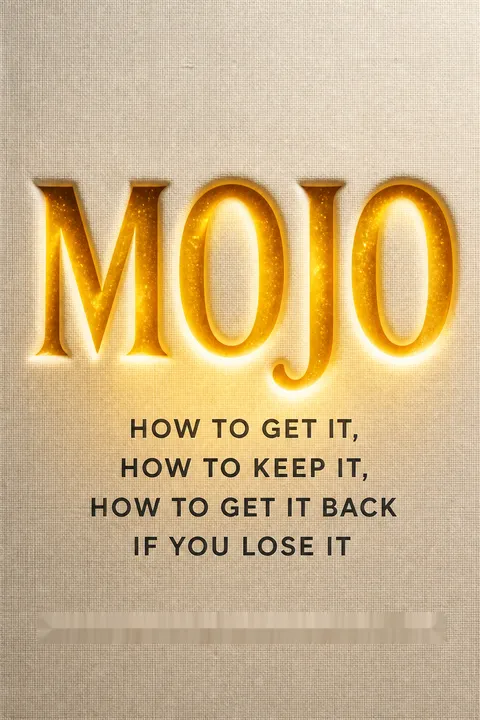
Mojo is lived alignment. Goldsmith defines Mojo as a positive spirit toward what a person is doing now, beginning internally and showing outwardly. It is not simply a winning streak or a prestigious job. The test is whether an activity feels worthwhile to the person doing it and whether that positive engagement is evident to others. A skilled worker can care deeply yet appear angry or indifferent, leaving colleagues to judge the visible behavior instead of the good intent.
Small moments can radiate. Goldsmith recalls roofer Dennis Mudd taking such pride in his work that he offered to let the homeowner inspect the finished roof before paying. Duke Ellington, whose career had stalled, kept performing and seized a late-night opportunity at Newport to reconnect with an audience. Their circumstances differed, but each example shows how commitment becomes legible through action.
The idea usefully joins private experience to public behavior: feeling engaged matters, but relationships depend on what other people can actually observe. That distinction helps explain why benevolent intentions do not automatically produce trust. At the same time, visible enthusiasm is not a complete measure of good work. Some valuable tasks are quiet, emotionally taxing, or performed under unfair conditions. The strongest reading is not to perform cheerfulness for an audience, but to notice whether the work has genuine value and communicate care in ways that fit the task.
Audit each task for what you bring and what it gives back
Separate input from return. The Mojo Scorecard measures two sides of an activity. Professional Mojo is what a person brings: motivation, knowledge, ability, confidence, and authenticity. Personal Mojo is what the activity gives back: happiness, reward, meaning, learning, and gratitude. Rate each dimension from 1 to 10 for a specific task, rather than judging an entire job as one undivided experience.
Patterns reveal choices. Goldsmith describes a media executive who discovered that lunch was his most satisfying part of the day. He enjoyed trading useful ideas with people he knew, advising them, and pitching his services. The insight was not that everyone should schedule more lunches. It was that a low score can identify a task to redesign, delegate, approach differently, or remove where possible.
This task-level view avoids the trap of labeling a whole career either wonderful or miserable. A job may contain energizing work, necessary drudgery, and tasks that are both poorly suited and unrewarding. Separating what a person contributes from what they receive also makes diagnosis more practical: low confidence calls for skill-building, while low meaning may call for a different role or purpose. The scores remain subjective, though. Their value lies less in producing a precise total than in prompting an honest conversation about specific work.
Interrupt autopilot by scoring today's happiness and the task's lasting meaning
Inertia is the default. Goldsmith calls the tendency to continue whatever is already happening the Mojo Paradox: people may want more happiness and meaning, yet often remain with routine instead of choosing a change. His remedy is a brief check on each activity: How satisfying is this now, and what lasting benefit does it create? Asking before an activity can sharpen attention; asking afterward can expose patterns that routine hides.
Use two dimensions. Goldsmith's Mojo Survey sorts activities by immediate happiness and longer-term meaning. Succeeding is high in both; surviving is low in both. Stimulating activities feel good but offer little lasting benefit, while sacrificing activities promise benefit at a present cost. In the book's survey, time spent succeeding was positively correlated with reported satisfaction, while surviving showed a negative relationship. These are associations, not proof of cause.
The two-question check turns reflection into a small interruption of habit, which is often more usable than a sweeping resolution to change one's life. The distinction between immediate pleasure and longer-term value also prevents a simplistic demand that every worthwhile act feel pleasant. Still, the categories are lenses, not objective verdicts: the same exercise or caregiving task can feel burdensome to one person and meaningful to another. Their best use is to reveal a person's own tradeoffs, not to shame leisure or glorify sacrifice.
Replace inherited self-stories with an identity you deliberately practice
Identity has several sources. Goldsmith describes four influences: remembered identity, built from one's recollections; reflected identity, shaped by others' opinions; programmed identity, absorbed from family, culture, or work; and created identity, chosen for the person one intends to become. The first three can explain a self-image, but they need not dictate future behavior. A person who once struggled with follow-up can keep repeating that label long after the weakness has changed.
Practice a chosen version. Goldsmith recounts meeting Bono as he moved among identities including ordinary person, musician, rock star, and humanitarian. The point is not that anyone can become anything. Physical and situational limits are real. Rather, a chosen identity can expand the possibilities a person notices and the actions they are willing to attempt, without requiring them to erase their past.
This model makes identity less like a hidden essence and more like an evolving account assembled from memory, social feedback, and aspiration. That framing can loosen self-fulfilling labels: someone who thinks of themselves as a poor listener may overlook evidence of improvement and behave accordingly. Yet identity is not infinitely malleable. Social roles, resources, and other people's expectations constrain what can be practiced safely or credibly. A useful created identity therefore needs both aspiration and evidence, with behavior serving as the bridge between them.
Count achievement by your standards, not applause alone
Success has two scoreboards. One measures what other people recognize: revenue, promotions, public praise, or visible results. The other measures what makes the person feel capable, useful, or fulfilled. The two can align, but they often do not. Richard, a respected corporate communications executive, saw his work as inferior to the fiction writing he imagined doing. Mary, a social worker who valued helping people, became unhappy comparing her income and lifestyle with former classmates.
Inspect your accounting. Goldsmith warns that achievement can be distorted by taking too much credit for team results, overlooking collaborators, relying on an old accomplishment, or overvaluing a recent event simply because it is fresh. A better question is not only what has been achieved, but whether the result matters to the person and whether the evidence supports their account of it.
The two-scoreboard model helps explain why outward success can coexist with private dissatisfaction, and why meaningful work can feel unrewarded when recognition is absent. Neither standard should automatically cancel the other. External measures can reveal impact and provide material security; personal standards can protect people from living entirely for approval. The challenge is to distinguish a genuine preference from a comforting story. Richard's imagined writing career, for instance, remains a hypothesis until tested through sustained effort, not merely contrasted with a real job.
Earn reputation through repeated behavior, then check how others read it
Reputation forms through patterns. A single strong presentation may impress colleagues, but repeated clear presentations are what establish a reputation for being an effective speaker. Goldsmith argues that people often miss the patterns others see in them, so he recommends reviewing both strong and poor moments and asking colleagues for feedback. In his coaching work, 360-degree reviews sometimes revealed problems executives had not recognized in their own behavior.
Choose effectiveness over display. The book contrasts being seen as smart with being effective. An engineer might prefer a brilliant design that never gets built, or a slightly less elegant design that the organization can produce. Goldsmith's point is that reputation depends on useful results, not simply on demonstrating intelligence. Once a pattern is visible, consistent actions can gradually change how others interpret a person.
Reputation is a social record, not a private intention, so feedback can expose a gap between self-perception and impact. The emphasis on repetition is especially practical because it makes change observable rather than dependent on a persuasive apology. However, reputations can also reflect bias, organizational politics, or unequal access to high-visibility assignments. Feedback deserves attention, not unquestioned obedience. The useful question is whether multiple observers identify a consistent behavior that the person can change, rather than whether every judgment is fair or accurate.
Accept the facts, then change yourself or the situation
Acceptance is not surrender. Goldsmith distinguishes what can be changed from what must be faced as it is. A group of lawyers whose firm collapsed could wait for the old job market to return, or use their skills in a different field. Waiting for conditions to become comfortable can become wishful thinking. Acceptance means beginning from the facts, then choosing a response rather than spending energy denying the situation.
Choose the lever. Goldsmith calls the choice changing You or changing It. A worker might adjust an attitude, influence a decision-maker, change a role, or leave an employer. The right move depends on the circumstances. He also warns against arguments that rarely alter outcomes, such as demanding to know another person's hidden motives or repeatedly insisting that a disappointing decision is unfair. This does not mean ignoring real injustice; it means distinguishing a consequential fight from an ego-driven loop.
The framework offers a useful alternative to helplessness: either alter one's own response or alter the conditions that produce it. It also gives acceptance a practical meaning, distinct from passive approval. The key limitation is that the choice is not equally available to everyone. Financial obligations, discrimination, caregiving, and weak labor markets can make leaving far harder than the model's clean binary suggests. In constrained situations, identifying even a small sphere of influence can help, but structural barriers should not be mistaken for an individual's failure to adapt.
Refuse commitments that turn today's ambition into tomorrow's resentment
Overcommitment can hide as enthusiasm. People who are good at their work attract requests and opportunities, then may accept so many that quality and enjoyment decline. Goldsmith describes adding speaking engagements to an already full calendar, even when the time might have served better for writing or rest. Saying yes can please someone immediately while creating a longer-term cost to one's own work and spirit.
Notice the other traps. The book also cautions against waiting for bad facts to reverse, staying with a failing choice because of past investment, bashing a boss, and letting relaxed conduct undo professional trust. Goldsmith reports that participants in his classes estimated about 65 percent of workplace conversation involved boasting, criticizing, or listening to either. That is a self-reported estimate, but it points to a practical opportunity: spend less time on talk that changes nothing.
These examples share a subtle mechanism: short-term relief or approval can quietly accumulate into long-term damage. A new request feels flattering, a sunk cost makes quitting feel wasteful, and complaining can provide temporary social bonding. Naming these payoffs makes the traps easier to recognize. Restraint, however, should not become reflexive refusal. Some commitments build relationships or open important opportunities. The more useful test is whether the choice fits declared priorities and capacity, rather than whether it is merely convenient to accept or emotionally difficult to decline.
Use constraints to uncover a path your crowded competitors overlook
Set personal criteria first. Goldsmith argues that vague wishes do little to guide decisions. A specific rule, such as limiting time away from one's children or avoiding unnecessary meetings, can help identify which opportunities fit. Barbara, an executive who disliked meetings, left her corporate job to consult independently and later built a small firm. The criterion clarified what she needed from work, though it did not make the risks of self-employment disappear.
A constraint can redirect effort. Broadcaster John Madden refused to fly, so he traveled to football games by bus and used the time to study game footage. Apparel executive Judith avoided competing directly for the same designers and customers as established divisions, instead pursuing neglected talent and underserved customers. In both cases, a limitation encouraged a distinctive route rather than a head-on contest.
Criteria turn values into decision rules, while constraints can force attention toward overlooked options. Together, these ideas counter the assumption that progress always means adding more: more status, more commitments, or more direct competition. But constraints are not automatically creative. A limitation can shrink opportunity when it is imposed without choice or resources. The practical distinction is whether the person can use a constraint to explore alternatives, or needs support to remove it. Either way, specificity helps reveal which tradeoffs are genuinely acceptable.
Make change stick through mission-driven actions and regular human follow-up
Small actions make a mission credible. Goldsmith recounts Frances Hesselbein, then head of the Girl Scouts, carrying his laundry herself while preparing a training session for volunteers. Her stated purpose was to help girls and young women reach their potential; the unglamorous gesture showed that service applied to ordinary moments, too. A mission matters when it influences conduct, not only when it appears in a speech.
Do not rely on resolve alone. Goldsmith says lasting behavior change often requires follow-up. In his own daily arrangement with a friend, each person answered questions about personal goals and recorded the results. They reported achieving targets more reliably with this routine, and slipping after they stopped. Repeated actions build credibility with others, while a trusted partner makes promises harder to forget.
This closing principle connects purpose to accountability. A mission supplies direction; small observable choices make it believable; another person can help sustain attention when motivation fades. The combination is stronger than inspiration alone because it links identity to repeated practice. Still, accountability works best when it is supportive and chosen, not surveillance disguised as care. The book's examples center on people with agency and helpful networks. Readers without those conditions may need to build a modest structure first, such as one trusted check-in or one measurable commitment.
Analysis
Goldsmith's central contribution is to treat motivation as a relationship among inner experience, present activity, and social perception, rather than as a fixed personality trait. That makes Mojo unusually actionable: dissatisfaction can be investigated at the level of a task, a role, a self-story, or a reputation. The distinction between what a person brings to work and what work gives back is especially valuable because competence and fulfillment are not interchangeable. A capable employee can be depleted, while an apparently modest job can provide both pleasure and purpose.
The book's measurement tools are best understood as prompts for attention, not scientific instruments. The Mojo Survey draws on a self-selected audience that is unusually educated and professionally accomplished, and its reported associations cannot show that succeeding activities cause satisfaction. Self-ratings also invite optimistic distortion, a problem Goldsmith acknowledges. Even so, repeated measurement may help individuals notice how they allocate time and compare stated priorities with daily behavior.
The larger tension is between personal agency and organizational conditions. The advice to change oneself or the situation is compelling when a person has room to move, but layoffs, unequal power, financial dependence, and caregiving can narrow that room sharply. A culture that demands visible enthusiasm while eroding security may label structural strain as an individual attitude problem. The framework is strongest when it treats adaptation as one option among several, alongside collective action and institutional change.
Its most durable lesson is therefore not that every task can be made enjoyable. It is that people can become more precise about what gives an activity meaning, what drains them, and which response is realistically available. Mojo is a useful diagnostic vocabulary for that work, provided it does not turn happiness into another performance target or acceptance into acquiescence.
Review Summary
Mojo receives mostly positive reviews, with an average rating of 3.89 out of 5. Readers appreciate Goldsmith's practical advice on improving one's personal and professional life. The book explores the concept of "mojo" as a positive spirit that radiates from within. Many find the author's writing style engaging and his insights valuable. Some readers, however, feel the content is repetitive or lacks novelty. The book's focus on self-reflection and evaluating daily activities resonates with many, while others find it less impactful than Goldsmith's previous works.
People Also Read









Glossary
Mojo
Visible positive engagementGoldsmith's term for a positive spirit toward the activity a person is doing in the present. It begins with the person's internal experience and becomes evident to others through behavior. Mojo is not simply success, momentum, or outward cheerfulness. It connects personal satisfaction and meaning with the way one's engagement is expressed.
Nojo
Visible negative engagementGoldsmith's playful label for the opposite of Mojo: a negative spirit toward one's current activity that shows outwardly. It includes resentment, indifference, bare-minimum effort, and a sense of merely enduring the work. The term describes a recognizable pattern of disengagement, not a permanent identity or a diagnosis.
Professional Mojo
What you bringThe part of Mojo measured by the qualities a person brings to an activity: motivation, knowledge, ability, confidence, and authenticity. It concerns whether someone wants to do the work, understands it, can perform it, trusts their capability, and is genuine in their engagement. It is distinct from the personal benefits the activity returns.
Personal Mojo
What work returnsThe part of Mojo measured by what an activity gives back to the person doing it. Goldsmith names happiness, reward, meaning, learning, and gratitude as its dimensions. A task can be performed skillfully yet provide little personal benefit, or be meaningful even when it brings limited recognition or material reward.
Mojo Scorecard
Ten-part activity assessmentA self-assessment for rating a specific activity from 1 to 10 across five qualities a person brings and five benefits the activity returns. The scores can be recorded across a day to reveal which tasks energize, satisfy, or drain someone. Its purpose is to identify patterns and possible changes, not to produce an objective grade.
Mojo Paradox
Inertia over desired changeGoldsmith's name for the gap between wanting more happiness and meaning and the tendency to keep doing what one is already doing. Routine can persist even when an activity no longer serves a person. Regularly evaluating an activity's immediate satisfaction and lasting benefit is offered as a way to interrupt that inertia.
Created Identity
Chosen future selfThe part of identity a person consciously shapes rather than simply inheriting from memories, feedback, or social programming. It involves choosing who to become and practicing behavior consistent with that choice. Goldsmith presents it as a source of personal change while recognizing that physical and situational limits remain real.
Mojo Survey
Happiness and meaning inventoryA self-assessment asking respondents to classify activities according to short-term satisfaction and long-term benefit, at work and outside work. It groups activities as surviving, stimulating, sacrificing, sustaining, or succeeding. The book reports relationships between these categories and overall satisfaction, while noting that the respondents were not representative of all workers.
You or It
Change self or situationGoldsmith's shorthand for two broad routes to improving a low-Mojo situation. A person can change You, meaning their own behavior, interpretation, or approach, or change It, meaning the job, relationship, environment, or other external condition. The appropriate route depends on what is changeable and on the costs of each option.
FAQ
What's Mojo: How to Get It, How to Keep It, How to Get It Back If You Lose It about?
- Personal Development Focus: The book explores the concept of Mojo, which is the personal energy and enthusiasm that drives individuals to achieve happiness and meaning in their lives.
- Practical Framework: It provides a structured approach to measuring and enhancing Mojo through self-assessment tools and actionable strategies.
- Real-Life Examples: Marshall Goldsmith shares case studies and anecdotes to illustrate how different individuals experience and manage their Mojo.
Why should I read Mojo by Marshall Goldsmith?
- Enhance Your Life: The book helps you identify what truly brings you happiness and meaning, encouraging self-reflection and personal growth.
- Practical Tools: It offers practical tools and techniques to measure and improve your Mojo, making it a valuable resource for personal and professional effectiveness.
- Expert Insights: Authored by a renowned executive coach, the book is backed by years of experience in helping leaders and individuals achieve positive change.
What are the key takeaways of Mojo by Marshall Goldsmith?
- Four Key Elements: Identity, Achievement, Reputation, and Acceptance are essential components of Mojo.
- Self-Assessment Tools: The book provides tools like the Mojo Scorecard to evaluate your current state of Mojo.
- Importance of Acceptance: Recognizing what you can and cannot change is crucial for maintaining a positive spirit.
What is the definition of Mojo according to Marshall Goldsmith?
- Operational Definition: Mojo is defined as "that positive spirit toward what we are doing now that starts from the inside and radiates to the outside."
- Positive Spirit: It is a feeling of optimism and satisfaction that influences how we engage with tasks and how others perceive us.
- Connection to Happiness: Mojo is closely tied to achieving happiness and meaning in life.
How can I measure my Mojo using Marshall Goldsmith's methods?
- Mojo Scorecard: A self-assessment tool that allows you to rate various aspects like motivation, knowledge, and happiness related to activities.
- Daily Reflection: Regularly scoring your activities helps identify patterns in your Mojo levels.
- Continuous Improvement: The Scorecard encourages ongoing self-reflection and adjustment.
What are Mojo Killers mentioned in Mojo by Marshall Goldsmith?
- Over-Committing: Taking on too much work can lead to burnout and harm your Mojo.
- Waiting for Change: Holding out for circumstances to improve without action can lead to stagnation.
- Bashing the Boss: Complaining about your boss or workplace creates a negative atmosphere.
What is the Mojo Paradox in Mojo by Marshall Goldsmith?
- Inertia vs. Change: The paradox states that our default response is inertia, leading to a lack of fulfillment.
- Self-Directed Follow-Up: Evaluating activities based on long-term benefits and short-term satisfaction helps break inertia.
- Awareness of Choices: Recognizing the paradox encourages taking control of your life and making conscious choices.
How does acceptance play a role in maintaining Mojo according to Marshall Goldsmith?
- Letting Go of Control: Acceptance involves recognizing what you can and cannot change, reducing frustration and anxiety.
- Emotional Freedom: Accepting situations as they are frees you from negative emotions that drain Mojo.
- Encouraging Growth: Acceptance encourages adaptation and growth in response to challenges.
How can I improve my reputation according to Mojo by Marshall Goldsmith?
- Consistency in Actions: Demonstrate consistent behavior that aligns with the qualities you want to be known for.
- Seek Feedback: Regularly solicit feedback to understand how your actions are perceived.
- Focus on Effectiveness: Prioritize being effective over merely appearing smart.
What is the "You or It" dichotomy in Mojo by Marshall Goldsmith?
- Understanding the Choice: It refers to choosing whether to change something about yourself (You) or your circumstances (It).
- Self-Reflection: Encourages assessment of what aspects of life you can control.
- Empowerment: Focusing on what can be changed leads to increased satisfaction and agency.
What are some common mistakes people make that affect their Mojo according to Marshall Goldsmith?
- Whining and Complaining: Complaining without action drains Mojo and creates negativity.
- Focusing on Wrong Metrics: Seeking external validation over meaningful progress leads to dissatisfaction.
- Neglecting Relationships: Failing to nurture relationships impacts Mojo negatively.
What are the best quotes from Mojo by Marshall Goldsmith and what do they mean?
- "Mojo is that positive spirit...": Emphasizes that true energy and enthusiasm come from within.
- "The only person who can define meaning...": Highlights personal responsibility in determining happiness.
- "You go first. You be happy.": Reminds that personal happiness can inspire others.
About the Author
Other books by Marshall Goldsmith



Download PDF
Download EPUB
.epub digital book format is ideal for reading ebooks on phones, tablets, and e-readers.








