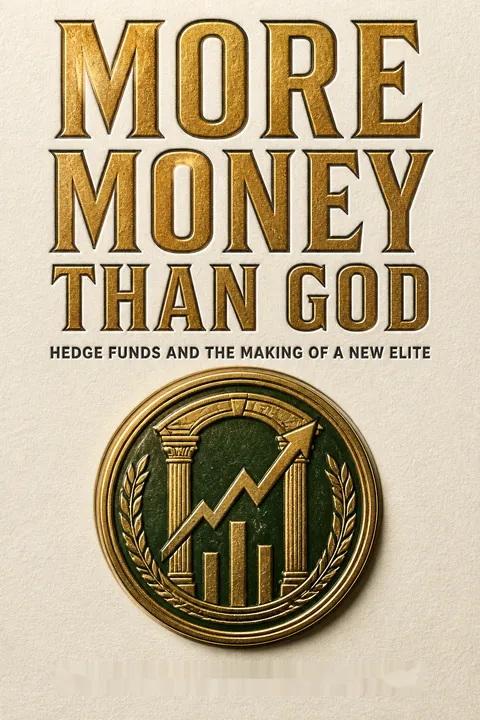


Key Takeaways
Build a hedge around market swings, then let stock selection earn returns
A new investment machine. In 2006, the lowest-paid of the top 25 hedge-fund earners reportedly took home $240 million, while the top three each earned more than $1 billion. The business model traced back to Alfred Winslow Jones, a former sociologist who launched a fund in 1949. He bought promising stocks, shorted weaker ones, and used leverage to increase the scale of his bets while offsetting some broad market risk. He charged a share of profits, tying compensation to results.
Skill, not a market call. Jones also tracked how much return came from stock selection, later called alpha, and how much came from general market exposure, called beta. His market timing was poor, but his fund still prospered, in part because he recruited stock pickers and rewarded useful ideas. Hedging did not create skill. It gave skill a more controlled way to operate.
The lasting innovation is organizational as much as financial. Separating the quality of a stock decision from the direction of the whole market resembles experimental design: isolate one variable, then judge performance more clearly. The distinction between alpha and beta also helps investors ask whether expensive management is adding anything beyond exposure to an index. Yet hedging can make risk look smaller than it is if correlations change or leverage is misjudged. The structure is a tool for expressing judgment, not a guarantee that judgment is sound.
Make liquidity provision your edge when institutions must trade in a hurry
A buyer when others had to sell. Michael Steinhardt built an advantage as pension funds and mutual funds began trading enormous blocks of shares. A large institution selling hundreds of thousands of shares could push the price down simply through the weight of its order. Steinhardt bought such blocks at a discount, then found buyers or resold the shares when prices recovered. He was being paid, in effect, to provide liquidity when the market struggled to absorb a large trade.
Access had a price. Steinhardt’s broker network helped him act quickly and resell efficiently. But some brokers also gave him information about sellers that other investors were not supposed to receive. His success therefore illustrates both a real market service and an ethical danger: privileged access could improve prices for the trader while disadvantaging the clients who had entrusted shares to a broker.
Liquidity is often treated as if it were always available at a single fair price. In practice, it is a service that becomes scarce precisely when many people want it at once. Steinhardt’s trading shows why an intermediary can improve market functioning while earning a substantial premium. The difficult distinction is between being compensated for absorbing risk and exploiting confidential information. The first can benefit both sides of a trade; the second shifts value through unequal access. A market can need active traders and still need firm rules about what they may know.
When a model fails, keep its risk lesson and test a different signal
A costly lesson in corn. Commodities Corporation began with economists building models of supply and demand. In 1971, its traders bet heavily that reports of a devastating corn blight were exaggerated. A contradictory television report sent prices surging, and exchange limits prevented them from getting out quickly. The firm’s capital fell from $2.5 million to $900,000, even though its original analysis eventually proved right. Being right about fundamentals did not save a position that was too large to survive a price shock.
Flexibility became the method. The firm tightened risk limits and gave more capital to a computer program that followed price trends. Its Technical Computer System, or TCS, used patterns in past prices to identify possible trends. Traders such as Michael Marcus combined those signals with fundamental research, using stop-loss orders to limit damage when a trade failed. The book’s recurring lesson is practical: preserve discipline, but do not defend a strategy just because it was the original theory.
This is a vivid example of the difference between a correct explanation and a robust decision. A scientific hypothesis can survive disconfirmation; a leveraged trade may not survive the time required for the hypothesis to prove itself. The firm’s response joined two disciplines: experimental revision of the model and institutional limits on how much any trader could risk. Trend signals are not universally reliable, and past patterns can disappear. Their value here lies partly in the willingness to test, size modestly, and stop rather than treating conviction as evidence.
Watch beliefs reshape fundamentals, then wait for the trigger that breaks the loop
Prices can help create reality. George Soros called this interaction reflexivity: investors form imperfect views of the world, act on them, and thereby change the conditions they are trying to judge. A rising share price can make it easier for a company to raise capital, improve its prospects, and attract still more buyers. The same feedback can run backward, turning optimism into a collapse. Soros looked for the relationship between perceptions and economic facts, not just either one in isolation.
A theory put to work. In 1985, Soros bet against the dollar, reasoning that policy and market sentiment could reverse its rise. The Plaza agreement, in which major governments coordinated action to weaken the dollar, became a trigger. Soros expanded his position as the currency began falling, and his fund gained about 35 percent over four months. The trade was not a perfect forecast: he had expected banking problems that did not materialize. His key insight was that a small trigger could redirect a self-reinforcing trend.
Reflexivity gives investors a way to think about markets as systems with feedback, rather than as calculators that simply absorb facts. Similar loops appear in social behavior: expectations about a shortage can prompt hoarding, which helps produce the shortage. The concept is powerful because it explains why an initially mistaken belief can become temporarily self-confirming. Its weakness is timing. Feedback theories can make a boom or reversal seem intelligible after the fact while leaving the precise turning point uncertain. A useful application pairs the narrative with a clear limit on losses.
A currency peg is vulnerable when domestic policy cannot defend it
A promise with a breaking point. In 1992, Britain tied the pound to the German mark through Europe’s exchange-rate mechanism. German reunification had pushed German interest rates up, while Britain was in recession and needed lower rates. Raising rates to defend the pound would further squeeze British households, many of whom had variable-rate mortgages. Stan Druckenmiller recognized that the government faced incompatible goals and sold pounds while buying marks.
Markets tested the commitment. George Soros urged him to enlarge the bet after German central-bank remarks signaled little willingness to support weaker currencies. The Bank of England spent roughly $27 billion trying to defend sterling and raised rates sharply, but the pound still left the system. Quantum’s profit on the trade exceeded $1 billion. The episode shows why a peg can invite a one-sided speculative bet: the currency may have limited room to rise, while the government may eventually be forced to let it fall.
Currency attacks are not automatically proof that speculators are villains or that governments are blameless. In Britain’s case, the peg constrained monetary policy during recession, and the eventual exit allowed lower rates. The market exposed a policy conflict that officials had been reluctant to admit. Still, a speculative position can hasten a crisis and increase the cost of adjustment, particularly where banking systems are fragile. The relevant question is not merely whether a currency is mispriced, but whether the government can credibly sustain the policy that supports it.
Stress-test who must sell, not just what prices might do
Models can miss the exit. Long-Term Capital Management, or LTCM, paired similar securities and expected their prices to converge. It used value at risk, a statistical estimate of potential losses under ordinary market conditions, and tested severe scenarios. Yet after Russia defaulted in 1998, investors rushed toward safe assets, brokers demanded more collateral, and many supposedly different trades lost money together. Funds holding similar positions were forced to sell at the same time, pushing prices farther from the levels LTCM expected them to regain.
Liquidity became the common risk. LTCM had about $5 billion in capital supporting a portfolio worth roughly $120 billion, plus enormous derivatives exposure. Its partners understood that liquidity mattered, but underestimated how quickly it could vanish across markets at once. The Federal Reserve organized a private rescue by creditors, not a taxpayer-funded bailout. The episode shows that diversification by asset label is weak protection when every position depends on the same assumptions about financing and buyers.
Risk models are most useful when treated as maps with boundaries, not as measurements of the future. Value at risk can summarize routine fluctuations, but rare events and changing correlations are exactly where the estimate becomes least dependable. A deeper stress test asks who else owns the same trade, which lenders can withdraw, and whether the asset can be sold without moving its price. Those are network questions, not just statistical ones. The LTCM story makes a broader point: apparently diversified positions may share a single hidden dependency, such as continued market liquidity.
Demand transparent sources of return before calling illiquid bets diversification
Endowments changed the industry. Yale investment chief David Swensen helped institutional investors embrace absolute return, a label for strategies intended to earn returns beyond the movements of conventional stock and bond markets. He favored managers whose incentives and methods he could understand. Yale invested with Farallon, whose merger and bankruptcy specialists profited when major events disrupted settled valuations. The approach helped popularize hedge funds as a distinct allocation for universities and other institutions.
Quiet returns can hide risk. Farallon also bought distressed assets and, in 2002, control of Indonesia’s largest bank after the country’s political and financial crisis. Such investments could provide capital where others would not, but they were hard to sell and difficult to value frequently. When an asset is priced only occasionally, reported returns can look smoother than the underlying experience. A fund may appear diversified while making a concentrated bet that illiquid markets will remain calm.
Institutional investors can bring patience, analytical scrutiny, and capital to opportunities that public markets neglect. Their demand for understandable returns also encourages managers to explain where performance comes from. But a tidy return series is not necessarily evidence of low risk when assets are marked infrequently. This is a measurement problem as much as an investment problem: volatility that is not observed on schedule is not volatility that has disappeared. Due diligence should examine not only the investment thesis, but also who sets valuations and how quickly the portfolio could be converted to cash.
Let computers search for signals too faint for intuition to detect
Patterns without a grand theory. James Simons built Renaissance Technologies around mathematicians, physicists, and code breakers rather than conventional market analysts. His team searched large collections of cleaned financial data for small, repeatable patterns. Henry Laufer identified subtle regularities in price movements after market events; repeated across thousands of observations, a slight statistical advantage could become valuable. Renaissance’s Medallion fund returned an average of about 39 percent a year from the end of 1989 to 2006, according to the book.
The research process mattered. Renaissance combined extensive computing infrastructure with frequent internal review, shared incentives, and collaboration among researchers. Its signals remained secret, and the book does not claim that every data pattern was meaningful. Some apparent patterns are coincidences. The firm’s advantage came not simply from using computers, but from building a system that could clean data, test signals, combine them, and keep searching as market conditions changed.
The Renaissance story challenges the idea that useful knowledge must arrive as an elegant explanation. In some domains, prediction can precede understanding: a model may detect a pattern that human intuition cannot yet describe. That approach is especially potent when data are abundant and signals are weak but numerous. It also creates a familiar statistical hazard: search enough data and chance will produce convincing-looking patterns. The safeguard is disciplined testing, clean data, and scrutiny of performance outside the sample used to discover the signal. Opacity may protect a strategy, but it makes outside evaluation harder.
Shift risk away from bailed-out banks, but supervise giant, illiquid funds
Failure is part of discipline. The book argues that independent hedge funds often control risk more tightly than large banks because managers invest personal wealth, mark positions to market, and lack an expected government rescue. During the 2007 to 2009 crisis, banks and major financial firms received public support, while thousands of hedge funds failed without direct taxpayer bailouts. Citadel suffered enormous losses in 2008 but survived through longer-term funding, active cash management, and operational systems that helped it understand its exposures.
Scale changes the case. Hedge funds can still threaten markets when leverage, derivatives, and illiquid holdings become large enough to make a disorderly failure contagious. Mallaby therefore favors leaving ordinary boutiques lightly regulated while scrutinizing funds whose leveraged positions become systemically important. His proposed thresholds included review above $120 billion in leveraged assets, tougher oversight above $200 billion, and greater attention to publicly traded fund companies. The principle is not that hedge funds are safe, but that institutions should bear their own failures whenever possible.
The distinction between a firm that can fail and one whose failure forces public rescue is a useful guide to financial policy. It focuses attention on external costs rather than on whether a business looks respectable or innovative. Independent ownership and personal investment can strengthen incentives, but neither prevents crowding, runs, or losses imposed on counterparties. A policy that simply exempts hedge funds would therefore be too broad. The more defensible version is conditional: preserve room for small firms to experiment, while monitoring leverage, liquidity, and interconnectedness where private failure could become a public crisis.
Analysis
Mallaby’s history is strongest when it treats hedge funds not as a single strategy but as a changing institutional form. Jones’s stock-selection incentives, Steinhardt’s liquidity provision, Soros’s macroeconomic feedback loops, Simons’s statistical research, and Steyer’s event-driven investing are different answers to the same question: where can an investor act when other market participants are constrained, inattentive, or wrong? This makes the book a history of market structure as much as a biography of wealthy traders.
Its central tension is that the same freedom can stabilize prices and amplify instability. Short sellers can challenge unjustified valuations, while leveraged traders may be forced to sell together. A fund can provide liquidity during an ordinary session and withdraw it in a panic. A successful method can correct a mispricing, attract imitators, and become a crowded vulnerability. These are not contradictions to be resolved by labeling hedge funds good or bad. They are conditional outcomes shaped by financing, position size, asset liquidity, and the incentives of the firm.
The narrative’s principal limitation is its focus on celebrated survivors. The remarkable records of famous managers demonstrate that skill can exist, but they do not by themselves establish how frequently it exists across thousands of funds. The book recognizes this problem through discussion of survivorship and valuation biases, yet its policy case still depends on the claim that independent funds generally manage risk better than banks. That claim is persuasive in the examples presented, but not universal. Hedge-fund subsidiaries inside banks, crowded trades, and the failures of LTCM and Amaranth show how quickly the model can lose its distinctive safeguards.
The book’s most durable policy insight is therefore narrower than a blanket defense of hedge funds: preserve organizational diversity, make failure possible, and direct oversight toward concentrated systemic risk rather than the label attached to a firm. Its historical sweep also offers a warning about financial innovation. Each generation finds a new source of apparent safety, from hedging to statistical diversification to complex securities. The crucial question is always what shared assumption those protections leave exposed.
Review Summary
More Money Than God offers a comprehensive history of hedge funds, from their origins to modern times. Readers praise Mallaby's engaging storytelling, thorough research, and balanced perspective on the industry. The book explores key events, legendary figures, and the impact of hedge funds on financial markets. While some reviewers find Mallaby's pro-hedge fund stance controversial, many appreciate the insights into complex financial strategies and market dynamics. The book is considered informative and thought-provoking, appealing to finance enthusiasts and those interested in Wall Street's inner workings.
People Also Read








Glossary
Alpha
skill-based returnThe portion of an investment return attributed to a manager’s decisions rather than broad exposure to a market. Jones tracked stock-selection gains separately from gains caused by the market’s general direction. The term later became central to institutional investors seeking returns that could improve a portfolio without simply duplicating stock or bond indexes.
Beta
market-linked returnThe return associated with exposure to a broad market movement, rather than with a manager’s security selection. In the book’s account, Jones distinguished this market component from alpha. A portfolio can earn beta by holding assets that rise with a market, while hedging or other active strategies seek to reduce or supplement that exposure.
Reflexivity
beliefs changing market realitiesGeorge Soros’s term for the feedback between investors’ imperfect perceptions and the conditions they are judging. Investor beliefs affect prices, and prices can then change companies’ access to capital, economic behavior, or future prospects. Because perceptions and fundamentals influence each other, markets may move away from equilibrium and later reverse sharply.
Value at risk
estimated routine loss limitA statistical measure used by Long-Term Capital Management to estimate how much a portfolio might lose under ordinary market conditions over a specified period. The fund estimated the volatility of positions and their correlations, then combined the possible losses. The measure did not reliably capture unprecedented events, changing correlations, or the possibility that liquidity would disappear.
Technical Computer System
automated trend-following programFrank Vannerson’s computer system at Commodities Corporation, developed to identify and trade price trends in commodities. It used historical price data to distinguish potentially persistent movements from ordinary fluctuations. The system helped redirect the firm away from an exclusive reliance on economic forecasting and toward automated trend following, with risk limits built into trading decisions.
Absolute return
returns beyond market directionA label used by endowment investors, including Yale, for strategies intended to produce returns that are not simply dependent on whether conventional stock and bond markets rise. Hedge funds were a major example. The appeal was both potential market-beating performance and diversification, though returns that appear uncorrelated can still share hidden risks.
Event-driven
investing around disruptive eventsAn investment approach that seeks opportunities created when an event makes existing market prices unreliable. Examples include takeover bids, corporate bankruptcies, and political or financial crises. Farallon used merger analysis and distressed-debt research to assess how events would change the value of securities, often trading where other investors faced restrictions or lacked the appetite to participate.
High-water mark
fee recovery after lossesA hedge-fund fee provision that prevents a manager from collecting new performance fees until losses have been recovered and the fund has returned above its previous peak value. It can align the manager more closely with investors after a decline. It does not eliminate risk taking, and it cannot guarantee that a manager will remain in business long enough to recover losses.
Limits to arbitrage
constraints on correcting mispricingThe obstacles that prevent knowledgeable investors from quickly forcing a mispriced asset toward a more rational value. Traders may lack enough capital, face borrowing or short-selling constraints, or be unable to withstand losses while waiting for the market to correct. As a result, prices can remain distorted, and trends or bubbles can persist even when some investors recognize the problem.
Shadowbank
bank-like lending without bank rulesA nonbank firm that performs some bank-like financial activity without the same structure or protections as a deposit-taking bank. In the book, Michael Steinhardt used borrowed short-term money to buy longer-term bonds, capturing the difference in yields. Such activity could bypass bank capital requirements while still relying on lenders and market liquidity.
FAQ
What's More Money Than God about?
- Focus on Hedge Funds: The book explores the rise and influence of hedge funds on the financial landscape, detailing their role in creating a new financial elite.
- Historical Context: It traces the origins of hedge funds back to Alfred Winslow Jones in 1949 and follows their evolution through various market cycles.
- Key Figures: Profiles of influential managers like George Soros, Julian Robertson, and Paul Tudor Jones are included, highlighting their strategies and philosophies.
Why should I read More Money Than God?
- Insightful Analysis: Sebastian Mallaby provides a deep dive into hedge fund mechanics, making it a valuable resource for understanding modern finance.
- Real-World Examples: The book is filled with compelling stories and case studies that make complex concepts accessible.
- Cultural Impact: It examines the economic and cultural implications of hedge funds, offering a broader perspective on their societal role.
What are the key takeaways of More Money Than God?
- Hedge Fund Strategies: Emphasizes strategies like leverage, short selling, and performance fees, which are hallmarks of hedge fund operations.
- Market Psychology: Highlights the importance of understanding market psychology and investor behavior for successful trading.
- Regulatory Challenges: Discusses the regulatory environment and debates about hedge funds' impact on market stability.
How do hedge funds differ from traditional investment funds according to More Money Than God?
- Investment Flexibility: Hedge funds can employ diverse strategies, including short selling and leverage, unlike traditional funds.
- Performance Fees: Hedge funds often charge performance fees, aligning managers' interests with investors'.
- Investor Base: They cater to accredited investors and institutions, allowing for higher risks and aggressive strategies.
What role does market psychology play in hedge fund strategies as discussed in More Money Than God?
- Understanding Investor Behavior: Successful managers leverage market psychology to anticipate and react to market movements.
- Feedback Loops: Investor sentiment can create feedback loops, driving prices away from fundamental values.
- Contrarian Strategies: Many strategies are based on contrarian principles, exploiting irrational investor behavior.
What are the different hedge fund strategies discussed in More Money Than God?
- Macro Trading: Involves large bets on macroeconomic trends, such as currency movements or interest rate changes.
- Event-Driven Investing: Focuses on specific events like mergers or bankruptcies to identify investment opportunities.
- Statistical Arbitrage: Relies on mathematical models to identify pricing inefficiencies between related securities.
How did hedge funds contribute to the financial crises mentioned in More Money Than God?
- Amplifying Market Volatility: High leverage and large trades based on sentiment can exacerbate market volatility.
- Crowded Trades: Similar positions among funds can lead to systemic risks and widespread losses.
- Lack of Transparency: Less regulatory oversight leads to opacity, creating risks for the broader financial system.
How did the collapse of Long-Term Capital Management (LTCM) influence hedge fund regulation?
- Systemic Risk Awareness: Raised awareness of the systemic risks posed by hedge funds, leading to calls for increased regulation.
- Regulatory Changes: Discussions about stricter regulations on leverage and risk management practices followed.
- Market Discipline: Illustrated the market's ability to discipline hedge funds, as LTCM was rescued by peers, not government.
What is the significance of George Soros in More Money Than God?
- Market Influence: Known for identifying and capitalizing on market inefficiencies, with successful bets like against the British pound.
- Philosophy of Reflexivity: His concept of reflexivity posits that market participants' perceptions can influence outcomes.
- Philanthropic Impact: Beyond trading success, his philanthropic efforts and influence on global politics are discussed.
How did the financial crisis of 2008 affect hedge funds as described in More Money Than God?
- Widespread Losses: The crisis led to significant losses, exposing vulnerabilities in risk management practices.
- Investor Withdrawals: Many investors sought to withdraw capital, creating liquidity challenges for funds.
- Regulatory Response: Prompted discussions about the need for regulatory oversight, particularly regarding leverage and risk management.
What are the best quotes from More Money Than God and what do they mean?
- Rapid Wealth Accumulation: "Perhaps never before in history have so few made so much money so fast," reflects the rapid wealth accumulation among hedge fund managers.
- Market Irrationality: "The market can stay irrational longer than you can stay solvent," emphasizes the risks of betting against market trends.
- Speculation Dangers: "Speculation can be very harmful," highlights the fine line between successful trading and reckless gambling.
What lessons can be learned from the hedge fund failures discussed in More Money Than God?
- Importance of Risk Management: Failures like Long-Term Capital Management underscore the need for effective risk management.
- Need for Transparency: Greater transparency is needed to mitigate systemic risks in the hedge fund industry.
- Caution Against Overconfidence: Overconfidence in strategies can lead to failures; investors should remain vigilant and adaptable.
About the Author



Download PDF
Download EPUB
.epub digital book format is ideal for reading ebooks on phones, tablets, and e-readers.








