

Key Takeaways
See the mosquito as an adaptive organism, not a tiny villain
A surprising life cycle. More than 2,500 mosquito species exist, but only some bite people, and only females of those species take blood meals. Most mosquitoes feed on nectar or other sugars. A female generally takes blood to produce eggs, not because humans are her preferred prey. A common house mosquito, Culex pipiens, can assemble about 240 eggs into a floating raft. Its offspring pass through aquatic larval and pupal stages before emerging as flying adults.
Adaptation, not malice. Mosquitoes occupy an extraordinary range of habitats, from desert pools to Arctic wetlands. Some eggs wait through years of drought; some larvae breathe through plant roots. The insect's capacity to exploit new environments is part of what makes it dangerous to people. The danger, however, is incidental to the mosquito's effort to survive and reproduce.
This framing replaces moral blame with ecological explanation. It also makes the insect more interesting: the same traits that help a species persist can make it a public health threat when its habitat overlaps with human life. That distinction matters because killing individual mosquitoes is not the same as changing the conditions that support them. Admiration need not soften the urgency of disease prevention. It can sharpen it by directing attention toward behavior, breeding sites, and the specific species involved.
Judge transmission risk by a mosquito's lifespan, not its sheer numbers
Three parts of transmission. The book explains contagion through the basic reproduction number, or BRN: the number of further infections an infected person generates under favorable conditions. For mosquito-borne disease, the mosquito's abundance matters, but so do its tendency to feed on people and its chances of surviving long enough to transmit an infection. The authors rank longevity as the strongest of these influences. A large swarm is alarming, but a mosquito that bites the right hosts and lives long enough to pass on a pathogen may matter more.
A chain, not a bite. A vector must acquire a pathogen from an infected host, allow it to develop, and then deliver it during another bite. The book's point is that risk depends on the links in this chain, not simply on how many insects are visible.
This is a useful correction to intuitive risk assessment. People tend to count what they can see, while transmission depends on less visible variables: host preference, infection, and survival. The same logic applies to other networks, where a few highly connected or persistent nodes can matter more than a large number of inactive ones. The framework is powerful, but ranking longevity above abundance should not be mistaken for a universal rule detached from local ecology. Each disease has its own transmission conditions.
Audit the habitats our infrastructure accidentally builds for mosquitoes
Progress can create breeding grounds. The Aswan High Dam brought electricity and reliable irrigation to Egypt, but also helped create permanent wet areas where Culex mosquitoes could breed near people. The book similarly traces the spread of the Asian tiger mosquito, Aedes albopictus, to used tires shipped to Houston. Tires held rainwater in sheltered cavities, an ideal imitation of the tree holes where this species evolved. The insect spread from there to other parts of the country and beyond.
Design has consequences. Water systems, drainage, construction, and discarded containers can all change mosquito habitat. Irrigation canals may leak into fields; clogged gutters, rain barrels, and abandoned pools can hold standing water close to homes. Infrastructure is not merely a backdrop to disease. It can shape where vectors breed, how abundant they become, and how easily they reach people.
The examples show why public health cannot be separated from engineering and waste management. A dam or a shipment of tires can generate benefits in one system and costs in another. This is a familiar pattern in environmental design: interventions alter incentives and habitats, sometimes producing effects that were not part of the original plan. The practical implication is not to reject development, but to include vector risk in its design and maintenance. A habitat audit can be cheaper than responding to a disease outbreak after the fact.
Read military and migration history through local pathogens
Disease changes the balance of power. Malaria helped make parts of ancient Rome dangerous to outsiders, and it devastated Mungo Park's 1805 expedition along the Niger River. Only a handful of his 44 men returned. In 1802, yellow fever and malaria also crippled the French force sent to retake Haiti: just 6,000 of 29,000 soldiers and sailors survived. These outcomes were not simply failures of strategy. The newcomers lacked the partial immunity that local populations had acquired through repeated exposure.
Movement brings new risks. Ships, armies, and trade routes carried pathogens and mosquitoes into populations with little protection. Yellow fever reached the Americas, likely aboard slave ships carrying both the virus and its mosquito vector. Disease could therefore shape conquest, migration, labor, and economic growth as powerfully as weapons or geography.
The historical lens makes disease a force in political history rather than a footnote to it. It also resists a simplistic story of technological superiority: armies can bring enormous force and still be vulnerable to local ecology. The immunity explanation helps clarify why the same pathogen can have different consequences in different populations, though immunity is not a fixed shield and varies among individuals. Reading military events this way also reveals how commerce and coerced migration spread biological risks alongside people and goods.
Demand proof of transmission, not merely a plausible disease theory
A theory needed a test. Physicians had long connected malaria with wetlands and mosquitoes, but association was not proof. Patrick Manson made a breakthrough by showing that filarial worms, which cause elephantiasis, developed inside mosquitoes after feeding on infected blood. He incorrectly thought people became infected by drinking water contaminated by dead mosquitoes, but his evidence established that mosquitoes could be essential to a human parasite's life cycle.
The transmission chain closes. Ronald Ross found malaria parasites developing in mosquitoes, and later work showed how infected mosquitoes passed them to new hosts. For yellow fever, Cuban physician Carlos Finlay proposed mosquito transmission; Jesse Lazear and colleagues tested the idea, and Walter Reed's commission used controlled experiments to establish the mosquito's role. The science advanced through observation, experiments, and correction, not one heroic flash of insight.
The story illustrates a core principle of causal reasoning: a compelling association becomes stronger when researchers identify a mechanism and test whether interrupting it changes the outcome. It also shows why scientific credit is complicated. Discoveries depend on earlier conjectures, technical skill, assistants, and replication, while competition can distort how contributions are remembered. Manson's error does not erase his advance; it demonstrates that evidence can move knowledge forward before every part of an explanation is correct.
Use insecticides as temporary tools, not permanent victories
DDT bought time, not certainty. After World War II, large campaigns used DDT against malaria-carrying mosquitoes. Cases fell sharply in places such as Greece and Sardinia, but mosquitoes survived, and some populations evolved resistance. In Sri Lanka, officials even changed the test for DDT resistance, allowing mosquitoes more time to die and making a failing campaign look successful. Once spraying ended, malaria returned, and people who had lost immunity faced renewed danger.
Two forms of resistance. The mosquito can evolve resistance to insecticides, while the malaria parasite can evolve resistance to medicines. Incomplete drug courses and repeated exposure to inadequate doses can favor resistant parasites. The lesson is not that chemicals never work. It is that short-term results can disguise adaptation, weak monitoring, or dependence on an intervention that cannot be sustained.
This is a warning against confusing impact with permanence. The same intervention can reduce illness and select for resistant survivors, so evaluation must track both immediate outcomes and the conditions that could reverse them. The account also highlights a governance problem: when officials redefine success to preserve a campaign, measurement stops serving the public. Chemical tools remain valuable, but their use needs transparent criteria, resistance monitoring, and a plan for what follows when efficacy declines.
Treat trade routes as disease pathways, not just economic links
A local outbreak can travel. Used tires helped carry Aedes albopictus from Asia to the United States, where it became established and spread. In 1999, New York City's outbreak of encephalitis first appeared to be St. Louis encephalitis. Dead birds, sick horses, and human cases eventually led investigators to identify West Nile virus, a pathogen previously associated with Africa and other regions. No one could determine with certainty how it had arrived.
Watch animals and vectors. Birds and mosquitoes helped reveal the outbreak's reach. Dead birds can provide an early warning that a virus is circulating, while tests on mosquitoes can show whether it is reaching the kinds of hosts that transmit infection to people. Travel and commerce do not guarantee outbreaks, but they make distant ecosystems more connected and give both pathogens and vectors new opportunities to move.
The New York episode captures a systems problem: clues were distributed across human medicine, veterinary care, and wildlife pathology. No single institution initially held the whole picture. This supports a One Health approach, meaning that human, animal, and environmental health are monitored together. Surveillance also needs to be selective. A dramatic signal, such as bird deaths, can trigger investigation, but repeated data on infected, human-biting mosquitoes may be more useful for judging immediate risk.
Choose mosquito control by species, habitat, and season
Different mosquitoes need different responses. Culex pipiens, associated with West Nile virus, often breeds in foul, stagnant water around homes. Anopheles mosquitoes that transmit malaria use relatively stable, clean water. Aedes aegypti, which carries dengue and yellow fever, can breed in small artificial containers. A single generic campaign may miss the places where a particular vector rests or lays eggs.
Match the intervention. Screens and air-conditioning can reduce contact with house mosquitoes. Removing water-holding containers can limit Aedes breeding. Microbial larvicides such as Bti target mosquito larvae and are described as relatively specific to mosquitoes and close relatives. Repellents and clothing can reduce bites outdoors. Spraying may help in some outbreaks, but effectiveness depends on timing, weather, insect behavior, and whether the spray reaches where the target species rests.
Specificity makes control both more efficient and easier to explain to the public. It replaces the theatrical image of a universal war with a practical question: where does this vector breed, feed, and rest? That precision can also reduce unnecessary exposure to insecticides. Still, no intervention is neutral in every setting. Larval control requires finding breeding sites, while adult spraying may be incomplete or mistimed. Public health decisions therefore need evidence about local mosquito behavior, alongside clear communication about uncertainty.
Make housing and public services part of malaria prevention
Health can improve through development. In the United States, drainage, window screens, better housing, and economic changes helped malaria recede even while malaria-capable mosquitoes remained. The Tennessee Valley Authority altered water conditions and supported development in areas where malaria had been common. The book argues that electricity, roads, sewers, and durable homes can reduce the daily contact between people and vectors.
Build around local routines. In parts of Africa, larvae of important malaria vectors thrive in water-filled pits left by digging mud bricks; pollen from nearby corn gardens can feed them. The problem is not that villagers make irrational choices. The pits, crops, and homes serve practical needs, but their arrangement can create risk. Durable building methods, screened openings, and carefully planned water use could improve living conditions while reducing mosquito contact.
This expands disease prevention beyond clinics and spray teams. Housing and utilities can function as public health infrastructure because they alter exposure every day, without requiring residents to maintain constant vigilance. The approach is strongest when shaped with local communities rather than imposed as a technical fix. Development alone is not a cure: dams, irrigation, and construction can also create breeding sites. The relevant question is whether a project improves living conditions while anticipating the ecological effects it introduces.
Analysis
The book's central achievement is to make the mosquito legible at several scales at once. It moves from the insect's exquisitely adapted life cycle to the mechanics of infection, then to armies, cities, and international campaigns. That movement matters because mosquito-borne disease is not reducible to either a dangerous insect or a vulnerable human. It emerges from a relationship among vector behavior, pathogen development, human immunity, and the environments people build.
Its strongest historical argument is that biological processes have political consequences. Malaria and yellow fever helped shape military campaigns, colonial settlement, and urban economies, even before anyone understood how they spread. The later scientific narrative complicates the familiar tale of heroic discovery: Manson, Ross, Finlay, Lazear, and Reed each contributed evidence, while mistakes, competition, and unequal recognition shaped how knowledge accumulated.
The book is also a study in intervention failure. DDT campaigns reduced disease, but resistance, uneven coverage, changing immunity, and overstated success undermined claims of permanent victory. The argument favors sustained, locally informed prevention over confidence in a single weapon. That systems perspective remains compelling, especially when paired with surveillance, housing, sanitation, and targeted control.
Some policy claims, particularly the book's defense of DDT and its skepticism about genetic mosquito control, are tied to the scientific and political debates of 2001. They should be read as arguments from that moment, not as timeless verdicts. The larger analytical lesson survives the particulars: every intervention changes the environment in which vectors and pathogens evolve, and every public health success depends on measurement, maintenance, and trust. The book asks readers to combine wonder with vigilance. Understanding the mosquito does not mean accepting its harms; it means choosing responses that fit the biology and the human setting rather than mistaking force for control.
Review Summary
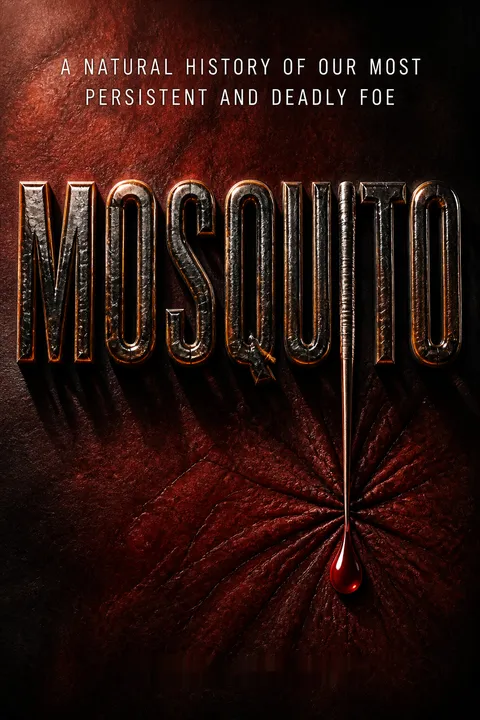
Mosquito by Andrew Spielman receives mostly positive reviews, praised for its engaging and informative content about mosquitoes and their impact on human history. Readers appreciate the blend of scientific information, historical context, and public health implications. The book covers mosquito biology, disease transmission, and control efforts. Some criticisms include America-centric focus and outdated information. Overall, reviewers found the book fascinating, well-written, and eye-opening, despite its sometimes gruesome subject matter. Many readers gained a new respect for mosquitoes and their role in shaping human history.
People Also Read
Glossary
Vector
Pathogen-carrying organismA vector is a living organism that carries a disease-causing agent between hosts. In this book, mosquitoes are vectors when they acquire a pathogen from an infected person or animal and transmit it through a later bite. Different mosquito species transmit different pathogens, and their feeding habits and lifespans affect how effectively they spread infection.
basic reproduction number
Expected secondary infectionsThe basic reproduction number, abbreviated BRN in the book, describes how many additional infections one infected person generates under favorable conditions. For mosquito-borne disease, the number is influenced by the abundance of the vector, its tendency to bite people, and its chance of living long enough to acquire and transmit a pathogen.
bridge vector
Connects animal and human hostsA bridge vector is a mosquito that can carry a pathogen from an animal reservoir to people. In the book's account of eastern equine encephalitis, one mosquito species maintains the virus among birds, while other mosquitoes bite both birds and humans and provide the route of infection into people.
anthropophilly
Preference for human hostsAnthropophilly is a mosquito's tendency to feed on humans. A mosquito strongly oriented toward people can be an efficient disease vector because it repeatedly connects human hosts. The book uses the term when describing Aedes aegypti, whose reliance on people for blood and small breeding containers helped it travel and thrive in human settlements.
autogenous
Eggs without a blood mealAn autogenous mosquito can produce fertile eggs without first taking a blood meal. Most female mosquitoes use blood nutrients to support egg production, but the book describes exceptions. Autogenous mosquitoes can differ in where they mate and how they feed, and may interbreed with blood-feeding forms under particular conditions.
Bacillus thuringiensis israelensis
Mosquito larva-killing bacteriumBacillus thuringiensis israelensis, commonly called Bti, is a bacterium used as a larvicide. When susceptible mosquito larvae ingest it, bacterial toxins damage the gut and kill them. The book presents Bti as a relatively environmentally specific control because its effects are concentrated on mosquitoes and closely related organisms.
species sanitation
Eradicating a target speciesSpecies sanitation is the zero-tolerance strategy associated in the book with mosquito fighter Fred Soper. It aims to eliminate every member of a targeted mosquito species from a defined area, rather than merely reduce its numbers. The approach assumes that incomplete removal can allow the population and the disease cycle to recover.
Roll Back Malaria
Integrated malaria reduction campaignRoll Back Malaria, abbreviated RBM, is the international campaign described in the book as seeking to reduce malaria deaths. Its strategy combines insecticide-treated bed nets, clinical care using combinations of drugs, and intelligence-based responses guided by surveillance and geographic information. The campaign aims to reduce disease burden rather than rely on a single method.
Download PDF
Download EPUB
.epub digital book format is ideal for reading ebooks on phones, tablets, and e-readers.








