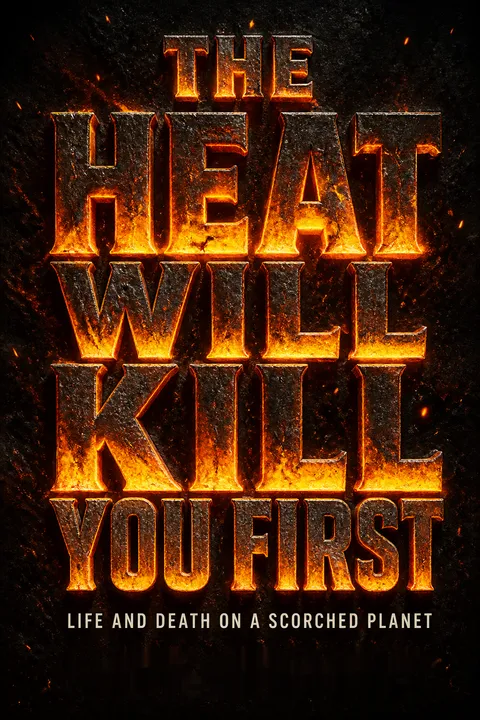


Key Takeaways
See extreme heat as climate change's engine, not a side effect.
Heat drives the chain. The book asks readers to stop treating heat as a mild rise on a thermometer. It is the force that can dry forests, intensify fires, warm rivers, stress crops, and disrupt the systems that support life. The 2021 Pacific Northwest heat dome made that force visible: Portland's temperature rose from 76 to 114 degrees in a day, while one poorer neighborhood measured 25 degrees hotter than a leafy, affluent area.
A narrow habitable range. The Goldilocks Zone is the range of conditions in which life can function, neither too hot nor too cold. Human activity has pushed the planet toward its limits. A global estimate cited in the book attributes 489,000 deaths to extreme heat in 2019, more than to other natural disasters combined.
What's striking is how this framing connects events that are often reported separately. Wildfire, crop failure, and overheated cities become linked outcomes of a common physical driver, not a grab bag of unrelated crises. That systems view is useful because it shifts attention upstream, toward causes that can be mitigated. It also resists the comforting idea that warming is gradual and therefore manageable. Still, global averages can conceal sharp local differences: a degree of warming means little without knowing who is exposed, for how long, and with what resources.
Water cannot save you when your body can no longer shed heat.
Cooling has limits. Hyperthermia means the body absorbs or produces more heat than it can release. In heat, blood moves toward the skin and sweat helps carry heat away. Humidity can weaken this cooling because sweat evaporates less readily. Wet bulb temperature measures how well evaporation can cool the air; 95 degrees is often cited as the upper limit of human adaptability to humid heat, not a universal safe threshold below which danger disappears.
Water is not a cure. On a 107-degree day in California, a couple hiking with their baby and dog became disoriented and died from hyperthermia. The case shows how exertion, direct sun, and a steep exposed trail can overwhelm even healthy people. Drinking water supports sweating, but it does not directly cool the body's core or guarantee protection from heatstroke.
The lesson is a corrective to a familiar piece of advice: hydrate and carry on. Hydration matters, but heat safety also depends on workload, shade, humidity, health, and the ability to stop. That makes preparation less like packing a water bottle and more like managing exposure. The body is not a machine with a single alarm that everyone hears at the same time. Cognitive impairment can arrive while someone still believes they can push through, so plans should make retreat and rest easy before judgment falters.
Make cooling public infrastructure, not a privilege of private wealth.
Cities intensify heat. An urban heat island is a built-up area that runs warmer than its surroundings because pavement, concrete, and buildings absorb and radiate heat, while sparse tree cover limits shade and evaporative cooling. Downtown Phoenix can be as much as 20 degrees hotter than nearby areas. The danger is not evenly shared: cooling centers may be out of reach for people without transport, while people in poorly insulated homes face dangerous indoor temperatures.
Power can be lifesaving. In Chennai, low-income families endure hot nights in homes with little shade and unreliable access to cooling. In Arizona, seventy-two-year-old Stephanie Pullman died after her electricity was disconnected over an unpaid bill of about $52 during a 107-degree spell. A heat plan that relies only on private air-conditioning leaves survival dependent on income, housing, and a functioning grid.
Cooling belongs in the same category as clean water and emergency shelter: its value is collective, but access is often privatized. That mismatch helps explain why a city can have plenty of air-conditioning and still leave its most vulnerable residents exposed. The infrastructure question is also a justice question. A useful test for heat policy is not simply whether a city has cooling resources, but whether people at greatest risk can reach them, afford them, and use them without jeopardizing work or safety.
Heat redraws where species live, where disease travels, and who must move.
Life seeks cooler ground. As habitats warm, animals and plants shift toward higher elevations or latitudes. The book reports that land animals are moving about a mile per year on average, while malaria-carrying mosquitoes are moving about 2.5 miles per year. Some species cannot move fast enough, or have nowhere cooler to go. Polar bears, for example, depend on sea ice to hunt seals, so losing ice removes both habitat and food.
Movement creates new contact. People also move when heat, drought, floods, or crop failures make home harder to inhabit, though money and borders shape who can move safely. As animals enter new ranges, they encounter species and people they rarely met before. These encounters can allow pathogens to jump hosts. The book describes this as one route by which climate disruption raises the risk of new infectious diseases.
Migration is often treated as an exception to a stable world, but ecology suggests it is a basic survival response. The important distinction is between movement with options and movement under duress. A bird can follow a shifting habitat more easily than a person trapped by debt, borders, or a job. Disease risk also grows from the conditions that bring species into contact, not from wildlife as an inherent threat. This makes habitat protection and public health parts of the same conversation.
Climate-driven heat has already cut global farm productivity by 21%.
Plants have thermal limits. A study cited in the book estimates that global crop production is 21 percent lower than it would have been without human-caused climate change. Heat accelerates plants' need for water, while drought can leave too little in the soil. It can also disrupt pollination and reproduction. For each additional degree Celsius of global mean warming, projected yields fall by about 7 percent for corn, 6 percent for wheat, and 3 percent for rice.
The food system is exposed. In Texas in 2022, some corn growers expected yields around half of normal after heat and drought. Corn is especially consequential because it feeds livestock, becomes ingredients in processed foods, and is used for fuel. New crop varieties and irrigation can help, but they cannot erase biological limits or solve the unequal distribution of water and food.
Food security depends on more than the amount of grain produced. It also depends on affordability, storage, trade, and who gets priority when supplies tighten. The book's examples make clear that heat can strike both the biological base of agriculture and the political systems layered on top of it. That distinction matters: a harvest shortfall need not become famine, but fragile distribution and unequal purchasing power can turn scarcity into crisis. Adaptation therefore needs both resilient crops and fairer food systems.
Follow ocean heat into the food webs and weather it reshapes.
The sea stores the heat. A marine heat wave is an unusually warm period in ocean water. The Blob, a vast Pacific warm-water event beginning in 2013, raised local ocean temperatures by about five degrees. It weakened phytoplankton, tiny organisms that anchor marine food webs. Krill and small fish declined, followed by disruption across the chain, including mass strandings of marine mammals, a collapsed Alaska cod fishery, and the deaths of about a million seabirds.
Effects travel far. The ocean has absorbed about 90 percent of the extra heat trapped by greenhouse gases, but that heat is stored, not eliminated. It changes currents, species ranges, and weather patterns. Along California's coast, warmer water and the loss of sea stars helped purple sea urchins proliferate and consume kelp forests. Coral reefs face bleaching when heat disrupts their relationship with the microscopic organisms that supply most of their food.
The ocean is both buffer and amplifier. By absorbing heat, it slows the immediate warming of the air; by holding that energy, it reshapes marine ecosystems and feeds changes in weather. This complicates the intuition that a cooler sea is merely a local benefit. Ocean systems connect distant communities through fisheries, storms, and food supply, so ecological damage can travel through economies as well. The Blob also illustrates why monitoring matters: a change that begins far offshore can become a crisis on land.
Protect outdoor workers; acclimatization is not a racial trait.
Work can become a lethal exposure. During the 2021 Pacific Northwest heat wave, farmworker Sebastian Perez died while working outdoors in a field at 106 degrees. He had migrated from Guatemala hoping to earn enough to build a home with his wife. The book cites research finding that farmworkers are 35 times more likely than workers in other occupations to die from heat-related causes. Workers also face increased injury risk, slower thinking, and long-term kidney damage.
Toughness is no safeguard. The belief that people from hot countries are naturally suited to heat has been used to excuse dangerous labor, including during slavery. Individual acclimatization can improve heat tolerance, but it does not cancel the effects of workload, humidity, or inadequate rest. Shade, cool drinking water, breaks, and enforceable workplace rules are basic protections, not optional comforts.
This story makes clear that heat risk is produced by labor conditions as much as by weather. When workers cannot pause without losing income or risking their jobs, advice to listen to one's body is inadequate. The history of racialized claims about heat tolerance shows how supposedly biological explanations can protect employers from scrutiny. Effective standards shift responsibility away from individual endurance and toward the people who control schedules, shade, water, and access to medical help.
Attribute heat disasters to climate change while evidence is still visible.
Probability can be measured. Extreme event attribution is the science of estimating how human-caused climate change alters the likelihood or intensity of a particular weather event. Friederike Otto and colleagues compare climate models with higher greenhouse gas levels to models with lower levels, asking how often similar events occur under each condition. The method does not claim that every hot day has one simple cause; it measures how human influence shifts the odds.
Evidence can arrive quickly. After the 2021 Pacific Northwest heat wave, World Weather Attribution researchers concluded within nine days that an event of that severity would have been virtually impossible without climate change. Attribution can make the crisis more immediate and inform debates about responsibility and compensation. It also requires care: different studies may answer different questions, and uncertainty about a specific event is not the same as uncertainty about human-caused warming.
Attribution turns climate science into a form of public accounting. It links a broad trend to a particular loss without pretending that weather has only one cause. That distinction is intellectually important and potentially consequential for law and policy. The method's speed also creates a communication challenge: rapid findings are useful during public attention, but must remain transparent about assumptions and limits. Trust depends not on claiming certainty everywhere, but on explaining exactly what the evidence can and cannot establish.
Name heat waves so people can recognize danger before bodies fail.
Make invisible risk legible. Hurricanes have names and wind-speed categories; heat waves often arrive as a vague stretch of hot days. That makes it harder for people to recognize a shared emergency. In Seville, officials piloted a system that named a dangerous heat event Zoe and issued practical advice: reduce activity, drink fluids, close blinds during the day, and ventilate at night.
Communication needs evidence. The system used a health-based ranking method that considered how particular air conditions related to mortality in that city. A survey cited in the book found that people who recalled hearing about Zoe were more likely to report protective behavior and discuss the event. The pilot was promising, not conclusive. Names only matter if alerts are timely, locally relevant, and paired with support for people who cannot simply stay home.
Naming is not a scientific discovery; it is a design choice about attention. Its value is that it can turn a collection of isolated hot days into a common event people recognize and discuss. But awareness campaigns cannot substitute for working cooling centers, safe workplaces, or accessible care. A good warning system should be judged by whether it changes behavior and reaches people most exposed, not by how memorable its labels are.
Use air-conditioning as refuge, not as the entire climate strategy.
Cold air changed society. Mechanical air-conditioning helped transform hot regions such as Houston, making new buildings, industries, and population growth possible. Harold Goodman built a vast business around low-cost units, reflecting the appeal of affordable cooling. Yet air-conditioning consumes substantial electricity, and much of the power still comes from fossil fuels. The book estimates that cooling accounts for nearly 20 percent of electricity used in buildings, while the number of room units worldwide could rise to 4.5 billion by 2050.
Cooling has side effects. Air-conditioning removes heat from interiors but releases it outdoors, contributing to urban heat buildup. Heavy demand can strain the grid; a long outage can make sealed buildings dangerous. This does not make air-conditioning dispensable. It makes efficiency, reliable power, and building design essential parts of safe cooling.
Air-conditioning is a classic case of a technology that solves an immediate problem while creating system-wide costs. Its benefits are real, especially for people whose bodies cannot safely tolerate heat, so simple rejection would be both impractical and inequitable. The better question is what combination of cooling methods reduces exposure with the least added energy demand. That includes efficient equipment, passive design, and public access, rather than treating each household's thermostat as a complete climate policy.
Retrofit cities for shade, airflow, and cooling everyone can reach.
Build for the climate ahead. Paris learned the deadly cost of heat in 2003, when about 15,000 people died in France. Many victims lived alone in poorly ventilated attic rooms beneath zinc roofs that absorb intense heat. The city now faces a difficult choice: preserve historic buildings as they are, or modify them for a climate they were not designed to withstand.
Cooling can be designed in. Useful measures include planting and maintaining shade trees, using lighter surfaces, improving insulation and airflow, restoring green space, and creating community resilience hubs with cooling and backup power. Paris's proposed redesign of the Champs-Élysées would replace some traffic space with paths, trees, and lighter paving. Such projects take money and time, and tree planting without long-term maintenance can fail.
Urban adaptation is not a menu of attractive objects, such as trees or white pavement. It is a coordinated redesign of land, buildings, transport, and emergency services. The Paris example also exposes a hard political problem: preservation can protect cultural memory while preserving features that now endanger residents. Neither wholesale demolition nor frozen heritage is a sufficient answer. Choices need to weigh safety, history, cost, and who benefits from each intervention.
Study planetary sunshades cautiously, never as substitutes for cutting emissions.
A risky intervention. Solar radiation management, also called solar geoengineering, would add reflective particles high in the atmosphere to send a small amount of sunlight back into space. The idea imitates the temporary cooling effect of a major volcanic eruption. David Keith argues that it deserves research because it might reduce extreme heat while emissions fall, with potential benefits for people in the hottest and poorest regions.
Cooling is not a cure. The particles would need replenishing, and the intervention could affect rainfall, including monsoons that agriculture depends on. It also creates a moral hazard: confidence in a technical fix could weaken the pressure to stop burning fossil fuels. The book presents no settled answer, only a reason to examine risks, governance, and distribution of harms before anyone attempts deployment.
The proposal forces a difficult distinction between studying a tool and endorsing its use. Refusing even to investigate a possible emergency measure may be imprudent, but deploying it could create new risks and conflicts over who controls the planetary thermostat. Its most important ethical test is distribution: who receives cooling, who bears side effects, and who gets a voice in the decision? Research can inform those questions, but cannot replace emissions cuts or political agreement.
Analysis
The book's central achievement is to make an invisible force narratable. Heat leaves few immediate visual traces, so Goodell uses bodies, landscapes, and infrastructure as instruments of perception: a family lost on a trail, a worker in a field, a city apartment that turns into an oven, a seal carrying an ocean sensor. These stories translate thermodynamics into lived consequences without reducing the subject to statistics alone.
The argument also moves between scales. A body's cooling system has limits; a city adds heat through its materials and energy use; climate change shifts the conditions on which ecosystems and economies depend. That movement reveals a crucial asymmetry: exposure is physical, but vulnerability is organized by income, labor rules, housing, race, and access to electricity. Heat is therefore not only an environmental hazard. It is a stress test of social arrangements.
The book is most persuasive when it separates mechanisms from outcomes. Heat can raise the probability of an event without being its sole cause. A crop shortfall does not automatically mean famine, and a warning does not guarantee safety. Such distinctions strengthen rather than weaken the case for action, because they identify where choices still matter.
The resulting ethic is neither technological optimism nor fatalism. Cooling equipment, crop breeding, urban redesign, and even research into solar geoengineering may reduce harm, but each has limits and distributional consequences. The durable response combines emissions reduction with adaptation and public protection. The deeper question is not whether humans can engineer comfort, but whether they can make safety available beyond the wealthy, and whether they can respect biological limits before crisis makes the choices for them.
Review Summary
The Heat Will Kill You First is a gripping yet terrifying book about climate change's devastating impacts. Readers praise Goodell's accessible writing style, vivid storytelling, and comprehensive coverage of heat-related issues. The book explores topics like extreme weather, rising sea levels, disease spread, and social inequalities exacerbated by climate change. While some found certain chapters dull or overly personal, most reviewers consider it a must-read that illuminates the urgent need for action. Many readers express feeling deeply affected, even depressed, by the book's stark portrayal of our warming planet's future.
People Also Read








Glossary
Goldilocks Zone
habitable temperature rangeThe range of environmental conditions in which a form of life can survive and function. In astronomy, the term describes the distance from a star where liquid water can exist on a planet's surface. In the book, it also describes the relatively stable temperature conditions within which humans and other species evolved.
heat dome
persistent lid of hot airA persistent high-pressure system that traps hot air over a region, sometimes for days or weeks. The trapped air warms further as it remains over land, which can absorb and amplify heat. A heat dome contributed to the record-breaking 2021 heat wave in the Pacific Northwest.
hyperthermia
dangerously high body temperatureA condition in which the body absorbs or generates more heat than it can release, causing internal temperature to rise abnormally. It can result from environmental exposure, strenuous activity, or both. Severe hyperthermia can lead to heatstroke, organ damage, and death.
wet bulb temperature
evaporative cooling limitA measure of the lowest temperature that evaporation can produce in the surrounding air. It is measured with a thermometer covered by a wet cloth. When air is humid, less water evaporates and the wet bulb reading rises, indicating that sweat will cool the body less effectively.
urban heat island
hotter built-up areaA populated area that is warmer than its rural surroundings because pavement, concrete, and buildings absorb and release heat, while reduced vegetation means less shade and evaporative cooling. Vehicles, air conditioners, and other machines add waste heat. The difference can be especially pronounced at night.
extreme event attribution
climate influence on event oddsA scientific method for estimating how human-caused climate change affects the likelihood or intensity of a specific weather event. Researchers compare observations and climate-model simulations under different greenhouse gas conditions. The method can show that climate change altered an event's odds without claiming it was the event's only cause.
marine heat wave
unusually warm ocean periodA period when ocean temperatures in a region remain unusually high. Such events can disrupt marine food webs, shift species ranges, and damage ecosystems such as kelp forests and coral reefs. The Pacific event known as the Blob showed how ocean heat can also influence weather on nearby land.
solar radiation management
reflect sunlight to cool EarthA proposed form of solar geoengineering that would introduce reflective particles into the upper atmosphere to reduce the amount of sunlight reaching Earth. It could lower temperatures, but it would not remove carbon dioxide and might affect rainfall or other climate patterns. The book presents it as a risky intervention requiring research and governance.
FAQ
What is The Heat Will Kill You First: Life and Death on a Scorched Planet by Jeff Goodell about?
- Focus on extreme heat: The book investigates how extreme heat, driven by human-caused climate change, is becoming the most deadly and transformative force on Earth.
- Human and ecological impact: Goodell details the effects of heat on people, animals, plants, and entire ecosystems, using real-world events like the 2021 Pacific Northwest heat wave.
- Interdisciplinary approach: The narrative blends scientific research, personal stories, and investigative journalism to reveal the multifaceted consequences of rising temperatures.
- Urgency and adaptation: Goodell stresses the urgent need for adaptation and mitigation as heat threatens the stability of civilization and pushes us beyond the "Goldilocks Zone."
Why should I read The Heat Will Kill You First by Jeff Goodell?
- Urgent wake-up call: The book makes the abstract threat of climate change immediate and personal by showing how heat is already killing people and disrupting societies.
- Comprehensive perspective: Goodell combines science, storytelling, and on-the-ground reporting to provide a holistic view of heat’s dangers and its role in climate change.
- Insight into inequality: The narrative highlights how heat disproportionately affects the poor, outdoor workers, and marginalized communities, exposing deep social and economic divides.
- Actionable awareness: Readers gain knowledge to inspire informed discussions and consider solutions for resilience and adaptation.
What are the key takeaways from The Heat Will Kill You First by Jeff Goodell?
- Heat as a silent killer: Extreme heat is the deadliest weather hazard, often killing invisibly and exacerbating other crises like wildfires, disease, and migration.
- Limits of adaptation: While technology and innovation can help, they cannot fully offset the rapid pace and intensity of heat increases caused by fossil fuel emissions.
- Heat exacerbates inequality: Wealth and privilege can buy protection, but the poor and vulnerable suffer most, making heat a "predatory event."
- Interconnected crises: Heat intensifies food insecurity, migration, and pandemics, underscoring the need for integrated climate action.
How does Jeff Goodell explain the science of heat and its effects in The Heat Will Kill You First?
- Heat as molecular vibration: Heat is described as the kinetic energy of molecules; temperature measures their average speed, with higher speeds meaning more heat.
- Heat waves and atmospheric dynamics: Changes in the jet stream and Rossby waves can trap hot air, causing prolonged and deadly heat waves.
- Human body heat management: Humans regulate core temperature through sweating and blood flow, but extreme heat can overwhelm these systems, leading to heat exhaustion and heatstroke.
- Biological breakdown: At high temperatures, proteins unfold and cells break down, causing organ failure and death in humans, animals, and plants.
What is the "Goldilocks Zone" concept in The Heat Will Kill You First by Jeff Goodell?
- Definition of Goldilocks Zone: It refers to the narrow range of temperatures where life can survive and thrive—"not too hot, not too cold."
- Human evolutionary context: Humans evolved within this zone, with adaptations like sweating and bipedalism to manage heat.
- Crossing the threshold: Rapid warming is pushing populations and ecosystems outside this zone, leading to mass die-offs and migrations.
- Metaphor for climate stability: Goodell uses the concept to warn that exceeding this zone threatens civilization’s survival.
How does The Heat Will Kill You First by Jeff Goodell address the impact of heat on urban areas?
- Urban heat island effect: Cities can be up to 20 degrees hotter than surrounding areas due to heat-absorbing materials and waste heat from air conditioning.
- Infrastructure vulnerabilities: Heat stresses power grids, water supplies, and transportation, increasing the risk of blackouts and cascading failures.
- Social inequities: Poor neighborhoods often have fewer trees and cooling resources, making residents more vulnerable to heat.
- Real-life stories: Goodell shares personal accounts from cities like Phoenix and Chennai to illustrate daily struggles with urban heat.
What does Jeff Goodell reveal about heat-related deaths among outdoor workers in The Heat Will Kill You First?
- High risk for laborers: Farmworkers, delivery drivers, and construction workers face extreme heat daily, with farmworkers being 35 times more likely to die from heat-related causes.
- Tragic case studies: The story of Sebastian Perez, a Guatemalan farmworker who died from heatstroke, highlights systemic failures in worker protections.
- Lack of regulations: The US has no federal heat safety standards for workers, and state-level rules are often weak or unenforced.
- Long-term health impacts: Chronic illnesses like kidney disease are rising among heat-exposed workers, showing heat’s deadly toll beyond immediate fatalities.
How does The Heat Will Kill You First by Jeff Goodell explain the relationship between heat and food security?
- Heat stresses crops: Extreme heat accelerates plant metabolism, increases water needs, and damages crops during critical growth phases, reducing yields.
- Global crop declines: Climate-driven heat and drought have caused a 21% loss in global agricultural production over the last 20 years.
- Food price and instability: Heat-induced crop failures contribute to food price spikes and have triggered social unrest and conflict.
- Adaptation challenges: New crop varieties and indoor farming offer hope, but rapid warming and water scarcity threaten global food system stability.
What insights does Jeff Goodell provide about air-conditioning and its environmental impact in The Heat Will Kill You First?
- History and necessity: Air-conditioning has shifted from a luxury to a necessity, enabling the growth of hot cities and changing lifestyles.
- Environmental costs: Air-conditioning relies on electricity, often from fossil fuels, and uses potent greenhouse gases, creating a feedback loop of more heat and energy use.
- Social divide: Access to air-conditioning creates a "thermal divide," where the wealthy stay cool while vulnerable populations suffer.
- Grid strain: Increasing demand for cooling strains power grids, risking blackouts during heat waves.
How does The Heat Will Kill You First by Jeff Goodell address the spread of diseases by mosquitoes and ticks due to heat?
- Mosquito range expansion: Warmer climates allow species like Aedes aegypti to spread diseases such as dengue, Zika, and yellow fever into new regions.
- Tick-borne threats: Ticks, including invasive species, are moving northward, increasing the risk of diseases like Lyme and Crimean Congo Hemorrhagic Fever.
- Pandemic risks: Climate-driven animal migrations and zoonotic spillover events raise the risk of new pandemics.
- Heat and disease: Rising temperatures worsen over half of known infectious diseases, making heat a key driver of global health threats.
What is the significance of "The Blob" and marine heat waves in The Heat Will Kill You First by Jeff Goodell?
- The Blob explained: A massive marine heat wave in the Pacific Ocean raised water temperatures by 5°F, disrupting marine ecosystems and food chains.
- Ecological consequences: The Blob caused mass die-offs of sea stars, seabirds, and fish, collapsed fisheries, and contributed to wildfires and droughts on land.
- Ocean’s role in climate: The ocean absorbs 90% of excess heat from fossil fuel emissions, buffering atmospheric warming but also storing heat that drives marine heat waves.
- Threat to coral reefs: Marine heat waves cause coral bleaching and threaten the survival of reefs like the Great Barrier Reef.
How does Jeff Goodell describe the emerging science of extreme event attribution in The Heat Will Kill You First?
- Attribution science: Scientists can now determine how much human-caused climate change increases the likelihood and intensity of specific heat waves.
- Real-time analysis: Projects like World Weather Attribution provide rapid assessments, showing many recent deadly heat waves would have been "virtually impossible" without climate change.
- Legal and social implications: Attribution science could hold fossil fuel companies legally responsible for climate damages, transforming climate justice.
- Scientific challenges: Predicting future heat extremes and their limits remains complex, with ongoing research into atmospheric dynamics and jet stream behavior.
Download PDF
Download EPUB
.epub digital book format is ideal for reading ebooks on phones, tablets, and e-readers.








