

Key Takeaways
Keep the dream, but let its route change.
Dreams need a working route. Kalam’s childhood fascination with flight led him to study aeronautical engineering and hope for a place as an air force pilot. He narrowly missed selection, ranking ninth when only eight candidates could be accepted. The disappointment did not end his ambitions. He took a scientific post instead, entered India’s emerging space programme, and went on to lead major engineering projects.
Purpose can outlast one plan. His central lesson is not that every ambition comes true as imagined, but that a person must keep aspiring and work seriously toward what matters. A failed route can reveal a different way to contribute, provided the dream is not confused with one specific job title.
What's useful here is the distinction between a goal and the value beneath it. Kalam wanted to fly, but the deeper attraction was to science, invention, and reaching beyond familiar limits. That distinction helps explain why a blocked ambition need not make earlier effort pointless: skills and interests can travel to another field. The caution is that setbacks do not always reveal a hidden destiny. Sometimes they are simply losses, and people need practical support as well as a hopeful interpretation. The strongest version of the lesson is to grieve the closed door, then ask what part of the original desire can still be pursued.
Treat small duties as training for the work you cannot yet imagine.
Responsibility began early. At eight, Kalam helped his cousin Samsuddin distribute newspapers after wartime restrictions ended the train’s stop at Rameswaram. Bundles were tossed from the moving train, and Kalam had to catch them, sort the papers, deliver them, and collect payments. The work fitted around dawn mathematics lessons, religious instruction, school, and homework. His earnings helped a large household manage shortages.
Reliability became practical knowledge. The route taught him to judge distance and timing, keep track of accounts, and show up when others depended on him. He remembered the job with affection, not only as hardship. It gave him an early experience of being useful and of keeping a promise even when the rest of the day was already full.
The episode connects learning to real responsibility. A child handling routes, customers, and money meets mathematics as a tool for navigating the world, not merely a school subject. That kind of applied learning can strengthen competence and confidence. Still, the story should not turn childhood economic pressure into a universal virtue. Kalam describes a family under strain, and his work helped address a real need. The broader lesson is to give young people meaningful tasks and trust, while ensuring that responsibility supports their development rather than replacing the education and care they deserve.
Find people who enlarge your sense of what is possible.
Ambition needs allies. Ahmed Jalalluddin, an older cousin who helped build Kalam’s father’s boat, noticed the boy’s curiosity and patiently discussed science, nature, books, and life beyond the island. He helped arrange Kalam’s move to a larger school, supported him through homesickness, and encouraged him as he entered the wider world. His sister Zohra gave a different kind of support: she used her gold jewellery as security for the money needed to send Kalam to the Madras Institute of Technology.
Belief became material help. The admission fee was a serious burden for the family. Kalam studied hard, earned a scholarship, and later redeemed the jewellery. His progress depended not only on individual effort, but on people willing to invest trust, time, and resources in him.
This story makes mentorship concrete: it is not just praise, but attention, guidance, and sometimes a costly act of faith. Jalalluddin helped Kalam imagine a life beyond Rameswaram; Zohra helped make that life financially possible. Together they resemble the social infrastructure behind achievement, often hidden when success is narrated as a solo performance. The account also invites a useful question: whose ambitions receive this kind of investment? Zohra’s generosity is celebrated, while her own aspirations remain largely outside the frame. Support matters most when it expands opportunity without making one person’s dreams the only ones that count.
Let rejection redirect your effort, not define your capacity.
Failure changed the route. At the Madras Institute of Technology, Kalam’s professor rejected his aircraft design and gave him three days to redo it, warning that his scholarship depended on the result. Kalam worked intensely and produced a design the professor praised. Years later, the air force selection board delivered a different kind of rejection: Kalam ranked ninth, while there were only eight places. He went to Rishikesh, spoke with Swami Sivananda, and returned ready to accept a scientific post in Delhi.
The response matters. The professor’s challenge showed Kalam that concentrated effort could uncover ability he had not yet used. The failed pilot selection forced him to reconsider where that ability might serve. Neither event erased the disappointment, but each became part of a change in direction rather than a verdict on his worth.
These episodes show two distinct forms of feedback. The design assignment offered a specific problem and a chance to improve; the selection result closed an opportunity without implying that Kalam lacked all relevant ability. Separating those meanings is central to learning from rejection. The professor’s approach also deserves nuance: intense pressure can focus effort, but a scholarship threat is not a reliable or humane teaching method for everyone. A sound challenge offers clear standards and support, not fear alone. The useful principle is to treat outcomes as information, then decide whether to revise the work, the strategy, or the destination.
When storms erase the plan, rebuild before surrendering the purpose.
Recovery is part of the work. Kalam’s father built a ferry boat to carry pilgrims between Rameswaram and Dhanushkodi. A cyclone washed it away, destroying a source of family income and a project the young Kalam had watched take shape. His father eventually built another boat and resumed the business. In 1964, a far more devastating cyclone destroyed part of Dhanushkodi and swept away the ferry again.
The same lesson returned in engineering. Years later, the first experimental flight of the SLV-3 launch vehicle failed, and the vehicle fell into the sea. Kalam describes the shock and exhaustion of that moment, but also the need to rest, investigate what went wrong, and continue. His father’s response to the storm had already shown him that plans can be rebuilt after forces beyond one’s control disrupt them.
The ferry and the launch vehicle make resilience tangible: both were complex projects exposed to forces no individual could fully command. The story is strongest when recovery means more than cheerful persistence. It includes acknowledging loss, restoring energy, and examining what can be changed. This resembles how resilient systems are designed: they anticipate disruption and make recovery possible, rather than assuming nothing will go wrong. At the same time, not every loss can be repaired, and rebuilding is not solely a matter of character. Resources, collective effort, and time determine which plans can begin again.
Protect pluralism through direct, local acts of courage.
Harmony required intervention. As a child, Kalam shared a classroom bench with his Hindu friend Ramanadha Sastry. A new teacher moved Kalam to the back because he wore a Muslim skullcap while his friend wore a Brahmin tuft. Both boys told their fathers. Kalam’s father, the temple priest, and the local church priest confronted the teacher together. The teacher acknowledged his bias and corrected the seating arrangement.
Trust was built through practice. The three religious leaders also met regularly to discuss community concerns and defuse rumours. Elsewhere, a church at Thumba was given over for India’s space research station, with the congregation’s consent. These episodes show pluralism not as a slogan, but as relationships, communication, and decisions that protect people’s equal place in a community.
The classroom incident shows how discrimination can be interrupted without turning the offending teacher into an irredeemable enemy: the leaders insist on correction, hear an explanation, and secure changed behaviour. Their regular meetings also suggest that trust is maintained before a crisis, not improvised during one. The church’s contribution to scientific work gives cooperation a visible institutional form. Yet the episodes depend heavily on respected elders stepping in. A durable pluralism also needs rules and everyday habits that protect children when no influential person happens to notice an injustice.
Build teams where failure exposes systems, not just individual blame.
Leadership joined the parts. Kalam’s mentor Vikram Sarabhai listened to junior engineers, trusted them with responsibility, and connected projects that initially seemed unrelated. When a demonstration of a rocket nose-cone mechanism failed, Sarabhai did not simply scold the engineers. He explored the conditions behind the problem and concluded that the team needed an integrated space for system testing. He then created a new engineering section to address that gap.
Errors can reveal missing structure. The episode shows a leader looking beyond the immediate malfunction to the organization that produced it. Sarabhai also encouraged young engineers to see their tasks as part of a larger national programme, including rockets, launch facilities, satellites, and supporting technologies. Trust and clear coordination helped make ambitious work possible.
This is a strong example of systems thinking. A technical failure may arise not from one careless person, but from interfaces, roles, or testing arrangements that make error likely. Leaders who investigate those conditions can improve both performance and learning. The same approach underlies a healthy safety culture: people must be able to report problems, while teams still identify responsibility and correct unsafe practice. Avoiding blame is not the same as avoiding accountability. Sarabhai’s example is valuable because it pairs confidence in people with organizational changes that address what the failure has exposed.
Count the human cost behind every celebrated technical achievement.
Courage has consequences. During a laboratory accident involving a dangerous sodium mixture, Kalam’s colleague Sudhakar broke a window and pushed Kalam out of the burning room. Sudhakar suffered severe burns and hand injuries. Kalam felt gratitude, but also a new sense of responsibility toward the work they shared.
Public missions involve private grief. In 1999, an aircraft carrying an airborne surveillance system crashed after a component fell off. All eight crew members died. Kalam met their families, including parents and young widows caring for infants. Their questions stayed with him, as did the long process families faced in receiving compensation. He argues that national progress depends on workers’ toil and sacrifice, and that people in authority must remember whose lives make their plans possible.
These accounts place human safety inside engineering rather than treating it as an afterthought. The laboratory accident shows individual courage, while the crash exposes the stakes of system failure and the obligations owed to bereaved families. That distinction matters: admiration for a rescuer cannot substitute for prevention, and public praise cannot compensate for slow or inadequate support. Stories of sacrifice can inspire solidarity, but they can also make preventable danger seem noble. The more demanding lesson is to honour workers by improving safety, taking responsibility for failures, and treating families with care after disaster.
Read widely enough to borrow wisdom across disciplines and faiths.
Books became working companions. As a student with little money, Kalam needed to sell a Russian novel to afford a train ticket home. The second-hand bookseller offered a loan against the book instead, letting Kalam keep it. He later read writers including Tolstoy, Walter Scott, and Thomas Hardy, and returned often to books that helped him think through difficult moments.
Different traditions offered different lenses. He names Light from Many Lamps, the Tamil Thirukural, and Alexis Carrel’s Man the Unknown among his important books. He also read the Koran, the Vedas, and the Bhagavad Gita, alongside poetry. These works shaped his moral reflection and gave him language for questions about work, grief, science, and spiritual life.
Kalam’s reading life is notable for range rather than allegiance to a single intellectual tradition. Literature offers imagined lives, philosophical writing supplies principles, and scientific texts help describe the material world. Reading across these forms can prevent a person from mistaking one vocabulary for the whole truth. The bookseller’s kindness also shows how access depends on human relationships, not only personal appetite. Still, wide reading is not automatically wise reading. The value comes from returning to ideas, testing them against experience, and allowing disagreement between texts to sharpen judgment.
Tie national ambition to practical benefits people can actually use.
Technology needs a public purpose. Sarabhai argued for building India’s own space capabilities not simply to compete with other nations, but to support communication, weather forecasting, education, and the search for water resources. Kalam carried that emphasis into work at the Technology Information, Forecasting and Assessment Council, or TIFAC. Its India Vision 2020 effort organized 17 task teams, drew on more than 500 members and consulted over 5,000 people. The work produced 25 reports for the prime minister in 1996.
A vision must reach people. As president, Kalam travelled widely, listened to citizens, and urged young people to ask questions. He also promoted Providing Urban Amenities in Rural Areas, or PURA. In his view, plans gain force when they are explained, debated, and connected to daily life.
This takeaway links technical ambition to public value, a useful counterweight to innovation pursued for prestige alone. The consultation behind India Vision 2020 gave its planning process a broad base, while the proposed applications made the case for advanced science in practical terms. But a plan’s scale and participation do not establish that its goals were achieved. The cited growth target was aspirational, and turning forecasts into services depends on implementation, institutions, and sustained evaluation. Kalam’s emphasis on conversation is therefore more than outreach: it is a way to keep national plans answerable to the people they claim to serve.
Analysis
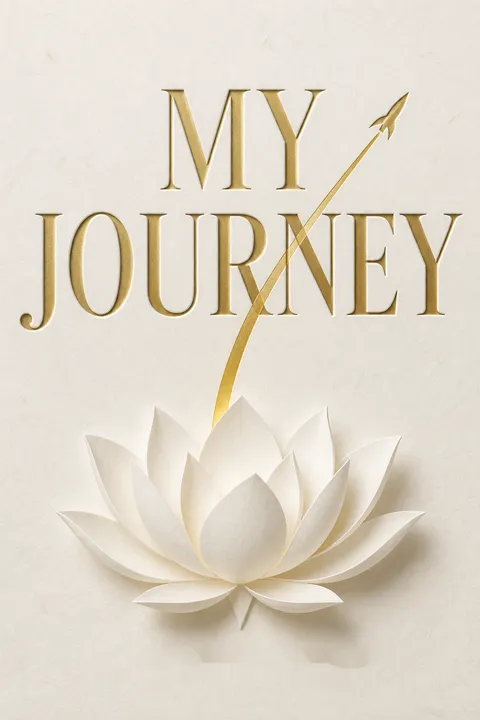
My Journey is a memoir organized less as a career chronology than as a series of moral apprenticeships. A boat taking shape on a beach introduces engineering; a newspaper route teaches punctuality and responsibility; a humiliating classroom incident makes secularism a lived question; a failed launch tests what leadership looks like after public disappointment. The arc from Rameswaram to the presidency is therefore not simply upward mobility. It is a repeated widening of scale, from family and village to laboratory and nation, while carrying forward habits learned in the smaller settings.
Three kinds of support recur. Material support appears in Zohra’s mortgaged jewellery. Intellectual support appears in Jalalluddin’s questions and Sarabhai’s trust. Emotional support appears in the care of Kalam’s parents and in Brahm Prakash’s quiet response after the failed SLV-3 flight. This makes the memoir’s account of achievement more collective than the familiar lone-genius story. The scientist is also a beneficiary of hospitality, mentoring, family labour, and institutions capable of learning.
The book’s combination of scientific work and religious faith is presented as complementarity: empirical inquiry explains mechanisms, while spiritual reflection helps orient a life toward meaning and conduct. That synthesis is personally coherent, though it should not be mistaken for a scientific argument that spiritual explanations establish technical facts. The memoir’s practical examples, from community dialogue to integrated rocket testing, make its strongest case through action rather than doctrine.
A tension also runs through its celebration of discipline and sacrifice. The memoir gives women’s care and generosity a central role, yet their ambitions receive less attention than the careers they enable. Likewise, stories of dangerous work and personal sacrifice are moving, but they can obscure the obligation to prevent avoidable harm. The most durable reading holds both truths together: perseverance and service matter, and institutions must share the burdens they ask individuals to bear.
Review Summary
My Journey: Transforming Dreams into Actions receives high praise from readers for its inspirational and heartwarming content. Reviewers appreciate Kalam's humble storytelling, highlighting his childhood experiences and the influences that shaped his life. The book's short, impactful stories resonate with readers, offering valuable life lessons and insights into Indian culture. Many recommend it for its motivational power, especially for students and young people. Critics note its brevity but commend its ability to provoke thought and inspire personal growth.
People Also Read









Glossary
SLV-3
India’s satellite launch vehicleThe Satellite Launch Vehicle-3 was an Indian launch vehicle project led by Kalam at the Indian Space Research Organisation. Its purpose was to develop the capability to place satellites into orbit. The first experimental flight failed when the vehicle went out of control and fell into the sea, making analysis and continued development central parts of the project.
Thumba Equatorial Rocket Launching Station (TERLS)
India’s early rocket research stationTERLS was established at Thumba, Kerala, near the equator, for research involving rockets and the upper atmosphere. Under Vikram Sarabhai’s leadership, the project used local facilities, including a church and the bishop’s house, which were made available for scientific work. It became an important early base for India’s space programme.
Nandi
An indigenous hovercraft prototypeNandi was a hovercraft prototype designed and built by Kalam and a small team at the Aeronautical Development Establishment. The project began without established designs or experienced local specialists. The team completed a working prototype, but the programme was later shelved when succeeding defence ministers did not support its continued use.
Technology Information, Forecasting and Assessment Council (TIFAC)
Technology planning councilTIFAC was the council Kalam chaired while helping develop a national vision for India’s economic and technological development. Its India Vision 2020 work organized 17 task teams, involved more than 500 members, consulted over 5,000 people, and produced 25 reports. The process aimed to connect technical expertise with a broad national development plan.
India Vision 2020
A national development planIndia Vision 2020 was a development vision prepared through TIFAC to describe how India might become an economically developed nation. It drew on teams and consultations across sectors and considered areas including agriculture and information technology. Kalam treated the vision as a mission that needed public explanation and debate, not only a written plan.
Providing Urban Amenities in Rural Areas (PURA)
A rural development initiativePURA was an initiative Kalam continued to promote after his presidency. Its name expresses the goal of bringing urban amenities to rural areas. In the memoir, it appears as part of his broader effort to connect technology and development with the needs of people outside major cities, alongside teaching, research, and engagement with students.
FAQ
1. What is "My Journey: Transforming Dreams into Actions" by A.P.J. Abdul Kalam about?
- Personal memoir: The book is a collection of autobiographical stories and reflections from Dr. Kalam’s childhood to his years as a scientist and President of India.
- Focus on formative experiences: It highlights the lesser-known incidents, people, and values that shaped his character, ambitions, and worldview.
- Themes of dreams and perseverance: Central to the narrative is the importance of dreaming big, working hard, and overcoming setbacks.
- Inspiration for youth: The book is intended to motivate young readers to pursue their dreams and contribute positively to society.
2. Why should I read "My Journey: Transforming Dreams into Actions" by A.P.J. Abdul Kalam?
- Learn from a visionary: Dr. Kalam shares practical wisdom and life lessons drawn from his own journey from humble beginnings to the highest office in India.
- Relatable and human stories: The book offers intimate glimpses into his family life, failures, mentors, and moments of doubt, making it accessible and inspiring.
- Universal values: It emphasizes values like humility, resilience, compassion, and the pursuit of knowledge, which are relevant to readers of all ages.
- Motivation for self-improvement: Readers seeking encouragement to overcome obstacles and pursue their goals will find actionable advice and hope.
3. What are the key takeaways from "My Journey: Transforming Dreams into Actions"?
- Dreams require action: Dr. Kalam insists that dreams are not what we see in sleep, but those that keep us awake and drive us to act.
- Value of setbacks: Failures and adversities are necessary for growth, introspection, and eventual success.
- Role of mentors and family: The influence of parents, teachers, and mentors is crucial in shaping one’s character and destiny.
- Service and humility: True happiness and fulfillment come from serving others and remaining humble, regardless of achievements.
4. How does A.P.J. Abdul Kalam describe his childhood and family influences in "My Journey"?
- Simple beginnings: Kalam grew up in Rameswaram, Tamil Nadu, in a large, loving, but financially modest Muslim family.
- Father’s wisdom: His father, Jainulabdeen, was a boat owner and imam, known for his spirituality, generosity, and calmness, which deeply influenced Kalam’s outlook.
- Mother’s sacrifice: His mother, Ashiamma, embodied selflessness and resilience, often sacrificing her own needs for the family’s well-being.
- Harmony and values: The family lived in a multi-religious community, fostering values of tolerance, harmony, and mutual respect.
5. What role did mentors and teachers play in A.P.J. Abdul Kalam’s life, according to "My Journey"?
- Ahmed Jalalluddin: His brother-in-law and first mentor, who encouraged his curiosity, supported his education, and instilled positive thinking.
- School teachers: Teachers like Reverend Iyadurai Solomon and Professor Srinivasan inspired his love for science and pushed him to realize his potential.
- Dr. Vikram Sarabhai: As a professional mentor, Sarabhai’s leadership and vision shaped Kalam’s career in India’s space program.
- Mentorship lessons: The book emphasizes that mentors help us discover our strengths, guide us through failures, and shape our character.
6. How does "My Journey" by A.P.J. Abdul Kalam address the importance of failure and setbacks?
- Personal failures: Kalam recounts failing to qualify as an Air Force pilot and the initial failure of the SLV-3 rocket launch as pivotal moments.
- Learning opportunities: He views setbacks as essential for introspection, learning, and building resilience.
- Destiny and acceptance: The book discusses accepting destiny, learning from disappointments, and moving forward with renewed purpose.
- Advice to readers: Kalam encourages embracing failures as stepping stones to greater achievements.
7. What are some of the specific concepts or values highlighted in "My Journey: Transforming Dreams into Actions"?
- Dreams and hard work: The necessity of dreaming big and working persistently to achieve those dreams.
- Spirituality and science: The integration of spiritual values with scientific pursuit, showing they are not mutually exclusive.
- Service to others: The importance of humility, compassion, and serving society as a path to true fulfillment.
- Secularism and harmony: The value of religious harmony and respect for diversity, as seen in his upbringing and community.
8. How does A.P.J. Abdul Kalam describe the role of books and reading in his life in "My Journey"?
- Books as companions: Kalam considers books lifelong friends that have guided and comforted him through various phases of life.
- Influential works: He highlights "Light from Many Lamps," the "Thirukural," and "Man the Unknown" as particularly impactful.
- Religious and philosophical texts: He draws wisdom from the Koran, Bhagavad Gita, and other scriptures, integrating their teachings into his worldview.
- Encouragement to youth: Kalam urges young people to cultivate the habit of reading for personal growth and inspiration.
9. What are some memorable incidents or stories from "My Journey: Transforming Dreams into Actions"?
- Building the family boat: Watching his father and cousin build a ferry boat sparked his interest in engineering.
- Newspaper delivery boy: At age eight, Kalam worked delivering newspapers, learning responsibility and the value of hard work.
- Religious harmony incident: When a teacher tried to segregate students by religion, the elders of the community resolved it peacefully, reinforcing secular values.
- Laboratory accident: A near-fatal accident at Thumba taught him about courage, gratitude, and the selflessness of colleagues.
10. How does "My Journey" by A.P.J. Abdul Kalam portray the development of India’s space and missile programs?
- Early involvement: Kalam describes his entry into INCOSPAR and ISRO, working under Dr. Vikram Sarabhai.
- SLV-3 project: He details the challenges, teamwork, and eventual success of India’s first satellite launch vehicle.
- Missile development: The book covers his leadership in developing indigenous missile systems like Prithvi and Agni.
- Lessons in leadership: Kalam shares insights on vision, team-building, learning from failures, and the integration of science and national development.
11. What are the best quotes from "My Journey: Transforming Dreams into Actions" and what do they mean?
- "Dreams are not those that we see in our sleep; they should be the ones that never let us sleep." – Emphasizes the power of passionate, action-driven dreams.
- "Adversity always presents opportunities for introspection." – Suggests that challenges are valuable for self-discovery and growth.
- "Do not make rocketry your profession, your livelihood—make it your religion, your mission." – Stresses the importance of total commitment and passion in one’s work.
- "To be able to be gentle and forgiving, compassionate and kind are finally all we need to be..." – Highlights the enduring value of humanity over achievements.
12. What is A.P.J. Abdul Kalam’s advice to youth and readers in "My Journey: Transforming Dreams into Actions"?
- Keep dreaming and working: He urges youth to dream big, work hard, and never give up in the face of obstacles.
- Value education and mentors: Seek knowledge, read widely, and learn from teachers and mentors.
- Embrace setbacks: Treat failures as necessary steps toward success and personal growth.
- Serve society: Use your talents and achievements to contribute to the nation and uplift others, embodying humility and compassion.
About the Author




Download PDF
Download EPUB
.epub digital book format is ideal for reading ebooks on phones, tablets, and e-readers.








