

Key Takeaways
Let childhood questions grow into a mission, then keep feeding them
Curiosity had a home. Growing up in Rameswaram, Kalam watched birds and the changing sky, wondered how flight worked, and searched for answers in books. A local freedom fighter, S.T.R. Manickam, opened his home library to children. Kalam also collected tamarind seeds for a little money and helped his cousin distribute newspapers, giving him both responsibility and a window onto events beyond town.
A lesson took flight. At ten, he admitted to his teacher Sivasubramania Iyer that a classroom explanation of bird flight had not made sense. The teacher took the class to the shore to observe birds in motion. Seeing the idea in nature helped Kalam understand it, and turned a passing fascination into an ambition to study flight.
What's striking is how curiosity becomes durable when it meets access: a library, an attentive teacher, and a chance to observe the real thing. This resembles experiential learning, in which concepts become easier to grasp when learners connect explanation with direct observation. It also complicates the popular idea that ambition is purely self-generated. Kalam's questions mattered, but so did the adults who took them seriously. The lesson is not that every child needs a rare mentor; it is that schools and communities can make curiosity more likely to survive by giving it books, time, and practical examples.
Turn ambition into a sequence of study, practice, and demanding work
A dream needs steps. To pursue flight, Kalam left Rameswaram for school in Ramanathapuram, earned a physics degree, then entered the Madras Institute of Technology to study aeronautical engineering. His family struggled to cover the fees. His sister Zohra pawned her jewellery to help him enroll, and Kalam resolved to repay her.
Standards made effort visible. During a team aircraft-design project, their progress lagged. Their professor gave Kalam until Monday to finish or risk losing his scholarship. He worked through the weekend and completed the project. The episode taught him the force of focused effort, but it also shows that hard work rested on a support structure: family sacrifice, a scholarship, teachers, and access to technical training.
Kalam's path is a useful corrective to the idea that a compelling goal makes preparation automatic. His ambition became credible through successive forms of learning, from school mathematics to hands-on aircraft study. Research on expertise likewise emphasizes sustained practice and feedback, not inspiration alone. Yet the deadline story should not be mistaken for a universal recipe. A high-pressure ultimatum can concentrate effort, but it can also undermine learning when used carelessly. The more transferable combination is clear standards, meaningful support, and a demanding task that allows a learner to demonstrate growing competence.
Treat rejection as a change of route, not a verdict on your ability
One door stayed shut. Kalam wanted to become an Indian Air Force pilot, but placed ninth when only eight candidates were selected. After visiting Rishikesh, he took comfort from Swami Sivananda's counsel to accept what had happened and continue forward. He returned to Delhi and accepted a scientific assistant position designing aircraft.
A detour opened a field. Later, at the Aeronautical Development Establishment in Bangalore, Kalam led work on an Indian hovercraft called Nandi. Its successful demonstration impressed scientist M.G.K. Menon, who recommended him for a rocket-engineering role with India's space research committee. Kalam had not applied for that job. The route changed, but his accumulated aeronautical skills made the new opportunity possible.
The episode distinguishes flexibility from abandoning a goal. Kalam did not become a pilot, but he retained the underlying interest in flight and found a different way to work with it. Career research often describes this as preserving a broader purpose while revising a specific plan. The story should not be reduced to the comforting claim that every disappointment hides a better destiny. No outcome is guaranteed. Its stronger lesson is practical: after a setback, identify which skills and interests remain usable, then look for a new setting where they matter.
Build national capability from whatever rooms and resources are available
A space program began simply. India chose Thumba, a fishing village near the magnetic equator, for rocket research. The local church became a work site, the bishop's house a workshop, and the prayer room a laboratory. The community agreed to give up its church and homes for the project, and the government provided another place for residents to live. Early on, workers carried rocket parts on bicycles when other transport was busy.
Small launches taught larger lessons. In 1963, the team successfully launched a sounding rocket from the new Thumba station. Sounding rockets carry instruments to study the atmosphere. The work helped build experience for India's own Rohini rockets and, later, the four-stage SLV-3 satellite launcher. Kalam came to see technical independence as a source of useful services and national confidence.
The story makes technological capacity look less like a sudden breakthrough than an accumulation of facilities, skills, and trust. That resembles the idea of absorptive capacity: a country must be able to learn from imported tools and expertise before it can develop its own. The community's agreement is equally important. Infrastructure is not merely a technical input; it changes people's homes and routines. This account shows the value of public cooperation, while reminding readers that development projects deserve scrutiny about consent, compensation, and who receives the benefits.
When a mission fails, leaders should protect the team and learn openly
The first SLV-3 launch failed. In August 1979, a computer warning halted the countdown shortly before liftoff. The team judged the issue minor and proceeded. After takeoff, a control problem in the second stage sent the rocket into the Bay of Bengal. Kalam felt responsible for years of work that had ended in failure.
Leadership shaped the recovery. Professor Satish Dhawan looked after Kalam, then faced the press and took responsibility for explaining the setback. After the team analyzed the problem and worked again, SLV-3 succeeded in July 1980, placing the Rohini satellite in orbit. Kalam drew a distinction between credit and blame: leaders should share success with the team and accept responsibility when a mission fails.
Dhawan's response resembles a principle used in high-reliability organizations: people need enough psychological safety to report problems and analyze them without fear of scapegoating. That is not the same as treating every failure as acceptable. The 1979 warning is a sharp reminder that courage and team confidence cannot replace rigorous launch criteria. Good failure management combines accountability with a careful technical postmortem, so the organization learns without hiding errors or humiliating individuals. The leader's public conduct can either enable that process or make everyone more concerned with self-protection.
Build defensive strength without pretending weapons create peace
Security was Kalam's rationale. In 1983, he led a national effort to develop five indigenous missile systems: Prithvi, Trishul, Nag, Akash, and Agni. He argued that domestic expertise could reduce dependence on other countries and help protect India. Agni's successful 1989 test demonstrated a missile with a reported range of 1,500 to 3,000 kilometres and technology that allowed its warhead to withstand the heat of re-entry.
The ethical tension remained. Kalam acknowledged the question of whether weapons conflicted with India's history of nonviolence. His answer was that the weapons should serve security and deterrence, not aggression. He saw the Agni program as a source of technological confidence as well as military power, while recognizing that weapons themselves could not guarantee peace.
This argument rests on deterrence: the belief that a credible capacity to respond can discourage an attack. It also exposes a familiar security dilemma, in which one state's effort to feel safer can make others feel more threatened. The distinction between defensive intention and actual effect is therefore essential, but difficult to verify from intention alone. Kalam's account presents indigenous capability as a response to vulnerability; a fuller public debate must also ask how command, restraint, diplomacy, and the costs of escalation shape whether that capability contributes to security.
Make public office a place for listening, not just ceremony
A national vision needed public reach. Kalam helped develop Technology Vision 2020, a plan to use science and technology in pursuit of a developed India. He also promoted PURA, or Providing Urban Amenities in Rural Areas. In 2002, he accepted the presidency partly because the position offered a wider platform for that vision, and described his approach as an Interactive President.
The office became a channel. Kalam digitized correspondence in the President's Secretariat and held working breakfasts with parliamentarians to discuss state needs such as health, education, employment, and connectivity. He welcomed students and met citizens across India. More than a million young people interacted with him over the years, and he continued teaching after his presidential term ended.
Kalam treats leadership as a form of connection between technical knowledge and public need. That is a valuable systems perspective: policy cannot be designed well if expertise remains isolated in laboratories or government offices. His listening practices also suggest that participation can generate locally informed priorities. Still, a vision document and energetic outreach are not the same as measurable improvement. The harder institutional task is translating broad goals into funded programs, assigning responsibility, and checking whether benefits reach the people they are meant to serve.
Judge technical brilliance by the human burden it can remove
One small device mattered deeply. During a hospital visit, Kalam saw children with polio struggling to walk in leg braces weighing more than four kilograms. He asked engineers who had worked on the Agni missile whether they could adapt lightweight composite material for better braces. They developed a version weighing about 400 grams. With help from doctors, children could move more freely, and some began running and cycling.
Impact changed his measure of success. Kalam described this work as a deeper form of happiness than launching rockets or helping conduct nuclear tests. The comparison reframes innovation: the value of a technology is not only its sophistication or national prestige, but also the concrete difference it makes in someone's daily life.
The braces illustrate human-centered engineering: start with a person's constraint, then adapt technical knowledge to reduce it. The collaboration between engineers and doctors matters because a lighter object is useful only if it fits clinical needs and works for the children using it. The story also counters a common innovation bias toward novelty and scale. A modest assistive device can matter more to its users than a spectacular system. One anecdote cannot establish broad impact, but it offers a powerful test for technical work: whose burden becomes lighter?
Turn national pride into habits of integrity, service, and environmental care
Kalam's closing advice was practical. He urged young people to choose an aim, acquire the knowledge to pursue it, work consistently, and recover from setbacks. He also encouraged reading good books and asking what contribution a person hopes to be remembered for. These are not separate from his account of engineering; they echo the way teachers, books, and hard projects shaped his own path.
His youth pledge widened the goal. It included working with integrity, serving family and society, protecting human dignity without discrimination, helping others, caring for the planet, and respecting other people's success. National ambition, in this view, depends on citizens practicing responsibility in ordinary life, not only celebrating large achievements.
The pledge joins personal ambition to civic obligations, resisting the idea that success is a private trophy. Its emphasis on dignity and service also gives patriotism an ethical measure: the nation is strengthened by how it treats people, not only by its technology or status. The environmental commitment broadens the horizon further, since development depends on the conditions future citizens inherit. A pledge can inspire, but habits and institutions make values real. The useful question is which daily choices, school practices, and public rules allow these ideals to survive beyond a ceremony.
Analysis
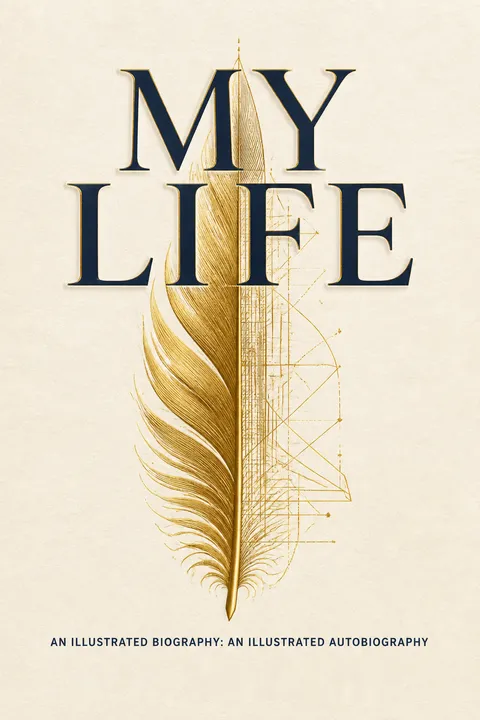
This illustrated autobiography is organized as a journey from a boy watching birds in Rameswaram to an engineer, national program leader, teacher, and president. Its central argument is not simply that ambition produces success. Kalam's story gives ambition a social infrastructure: parents who nurture him, siblings who sacrifice, teachers who make ideas tangible, colleagues who build difficult systems, and leaders who protect teams after failure. The result is a memoir of individual aspiration told through institutions and relationships.
Flight supplies the book's recurring image, but the meaning changes with each stage. First it is a child's fascination, then a technical discipline, then a means of national independence, and finally an invitation to young people to take responsibility. The strongest episodes are specific: a science lesson moved outdoors, rocket parts carried by bicycle, a failed launch followed by a successful one, and missile materials adapted into lighter braces. They show how large ambitions depend on practical learning and how advanced technology can be redirected toward immediate human needs.
The book's optimism is also its limitation. It often presents scientific and military capability as a route to security and development, but capability alone cannot determine who benefits, how risks are governed, or whether investment reaches urgent needs. The discussion of nuclear deterrence acknowledges a moral tension without fully resolving it. Similarly, Technology Vision 2020 is presented as a national aspiration, not evaluated here as a set of outcomes. Those gaps do not erase the memoir's value; they clarify what readers should ask when admiration becomes policy.
Kalam's most durable lesson is therefore both motivational and institutional. Give people a meaningful aim, the knowledge and resources to pursue it, and leadership that lets them learn from mistakes. Then judge achievement by more than recognition. The human measure is whether the work expands capability while improving life for people who might otherwise be overlooked.
Review Summary
"My Life" is highly praised as an inspiring and motivational autobiography. Readers appreciate Kalam's humble storytelling, simple language, and focus on the power of dreams and hard work. Many found it emotionally impactful and relevant for all ages, especially youth. The book covers Kalam's journey from a small town to becoming President, highlighting his scientific achievements and dedication to India's development. Reviewers consistently mention the book's ability to ignite curiosity, encourage perseverance, and instill a sense of national pride.
People Also Read








Glossary
SLV-3
Satellite-launch vehicleIndia's four-stage Satellite Launch Vehicle 3, developed to place a satellite into orbit. Kalam led the overall project after earlier managing one of its stage teams. Its first launch in 1979 failed when the rocket became unstable, while the 1980 launch successfully placed the Rohini satellite in orbit.
T.E.R.L.S.
Thumba rocket-launch stationThe Thumba Equatorial Rocket Launching Station, established in a fishing village near Thiruvananthapuram. It began with basic facilities adapted from local buildings and became the site of India's early sounding-rocket work. The station supported the development of practical expertise for later space projects.
Technology Vision 2020
Plan for national developmentA document developed through the Technology Information Forecasting and Assessment Council, with the goal of transforming India into a developed nation by 2020. It connected advances in science and technology with national development. Kalam argued that innovation should move beyond research institutions and become useful in areas such as farming, communication, defense, and employment.
PURA
Rural access to amenitiesAn abbreviation for Providing Urban Amenities in Rural Areas, a development idea Kalam associated with his vision for India. The phrase expresses the goal of bringing amenities associated with cities to rural communities. The autobiography names PURA as part of his public mission but does not give a detailed account of its operating model.
Operation Shakti
1998 nuclear-test operationThe name used for India's secret nuclear-test operation at Pokhran in Rajasthan in 1998. The work was conducted jointly by the Department of Atomic Energy and the Defence Research and Development Organisation. Kalam took part in overseeing preparations, which were concealed in the desert landscape before the tests were carried out.
Interactive President
Public-facing presidencyKalam's description of the kind of president he wanted to be: one who used the office to meet citizens and engage with their ideas. His approach included inviting children and other visitors to Rashtrapati Bhavan, meeting parliamentarians to discuss state needs, and speaking to young people around the country.
Oath for Youth
Civic commitments for young peopleKalam's set of commitments for young people, covering ambition, effort, integrity, service, human dignity, environmental care, courage, and respect for others. The pledge joins personal achievement to responsibility toward family, society, country, and the wider world. It appears at the close of the autobiography as a practical expression of his message to young readers.
FAQ
What's "My Life: An Illustrated Biography" about?
- Autobiographical Journey: The book is an illustrated autobiography of A.P.J. Abdul Kalam, detailing his life from his childhood in Rameswaram to becoming the President of India.
- Inspirational Story: It covers his journey of overcoming challenges, his passion for science and technology, and his contributions to India's space and missile programs.
- Personal Reflections: Kalam shares personal anecdotes, his thoughts on leadership, and his vision for India's future, making it both a personal and professional narrative.
Why should I read "My Life: An Illustrated Biography"?
- Inspiration and Motivation: The book provides a motivational account of how a boy from a small town became a renowned scientist and leader.
- Insight into Leadership: It offers valuable lessons on leadership, resilience, and the importance of dreaming big.
- Understanding India's Progress: Readers gain insights into India's advancements in space and defense technology through Kalam's experiences.
What are the key takeaways of "My Life: An Illustrated Biography"?
- Dream Big: Kalam emphasizes the importance of having a vision and working tirelessly towards achieving it.
- Resilience in Failure: The book highlights how setbacks are part of the journey and how to manage and learn from them.
- Service to Nation: It underscores the significance of contributing to the nation's development through science and technology.
What are the best quotes from "My Life: An Illustrated Biography" and what do they mean?
- "I am born with wings": This quote symbolizes the potential within every individual to achieve greatness and rise above challenges.
- "Dreams should be those that keep us awake": It emphasizes the importance of having ambitious goals that drive continuous effort and passion.
- "You are beautifully clothed in your success": This reflects the idea that true success is not about appearances but about the achievements and contributions one makes.
How did A.P.J. Abdul Kalam's childhood influence his career?
- Early Curiosity: Kalam's childhood curiosity about nature and the world around him sparked his interest in science and technology.
- Supportive Environment: Growing up in a supportive family and community encouraged his educational pursuits and dreams.
- Role Models: Influential figures like his teachers and family members inspired him to aim high and work hard.
What challenges did A.P.J. Abdul Kalam face in his career?
- Financial Constraints: Kalam faced financial difficulties in pursuing higher education, which he overcame with family support.
- Professional Setbacks: He experienced failures, such as the initial unsuccessful launch of SLV-3, which taught him resilience.
- Technological Limitations: Working in a developing nation, he often had to innovate with limited resources and support.
What is A.P.J. Abdul Kalam's vision for India?
- Developed Nation by 2020: Kalam envisioned India as a developed nation with advancements in technology, education, and infrastructure.
- PURA Concept: He advocated for Providing Urban Amenities in Rural Areas to bridge the urban-rural divide.
- Youth Empowerment: Kalam believed in empowering the youth to drive the nation's progress through education and innovation.
How did A.P.J. Abdul Kalam contribute to India's space and missile programs?
- SLV-3 Development: Kalam led the team that developed India's first satellite launch vehicle, SLV-3, marking a significant milestone in space technology.
- Missile Development: He played a crucial role in developing indigenous missile systems like Agni and Prithvi, enhancing India's defense capabilities.
- Leadership and Innovation: His leadership and innovative approach were instrumental in overcoming challenges and achieving technological advancements.
What leadership lessons can be learned from A.P.J. Abdul Kalam?
- Empowering Teams: Kalam believed in empowering his team members and giving them credit for successes while taking responsibility for failures.
- Visionary Thinking: He demonstrated the importance of having a clear vision and inspiring others to work towards it.
- Resilience and Adaptability: His ability to adapt to challenges and learn from failures is a key lesson in effective leadership.
What role did education play in A.P.J. Abdul Kalam's life?
- Foundation for Success: Education was the foundation of Kalam's success, providing him with the knowledge and skills needed for his career.
- Lifelong Learning: He was a proponent of lifelong learning, constantly seeking new knowledge and experiences.
- Teaching and Mentorship: Kalam valued teaching and mentorship, believing in the power of education to transform lives and societies.
How did A.P.J. Abdul Kalam's presidency impact India?
- People's President: Kalam was known as the "People's President" for his accessibility and connection with the common people, especially the youth.
- Focus on Development: He used his presidency to promote his vision for a developed India and to inspire citizens to contribute to national progress.
- Innovative Initiatives: His tenure saw initiatives like e-governance and increased engagement with various sectors to address national challenges.
What is the significance of the "Oath for Youth" in "My Life: An Illustrated Biography"?
- Guiding Principles: The "Oath for Youth" outlines principles for young people to live by, emphasizing integrity, hard work, and service to others.
- Empowerment and Responsibility: It encourages youth to take responsibility for their actions and to work towards personal and national goals.
- Vision for the Future: The oath reflects Kalam's belief in the potential of the youth to shape a better future for themselves and the nation.
About the Author



Download PDF
Download EPUB
.epub digital book format is ideal for reading ebooks on phones, tablets, and e-readers.








