

Key Takeaways
Judge leadership by who gets protected, not who gets remembered.
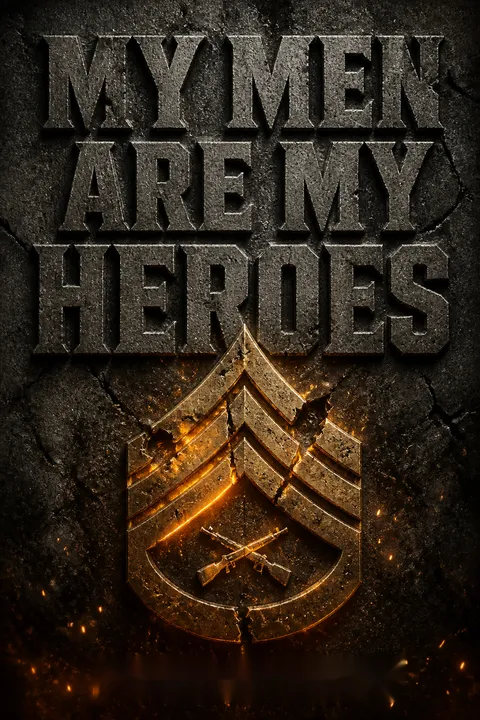
The photograph misleads. The book centers on a famous image of First Sergeant Brad Kasal, badly wounded in Fallujah, still holding his pistol. But Kasal resists becoming the story’s lone hero. He says his men are his heroes, and repeatedly points to the Marines who fought, treated the wounded, and carried them out. His identity as a leader rests less on the image than on years spent preparing and looking after those under his command.
Credit is shared. In the House of Hell, Kasal risked his life to reach trapped Marines, but Sergeant Robert Mitchell entered the same danger to help him, while other Marines organized their rescue. The narrative’s central lesson is that a visible act of bravery can depend on a whole network of unseen preparation, trust, and action.
What's striking is how the memoir pushes back against the familiar hero photograph. Social psychology calls the tendency to credit a visible individual while overlooking the group behind him the attribution error. Kasal's insistence on naming others corrects that distortion and makes leadership measurable through responsibility rather than recognition. At the same time, stories need memorable faces, and the image can help readers attend to otherwise anonymous service. The useful distinction is not hero versus team, but symbol versus explanation: a symbol can open the door, while an honest account shows who else stood behind it.
Earn authority before danger by mastering the work beside your people.
Credibility has a history. Kasal grew up working on his family's Iowa farm, joined the Marines after high school, and built a career almost entirely in infantry units. He sought demanding instruction, including Army Ranger School and Marine mountain-leadership courses, and trained relentlessly. The point is not that physical toughness automatically makes a leader. It is that Kasal's authority was grounded in practical competence and years of shared hardship, not merely his rank.
Presence makes standards visible. At the School of Infantry, he sometimes ran an obstacle course after a long march to show exhausted recruits they could keep going. In Iraq, he joined patrols and endured the same conditions as junior Marines. Yet he says he did not intend to take over their jobs: he watched, then offered feedback privately. His example made expectations tangible while leaving room for others to lead.
This is leadership as embodied credibility: people are more likely to trust standards they see their leaders practice. The idea connects to apprenticeship, where skill passes through demonstration and correction, not slogans alone. Kasal's distinction between being present and taking command is especially useful; visibility can reassure subordinates, while constant interference can weaken their judgment. There is also a limit. Physical endurance is not a universal measure of leadership, and a leader's willingness to share hardship cannot replace sound decisions, communication, or care for fatigue.
Practice until good judgment survives fear, fatigue, and confusion.
Repetition reduces hesitation. Kasal describes Marine training as learning by doing tasks until responses become reliable under pressure. Recruits repeat drills, weapons procedures, and physical exercises; infantry leaders rehearse how to move and communicate. This preparation mattered in Fallujah, where Marines faced fire from windows, rooftops, alleys, and rooms, often while tired and uncertain about where the enemy was.
Preparation includes contingencies. Before the assault, Kasal tracked Weapons Company's sections across several locations and planned who would replace injured personnel or failed equipment. Standard operating procedures, meaning agreed routines for recurring situations, helped dispersed teams coordinate. They did not remove danger: combat produced surprises, confusion, and losses. But rehearsed basics gave Marines a shared starting point when careful deliberation was difficult.
The account echoes safety-critical fields such as aviation and emergency medicine, where checklists and practiced routines protect attention for unexpected problems. Under stress, working memory narrows; familiar procedures can keep basic actions from consuming every mental resource. Yet automation is not the same as judgment. A drill that worked yesterday can fail in a changed setting, and rigid adherence can be dangerous. The strongest reading of Kasal's emphasis is not practice instead of thought, but practice that frees people to notice when the situation calls for adaptation.
Treat restraint as a combat skill, not a concession.
Two duties collided. Before the battle, Marines in al-Anbar were told to protect residents and build trust while confronting insurgents who attacked them with bombs, snipers, and mortars. The guidance was to be a dependable ally to those who cooperated and a formidable opponent to those who fought. Rules of Engagement, or ROE, set limits on when Marines could use force. Kasal says his leaders worked to keep young Marines from responding indiscriminately, even as casualties and anger mounted.
Discipline was tested. The book describes Marines trying to identify hostile intent before firing, and insurgents exploiting that caution by moving among civilians or abandoning weapons. In Fallujah, the danger of hidden fighters and trapped Marines intensified the pressure to use heavier force. Kasal's account presents restraint not as softness, but as a difficult leadership task under conditions designed to provoke mistakes.
This tension resembles the problem of legitimacy in peacekeeping: restraint can protect civilians and preserve cooperation, but it can also expose troops to danger if adversaries exploit predictable limits. The memoir makes the moral and tactical strain concrete rather than abstract. Its account also shows how easily discipline can erode when people are exhausted, threatened, and grieving. The challenge is to distinguish justified force from anger-driven force without pretending that either decision is simple. Tactical necessity deserves scrutiny alongside the human costs of the tactics chosen.
A battle plan cannot repair political time already squandered.
A pause changed the battlefield. After the first attempt to retake Fallujah in April 2004, a ceasefire and months of negotiations interrupted the assault. The book reports that this interval let insurgents gather weapons, build defenses, plant improvised explosive devices, and draw in more fighters. When the Marines returned in November, they faced a city prepared for close combat.
The mission kept shifting. The Marines were asked to reduce attacks, train Iraqi forces, protect residents, and build political support, while also finding and killing insurgents. From June to October, the battalion intelligence officer recorded 207 indirect-fire attacks and 95 improvised-explosive-device ambushes. These figures show the pressure on the unit, but also the difficulty of treating military action as a substitute for a political settlement.
What's important here is the difference between operational success and political success. A force can seize terrain and still fail to create durable consent or security. The book's account shows how delays, unclear aims, and conflicting assignments shaped the danger faced by Marines. It also reveals a limitation of a combat-centered narrative: military leaders can describe the costs of a political decision more clearly than they can establish what alternative policy would have worked. The reader can recognize the cost of lost time without assuming that a faster assault alone would have solved the conflict.
When comrades are trapped, leadership means accepting their danger.
A rescue becomes the test. On November 13, 2004, Marines entered a fortified house in Fallujah and came under fire. Sergeant Christopher Pruitt emerged wounded; others remained trapped inside, including Lance Corporal Alex Nicoll and Corporal Robert Mitchell. Kasal heard that Marines needed help and went into the building with the group moving toward the fight. The house, later called the House of Hell, had concealed firing positions and offered attackers little safe room to maneuver.
He protected a fellow Marine. Kasal was shot seven times and struck by 44 pieces of shrapnel. After a grenade landed near him and Nicoll, Kasal covered Nicoll with his body. He remained conscious, guarded the doorway, and delayed attention to his own wounds while other Marines were still in danger. His actions turned his view of leadership into an immediate physical obligation.
The scene gives unusual clarity to a principle often reduced to rhetoric: loyalty costs something precisely when escape or self-protection is possible. In crisis psychology, a clear role can help people act amid fear; Kasal's focus on protecting the wounded gave him a task when his own survival was uncertain. That does not make self-sacrifice a universal leadership requirement. A culture that expects leaders to absorb every danger can waste expertise and normalize preventable risk. The episode is powerful because it is an extraordinary choice, not because every leader should imitate it mechanically.
Tell the rescue as a chain of courage, not a solo legend.
Several people made survival possible. Kasal entered the house, but Mitchell also ran into danger and helped treat the wounded. Lieutenant Jesse Grapes and other Marines tried different ways to reach those trapped inside. Private Justin Boswood helped provide cover, and Corporals Christopher Marquez and Dan Schaeffer entered without their weapons so they could carry casualties out. Other Marines suppressed enemy fire and created an escape route through a window.
The cost was real. One Marine, Sergeant Byron Norwood, was killed; 10 others were wounded in the fight. The rescue succeeded through coordinated acts under pressure, not one person's strength alone. Kasal later named the Marines who helped save him and others as the real heroes. The title's emphasis on his men becomes more credible when the narrative shows exactly what they did.
This episode resembles distributed cognition: in complex situations, the group functions as a problem-solving system, with information and action spread across people. One Marine identifies the threat, another communicates, another applies first aid, and others provide cover. The narrative restores those contributions that a single dramatic photograph might hide. It also reminds readers that teamwork does not make danger disappear; a chain of courage can still include death and severe injury. Honoring the group means keeping both facts in view, rather than turning collective sacrifice into a clean victory story.
Recovery requires stubborn effort, practical help, and honest uncertainty.
Persistence had a long price. Kasal's right leg was nearly severed, and doctors discussed amputation. He endured more than 20 surgeries, a skin graft, and an Ilizarov frame, an external device that holds bone in place while it heals. Clinicians warned that he might never run again. He struggled with pain, depression, and the loss of independence, while friends and volunteers helped with errands, cleaning, and transportation.
Progress came in small measures. Kasal first walked without a cane or crutch after 17 months, then attempted a short run in private. Nearly two years after the injury, he completed a Marine fitness test. He advised injured service members to ask for help and speak about depression, as well as to work hard. His recovery shows determination, but also how much support and medical care made that effort possible.
Kasal's story offers a strong account of agency without making recovery sound effortless. Rehabilitation often depends on goals that give patients a sense of control, while social support helps with the practical and emotional burdens of injury. The memoir's emphasis on willpower can inspire, but it needs a careful boundary: recovery is not a moral test, and those who do not regain function have not failed to want it enough. Kasal himself describes lasting pain and limitations. His advice is most humane when persistence and asking for help are treated as partners.
Read combat memoirs as witnesses, not complete verdicts on war.
The account has a clear standpoint. Kasal's story offers detailed testimony about infantry leadership, the pressures of urban combat, the bonds among Marines, and the difficult recovery that followed. It also argues that American service members helped Iraqis and criticizes media coverage for emphasizing violence over constructive work. Those claims reflect the author's convictions and experience, and the book gives readers vivid examples of what Marines believed they were trying to accomplish.
The view remains bounded. Most of the narrative follows Marines and their commanders. Iraqi perspectives appear mainly through the Marines' encounters, intelligence reports, or descriptions of local leaders and fighters. That makes the book valuable as a firsthand account of one unit's experience, but not a complete history of Fallujah or a decisive assessment of the war's political outcomes.
A memoir's authority is strongest where proximity matters: what a leader saw, how a unit operated, and what injury demanded of a body and a family. Its limits are equally important. One combatant's experience cannot settle the motives of every local actor or establish whether a war achieved its stated aims. Reading with that distinction preserves the testimony without requiring either reverence or dismissal. It also invites a useful question: whose experience is missing, and what additional sources would be needed to judge the larger conflict?
Analysis
This is a combat memoir organized around a dramatic hinge. The narrative first builds Kasal's authority through his Iowa upbringing, infantry training, and years of deployments. It then widens into the political and military context of Fallujah, before narrowing sharply to the November 13 firefight that made his image widely recognizable. The final movement is recovery: from acute injury and uncertain prognosis toward partial return to military life. That structure makes the book both a biography and an argument about what leadership means under pressure.
Its most persuasive theme is the gap between public heroism and private responsibility. Kasal's famous photograph suggests a solitary figure, while the narrative insists that competence, loyalty, and survival are collective achievements. Specific accounts of NCOs, corpsmen, junior Marines, and rescue attempts give substance to that claim. The descriptions of wounds and rehabilitation also prevent the story from ending at the moment of battlefield recognition.
The book's strength is experiential detail, particularly in showing how command becomes a daily practice: training, checking on people, controlling anger, and making decisions amid incomplete information. Its limitation is equally clear. It is told from the Marine perspective, and its political claims about the war and its media criticism extend beyond the evidence a single unit's experience can establish. That does not diminish the account's value; it defines the questions it can answer well. Readers gain a vivid understanding of one battalion's experience, not a comprehensive Iraqi or strategic history.
The lasting insight is therefore neither that courage solves war nor that one heroic act explains Fallujah. It is that leaders are judged through the people they prepare, protect, and trust, while the consequences of military decisions remain larger than any individual's bravery.
Review Summary
My Men Are My Heroes received mostly positive reviews, with readers praising the book's portrayal of Marine life, leadership, and combat experiences. Many found Kasal's story inspiring and appreciated the focus on his men. Some criticized the writing style as repetitive or lacking depth. Readers valued the detailed account of the Fallujah battle and Kasal's recovery. Several reviewers noted the book's importance in understanding the Marine mindset and the realities of war, despite its flaws in execution.
People Also Read


Glossary
CAAT
mobile heavy-weapons teamCombined Anti-Armor Team, a Marine unit equipped to provide heavy weapons support to infantry. In the book, Weapons Company CAAT sections used armed Humvees and weapons such as TOW missiles and machine guns to support rifle companies, provide overwatch, and respond to enemy positions.
Rules of Engagement
limits on using forceRules of Engagement, often abbreviated ROE, are instructions defining when and how military personnel may use force. In the book, Marines were expected to identify hostile action or intent before firing, a constraint that complicated combat when insurgents concealed weapons, mingled with civilians, or attacked and then withdrew.
MOUT
urban combat operationsMilitary Operations on Urban Terrain, a term for military training and combat in built-up areas. In the book, MOUT includes the problems of moving through streets and buildings where threats may come from windows, rooftops, alleys, or interior rooms, and where forces need to coordinate movement and cover.
Ilizarov frame
external bone-stabilizing deviceAn Ilizarov frame is an external orthopedic device made from circular metal rings connected to pins or wires placed through bone. It can stabilize a severe fracture and support bone healing or reconstruction. Kasal received one after his leg was badly damaged, making treatment lengthy, painful, and restrictive.
Dragon Eye
small surveillance aircraftDragon Eye was a small unmanned aerial vehicle used by Marines to collect and transmit images of the battlefield. The battalion could use its live or recorded pictures to inspect suspected enemy positions, assess routes, and support decisions about fires. In the book, it gave commanders a view of areas they could not safely observe directly.
House of Hell
fortified Fallujah residenceThe House of Hell is the Marines' name for the fortified residence where Kasal and other Marines fought on November 13, 2004. The house had concealed positions that exposed entering Marines to fire. Several Marines were wounded or trapped there, and the rescue effort became the defining episode in Kasal's story.
Battalion Aid Station
forward emergency treatment siteA Battalion Aid Station, abbreviated BAS, is a unit medical facility close to the battlefield. In the book, corpsmen and doctors stabilized wounded Marines, controlled bleeding, and prepared urgent casualties for evacuation. It was an essential link between injury in the city and treatment at larger medical facilities.
Download PDF
Download EPUB
.epub digital book format is ideal for reading ebooks on phones, tablets, and e-readers.








