

Key Takeaways
Stop treating success and pleasure as proof that you are free.
A polished life can still feel hollow. In college, Colleen earns top grades, gives time to social causes, attends Sunday Mass, and keeps a careful grip on her appearance. She also parties, drifts through undefined relationships, and feels increasingly empty. Her problem is not simply that she enjoys herself; it is that she has divided her life into respectable and reckless versions, neither of which answers what she wants most. Feminist theory courses and practical improvements to her lifestyle do not resolve the deeper question of meaning.
Honesty opens a door. In a nearly empty church, Colleen admits that she wants to know God, without receiving a dramatic sign or instant relief. The change begins with facing her dissatisfaction instead of disguising it. Her search will test the assumption that freedom means keeping every option open and avoiding costly commitments.
The opening is powerful because it locates distress inside a life that appears successful, rather than treating it as a failure of discipline or opportunity. That resembles a familiar distinction in psychology between pursuing immediate rewards and living by values that give those rewards direction. The memoir also complicates a simple critique of pleasure: parties, ambition, and physical confidence are not portrayed as inherently corrupt. The trouble is their role as substitutes for deeper belonging. The account is specifically Catholic, but its diagnostic question travels well: which parts of a life are genuinely chosen, and which are performances maintained to avoid a harder desire?
Let wise companions, even centuries old, help interpret your life.
Teresa becomes a mirror. Colleen initially dismisses spiritual books, then reads about Teresa of Ávila, a lively, ambitious woman who spent years as a nun divided between devotion to God and attachment to admiration, comfort, and social life. At thirty-nine, Teresa is moved by an image of the suffering Christ and begins to change. Persistent prayer gradually redirects her energy; she later reforms Carmelite convents and becomes a major spiritual writer.
Friendship across time. Colleen recognizes her own hunger for meaning and desire for achievement in Teresa’s imperfect story. In Catholic belief, the communion of saints means that the living and the dead in God remain connected, and that saints can serve as examples and intercessors. Colleen does not copy Teresa’s vocation. She turns to her as a trusted guide for a different life.
Teresa’s usefulness lies partly in her lack of instant perfection. A guide who has wrestled with vanity and divided loyalties can make change feel imaginable, not merely admirable from a distance. This resembles the role of biography in moral learning: stories offer concrete models for noticing motives and rehearsing alternative choices. The spiritual friendship here is also an antidote to the modern assumption that meaningful guidance must come from someone nearby or contemporary. Still, a saint’s life is not a universal template. Its value depends on discerning the transferable insight, such as redirecting ambition, rather than imitating historical practices or circumstances wholesale.
Turn small acts of care into serious spiritual practice.
Thérèse makes love ordinary. Thérèse of Lisieux, a Carmelite nun who died at twenty-four, developed what she called the little way of spiritual childhood: trusting God while expressing love through modest, everyday choices rather than grand achievements. She tries to be kind to a difficult fellow nun, stays patient when misunderstood, and accepts irritating duties without turning them into occasions for complaint. Her sensitivity makes these acts costly, not effortless.
Care changes what counts. Colleen applies this approach to her father, who has Alzheimer’s. As he loses memory and independence, she practices patience by listening to repeated stories, helping him dress, and giving him her attention in crowded rooms. His dependence does not erase his dignity or capacity to love. It challenges her to value a person beyond productivity, sharpness, or self-sufficiency.
The little way gives moral weight to work that is often invisible, including caregiving, patience, and attention. That insight aligns with care ethics, a philosophical approach that treats dependency and relationships as central features of human life, rather than exceptions to an ideal of independence. It also offers a practical test of love: not only what someone feels, but how they respond to repeated, unglamorous needs. The risk is romanticizing care or implying that patience should make inadequate support acceptable. Colleen’s story is strongest when it honors the vulnerable person while also showing how demanding care can be for relatives.
Choose the faithful risk without demanding certainty first.
Trust becomes a decision. Faustina Kowalska, a poor Polish nun whose writings inspired the Divine Mercy devotion, centers her spirituality on trusting God despite illness, obscurity, and disbelief from others. The Divine Mercy chaplet, a short prayer using rosary beads, becomes a steady practice for Colleen during a career crisis. She has a prestigious White House speechwriting job, but wants to marry John and return to St. Louis. She repeatedly asks for a clear sign that will remove the risk of choosing.
No sign arrives. Colleen eventually recognizes that her desire to go home matters more than preserving status and certainty. She leaves Washington without a new job in hand. The choice is not presented as proof that every career sacrifice is right; it is an act of trust shaped by her own commitments and circumstances.
This episode distinguishes trust from prediction. Colleen cannot know whether leaving Washington will produce professional success, but she can decide which commitments deserve priority. In decision theory, choices often have to be made under uncertainty, with values guiding action where evidence cannot settle the outcome. The spiritual practice of repetition also has a practical dimension: it gives anxiety a structure and creates room for reflection. A necessary caution is that costly sacrifice is not automatically virtuous. Trust should not become a reason to ignore coercion, financial realities, or unequal burdens. The memoir’s emphasis works best as discernment, not a blanket command to give something up.
Practice motherhood as care, whether or not pregnancy comes.
Edith Stein broadens the meaning. Stein, a Jewish-born philosopher who became a Catholic Carmelite nun and died at Auschwitz, describes spiritual maternity as a woman’s capacity to welcome and nurture another person’s growth. Colleen encounters this idea while struggling with infertility and feeling that motherhood is slipping away. The concept does not deny her longing to conceive. It challenges her belief that maternal love only counts when expressed through pregnancy and child-rearing.
Look for present openings. Colleen recognizes maternal care in tending to her father, in her mother’s demanding work as his caregiver, and in friends who nurture students or support vulnerable women. She also sees how grief can distort care into control, resentment, or a fixation on being praised. Spiritual maternity, in this account, means giving attention and protection without making another person an extension of oneself.
The distinction between biological motherhood and maternal care is generous because it recognizes forms of nurture that family structures and public recognition often overlook. It also offers a way to honor infertility without pretending that alternate forms of care erase the loss. Stein’s framework, however, ties particular relational tendencies closely to women’s nature. That can affirm experiences the author found neglected, but it can also turn a cultural expectation into a universal rule. The most durable idea is less about assigning care to one sex than about treating attentive, life-giving relationships as valuable work, whether performed by women or men.
Treat the waiting itself as part of the burden.
Faith does not cancel darkness. After Colleen’s father dies following years of Alzheimer’s, her grief deepens alongside the uncertainty of infertility. She feels numb, struggles to pray, and finds little comfort in ideas that once sustained her. Reading Mother Teresa’s private writings, she discovers that the saint spent decades feeling spiritually abandoned while continuing to serve the poor. Colleen understands this not as proof that suffering is secretly pleasant, but as an example of continuing to love amid spiritual desolation.
Waiting is active suffering. Colleen’s mother names the uncertainty itself as part of the trial: not knowing whether a child will come, how long her father will suffer, or what the future holds. Colleen keeps showing up for prayer and daily responsibilities without pretending to understand why events unfold as they do.
The chapter captures a neglected dimension of hardship: uncertainty can exhaust people even when no new crisis occurs. Research on stress and coping likewise distinguishes the strain of an event from the strain of not knowing when it will end. The memoir’s religious language gives this waiting a framework of fidelity, but it wisely does not claim that faith removes pain or explains every loss. There is a delicate boundary here. Interpreting suffering as spiritually meaningful may help one person endure, yet imposing that interpretation on someone else can silence grief. The account is most humane when it permits lament alongside perseverance.
Let Mary teach presence when you cannot control outcomes.
A mother who waits. Colleen’s growing devotion to Mary moves beyond asking for help in emergencies. She studies Mary’s brief Gospel appearances: her acceptance of an uncertain calling, her attentive presence at a wedding, and her decision to remain near Jesus during his suffering. Mary is not portrayed as having an easy maternal life. Her story includes fear, displacement, and the death of her son.
Presence replaces perfection. During Colleen’s high-risk twin pregnancy, she faces bleeding, bed rest, and the possibility of losing both babies. She cannot make the danger disappear, so she turns to Mary as a model of faithful presence rather than control. In Catholic teaching, Marian devotion should lead toward Christ, not replace him. Colleen’s practice becomes a way to seek courage and imitate Mary’s trust.
Mary’s example offers a form of strength that is neither loud self-assertion nor passive resignation: attention, endurance, and fidelity in circumstances that cannot be managed into safety. That is particularly relevant to caregiving and illness, where presence may matter more than solutions. The narrative also resists a polished image of motherhood by emphasizing Mary’s sorrow and uncertainty. Still, the ideal of surrender can be misread as a demand that women accept preventable harm. Its constructive meaning depends on distinguishing acceptance of what cannot be controlled from silence about what can and should be changed.
Receive a long-awaited gift without calling every wound resolved.
An extraordinary answer, not a formula. After four years of infertility, Colleen becomes pregnant without IVF and learns she is carrying twins. The pregnancy is dangerous: repeated bleeding, strict bed rest, and fears that the babies may not survive. The bleeding eventually resolves, which Colleen and John understand as an answer to prayer. At thirty-six weeks, a difficult labor ends with the birth of their son and daughter.
Joy does not rewrite the past. The ending gathers years of longing, her father’s death, her spiritual friendships, and the arrival of children into one family story. But the outcome is particular to Colleen. The memoir does not establish that prayer guarantees pregnancy or that every loss receives a visible resolution. Its deeper claim is that love and faith can shape a life through uncertainty, whether or not the desired outcome arrives.
The ending gains emotional force because the desired gift arrives only after years in which it seemed unlikely, and because the pregnancy itself remains frightening. That complexity prevents a simple equation between faith and reward. The story also raises a broader question about memoir: a powerful personal resolution can feel like a promise to readers facing the same trial, even when no such promise is intended. The explicit distinction matters. Colleen’s pregnancy is her testimony, not a prediction for other infertile people. The book’s more widely applicable insight is that joy can coexist with scars and does not make earlier suffering unreal.
Analysis
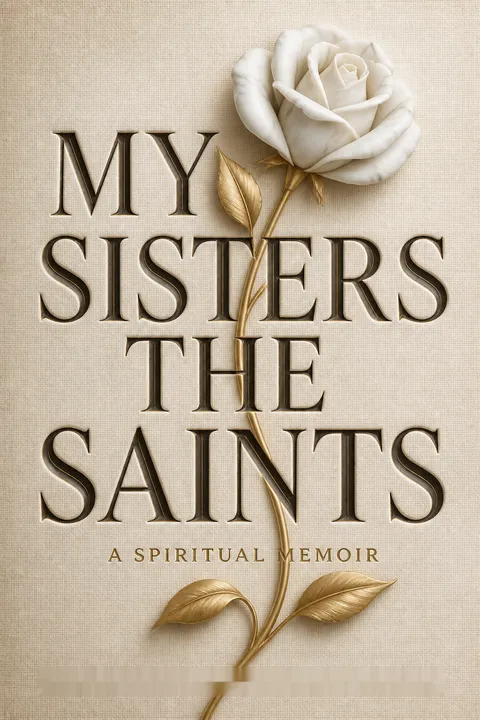
My Sisters the Saints is a spiritual memoir organized around six women who become guides through distinct tests: Teresa helps Colleen confront divided desires, Thérèse reframes care and weakness, Faustina teaches trust, Edith Stein expands motherhood, Mother Teresa gives language to spiritual desolation, and Mary models faithful presence. The book’s narrative force comes from pairing each saint with a lived crisis rather than presenting a system first. A college party scene opens the question of emptiness; Alzheimer’s makes spiritual dependence concrete; the White House job turns trust into a career decision; infertility and a high-risk pregnancy test the limits of hope.
The memoir’s central account of freedom is countercultural but not simply anti-career or anti-pleasure. Colleen once treats control, achievement, and independence as safeguards against vulnerability. Her experiences revise that picture: commitments can be liberating when chosen in love, and dependence need not erase dignity. The saints function as companions because their stories offer interpretations that immediate social expectations do not. They help her understand caregiving, marriage, and faith as meaningful, even when those choices carry real costs.
The book is most persuasive when it distinguishes endurance from easy optimism. Colleen does not claim that prayer prevents Alzheimer’s, infertility, or grief. She describes a father whose joyful faith persists as his capacities disappear, and a season when her own prayers feel unanswered. Yet the memoir’s Catholic framework interprets suffering as potentially redemptive, a claim that readers outside that tradition may not share. It should be understood as the author’s spiritual meaning-making, not a universal explanation or a reason to minimize pain.
Its account of femininity is both distinctive and debatable. The idea of spiritual maternity honors women’s relational and caregiving work, while some claims about sex-specific nature risk narrowing the variety of women’s and men’s lives. Colleen’s own story partly broadens the concept beyond pregnancy. Ultimately, the book argues that no single outcome defines a woman’s worth: not professional prestige, biological motherhood, or visible control. Meaning emerges through relationships, faith, and attention to people who are easily judged by what they can produce.
Review Summary
My Sisters the Saints is a spiritual memoir that resonates with many readers, particularly Catholic women. Campbell interweaves her personal struggles with insights from female saints, offering a unique perspective on faith, feminism, and modern life. While some readers found the book inspiring and relatable, others felt it lacked depth or was too judgmental. Many appreciated Campbell's honest portrayal of her spiritual journey, including her experiences with infertility and caring for her father with Alzheimer's. The book's exploration of saints' lives was widely praised.
People Also Read





Glossary
Little way of spiritual childhood
Love expressed in small actsThérèse of Lisieux’s approach to spiritual life, grounded in trust in God and love expressed through ordinary actions. Rather than attempting dramatic achievements or severe penances, a person practices patience, kindness, and small sacrifices in daily circumstances. The approach treats humble acts as meaningful when they are offered with love.
Divine Mercy chaplet
A prayer for divine mercyA Catholic prayer associated with Saint Faustina Kowalska and recited using rosary beads. Its repeated prayers focus on Christ’s suffering and ask for mercy for the individual and the world. In the memoir, Colleen uses the chaplet as a steady practice during anxiety and a difficult decision about her career and marriage.
Spiritual maternity
Nurturing another’s growthA form of motherhood understood as welcoming, protecting, and helping another person grow physically, emotionally, intellectually, or spiritually. In Edith Stein’s account as presented in the memoir, it is not limited to pregnancy or raising children. It can be expressed through family life, religious vocation, friendship, teaching, caregiving, and service.
Dark night of the soul
Spiritual desolation and purificationA term associated with John of the Cross for periods in which a person experiences spiritual dryness, feels distant from God, and loses the consolations that once supported faith. In the memoir, this language helps Colleen interpret Mother Teresa’s long inner desolation. It does not mean that every period of sadness or depression is a mystical experience.
Redemptive suffering
Suffering joined to Christ’s workA Catholic belief that suffering, while not part of humanity’s original good, can be joined to Christ’s suffering and become a means of spiritual growth or service to others. The memoir uses this idea to interpret the father’s Alzheimer’s and Mother Teresa’s spiritual darkness. It presents a faith-based interpretation, not a claim that suffering is itself desirable.
Communion of saints
Believers united across deathA Catholic teaching that Christians on earth, those being purified, and the saints in heaven remain united in Christ. The memoir draws on this belief to describe relationships with saints as more than admiration of historical figures: they can offer examples, spiritual companionship, and intercession. Colleen’s friendships with the six women saints shape how she understands her own life.
FAQ
What's "My Sisters the Saints" about?
- Spiritual Memoir: "My Sisters the Saints" is a spiritual memoir by Colleen Carroll Campbell that chronicles her personal journey of faith and self-discovery through the lens of six women saints.
- Personal and Universal Struggles: The book explores Campbell's struggles with modern feminism, professional ambitions, and personal crises, including her father's Alzheimer's and her own infertility.
- Saintly Guidance: Campbell finds inspiration and guidance from saints like Teresa of Ávila, Thérèse of Lisieux, and Mother Teresa, who help her navigate her life's challenges.
- Faith and Feminine Identity: The memoir delves into the intersection of Campbell's Christian faith and her understanding of her feminine identity in a contemporary world.
Why should I read "My Sisters the Saints"?
- Inspiring Journey: The book offers an inspiring account of a woman's quest for meaning and peace, making it relatable for anyone seeking spiritual growth.
- Saintly Wisdom: It provides insights into the lives and teachings of six influential women saints, offering timeless wisdom applicable to modern life.
- Personal Reflection: Readers are encouraged to reflect on their own spiritual journeys and consider the role of faith in their lives.
- Cultural Commentary: Campbell's narrative addresses contemporary issues like feminism, career ambitions, and personal fulfillment, providing a thoughtful critique of modern culture.
What are the key takeaways of "My Sisters the Saints"?
- Faith and Trust: The memoir emphasizes the importance of trusting in God's plan, even amidst uncertainty and suffering.
- Spiritual Maternity: Campbell explores the concept of spiritual maternity, highlighting the nurturing role women can play regardless of biological motherhood.
- Redemptive Suffering: The book illustrates how suffering can be transformative and redemptive, drawing individuals closer to God.
- Role of Saints: It underscores the value of looking to saints as spiritual guides and friends who can offer support and wisdom.
How does Colleen Carroll Campbell describe her spiritual journey?
- Initial Emptiness: Campbell begins her journey feeling a deep sense of emptiness and questioning the meaning of her life.
- Encounter with Saints: She finds solace and direction through her encounters with the writings and lives of six women saints.
- Personal Transformation: Her journey leads to a profound personal transformation, as she learns to integrate her faith with her feminine identity.
- Ongoing Quest: Campbell's journey is ongoing, marked by continual growth and a deepening relationship with God.
What role do the saints play in "My Sisters the Saints"?
- Guides and Friends: The saints serve as spiritual guides and friends, offering Campbell wisdom and support through her life's challenges.
- Models of Faith: Each saint exemplifies a unique aspect of faith, from Teresa of Ávila's boldness to Thérèse of Lisieux's simplicity.
- Inspiration for Change: The saints inspire Campbell to make significant changes in her life, aligning her actions with her faith.
- Connection to God: Through the saints, Campbell finds a deeper connection to God and a clearer understanding of her spiritual path.
What is the significance of spiritual maternity in the book?
- Beyond Biological Motherhood: Spiritual maternity is presented as a nurturing role that women can fulfill, regardless of their ability to bear children.
- Edith Stein's Influence: The concept is heavily influenced by Edith Stein's writings, which emphasize a woman's natural inclination to nurture and protect.
- Personal Application: Campbell applies this concept to her own life, finding ways to nurture others and contribute to the world.
- Broader Implications: Spiritual maternity challenges societal norms and offers a broader understanding of women's roles and contributions.
How does Campbell address the tension between feminism and faith?
- Cultural Critique: Campbell critiques modern feminism for sometimes neglecting the unique gifts and roles of women as understood through faith.
- Personal Struggle: She shares her own struggles with balancing career ambitions and personal fulfillment with her faith and feminine identity.
- Saintly Perspectives: The saints provide alternative perspectives on womanhood, emphasizing virtues like humility, trust, and spiritual strength.
- Reconciliation: Campbell ultimately finds a way to reconcile her feminist ideals with her Christian faith, embracing a more holistic view of womanhood.
What are the best quotes from "My Sisters the Saints" and what do they mean?
- "Living free is different from being in control." This quote highlights the distinction between true freedom, which comes from surrendering to God's will, and the illusion of control.
- "The pilgrim who seeks God never travels alone." It emphasizes the communal aspect of faith, where saints and fellow believers support each other on their spiritual journeys.
- "The waiting is the cross." This reflects the idea that the uncertainty and patience required in life's trials are themselves a form of suffering to be offered to God.
- "God alone suffices." A reminder of the sufficiency of God's love and presence, echoing the teachings of Teresa of Ávila.
How does Campbell's father's illness impact her spiritual journey?
- Catalyst for Reflection: Her father's Alzheimer's prompts Campbell to reflect deeply on suffering, mortality, and the meaning of life.
- Source of Strength: His unwavering faith amidst his illness becomes a source of strength and inspiration for Campbell.
- Lesson in Humility: The experience teaches her humility and the importance of trusting in God's plan, even when it is not understood.
- Spiritual Growth: It ultimately contributes to her spiritual growth, as she learns to see God's presence in suffering and vulnerability.
How does Campbell's struggle with infertility shape her understanding of faith?
- Test of Faith: Infertility becomes a significant test of Campbell's faith, challenging her to trust in God's timing and plan.
- Spiritual Maternity: It leads her to explore the concept of spiritual maternity, finding fulfillment in nurturing others in non-biological ways.
- Role of Prayer: Prayer becomes a crucial part of her journey, as she seeks guidance and comfort from God and the saints.
- Acceptance and Surrender: Campbell learns to accept her circumstances and surrender her desires to God, finding peace in the process.
What lessons does Campbell learn from Mother Teresa's "dark night of the soul"?
- Understanding Desolation: Mother Teresa's experience of spiritual desolation teaches Campbell about the nature of faith without consolation.
- Embracing Suffering: She learns that suffering can be a means of sharing in Christ's redemptive work and growing closer to God.
- Love in Action: Mother Teresa's life exemplifies that true love is found in actions and choices, not just feelings.
- Perseverance in Faith: Campbell is inspired by Mother Teresa's perseverance, realizing that faith is about continuing to trust and serve God, even in darkness.
How does "My Sisters the Saints" conclude Campbell's spiritual journey?
- Ongoing Journey: The book concludes with Campbell's realization that her spiritual journey is ongoing, marked by continual growth and learning.
- Fulfillment in Motherhood: She finds fulfillment in motherhood, both biological and spiritual, as a culmination of her journey.
- Deepened Faith: Her faith is deepened through her experiences, leading to a more profound trust in God's love and plan.
- Hope and Gratitude: Campbell ends with a sense of hope and gratitude for the blessings she has received and the saints who have guided her.
Download PDF
Download EPUB
.epub digital book format is ideal for reading ebooks on phones, tablets, and e-readers.








