

Key Takeaways
Make language practice predictable, then let your toddler lead.
Repeat a playful pattern. A play routine is a fun activity with a familiar sequence. Its predictability helps a toddler anticipate what comes next and creates chances to join in. For example, toy animals might greet each other, go into a barn, eat or sleep, and then be put away. The adult provides a loose structure, while the child makes choices and leads the play.
Keep the routine flexible. Choose a time when both adult and child are ready, and begin with something easy or especially appealing. Add a small challenge in the middle, then end with an activity the child enjoys and can do successfully. The book's 25 activity plans use this same basic rhythm with toys, games, and crafts. Stop when interest fades rather than finishing every step.
The important distinction is between predictable and rigid. Repeated sequences give a toddler a chance to anticipate, but the child's choices keep the exchange responsive rather than turning play into a lesson plan. This makes the structure useful without making the adult's agenda the center of the activity. The approach also gives caregivers a simple way to judge success: not whether every planned step happened, but whether the child stayed engaged and had opportunities to participate.
Talk about what already holds your toddler's attention.
Follow the child's focus. When a toddler looks at a dog, points to a tree, or pushes a train, respond to that subject. The book calls narrating the adult's actions self-talk, and narrating the child's actions parallel talk. Both give language a clear connection to what is happening. If a child pushes a train, the adult might briefly describe the train moving, instead of changing the subject or asking the child to name it.
Comment more than you quiz. A string of questions can make play feel like a test and restrict the child's responses. The author suggests aiming for at least three comments for every question. Comments can name an action, describe an object, or acknowledge a gesture. Questions still have a place, especially when offering a real choice, but they work best as part of a shared exchange.
The child's focus supplies a shared subject, so the adult's words are easier to connect with the moment. This is more than a way to avoid uncomfortable quizzes: it respects the toddler as a communication partner whose gestures and attention already carry meaning. The suggested comment-to-question ratio is a practical reminder, not a score to enforce. If a question genuinely invites a choice or helps the child continue play, it can be useful; the problem is treating every interaction as a test.
After speaking, leave three to five seconds for a reply.
Make room for processing. After a comment or question, pause for about three to five seconds. Look expectantly at the child, but do not rush to repeat, rephrase, or answer for them. The pause gives the toddler time to understand the words and decide how to respond. A response can be a word, a sound, a gesture, or an action, not just a spoken answer.
Let the moment continue. If the child does not respond, the advice is not to keep prompting until they do. Continue the activity and offer another natural opportunity. In a bubble game, for instance, an adult can pause after describing a bubble, wait, and then blow another one if the child remains quiet. The goal is to make a turn available, not to demand one.
A pause changes the adult's role from constant instructor to attentive partner. It also makes the child's less obvious contributions easier to notice: reaching, looking, or acting can be meaningful turns. The specific timing is best treated as a usable prompt rather than a universal processing rule. A child may need more or less time depending on the situation, so the adult should observe the child's cues instead of counting mechanically.
Match your words and play to what your toddler can manage.
Build from the child's current level. Understanding often develops before speaking, and a toddler may follow a direction or point to a picture before using words. Early words can also be tied to one familiar person or situation before the child applies them more broadly. The author advises adults to use short, concrete language that fits what the toddler currently understands and can imitate.
Let play guide expectations. The book summarizes Carol Westby's play stages, linking developing play abilities with emerging language. A child who pretends to eat with a spoon may be ready for different language opportunities from one who is still exploring how a toy works. Around 50 words is offered as a general point at which many children begin combining words, but the book notes that growth may be gradual rather than a sudden spurt. Treat milestones as guides, not guarantees.
This developmental framing helps replace a simple question, such as whether a child is talking, with a more informative one: what can the child understand, do, and communicate now? Play can reveal capacities that spoken language alone misses. The book's milestone descriptions and word-count guideline can help organize observation, but they cannot determine an individual child's needs. Children vary, and a concern about development calls for advice from a qualified professional rather than a home-made diagnosis.
Create chances to communicate without making speech the admission price.
Set up a useful opening. Rather than anticipating every need, an adult can arrange a small, manageable reason for the toddler to communicate. A preferred toy can be visible but not immediately available, or a container can be difficult to open. Wait to see whether the child asks for help through a word, sound, gesture, or look. Choices between two toys can also invite a response.
Respond to the attempt. The book stresses that a toddler should not have to say a target word before receiving what they need. If a child cannot open a box, the adult can model a useful word and help. The challenge should be mild: if the child becomes frustrated, simplify the task or stop. The purpose is to make communication worthwhile, not to withhold help until a child performs.
Small obstacles can create authentic reasons to communicate, which is different from asking a child to label objects on demand. The key safeguard is the one emphasized here: access to help should not depend on speech. Gestures and other attempts count, and frustration is evidence that the setup may be too demanding. This keeps the activity focused on communication and problem solving, rather than turning a routine need into a test of verbal performance.
When imitation stalls, reduce pressure and add support.
Change the interaction first. If a toddler is not copying words, check whether the adult is talking too much, asking too many questions, or using language that is too long. The book's R-A-I-S-E-S mnemonic gathers troubleshooting options: ease pressure, add visual or physical cues, echo the child's sounds or actions, slow speech, make intonation more noticeable, and keep language brief. A picture, gesture, or pointing cue can make a word easier to understand.
Imitation is not the only goal. The adult can narrate, follow the child's lead, and continue a playful activity without requiring repetition. For example, if a child makes an animal sound, echoing it can affirm the child's contribution and invite another turn. If the child still does not imitate, simplify or change the activity rather than insisting. The book also suggests reviewing a recorded interaction, with parental permission when the child is not one's own.
The troubleshooting approach treats a lack of imitation as information about the interaction, not as defiance. That shift encourages adults to examine their own pace, demands, and cues before asking the child to try harder. It also broadens the definition of participation to include actions and sounds. The mnemonic is most useful as a menu of adjustments, not a checklist that must be applied all at once; too many cues can make a simple play moment busy and confusing.
Accept approximations, then model words that matter in daily life.
A rough attempt is progress. If a toddler points to a dog and says an imperfect version of its name, do not correct them with a blunt rejection. Acknowledge the meaning and provide the clearer word naturally. The book also recommends expanding a child's meaningful but incomplete phrase by adding a small amount of correct language, while keeping the child's original intention. Use this sparingly so conversation remains natural.
Prioritize useful vocabulary. For a child whose language is emerging slowly, the author favors words for relevant objects, actions, places, and attributes over early drills on letters, numbers, colors, or shapes. A word for help, food, or a familiar toy can serve an immediate purpose in daily life. Animal sounds, gestures, and short phrases can also be communication steps, rather than reasons to wait until clear words appear.
This approach protects the child's willingness to communicate while still giving a clear language model. It distinguishes teaching from correcting: the adult can supply a more complete form without suggesting that the child's attempt was worthless. The focus on functional vocabulary also gives caregivers a practical test for choosing words: does this word help the child express something meaningful in the routines they share? Accuracy matters, but usefulness and confidence matter too.
Practice in ordinary routines, track change, and consult a specialist when concerned.
Use the day you already have. Mealtimes, dressing, play, and cleanup can all provide repeated chances to hear and use language. The book recommends choosing a realistic time for focused play, while also carrying techniques into everyday caregiving. A consistent routine need not follow an exact clock schedule; a familiar sequence and transition cues can help a toddler know what is coming.
Notice progress without guessing. Establish a baseline by recording what the child currently understands, says, or does, then revisit it regularly. The book suggests tracking words and communication attempts during a short observation period, and setting a specific goal, such as using words or gestures to express wants. If speech, language, or play skills are a genuine concern, consult a licensed speech-language pathologist. The book is a guide for caregivers, not an assessment or replacement for therapy.
Tracking turns an impression such as 'nothing is changing' into observations that can guide the next step. It can also show growth in comprehension, gestures, and participation, not only new spoken words. At the same time, a home chart has limits: it cannot identify the cause of a delay or determine what intervention is appropriate. The book's strongest practical boundary is therefore essential: use these ideas to support interaction, and seek individualized professional guidance when concerns persist.
Analysis
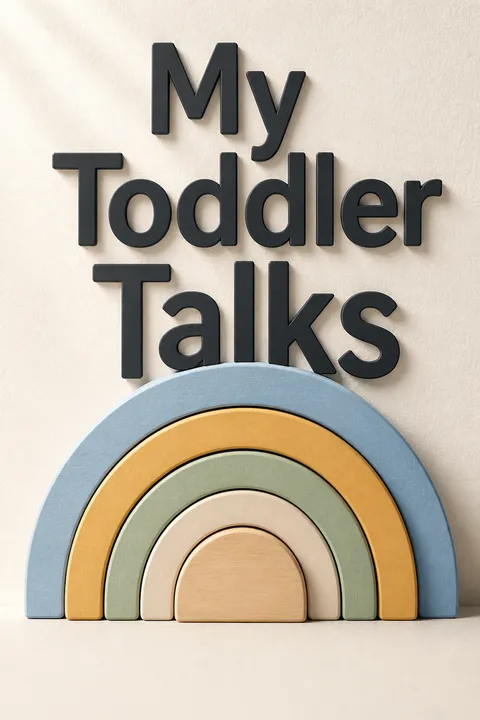
My Toddler Talks is a practitioner-authored parenting guide, organized around a central method rather than a sustained story: create enjoyable, repeatable play, model language in context, and adjust support to the child's response. Its short activities make the advice concrete, while the recurring cautions against over-questioning, over-directing, and expecting instant speech give the book its real coherence. The most useful synthesis is that language support is less about delivering a lesson than arranging a responsive exchange. The adult notices what the child attends to, supplies language that fits, pauses, and treats any meaningful response as a turn.
This design has a strong connection to joint attention, the shared focus between a child and caregiver that makes words easier to interpret. Its emphasis on short models and waiting also resembles scaffolding: help is supplied in a form the learner can use, then adjusted as capability changes. The routines make practice ecologically valid because they arise from familiar play and caregiving, not only from artificial drills. They also protect the relationship by making enjoyment a condition of learning, not a reward after performance.
Some recommendations require careful interpretation. A three-to-one ratio of comments to questions, a three-to-five-second pause, and the 50-word reference are heuristics, not universal laws or diagnostic thresholds. Similarly, putting a desired object out of reach can invite communication, but if applied rigidly it can turn ordinary dependence into pressure. The book itself offers the corrective: accept gestures and sounds, help when needed, and stop when frustration appears. Its 2012 publication date and brief treatment of developmental variation also make professional assessment especially important when concerns arise. The best use of the book is as a practical toolkit for responsive interaction, not as a substitute for individualized clinical advice.
Review Summary
My Toddler Talks receives mostly positive reviews, with an average rating of 4.02 out of 5. Readers appreciate its practical advice, simple activities, and easy-to-follow guidance for promoting toddler language development. Many find it helpful for children with speech delays or as a resource for parents and professionals. Some reviewers note that the content may be too basic or geared towards younger toddlers. Overall, the book is praised for its straightforward approach and useful strategies for encouraging speech through play and interaction.
People Also Read








Glossary
Play routine
Predictable play sequenceA play routine is an enjoyable activity organized around a familiar sequence. Because the child can anticipate what comes next, the adult has natural opportunities to model language and the child can participate through words, sounds, gestures, or actions. The adult provides the structure while allowing the toddler to make choices and influence the play.
Self-talk
Narrating adult actionsSelf-talk means describing what the adult is doing, seeing, touching, or otherwise experiencing while the toddler is present. During an activity, an adult might briefly name an action as it happens. The child is not required to imitate or answer; the purpose is to provide language connected to the immediate situation.
Parallel talk
Narrating the child's actionsParallel talk means putting simple language to what the child is doing, seeing, or touching. It lets the adult connect words to the toddler's current attention, rather than shifting the child to a new topic. Like self-talk, it provides language exposure without requiring the child to repeat or respond.
Expand
Add language to a phraseExpansion is a modeling technique for a child who is already speaking. The adult responds to a meaningful but incomplete child utterance with a slightly fuller, grammatically correct version that preserves the child's intended meaning. It is meant to enrich the exchange, not to correct the child or demand repetition.
R-A-I-S-E-S
Troubleshooting language supportR-A-I-S-E-S is the book's mnemonic for adjusting an interaction when a toddler is not imitating. It prompts the adult to lower pressure, add support such as gestures or pictures, imitate the child, slow speech, make intonation more noticeable, and keep language short. These are options for adapting play, not requirements to use every technique at once.
C-U-T-I-E
Reminders for what to avoidC-U-T-I-E is the book's mnemonic for common adult missteps during play. It groups cautions against rejecting a child's communication, relying on excessive negative language, prioritizing academic labels when functional words are needed, ignoring the child's interests, and expecting language to develop on demand. Its purpose is to keep interaction encouraging and relevant.
Westby Play Scale
Play-based developmental guideThe Westby Play Scale is a framework developed by speech-language pathologist Carol Westby to consider children's cognitive and language abilities through play. The book summarizes stages in which play grows from exploring objects to pretend and symbolic play, alongside changes in communication. It is presented as a way to understand developmental relationships, not as a standalone diagnosis.
Download PDF
Download EPUB
.epub digital book format is ideal for reading ebooks on phones, tablets, and e-readers.








