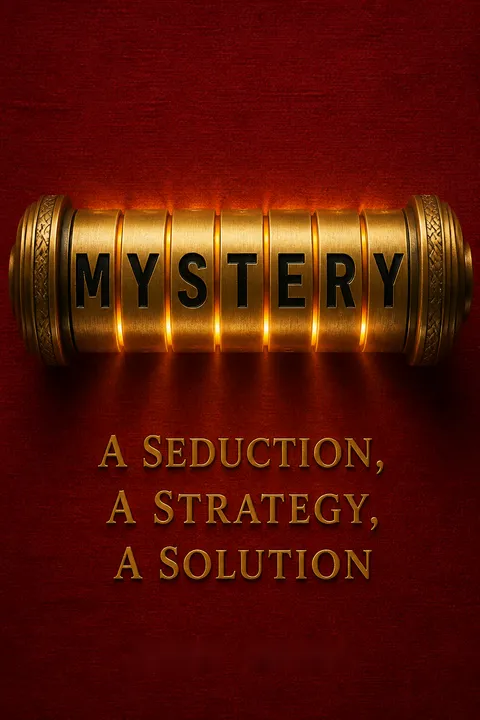


Key Takeaways
Design the chase, not just the reveal, if you want attention to last
The unanswered question hooks us. In 1926, Agatha Christie disappeared for eleven days. Her abandoned car, missing body, and defensive husband gave the public clues without a solution. The book presents the episode as a mystery Christie staged in her own life. Edgar Allan Poe had made a similar discovery in fiction: his detective stories held readers not with the crime alone, but with the hunt for its explanation.
Surprise teaches the brain. A prediction error is the gap between what someone expects and what happens. The book links these moments of surprise to dopamine activity, which helps direct attention and learning. A story that sets up a pattern, then withholds or unsettles its resolution, turns the audience into active investigators.
What's striking is that suspense makes attention participatory. The audience is not simply receiving a plot, but testing explanations against new evidence. That helps explain why the same structure works in a crime story, a classroom question, or a product launch. The strategy also has an ethical edge: suspense can invite genuine curiosity, or exploit it by withholding information without a fair payoff. The useful distinction is whether the delay deepens understanding or merely prolongs dependence. Mystery earns attention most durably when the eventual experience feels richer because the question was asked.
Hide enough to invite curiosity, but not enough to make people quit
Curiosity needs a sweet spot. A mystery box is a concealed piece of information that pulls an audience forward. A surprise egg video featuring Ryan opening toys drew more than a billion views because viewers wanted to see what came next. Steve Jobs used a similar delay at the iPhone launch, teasing the product before revealing it. In each case, the hidden object creates a question the audience can imagine answering.
Too much mystery backfires. Psychologist Daniel Berlyne found an inverted-U pattern: familiar material bores people, while information that feels wholly random is hard to engage with. Slot machines exploit this appetite by advertising rare jackpots and arranging near misses that feel like progress. That illusion keeps people playing, even though the game offers no skill-based path to winning.
The useful design principle is calibrated uncertainty: people need enough structure to form a guess, then enough surprise to revise it. This resembles good interface design, where clear goals coexist with discovery, and good teaching, where a problem is challenging but not incomprehensible. The slot-machine example marks the boundary between engagement and manipulation. A near miss feels informative, but in a game of chance it does not mean success is closer. Curiosity is powerful partly because it mistakes some uncertainty for learnable pattern, so ethical design must not disguise randomness as progress.
Question what familiar objects can do before declaring a trick impossible
Magic hides its method. Unlike a mystery box, which conceals an answer, a magic trick reveals the outcome while concealing how it happened. Functional fixedness is the tendency to assume that an object can only be used in its ordinary way. In Jan Rouven's puzzle illusion, extra wooden pieces seemed to fit inside a frame because one piece concealed a smaller block. The audience overlooked the possibility that a solid-looking block could also serve as a hiding place.
Look for patterns, not just clues. During World War II, mathematician Bill Tutte helped crack the German Lorenz cipher without ever seeing its machine. He spent months studying encrypted messages, noticing repetitions that exposed the system's structure. Both cases reward the same habit: question the assumptions that make a method invisible, then examine the parts others treat as ordinary.
Functional fixedness is a useful reminder that perception is not passive. Expectations about what a block, mirror, or computer can do shape what seems possible before evidence is considered. The same habit supports scientific reasoning: anomalies matter when they reveal that a familiar model is incomplete. Yet not every surprise conceals a clever mechanism. Some events are genuinely random, and searching for patterns can produce false discoveries. The disciplined move is to stay imaginative while requiring evidence. Curiosity opens candidate explanations; careful testing determines which one deserves belief.
Make familiar material strange enough to earn a second look
A little friction can focus attention. Disfluency is the mental effort caused by information that is less familiar or less easy to process. In a classroom study described in the book, students who received material in unusual fonts, including Comic Sans, remembered more. In a separate reasoning test, 90 percent of people reading an easy-to-read version missed at least one question, compared with 35 percent reading a disfluent version. The extra effort appeared to interrupt quick, mistaken answers.
Art can use the same interruption. The Blair Witch Project replaced polished horror conventions with rough, apparently documentary footage, making viewers uncertain about what was real or safe. Goodnight Moon also varies its familiar bedtime pattern with unexpected objects and pauses. In both, departures from the expected form prompt closer attention rather than passive recognition.
Productive difficulty is not the same as making everything harder. A small obstacle can slow automatic processing and invite reflection, while excessive difficulty can obscure the point or drive people away. That distinction matters in design, teaching, and art: friction should reveal something worth noticing. The book's examples suggest that novelty works best when it has a legible frame, such as a recognizable story genre or a familiar learning task. Without that frame, strangeness becomes noise. The challenge is to interrupt habit without removing the reader's ability to participate.
Read complicated characters as rehearsal for real people
People resist simple labels. Shakespeare's Hamlet is difficult to pin down partly because the play withholds clear explanations for his behavior. Literary critic E. M. Forster called characters who can surprise us convincingly round, in contrast with flat characters built around one defining trait. The book argues that such characters resemble real people, whose actions shift with their circumstances.
Fiction can train perspective-taking. Research described in the book found that reading literary fiction improved performance on tests of theory of mind, the ability to infer what others may think or feel. Psychologist Walter Mischel's studies also found that people behave differently across situations, rather than displaying one stable trait everywhere. Treating a person as a fixed type can therefore miss the context that shaped a particular action.
The strongest implication is not that novels automatically make readers kinder, but that narrative can exercise a useful mental skill: holding several possible motives in mind before deciding what someone is like. This counters the everyday tendency to explain another person's behavior as character while explaining one's own as circumstance. Fiction gives that correction emotional texture, not just a rule. Still, empathy in a story does not guarantee fairness in life. The transfer depends on whether readers carry the habit of interpretation beyond the page, especially when real people are inconvenient or unfamiliar.
Keep ambiguity alive instead of mistaking certainty for truth
Not every unknown has a hidden answer. The Voynich manuscript contains strange writing and fantastical plant drawings. Scholar William Newbold claimed to decode it as a scientific work by Roger Bacon, but later examination showed that his method could generate incompatible readings. His eagerness to solve the mystery helped him mistake interpretation for evidence.
Ambiguity can be uncomfortable. In Daniel Ellsberg's urn experiment, most people preferred to bet on a container with known odds rather than one with an unknown mix, even when the uncertainty did not make the known option objectively better. The duck-rabbit illusion offers another model: the image can be seen as either animal, and its ambiguity is part of what it is. In life, forcing one explanation can create false certainty.
Ambiguity tolerance is not a demand to suspend judgment forever. Decisions often require action before every fact is known. The practical skill is to distinguish a question that has a discoverable answer from a situation with several plausible interpretations, then match confidence to evidence. That distinction is valuable in medicine, law, and public debate, where anxiety can make a definitive story feel safer than an honest uncertainty. The Voynich case shows why humility matters: interpretive ingenuity can feel like proof, especially when a person has invested heavily in finding a solution.
Build a life around questions that reward return, not final victory
Some games end; others deepen. Philosopher James Carse called activities with fixed rules and a winner finite games. An infinite game is played to keep it going. The boys in Carse's childhood sandlot baseball game changed teams and ignored the score when necessary, because continuing to play mattered more than winning.
Separate puzzles from mysteries. A puzzle has a definite answer waiting to be found; a mystery depends on uncertain factors and may never settle. The book connects this distinction to forecasting: Philip Tetlock's superforecasters improved by treating beliefs as testable hypotheses and updating them as evidence changed. It also describes awe as the response to something vast that exceeds an existing understanding. In enduring art, repeated exposure can reveal new questions rather than exhaust the work.
This distinction helps separate mastery from ongoing inquiry. A finite goal can motivate effort, but if every activity becomes a contest with a final score, exploration is easily reduced to performance. Infinite play protects room for revision, shared discovery, and enjoyment that does not depend on being right. The idea also needs balance: some puzzles must be solved, and some decisions cannot wait for endless interpretation. The value lies in recognizing which mode a situation calls for. A mystery deserves openness; a solvable problem deserves a method and a stopping point.
Teach by making students explain, struggle, and revise their own thinking
Make students do the thinking. The Harkness method organizes learning around student-led discussion of open-ended questions, with the teacher facilitating rather than supplying every answer. At Chicago's Noble Academy, teachers paired this method with a culture of discipline and shared responsibility. The school reported student growth in the 98th and 97th percentiles on ninth- and eleventh-grade standardized measures, and college enrollment above 91 percent.
Struggle can improve learning. In self-explanation, students generate and test their own explanations instead of simply following a teacher's procedure. A meta-analysis of 69 experiments found benefits across subjects. In a physics study, students who worked through problems learned more, even though they felt they had learned less. The effort exposed gaps in their understanding and gave them a reason to repair those gaps.
The model treats students as active learners rather than containers for information, and it makes uncertainty socially manageable: peers can test an idea without requiring one person to perform certainty. That is a meaningful design choice, not merely a more conversational classroom. The reported school outcomes are promising, but they do not isolate Harkness from the school's other structures, resources, or student supports. The broader claim is stronger than any single score: explaining, listening, and revising are transferable practices. To work, however, discussion needs norms and preparation, not just desks arranged around a table.
Use answers as clues, not as permission to stop investigating
The first diagnosis may be incomplete. A Porsche 911 arrived at mechanic Jeff Haugland's shop with an engine that would not turn off. Computer diagnostics offered no answer. After months of investigation, he traced the problem to corrosion in the convertible-top control unit, which sent stray electrical power to the engine system. The apparent engine fault began in a seemingly unrelated circuit.
Beware of WYSIATI. The term means What You See Is All There Is, a bias in which people treat available information as if it were complete. In a study of 115 students solving a key-and-light puzzle, those rewarded for finding one solution often stopped searching. When told to find the general rule, every student discovered the wider pattern. Mindfulness, in this account, means actively noticing what may be missing or changing, not merely following an established answer.
This is a practical case for combining automation with independent judgment. Diagnostic tools and search engines compress enormous amounts of information, but they inherit the limits of their design and the data they can see. The mechanic's advantage is not rejecting the computer; it is treating its output as a starting hypothesis. That approach also guards against a common failure in teams, where an early explanation becomes the default and later evidence is fitted around it. Persistent doubt is useful when it generates tests. Without testing, however, doubt can become aimless suspicion.
Analysis
The book's central argument is that mystery is not merely missing information. Properly shaped uncertainty is a tool for attention, learning, aesthetic pleasure, and intellectual humility. Its examples form a progression: a concealed answer creates curiosity, an unexplained method creates wonder, a difficult form interrupts automatic thinking, and an opaque character or ambiguous text invites interpretation. The final movement carries these habits into classrooms and practical problem-solving, where acknowledging what remains unknown can outperform confident repetition.
The strongest feature of this account is its insistence that uncertainty has different forms. A slot machine manufactures the feeling of progress without offering a learnable path. A difficult poem asks readers to work, but its uncertainty can reward rereading. A faulty car diagnosis is an incomplete puzzle, while predicting human behavior may remain genuinely uncertain. Treating all three as the same problem would be a mistake. The useful question is not simply whether something is unknown, but whether further investigation can reduce the uncertainty and what kind of evidence would count.
The book also links curiosity to an ethical stance. In fiction, interpretive patience can soften the urge to reduce people to labels. In education, students learn to expose their uncertainty rather than hide it. In forecasting and repair, the investigator resists the comforting story that the first explanation is complete. These are not guarantees of wisdom. Curiosity can become compulsive, ambiguity can be exploited, and effortful material can become inaccessible. A mystery needs enough structure to support inquiry, and enough discipline to prevent imagination from masquerading as proof.
The lasting lesson is therefore not to avoid answers. It is to resist premature closure. Answers are valuable, but they should remain revisable when evidence changes. The best questions do more than delay a reveal: they make people notice, think, and participate. In that sense, mystery is both an artistic strategy and a practice of living with the limits of knowledge.
Review Summary
Mystery by Jonah Lehrer explores the psychological appeal of mysteries in various aspects of life. Readers found the book intriguing, with engaging anecdotes and research on topics like sports, music, and education. Many appreciated the insights into human behavior and curiosity. Some felt the book lacked depth or organization, while others found it inspiring and thought-provoking. The writing style was compared to Malcolm Gladwell's. Overall, reviewers enjoyed the book's exploration of why humans are drawn to the unknown, though opinions on its effectiveness varied.
People Also Read






Glossary
Mystery box
A concealed story hookA mystery box is a secret or withheld piece of information that creates a question and keeps an audience engaged. It may be the identity of a culprit, the contents of a package, or the significance of an unexplained event. The technique works best when the audience can imagine possible answers without knowing which one is correct.
Prediction error
A mismatch with expectationA prediction error occurs when an outcome differs from what a person expected. In the book's account, the brain responds strongly to these mismatches because they draw attention and can support learning. Stories, games, and artworks can use surprise to make people notice information they might otherwise ignore.
Functional fixedness
A narrow view of an object's useFunctional fixedness is the tendency to assume that familiar objects can only serve their usual purpose. A person may see a block as a building piece, for example, and fail to imagine it as a container. Magicians exploit this bias by hiding methods in objects whose alternative uses audiences do not consider.
Disfluency
Effortful processingDisfluency is the extra mental effort caused by information that is unfamiliar or difficult to process. Unusual fonts, disrupted patterns, and unconventional forms can slow automatic responses and prompt closer attention. The book presents disfluency as potentially useful for learning and art, provided the difficulty remains manageable rather than obscuring the material.
Strategic opacity
Purposeful withholding of motivesStrategic opacity describes a writer's deliberate choice to leave out information that would fully explain a character's motives or actions. The resulting uncertainty encourages audiences to interpret behavior rather than receive a settled account. In the book's examples, Shakespeare's unexplained character choices make figures such as Hamlet feel less predictable and more lifelike.
Ambiguity aversion
Preference for known oddsAmbiguity aversion is the tendency to prefer choices with known probabilities over choices whose probabilities are unclear. In Ellsberg's urn example, people favor a container with a stated mix of colored balls rather than one with an unknown mix. The preference can feel safer, but it may distort decisions when uncertainty is mistaken for greater danger.
Infinite game
Play aimed at continuingAn infinite game is an activity whose purpose is to keep participants engaged, rather than to reach a final victory. Its rules may change to preserve participation. Philosopher James Carse contrasts this with finite games, which have fixed rules, clear winners, and a definite endpoint. The book applies the idea to art, learning, and ongoing inquiry.
Harkness method
Student-led open discussionThe Harkness method is a teaching approach centered on student-led discussion of open-ended questions. Students carry much of the intellectual work by interpreting material, explaining their reasoning, and responding to peers. The teacher guides the process and supports productive participation rather than delivering every answer or procedure.
Self-explanation effect
Learning through generated explanationsThe self-explanation effect is the learning benefit that can occur when students generate explanations for themselves instead of only receiving answers or procedures. Working through uncertainty can reveal gaps in understanding and help learners connect ideas. The book describes research finding benefits across subjects, even when students feel less confident during the process.
WYSIATI
Treating visible evidence as completeWYSIATI stands for What You See Is All There Is. It describes the tendency to build the best available explanation from the information at hand while neglecting what is missing. The book uses it to explain why people may accept an initial computer diagnosis or one successful solution without checking for overlooked causes or broader rules.
FAQ
What's Mystery: A Seduction, A Strategy, A Solution about?
- Exploration of Mystery's Appeal: The book examines the allure of mystery in art, literature, and life, exploring why humans are drawn to the unknown.
- Interdisciplinary Approach: Jonah Lehrer uses psychology, literature, and personal anecdotes to illustrate how embracing uncertainty can lead to deeper insights.
- Practical Applications: It discusses how recognizing and appreciating mystery can improve decision-making and creativity across various fields.
Why should I read Mystery: A Seduction, A Strategy, A Solution?
- Engaging Narrative: Lehrer intertwines stories of famous mysteries with scientific insights, making the book both informative and entertaining.
- Valuable Insights: Readers gain insights into how mystery influences aspects of life, from personal relationships to professional success.
- Practical Strategies: The book offers strategies for applying the concepts of mystery in everyday life, enhancing curiosity and creativity.
What are the key takeaways of Mystery: A Seduction, A Strategy, A Solution?
- Embrace Uncertainty: Acknowledging what we don’t know can lead to greater understanding and creativity.
- Curiosity as a Tool: Engaging with the unknown can lead to new insights and opportunities.
- Cognitive Benefits: Mystery can improve critical thinking and empathy, encouraging exploration and understanding of complex characters.
What are the best quotes from Mystery: A Seduction, A Strategy, A Solution and what do they mean?
- “The most beautiful thing we can experience is the mysterious.”: This Einstein quote suggests that mystery is essential to art and science, driving creativity and exploration.
- “Art needs surprise, otherwise it doesn’t hold an audience’s attention.”: Sondheim's quote highlights the importance of unpredictability in art, reinforcing that mystery keeps audiences engaged.
- “Not knowing is what makes you feel alive.”: This encapsulates the book’s message about the value of embracing mystery and uncertainty.
How does Lehrer define the concept of "mystery box" in Mystery: A Seduction, A Strategy, A Solution?
- Definition of Mystery Box: A "mystery box" is any contained secret that drives a story forward, creating suspense and intrigue.
- Examples in Media: Lehrer cites suspenseful elements in Star Wars and Jaws, where information is withheld to maintain interest.
- Psychological Impact: This technique engages curiosity, prompting audiences to seek answers and stay invested in the narrative.
What role does dopamine play in our attraction to mystery, according to Mystery: A Seduction, A Strategy, A Solution?
- Dopamine's Function: Acts as a neural currency, helping us locate interesting parts of our environment and enhancing focus.
- Surprise Triggers Dopamine: Unexpected events or "prediction errors" lead to dopamine spikes, increasing engagement and attention.
- Learning Through Mystery: This mechanism encourages exploration and curiosity, driving us to seek new experiences and knowledge.
How does Mystery: A Seduction, A Strategy, A Solution relate to the concept of "desirable difficulty"?
- Definition of Desirable Difficulty: Challenges can enhance learning and retention, making the process more engaging.
- Application in Education: Studies show that disfluent fonts or complex tasks improve memory and understanding by requiring more cognitive effort.
- Connection to Mystery: Engaging with difficult material, like complex narratives, leads to deeper insights and appreciation for art.
What is the Harkness method mentioned in Mystery: A Seduction, A Strategy, A Solution?
- Student-Centered Learning: Emphasizes student-led discussions, shifting focus from teacher to student engagement.
- Encourages Critical Thinking: Promotes problem-solving skills by allowing students to explore complex topics collaboratively.
- Real-World Application: Prepares students for situations requiring navigation of ambiguity and uncertainty, teaching them to embrace challenges.
How does Lehrer connect mystery to empathy in Mystery: A Seduction, A Strategy, A Solution?
- Literature and Empathy: Engaging with complex characters fosters empathy, as readers navigate their motivations and emotions.
- Psychological Studies: Reading literary fiction enhances understanding of others' thoughts and feelings, improving social interactions.
- Cultural Significance: Exploring human behavior mysteries through literature makes us more compassionate and understanding individuals.
What role does overconfidence play in decision-making, according to Mystery: A Seduction, A Strategy, A Solution?
- Bias in Judgments: Overconfidence leads to poor decision-making, especially in fields like sports management.
- Ignoring Uncertainty: Often results in ignoring the inherent uncertainty in predictions, failing to recognize knowledge limits.
- Need for Humility: Advocates for acknowledging ignorance, recognizing complexity for better outcomes.
How does Lehrer connect mystery to creativity in Mystery: A Seduction, A Strategy, A Solution?
- Mystery as a Catalyst: Stimulates creativity by encouraging exploration and questioning.
- Art and Ambiguity: Great art contains layers of ambiguity, inviting interpretation and deeper reflection.
- Curiosity Drives Innovation: Curiosity, fueled by mystery, is essential for creative thinking, allowing discovery of new possibilities.
What is the significance of the Voynich manuscript in the context of Mystery: A Seduction, A Strategy, A Solution?
- Enduring Mystery: An unsolved mystery that captivates scholars, highlighting the allure of the unknown.
- Human Fascination with Codes: Reflects the desire to solve mysteries, leading to both frustration and fascination.
- Lessons in Interpretation: Illustrates the importance of interpretation and knowledge limits, reminding that some mysteries hold value even if unsolved.
About the Author
Other books by Jonah Lehrer



Download PDF
Download EPUB
.epub digital book format is ideal for reading ebooks on phones, tablets, and e-readers.








