

Plot Summary
A Rat in the Room
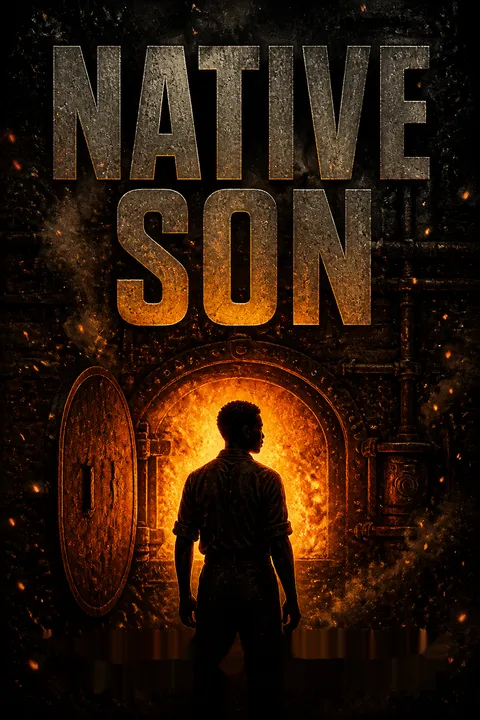
An enormous rat bolts through the cramped Chicago room where Bigger Thomas lives with his mother, sister Vera, and brother Buddy. Bigger kills it, then frightens Vera with its body until she faints, provoking his mother’s anger and another reminder that the family depends on his wages. The relief office has arranged a chauffeur’s job with the wealthy Daltons; if Bigger refuses, his family loses its food assistance.
He resents being cornered into work, while a plane writing advertisements across the sky sharpens his sense that white people can go anywhere and he cannot. At the poolroom, he and his friends consider robbing Blum’s delicatessen, a white-owned shop whose robbery would cross a dangerous racial boundary.
The rat is more than a startling opening incident. It makes the family’s poverty physically present, then gives Bigger a brief, controllable victory over something dangerous. His amusement at Vera’s fear shows how easily he turns power into a performance, especially when his actual choices feel restricted. The plane and the prospect of robbing Blum’s offer different fantasies of agency: one belongs to a world that excludes him, the other risks provoking that world’s full force. The job begins under coercion, not aspiration. Bigger’s anger therefore has a material source, but the opening also establishes his habit of displacing that anger onto people close enough to reach.
Blum's Becomes a Test
At Doc’s poolroom, Bigger pushes Gus, G.H., and Jack toward the planned robbery, then humiliates Gus when he hesitates. The argument becomes a beating: Bigger chokes Gus, threatens him with a knife, and forces him to submit before Gus escapes by throwing a billiard ball. Bigger slashes Doc’s pool table and is driven out at gunpoint, leaving his friends and the robbery behind.
In a movie theater with Jack, a newsreel identifies Mary Dalton as the heiress whose family will employ him. The image excites him with fantasies of entering a wealthy household and learning how rich people live. By the time the film ends, he has abandoned the robbery in his mind, but his fight has already damaged his place in the gang.
Bigger’s decision to provoke the robbery is not simple courage. He fears the job as much as Gus does, and his attack turns that shared fear into a contest he can dominate. Violence offers immediate relief from indecision, but it leaves him more isolated and does not make the robbery happen. The movie then supplies a safer fantasy: he can enter wealthy life as an employee and perhaps discover a route to money or pleasure. The film’s images let him imagine access without confronting the humiliating conditions of actual access. This pattern, imagining freedom through borrowed images and then reaching for force when reality closes in, shapes the choices that follow.
The Dalton House
Bigger reaches the Daltons’ large home with a gun hidden beneath his clothes, anxious in a neighborhood where a Black man walking alone could be treated as a threat. Henry Dalton hires him for a weekly wage, meals, and a room, with extra money for himself. Peggy, the housekeeper, explains his duties, including tending the furnace, while the blind Mrs. Dalton encourages him to consider returning to school.
Bigger wants the comfort but not the schooling. Mary, the daughter from the newsreel, unsettles him by raising unions and speaking to him as if they were equals. Her parents’ charitable language does not erase his discomfort, and he cannot tell whether her attention is kindness or another kind of danger.
The household’s generosity is real at the level of individual intention, yet it arrives inside a rigid employer-servant relationship. Bigger must read every gesture for its practical consequences: whether he will keep his job, where he should stand, and what kind of speech is safe. Mary’s informal approach disrupts the familiar rules without giving him a reliable replacement. Mrs. Dalton’s offer of education likewise assumes that opportunity can be accepted simply by wanting it, while Bigger knows how often institutions have already shut him out. The scene makes social misunderstanding reciprocal but unequal. The Daltons can experiment with friendliness; Bigger bears the risk of interpreting it incorrectly.
Dinner with Jan
On his first night driving Mary, Bigger discovers that she has skipped her university lecture to meet Jan Erlone, her Communist boyfriend. Jan insists on a handshake and an informal relationship; Bigger feels exposed by the contact and distrusts the pair’s sudden familiarity.
Mary and Jan squeeze him between them in the front seat, take him to a Black neighborhood café, and press him to eat and drink with them. The diners, including Bigger’s friend Jack and his girlfriend Bessie, notice the white couple at his table.
Jan and Mary discuss organizing Black workers, but their eager questions leave Bigger unsure whether they see him as a man or as a political cause. After drinking and driving through a park, Jan leaves. Mary, heavily intoxicated, rides home beside Bigger.
The dinner reverses ordinary racial etiquette without undoing the power relations that produced it. Jan’s handshake is meant as recognition, but Bigger experiences it as a demand to perform comfort on command. Mary’s insistence that he join them similarly leaves little room for refusal, even when she believes she is offering inclusion. At the café, the scrutiny of people who know Bigger adds another audience to his unease: he is being judged both for crossing a racial boundary and for how he behaves within it. The couple’s political ideals do not automatically make them perceptive. Their good intentions collide with a man whose caution has been learned through consequences.
The Pillow Goes Still
At the Dalton home, Mary is too drunk to walk upstairs alone, so Bigger supports her through the kitchen and carries her to her bedroom. He kisses and touches her while she is incapacitated. Then Mrs. Dalton enters, unable to see but close enough to discover another person if Mary speaks or moves. Bigger clamps a pillow over Mary’s face to keep her from making a sound.
When he lifts it, Mary is dead. Terrified of being discovered alone with a white woman, he stuffs her into her trunk, but her legs will not fit. He carries her to the basement furnace, cuts off her head, and forces the remains into the fire. He leaves the trunk behind and takes Mary’s purse, turning an accidental death into deliberate concealment.
The death grows from a chain of immediate choices rather than a plan to kill Mary: Bigger conceals his presence, then keeps concealing it as each new risk appears. That sequence does not make the killing harmless or inevitable. He has already taken advantage of Mary while she is unable to protect herself, and he chooses silence over calling for help. Mrs. Dalton’s blindness intensifies his panic because he imagines exposure even where it cannot occur through sight. The furnace and trunk become instruments of his effort to control the story of what happened. His fear is socially conditioned, but his actions produce consequences that extend beyond the moment of fear.
A Trunk Sent North
Back in his family’s room before dawn, Bigger hides Mary’s purse and bloodied knife, then returns to the Dalton home with her half-packed trunk. He tells Peggy and Mrs. Dalton that Mary left for Detroit and sends the trunk to the station, hoping the family will accept her absence as a planned trip.
When Mary fails to arrive, Peggy and Mrs. Dalton question him; he insists that Jan was with Mary and directs suspicion toward the Communist. Private investigator Britten confronts him and searches the trunk, but Henry Dalton intervenes when Britten’s questions become abusive.
Jan is brought in, and Bigger repeats his false account. Jan denies being at the house, making himself look less credible. Bigger gains temporary cover, but the household’s uncertainty gives him the idea of exploiting Mary’s disappearance.
Bigger’s cover story works because it uses facts the Daltons already fear: Mary’s political activities and her relationship with Jan. He does not need to invent an entirely new identity for her, only to steer other people toward the explanation they find most available. Britten’s racism helps him at first by treating the young chauffeur as too ignorant to be a serious conspirator, although that same prejudice makes the investigation more dangerous. Henry Dalton’s intervention protects Bigger from immediate mistreatment, but it also leaves the false story untested. A temporary reprieve becomes an invitation to deepen the lie, turning survival into a deliberate scheme.
The Red Kidnap Note
Bigger visits Bessie, his girlfriend, and flaunts the money taken from Mary’s purse. After she mentions the notorious Leopold and Loeb kidnapping, he sees a way to turn Mary’s disappearance into a ransom demand.
He tells Bessie enough to make her suspect he knows where Mary is, then pressures her to help collect the money. When Jan confronts him outside the Dalton home and asks what happened to Mary, Bigger threatens him with a gun rather than answer.
He writes a ransom letter in gloves, signs it as a Communist, and adds a hammer-and-sickle emblem to direct blame toward Jan’s political circle. He slips the letter beneath the Dalton door. Henry Dalton receives it and tells reporters he will pay, making Mary’s disappearance a public kidnapping case.
The ransom plot is Bigger’s first sustained attempt to convert a crisis into a future he can control. The plan depends on a sequence of false assumptions: that the Daltons will believe Mary is alive, that Bessie will obey, and that the public will blame the Communists. Bessie’s participation is not freely chosen; she is frightened by Bigger’s money, threats, and knowledge of her past thefts. His forged political emblem borrows a ready-made public fear, revealing how media stereotypes can become tools in the hands of someone they otherwise endanger. Yet the scheme also binds Bigger more tightly to the people he is manipulating, leaving him less room to escape.
Bones in the Furnace
As reporters and investigators fill the Dalton home, Bigger continues tending the furnace and tries to keep attention away from its contents. The men’s questions focus on Jan and the ransom letter, while Bigger remains protected by their assumption that a Black chauffeur could not have devised the scheme.
When Peggy tells him to clear the furnace ashes, he struggles to keep the fire burning and smoke rolls through the basement. An investigator takes the shovel from him and finds small bones and a piece of Mary’s earring among the ashes. The press recognizes the remains as Mary’s. Bigger slips upstairs, climbs from his room’s window into the snow, and disappears while the men gather around the evidence.
The furnace turns a private attempt at concealment into a public discovery through ordinary maintenance. Bigger’s danger is not uncovered by a brilliant detective but by ash that blocks the draft and forces someone else to handle the shovel. His confidence had depended on the belief that nobody would inspect the fire closely. The earring gives the remains a family history and an identity that his scheme tried to erase. The press rapidly converts evidence into a sensational story, while the racial assumption that Bigger is incapable of complex planning has already made him seem invisible. He escapes the house, but discovery changes the scale of the threat.
Bessie in the Airshaft
Bigger reaches Bessie’s room and tells her that Mary’s remains have been found. They leave together for an abandoned building, carrying blankets and the money Bessie has left from Mary’s purse. Bessie understands that Bigger has killed Mary and fears the police will trace him through her. In the cold hideout, he forces himself on her despite her resistance.
After she falls asleep, he decides that he cannot take her along and fears she will expose him. He crushes her skull with a brick, then throws her body and bedding down an airshaft. He forgets the remaining money in her dress. His attempt to secure an accomplice ends in another killing and leaves him almost penniless.
Bigger’s treatment of Bessie strips away any romantic account of their relationship. He values her body, money, and silence as resources, then kills her when he decides she has become a liability. Her fear and exhaustion are not simply obstacles in his escape; they are evidence of the harm his decisions inflict on someone already constrained by poverty and exhausting work. The airshaft echoes the furnace as another space where Bigger tries to hide a body, but this time he abandons money along with the victim. His growing sense of power is therefore inseparable from dependence on violence, and each act narrows his practical options.
The Roofline Hunt
Bigger hides in vacant flats and moves through the Black Belt as newspapers brand him a rapist and murderer. Police and volunteers search Black homes, while Black residents lose jobs and face beatings because the story has made every Black man suspect. Hungry and freezing, he steals bread and watches the search lines close around his hiding places.
On a rooftop, he strikes a searching officer with his gun and runs across connected roofs. Cornered on a water tank, he fires at pursuers, knocks tear-gas canisters away, and finally loses his weapon when police blast him with water in the freezing wind. He falls from the tank and is dragged into the street, where a mob calls for his death before police carry him away.
The manhunt makes the social consequences of Bigger’s crime visible without making him responsible for the city’s choices in how to respond. Police target an entire neighborhood, and newspapers fuse accusation with racial myth, so the search punishes people who had no part in the murder. Bigger experiences the expanding violence as confirmation that the world has always been organized against him, yet his attempt to resist capture includes another assault and further danger. The rooftop is the starkest expression of his isolation: he can see the city but cannot enter it safely. State force and mob threat converge on his body.
The Cross in the Flames
After his capture, Bigger refuses food and speech until officials bring him before the coroner. At the inquest, the press describes him as subhuman, while testimony turns Jan’s politics and Bigger’s race into supposed evidence of motive.
Buckley presses him to confess and falsely links him to other assaults; exhausted, Bigger signs a statement admitting the crimes he committed. During a later escort past the Dalton home, he sees a Ku Klux Klan cross burning above the crowd and tears away the wooden cross Reverend Hammond gave him.
In jail, Jan visits and admits he had failed to understand Bigger’s fear. Jan brings lawyer Boris Max, whose questions let Bigger describe his thwarted ambitions and anger, though Bigger remains unsure that anyone can help.
This section stages competing claims over what Bigger means. The press and officials turn him into a racial symbol, while the preacher offers salvation through submission and Jan offers solidarity through political recognition. Neither framework immediately fits Bigger’s experience. The burning cross makes the difference between Christian comfort and racial terror visible, and Bigger rejects the cross because it now seems entangled with the threat outside. Max’s listening produces a different kind of encounter: not absolution, but attention to the life behind the crimes. The novel leaves the tension unresolved. Recognition may help Bigger speak, but it cannot undo his acts or guarantee that the court will hear him.
Max Argues for Life
Bigger’s mother, Vera, Buddy, and former friends visit him; his mother pleads with Mrs. Dalton for mercy, while Buddy insists he would fight for his brother. Max prepares a guilty plea with a request for a life sentence, arguing that segregation, poverty, and blocked opportunity shaped Bigger’s life without erasing responsibility for the murders.
Buckley counters with a parade of witnesses and staged evidence, depicting Bigger as a sexual monster. With soldiers holding back a white mob, Max asks the judge to consider the conditions behind the crimes.
The judge instead sentences Bigger to death, citing the public disturbance. Max later tells him the Governor has refused to intervene. The legal process has heard his guilt more clearly than his explanation.
The court’s procedure offers a formal hearing while the mob outside supplies an informal verdict. Max tries to make the sentence answer a broader question about how social conditions shape conduct, but his eloquence cannot overcome a proceeding organized around public fear. Buckley’s presentation converts uncertainty into a lurid certainty, including false claims that Bigger raped Mary. The family visit exposes another cost of the case: Bigger’s crimes have entered his mother’s and siblings’ lives, and their love cannot shield them from public humiliation. Max’s argument is ethically complicated because it risks explaining Bigger through social forces alone. The judge’s death sentence shows that explanation and acquittal are not the same thing.
A Last Measure of Freedom
In his final days, Bigger refuses his family’s visits and avoids religious consolation, yet he wants one last conversation with Max. When Max comes after the Governor rejects an appeal, Bigger struggles to explain what their earlier conversations awakened in him: a desire to understand himself and other people rather than hide behind hatred.
He admits that he did not set out intending to kill, but also refuses to pretend that his crimes meant nothing to him. Max tries to connect Bigger’s frustrated ambitions to the hopes that built the city, while warning that murder was not a path toward justice.
Bigger asks whether the people who condemned him also wanted something from life. Max cannot give him certainty. They part before Bigger’s scheduled execution, with that question still open.
The ending does not grant Bigger moral redemption or a clean theory of his violence. He recognizes that his actions came from more than a single moment, but his claim to meaning remains bound to the murders that made others suffer. Max offers a social interpretation that connects private frustration to economic power, yet he cannot turn that interpretation into an answer Bigger can securely inhabit. The final question about whether his enemies also wanted to live complicates the easy division between victim and oppressor without making their power equal. Bigger’s brief movement toward fellow feeling is real, but it arrives too late to repair the lives he damaged or alter the sentence.
Analysis
Native Son follows a young man whose longing for agency has been narrowed by poverty, racial segregation, and daily humiliation, then asks what happens when that frustration finds an outlet only in violence. Bigger is neither a passive product of his circumstances nor a self-contained monster. He makes choices, including concealment, manipulation, and further killing, but those choices occur within a world that has restricted his education, employment, housing, and freedom of movement. The novel refuses to make these facts cancel each other out. Social explanation is not acquittal, and accountability does not make the surrounding order innocent.
The book’s repeated images of restricted space give this argument material form. The Thomas family’s single room, the Black Belt, the Dalton basement, vacant buildings, the jail cell, and the courtroom all sort people into unequal positions. Bigger’s imagined access to planes and wealth reflects a real desire to participate in public life, while the systems around him offer charity without changing the boundaries that produce deprivation. Henry Dalton’s donations and Max’s defense matter, but neither gesture alone repairs the conditions that shaped Bigger’s expectations.
The novel also examines how public stories become instruments of power. The newspapers transform uncertain facts into a story of racial threat, and the courtroom repeats that story through staged evidence and claims of sexual monstrosity. Max tries to replace spectacle with an account of social history, yet his argument risks turning Bessie and Mary into evidence for Bigger’s psychological condition rather than fully independent people. That tension is central to the book’s force. It asks readers to see the structures that helped produce violence without losing sight of the victims or the choices made by the person who committed it. At the end, Bigger’s brief movement toward recognizing a shared human desire does not resolve the conflict. It clarifies what has been denied, and how much damage has already been done.
Review Summary
Native Son is a powerful and controversial novel that explores racism and oppression in 1930s America. Many readers find it challenging due to its violent protagonist, Bigger Thomas, but praise Wright's unflinching portrayal of systemic racism and its psychological effects. The book is seen as a landmark in African American literature, though some criticize its bleakness and occasional heavy-handedness. Readers appreciate Wright's complex characterization and social commentary, noting the book's continued relevance in discussions of race relations today.
People Also Read








Characters
Bigger Thomas
A cornered, restless chauffeurBigger is a twenty-year-old Black Chicagoan whose anger and guardedness conceal a powerful hunger for choice. He lives with his mother, sister, and brother in a cramped, rat-infested room, and he resents being pressed into a life of low-paid work and narrow options. Movies and magazines offer him glimpses of planes, wealth, and movement beyond the Black Belt, but those images sharpen his awareness of what he cannot reach. With friends, he uses swagger and violence to cover fear; with his family, he often keeps emotional distance because their hardship makes him feel powerless. His central psychological conflict is not simply between good and bad impulses, but between a desire to act and a learned expectation that action will bring punishment.
Mary Dalton
A privileged young reformerMary is Henry and Mrs. Dalton’s only daughter, a university student whose politics and impatience with convention distinguish her from the guarded world of her parents. She wants to support labor organizing and learn how Black Chicagoans live, but her curiosity often outruns her understanding of the risks borne by the people she approaches. She treats familiarity as a moral good and assumes that crossing social boundaries can create mutual recognition. Her intentions are sincere, yet her wealth and security make it possible for her to experiment in ways that others cannot. Mary embodies the gap between wanting to challenge injustice and knowing how one’s own behavior is shaped by unequal power.
Jan Erlone
A Communist organizerJan is Mary’s boyfriend and a committed Communist who hopes to organize workers across racial lines. He approaches Bigger with confidence and warmth, assuming that a handshake and informal address will make their equality clear. That confidence reveals both his sincerity and his limited awareness of how white familiarity can feel threatening to someone trained to expect danger. Jan believes political solidarity must be built through direct contact, but initially mistakes his intentions for the effect he has. His capacity to reconsider himself matters as much as his ideology: he can recognize that his approach failed and try to listen without demanding immediate trust.
Bessie Mears
A wary, overworked girlfriendBessie is Bigger’s girlfriend and a domestic worker whose exhausting schedule leaves little room for rest or security. She seeks relief in drinking and in brief moments of pleasure, while remaining alert to the danger of depending on a man who offers affection inconsistently. Their relationship mixes desire, bargaining, and fatigue rather than a shared plan for the future. Bessie can read Bigger’s moods, but she has limited power to shape what he does with them. Her doubts and practical fears make her more perceptive than Bigger wants her to be. She represents a life constrained by poverty not as an abstraction, but as work, rent, alcohol, and a fragile claim to personal choice.
Boris Max
A defense lawyer who listensMax is a Jewish lawyer affiliated with the Labor Defenders who takes Bigger’s case after the disappearance becomes a political spectacle. He approaches Bigger as a person whose feelings and history matter, not only as a defendant to be managed. His questioning gives Bigger room to describe ambitions he has rarely admitted aloud, including the wish to fly, work in business, and live without constant fear. Max believes individual violence must be understood within social structures, although his arguments sometimes risk making Bigger an example of a theory. He is neither detached nor all-powerful: his effort to defend Bigger confronts public hatred and legal limits that he cannot simply reason away.
Henry Dalton
A wealthy, paternal landlordHenry Dalton is Mary’s father, a millionaire businessman who hires Bigger as a chauffeur and presents himself as a benefactor to Black communities. He supports Black education and offers Bigger wages, meals, and lodging, yet his real-estate interests help confine Black tenants to overcrowded neighborhoods where rents are high and housing is poor. Dalton sees his philanthropy as evidence of decency, which makes it difficult for him to recognize how his business practices reinforce the conditions he hopes to soften. His character is shaped by a genuine wish to help and a reluctance to see that charity cannot compensate for structural power.
Mrs. Dalton
A blind philanthropistMrs. Dalton is Henry’s wife and Mary’s mother, a blind former teacher who urges Bigger to pursue education and a skilled trade. She is deeply committed to philanthropy and believes opportunity can change a young person’s life. Her concern is sincere, but she tends to imagine what Bigger ought to want rather than ask what he has learned to expect. Her physical blindness gives the novel a concrete image for the limits of charitable perception: she can care about people while remaining unaware of the systems shaping their lives.
Mrs. Thomas
A worn, protective motherBigger’s mother carries the family’s daily responsibilities and faith, hoping that a steady job will give her children a safer home. She urges Bigger to accept help and fears the consequences of his association with the neighborhood gang. Her warnings can sound like nagging to him, but they come from years of watching poverty narrow the family’s choices. She represents practical endurance and religious hope, two resources Bigger both needs and resists.
Vera Thomas
A vulnerable younger sisterVera is Bigger’s sister, a young woman trying to continue her education and sewing classes despite crowded housing and limited money. She is easily frightened by the rat and hurt by Bigger’s teasing, yet she also challenges his rudeness and hopes he will avoid trouble. Her vulnerability reflects the family’s shared exposure to deprivation, while her plans show a modest attempt to imagine a future beyond the room they share.
Buddy Thomas
A loyal younger brotherBuddy admires Bigger and wants a job like his brother’s, treating him as a model of adult possibility. He is less guarded than Bigger and tries to offer practical help when he senses something is wrong. His loyalty exposes the tenderness Bigger keeps hidden, but it also makes him vulnerable to Bigger’s demands for silence and obedience.
Peggy
The Dalton household's keeperPeggy is the Daltons’ Irish housekeeper, cook, and longtime employee. She shows Bigger the kitchen, basement, furnace, and room assigned to him, helping him navigate the household’s routines. She believes the Daltons are good employers and speaks of the home as a family, though the hierarchy between servant and employer remains clear. Her practical kindness makes her an important observer of the household’s ordinary life.
David A. Buckley
A vote-seeking prosecutorBuckley is the State’s Attorney, a political figure whose public posture links law enforcement to electoral advantage. He treats Bigger as a useful emblem of danger and presses for the harshest punishment, while framing his own position as the protection of ordinary citizens. His rhetoric converts racial fear into a claim of civic duty, making him a powerful antagonist within the courtroom.
Britten
A prejudiced private investigatorBritten works as a private investigator for Henry Dalton and conducts the first questioning of Bigger. He assumes that political radicals are responsible and treats Black people with open suspicion. His interrogation shows how an investigation can be distorted by prior belief: he searches for evidence of Communist influence before he understands the facts of Mary’s disappearance.
Reverend Hammond
A pastor offering salvationReverend Hammond is the pastor of Mrs. Thomas’s church. He visits Bigger in jail with a message of forgiveness and eternal life, hoping religious faith will comfort him. His beliefs offer a coherent answer to suffering, but they do not match Bigger’s desire to find meaning in earthly life and social belonging. Their encounters reveal the emotional distance between inherited faith and a young man unwilling to accept consolation on terms he cannot believe.
Jack
A friend from the gangJack is one of Bigger’s friends from the poolroom and the gang’s planned robberies. He joins the discussion about Blum’s store, accompanies Bigger to the movie, and later appears among those affected by the case. He shares Bigger’s appetite for excitement but tends to be less volatile, serving as a companion rather than a counterweight strong enough to redirect him.
Gus
A friend caught in fearGus is a member of Bigger’s gang and the original planner of the proposed robbery of Blum’s. He hesitates because the target is white and may be armed, which exposes a fear shared by the others. His conflict with Bigger shows how the group’s bravado can fracture when a fantasy becomes an immediate risk.
G.H.
A cautious gang memberG.H. is one of Bigger’s friends and a participant in the discussion of robbing Blum’s store. He questions the use of a gun and the danger of targeting a white shopkeeper, reflecting the group’s unease beneath its bravado.
Doc
The poolroom ownerDoc owns the poolroom where Bigger and his friends gather. He tries to stop Bigger’s fight with Gus, then threatens him with a gun after Bigger damages the pool table. His establishment is one of the few places where the young men can gather, but it cannot contain Bigger’s volatility.
Mrs. Rawlson
Mary's maternal grandmotherMrs. Rawlson is Mrs. Dalton’s mother. Her testimony about the family earrings establishes the heirloom’s history and helps identify the remains recovered from the furnace.
Mrs. Patterson
Mrs. Dalton's absent attendantMrs. Patterson usually assists Mrs. Dalton. Her absence on the night Mary returns leaves Mrs. Dalton without her usual attendant and adds to the household’s vulnerability and confusion.
Plot Devices
The Black Belt
Makes segregation physicalChicago’s racially divided geography determines where Bigger’s family can rent, work, and move without attracting suspicion. The Daltons’ real-estate holdings connect their philanthropy to the cramped housing in which Bigger’s family lives. During the manhunt, the Black Belt becomes both refuge and trap: Bigger knows its streets and vacant buildings, but police searches and racial profiling close those spaces around him. The setting therefore shapes the plot’s practical possibilities, not merely its atmosphere. It limits Bigger’s lawful choices before the crime and determines how the city responds after it.
The Furnace
Hides evidence, then reveals itPeggy teaches Bigger how to tend the Daltons’ basement furnace as part of his new job. After Mary dies, he uses it to burn her body, believing the fire will erase the evidence and buy time. The plan depends on the furnace receiving enough air and on nobody inspecting the ashes. When investigators try to clear the clogged furnace, they uncover bone fragments and Mary’s earring. The household device that first marks Bigger’s place as a servant becomes the instrument that exposes his crime.
The Ransom Note
Redirects suspicion toward RedsBigger writes a ransom demand after learning how a famous kidnapping case used a request for money. He signs the note as a Communist and draws a hammer and sickle, hoping the Dalton family and press will blame Jan and his political associates. The letter temporarily shapes the investigation and persuades the public that Mary may still be alive. It also prompts Henry Dalton to make a public promise to pay. The note is a practical deception built from stereotypes already circulating in the city, but its publicity brings more investigators into the house and increases the chance that Bigger’s other concealments will fail.
Newspapers and Cameras
Turn accusation into public panicReporters photograph Bigger, publish his image, and circulate claims that he raped Mary before the investigation has established what happened. Their coverage links the case to racial danger and Communist conspiracy, helping trigger mass searches of Black homes, dismissals from jobs, and vigilante activity. The papers also carry practical information that Bigger uses to track the hunt and understand how quickly the search is tightening. Their influence is not limited to distorting the facts; it changes the behavior of police, employers, crowds, and the defendant himself.
The Cross
Contrasts faith with racial terrorReverend Hammond gives Bigger a small Christian cross as a sign of forgiveness and hope. Later, while police escort Bigger past the Dalton home, a Ku Klux Klan cross burns above the crowd. The visual contrast changes the meaning of the object for him: a symbol offered as spiritual comfort now sits against a public threat of racial violence. Bigger rejects the cross, unable to separate religious consolation from the danger surrounding him. The motif links the preacher’s promise of salvation to the mob’s use of terror while exposing how little either message answers Bigger’s immediate need to understand his life.
FAQ
Synopsis & Basic Details
What is Native Son about?
- Oppression breeds tragic outcomes: Native Son tells the story of Bigger Thomas, a young Black man living in Chicago in the 1930s, whose life is shaped by poverty, racism, and limited opportunities.
- Accidental crime spirals: Bigger's accidental killing of a wealthy white woman sets off a chain of events that expose the deep-seated racial tensions and social inequalities of American society.
- Explores systemic injustice: The novel explores themes of fear, violence, identity, and the search for meaning in a world that seems determined to deny Bigger his humanity.
Why should I read Native Son?
- Unflinching social commentary: Native Son offers a raw and unflinching portrayal of the systemic racism and social injustice that shaped the lives of Black Americans in the 1930s.
- Psychological depth and complexity: The novel delves into the psychological complexities of its characters, particularly Bigger Thomas, exploring the impact of oppression on his identity and actions.
- Timeless relevance: Despite being set in a specific historical context, the themes explored in Native Son remain relevant today, prompting readers to reflect on issues of race, class, and inequality in contemporary society.
What is the background of Native Son?
- Great Depression era Chicago: The novel is set against the backdrop of the Great Depression in Chicago, a time of widespread poverty, unemployment, and social unrest, particularly affecting the Black community.
- Racial segregation and discrimination: Jim Crow laws and informal practices of racial segregation and discrimination were prevalent in Chicago, limiting opportunities for Black people in housing, employment, education, and other areas of life.
- Influence of Communism and social protest: The rise of Communism and other social protest movements in the 1930s offered alternative ideologies and strategies for addressing social and economic inequality, influencing the characters and themes in the novel.
What are the most memorable quotes in Native Son?
- "Half the time I feel like I'm on the outside of the world peeping in through a knothole in the fence...": This quote encapsulates Bigger's sense of alienation and exclusion from mainstream society due to his race and socioeconomic status. It highlights the theme of social invisibility and the psychological impact of systemic oppression.
- "What I killed for must've been good!": This quote, uttered near the end of the novel, reveals Bigger's twisted sense of empowerment and self-discovery through violence. It underscores the destructive consequences of oppression and the distorted values that can emerge from a life of deprivation.
- "We make men feel small and then wonder why they are not big": This quote, often attributed to Boris Max's closing argument (though not verbatim in the text), encapsulates the novel's central argument about the societal forces that shape individual behavior. It highlights the responsibility of society to create conditions that foster human potential rather than stifle it.
What writing style, narrative choices, and literary techniques does Richard Wright use?
- Gritty realism and naturalism: Wright employs a gritty, realistic style to depict the harsh realities of poverty, racism, and violence in Bigger Thomas's life. The novel's naturalistic elements emphasize the deterministic forces that shape Bigger's fate, highlighting the limitations of individual agency in the face of systemic oppression.
- Stream of consciousness and psychological depth: Wright uses stream of consciousness techniques to delve into Bigger's inner thoughts and feelings, providing readers with a visceral understanding of his psychological state. This narrative approach allows for a nuanced exploration of Bigger's motivations, fears, and desires.
- Symbolism and imagery: Wright uses powerful symbols and imagery to convey the novel's themes. The rat in the opening scene, the furnace, the color white, and the recurring motif of blindness all contribute to the novel's rich tapestry of meaning.
Hidden Details & Subtle Connections
What are some minor details that add significant meaning?
- The alarm clock's jarring clang: The opening scene's alarm clock symbolizes the rude awakening Bigger experiences as he confronts the limitations and injustices of his world. It's a constant, unwelcome reminder of the life he's trying to escape.
- Bigger's ripped pantleg: The rat's ripping of Bigger's pantleg foreshadows the larger societal "rips" and damages Bigger will inflict and suffer. It's a small, physical manifestation of the larger societal wounds.
- The "You Can't Win!" poster: The poster of Buckley, the State's Attorney, with the slogan "You Can't Win!" encapsulates the sense of hopelessness and powerlessness that Bigger feels in the face of systemic oppression. It's a constant reminder of the rigged game he's forced to play.
What are some subtle foreshadowing and callbacks?
- The airplane writing in the sky: The airplane writing "Use Speed Gasoline" foreshadows Bigger's desire for freedom and escape, as well as the unattainable nature of the American Dream for Black people in his time. The fleeting nature of the skywriting mirrors the fleeting nature of Bigger's hopes.
- The movie Trader Horn: The movie Trader Horn, with its images of naked Black people in Africa, contrasts sharply with Bigger's own experience of being Black in America. It highlights the cultural disconnect and the romanticized, often dehumanizing, portrayals of Black people in popular culture.
- Mrs. Dalton's blindness: Mrs. Dalton's blindness is a recurring motif that symbolizes the willful ignorance and lack of understanding of white liberals regarding the true realities of Black life. It's a constant reminder of the limitations of even the most well-intentioned efforts to address racial inequality.
What are some unexpected character connections?
- Mr. Dalton's financial support of the NAACP: Mr. Dalton's support of the NAACP creates a complex irony, as his wealth is built on a system that oppresses the very people he claims to help. This highlights the limitations of philanthropy as a solution to systemic inequality.
- Peggy's Irish heritage: Peggy's Irish heritage and her family's experience with English oppression create an unexpected parallel with the Black experience in America. This connection suggests a shared history of marginalization and the potential for cross-cultural understanding, though it's ultimately limited by Peggy's own biases.
- Jan's genuine desire to help: Jan's genuine desire to help Bigger clashes with his naivete and inability to fully grasp the complexities of Bigger's situation. This highlights the limitations of even the most well-intentioned white allies in addressing systemic racism.
Who are the most significant supporting characters?
- Buddy Thomas: Buddy represents the younger generation facing the same oppressive circumstances as Bigger. His admiration for Bigger and his desire for a better life highlight the cyclical nature of poverty and limited opportunities.
- Vera Thomas: Vera embodies the vulnerability and fear that many Black women experienced in the face of racial and sexual violence. Her fainting spell after Bigger scares her with the rat underscores the psychological toll of living in a constant state of anxiety.
- Peggy: Peggy, the Dalton's Irish housekeeper, provides a perspective from someone who is both an outsider and an insider. Her comments reveal the subtle ways in which racism and classism are embedded in everyday interactions.
Psychological, Emotional, & Relational Analysis
What are some unspoken motivations of the characters?
- Bigger's desire for recognition: Bigger's actions are driven by a deep-seated desire for recognition and validation in a society that constantly devalues him. His crimes, though horrific, are a twisted attempt to assert his existence and make his mark on the world.
- Mary's search for authenticity: Mary's involvement with Communism and her interest in Black culture stem from a search for authenticity and meaning beyond the confines of her privileged upbringing. However, her efforts are often misguided and ultimately contribute to the tragedy.
- Mr. Dalton's need for absolution: Mr. Dalton's philanthropy can be interpreted as an attempt to assuage his guilt over profiting from a system that oppresses Black people. His actions are driven by a desire to maintain his social standing while also appearing to be a benevolent figure.
What psychological complexities do the characters exhibit?
- Bigger's internalized racism: Bigger exhibits internalized racism, reflecting the pervasive influence of white supremacist ideology on his self-perception. He often disparages himself and other Black people, internalizing the negative stereotypes that society projects onto him.
- Mary's white savior complex: Mary displays a white savior complex, believing that she can "help" Bigger and other Black people without fully understanding their experiences or the systemic forces that oppress them. Her actions are often driven by a desire to alleviate her own guilt and feel virtuous.
- Jan's blind idealism: Jan's idealism blinds him to the complexities of race relations and the ways in which his own privilege can perpetuate inequality. He genuinely wants to help, but his lack of self-awareness often leads to unintended consequences.
What are the major emotional turning points?
- The accidental killing of Mary: This event marks a major turning point in Bigger's emotional state, plunging him into a state of panic, fear, and desperation. It forces him to confront the consequences of his actions and the reality of his situation as a Black man in a racist society.
- The discovery of Mary's bones: The discovery of Mary's bones in the furnace intensifies Bigger's fear and paranoia, leading him to make increasingly reckless decisions. It also marks a shift in his relationship with Bessie, as he is forced to involve her in his cover-up.
- Max's plea for understanding: Max's plea for understanding in the courtroom offers Bigger a glimmer of hope and a sense of validation. It allows him to articulate his feelings and experiences in a way that he has never been able to before.
How do relationship dynamics evolve?
- Bigger and his family: Bigger's relationship with his family is characterized by tension, resentment, and a lack of communication. He feels trapped by their poverty and their expectations, leading him to distance himself from them emotionally.
- Bigger and Mary: Bigger's relationship with Mary is marked by misunderstanding, fear, and a power imbalance. Their interactions are shaped by the racial and social barriers that separate them, ultimately leading to tragedy.
- Bigger and Bessie: Bigger's relationship with Bessie is based on a mix of physical attraction, dependency, and manipulation. He exploits her vulnerability and ultimately sacrifices her in his desperate attempt to escape the consequences of his actions.
Interpretation & Debate
Which parts of the story remain ambiguous or open-ended?
- Bigger's true feelings for Mary: It's debatable whether Bigger felt any genuine attraction or connection to Mary, or if his actions were solely driven by fear and a desire to exploit her. The novel leaves open the possibility that Bigger was capable of more complex emotions, but that they were stifled by his circumstances.
- The extent of Jan's culpability: While Jan is ultimately exonerated, the novel leaves open the question of whether his actions, however well-intentioned, contributed to the tragedy. His naivete and lack of awareness of the power dynamics at play could be seen as a form of complicity.
- The possibility of Bigger's redemption: The ending of the novel offers a glimmer of hope for Bigger's redemption through understanding and self-acceptance. However, it's ultimately left ambiguous whether he is truly capable of change or if his fate is sealed by the forces of oppression.
What are some debatable, controversial scenes or moments in Native Son?
- The graphic depiction of violence: Wright's graphic depiction of violence, particularly the murders of Mary and Bessie, has been criticized by some for being exploitative and sensationalistic. Others argue that it's necessary to convey the brutal realities of Bigger's world and the psychological impact of oppression.
- The portrayal of Bigger as a sympathetic character: Wright's attempt to humanize Bigger and elicit empathy for him has been met with mixed reactions. Some argue that it's problematic to portray a violent criminal as a victim of circumstance, while others believe that it's essential to understand the root causes of crime and social unrest.
- The ending's message of hope: The ending's message of hope, however faint, has been interpreted in various ways. Some see it as a genuine attempt to offer a path toward redemption, while others view it as a naive and unrealistic conclusion to a story of such profound despair.
Native Son Ending Explained: How It Ends & What It Means
- Bigger's acceptance of responsibility: In the final scene, Bigger, facing imminent execution, tells Max, "What I killed for must've been good!" This suggests a twisted sense of self-discovery and a recognition that his actions, however horrific, were a product of his own agency and desire for freedom.
- Rejection of traditional redemption: Bigger rejects the traditional path to redemption offered by religion, choosing instead to embrace his own flawed humanity and the validity of his feelings, even if they led to violence. This underscores the novel's critique of societal norms and the limitations of conventional morality.
- Ambiguous hope for the future: While Bigger's fate is sealed, the novel ends with a glimmer of hope that his story will serve as a catalyst for social change. Max's commitment to fighting for justice and the recognition of Bigger's humanity suggest that even in the face of tragedy, there is the potential for progress.
Download PDF
Download EPUB
.epub digital book format is ideal for reading ebooks on phones, tablets, and e-readers.








