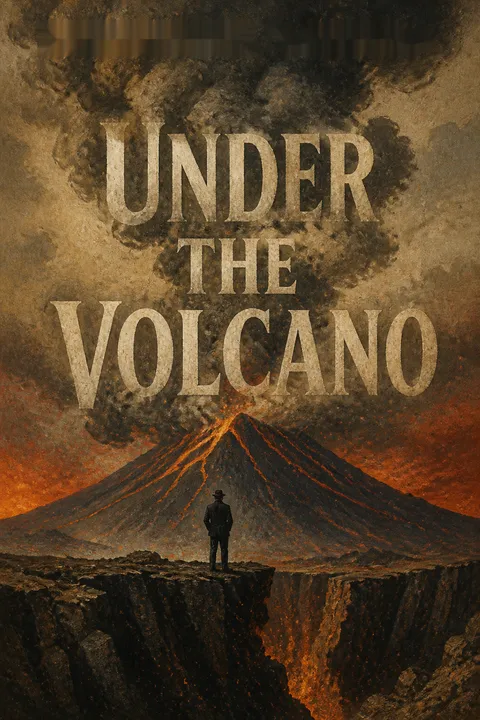


Plot Summary
The Letter Laruelle Burns
On the Day of the Dead in 1939, filmmaker Jacques Laruelle prepares to leave Quauhnahuac while Dr. Arturo Diaz Vigil recalls the Consul’s last, desperate months. At a cinema bar, manager Bustamente returns a volume of Elizabethan plays that Geoffrey Firmin had lent Laruelle. A folded letter inside, written but never sent, reveals Geoffrey’s yearning for Yvonne and his imagined future with her in a northern home.
Laruelle understands that the letter’s hope outlived its chance. He burns it in the candlelight, destroying the private plea even as the town’s festival resumes outside. The novel then turns back to the previous year, when Yvonne returned and Geoffrey still had a chance to answer her.
The opening makes memory itself an action with consequences: Laruelle finds the evidence, recognizes what it means, then destroys it. His choice is not simple cruelty. The letter belongs to a private pain he cannot repair, and burning it lets him avoid becoming its messenger too late. The frame also establishes a split between public ritual and intimate catastrophe. Quauhnahuac marks the dead with candles and noise, while Geoffrey’s most important words never reach their intended reader. The reader enters the story knowing that recollection cannot reverse events, which gives the coming day its terrible pressure.
Yvonne Returns to Quauhnahuac
Yvonne arrives by plane after traveling from California by ship, carrying the hope that she and Geoffrey can begin again. At the Bella Vista, she finds him in his formal clothes, already drinking and speaking to the barman as if through a private ritual. He is startled by her return but does not embrace her.
As they walk through town, he explains that he has resigned from the British consular service and that his half-brother Hugh is staying with him. Yvonne learns that Hugh has gone to Mexico City and may return that day. Geoffrey’s jokes and careful manners cannot conceal his shaking hands or his fear of what she expects. They reach their old house together, with the reunion still uncertain.
Yvonne’s return is an act of hope, but the scene makes clear that hope cannot function as a substitute for change. She has crossed an ocean and a year of separation; Geoffrey has not crossed the distance between wanting rescue and accepting it. His politeness is both social armor and a way to evade the emotional fact in front of him. The walk through familiar streets places their marriage inside a landscape that remembers them better than they can communicate. Hugh’s anticipated arrival adds another pressure point: reconciliation will not happen in a private world of two.
The Garden Cannot Hold Them
At home, Yvonne sees the neglected garden and broken furnishings that testify to Geoffrey’s long decline. For a moment they touch, but he drinks from a bottle of medicine Hugh supplied, then slips away to find more alcohol before she finishes bathing.
He collapses on the Calle Nicaragua. A passing English motorist helps him up and gives him whiskey, allowing Geoffrey to return without serious injury. Over breakfast, Yvonne proposes that they leave Mexico and start again elsewhere.
Geoffrey briefly imagines agreeing, then takes offense when she suggests waiting until he is sober enough to decide. He retreats into explanations about his drinking and his unfinished book. Yvonne’s return has opened a door, but Geoffrey chooses not to walk through it.
The garden externalizes a domestic condition that neither spouse can reduce to a single cause. Yvonne sees damage that calls for practical repair; Geoffrey treats it as a judgment on his ownership and failure. The near-fall makes his body briefly vulnerable to help from a stranger, but even rescue arrives carrying whiskey, so dependence is reinforced rather than interrupted. His refusal to postpone the decision until sobriety reveals the central trap: he experiences the condition that might free him as an insult to his autonomy. The marriage’s hope is real, yet each attempt to name a next step becomes another occasion for defense.
Hugh Offers a Northern Life
Hugh returns from Mexico City dressed like a Texas cowboy, having resigned from his newspaper job and determined to sail from Veracruz. He meets Yvonne in the garden while Geoffrey sleeps. The two ride horses into the countryside, where Hugh asks whether she has truly returned to Geoffrey and learns that she has.
He worries that his presence may complicate their reunion, but Yvonne asks him to stay until they can talk. During the ride she imagines a farm; Hugh instead sketches a modest life in a British Columbia fishing village, where Geoffrey might write and Yvonne might build a home. They pass the ruined summer palace of Maximilian and Carlotta, then return with the possibility of escape newly vivid.
Hugh’s proposal matters because it converts an abstract wish to leave into a practical image: a shack, a shore, work, and seasons. Yet he is not a neutral adviser. His concern for Yvonne, his loyalty to Geoffrey, and his own appetite for action pull in different directions. The ride briefly lets the siblings and Yvonne inhabit a shared future without the Consul’s drinking at its center. The ruined palace complicates that vision, reminding them that even an intended paradise can become a prison. Their conversation offers a route, not a solution, and the difference will soon matter.
A Sign at the Fence
After waking from a drunken sleep, Geoffrey searches the garden for the tequila he hid. A public notice beside his property warns residents to protect the garden from destruction, and he reads it as an accusation aimed at him. His neighbor Mr. Quincey catches him drinking and mocks his claims of sobriety. Dr. Vigil arrives, admits his own hangover, and offers sympathy rather than a cure.
Geoffrey continues drinking while trying to appear composed, then hears Yvonne and Hugh discussing him. He prepares to join them, but his thoughts fracture into hallucinations of insects, voices, and catastrophe. The day’s outing becomes another attempt to manage his drinking rather than a step away from it.
The sign turns ownership into a moral question: Geoffrey possesses a home but no longer tends it, and the public language of maintenance reaches him as personal condemnation. His response is revealing. Rather than accept the accusation as a prompt for repair, he converts it into one more persecutory message from the world. Quincey’s bluntness and Vigil’s companionship offer opposing forms of contact, neither of which can make Geoffrey choose sobriety. The hallucinations show how his inner disorder colonizes ordinary surroundings. The garden is not merely a symbol of neglect; it is a place where the possibility of responsibility is repeatedly presented and refused.
Hugh's Sea of False Starts
As Hugh helps shave Geoffrey, his memories expose how often he has mistaken publicity for purpose. As a schoolboy he left for sea hoping to become famous as a songwriter, but his publisher printed his paid-for songs without distributing them. Hugh later discovered that one was plagiarized, and a threatened scandal over his affair with the publisher’s wife vanished only when the publisher forgave him.
His first voyage taught him that sailors’ hard lives were not a stage for his ambitions. Now he has left journalism and means to join a ship carrying supplies to the Spanish Loyalists, though he doubts his motives and the value of the gesture. He still hopes action can make amends for a life spent performing conviction.
Hugh’s history explains why he distrusts his own heroism. He has repeatedly fashioned a public identity, then discovered that the work beneath it was compromised by vanity, fraud, or convenience. The sea taught him to see labor beyond his romantic fantasies, while the publisher’s forgiveness denied him the clean punishment he expected. His Spanish mission therefore carries genuine political commitment and a private wish for moral repair. The tension is not that he is secretly insincere, but that he cannot separate solidarity from self-dramatization. Helping Geoffrey is another chance to act, though the day will expose how limited one person’s intervention can be.
The Postcard Arrives Too Late
The three travel toward Tomalín with Dr. Vigil and Laruelle joining them. Laruelle and Geoffrey fall behind, where their old friendship resurfaces alongside resentment over Yvonne and the past. In the crowded square, a postman finally delivers a postcard Yvonne wrote soon after leaving Geoffrey.
It wandered through several countries before reaching him, and its words make clear that she had once asked why she left and hoped to hear from him. Geoffrey reads it, but does not show it to Yvonne. Later he slips it under Laruelle’s pillow. Its arrival proves that silence was not the only possible response to their separation, yet Geoffrey turns the proof into another secret instead of using it to speak.
The postcard is a material record of missed reciprocity. Its journey through the postal system gives delay a physical form, but the decisive delay is Geoffrey’s: even when the message reaches him, he cannot convert knowledge into contact. Hiding it under Laruelle’s pillow repeats the novel’s broader pattern of displacement. Meaningful objects keep changing hands, while the people who need them fail to act. Laruelle’s presence sharpens the difficulty because he is both friend and witness to the marriage’s history. The scene makes clear that fate is not only what happens to the characters; it is also what they do with chances that arrive imperfectly.
The Wounded Man by Road
On the bus to Tomalín, Hugh spots an injured Indigenous rider lying beside the road. The Consul recognizes the rider’s horse, marked with the number seven, from earlier that day. Hugh wants to help, but passengers warn that touching the man could bring legal trouble; others argue over whether police, an ambulance, or a doctor should be called.
The pelado removes the rider’s hat, revealing a head wound and money tucked beneath his collar. The bus leaves after officials arrive, forcing Hugh and Geoffrey aboard. As it pulls away, they see the pelado holding the dead or dying man’s coins. The group’s hesitation has protected no one, and the horse continues with the unfolding story.
The roadside episode makes moral paralysis concrete. The passengers do not lack language, concern, or theories; they have all three in abundance. What they lack is a shared willingness to accept consequences. Their debate over law and jurisdiction turns the wounded man into an administrative problem, while his body continues to fail. Hugh’s impulse to intervene is sincere but ineffective, and Geoffrey’s brief instruction to help cannot overcome the crowd’s fear. The pelado’s theft further unsettles any easy division between compassion and exploitation. The scene prepares the final violence by tying the horse to the man and exposing the local authorities’ capacity to make responsibility disappear.
Hugh Rides the Bull
At the Tomalín arena, the bull refuses to perform, and the crowd grows restless. Hugh suddenly enters the ring and rides the second bull, holding on as the animal bucks and the charros crowd it with ropes and blows. His reckless intervention gives Yvonne and Geoffrey a rare moment alone.
She describes the life she imagines for them in Canada, and Geoffrey agrees that they should leave and begin again. Hugh eventually dismounts safely, but the promised escape has already begun to fray. The trio leave the arena and pass an old, lame Indigenous man carrying another elderly man on his back. Soon afterward Geoffrey slips away toward a cantina, leaving Yvonne and Hugh to search for him.
Hugh’s ride is at once brave, theatrical, and morally ambiguous. He acts when the crowd has settled into passive expectation, but his intervention does not transform the conditions that made the spectacle cruel. Its immediate consequence is emotional rather than political: Yvonne and Geoffrey find a brief privacy in which they can imagine departure. The old man carrying another man then replaces the arena’s staged struggle with an unadorned image of care. Geoffrey’s disappearance breaks the fragile promise. He can agree to a future in the stillness of a moment, but the pull of the cantina soon overtakes that agreement.
Geoffrey Chooses the Farolito
At Salón Ofelia, Geoffrey drinks mescal while Yvonne and Hugh swim, eat, and try to keep their plans alive. Their conversation about the wounded rider and political action turns into a bitter argument about whether helping others changes anything. Geoffrey attacks Hugh’s journalism and ideals, then lashes out at Yvonne and their marriage.
He leaves the tavern alone, choosing the forest path toward Parián and the Farolito. Yvonne and Hugh follow later, hoping to find him before he reaches the bar. Hugh buys a guitar from a man at the El Popo, while Yvonne tries to make sense of the Consul’s scrawled poem on an old menu. The storm closes over their search.
Geoffrey’s argument converts the day’s moral question into a defense of his own withdrawal. He recognizes the gap between declarations and effective aid, but uses that recognition to discredit action altogether. Hugh’s politics are vulnerable to accusations of vanity, yet Geoffrey’s critique also protects his addiction from scrutiny. Yvonne’s practical hope becomes another target because it asks him to imagine a life beyond immediate drinking. His departure is therefore more than a change of location: it is a choice to return to the place where despair feels familiar and controllable. The guitar Hugh buys offers a counterpoint, a tool for expression rather than escape, though he has not yet learned what to do with it.
The Eagle and the Storm
Hugh and Yvonne follow the forest route toward Parián, asking at cantinas whether anyone has seen Geoffrey. At El Petate, Yvonne finds a small eagle confined in a cage and releases it. They continue through the darkening woods as lightning and thunder gather. Hugh loses the path while Yvonne climbs onto a fallen tree trunk to guide him.
A riderless horse, bearing the same number seven they saw on the wounded man’s horse, bolts through the undergrowth. Yvonne slips from the trunk and the horse comes down upon her. Her consciousness breaks into a vision of the Canadian home she had imagined, now burning as its rooms and furnishings disappear. Hugh’s search and the storm continue beyond her fading perception.
The eagle’s release is a brief, deliberate act of mercy in a day crowded with people who hesitate or look away. It cannot rescue Yvonne, but it shows that she still responds to suffering with action. The number seven horse binds the roadside injury to the forest catastrophe, turning an earlier encounter into an approaching consequence rather than a disconnected episode. The storm strips away the couple’s imagined geography of safety. Yvonne’s vision of the Canadian home burning is not simply a premonition; it is the final collapse of a future she had begun to inhabit emotionally. The narration leaves the physical aftermath unseen, but the scene strongly implies her death.
The Farolito's Final Verdict
At the Farolito, Geoffrey drinks while the proprietor, Diosdado, returns the bundle of Yvonne’s unanswered letters. Reading them, he finally sees how long she pleaded for contact and forgiveness. He wants her, but does not leave to find her. Local officials arrive, take his papers, and treat Hugh’s cable and an anarchist card as evidence that Geoffrey is a spy.
They accuse him of robbery and of being an Englishman, a Jew, or a political agitator, then order him to prison. Geoffrey recognizes the horse from the roadside and accuses them of stealing it and harming its rider. When he reaches for the bridle, the Chief of Rostrums shoots him. As Geoffrey dies, someone throws a dead dog down the ravine.
The letters give Geoffrey direct access to the care he had imagined absent, but recognition comes after his habits have made response nearly impossible. His refusal to seek Yvonne is not ignorance now; it is a surrender to a world in which every route toward repair feels closed. The officials’ accusations convert his muddled identity into a political convenience, while his charge about the horse links institutional violence to the earlier roadside scene. His final attempt to name what happened cannot interrupt the machinery around him. The dead dog thrown into the ravine denies the ending any clean ritual of justice. Death arrives not as revelation but as another act of disposal.
Analysis
Under the Volcano turns one day into a study of choices made under the pressure of addiction, political violence, and failed communication. Geoffrey is not merely unable to stop drinking; he uses intelligence to make each delay sound principled. He can analyze the limits of political intervention, diagnose his own evasions, and imagine a life with Yvonne in extraordinary detail. What he cannot do is convert insight into sustained action. The novel’s tragedy therefore rests not on ignorance but on the gap between recognizing a truth and consenting to live by it.
Yvonne’s return provides a genuine possibility of renewal, not a sentimental cure. Her imagined Canadian home represents practical intimacy: work, shelter, and a future built together. Geoffrey briefly accepts that future, but his habits and resentments repeatedly displace it. Hugh offers a contrasting model of action, though his own history complicates his idealism. He knows that political courage can become performance, yet he continues to seek work that might make his beliefs consequential. His ride on the bull and his efforts to help the wounded man show both the value and the limits of intervention.
The roadside episode is the novel’s sharpest social diagnosis. The crowd’s deliberation appears reasonable in fragments, but collectively it becomes abandonment. The injured man’s fate is not separated from the Consul’s later fate: both are caught in a system where official power, public caution, and private self-interest make responsibility difficult to locate. The numbered horse carries that connection forward, refusing to let the earlier event remain merely a passing spectacle.
The novel’s form deepens this moral pressure. The retrospective frame, delayed letters, recurring signs, and unstable chronology make memory feel active but unreliable as a remedy. The characters repeatedly receive evidence of what matters, then misread, hide, or fail to act on it. The landscape remains magnificent, but its volcanoes and ravines do not provide absolution. Beauty can make a lost future imaginable; it cannot make that future happen. The final tragedy is thus both personal and political: private refusal unfolds inside a public world already practiced at looking away.
Review Summary
Reviews of Under the Volcano are polarized. Many readers consider it a masterpiece of 20th-century modernist literature, praising its lyrical prose, rich symbolism, and haunting portrayal of alcoholism set against Mexico's Day of the Dead. The stream-of-consciousness style effectively immerses readers in the protagonist's drunken deterioration. Critics, however, find it impenetrably dense, self-indulgent, and exhausting, comparing it unfavorably to Joyce while questioning its accessibility. Most agree the novel's depiction of addiction is viscerally authentic, and the Mexican setting is vividly rendered, though opinions diverge sharply on whether the experience is rewarding.
People Also Read

Characters
Geoffrey Firmin
The Consul in free fallA former British Consul in Quauhnahuac, Geoffrey is a decorated veteran, a man of formidable intelligence, and an alcoholic whose intellect often becomes a defense against change. He moves between genuine tenderness and evasive cruelty, especially with Yvonne, whom he loves but repeatedly fails to meet honestly. His abandoned research into alchemy and the occult gives shape to his hunger for an ultimate explanation, while his drinking offers immediate relief from the pain of having no such answer. Geoffrey is not indifferent to responsibility; he is acutely aware of it, which makes his self-deception more painful. He can imagine a different life with extraordinary vividness, but acting on that vision requires a steadiness he struggles to sustain.
Yvonne Firmin
Astronomer and returning wifeGeoffrey’s estranged wife returns to Mexico hoping their marriage can be rebuilt. Yvonne is observant, practical, and emotionally courageous, though years of loss have made hope feel dangerous. Her studies in astronomy and memories of a life spent moving between places give her an instinct for distance and pattern; she is often able to picture a future more clearly than the people around her. She once acted in films and carried family burdens from childhood, but she resists being reduced to a tragic past. With Geoffrey, she alternates between patience and the need to ask for concrete change. Her wish for a home is not an escape from difficulty so much as a bid for shared work and ordinary intimacy.
Hugh Firmin
Restless political reporterGeoffrey’s younger half-brother, Hugh is a journalist, former sailor, musician, and political idealist who is preparing to return to sea. He is drawn to direct action because he distrusts the compromises of journalism and fears that talk can become a substitute for solidarity. Yet he is also self-conscious about his own motives, remembering how youthful ambition once masqueraded as courage. His bond with Geoffrey combines affection, rivalry, and unresolved guilt; with Yvonne, he is protective and emotionally close, which complicates his role in their reunion. Hugh’s energy makes him the person most likely to intervene, but he learns that action cannot guarantee rescue or erase the consequences of past choices.
Jacques Laruelle
Filmmaker and old friendA French filmmaker who has known Geoffrey since boyhood, Laruelle is both an intimate witness and a man who keeps emotional distance through irony and aesthetic judgment. His friendship with Geoffrey survives long periods of estrangement, but their closeness carries old resentments involving Yvonne and the past. Laruelle is preparing to leave Mexico, where he has spent several years among artistic ambitions, failed attachments, and accumulating memories. He recognizes how people turn their lives into stories, yet his own sense of departure is burdened by the parts of his history he cannot settle. His perspective gives the novel a frame of hindsight, though memory does not make him omniscient or capable of repairing what he recalls.
Arturo Diaz Vigil
Doctor and drinking companionA Quauhnahuac physician and friend of Laruelle, Vigil knows Geoffrey through the town’s cantinas and tries, with imperfect tact, to offer medical help. He has his own drinking problem and therefore approaches the Consul with sympathy rather than moral superiority. His manner combines polished courtesy with moments of frankness, and he recognizes that Geoffrey’s suffering involves more than physical symptoms. Vigil can provide advice and companionship, but he cannot compel Geoffrey to accept treatment.
Señora Gregorio
Bar owner with hard-won pityThe widowed proprietor of a small cantina, Señora Gregorio understands loneliness through her own losses and years of disappointment. She speaks with a mixture of humor and tenderness, meeting Geoffrey without pretending his drinking is harmless. Her bar becomes a brief refuge where he can encounter kindness without having to explain himself. She believes people must endure what life brings, but her compassion does not turn into a promise that anyone can be saved.
Concepta
The household's steady witnessAn older woman who works in Geoffrey and Yvonne’s household, Concepta has watched the house and garden deteriorate. She carries out practical tasks with a quiet familiarity that contrasts with the couple’s emotional disorder. Her presence anchors the domestic world in routine, even when the people who live there cannot maintain it. She neither explains nor judges the marriage, but her continued labor makes neglect visible.
Mr. Quincey
The garden's stern neighborAn American neighbor who tends his lawn with disciplined care, Quincey sees Geoffrey’s drinking from close range and refuses to flatter him. His bluntness makes him an uncomfortable witness to the Consul’s self-deceptions. Quincey represents a practical, property-minded outlook that Geoffrey both mocks and resents, though the neighbor’s order also exposes the state of Geoffrey’s neglected home.
Juan Cerillo
Oaxacan courier and idealistA chemist who works as a courier for a rural credit bank, Juan carries funds to villages supporting collective agriculture. Hugh remembers him from Spain and admires the way his political commitments are tied to dangerous, practical work. Juan’s own history includes poverty, political violence, and painful family experiences, giving his idealism a weight Hugh’s more abstract arguments often lack.
Captain Constable
Yvonne's erratic fatherYvonne’s father was an American consul and an inventive, sociable man whose schemes repeatedly failed. He tried to make a living through projects connected to pineapples and inventions, while Yvonne learned early to support herself and him. His disappointments and drinking helped shape her fear of watching someone she loves retreat into self-destruction, though she does not see her own history as destiny.
Fructuoso Sanabria
Local garden officialA severe official associated with Quauhnahuac’s powerful local security network, Sanabria appears watchful and difficult to read. His title suggests responsibility for public gardens, but the role is entangled with a broader system of authority. He is a quiet presence whose attention makes the Consul feel observed, even before their encounter becomes openly threatening.
The Chief of Rostrums
A police faction's interrogatorA local security official who questions Geoffrey and presses him about his identity, papers, and political affiliations. He uses mockery and procedural authority together, making it difficult to tell where intimidation ends and official business begins. His presence embodies a local political order shaped by suspicion, shifting loyalties, and coercive power.
Señor Bustamente
Cinema manager and observerThe courteous manager of Quauhnahuac’s cinema, Bustamente knows Geoffrey as a familiar patron and helps Laruelle recover the book left behind there. His observations offer a local view of the Consul’s public reputation, distinct from the private history his friends know.
Cervantes
Tlaxcalan cockfighter and hostA Tlaxcalan who keeps a bar and trains fighting cocks, Cervantes receives Geoffrey during the Tomalín outing. He is proud of his family traditions and religious observances, and he moves easily between hospitality, food, and the grim business of cockfighting.
The Pelado
A compromised roadside witnessA Spanish-speaking drifter encountered on the bus, the pelado initially appears drunk and disordered. At the roadside he is the first to inspect the wounded rider, displaying both practical awareness and a capacity for self-interest. His actions leave the passengers uncertain how to judge him.
The English Motorist
A passing English rescuerA cheerful English traveler who encounters Geoffrey after he collapses in the road. He offers a hand and a drink without understanding the deeper crisis, becoming a brief example of ordinary help that arrives by chance.
The Elephant
The Farolito's grim proprietorThe owner of the Farolito, known by his imposing nickname, runs the cantina where Geoffrey spends much of the final evening. He is guarded and observant, and he has kept a bundle of letters belonging to the Consul. His establishment functions as both a refuge and a place where vulnerability can be exploited.
A Few Fleas
The Farolito's young barmanThe Elephant’s young son tends the bar, reading comic stories and serving Geoffrey drinks. His distracted, childish presence sits oddly beside the adult violence and despair around him. He is part of the cantina’s daily life rather than an interpreter of it.
Plot Devices
The Day of the Dead Frame
Memory folds back on itselfThe novel opens one year after Geoffrey’s final day, with Laruelle preparing to leave Quauhnahuac and finding Geoffrey’s unsent letter. This frame establishes that the central events have already ended in catastrophe, then sends the story back to the day Yvonne returned. The reader experiences the past as a sequence that is both unfolding and already remembered. The Day of the Dead gives the frame a public ritual of remembrance, while Laruelle’s private act of burning the letter shows how incomplete and selective memory can be. The structure does not solve the tragedy; it makes the coming day feel like a recollection that cannot be corrected.
Alcohol and Strychnine
Relief disguised as treatmentGeoffrey calls Hugh’s bitter medicinal mixture a cure and repeatedly contrasts it with the whiskey, tequila, and mescal he seeks. The supposed treatment gives him a vocabulary for drinking while allowing him to imagine he is exercising control. He calculates doses, promises to taper off, and hides bottles, but each calculation becomes another means of delaying a decision. Alcohol also changes how he experiences time, memory, danger, and other people. The device is psychological as well as physical: it offers short-lived shelter from guilt while making ordinary choices harder to face. Its effects shape the novel’s fractured perception without making Geoffrey’s addiction a supernatural mystery.
The Delayed Messages
Love arrives without an answerTwo sets of writing carry the marriage’s unfinished history. Yvonne’s postcard, written after she first left, travels through several countries before reaching Geoffrey, and her earlier letters remain unread or unanswered. Geoffrey’s own letter to Yvonne, written in the aftermath of their separation, never leaves his possession. The messages make the couple’s silence tangible: affection existed, but neither timely receipt nor written confession automatically produces reconciliation. Their circulation through books, bars, and hands also links intimacy to chance, while each character’s response to a message remains a choice. The device lets the novel distinguish between having feelings and communicating them in time.
The Number Seven Horse
One encounter returns as consequenceA horse branded with the number seven appears first in the countryside, then beside an injured Indigenous rider, and finally in the forest during the storm. Its repeated appearance ties separate parts of the day together and gives Geoffrey and Hugh a physical clue that the road incident has not ended. The horse is neither an abstract omen nor a simple symbol: it is an animal moving through a world where people have failed to establish what happened to its rider. Its return gathers the novel’s questions about witness, responsibility, and violence into one recurring presence. The device makes the ending feel connected to earlier inaction rather than detached from it.
Volcanoes and Ravines
Landscape mirrors unstable choicesPopocatepetl and Ixtaccihuatl dominate the valley, while the barranca repeatedly interrupts roads, gardens, and paths. Characters use the landscape to imagine distance, escape, danger, and the possibility of a new beginning. Yvonne’s idea of a northern home contrasts with the enclosed routes around Quauhnahuac, while Geoffrey experiences the ravine as a recurring edge he cannot avoid. The volcanoes remain beautiful and largely indifferent to human plans. This contrast matters: the natural world offers scale and pattern, but no moral instruction or rescue. The device gives the novel a vivid geography without turning the mountains into a promise that the characters can simply climb out of their lives.
Download PDF
Download EPUB
.epub digital book format is ideal for reading ebooks on phones, tablets, and e-readers.








