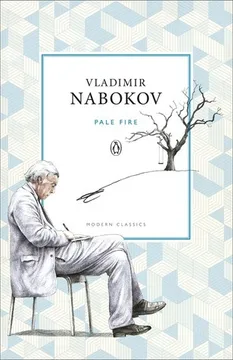


Plot Summary
The Neighbor's First Winter
In his foreword, Charles Kinbote1 presents himself as the rightful editor1 of John Shade2's last poem. He then reaches back to February 1959, when he rents a house beside the celebrated poet2 in New Wye. After an awkward first meeting at the faculty club, Kinbote1 gives Shade2 a ride home and meets Shade's wife,3 Sybil.3
The poet2's warmth encourages Kinbote1 to treat their growing acquaintance as an exceptional friendship, though Sybil3 keeps him at a distance and colleagues mock his eccentricity. Kinbote1 records these slights as proof that others fail to understand his bond with Shade.2 His commentary begins as a defense of that bond, but its certainty already exceeds what the neighborly encounters can establish.
The frame makes ownership a psychological issue before it becomes a publishing dispute. Kinbote's account of ordinary courtesies turns them into evidence of intimacy, while Sybil's reserve becomes, in his telling, an obstacle imposed by lesser minds. His editorial voice therefore asks readers to accept both a manuscript and the private history he claims gives it meaning. The gap between what happens and what Kinbote infers is the book's first source of suspense.
Zembla Enters the Study
As their walks become more frequent, Kinbote1 recounts the history of a northern kingdom and its exiled ruler,6 Charles Xavier,6 hoping Shade2 will turn the material into poetry. Kinbote1 watches the poet2's windows and imagines that the story is taking shape in Shade2's work.
When Sybil3 reveals that her husband2 has begun a long poem, Kinbote1 is thrilled; Shade,2 however, keeps his drafts private and refuses to discuss them until they are finished. Kinbote1 sees him reading pages to Sybil,3 not to himself, and interprets that exclusion as her censorship of the royal theme. The poem is in fact Shade2's own undertaking, but Kinbote1's conviction that he has supplied its hidden subject now governs every note he writes.
Kinbote confuses influence with authorship. Because he has given Shade material, he treats the poem's secrecy as a personal injury and Sybil's presence as editorial interference. Shade's refusal to show unfinished work is a modest boundary, yet Kinbote converts it into evidence for a plot against him. The distinction between a story told and a story written becomes unstable, preparing readers to question who controls the meaning of the poem.
Hazel's Unlit Windows
Shade2's poem moves from his childhood memories into the life he shares with Sybil3 and their daughter,4 Hazel.4 Orphaned young himself, Shade2 recalls Aunt Maud10's eccentric household and his early spells of collapse, then traces his long marriage to Sybil.3
The couple try to reassure themselves as Hazel4 grows into an isolated, difficult young woman whose appearance and manner make social life painful. She struggles at college, returns from a French school in tears, and finds few companions.
Years earlier, the family also endured unexplained disturbances around Hazel,4 including moving objects and lights in a barn. Her parents2 could neither explain the events nor reach her through them. Their protective hope gradually hardens into helpless attention to every sign of her distress.
Hazel's story is shaped by the limits of parental interpretation. Shade and Sybil try to translate her difference into temporary stages, practical remedies, or supernatural disturbance, but none gives them access to her inner life. Kinbote's commentary adds a second layer of speculation to a family already struggling to understand what it sees. The poem's domestic details matter because they show how love can remain intense while knowledge remains incomplete.
The Lake at Lochanhead
Hazel4's disappointment sharpens when a young man who has agreed to take her out leaves abruptly, claiming another obligation. She declines to burden the remaining pair and sets off alone instead of taking the bus home. At Lochanhead, she gets off in the dark near the half-thawed lake. Shade2 and Sybil3 spend the evening watching television, unaware of her route; Kinbote1's reading of the poem later intercuts their broadcast with Hazel4's journey.
Searchers find her body near the reedy shore. The poem leaves the exact moment and motive unresolved, while Kinbote1 declares that she entered the water deliberately. For Shade2 and Sybil,3 the loss turns ordinary household sounds and routines into reminders of the daughter4 they could not reach.
The split between the living room and Hazel's journey makes failed attention visible: her parents occupy the same evening but not the same knowledge. Kinbote supplies certainty where Shade's poem preserves competing possibilities, including accident and suicide. That difference matters. The commentator's confidence may comfort him, but it cannot restore Hazel's voice or settle what she intended. The scene refuses the easy conversion of grief into a solvable mystery.
A Fountain Beyond Death
After Hazel4's death, Shade2 examines what may follow the grave, while Kinbote1 describes his lectures at an institute devoted to the afterlife. Shade2 recalls collapsing during a poetry talk and seeing a stark white fountain in a realm unlike ordinary consciousness. His doctor dismisses the vision as a product of the collapse. Shade2 later finds a magazine account by a woman who reports the same image.
When he visits her, her journalist's notes reveal that the printed fountain was actually a mountain, a small error that might have ended the inquiry. Instead, Shade2 treats the coincidence as a possible pattern: not proof of heaven, but a connection hidden in the weave of events. Art becomes his way to test whether chance can carry meaning.
Shade does not turn the vision into a doctrine. A medical explanation weakens its authority, then a misprint both unsettles and renews the question. His response is neither simple belief nor dismissal: he shifts from asking what exists after death to noticing how unrelated experiences can echo one another. Kinbote, by contrast, wants a providential map. Their different needs make the same uncertainty a source of aesthetic discovery for Shade and spiritual anxiety for his editor.
Scarlet Escape from Onhava
Kinbote1's royal chronicle explains how Charles Xavier,6 imprisoned after revolution in Zembla, remembers a secret passage he discovered as a boy with his friend Oleg.11 As an adult captive, Charles6 finds the concealed route behind a palace closet and tells Odon,7 an actor and royalist,7 who helps him reach the theater.
When the guards' search closes in, Odon7 drives him toward the mountains and stays behind as a decoy. Charles6 climbs through a storm, takes shelter with a farmer, and continues alone across the Bera Range. At the coast, he finds Odon7 waiting near the sea caves. Their escape gives the king6 a life in exile, but it also gives the revolutionary Shadows a target to pursue beyond Zembla.
The passage links childhood play to political survival: a route first explored as an adventure becomes usable only when the palace turns into a prison. Charles survives through memory, disguise, and help from Odon, not through royal authority. Kinbote's elaborate account also exposes his hunger to make exile feel like a complete romance. Its detail invites belief even as its source remains the commentator who claims the story as his own.
Gradus Loses the Trail
The Shadows select Jakob Gradus5 to kill the escaped king,6 and he leaves Zembla while Shade2 is composing his poem. In Paris, Gradus5 tries to reach the former consul Oswin Bretwit with a clumsy cover story; Bretwit misunderstands him and reveals nothing. In Switzerland, Gradus5 visits a house where Odon7 is staying, but the actor7's young companion misdirects him toward the Riviera.
Gradus5 reaches Nice, where two Soviet operatives searching for the queen8's valuables have found a letter containing the king6's American address. Their superior passes the information to Gradus,5 who flies to New York and then travels to New Wye. His progress depends less on skill than on other people's accidental discoveries.
Gradus is a poor instrument for a mission that requires judgment. He mistakes social cues, fails to read Bretwit, and arrives near Odon without recognizing the information in front of him. Yet the conspiracy keeps advancing through bureaucratic mishaps and stolen papers. This makes the threat feel both absurd and real: political violence does not need a brilliant agent when chance, systems, and a loaded gun keep pushing him forward.
The Poem's Last Card
In July, Shade2 writes the final canto of his 999-line poem, returning to daily work, Sybil,3 and the small patterns through which art makes experience intelligible. Kinbote1 believes the completed manuscript contains traces of his royal story, though most of it concerns Shade2's life and Hazel.4 On the final evening, Shade2 tells Kinbote1 that the poem is nearly finished and lets him carry the envelope of index cards.
They walk together toward Kinbote1's house, where the poet2 hopes to hear the editor1's promised explanation of the theme. Meanwhile, Gradus5 has reached the campus, glimpsed Kinbote1 in the library, and obtained directions to his house from a professor.12 The two paths converge just as Shade2 entrusts his work to Kinbote.1
The cards make composition physical: Shade's months of grief and attention have become a bundle another person can carry, edit, and claim. Kinbote's belief that the poem conceals Zembla collides with the text's actual emphasis on Shade's life. Meanwhile, Gradus's approach is synchronized with the poem's final movement, so literary form and violent chronology appear to rhyme without proving that one controls the other.
Bullets at the Door
As Shade2 and Kinbote1 reach the house, a short, dark-haired stranger waits at the door. Kinbote1 recognizes him as Gradus5 and claims the gunman is aiming at him, the supposed exiled king.6 The first shots miss Kinbote;1 another strikes Shade2 in the heart. Kinbote1 falls while clutching the poem, and his gardener9 hits the attacker with a spade, disarms him, and helps subdue him until police arrive.
The papers identify the prisoner as Jack Grey, an apparent escapee from a criminal institution. Kinbote1 later says Grey admitted that he had been sent to kill the king6 and had killed the wrong man. Shade2's death is the brutal consequence of a failed assassination and a mistaken identity.
The climax turns the book's central uncertainty into bodily consequence. Kinbote's royal identity remains unverified, but his reading of the attack makes him the intended target; Shade becomes the victim of a plot he did not know existed. The gardener's sudden intervention saves Kinbote and the manuscript, not the poet. Literature survives in a form that immediately invites appropriation, while the person who made it is gone.
Kinbote Keeps the Pages
After the shooting, Kinbote1 conceals Shade's cards and persuades Sybil3 to let him publish the poem with his commentary. She believes he tried to shield her husband2 and signs an agreement that gives Kinbote1 editorial control.
During the investigation, he says Grey revealed that he was Gradus,5 the Shadows' chosen assassin; Grey later kills himself in jail. Kinbote1 leaves New Wye for a remote cabin, where he completes his notes and publishes his account despite resistance from Shade2's colleagues.
He mourns the poem's failure to become the royal romance he expected, then finds consolation in scattered echoes he believes Shade2 took from him. At the book's close, he imagines another pursuer approaching, unable to stop turning uncertainty into a story about himself.
Kinbote's final victory is editorial rather than political: he controls the pages because Sybil trusts his account of the shooting. That trust lets him place his own narrative beside Shade's and call the combination a recovered truth. Yet his disappointment at the poem's independence reveals the limit of his triumph. He can preserve the manuscript and annotate it, but he cannot make Shade's work belong to him without exposing how badly he needs it to.
Analysis
Pale Fire makes reading itself the central contest. Shade2's poem turns childhood, marriage, Hazel4's death, and a near-death vision into an art that admits uncertainty without surrendering form. Kinbote1's commentary performs the opposite movement: it converts uncertainty into a royal narrative that places him at the center. The gap between the poem and its gloss is not merely comic; it exposes how interpretation can become a strategy for managing loneliness and grief. Kinbote1 wants the poem to confirm that his exile matters, while Shade2's verse finds significance in particulars that resist a single master explanation.
The book's formal design gives both men a kind of power. Shade2 arranges experience through rhyme and recurrence. Kinbote1 arranges it through notes, dates, identities, and cross-references. His method sometimes illuminates details, yet it also absorbs other people's lives into his own story. The synchronized progress of Gradus5 and the poem intensifies this ambiguity: events appear patterned, but the pattern reaches us through an unreliable editor.1 Coincidence may be a structure of reality, a property of art, or simply the shape Kinbote1 needs to see.
The ending binds these questions to consequences. Kinbote1 survives and controls the manuscript, while Shade2's life cannot be recovered from the poem he finished. The editor1's possession of the pages is therefore not a simple victory. He preserves Shade2's work, but his commentary obscures the independence of the person who made it.2 The novel asks readers to practice a harder form of attention: to notice the ingenuity of patterns without confusing a compelling interpretation with verified truth.
Review Summary
Reviewers overwhelmingly celebrate Pale Fire as a masterpiece of postmodern fiction, praising Nabokov's structural brilliance in weaving a 999-line poem with a delusional commentary by Charles Kinbote. Many call it among the finest novels of the 20th century, highlighting its satire of literary criticism, unreliable narration, and extraordinary wordplay. The poem itself earns genuine admiration. Several reviewers engage creatively with the text, writing parody reviews mimicking Kinbote's style. A few note the book rewards rereading, while a small minority find the Zemblan digressions tedious.
People Also Read





Characters
Charles Kinbote
The self-appointed editorA foreign-born professor living beside John Shade2, Kinbote narrates the poem through a foreword and a dense commentary. He presents himself as an exiled king6 and treats Shade2 as his uniquely understanding friend, but the book gives readers reason to test those claims rather than accept them outright. Kinbote is observant about small details and often blind to the meanings other people assign them. His loneliness drives him to turn proximity into intimacy and coincidence into evidence. He wants to preserve Shade2's work, yet he also wants the poem to validate his own life. That tension makes him both a vulnerable exile and a controlling interpreter.
John Shade
The poet of mortal lifeA celebrated poet and professor, Shade shapes ordinary perception into tightly patterned verse. His poem draws on childhood memories, his marriage to Sybil3, the loss of his daughter4 Hazel4, and his questions about survival after death. He approaches mystery with curiosity but resists easy explanations, including the grand story Kinbote1 wants him to tell. Shade is affectionate without being demonstrative, attentive to language, and capable of finding meaning in both grief and small domestic particulars. His self-discipline as a writer contrasts with Kinbote1's wish to direct his work. Through the poem, Shade offers an intimate account of a life without pretending that art can repair it.
Sybil Shade
The poet's watchful wifeSybil is Shade2's long-time wife and Hazel4's mother. Practical, protective, and guarded around Kinbote1, she helps shape the household's response to their daughter4's struggles and gives Shade2 a steady domestic companion. Her reserve is difficult for Kinbote1 to interpret, so he repeatedly casts her boundaries as hostility or censorship. In Shade2's poem, she appears through remembered courtship, shared habits, and grief held in daily life. Her perspective remains largely outside Kinbote1's control, a fact that makes her silences as important as his elaborate explanations.
Hazel Shade
The isolated daughterHazel is the daughter of John2 and Sybil Shade3, a serious and difficult young woman whose social isolation troubles her parents. She is intelligent, idiosyncratic, and resistant to being softened into the conventional image of a happy child. Strange events around her, including unexplained lights and moving objects, deepen the family's uncertainty about how to understand her. Shade2's poem remembers her with tenderness but also with the painful knowledge that affection cannot guarantee access to another person's inner life. Hazel's presence gives the poem its most intimate emotional weight and tests her parents2' habit of hoping that time will solve what they cannot name.
Jakob Gradus
The stumbling assassinGradus is a member of the revolutionary Shadows, assigned to find and kill the fugitive king6. He is a small-time worker and political operative, not a master planner; he follows instructions with limited understanding and repeatedly misreads the people he encounters. His dull certainty makes him dangerous, because he can carry out violence without grasping its wider consequences. Kinbote1's account gives him a growing physical presence as he travels west, turning him into a counterforce to the poet2's careful acts of observation.
Charles Xavier
The king in exileCharles Xavier is the last king of Zembla in the royal history Kinbote1 recounts. A cultivated ruler with a strong attachment to literature and a complicated relationship to royal duty, he becomes a fugitive after revolution removes him from power. His escape depends on allies, disguises, and a forgotten passage beneath the palace rather than on the authority of his crown. The narrative's uncertainty about Kinbote1's relation to Charles is central: readers encounter the king both as a character in the commentary and as a possible identity claimed by its author.
Odon
The actor and royalistOdon, an actor and committed royalist, helps Charles Xavier6 escape from the palace and later remains connected to the exiled king6's circle. His theatrical skill makes disguise and performance part of the practical machinery of resistance. He acts decisively when the king6's route is threatened, then uses his public profession to move through a world where loyalty can be fatal. In Kinbote1's account, Odon's flair gives the royal chronicle a vivid counterpoint to Gradus5's clumsiness.
Disa
The distant queenDisa is Charles Xavier6's estranged queen, living apart from him on the French Riviera. Kinbote1 describes her as proud, melancholy, and still emotionally bound to a marriage that brought her little tenderness. Her letters and shared property remain entangled with the royal escape and its aftermath. She stands at a distance from the American academic world, but her presence reveals the personal cost of Charles6's exile and Kinbote1's complicated investment in royal memory.
The gardener
The quiet rescuerKinbote1's young gardener is an attentive, capable worker who knows plants and hopes to study landscaping, botany, and French. His practical presence contrasts with Kinbote1's grand claims and elaborate interpretations. He tends the grounds around the rented house and becomes important through direct action rather than speculation. Kinbote1 admires him, depends on him, and gives him unusual space in the closing commentary.
Aunt Maud
The eccentric family artistMaud is Shade2's aunt, a poet and painter who helps raise him after his parents die. Her taste for realistic objects mixed with grotesque imagery leaves a durable imprint on the family home. Shade2 remembers her through the preserved room and its odd keepsakes, while her artistic temperament offers an early model for seeing the strange inside the ordinary.
Oleg
The king's boyhood friendOleg, Duke of Rahl, is Charles Xavier6's close companion in youth. Their shared exploration of a hidden passage beneath the palace creates a memory that later matters to the king6's understanding of the building. Oleg belongs to the royal chronicle's intimate past, where play, secrecy, and loyalty overlap.
Gerald Emerald
The mocking colleagueEmerald is a young instructor at Wordsmith College who joins the academic teasing directed at Kinbote1. He is quick with a cutting remark and casual in his treatment of the people around him. His brief presence links campus gossip to the final approach of the political plot.
Plot Devices
Poem and Commentary
A story inside its glossThe book presents Shade2's poem alongside Kinbote1's foreword, notes, and index. The commentary promises context but repeatedly redirects attention toward Kinbote1's own concerns, especially his claimed royal identity and exile. Readers must compare what Shade2's poem actually describes with what its editor1 says it means. The arrangement turns annotation into action: Kinbote1's interpretation competes with the work he is supposed to explain.
The Index Cards
A life made portableShade2 writes his poem on dated index cards, allowing Kinbote1 to reconstruct its composition day by day. The cards make the act of writing concrete and give the commentary a calendar against which Gradus5's journey can be placed. At the end, the manuscript is physically carried away from the scene of the shooting. Its portability makes it both an artistic record and an object over which Kinbote1 can claim control.
Counterpoint in Time
Separate lives share a rhythmKinbote1 aligns Shade2's writing sessions with Gradus5's travel, often matching a line or image to an event happening elsewhere. The parallels make the poem seem to anticipate the assassin5's approach, though the connections arrive through Kinbote1's retrospective arrangement. This technique gives political suspense a formal pattern while leaving open whether the pattern belongs to fate, coincidence, or the commentator1's imagination.
Misprints and Doubles
Errors that resemble revelationsThe book repeatedly turns on likenesses, mistaken identities, and small textual errors. Shade2's afterlife inquiry hinges on a report that changes a mountain into a fountain; Kinbote1 also reads names, images, and coincidences as signs linking his own story to the poem. These devices make interpretation feel productive and dangerous at once: a mistake can uncover an unexpected pattern, but it can also encourage a reader to see proof where there may only be resemblance.
About the Author




Download PDF
Download EPUB
.epub digital book format is ideal for reading ebooks on phones, tablets, and e-readers.








