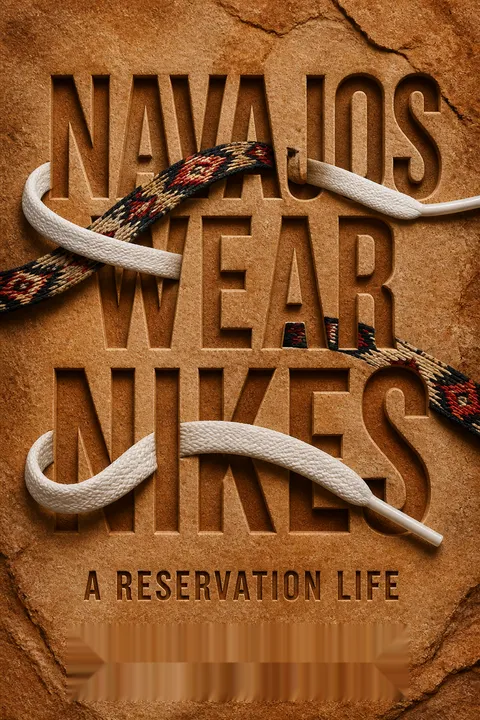


Key Takeaways
Answer racial shorthand with stories about actual people and places
A question with a trap. When seven-year-old Jim arrives in Ganado from Pittsburgh, he expects Indians to match his mother's romantic collection of books and artifacts. Instead, he meets Navajo classmates in jeans and Nikes, and becomes their target as the lone white child in class. The teasing name bilagáana bilasáana translates as white apple: bilagáana means white person, and bilasáana means apple. Its meaning shifts from joke to insult, then to a name Jim can live with.
Specificity beats stereotype. The book opens with the question Are you Indian? and keeps testing how much a racial label can explain. Jim's answer is not a simple yes or no. He tells the stories of particular friends, families, and places, rather than letting an outsider's assumptions do the talking.
The opening makes identity a problem of categories, not merely manners. A label can flatten distinct nations into one imagined group, while a story restores differences in language, history, and daily life. This resembles a basic insight from social psychology: people often mistake a group stereotype for knowledge of its members. Narrative can interrupt that shortcut by supplying detail. Still, personal stories cannot stand in for every Navajo experience. The book's strength is its situated account of Ganado, not a claim to define an entire people.
Navajos wear Nikes because living cultures adapt without vanishing
Modern life is not cultural failure. Jim's early image of Native people comes from tipis, horses, and buckskin. Ganado overturns it: Navajo children wear sneakers, watch television, play basketball, and speak Navajo at home. Diné means The People, a name many Navajo people prefer to the broad label Indian. Their identity is carried through relationships, language, land, and practice, not a required costume.
Adaptation has a history. Navajo life has incorporated Pueblo farming and weaving, Spanish sheep and horses, and modern technologies, while maintaining its own ways of living. Frybread, for instance, arose under American occupation, when flour and lard were distributed as government commodities. The contemporary is not outside the culture. It becomes part of how people make life on their terms.
The title's contrast between Navajo identity and Nike shoes exposes a persistent error: treating tradition as an untouched past. Anthropologists often describe cultures as processes of selection and reinterpretation, not sealed containers. The book makes that idea tangible through ordinary objects, from sneakers to a television in a ceremonial home. Adaptation, however, should not be confused with free choice. Some changes arise from coercion, economic pressure, or loss. The useful distinction is not old versus new, but whether a community retains agency over what it takes up.
Build closeness through reciprocal work, not a claim to someone else's identity
Friendship is practiced. Jim's first steady connection is Ferlin, a Navajo boy who shows him the wash, animal tracks, and how to herd sheep. Later, Jim helps drive a flock out of a cornfield, learns to make frybread, and discovers the value of saying thank you. His place in the community grows through shared tasks, meals, jokes, and mistakes, not through pretending to be Navajo.
Care crosses generations. Mrs. Shorty stays with Jim and his brother while their mother works nights. She makes rugs, dolls, and knitted goods for money and teaches the boys Navajo words. Jim later helps care for his younger sister and brother, a responsibility his friends accept as ordinary family life. Nolan, his Navajo stepfather, brings another model of kinship, combining art, work, and care with a life shaped by boarding schools and hardship.
Belonging here is relational and accountable. It develops through repeated acts of help, not through a claim of cultural ownership. That distinction matters in an era when cultural appreciation can slide into appropriation: closeness does not erase unequal histories or confer membership. The account also shows how practical care transmits knowledge. A child learns language and obligations while doing chores, not just by studying customs from a distance. Reciprocity is not a shortcut to belonging, but it is a more honest basis for connection.
Treat toughness as a tool, not proof that pain is harmless
Endurance has two sides. In school, Jim faces repeated teasing and fights. At home, his mother meets his pleas to leave with her brisk insistence that he can endure it. His Navajo friends use Tough Noodle as a teasing name for the toughness expected of them. Jim sees this toughness in a friend who stays composed through a painful prank, and in his mother, who hides a serious leg injury during a Scout trip.
The body keeps score. Football becomes another proving ground. On the third grueling day of practice, Jim is bruised, bleeding, and close to quitting. A coach points out the marks on his arms as evidence of persistence. The moment gives Jim pride, but the same culture of endurance can make injuries and bullying seem normal. Survival is real; so is the cost of having to prove it.
The memoir refuses to make resilience a tidy virtue. Toughness gives children tools for surviving an environment where adults may not intervene, yet it can also teach them to conceal pain instead of seeking help. This tension appears in many settings shaped by masculinity, poverty, or institutional neglect. Resilience is most valuable when it increases a person's choices; it becomes dangerous when others use it to excuse preventable harm. Jim's account holds both truths without reducing his friends to victims or their endurance to romance.
Defend vulnerable lives even when routine systems make them disposable
A dog changes the scale. Jim finds Mal, a stray with severe rope burns and cuts, and stays to feed and help him rather than turning away. The family treats his injuries, then fosters other neglected dogs. Mal is eventually collected by animal control and euthanized before the family can retrieve him, despite having an owner and identification tags.
Dog Day becomes resistance. The Navajo Nation's dog-catchers sometimes round up unclaimed dogs and kill them quickly. Jim and his friends spend a day hiding dogs or claiming they belong to someone, trying to keep them out of the truck. Their effort is improvised and imperfect, but it follows the same moral instinct that led Jim to Mal: an animal's suffering should not become invisible just because neglect is common. The stories also show the limits of rescue when larger systems remain unchanged.
The dog episodes make compassion concrete, while resisting the easy idea that kindness alone solves structural problems. Animal welfare research often distinguishes individual rescue from prevention: each matters, but the first cannot replace resources, veterinary care, or humane policy. The memoir's setting complicates judgment, since poverty, distance, and limited services shape both animal neglect and the choices available to people. Jim's friends are not simply villains for living amid cruelty. Their shared effort to protect animals instead reveals how ethical action can begin locally, even when it cannot repair the whole system.
Take spiritual traditions seriously without turning them into tourist spectacle
Belief shapes behavior. As children, Jim and Ferlin fear ch’į́įdii, spirits associated with death, and yee naaldloshii, witches or skinwalkers believed to take animal or human forms. After they hear what seems like a voice in the dark wash, they run home and check each other's backs for harmful objects. The fear is part of the way they understand a landscape marked by local stories and taboos.
Ritual is lived, not staged. As an adult, Jim attends a hózhǫ́ǫ́jii, a Blessing Way ceremony that offers prayer and support for a pregnant teenager and her family. Hózhǫ́ means something like harmonious beauty or balance. Sacred songs and corn pollen share the space with a microwave and a video game. The combination is not a contradiction. It is a contemporary family carrying tradition into daily life.
The supernatural stories are not presented as proof that outsiders should adopt Navajo beliefs. They show how inherited explanations organize caution, memory, and a sense of place. Religious studies often distinguish between asking whether a belief is literally true and asking what it does within a community. The ceremony offers another kind of evidence: ritual can create shared attention and practical support around a vulnerable family. Respect requires resisting both mockery and exoticization. A sacred practice is not a colorful prop for a visitor's spiritual adventure.
Trace hardship through policy and history, not racial character
History enters daily life. The Navajo were forced to march more than 300 miles to Fort Sumner in the 1860s; the book says roughly one in eight died during captivity. After their return, federal livestock reduction policies killed large numbers of sheep and goats, animals that were both livelihood and family wealth. Officials planned to cut herds from about 1.3 million animals to 400,000. By 1947, the sheep and goat populations had fallen below that target, and many Navajos faced severe hunger.
Present conditions have context. Jim cites data from his era showing high rates of violence and abuse on reservations, with alcohol involved in more than two-thirds of the reported violence. He also notes that reservation policing resources were lower than in West Virginia. These figures do not explain every person's experience, but they challenge explanations that blame a population's character for conditions shaped by history, poverty, and inadequate services.
The historical detail changes the moral frame. A policy that looks like land management from a government office can mean the destruction of a household's food, wealth, and relationship with animals. This is a useful corrective to accounts that isolate present-day hardship from earlier state action. The numbers in a memoir should still be read with attention to date, definitions, and the scope of the data. Their role here is not to describe every Diné life, but to make clear that social conditions have causes beyond racial identity.
A town's institutions can make prejudice feel like ordinary procedure
The border changes the rules. When Jim's family moves from Ganado to Page, a town near the Navajo Nation, he finds a school where Navajo students are the majority but fewer than ten percent of teachers are Navajo. He also learns that the town police force has no Navajo officers, although, according to the book, most criminal cases involve American Indians.
Routine decisions have consequences. The memoir recounts Burton Amos, an Anglo man who disappeared after a car crash. Police initially assumed the missing driver was Navajo and did not continue searching after their flashlights failed. They resumed the search after his father arrived and made clear he was white. His remains were found much later. The case became a legal dispute. Jim's point is not that every officer is racist, but that institutional habits can turn assumptions into consequential action.
Prejudice is often easiest to recognize when someone announces it. The harder problem is routine discretion: whose absence triggers a search, whose complaint earns attention, and who gets treated as representative of a group. Organizational research calls attention to these small decisions because their effects accumulate even without a coordinated conspiracy. The book carefully separates that pattern from a verdict on every person in Page. That distinction strengthens the critique: institutions can reproduce unequal outcomes through habits that feel neutral to the people carrying them out.
Measure development against sacred relationships, not acreage or profit
A percentage can conceal a violation. The Arizona Snowbowl proposed making artificial snow from treated wastewater on the San Francisco Peaks, a mountain sacred to Navajo people and other tribes. The plan also called for clearing forest for more parking. A scientist cited in the book found pharmaceuticals, hormones, and other contaminants in the reclaimed water. The resort and city treated the project as an economic and recreational use of land.
The dispute was about meaning. Some of Jim's college friends argued that the snow would affect only about one percent of the mountain. He answered with a comparison to cleaning a church with water that had been contaminated by urine. The point is not that sacred land is valuable only when pristine, but that measuring a small physical footprint does not measure the injury to religious practice or tribal sovereignty.
Environmental conflicts often become disputes over incompatible measures of value. A developer counts acreage, revenue, and visitor access; a community may understand a place as a living relation that cannot be reduced to a percentage. Environmental justice asks whose definition of acceptable risk governs, and who bears the cultural cost when a project proceeds. The analogy to a church helps outsiders feel the violation, although it also translates a distinct Navajo relationship into a Christian frame. That translation can open empathy, but it should not replace listening to the tribes themselves.
Learn a place's stories without claiming an identity that isn't yours
The outsider keeps learning. Jim is Irish and Slavic, born in Pennsylvania, and never claims to be Navajo. Yet Ganado shapes how he sees animals, weather, work, and community. At an East Coast college, he is welcomed by white peers but notices different habits around food, nature, and religion. Their assumption that people outside Christianity are condemned also forces him to consider how a universal claim can erase the histories and moral lives of others.
Return becomes responsibility. As an adult, Jim comes back to Ganado to record oral histories and learn more Navajo. He describes himself as formed by the place, not transformed into one of its people. The distinction matters: love does not grant ownership. Learning its stories, naming its history accurately, and treating its people as particular human beings become ways to honor the place from outside it.
The ending offers a productive model of cultural humility: connection without impersonation. Place attachment can shape perception deeply, but identity also depends on kinship, language, history, and communal recognition. Those dimensions are not interchangeable. The memoir is strongest when it acknowledges the limits of its narrator's position while still asking him to take responsibility for what he has learned. Its account also invites a question for any reader: what would it mean to tell the history of a place without treating affection as permission to speak for everyone who lives there?
Analysis
This memoir is a coming-of-age narrative, but its deeper subject is translation: how a child learns to interpret a place that outsiders have already reduced to stereotype. The opening question, whether Jim is Indian, is not solved by choosing a more sophisticated label. Instead, the book answers through accumulating scenes: the schoolyard, sheep camp, animal rescues, ceremonies, football practice, Page's institutions, and an East Coast college. Each setting revises the narrator's understanding of what identity means and what it cannot mean.
The narrative's central strength is its double vision. Jim is close enough to absorb local speech, friendships, practical knowledge, and family obligations, yet far enough outside to notice how white visitors romanticize Navajo life and how border-town institutions normalize unequal treatment. That position creates insight, but also a limit. One childhood memoir, even one enriched by interviews and historical sources, cannot represent the full range of Diné experience. The author signals this by locating his memories in Ganado and refusing to claim Navajo identity.
The book also avoids treating culture as a relic. Sneakers, video games, sheep, sacred songs, and modern work coexist. This makes adaptation visible without pretending that every change is voluntary or harmless. The historical account of forced removal and livestock reduction sits beside present-day poverty and violence, connecting policy to lived conditions without making hardship the essence of Navajo life.
Its most important ethical distinction is between belonging and possession. Jim can love Ganado, learn its language, and be shaped by its people without becoming Diné or speaking for them. That stance makes the memoir useful beyond its setting: it asks readers to replace racial shorthand with specific knowledge, and to treat affection for a place as a reason to learn its history, not claim its identity.
Review Summary
Navajos Wear Nikes is highly praised for its unique perspective on Navajo life from a white author who grew up on the reservation. Readers appreciate Kristofic's honest portrayal of both the beauty and challenges of reservation life, his respect for Navajo culture, and his engaging storytelling. Many find it educational and thought-provoking, offering insights into cultural identity and the complexities of growing up between two worlds. While some critique certain aspects, most reviewers recommend it as an important, entertaining read that provides a valuable window into Navajo culture.
People Also Read


Glossary
bilagáana
White personA Navajo word commonly used for a white person. The author notes that its precise origin is uncertain and records several possible explanations, including influence from Spanish words. In the memoir, the term helps expose how racial labels work in everyday life, while its use remains rooted in a specific Navajo language and community.
Diné
The PeopleA Navajo name for the people, and a term many Navajo people prefer to the broad label Indian. The book uses Diné to emphasize a specific people and identity rather than treating Indigenous nations as interchangeable. The term does not imply that every person who lives on the Navajo Nation is Diné.
Diné Bikéyah
Land of the PeopleThe Navajo homeland, described in the book as the country bounded by four sacred mountains in Arizona, Colorado, and New Mexico. It is not simply another name for a political reservation boundary. The term connects land to Navajo history, identity, sacred geography, and the communities who live there.
hózhǫ́
Harmonious beautyA Navajo concept that has no exact English equivalent. The author glosses it as harmonious beauty, a condition involving balance, well-being, and right relationship, not merely visual beauty or quiet. In the memoir, the idea helps explain why ceremonies, family relations, land, and everyday conduct can all be understood in terms of restoring or sustaining harmony.
iiná
Living by a patternA philosophical idea the author translates as living according to the pattern. He describes it as one part of a cycle associated with the four sacred directions: thinking in the East, planning in the South, living according to the pattern in the West, and reverence in the North. The concept links daily conduct to a larger order.
Tough Noodle
A resilient personThe author's recurring English expression for a valued form of toughness among his Navajo friends and family. It means enduring hardship without giving up or making a display of suffering. The memoir treats this quality with affection, while also showing how expectations of toughness can make pain, injury, and bullying easier to ignore.
ch’į́įdii
Evil spirits or ghostsA Navajo term for spirits associated with death, understood in the book as dangerous presences. Children are taught to treat the word and the beings it names with caution. The memoir presents these beliefs as part of the community's spiritual understanding of death and place, rather than as tourist folklore.
yee naaldloshii
SkinwalkerA figure in Navajo accounts of witchcraft, described in the book as a person who takes animal or human forms and uses harmful power. Stories about yee naaldloshii shape how characters interpret frightening events after dark. The memoir recounts these beliefs respectfully without asking readers to treat them as verified fact.
hataałii
Ceremonial singerA Navajo ceremonial specialist whose songs and ritual knowledge may be used in healing ceremonies. The literal sense is singer. Medicine man is an English label used in the book, but the author's explanation emphasizes song and ceremonial skill rather than medicine in the narrow Western sense.
hózhǫ́ǫ́jii
Blessing Way ceremonyA ceremony intended to place a person or undertaking in harmony with the order of the universe. In the memoir, a Blessing Way supports a pregnant teenager and her family through prayer, sacred corn pollen, and song. The author describes it as shorter than many Navajo ceremonies, lasting one night or four days.
FAQ
What's Navajos Wear Nikes: A Reservation Life about?
- Personal Narrative: The book is a memoir by Jim Kristofic, detailing his experiences growing up on the Navajo Reservation as a white boy among Navajos.
- Cultural Insights: It explores the social dynamics, traditions, and challenges of life on the Reservation, offering a nuanced perspective on Native American culture.
- Family and Belonging: The narrative focuses on Kristofic's family life and his search for identity in a culturally rich yet challenging environment.
Why should I read Navajos Wear Nikes?
- Unique Perspective: The book provides a rare viewpoint of a white child growing up in a Native American community, challenging common stereotypes.
- Engaging Storytelling: Kristofic's writing is both humorous and poignant, capturing the beauty and struggles of life on the Reservation.
- Cultural Education: It serves as an educational tool, shedding light on Navajo customs, beliefs, and social issues, fostering empathy and appreciation for Native American cultures.
What are the key takeaways of Navajos Wear Nikes?
- Cultural Identity: The book emphasizes understanding one's cultural identity and the impact of environment on personal growth.
- Resilience and Adaptation: It illustrates the resilience of the Navajo people and their ability to adapt to modern challenges while maintaining traditions.
- Stereotypes and Misconceptions: Kristofic addresses and debunks stereotypes about Native Americans, encouraging readers to look beyond surface-level assumptions.
What are the best quotes from Navajos Wear Nikes and what do they mean?
- Shared Humanity: “The hardest thing to learn about a people of another race is that they are just like you in all essential ways.” This quote underscores the shared humanity that transcends cultural differences.
- Authenticity in Identity: “I always try to answer The Question in the most honest way, the way my Navajo friends would expect. Not with a simple ‘yes’ or ‘no.’” It highlights the complexity of cultural identity and the importance of storytelling.
- Respect for Resources: “You can’t waste anything, or you’re being rude to the food.” This statement emphasizes the Navajo value of respect for resources and the environment.
How does Jim Kristofic address stereotypes in Navajos Wear Nikes?
- Challenging Assumptions: Kristofic confronts common stereotypes about Native Americans, providing real-life examples that counter these misconceptions.
- Personal Experiences: Through his own experiences, he illustrates the diversity within the Navajo community and the complexity of their lives.
- Cultural Nuances: The book highlights the richness of Navajo culture, fostering a deeper understanding of the Navajo way of life.
What role does family play in Navajos Wear Nikes?
- Mother-Son Relationship: Kristofic's relationship with his mother is central, showcasing her struggles and dreams and influencing his upbringing.
- Cultural Transmission: Family dynamics reflect the transmission of cultural values and traditions, teaching Kristofic about resilience and identity.
- Support and Conflict: The book portrays both support and conflict within family relationships, illustrating the complexities of navigating cultural differences.
How does Kristofic depict life on the Navajo Reservation?
- Vivid Descriptions: Kristofic uses rich language to paint a picture of the landscape, culture, and daily life on the Reservation.
- Social Issues: The narrative addresses social issues faced by the Navajo community, providing a realistic portrayal of life on the Rez.
- Community and Belonging: Despite challenges, the book emphasizes the strength of community and the sense of belonging from shared experiences.
What lessons does Kristofic learn throughout Navajos Wear Nikes?
- Understanding Identity: Kristofic learns the importance of understanding and embracing his cultural identity.
- Respect for Tradition: He gains a deep respect for Navajo traditions and values, recognizing their significance in shaping identity.
- Empathy and Connection: The book teaches the value of empathy and connection across cultural divides.
How does Navajos Wear Nikes address the theme of resilience?
- Cultural Resilience: The book showcases the resilience of the Navajo people in the face of adversity.
- Personal Growth: Kristofic's journey reflects his own resilience as he navigates the challenges of growing up on the Reservation.
- Community Support: The narrative emphasizes the importance of community support in fostering resilience.
What impact did Kristofic's upbringing have on his identity?
- Cultural Duality: Growing up on the Reservation shaped Kristofic's understanding of cultural duality.
- Influence of Environment: His upbringing influenced his values, beliefs, and worldview.
- Search for Belonging: Kristofic's journey reflects a search for belonging and acceptance.
How does Kristofic describe his experiences on the Navajo Reservation?
- Childhood Adventures: Kristofic shares vivid memories of his childhood, painting a picture of vibrant community life.
- Cultural Conflicts: He discusses the conflicts faced as a mixed-race individual, feeling caught between two worlds.
- Community and Belonging: The narrative emphasizes the importance of community and the bonds formed among friends and family.
What role does sports play in Navajos Wear Nikes?
- Rite of Passage: Sports, particularly football, are depicted as a rite of passage for young Navajo boys.
- Cultural Significance: Sports serve as a means of cultural expression and pride for the Navajo community.
- Challenges and Growth: Kristofic shares the physical and emotional challenges faced in sports, illustrating lessons learned through perseverance.
Download PDF
Download EPUB
.epub digital book format is ideal for reading ebooks on phones, tablets, and e-readers.








