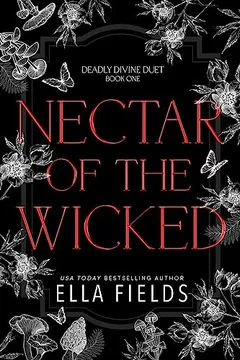


Plot Summary
The Hunt's Fatal Bargain
At twenty, Flea1 goes with Rolina,5 the bitter guardian who raised her,5 to trade with the Wild Hunt. Flea1 hopes the faeries will take her to the homeland she has never known; Rolina5 hopes their return will somehow restore her own lost daughter. The Hunt's officials reject their claim, saying the changeling1 has no family they can recover.
Rolina5 erupts, shoves Flea,1 and is suddenly dead. A silvery mist consumes her body, leaving the grass to absorb what remains. The golden-eyed faerie6 who approaches afterward threatens Flea,1 demands her name, and then leaves her alone in the field. Her guardian5 is gone, but the promised passage home has vanished with her.
The failed exchange turns Flea's long-awaited liberation into a double loss: she is freed from an abusive household but denied the answers she believed would make freedom meaningful. Rolina's hope was as imprisoning as her cruelty, because both women had built their lives around an imagined return. The Hunt offers no moral correction; its rules merely expose how little a desperate person's wishes matter to those with power. Flea's mixed grief and relief are therefore not contradictory. They are the first signs that she can recognize harm without pretending it was love.
The King in Room Twelve
With no savings and Rolina's5 unpaid debt hanging over her, Flea1 is pushed by landlord Madam Morin16 toward work at the Lair of Lust. She arrives inexperienced and frightened, then meets a striking faerie who tests her with questions rather than rushing her. Their first kiss leaves her shaken; when he gives his name, she recognizes Florian2 as the king of Hellebore.
His visits continue, and Flea1 admits she wants to find her birth family. She learns from Hal,15 a wary former Folkyn resident, that entry to the realm requires a powerful connection and a fortune in bribes. Florian2 admits he owns the pleasure house and offers access to his court, but conceals the full purpose behind the offer.
Flea's lack of experience makes the Lair a place of danger, but it also gives her a first chance to ask what she wants instead of merely complying. Florian's attentive questions feel unlike Rolina's contempt, and that contrast encourages Flea to mistake attention for safety. The scene's imbalance is material as well as erotic: he controls the venue, the money, and the information. Her desire is real, but it develops inside conditions he has arranged. The book makes attraction consequential by showing how easily emotional recognition can be confused with trustworthy intent.
A Bride's Blood Contract
Florian2 tells Flea1 he needs a bride to rule Hellebore while he wages war. He promises comfort, protection, and help discovering her origins, and says she may search within his kingdom. The prospect of leaving Crustle is too powerful for her to refuse, even as she doubts his motives. He produces a blood contract and lets her believe it is only an agreement to marry later.
Flea1 bites her finger and seals it with her blood. Florian2 then takes her from the apartment, allowing her to leave a letter and a book for Gane,4 the goblin librarian who has been her only friend.4 He materializes them into snowy Hellebore, where a royal carriage waits to carry Flea1 to his manor.
The contract converts Flea's longing into leverage. She chooses to sign, but her choice is shaped by a false account of what she is signing and by the near impossibility of reaching Folkyn alone. That distinction matters: agency is not erased, but it is manipulated through restricted knowledge. Her note to Gane preserves a fragile tie to the life she is leaving, while the journey into Hellebore makes her dream tangible. The new landscape is beautiful, yet the blood oath means its beauty arrives alongside a loss of control she cannot yet measure.
Hellebore's Beautiful Cage
Flea1 reaches Hellebore Manor and is dazzled by its red ivy, vast rooms, and library, but the steward Olin9 and much of the household treat her as an unwelcome outsider. Florian2 leaves her to explore while his warriors prepare for conflict, and his sparse explanations deepen her suspicion. In the woods, she finds an injured white wolf cub13 and carries it back to the stables despite Florian's2 order to leave it.
She names the cub13 Snow13 and tends its wound with help from the stable hand, Henron. When Florian2 later freezes and brutalizes a warrior in the hall, Flea's1 body remembers Rolina's5 violence. Florian2 notices her fear, softens, and arranges care for Snow,13 but his kindness does not erase the threat he represents.
The manor's luxury does not automatically become refuge. Flea has escaped a cramped apartment, yet the household's silence and Florian's command structure reproduce the old condition of being watched and judged. Her rescue of Snow is an early act of self-definition: she chooses care even when the king says not to interfere. Florian's response complicates her view of him, because he can recognize her distress and protect the cub while remaining capable of frightening violence. Flea's nervous system registers that contradiction before she can explain it.
The Name Beneath the Lies
While searching for a place to shelter Snow,13 Flea1 discovers a hidden dungeon beneath a hut in the woods. A beaten prisoner, Frensroth,14 recognizes her as a princess of Baneberry and says he was sent with others to retrieve her. Before he can explain more, Florian2 kills him. Flea1 confronts Florian2 and learns that he knew her identity before bringing her to Hellebore.
Her birth father, King Molkan,3 rules Baneberry, and her mother, Queen Corina, is dead. Florian2 admits that Molkan's3 actions cost him his sister, Lilitha, and that he has been weakening Baneberry ever since. Flea1 realizes the king's offer of a home was also a way to use her against her own family.
The revelation changes Flea's past from a personal mystery into the terrain of a political revenge. Her wish to belong has made her useful to two monarchs, neither of whom has asked what belonging means to her. Florian's murder of Frensroth is both a demonstration of power and an attempt to control the story Flea can hear. Her shock is sharpened by the fact that she entered his plan voluntarily, believing she was choosing a route to knowledge. She now has to separate the truth of her desire from the falsehoods used to direct it.
A Kingdom Built on Revenge
Flea1 refuses to accept Florian's2 claim over her and keeps testing the limits of her new life. She defies him by bringing Snow13 indoors, argues with him about his campaign, and searches his rooms for signs of the person behind the king. Florian2 reveals that Baneberry's king killed Lilitha, his sister, and that he has been striking at Molkan's3 kingdom to make him suffer.
Queen Aura of Oleander7 later tells Flea1 that Florian2 was once reckless and pleasure-seeking, but changed after losing his sister and father. The account does not excuse his cruelty; it makes its source more legible. As Hellebore's stolen goods and military preparations accumulate, Flea1 understands that the conflict is nearing open war.
Flea's disobedience is not yet escape, but it is a refusal to let Florian define every action as obedience or provocation. Snow gives that refusal an object beyond herself: she protects a vulnerable creature even when doing so brings consequences. Aura's account adds history without turning grief into absolution. Florian's pain explains the architecture of his vengeance, not its justice. This section also shifts Flea's attention from romance alone toward the material costs of the feud, as Baneberry's resources and people become visible evidence of what revenge does to a living kingdom.
The Frost Festival Trap
As Flea's1 faerie heat begins, Florian2 brings her to Hellebore's Frost Festival and presents her publicly as his chosen companion. The crowds stare, and several males take advantage of the crush to grope and harass her. A stranger in the trees whispers directions to a florist on Ashen Street, suggesting a way home. Flea1 cannot identify him before Florian2 finds her.
Furious, Florian2 captures the men who touched her, freezes them, and maims them when she confirms what happened. His possessiveness frightens her, but the danger and her rising heat pull her toward him. He carries her to his rooms, seals the doors in ice, and begins tending to her through the painful onset of her maturity.
The festival turns Flea into a spectacle before she has any understanding of the political performance being staged around her. The stranger's address gives her a possible route out, while the crowd's harassment shows how little protection public status can offer. Florian's violence is framed as defense, but it also makes his possessive claim unmistakable. Flea can feel protected and endangered by the same action. Her body is entering a biological crisis at the very moment the political world treats her as property, tightening the conflict between immediate need and long-term autonomy.
Four Days Behind Ice
Florian2 keeps Flea1 in his rooms for four days while her heat overwhelms her, feeding her, bathing her, and helping her endure it. Their intimacy becomes reciprocal when Flea1 drinks from him, an act he warns can create a dangerous bond.
Afterward, she overhears Florian2 and his commander Fume8 discussing her as part of the campaign against Molkan.3 She tells Florian2 she may be falling in love with him, but he gives no answer and leaves the next morning. Although still wary, Flea1 persuades his guard Zayla11 to let her visit the city with an escort.
During the journey, Zayla,11 Fellan,12 and the driver turn on her. Flea1 escapes a blade by bonding with a horse and materializing back to Crustle, where the golden-eyed faerie6 abducts her with enchanted dust.
The heat makes dependence bodily and intimate, but it cannot repair the deception that brought Flea to Hellebore. The blood exchange intensifies her attachment even as it raises the stakes of resisting Florian. Her confession is a bid for emotional clarity, and his silence leaves her with no reliable answer. The escape attempt then reveals how precarious her newly granted freedom was: permission can be withdrawn or weaponized by people around her. Her connection with the horse is the first power that answers her without demanding allegiance, though it carries her only into another uncertain captivity.
The Father Who Claims Her
The golden-eyed faerie6 delivers Flea1 to Baneberry, where King Molkan3 confirms he is her father3 and names her Tullia.1 He explains that he sent her to the middle lands to keep Florian2 from using her.
Over walks through the palace grounds, he recounts how he and Lilitha became soulmates despite his marriage to Corina, and how he eventually killed Lilitha after she threatened Corina and the unborn Tullia.1 Florian's2 revenge followed, while Molkan3 sent his infant daughter away.
Flea1 also learns that her bond with the horse reflects an inherited affinity for animals. Molkan's3 history gives context to both kings' grief, but his distance and the guards' control leave Flea1 unsure whether she has found family or another court that intends to use her.
Molkan supplies the history Flea has wanted, but information is not the same as care. His account makes the feud tragic without making either ruler innocent: both men have converted grief into decisions that shape other lives. Flea's animal affinity offers a different inheritance, one based on attunement rather than royal authority. Yet the palace keeps her physically and politically contained, so even the revelation of her name cannot settle the question of home. The emotional danger now lies in mistaking explanation for reconciliation.
The Golden Cage
Flea1 overhears Molkan3 dismissing her as expendable and saying she cannot be allowed to marry Avrin,6 his adviser,6 because she already belongs to Florian.2 At the introduction ball, Avrin6 arrives with an iron restraint and enchanted dust. Flea1 wakes naked inside a cage in the throne room, while Molkan3 presents her as Florian's2 secret wife and a spy sent to betray Baneberry.
The guests believe him and taunt her, though Flea1 knows she signed a contract without understanding that it was already a marriage bond. Avrin6 eventually covers her with his cloak and takes her to a dungeon. He urges her to cooperate, but she insists she never knowingly spied for Florian2 and had not understood what the blood contract meant.
The ball transforms Flea's hoped-for homecoming into public authorship of a false identity. Molkan controls the room by giving the crowd a story that makes their cruelty seem patriotic. Flea's marriage bond is the hinge: Florian's concealed contract and Molkan's accusation converge, leaving her unable to defend herself with facts others refuse to hear. Avrin's partial tenderness does not undo his role in the staging. The scene exposes a system in which a woman's body can be made evidence for competing political claims, even when her own account is true.
Iron Writes Traitor
Molkan3 and Avrin6 chain Flea1 to a metal bench and demand military information she does not possess. When she cannot answer, Molkan3 cuts a snake-shaped pattern into her back and pours hot iron over the wounds, branding her as a traitor. During the torture, news arrives that Florian's2 forces are advancing, but Molkan3 continues the interrogation.
He then has Flea1 taken to the palace gates, naked and injured, and publicly disowns her. Avrin6 leaves her shackles unlocked. Flea1 walks into Bellebon as the crowd throws food and stones, then forces herself to materialize when the humiliation becomes unbearable. She lands in an empty apartment in Crustle, wounded and alone, and makes her way to Gane's4 hidden library.
Molkan's violence makes his earlier language of protection collapse. He treats Flea as a source of intelligence first and a daughter never, reproducing the same instrumental logic she encountered with Florian. The brand makes political judgment permanent on her skin, while the public expulsion denies her even the privacy of suffering. Avrin's unlocked restraints create an ambiguous opening rather than a rescue; Flea must still generate her own escape. Materialization becomes an act of refusal, carrying her away when neither court offers a place where her account can matter.
Back Through Crustle
Gane4 finds Flea1 collapsed in his library and tries to clean and bind her injuries, grieving that she ignored his warnings. Before he can return with better supplies, winter air moves through the aisles. Florian2 arrives carrying a dagger and a sack, having tracked her to the place she once trusted most.
Flea1 rises despite her wounds, takes Gane's4 kitchen knife, and faces the king who deceived her, used her, and left her to be branded.2 Florian's2 presence silences the library's fragile refuge. He calls her his wife and makes clear he has come to punish her. The book ends before either can act, leaving Flea1 injured but armed, and Florian2 close enough to reach her.
The return to the library brings Flea back to the opening's most dependable refuge, but it cannot restore the innocence she once found among books. Gane's care is imperfect and belated, yet unlike either king's attention, it asks nothing of her in exchange. Florian's arrival turns the familiar room into a confrontation between chosen knowledge and imposed power. Flea's knife is a small, concrete assertion of agency, not a guarantee of safety. Ending on that image preserves the central uncertainty: whether she can make a choice that belongs to her before someone else makes it for her.
Analysis
Nectar of the Wicked builds its romance inside a political world where nearly every bond can be used as a weapon. Flea1 begins with a simple hope: if she learns where she came from, she might finally belong somewhere. The story repeatedly tests that hope against people who treat knowledge, shelter, and affection as forms of leverage. Rolina5 keeps Flea1 through resentment; Florian2 draws her into Hellebore through a promise shaped by concealment; Molkan3 explains her history while subjecting her to political violence. The different men do not become equivalent, but their claims all force Flea1 to ask whether family and protection are being offered for her sake or for someone else's advantage.
The romance is compelling partly because the book refuses to make desire a reliable moral compass. Flea1 is attracted to Florian2 before she knows what he intends, and their physical intimacy becomes more intense as her dependence increases. The heat and blood exchange give that attraction a supernatural mechanism, but the emotional problem remains recognizably human: a person can want someone who has harmed her, and that want does not erase the harm. Florian's2 tenderness matters, but it cannot substitute for honesty. Flea's1 longing for him therefore becomes a conflict between bodily attachment and the self-preservation she has spent her life postponing.
The repeated image of cages gives the story its clearest structural pattern. Flea1 leaves a cramped apartment for a splendid manor, then discovers that luxury can still be confinement. Baneberry's palace seems to answer her search for origins, yet it too becomes a place where she is displayed and controlled. Her movement toward freedom is not a clean journey from captivity to safety. It is a series of attempts to reclaim choice, often made under pressure and at real cost. The ending withholds resolution. Flea1 returns to Gane's4 library, the place where books once let her imagine other worlds, but Florian2 arrives before she can recover. Her knife and his dagger leave the central struggle unresolved: whether she can turn knowledge of her own past into authority over her future.
Review Summary
Nectar of the Wicked receives mixed reviews, with ratings ranging from 1 to 5 stars. Praised for its dark fantasy elements, steamy romance, and compelling world-building, some readers found it addictive and emotional. However, others criticized the lack of character development, excessive sexual content, and troubling power dynamics. The book's cliffhanger ending left many eager for the sequel, while some struggled with the protagonist's naivety and the male lead's behavior. Trigger warnings are emphasized for violence and sexual content.
Characters
Flea
The abandoned changelingFlea grows up in Crustle believing that the answers to her origins will lead her to a true home. Books give her knowledge and refuge, while years of caring for Rolina5 teach her to read other people's moods before her own needs. She is observant, curious, and more compassionate than her guarded life might suggest, especially toward creatures who are injured or overlooked. Her inexperience makes her vulnerable to manipulation, but it does not make her passive: she bargains, questions authority, and takes risks when a path opens. Flea's deepest struggle is learning that longing can guide her without being allowed to dictate whom she trusts.
Florian
The winter kingFlorian rules Hellebore with formidable magic, exacting discipline, and a habit of deciding what others may know. He is controlled in public and intensely attentive in private, a contrast that makes his charm difficult to separate from his power. His interest in Flea1 is expressed through observation, protection, commands, and calculated omissions. He treats vulnerability as something to guard and something to exploit, often in the same breath. Beneath his rigid authority lies a history of grief, but he rarely offers it plainly, preferring action and control to open explanation. His presence draws Flea1 toward him even as his choices give her reason to resist.
Molkan
The guarded southern kingMolkan is a ruler shaped by old loyalties, private grief, and the demands of defending Baneberry. He speaks with a measured calm that can make even his harshest decisions sound inevitable. His account of the past reveals a man who understands the cost of desire but has not necessarily learned to spare others from paying it. He is strategic and proud, protective of his kingdom, and difficult to read as a father or ally. Molkan's willingness to explain history gives Flea1 information she has craved, while his political instincts keep their relationship uncertain.
Gane
Flea's steadfast librarianGane is a goblin librarian and Flea's1 only enduring friend in Crustle. He gives her access to books, respects her intelligence, and urges caution when her hopes begin to outrun her safety. His advice can sound discouraging, but it comes from affection and hard-earned knowledge of Folkyn. Gane values independence and privacy, yet he cannot stop himself from caring for Flea1 when she returns in need.
Rolina
The resentful guardianRolina raises Flea1 in Crustle while carrying grief for the human daughter she believes she lost. She provides shelter but demands labor and offers little tenderness, turning her unresolved mourning into blame. Her life is organized around the hope that the Wild Hunt will restore what she believes is hers. Rolina's cruelty and vulnerability coexist, though neither cancels the harm she causes.
Avrin
The golden-eyed adviserAvrin is a capable, watchful faerie connected to Baneberry's royal court. His humor can be provocative, but he is also perceptive about the emotional currents around him. He carries responsibilities that complicate his personal loyalties, and he often communicates more through timing and restraint than through reassurance. Flea1 cannot easily tell when he is helping, testing, or serving someone else's strategy.
Aura
The knowing queenAura is the queen of Oleander, quick-witted and socially perceptive. She watches political conflicts without easily committing her kingdom to either side, but she is willing to give Flea1 a more complicated account of Florian's2 past. Her warmth is playful rather than sentimental, and she often lets a pointed observation do the work of advice.
Fume
Florian's blunt commanderFume is a high-ranking Hellebore warrior and one of Florian's2 trusted companions. He speaks to the king2 with unusual familiarity and challenges him when strategy or judgment seems compromised. His loyalty does not prevent him from warning Florian2 about the consequences of his choices.
Olin
The severe stewardOlin manages Hellebore Manor with rigid formality and fierce loyalty to the royal household. His cold manner makes Flea1 feel like an intruder, but his attention to the estate's tensions suggests that his severity has personal roots. He believes order and discretion are forms of protection.
Kreed
The palace cookKreed is Hellebore's generous cook and father to Thistle18 and Arryn19. He treats Flea1 with more consideration than most of the household, adjusting her meals and speaking plainly about the court's habits. His past connection to Olin9 gives the manor's domestic life its own quiet subplot.
Zayla
The watchful guardZayla is assigned to accompany Flea1 and appears practical, observant, and alert to the dangers surrounding the manor. Her easy manner can make her seem more approachable than the other guards. Flea1 has reason to question whether that apparent concern reflects genuine care or a duty with concealed limits.
Fellan
The hostile guardFellan is a Hellebore guard whose contempt for Flea1 is plain even when he is performing an ordinary escort. His hostility makes him a persistent reminder that a royal household's protection may not extend to everyone under its roof.
Snow
The rescued wolf cubSnow is an injured white wolf cub Flea1 finds in the woods and nurses back to health. Fiercely curious and quick to grow, she becomes a steady source of companionship in a household that rarely feels welcoming. Her dependence gives Flea1 someone to protect without political calculation.
Frensroth
The wounded prisonerFrensroth is a Baneberry loyalist captured while trying to reach Flea1. Though injured and confined, he recognizes her significance and attempts to give her information before he can explain his mission fully.
Hal
The wary jewel traderHal is a former Folkyn resident who sells jewels in Crustle. His missing fingers and guarded manner reflect the risks of crossing borders and breaking rules. He gives Flea1 a blunt estimate of what it would take to enter Folkyn on her own.
Madam Morin
The calculating landladyMadam Morin owns the Lair of Lust and the building where Flea1 lives. She uses Rolina's5 debt to push Flea1 toward work that suits the house's business, presenting a financial trap as a practical arrangement.
Delen
The silent beauticianDelen prepares Flea1 for a public Hellebore celebration, decorating her hair and face with careful skill. His restraint and expressive gestures suggest a private history that Flea1 does not yet understand.
Thistle
Kreed's teasing sonThistle works in the manor kitchen alongside his twin brother. He is quick with a joke and more welcoming to Flea1 than the household's formal staff, though his humor can mask a watchful understanding of the court.
Arryn
Kreed's gentle sonArryn is Thistle's18 twin and one of the young workers in Kreed's10 kitchen. He approaches Snow13 with patience and helps make the kitchen feel less hostile to Flea1.
Nalia
Florian's longtime companionNalia is a red-haired faerie whose familiarity with Florian2 unsettles Flea1. Her place in his private history makes her a source of questions Flea1 cannot yet resolve.
Plot Devices
The Wild Hunt
A door with a priceThe Wild Hunt visits Crustle once each year to trade, bringing creatures and goods from beyond the middle lands. Flea1 and Rolina5 believe the visit may be their chance to change their lives, but the Hunt follows its own rules and refuses to retrieve Flea's1 family. Its arrival establishes the dangerous gap between Flea's1 hopes and the decisions of powerful faeries. The Hunt also creates the first encounter with the golden-eyed faerie6 who later reappears in her search for home.
The Blood Contract
A choice without full knowledgeFaerie agreements sealed with blood bind their participants with extraordinary force. Florian2 presents his contract as a promise of future marriage and support, allowing Flea1 to believe she still has time to decide what the commitment means. The contract is central to her decision to leave Crustle, and its true force later shapes the conflict between the Hellebore and Baneberry courts. It embodies the story's recurring question of whether consent can be meaningful when one party controls the information.
Materialization
Escape through desperationMaterialization lets a faerie travel through rifts in energy, but an untrained person may manage it only under extreme physical or emotional pressure. Flea's1 early attempts carry her to the library where she feels safest. As danger escalates, she learns to travel farther, and her ability becomes one of the few powers that can break the physical control other characters exert over her. The gift is linked to desperation, making each escape both a practical survival act and a measure of how trapped she feels.
The Faerie Heat
Need becomes leverageWhen a faerie reaches maturity, a recurring heat can bring intense physical need and may draw a female toward a mate. Flea's1 first heat begins as she is caught between political enemies and depends on Florian2 for relief. The crisis deepens their intimacy, while the blood they exchange adds a further bond and risk. The heat explains why Flea's1 decisions and feelings become harder to separate, but it does not settle whether her attachment is freely chosen or shaped by an urgent biological demand.
Animal Affinity
A bond beyond court politicsFlea1 discovers that she can communicate with animals through feeling rather than words. Her connection first appears when she cares for Snow13, then becomes crucial when a horse responds to her during her attempted escape from Hellebore. Avrin6 identifies the gift as an inheritance associated with Baneberry's royal bloodline. The ability gives Flea1 a relationship based on mutual attention rather than rank, ownership, or political bargaining, while providing a concrete means of survival.
About the Author

Download PDF
Download EPUB
.epub digital book format is ideal for reading ebooks on phones, tablets, and e-readers.








