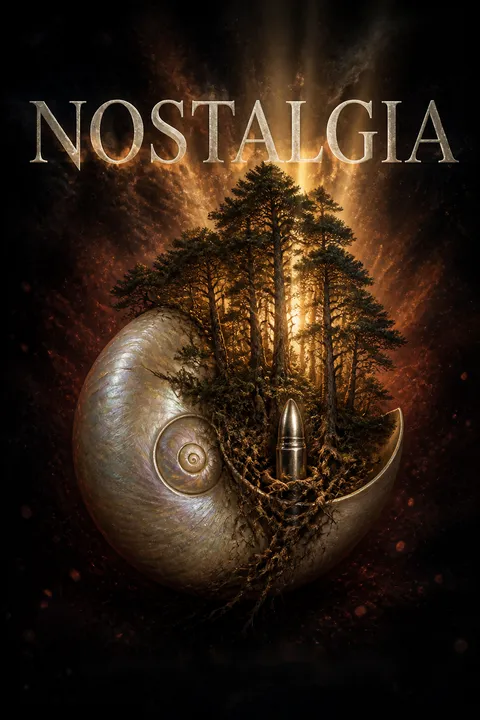


Plot Summary
Prologue
An elderly writer, fearing that death will erase both his life and his work, recalls the Roulette Player, a childhood neighbor who survives repeated games of Russian roulette. The player escalates from one bullet to six, and even the fully loaded gun cannot kill him: its shot triggers an earthquake, while the bullet lodges in a wall.
He abandons the game, only to die later when an empty pistol frightens him into a fatal heart attack. The old writer stakes his hope on the story itself. If the player exists in fiction, he reasons, perhaps the writer does too, and neither will vanish while someone reads.
The prologue makes storytelling a wager against annihilation rather than a route to fame. The old writer distrusts the polished fictions that once earned him attention, yet he cannot stop shaping experience into a narrative, even while insisting that art distorts the self. The Roulette Player offers an impossible fact that can anchor a real world: the writer's private theory is that absolute bad luck makes the player's repeated survival coherent. Fiction's paradox is therefore both saving and unsettling. It cannot prove that a life mattered outside the page, but it can keep a person present to another mind, including the imagined reader who stands in for death.
Mentardy Climbs the Chimney
Adult Mircea begins rebuilding a dream about the Bucharest courtyard where he spent childhood summers. His gang rules the sewage ditches by strength, torments animals, and hunts one another in a masked game. Then a quiet boy arrives with his strikingly tall mother. The gang tries to drag him into its game, but the boy's violent-looking fit leaves them frightened, not triumphant.
The next day, he climbs the bakery chimney's fire escape to its summit, then descends and tells the children he will not play their game. His nerve wins what force could not: the gang gathers around him. He moves them from the fetid ditches to a hidden courtyard, where stories of knights and distant lands begin to displace their old cruelties.
Mentardy's first power is not strength but refusal. He will not accept the gang's test of belonging, and his chimney climb turns that refusal into a spectacle the children cannot dismiss. Mircea remembers the gang's cruelty in precise detail, yet he also remembers how easily its rules change when someone offers a more compelling world. The courtyard stories do not instantly reform the children; they redirect their attention and give them another way to organize themselves. Childhood appears here as a small political order, governed first by force, then briefly by imagination.
The Laws of Mentardy
From his concrete throne, Mentardy describes nested worlds of puppets, infinite universes, and life after death. He floats when the children lift him with their fingertips, and his chalk rules forbid cruelty, lying, and their own masked hunt.
Even the girls join his circle, especially Iolanda, whose quiet closeness to him troubles Mircea. Then a peddler displays a pen that reveals a naked woman, and Mentardy somehow acquires it. His stories falter; he wanders the ditches at night wearing a homemade mask, and the gang watches him with suspicion.
Mircea and Luci follow him beneath the building and glimpse him with Iolanda in a boiler room. Their discovery turns the admired storyteller into a target, though the scene's meaning remains beyond the children.
Mentardy's theories blur childhood play with metaphysics, but his chalk prohibitions make their consequences immediate: for a time, the children stop hurting one another and the vulnerable boy with polio gains a companion. The shift is fragile. The peddler's erotic pen introduces adult knowledge as an object of secrecy, and the gang interprets Mentardy's private life through its own crude moral code. Mircea's narration never resolves what the children saw. That gap matters: memory turns an ambiguous encounter into a dividing line, while shame and fear supply meanings the witnesses cannot verify.
The Gang Turns on Him
After Sandu tells the gang what he saw, older boys erase Mentardy's chalk rules and revive the masked game. Mentardy returns to the courtyard in his painted mask, but the children pelt him with dirt until he collapses in a series of terrifying spasms. His mother carries him away, and he never returns. Rain, school, and the gang's dissolution follow.
Years later, Mircea writes the story, then finds the pages and recognizes the streets and children while doubting the impossible boy at its center. He cannot decide whether Mentardy was real or an invention that grew inside his memory. The story ends with the memory intact but its evidence unsettled, leaving Mircea as its sole witness and the reader as the only person he can address.
The gang's return to violence is not simply a rejection of Mentardy; it is an attempt to restore familiar rules after his presence has made them feel inadequate. His collapse is both a literal consequence of the attack and an image that the children cannot interpret. Adult Mircea's doubt complicates any clean moral lesson. He can verify the courtyard, the children, and the city, but not the figure who changed their conduct. Memory here is less an archive than a contested border between lived experience and the stories that make it intelligible.
Andrei Meets Gina
As a teenager, Andrei has already learned to treat desire as a threat. An earlier crush on Lili left him exposed to classmates' teasing, and his response is to retreat into poetry and theories that cast women as dangerous.
In his final year of school, he grows close to Gina, a stylish classmate whose family home and tastes seem to belong to another world. She confides in him while remaining entangled with Silviu, then alternates tenderness with distance. Andrei reads every return as proof that she may choose him.
Their first sexual encounter finally occurs in a hidden room beneath the natural history museum, where Gina leads him among specimens and skeletons. There, their bodies change places, leaving each to wake inside the other's physical life.
Andrei's fixation grows from a conflict between longing and self-protection. He wants intimacy but has built an identity around being too exceptional, too fragile, or too destined for it. Gina becomes the screen onto which he projects both salvation and danger. Her genuine vulnerability does not cancel the ways she uses his devotion as shelter from her other attachments. The museum encounter makes this psychological entanglement literal: intimacy becomes a loss of bodily certainty, not a harmonious union. The story asks whether knowing another person means entering their experience or discovering how little one can control there.
Love Becomes a Trap
Their relationship proceeds through reconciliations, separations, and humiliations. Gina returns to Silviu, later presents other romantic entanglements as facts Andrei must absorb, then draws him close again when she feels lonely.
He tries to make himself worldly enough to keep her, buys a suit for a New Year's celebration she abandons, and finally breaks down drunk at a classmate's gathering after hearing her describe the night she spent elsewhere. Even when he resolves to leave, her small gestures restart his hope.
Their fragile reunion leads them into the museum, where Gina reveals a private chamber she has cherished since childhood. Amid its exhibits, they make love. The intimacy does not settle their unequal attachment; instead, it precipitates the exchange of bodies that leaves both unable to return to familiar selves.
The relationship's cruelty lies in its intermittent rewards. Gina's affection arrives unpredictably, making Andrei more vigilant and dependent rather than more secure. He interprets each sign of tenderness as a possible verdict on his worth, while she seeks comfort without offering stable commitment. His attempt to become the man he imagines she wants also shows how love can become self-erasure before any supernatural transformation occurs. Their museum encounter gathers these tensions into one event: desire, fear, artifice, and childhood memory converge, and the apparent consummation instead produces radical estrangement.
The Museum Wakes
After making love in Gina's hidden museum room, Andrei and Gina wake in each other's bodies. They stare at the unfamiliar face and frame before them, then hear the exhibits stirring. Preserved embryos open their eyes; birds strain against their mounts; stuffed animals and insects begin to move.
The pair run through the museum as its collections revolt, passing the skeleton they had dismantled and the specimens they had handled in carefree curiosity. Their escape route back through the underground passage has disappeared, so they force their way out through the museum's gate.
Outside, they recognize that each must now live in the other's body, but neither knows how to restore what has been lost. They part without a plan, carrying the other's appearance and an intimacy that offers no reliable access to the other's mind.
The museum's awakening converts Andrei's earlier fantasies about women's bodies and animal predation into physical danger. The collections he treated as inert knowledge become agents, and his confidence that he can classify or master the feminine collapses alongside the exhibits. The exchange does not grant empathy automatically. Each character receives a body, not a transparent understanding of the person who inhabited it. Their escape is therefore a forced separation, not a resolution. The museum stages the limits of possession: love can bring bodies together, but it cannot make identity transferable without remainder.
The Mirror Gives Way
One of the pair writes a long account while confined to a women's neurological ward, trying to preserve a coherent past and shield the mind from the body's new occupant. Mirrors are covered, and the writing becomes an attempt to distinguish whose memories and feelings are being recorded.
When the narrator finally uncovers a mirror, the sight triggers a violent breakdown. At home afterward, the person dismantles the room, stacks furniture and Gina's possessions into a pyre, pours fuel over it, and climbs into the fabric before lighting it.
The story does not offer a stable account of survival or death; it leaves the reader with a manuscript whose authorship and identity are compromised. Writing preserves the crisis, but it cannot undo the exchange or recover an uncontested self.
The mirror and manuscript are competing instruments of self-recognition. The narrator covers the glass because direct sight threatens to make the bodily exchange undeniable, then writes in the hope that language can preserve continuity. Yet the account itself becomes suspect as memories and styles bleed across the boundary between the two people. The final destruction of the room turns possessions into both evidence and fuel. This is not a clean act of liberation: the person destroys the setting that holds the past, but the narrative cannot certify what follows. The story's form makes identity a question of authorship as much as anatomy.
Nana Tells Her Past
In another Bucharest story, Vali, a young literature student, spends the night with Nana, an older, divorced woman he met through a friend. He treats their arrangement as temporary, yet listens as she recounts her isolated childhood as Svetlana, a girl who visited her seamstress aunt in the city's poor outskirts.
There she found a gang of girls, a ruined field, and a frail young man named Egor, whose towering family lived in a lonely watchtower. Egor gives Svetlana a carved shell and tells her to sleep with it beneath her pillow.
Her first dreams lead through an endless forest. When the girls use a bone to find a buried entrance, they discover a vast chamber and a twenty-metre skeleton. The shell has made their games part of a larger mystery.
The frame turns a sexual encounter into a transfer of narrative authority. Vali believes he is managing a convenient affair, but Nana's childhood account recruits him into a world that neither his cynicism nor his literary education can contain. Svetlana's visits to her aunt are shaped by material deprivation, family illness, and rare freedom, so the field and watchtower become more than picturesque settings. The shell gives private dreams a shared structure, while Egor's attention makes the child feel chosen. The story asks whether being listened to is itself a form of intimacy, even when the listener initially intends to leave.
Queens Open Other Worlds
The girls invent a weeklong Queens game, assigning each player a color, an object, and a location. Whale's wishbone drags her to the buried skeleton; Ada's toy watch makes a walk through old age unfold in minutes, then returns each girl unharmed.
Carmina peers through a pierced pearl and leads them into a stone city, where their wishes assemble a luminous, double-sexed human being. Puia's fever drives the group above Bucharest and then across the world, until they witness catastrophe and the universe's collapse.
Meanwhile, Svetlana's dreams advance from the forest to a stream, a cracked cup containing a spider, and finally a golden key. These marvels deepen her attachment to Esther, whose companionship makes the approaching end of childhood feel personal rather than abstract.
The Queens game gives each child a bounded domain, yet every object opens onto scale far beyond her control: a skeleton beneath a field, a lifetime inside a courtyard, a city inside a pearl, a cosmos inside a fever. Their playful assignments become a method for encountering mortality and creation before they possess adult language for either. Svetlana's growing love for Esther makes the visions emotionally specific. The cosmos may be immense, but the loss she anticipates is the hand she holds and the childhood world that permits the holding. Wonder and grief develop together rather than taking turns.
The Doll Burns
On Carnation's night game in a ruined school, the girls kindle a fire to drive off bats and become drunk on their own dancing. They stage a tribunal and condemn Svetlana's beloved doll, Zizi, whom the narrator offers as the accused.
The girls strip and burn the doll, then flee as bats fill the corridors. Svetlana wakes horrified by what she has done. In the final game, she and Esther pretend to marry beside the locked shed, and their brief kiss gives Svetlana a moment of emotional certainty.
She then enters the shed with the golden key from her dream. Inside, she meets a writer typing the story of her childhood and receives a calendar page dated in the future. She wakes back in her own time, carrying physical evidence that her dream crossed into another reality.
Zizi's destruction is the story's moral rupture because the game ceases to be harmless precisely when the girls use it to silence a dependent object. Svetlana's participation makes guilt intimate; she cannot blame the tribunal as an outside force. Her kiss with Esther briefly gives desire a shape, but the shed takes her beyond the children's shared rituals into the machinery of authorship. The future-dated page is not a full explanation. It supplies proof of an impossible contact while making reality less secure. The threshold offers not escape from loss, but a glimpse of the mind that can contain it.
The Spider Takes the Story
Svetlana leaves her aunt's house after her mother recovers, and adulthood erases the neighborhood that once held the watchtower and its field. Years later she returns and finds the shed still standing, but emptied of its mysteries. She comes to believe that REM is not a place but the fictional mind that contains her, Vali, and their world.
The framing narrator then identifies itself as a spider-like presence feeding on the night's story. As Vali and Nana dress and part, Nana returns to her apartment and begins writing; the egg she has preserved cracks, releasing a Chimera. Vali goes back to his own repeated life, while the creature's voice absorbs their experience and leaves authorship, memory, and reality nested inside one another.
The ending refuses to let the reader settle for either supernatural confirmation or psychological explanation. The shed survives, but the watchtower and the original neighborhood are gone; material continuity offers no guarantee that the remembered world remains accessible. Nana's theory that her reality belongs to a writer is immediately folded into another frame, where a predatory narrator claims the story as nourishment. The preserved egg turns memory into a possible future creature, not a sealed keepsake. Every apparent author may be a character in a larger mind, so reading becomes both rescue from oblivion and another form of consumption.
The Horn Learns to Sing
In the final tale, architect Emil Popescu has built a career designing sunflower-oil factories and treasures his new cream-colored Dacia. When its horn jams, he becomes obsessed with finding a musical one.
A six-trumpet model playing a phrase from Verdi satisfies him only briefly, so he trades horns until he realizes that fixed tunes still deny the driver a role in making music. He buys an organ and has it installed where the steering wheel and dashboard belong.
Rather than drive, Emil sits in the car for hours, pressing keys and discovering patterns no one else can identify. A saxophonist called the Professor recognizes that Emil is unknowingly reconstructing musical history, from ancient scales onward, and abandons his own career to document the compositions.
Emil's obsession begins as a practical complaint about a machine that speaks in only one crude sound. His solution is not to improve transportation but to give the car a richer voice, and the substitution of organ for steering wheel marks the shift from use to devotion. The Professor recognizes artistic history in music Emil does not know he is making, turning private compulsion into public interpretation. Yet Emil's lack of conscious authorship complicates the idea of genius. The work seems to pass through him rather than originate in intention, while the people around him build a new identity and institution around what he cannot explain.
The Architect Plays the Cosmos
Emil's playing carries him from old musical forms into compositions that transform the people who hear them. Publicity makes him world-famous, while his body grows grotesque and his fingers lengthen to span the keys.
After Japanese technicians install a vast synthesizer around the Dacia, the Professor, now jealous and estranged, attacks Emil with a cleaver. The wounds provoke music of such force that the Professor becomes dependent on it, repeatedly threatening Emil to summon new sounds.
The music eventually remakes human society around listening; an attempt to kill Emil with nuclear weapons destroys most people but leaves him and a few survivors. Emil expands into a planetary musician, then into a cosmic body whose rhythms reshape stars and galaxies until a new galaxy forms from the remnants of the old.
The epilogue takes artistic influence to its monstrous limit. Music no longer represents human feeling; it alters bodies, institutions, and matter itself. The Professor's attack becomes an involuntary collaboration, because violence elicits the very work he desires. That dependence exposes the danger of treating an artist as a resource, while the public's surrender to listening turns aesthetic devotion into political and biological captivity. Emil's final transformation is not simply triumph. He becomes indistinguishable from the medium that once served him, and the universe is remade as the last audience for a creation no human can hear.
Epilogue
The final tale follows Emil Popescu's transformation from an architect who wants a more expressive car horn into a musician whose compositions reshape humanity and, eventually, the cosmos. Once the Dacia's organ replaces its steering wheel, Emil's playing carries him beyond conscious authorship.
The Professor's attempts to provoke and control him instead deepen his dependence on the music. In the end, Emil's body and instrument expand together until his rhythms alter stars, and a new galaxy takes shape.
The epilogue enlarges the collection's recurring question of whether art can cross the boundary between representation and reality. Emil begins by wanting a machine to speak, then becomes the vehicle through which music acts directly on listeners and matter. The Professor's mixture of scholarship, ambition, and envy shows how interpretation can become a form of possession. Yet the final cosmic scale also empties human mastery of its usual meaning: Emil does not simply control the universe; he is absorbed into an artistic process that outgrows him. Creation survives, but the creator's individual agency becomes harder to distinguish from the work.
Analysis
Nostalgia is a collection of stories in which memory does not simply retrieve the past; it makes the past unstable, vivid, and capable of acting on the present. The aged narrator in The Roulette Player uses a remembered impossibility to argue that fiction might preserve a person. Mircea's Mentardy manuscript reverses the bargain: the setting is verifiable, but the child who transformed it may not be. In The Twins, the body becomes an unreliable record of identity, and writing fails to separate one person's memories from another's. REM makes that uncertainty recursive. Svetlana's childhood may be a story inside Vali's affair, which may itself be consumed by a narrator inside another mind. The epilogue then gives artistic creation physical and cosmic force, while making the artist less sovereign as the work grows.
These stories repeatedly make the small world carry impossible weight. A courtyard, a shed, a museum room, or the interior of a parked car becomes a threshold where ordinary categories fail. Children use games to approach death and desire before they can name either; adults turn those experiences into systems, manuscripts, theories, and obsessions. Such systems offer order, but none settles what happened. The roulette player's survival, the Queens' transformations, and Emil's music all exceed the explanations their witnesses construct.
The collection's emotional force comes from the mismatch between a desire for permanence and the pressure of change. The narrators want to keep a person, a childhood, a body, or a sound from vanishing. Yet preservation always alters what it preserves: memory becomes fiction, love becomes projection, and music becomes a power that consumes its listeners. The book neither dismisses imagination as escape nor treats it as salvation. It presents creation as a real act with uncertain authorship and consequences, one that can keep experience alive while making it impossible to tell where the self ends and the story begins.
Review Summary
Nostalgia by Mircea Cărtărescu is a collection of five interconnected stories exploring themes of childhood, memory, and fantasy. Many readers praise Cărtărescu's imaginative and surreal writing style, comparing him to authors like Borges and Kafka. The book's dense, poetic prose and complex narrative structure challenge some readers, while others find it deeply engaging and thought-provoking. The stories blend reality and fantasy, often set in Bucharest, and feature vivid, dreamlike imagery. Some reviewers note that the longer pieces can be difficult to follow, but overall, the book is widely regarded as a masterful work of contemporary literature.
People Also Read
Characters
The Roulette Player
The defiant gamblerA poor, impulsive man from the narrator's childhood neighborhood, the Roulette Player is defined by his disastrous luck at ordinary games and his willingness to stake his life in clandestine Russian roulette. He is not presented as a disciplined hero: drink, gambling, and a rough history shape his life. Yet the game gives him a stage on which failure appears to reverse itself. His repeated survival fascinates spectators and unsettles the narrator, who searches for a coherent explanation without claiming certainty. The Roulette Player matters as both a person remembered and a test of what fiction can make believable.
The Roulette Narrator
The dying witnessAn elderly writer who once attended the underground games, the narrator revisits the Roulette Player as he faces his own death. He distrusts the literary conventions that shaped his career, yet cannot stop writing, because the act offers a possible continuation beyond bodily life. His account moves between eyewitness detail, rumor, and speculative explanation, and he openly acknowledges the limits of what he knows. His central need is not recognition but evidence that someone he knew existed. He turns the reader into a witness who might keep both lives present.
Mircea
The memory's witnessThe adult narrator of Mentardy is a teacher and occasional prose writer who tries to recover an extraordinary childhood summer. As a boy, he belongs to a gang organized around physical dominance; as an adult, he remembers both its cruelty and its brief conversion to wonder. His insistence that the events were real is complicated by his later discovery that parts of the remembered setting do not match the facts. Mircea is neither a neutral recorder nor a simple fabulist. His effort to write becomes a test of whether memory can preserve a person whose existence cannot be verified.
Mentardy
The courtyard visionaryA quiet, delicate boy who arrives in Mircea's apartment complex with his strikingly tall mother, Mentardy refuses the gang's games and wins its attention through stories, demonstrations, and strange theories. He offers ideas about nested worlds and life after death, but also gives the children concrete rules against cruelty. His presence attracts both devotion and suspicion, especially as he develops a private bond with Iolanda. Mentardy is compelling because his gentleness is not passive: he alters the children's behavior without matching their force, while remaining difficult for them to understand.
Andrei
The guarded loverA literary, isolated student, Andrei approaches desire with a mixture of hunger and dread. Earlier embarrassments intensify his retreat from classmates, and he builds a private intellectual identity that protects him from ordinary vulnerability. His attachment to Gina makes this defense unstable. He watches her closely, idealizes her, and attempts to adapt himself to the life he thinks she wants. Andrei's sensitivity gives him a sharp eye for emotional nuance, but it also helps him turn ambiguous gestures into proof of a future he desperately wants.
Gina
The elusive classmateGina is a stylish, socially confident student whose affection for Andrei coexists with other attachments and a strong need to command attention. She is not merely a cruel coquette: her stories, dreams, and moments of tenderness reveal a restless young woman shaped by a sheltered family life and a fear of being ordinary. She can be generous and perceptive, but she also draws on Andrei's devotion when she needs comfort. Her complexity unsettles his simple theories about women, even as their unequal relationship magnifies his possessiveness and insecurity.
Svetlana, called Nana
The keeper of REMIn the adult frame, Nana is an older, divorced woman who shares an intimate, unsettled relationship with Vali. In the childhood story she tells him, she is Svetlana, a lonely girl who finds meaning in visits to her aunt's home and in a circle of neighborhood girls. She is receptive to beauty and fantasy, but her memories also preserve shame, guilt, and the ache of growing up. Nana's decision to tell Vali her story makes her both its subject and its narrator, though the layered storytelling leaves open how fully she can control what the tale means.
Vali
The restless listenerA young literature student, Vali approaches Nana with the confidence of someone who believes he can keep an affair casual. He is clever, self-mocking, and attentive to stories, but his judgments about women often serve as cover for his own uncertainty. Nana's account draws him into a world that challenges his assumptions about memory and reality. Vali's role is deliberately unstable: he listens, interprets, and becomes part of the story, while another narrative presence claims to observe and consume his experience.
Egor
The frail dream guideA towering, fragile young man who lives with his mother in a lonely watchtower, Egor serves as Svetlana's guide to the shell's dream ritual. He combines a fantastical family history with a serious belief in REM and the possibility that one child can reach it. His body and manner make him seem otherworldly, but his ambition is deeply human: he wants his life to lead somewhere beyond his own limited reach. He watches over Svetlana's progress while exposing his own dependence on her success.
Esther
Svetlana's first loveA clever, bookish girl with red hair and a vivid imagination, Esther is Svetlana's closest companion among the neighborhood girls. She participates in their elaborate games while carrying a steadiness that distinguishes her from the others. Her friendship gives Svetlana a first experience of affection that feels more consequential than play, and the two girls share a tenderness neither has a clear social language for. Esther is remembered through the intensity of Svetlana's attachment, but she remains a child with her own interests and mysteries.
The Professor
The music's interpreterA trained saxophonist and aspiring intellectual, the Professor recognizes the historical forms emerging from Emil Popescu's playing. He turns private observation into scholarship and publicity, eventually abandoning his career to document the architect's work. His discernment is real, but so are his ambition and possessiveness. He wants to interpret Emil and make the music legible to the world, then finds that his attachment can become dependence. His changing relationship to the artist exposes the thin line between serving a creation and trying to own its source.
Emil Popescu
The architect musicianA successful architect specializing in sunflower-oil factories, Emil is initially content with a conventional life and deeply attached to his new Dacia. A malfunctioning horn awakens an unusual obsession with the car's capacity for expression. He is not a self-conscious composer; he follows sounds as they emerge, unaware of their historical significance. His refusal to abandon the vehicle, and his increasing absorption in its music, transform a practical man into a figure who exceeds ordinary categories of artist and machine. His work invites admiration while raising questions about agency and control.
Elena Popescu
The patient spouseEmil's wife is an architect who specializes in dairy factories and initially shares his stable, affectionate domestic life. As he becomes absorbed in the organ, she tries to understand his behavior through doctors and family advice, while coping with the collapse of their partnership. Her eventual relationship with the Professor complicates the household rather than neatly resolving it. Elena is practical and socially observant, but she is also vulnerable to the loneliness created by Emil's growing absence.
Esther, Carnation, Puia, Whale, Ada, and Carmina
The Queens' circleSvetlana's neighborhood companions form the cast of the weeklong Queens game. Their differences matter: Esther is imaginative, Carnation is bold, Puia is poised and remote, Whale is eager for others' approval, and Ada and Carmina are inseparable twins. Together they turn scraps, toys, and familiar places into elaborate worlds. Their game exposes rivalries, vulnerabilities, and surprising powers without making them simple symbols; they remain girls testing the limits of play before adult life forces those limits upon them.
Iolanda
Mentardy's quiet confidanteA little girl with oversized bows, Iolanda is one of the few children Mentardy speaks with privately. Her presence helps draw the gang's attention toward the limits of his openness and the mysteries they do not understand. She remains a child seen largely through Mircea's memory, which makes her less a fully known figure than part of the summer's unresolved emotional landscape.
Zizi
Svetlana's cherished dollSvetlana's handmade doll is her constant childhood companion, carefully dressed and treated as a student and confidante. Zizi gives the girl a private object onto which she can project care and authority. The doll's place in the Queens game reflects how play can protect tenderness, but also how a group can turn a cherished thing into a target.
The Roulette Narrator's reader
The final witnessThe reader is addressed by the elderly narrator as the person who may keep the Roulette Player and the writer from disappearing. This role is less a character with a biography than a position within the book: someone asked to receive a story whose reality cannot be settled. The reader's attention becomes the last link in the narrator's argument for survival through fiction.
Plot Devices
Russian roulette
A wager against chanceThe underground game places a hired player, a boss, and spectators with money at risk around a revolver loaded with one or more bullets. Its simple rules create a brutal spectacle that steadily changes scale as the Roulette Player survives repeated attempts and increases the number of bullets. The device connects gambling to questions of fate, bad luck, and belief: the narrator's explanation is that the player cannot succeed even at suicide because failure follows him everywhere. The game also supplies the old writer with a concrete, impossible memory on which to stake his claim that fiction can preserve a life.
Mentardy's chalk rules
A children's moral codeMentardy writes prohibitions against cruelty, harassment, lying, and the gang's masked game on the abandoned transformer in the courtyard. The children follow these rules for a time, changing how they treat one another and the vulnerable boy with polio. The list makes Mentardy's abstract influence visible in daily behavior, but it also reveals how temporary a new order can be. When the gang returns to its old rituals, erasing the words becomes an act of rejection as concrete as the later attack on Mentardy.
The shell and dreams
A map toward REMEgor gives Svetlana a carved shell whose markings accompany a sequence of dreams in an endless forest. Each dream supplies an image or object that advances her path, from obstacles and water to a spider-filled glass and a golden key. The shell makes the dreams feel cumulative rather than random, while Egor's explanations encourage Svetlana to interpret them as steps toward REM. It also links her private dream life to the games she plays with the girls, so that childhood objects become instruments for approaching a reality beyond their ordinary world.
The Queens game
Play becomes a portalThe girls assign each other a ruling day, a color, an object, and a location, then invent a game around those materials. The ordinary objects acquire strange powers: a wishbone points toward a buried chamber, a toy watch reveals aging, a pearl opens a city, and a thermometer expands the world as a fever rises. The game is a structure for the story's escalating visions, but it also lets the children explore status, mortality, creation, and desire in forms they can approach through play. Its final days turn these experiments toward guilt, love, and the shed that Svetlana enters.
The car organ
A machine finds its voiceAfter Emil Popescu's Dacia horn malfunctions, he replaces its fixed sound with an organ and ultimately a synthesizer. The car ceases to be a vehicle and becomes the setting for an expanding musical practice. Emil's playing unknowingly retraces musical history, then develops into a force that changes listeners and reality. The device joins the book's interest in artistic creation to its concern with control: Emil seeks to liberate a machine's expression, but the resulting music eventually captures the people who hear it and expands beyond human scale.
FAQ
Synopsis & Basic Details
What is Nostalgia about?
- Existential exploration of life: Nostalgia delves into the lives of various characters, exploring themes of fate, chance, and the human condition through interconnected narratives.
- Intertwined stories of obsession: The novel weaves together the story of a disillusioned writer, a man who plays a deadly game of roulette, and a young girl's journey through dreams, all connected by a sense of longing and the search for meaning.
- A blend of reality and surrealism: The narrative blurs the lines between reality and illusion, creating a dreamlike atmosphere that challenges the reader's perception of the world.
Why should I read Nostalgia?
- Unique narrative structure: The novel's interconnected stories and shifts in perspective offer a complex and engaging reading experience, challenging traditional storytelling conventions.
- Exploration of profound themes: Nostalgia delves into deep philosophical questions about life, death, love, and the nature of reality, prompting readers to reflect on their own existence.
- Rich and evocative prose: Cărtărescu's writing style is both lyrical and haunting, creating a vivid and immersive world that lingers in the reader's mind long after the book is finished.
What is the background of Nostalgia?
- Post-communist Romania: The novel is set in Bucharest, Romania, and reflects the cultural and social landscape of the post-communist era, exploring themes of disillusionment and the search for identity in a changing world.
- Literary and philosophical influences: Cărtărescu draws on a range of literary and philosophical traditions, including surrealism, existentialism, and magical realism, creating a unique and thought-provoking narrative.
- Exploration of the human psyche: The novel delves into the complexities of the human mind, exploring themes of memory, desire, and the subconscious through the characters' dreams and obsessions.
What are the most memorable quotes in Nostalgia?
- "Literature is teratology.": This quote from the prologue highlights the writer's disillusionment with the ability of literature to capture reality, suggesting that it often creates monsters rather than truth.
- "The Roulette Player had the dark face of a somewhat well-to-do peasant, his teeth half metal, half charcoal.": This vivid description of the Roulette Player emphasizes his ambiguous nature, blending the ordinary with the grotesque.
- "I am horrified at the thought that the aquarium might get punctured.": This quote from the prologue reveals the writer's fear of losing the constructed reality he has created, highlighting the fragility of his world.
What writing style, narrative choices, and literary techniques does Mircea Cărtărescu use?
- Fragmented and non-linear narrative: Cărtărescu employs a fragmented narrative structure, shifting between different characters and time periods, creating a sense of disorientation and mirroring the chaotic nature of memory and dreams.
- Surreal and dreamlike imagery: The novel is filled with surreal and dreamlike imagery, blurring the lines between reality and illusion and creating a haunting and evocative atmosphere.
- Introspective and philosophical tone: Cărtărescu's writing is deeply introspective, exploring complex philosophical themes through the characters' thoughts and reflections, often using a lyrical and poetic style.
Hidden Details & Subtle Connections
What are some minor details that add significant meaning?
- The recurring image of the color red: The color red appears in various forms throughout the novel, from the red light of the city to the red blood of the roulette game, symbolizing passion, danger, and the cyclical nature of life and death.
- The use of specific locations: The recurring locations, such as the old mill and the watchtower, gain symbolic significance, representing the past, the unknown, and the characters' search for meaning.
- The mention of specific objects: Objects like the shell, the typewriter, and the Reghin organ, become more than just props, acting as catalysts for the characters' journeys and revealing deeper layers of meaning.
What are some subtle foreshadowing and callbacks?
- The writer's dreams of loneliness: The writer's recurring dreams of an old man going mad from loneliness foreshadow his own descent into isolation and despair, highlighting the cyclical nature of his existential crisis.
- The description of the roulette game: The early descriptions of the roulette game, with its emphasis on chance and death, foreshadow the later transformations of the game and the Roulette Player's ultimate fate.
- The mention of the "short word": The children's discussion of a "short word" and their confusion about its meaning foreshadows the later exploration of sexuality and the complexities of adult relationships.
What are some unexpected character connections?
- The writer and the Roulette Player: The connection between the writer and the Roulette Player, revealed through their shared childhood, highlights the cyclical nature of fate and the way past experiences shape the present.
- The narrator and the Roulette Player: The narrator's obsession with Gina mirrors the Roulette Player's obsession with the game, suggesting a shared human tendency towards self-destructive behavior.
- The characters in the "Mentardy" section: The children in the "Mentardy" section, with their unique quirks and obsessions, foreshadow the later themes of identity and the search for meaning, highlighting the interconnectedness of seemingly disparate lives.
Who are the most significant supporting characters?
- Aunt Aura: In the "Mentardy" section, Aunt Aura represents a figure of both comfort and mystery, embodying the complexities of family relationships and the allure of the past.
- The Professor: In "The Twins" section, the Professor acts as a catalyst for the architect's transformation, highlighting the power of art and the human desire for transcendence.
- The old woman in the "Roulette Player" section: The old woman who appears in the restaurant scene with the Roulette Player, serves as a reminder of the presence of the past in the present, and the way that history shapes our lives.
Psychological, Emotional, & Relational Analysis
What are some unspoken motivations of the characters?
- The writer's desire for meaning: The writer's unspoken motivation is to find meaning in his life and work, using the story of the Roulette Player as a means of exploring his own existential doubts and fears.
- The Roulette Player's pursuit of transcendence: The Roulette Player's unspoken motivation is to transcend the limitations of his ordinary life, seeking a form of glory or recognition through his dangerous game.
- Gina's search for validation: Gina's unspoken motivation is to seek validation and attention, using her relationships as a means of asserting her own identity and power.
What psychological complexities do the characters exhibit?
- The writer's disillusionment and self-doubt: The writer exhibits a deep sense of disillusionment with his literary career and a constant struggle with self-doubt, questioning the value of his work and his place in the world.
- The Roulette Player's self-destructive tendencies: The Roulette Player displays a complex mix of defiance and self-destruction, driven by a desire to challenge fate and a deep-seated sense of worthlessness.
- The narrator's obsessive and self-loathing nature: The narrator's obsession with Gina reveals a complex mix of desire, resentment, and self-loathing, highlighting the destructive power of unrequited love and the fragility of the human psyche.
What are the major emotional turning points?
- The writer's encounter with the Roulette Player: The writer's encounter with the Roulette Player in the restaurant marks a turning point, as he begins to see the man's life as a reflection of his own struggles.
- The narrator's first intimate encounter with Gina: The narrator's first intimate encounter with Gina is a major emotional turning point, as it intensifies his feelings of longing and despair, leading to a deeper sense of self-loathing.
- The protagonist's dream of the forest: The protagonist's dream of the forest marks a turning point in her journey, as she begins to explore her subconscious and confront her deepest fears and desires.
How do relationship dynamics evolve?
- The writer and the Roulette Player: The relationship between the writer and the Roulette Player evolves from a childhood acquaintance to a symbolic connection, as the writer sees the Roulette Player's life as a reflection of his own existential struggles.
- The narrator and Gina: The narrator's relationship with Gina evolves from a state of longing and idealization to a complex mix of desire, resentment, and self-loathing, highlighting the destructive power of unrequited love.
- The protagonist and her friends: The protagonist's relationships with her friends evolve from simple childhood games to a complex exploration of identity, power, and the search for meaning, as they navigate the challenges of growing up.
Interpretation & Debate
Which parts of the story remain ambiguous or open-ended?
- The nature of REM: The nature of REM, the place where the protagonist's dreams lead her, remains ambiguous, leaving the reader to question whether it is a real place, a state of mind, or a metaphor for something else.
- The true identity of the Roulette Player: The true identity and motivations of the Roulette Player remain shrouded in mystery, leaving the reader to speculate about his origins and the reasons behind his dangerous game.
- The meaning of the final dream: The meaning of the protagonist's final dream, with its blend of beauty and horror, remains open to interpretation, leaving the reader to ponder the nature of reality and the human condition.
What are some debatable, controversial scenes or moments in Nostalgia?
- The depiction of the roulette game: The graphic and violent depiction of the roulette game, with its focus on death and human suffering, may be seen as controversial, raising questions about the nature of entertainment and the human fascination with mortality.
- The narrator's obsession with Gina: The narrator's obsessive and self-loathing behavior towards Gina may be seen as problematic, raising questions about the nature of love and the power dynamics in relationships.
- The ending of the "Mentardy" section: The abrupt and ambiguous ending of the "Mentardy" section, with the protagonist's sudden shift in perspective, may be seen as controversial, leaving the reader to question the nature of reality and the reliability of the narrator.
Nostalgia Ending Explained: How It Ends & What It Means
- The cyclical nature of time and memory: The ending of Nostalgia emphasizes the cyclical nature of time and memory, suggesting that the past is always present and that the search for meaning is an ongoing process.
- The blurring of reality and illusion: The novel's ending blurs the lines between reality and illusion, leaving the reader to question the nature of truth and the boundaries of the human experience.
- The enduring power of stories: The ending highlights the enduring power of stories to shape our understanding of the world and ourselves, suggesting that even in the face of death and oblivion, the human spirit can find a form of immortality through narrative.
Download PDF
Download EPUB
.epub digital book format is ideal for reading ebooks on phones, tablets, and e-readers.








