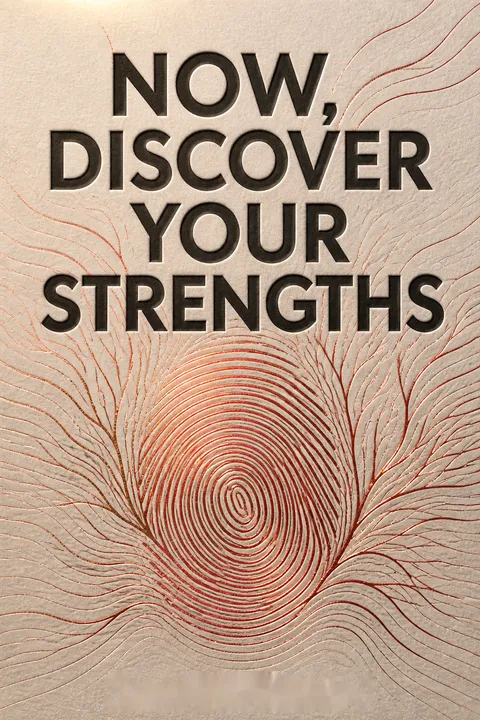


Key Takeaways
Build work around the strengths people can use every day
The missed opportunity. Gallup asked 198,000 employees across 7,939 business units whether they could do what they did best every day. Employees who strongly agreed were more likely to work in units with lower turnover, higher productivity, and better customer satisfaction. The reported differences were 50 percent, 38 percent, and 44 percent, respectively. Units that increased the share of employees using their strengths also saw comparable improvements in results.
Most people feel miscast. Across a broader database of 1.7 million employees, only 20 percent strongly agreed they used their strengths every day. The book argues that organizations often waste this capacity by treating people as interchangeable and concentrating development on weaknesses. Its alternative is to notice what each person does especially well, then shape the work so that ability gets regular use.
The argument turns employee fit from a matter of personal fulfillment into an operational question: what capacities is the organization leaving idle? The figures make a persuasive case for paying attention, especially because the book connects perceived strengths use with business and customer outcomes. They do not, by themselves, prove that strengths use caused every improvement. Still, the practical implication is strong: managers can investigate whether performance problems reflect limited ability, poor role design, or unnecessary constraints before prescribing more training.
A strength is repeatable excellence that also gives you energy
Performance must repeat. The book defines a strength as consistent near-perfect performance in an activity, not an occasional brilliant moment. It also argues that genuine strengths are energizing enough to sustain repeated use. A person may be capable of doing a task well, yet find that the work steadily drains them.
Fit beats the perfect résumé. Warren Buffett built his investing approach around patience, practical judgment, and trust in capable managers. He chose businesses he could understand and avoided opportunities he could not confidently assess. The book also notes that golfer Tiger Woods had weaker bunker play than other top professionals, but worked on it enough to keep it from undermining his strongest play. Excellence did not require equal ability in every part of the role. It required sharpening the strongest contribution and managing the rest.
This definition is useful because it refuses to confuse competence with strength. It asks two separate questions: does the person produce excellent results reliably, and does the activity remain sustainable? That distinction can prevent the common mistake of promoting someone simply because they perform well in a current job. Satisfaction alone is not proof of excellence, however, and external performance matters. The strongest assessment combines a person's experience of the work with evidence that the work is being done well.
Talent sets the starting conditions; knowledge and skills develop it
Three ingredients combine. In the book's vocabulary, talent is a naturally recurring pattern of thought, feeling, or behavior that can be put to productive use. Knowledge is what a person learns, including facts and lessons from experience. Skills are the steps used to perform an activity. A strength develops when talent is refined with relevant knowledge and skills.
Training is not magic. A salesperson can learn product details and practice asking useful questions, but the book argues that consistently sensing when and how to ask for a commitment depends on talent as well. Similarly, public-speaking techniques can help someone become more competent, but do not guarantee the ease and vivid storytelling attributed to Colin Powell. Practice matters; it is most productive when it strengthens a natural pattern rather than trying to manufacture one from scratch.
The distinction encourages more precise development plans. Instead of sending everyone to the same course, a manager can ask whether someone lacks information, a repeatable method, or an underlying inclination suited to the task. The book's sharp boundary between enduring talent and learnable skill is less useful if treated as an absolute law. People can acquire new behaviors and improve substantially. Its practical point remains valuable: improvement is not the same as effortless, sustained excellence, so training should be matched to both the person and the job.
Notice what you do instinctively, learn quickly, and want to repeat
Talent leaves traces. The book offers four clues for finding recurring strengths: spontaneous reactions, early yearnings, rapid learning, and satisfaction in doing the work. A software manager's behavior during a frightening plane alarm, for example, was to watch and read the people around her. The others rushed to analyze the controls, joke, panic, or confront the pilots. Their contrasting first reactions revealed different patterns of attention.
Look for a pattern, not a mood. Childhood interests can point toward enduring inclinations, while unusually fast progress in a new activity may reveal a talent that had not yet found an outlet. Satisfaction is another clue: a task may leave someone anticipating the next chance to do it. The StrengthsFinder Profile was designed to help identify dominant patterns, but its five results indicate potential for strengths, not finished abilities.
The four clues are strongest when they converge. A single burst of enthusiasm can reflect novelty, social approval, or a temporary circumstance; repeated behavior across different settings offers better evidence. The plane story illustrates a useful form of observation, but stress responses alone cannot define someone's full ability. Combining self-reflection with feedback and actual work results makes the search more grounded. The book's invitation is less to take a test as a verdict than to become a careful observer of one's own patterns.
Use your themes as clues, not as a complete identity
Patterns combine. StrengthsFinder groups recurring talents into 34 themes and identifies a person's five most dominant as their Signature Themes. The themes are a shared vocabulary, not separate boxes inside a person. The book notes that millions of combinations are possible, and that even one changed theme can alter how a pattern is expressed.
The same talents travel. Danielle, a journalist, moved into hospice therapy while retaining prominent Empathy and Command themes. Her ability to sense what people felt and to speak clearly in difficult moments found a new application in a different occupation. The book also rejects the idea that themes have simple opposites: a person can enjoy winning people over and also need solitude to think. The profile can prompt useful questions, but it cannot describe every nuance of a person or dictate a career.
A vocabulary for strengths can make differences discussable without reducing them to vague labels such as good with people. Its value depends on treating themes as hypotheses about behavior, then checking how they appear in real situations. Used rigidly, a profile can become a self-fulfilling script or a hiring shortcut. Used provisionally, it can help people articulate preferences, understand why colleagues approach tasks differently, and identify where the same abilities might be useful in a new role.
Manage weaknesses only when they obstruct excellent work
A weakness is consequential. The book defines weakness not as everything a person cannot do, but as anything that gets in the way of excellent performance. Lack of strategic talent is irrelevant in a role that does not require strategy. It becomes a weakness when the job depends on it. This definition helps distinguish useful development from endless repair work.
Choose a workaround. The book describes five ways to manage a genuine weakness:
1. Improve enough to meet the role's baseline demands.
2. Build a reminder or routine that prevents predictable errors.
3. Use a stronger talent to compensate.
4. Partner with someone whose abilities complement yours.
5. Stop doing the task if it is not essential.
A manager who could not intuit employees' feelings told them to state those feelings plainly. That honesty worked better than pretending to possess a talent she lacked.
This approach avoids both perfectionism and the fantasy that weaknesses never matter. Some minimum capabilities are essential for safety, coordination, and trust, even when they are not a person's strongest suit. The productive question is whether further effort can remove a real obstacle, not whether every deficiency can be erased. The emphasis on support systems and partnerships is particularly practical because it treats performance as something a team can design, rather than a test of individual self-sufficiency.
Manage people as individuals, and measure outcomes rather than style
Different people need different management. Best Buy manager Ralph Gonzalez asked new employees whether they preferred working with customers or arranging merchandise, then watched for more specific strengths and management preferences. Director Sam Mendes likewise adapted his approach to actors: one performer relaxed through joking, while another prepared in quiet isolation. Their methods differed because the people differed.
Hold the destination steady. The book recommends judging employees by results in three areas: business performance, customer experience, and effect on workplace culture. Managers can tailor how they coach, set expectations, or recognize people while still holding them accountable for shared outcomes. The suggested regular strengths discussions explore an employee's strongest themes, how those themes affect work, what development would help, and how the person prefers to be managed.
Individualized management is not favoritism when the standards remain clear. The distinction is between adapting the route and changing the destination: different people may need different feedback, structure, or autonomy to reach a common result. This requires curiosity and time, which helps explain why generic management systems are attractive. Yet personalization should remain open to correction. A manager's interpretation of a colleague's needs can be wrong, so direct conversation and observable outcomes are safer guides than confident assumptions.
Hire for talent, develop strengths, and reward expertise without promotion
Build the system around fit. A strengths-based organization selects people for the talents needed in a role, studies its strongest performers, and gives employees room to achieve results in their own ways. It invests in knowledge and skills that refine strengths rather than spending most development budgets on weakness repair. Gallup's research in one telecommunications company found no statistical relationship between manager ratings and customer ratings, while particular talent themes were associated with customer evaluations. The lesson is to measure what customers and the business actually value.
Make expertise a career. The book argues that promotion should not be the only way to gain status or pay. Organizations can define increasing levels of performance within a role and reward people who reach them, even if they do not manage others. This can reduce the pressure to move an excellent specialist into a job that fits poorly.
The organizational argument is most compelling when it links talent data to outcomes rather than treating a profile as valuable in itself. The customer-rating example exposes how internal approval can reward behaviors that customers do not value. At the same time, selection systems need safeguards: a measured pattern should inform judgment, not replace it, and historical performance can reflect unequal access to opportunity. Multiple career paths are a powerful corrective to the assumption that leadership is the only respectable form of growth.
Shape your role around your strengths instead of trusting career labels
Field and role are different. The book argues that StrengthsFinder cannot reliably tell someone which industry to enter. People with similar themes can succeed in very different fields, while people in the same occupation can excel through different combinations of talent. The more useful question is how a particular role can be shaped to use a person's strengths.
Redesign before abandoning. Pam, a public-service director who was energized by action and rallying people around a purpose, delegated formal strategic planning to a consultant while she moved work forward. Paula, an editor who loved shaping articles but disliked the public obligations of a chief editor, declined promotions that would have taken her away from that work. Their choices show that career growth can mean changing responsibilities, selecting collaborators, or declining a prestigious title, not simply climbing a ladder.
This is a more realistic career model than matching a personality label to an occupation. It directs attention to the daily tasks that create energy and strong performance, while allowing a profession to contain many different roles. The limitation is that not every worker can redesign a job or turn down a promotion without financial cost. Role shaping is therefore both an individual strategy and a management responsibility: organizations need enough flexibility for people to put their best abilities to use.
Analysis
The book's central move is to change the unit of development. Instead of asking how a person can become broadly competent, it asks which recurring abilities can be made reliably excellent, and what work would let those abilities matter. That shift is useful for individuals and organizations alike. It can redirect effort away from an endless inventory of shortcomings and toward the particular contributions that create value.
Its evidence is strongest as an argument for attention and experimentation. The employee surveys show a striking gap between people's sense of fit and the outcomes associated with stronger fit. The role examples make the mechanism concrete: Buffett selects investments compatible with his patience and practical judgment, while managers adapt work and communication to the people doing it. The data described are largely associations, however. They cannot establish that strengths use alone causes better performance, nor that a profile can identify the best person for a complex role.
The book's language of enduring talent is best treated as a working model, not a biological verdict. People can learn, change habits, and perform differently when context, incentives, or opportunity changes. Yet improvement has costs, and not every capability is equally easy or rewarding for every person to acquire. The practical question is therefore comparative: where is additional practice likely to produce meaningful gains, and where would a new partner, better process, or different assignment be more effective?
The organizational proposal also has an ethical dimension. Measuring outcomes rather than prescribing style can give employees more autonomy, while multiple career ladders can dignify expertise that does not involve managing others. But talent measures should not become gates that reproduce historical advantage. Fair hiring requires looking at both demonstrated ability and whether candidates had a genuine chance to demonstrate it. At its best, the strengths approach is neither a celebration of fixed types nor permission to ignore hard problems. It is a disciplined way to match human differences with real work, develop what can grow, and manage the rest without confusing uniformity with excellence.
Review Summary
Now, Discover Your Strengths focuses on identifying and leveraging individual strengths rather than fixing weaknesses. Many readers found the StrengthsFinder test insightful, although some criticized its limited accessibility. The book's emphasis on personal development and career alignment resonated with many, while others found it repetitive or lacking in practical advice. Some readers appreciated the shift in perspective from traditional weakness-focused approaches, while others questioned the scientific validity of the strengths-based method. Overall, opinions were mixed, with many finding value in the core concept despite criticisms of execution.
People Also Read







Glossary
Strength
Repeatable, energizing excellenceThe book defines a strength as consistent near-perfect performance in an activity. It should be something a person can perform repeatedly and with satisfaction, not merely a one-time success or a task the person can complete adequately. Strengths develop when natural talent is refined through relevant knowledge and skills.
Talent
Productive recurring patternA talent is a recurring pattern of thought, feeling, or behavior that can be applied productively. The book treats talents as a person's most important raw material for building strengths, while knowledge and skills can be learned. A talent is not automatically a strength: it must be developed and used effectively.
Knowledge
Learned facts and lessonsKnowledge is one of the learnable ingredients used to develop a strength. The book distinguishes factual knowledge, such as product features or professional procedures, from experiential knowledge gained by noticing what works in practice. Knowledge can support excellent performance, but it does not by itself guarantee it.
Skills
Steps of an activitySkills are the steps or structured techniques used to perform an activity. They can help people learn from effective performers and improve their execution. In the book's model, skills are most powerful when combined with relevant talent and knowledge. They may raise competence, but cannot alone ensure consistent near-perfect performance.
Signature Themes
Five dominant talent patternsSignature Themes are the five talent themes that score highest in a person's StrengthsFinder Profile. They indicate recurring patterns with strong potential to become strengths, not completed strengths or a comprehensive portrait of personality. The book advises examining how the themes interact rather than treating each one as an isolated label.
StrengthsFinder Profile
Assessment of talent themesThe StrengthsFinder Profile is a web-based assessment created to identify dominant patterns among 34 talent themes. In this book's version, respondents choose between paired statements under a time limit, and the results identify five Signature Themes. The authors present it as a tool for sharpening self-awareness, not as a career assignment or clinical diagnosis.
Weakness
Barrier to excellent performanceA weakness is anything that gets in the way of excellent performance. It is not simply an area where a person lacks proficiency. A missing ability becomes a weakness when a role requires it and the gap interferes with results. The book recommends managing such barriers without allowing repair work to displace strength development.
nontalent
Absent talent patternA nontalent is an area where a person lacks a natural talent pattern. The book argues that a nontalent is not automatically a weakness; it matters only when the person's role requires it and it obstructs performance. If it does matter, the person can seek a support system, a partner, limited skill improvement, or a different allocation of work.
Strengths-based organization
Workplace built around talentA strengths-based organization selects people for role-relevant talent, develops their strongest capacities, measures results rather than requiring one uniform style, and creates career paths that reward excellence without making management the only route upward. Its aim is to make it more likely that employees can use their strongest abilities in their everyday work.
FAQ
What's Now, Discover Your Strengths about?
- Focus on Strengths: The book emphasizes identifying and developing individual strengths rather than focusing on weaknesses. It introduces strengths-based psychology, a shift from traditional methods that prioritize fixing flaws.
- Clifton StrengthsFinder: It includes access to the Clifton StrengthsFinder assessment, a tool to help readers identify their unique talents and strengths for personal and professional development.
- Strengths Revolution: The authors advocate for a "strengths revolution" in organizations, suggesting that companies should build their cultures around the strengths of their employees to enhance productivity and satisfaction.
Why should I read Now, Discover Your Strengths?
- Personal Growth: The book helps you understand your unique talents and how to leverage them for success, encouraging self-awareness and self-acceptance.
- Improved Performance: It provides insights into how focusing on strengths can lead to better workplace performance, citing research on employee engagement and productivity.
- Practical Tools: Offers practical tools and frameworks, such as the StrengthsFinder assessment, to help you identify and develop your strengths effectively.
What are the key takeaways of Now, Discover Your Strengths?
- Strengths Over Weaknesses: Focus on strengths rather than weaknesses for greater fulfillment and success.
- Unique Talents: The book outlines 34 themes of talent identified through the StrengthsFinder assessment, helping individuals find roles that align with their abilities.
- Strengths-Based Organizations: Discusses how organizations can benefit from a strengths-based approach, leading to improved employee satisfaction and retention.
What is the Clifton StrengthsFinder assessment?
- Assessment Tool: An online assessment that identifies your top five dominant themes of talent, designed to help you discover your unique strengths.
- Personalized Results: Provides a personalized report detailing your Signature Themes, including descriptions and insights into how to apply these strengths.
- Actionable Insights: Offers actionable insights to guide your personal and professional development, encouraging you to focus on what you do best.
How can I apply my Signature Themes in my career?
- Leverage Strengths: Use your Signature Themes to identify roles and tasks that align with your strengths, leading to greater job satisfaction and performance.
- Seek Opportunities: Look for opportunities in your current role or organization to apply your strengths, such as new projects or responsibilities.
- Continuous Development: Continuously seek ways to develop and refine your strengths through training, mentorship, or experiences.
What are the 34 themes of StrengthsFinder?
- Diverse Themes: The book identifies 34 distinct themes of talent, such as Achiever, Activator, and Empathy, representing recurring patterns of thought, feeling, or behavior.
- Unique Combinations: Individuals can have different combinations of these themes, leading to unique strengths and helping identify roles that align with natural abilities.
- Framework for Development: The themes serve as a framework for personal development, allowing individuals to focus on enhancing strengths rather than fixing weaknesses.
How does focusing on strengths improve performance?
- Increased Engagement: Focusing on strengths leads to higher employee engagement and satisfaction, with employees feeling more fulfilled in their roles.
- Enhanced Productivity: Organizations that capitalize on employees' strengths see improved productivity and lower turnover rates, supported by research.
- Positive Work Environment: A strengths-based approach fosters a positive work environment where individuals feel valued for their unique contributions.
What are the obstacles to building my strengths?
- Self-Reluctance: Many individuals are reluctant to focus on strengths due to a long-standing emphasis on weaknesses in education and personal development.
- Cultural Norms: Cultural norms often prioritize fixing flaws over enhancing strengths, creating a skewed perspective on personal development.
- Fear of Weaknesses: Fear of confronting weaknesses can overshadow confidence in strengths, hindering the adoption of a strengths-based approach.
Can I develop new themes if I don’t like the ones I have?
- Focus on Existing Strengths: While you cannot change your inherent themes, you can develop and refine your existing strengths by enhancing related skills and knowledge.
- Manage Weaknesses: Focus on managing around your weaknesses, allowing you to maximize strengths without being hindered by areas of struggle.
- Seek Complementary Roles: Look for roles or partnerships that complement your strengths, collaborating with others who have different strengths.
How does Now, Discover Your Strengths suggest managing weaknesses?
- Focus on Strengths: Manage around weaknesses by leveraging strengths to compensate for areas where you may not excel.
- Support Systems: Create support systems or partnerships to help mitigate weaknesses, allowing you to focus on what you do best.
- Continuous Learning: Engage in learning opportunities that enhance strengths rather than remedial training aimed at weaknesses.
How can organizations create a strengths-based culture?
- Selection System: Implement a strengths-based selection system to identify and hire individuals based on their talents, ensuring a good fit for roles.
- Performance Management: Develop a performance management system that measures outcomes based on strengths, rather than a one-size-fits-all approach.
- Career Development: Create career development paths that allow employees to grow within their strengths, offering prestige and recognition for excellence.
What are some of the best quotes from Now, Discover Your Strengths and what do they mean?
- “Building on your strengths isn’t necessarily about ego. It is about responsibility.”: Emphasizes that focusing on strengths is about fulfilling one's potential and responsibilities, not self-promotion.
- “If at first you don’t succeed, try again. Then quit. There is no point making a fool of yourself.”: Highlights the importance of recognizing when to pivot and redirect efforts rather than persisting in unproductive paths.
- “To be what we are, and to become what we are capable of becoming, is the only end of life.”: Underscores the book's theme of self-discovery and the pursuit of personal excellence through understanding and applying one's strengths.
About the Author
Other books by Marcus Buckingham



Download PDF
Download EPUB
.epub digital book format is ideal for reading ebooks on phones, tablets, and e-readers.








