

Key Takeaways
When isolated diets changed, tooth decay rose across fourteen very different peoples.
A repeated contrast. Price compared isolated communities with members of the same populations who had adopted commercial foods. He studied groups including Swiss villagers, Gaelic islanders, Eskimos, Indigenous North Americans, Pacific Islanders, Africans, Australian Aborigines, and Peruvians. In isolated groups, tooth decay was often rare. Among people eating more imported foods, it became common. Price reported an average increase in susceptibility of about thirty-fivefold, though results varied substantially between groups.
A signal, not a verdict. The contrast suggests that diet deserves serious attention in dental health. Yet these were field observations, not controlled experiments. Modernization brought changes beyond food, so the comparisons reveal a strong pattern without proving that diet alone caused every difference.
What's striking is the breadth of the comparison. Similar shifts appeared among populations with very different ancestry and local foods, which makes the book's central question hard to dismiss: what changed when commercial diets arrived? The repeated pattern is useful for generating hypotheses and guiding prevention. Its limits matter, too. Isolation and modernization alter many conditions at once, so the observations cannot isolate food as the only cause. The most defensible lesson is to investigate the food transition, not to treat the reported fold increase as a universal prediction.
Build nutrition around whole foods that supply minerals, vitamins, and energy.
Different menus, shared qualities. The healthy groups did not follow one universal diet. Some relied on fish and shellfish, others on dairy products, game, or a mix of plants and animal foods. Price argued that their diets shared important traits: they avoided refined flour, sugar, and many processed foods, and included animal foods and salt. Drying, salting, and fermenting were common preservation methods.
More than calories. The book's summary of Price's food analyses says traditional diets supplied at least four times the minerals and water-soluble vitamins, and at least ten times the fat-soluble vitamins, found in the American diet of his era. These are historical comparisons, not measurements of every modern diet. The practical point is that a full stomach does not guarantee adequate materials for growth and repair.
The useful distinction here is between energy and nourishment. A food can satisfy hunger while supplying little of what the body needs to build tissue. Price's comparisons make that distinction concrete by showing how varied traditional menus could share nutrient-rich features. His broad estimates should be read in their historical context, not applied mechanically to today's food supply. The underlying question remains practical: does a diet provide adequate materials for the demands of growth, pregnancy, recovery, and everyday maintenance?
Treat fat-soluble nutrients as essential partners in mineral use.
A proposed activator. Price used the term Activator X for a fat-soluble factor he believed helped the body use minerals, including calcium and phosphorus. He found high levels of this activity in some butter, organ meats, fish, fish eggs, and other animal foods. In his account, butter from cows eating rapidly growing grass could be especially rich in it. He also emphasized that dairy products varied with the animals' feed.
Clinical observations. Price reported that adding high-activity butter and cod-liver oil to carefully adjusted diets coincided with changes in saliva chemistry and the control of dental decay. His evidence supports his historical hypothesis, not a settled identification of Activator X or a stand-alone treatment recommendation. He warned that excessive fish oil could be harmful and favored small amounts within a broader diet.
Price's emphasis on nutrients working together is a valuable corrective to the idea that minerals can be considered in isolation. His observations also make food quality, not merely food category, central: two samples of butter may differ because the cows ate differently. The term Activator X captures a question he believed remained unanswered. The evidence presented here does not establish the factor's precise identity or validate every proposed use. The durable insight is to be cautious about reducing complex food effects to a single supplement.
Prepare both parents before conception, and give mothers time to recover.
Preparation began early. Price found that many groups reserved special foods for people preparing to become parents, sometimes for months before marriage or conception. Practices varied: some emphasized fish eggs or other sea foods, while cattle-raising communities used dairy products and animal foods. Several groups also spaced children so mothers could recover before another pregnancy. Price noted that some traditions considered the father's condition as well as the mother's.
A generational concern. He argued that parental nutrition before conception, and maternal nutrition during pregnancy, could affect a child's development. His observations of difficult births and declining health among modernized groups reinforced that concern. The book offers historical field evidence and animal studies, not proof that diet explains every birth outcome. Its practical message is to treat preparation for pregnancy and recovery between pregnancies as important, rather than as afterthoughts.
The distinctive feature of these practices is their timing. Nutrition was treated as preparation for parenthood, not simply as a response to pregnancy. The idea connects maternal health, child development, and the spacing of births into one concern for the next generation. That is a useful public-health frame, but it should not turn complex birth outcomes into a test of parental virtue. The book's strongest contribution is the insistence that reproductive health deserves attention before conception, with support rather than blame for families.
Do not mistake nutritional injury for fixed heredity.
A changed pattern. Price photographed families in which older children had facial forms and dental arches closer to the group's traditional pattern, while younger siblings showed narrowed arches, crowded teeth, or altered facial development. He reported similar changes among several populations after parents adopted commercial diets, including cases where racial mixing could not explain the difference. He called some such changes intercepted heredity: development that failed to express the expected pattern.
A proposed explanation. Price linked these differences to parental nutrition and development before birth. The observations raise a valuable question about how environment may affect development, but the photographs alone cannot establish the mechanism. The book's challenge is to avoid assuming that a trait is simply inherited because it appears within a family.
This distinction is important because family resemblance does not by itself explain how a trait arose. Price's comparisons invite readers to consider whether conditions during development can interrupt an expected pattern. That perspective can widen attention beyond heredity alone. At the same time, facial appearance is not a reliable diagnostic tool for an individual's health, intelligence, or character. The book's photographs are persuasive records of visible differences, but their interpretation requires restraint: they suggest questions about development rather than settling them.
Prevent tooth decay with diet before relying on drilling and repair.
A clinical test. Price described patients with extensive dental decay who changed their diets to include more mineral-rich foods and high-activity butter, while reducing refined flour and sweets. In one group of seventeen patients, he recorded 237 open cavities at the outset and only two new cavities during a subsequent three-year period of dietary reinforcement. He also reported changes in saliva and cases in which decay appeared to harden rather than advance.
Prevention alongside dentistry. These were clinical observations, not a modern controlled trial, and the book does not show that diet can replace dental care. Price's point was that repeated repair does not address every factor contributing to decay. His approach combined attention to food with examination and treatment, and argued that prevention should begin before damage accumulates.
The memorable shift is from treating each cavity as an isolated mechanical problem to asking why the tooth became vulnerable. That broader question can complement clinical care by drawing attention to diet and overall health. The reported results are notable but come from a small, selected group without the controls needed to establish cause and effect. They support further investigation, not a promise that dietary changes alone will reverse established dental disease. Prevention and professional treatment need not be competing ideas.
Protect soil fertility because every human diet begins underground.
Food starts in soil. Price and soil scientist William Albrecht connected the quality of food to the minerals available for plant growth. Crops, milk, and meat carry materials taken from soil and pasture; when foods leave a farm without nutrients returning, fertility can decline. Price cited estimates that many regions had lost a substantial share of their productive capacity and that replacing phosphorus alone could be costly.
A wider cycle. Erosion, the removal of harvests, and the loss of organic matter all affect what future crops can provide. In the book's account, poorly nourished plants can mean poorly nourished animals and people. This does not mean soil condition alone determines health, but it makes agriculture part of nutrition rather than a separate technical concern.
The ecological chain is one of the book's most far-reaching ideas: food quality depends partly on what the land can supply, and farming decisions shape future supply. This perspective helps connect agriculture with public health instead of treating them as unrelated fields. Price's regional estimates are historical and should not be mistaken for current measurements. Still, the underlying question is durable: when nutrients leave a landscape in food, what practices return them or preserve the soil that supports the next harvest?
Investigate struggling children biologically without confusing observation with proof.
A troubling association. Price examined boys in a Cleveland school for students with serious behavior problems. He reported that, among 160 boys with records complete enough for assessment, only three had approximately normal dental arches. He also visited institutions for mentally backward children and prisoners, where he observed many facial and dental differences. He argued that some mental and behavioral difficulties might have biological contributions arising before birth.
Careful interpretation. These observations do not show that facial form predicts behavior, or that nutrition alone causes delinquency. The book's broader point is that a child's difficulties should not automatically be treated as a moral failure. Price urged attention to conditions affecting development, while his evidence leaves the specific causal pathway unresolved.
The humane impulse is to ask what has happened to a struggling child before judging what the child has done. Price's observations push against explanations based only on willpower or discipline. Yet the association he draws between facial features and behavior is especially vulnerable to overinterpretation. Appearance cannot justify labeling a child, and an institutional sample cannot stand for all young people. The strongest lesson is to pair compassion with careful evidence, investigating biological and social conditions without turning a hypothesis into a diagnosis.
Adapt the nutrient logic, not the geography of traditional diets.
No single menu. Price's examples show why copying one group's exact foods makes little sense. Swiss families relied heavily on rye and dairy; Gaelic islanders used oats and sea foods; Eskimos depended on fish and marine animals; other communities combined animal foods with local plants. Their menus differed because their environments differed, yet the healthier groups generally relied on locally available, minimally refined foods that provided minerals and vitamins.
Translate the principle. A modern household need not recreate an Arctic or mountain diet. Price's practical proposal was to preserve the nutritional value of foods, limit refined products, and choose suitable sources of animal and plant foods. Traditional practices can offer evidence about what works in a particular setting, but hardship, isolation, or one group's cuisine should not be romanticized.
The book is most useful when its examples are treated as evidence of adaptation, not as a universal meal plan. A fish-based island diet and a rye-and-dairy mountain diet can both meet needs through very different local resources. That flexibility makes the argument more practical than a call to imitate the past. It also guards against romanticizing communities whose lives included hardship. The reader's task is to ask what a local diet supplies and what processing has removed, rather than to copy another landscape's menu.
Analysis
Price builds a compelling narrative from a simple contrast: people living on long-established local diets often showed healthier teeth and more regular facial development than relatives who adopted commercial foods. The cross-cultural scope is the book's great strength. Swiss dairying, Gaelic oats and fish, Arctic marine foods, and Pacific Island staples differ sharply, yet Price finds recurring features in the diets and recurring deterioration after food transitions. That pattern makes the work valuable as an ecological hypothesis about nutrition, not merely a plea for a particular cuisine.
The evidence also has limits. Field comparisons cannot separate diet from every other change accompanying modernization, and photographs or selected clinical cases cannot establish the biological pathway. Price extends observations about teeth and facial form into claims about intelligence, criminality, and social decline. Those claims require much greater caution than his descriptive findings. The risk is that visible difference becomes a proxy for character, or that nutritional explanations obscure poverty, institutions, and other social conditions.
The book's lasting contribution is its insistence that food is not just fuel and that dental health cannot be understood in isolation from the body, agriculture, and early development. Its most useful modern reading treats the primitive communities as comparative case studies and its nutritional claims as questions to test. The reader can retain Price's core challenge while rejecting certainty where the evidence is observational: examine what processing removes, how local food systems sustain nutrient quality, and whether prevention deserves more attention than repair. That approach preserves the book's insight without turning a historically influential argument into a universal diagnosis or a moral judgment about individuals and cultures.
Review Summary
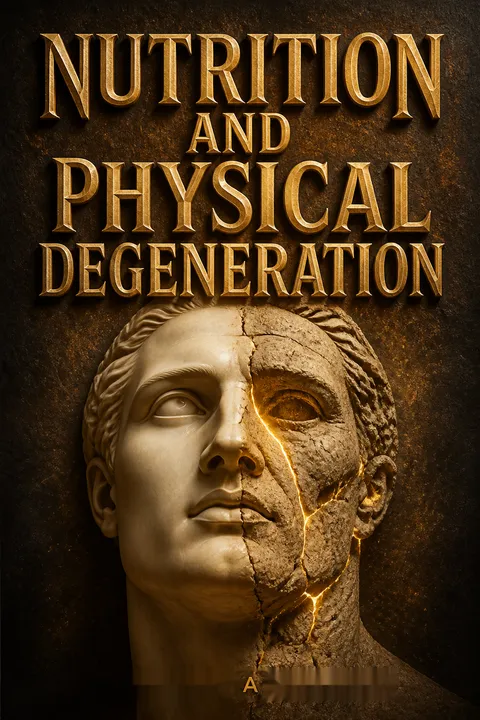
Nutrition and Physical Degeneration is a groundbreaking book that explores the connection between diet and health. Many readers find it fascinating and life-changing, praising Price's extensive research on isolated societies and their traditional diets. The book reveals how modern processed foods lead to dental problems and overall health decline. While some criticize its dated language and repetitive content, most appreciate its valuable insights into nutrition's impact on physical development and disease prevention. Price's work continues to influence discussions on diet and health today.
People Also Read



Glossary
Activator X
Proposed fat-soluble food factorPrice's name for a fat-soluble factor he believed helped the body use minerals, especially calcium and phosphorus. He reported finding high activity in some butter, organ meats, fish, and fish eggs, with levels varying according to animal feed. The book presents it as an important hypothesis, not as a fully identified nutrient.
intercepted heredity
Interrupted expected developmentPrice's term for a failure of offspring to express a physical pattern he expected from their ancestry. He used it to interpret changes in facial form and dental arches that he observed after parents adopted commercial diets. The term describes his explanation; the field observations alone do not establish the biological mechanism.
displacing foods of modern civilization
Commercial foods replacing local dietsPrice's label for foods that replaced traditional local diets as trade and modernization reached isolated communities. Examples in the book include refined flour, sugar, polished rice, canned goods, and vegetable fats. He associated their increasing use with loss of dental health and other physical changes, while the comparisons remain observational.
FAQ
What's Nutrition and Physical Degeneration about?
- Dietary Comparison: The book compares traditional diets of isolated populations with modern diets, focusing on their impact on health and physical development.
- Dental Health Focus: A significant emphasis is placed on dental health, particularly the incidence of dental caries among different populations.
- Cultural Insights: It provides insights into the cultural practices surrounding food and health, highlighting the wisdom of primitive societies in nutrition.
Why should I read Nutrition and Physical Degeneration?
- Timeless Relevance: Despite being published in 1939, the book addresses ongoing issues related to nutrition and health.
- Evidence-Based Research: Price's extensive field research and photographic documentation provide compelling evidence of the effects of diet on health.
- Holistic Approach: The book encourages a holistic view of health, considering physical, mental, and moral aspects of nutrition.
What are the key takeaways of Nutrition and Physical Degeneration?
- Traditional Diets' Importance: Emphasizes that traditional, unrefined diets are crucial for maintaining health and preventing degenerative diseases.
- Modern Foods' Consequences: Documents the adverse effects of modern, processed foods, including increased rates of dental caries and other health issues.
- Nutritional Activators: Highlights the essential role of fat-soluble vitamins in nutrient absorption and overall health.
What are the best quotes from Nutrition and Physical Degeneration and what do they mean?
- “The foods that supplied the vital fat-soluble activators included butterfat, marine oils, organ meats, fish and shellfish, eggs and animal tallows.”: Highlights the importance of nutrient-dense foods often neglected in modern diets.
- “The diets of the healthy primitives Price studied were diverse.”: Emphasizes the variety in traditional diets and the need for diversity in food choices.
- “If civilized man is to survive, he must somehow incorporate the fundamentals of primitive nutritional wisdom into his modern lifestyle.”: Calls for a return to traditional dietary practices to combat modern health issues.
How does Nutrition and Physical Degeneration define "activators"?
- Essential Nutrients: Activators are fat-soluble vitamins crucial for the absorption of other nutrients.
- Sources of Activators: Identifies foods rich in these activators, such as organ meats and fish liver oils.
- Role in Health: Vital for maintaining overall health and preventing degenerative diseases.
What methods did Weston A. Price use in Nutrition and Physical Degeneration?
- Field Research: Conducted extensive field studies, traveling to remote areas to observe and document diets and health.
- Comparative Analysis: Compared isolated groups on traditional diets with those on modern diets to draw conclusions about health impacts.
- Photographic Documentation: Used photographs to illustrate physical health and dental conditions, providing visual evidence of his findings.
What are the effects of modern diets according to Nutrition and Physical Degeneration?
- Increased Dental Caries: Significant rise in dental caries among populations shifting from traditional to modern diets.
- Physical Degeneration: Observed physical deformities, including misshapen dental arches and facial structures, linked to modern diets.
- Health Issues: Links modern diets to a rise in chronic diseases, such as heart disease and diabetes.
How does Nutrition and Physical Degeneration address the relationship between nutrition and disease?
- Nutritional Deficiencies: Argues that many modern diseases are rooted in nutritional deficiencies caused by processed foods.
- Preventive Measures: Advocates for a return to traditional diets to prevent disease.
- Holistic Health: Suggests that nutrition impacts not only physical well-being but also mental and moral health.
What is "activator X" in Nutrition and Physical Degeneration?
- Nutritional Factor: A fat-soluble nutrient found in high concentrations in butterfat from animals grazing on lush pastures.
- Role in Health: Essential for the proper utilization of minerals, particularly calcium and phosphorus, and linked to preventing dental caries.
- Comparison to Vitamins: Shares similar properties with vitamins and is crucial for maintaining health.
How does Nutrition and Physical Degeneration address dental caries?
- Nutritional Causes: Discusses how modern diets high in refined sugars and low in essential nutrients contribute to dental caries.
- Preventive Measures: Emphasizes the importance of a nutrient-rich diet, including whole foods and animal products, to prevent tooth decay.
- Case Studies: Provides numerous case studies showing the effectiveness of traditional diets in maintaining dental health.
What role does soil fertility play in nutrition as discussed in Nutrition and Physical Degeneration?
- Foundation of Food Quality: Explains that soil fertility directly affects the nutritional quality of food, impacting human health.
- Mineral Content: Highlights the importance of minerals like calcium and phosphorus in the soil for producing nutrient-rich crops and animal products.
- Consequences of Depletion: Warns that soil depletion leads to a decline in food quality, affecting the health of populations relying on those foods.
How can the findings of Nutrition and Physical Degeneration be applied today?
- Dietary Choices: Encourages individuals to incorporate more whole, nutrient-dense foods into their diets.
- Preventive Health: Suggests that proper nutrition can serve as a preventive measure against chronic diseases.
- Cultural Wisdom: Highlights the importance of learning from traditional cultures and their approaches to nutrition.
Download PDF
Download EPUB
.epub digital book format is ideal for reading ebooks on phones, tablets, and e-readers.








