


Key Takeaways
Earn leadership by meeting real needs, not by holding the title
A title is not influence. John Daily, a successful plant manager in the story, arrives at a monastery with a troubled marriage, distant children, workplace unrest, and a strained relationship with his baseball team. He has authority on paper, but people around him are not thriving. His teacher, Simeon, defines leadership as a learnable skill: influencing people to work willingly toward a shared good. The test is not whether someone has a senior role, but whether their influence helps others grow and leaves their part of the organization better.
Start with legitimate needs. Servant leadership means identifying and meeting the real physical and psychological needs of people entrusted to a leader, rather than simply satisfying their wishes. Respect, listening, honest feedback, encouragement, safety, and accountability all matter. The book’s central claim is that service builds influence, and influence is what makes leadership effective.
The story makes leadership measurable through its effects on people, rather than through the leader’s self-image or job description. That aligns with research on leader-member exchange, which examines the quality of the working relationship between a leader and each team member. The emphasis on growth also widens the scorecard beyond immediate output. Still, leaders should not claim sole credit for a team’s success or blame themselves for every hardship. Outcomes are shaped by resources, organizational design, and forces beyond one person’s control.
Use authority to invite commitment; reserve power for necessary boundaries
Power compels; authority persuades. In Simeon’s distinction, power is the capacity to make someone comply because of position or force. Authority is the skill of earning willing cooperation through personal influence. A supervisor can demand that a worker follow instructions, but cannot command creativity, trust, or wholehearted commitment. Those are given voluntarily, and people can often take them elsewhere.
Coercion has a cost. The story connects power-heavy parenting with teenagers’ resistance, and power-heavy workplaces with unrest and distrust. The lesson is not that power should never be used. Parents must set limits, and employers sometimes must discipline or dismiss. But when a leader repeatedly has to rely on threats, that is evidence to examine whether trust and influence have broken down. A position may grant power; only conduct can build authority.
This distinction captures a basic problem in organizational behavior: compliance is visible, while genuine commitment is harder to secure and easier to lose. People may follow an order while withholding judgment, initiative, or useful information. At the same time, authority does not eliminate legitimate hierarchy. In a safety emergency, clear direction can matter more than discussion. The practical question is whether power is being used to protect a shared standard, or to avoid the harder work of earning cooperation.
Turn the org chart upside down, then clear workers’ path to customers
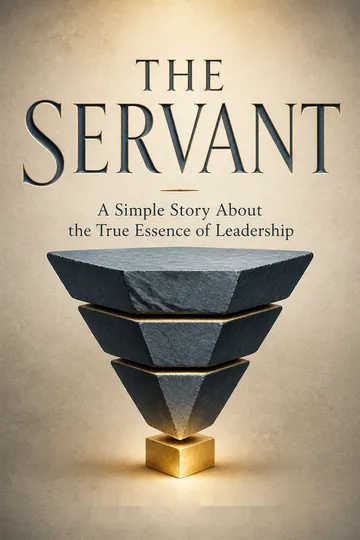
Move support toward the front line. The book asks readers to picture the familiar management pyramid inverted. Customers sit at the top, followed by the employees who serve them, then supervisors and senior leaders. The point is not that employees should run every decision. It is that people closest to customers often see their needs most clearly, so the rest of the organization should help them do good work.
Remove obstacles, not dignity. A nurse in the story describes supervisors as people who clear roadblocks so staff can care for patients. Simeon contrasts this with managers who disrupt work, criticize publicly, and then disappear. In a glass factory, the worker who packs the finished product may have the most direct effect on what the customer receives. A leader’s job includes listening to that worker, supplying what is needed, and keeping the organization focused on the customer rather than on pleasing the boss.
The inverted pyramid is useful because it shifts attention from rank to the flow of value. It resembles the idea of servant leadership in modern service operations: frontline workers need information, tools, and decision latitude to respond well. But decentralization is not automatically empowering. Without clear roles, training, and escalation paths, it can leave employees exposed to conflicting demands. The model works best when leaders remove needless friction while remaining accountable for standards, resources, and the consequences of decisions.
Serve what people need, even when they ask for what they want
Care includes limits. Simeon distinguishes a want, a desire considered without regard to consequences, from a need, a legitimate requirement for physical or psychological well-being. A parent who lets a child stay out all night may satisfy a wish while failing to protect the child. At work, paying whatever employees request could endanger the organization and their long-term jobs. Serving people is not the same as obeying them.
Needs have layers. The group discusses Maslow’s hierarchy: basic necessities, safety, belonging, esteem, and the chance to develop one’s potential. At work, fair pay and safe conditions matter, but so do respect, inclusion, recognition, and opportunities to do meaningful work. People differ, so the leader must learn what each person needs rather than assume one policy suits everyone. Accountability and clear boundaries are part of care, not its opposite.
This principle rejects both indulgence and cold command. It also raises a serious question: who gets to define another person’s needs? Managers can confuse their preferences with employees’ welfare, especially when power is unequal. The strongest application is collaborative diagnosis: ask people what blocks them, explain constraints, and make decisions transparently. Maslow’s hierarchy is a helpful organizing picture, but human motivation is not always a neat staircase. Belonging or purpose can matter even when material security is incomplete.
Make love a verb: practice respect, honesty, patience, and commitment
Behavior matters more than mood. Simeon uses the Greek term agapé for deliberate, other-directed love expressed through choices, not merely warm feelings. He connects it to eight behaviors: patience, kindness, humility, respect, selflessness, forgiveness, honesty, and commitment. A leader may feel irritated and still choose to listen carefully, speak truthfully, or treat someone with dignity. The standard is not pretending that harmful conduct is acceptable.
Care has a firm side. Honesty includes setting expectations, giving feedback, and holding people accountable. Forgiveness means releasing resentment after addressing a wrong, not denying that it happened. Kindness includes attention, appreciation, and encouragement, while humility means being authentic rather than self-important. In the book’s model, these behaviors require effort and sometimes sacrifice. They are not a performance of niceness; they are practical ways to meet people’s legitimate needs.
The distinction between love as feeling and love as conduct has broad ethical reach. It makes care possible even when affection is absent, and it prevents leaders from treating kindness as a personality trait reserved for people they like. The pairing of compassion with candor is especially important: support without standards can become permissiveness, while standards without respect become humiliation. A further safeguard is reciprocity. Leaders should not use selflessness to demand limitless availability from employees or excuse exploitative workloads.
Build character through deliberate practice, not leadership seminars alone
Leadership is a skill. Hunter argues that character traits such as listening, self-control, and honesty are developed through repeated behavior, not acquired by attending a class. A person typically moves from not recognizing a weakness, to recognizing it but performing awkwardly, to practicing it with growing competence, and finally to doing it with ease. The uncomfortable middle stage is part of learning, not proof of failure.
Use the Three Fs. The book’s development process is Foundation, Feedback, and Friction. First, define the leadership standard. Next, gather honest information about the gap between current behavior and that standard, including from people affected by the leader. Finally, create healthy friction: set specific goals, share them with others, and create accountability for practicing them. The goal is sustained improvement, not perfection. A seminar can clarify the standard, but only practice can make it part of someone’s conduct.
The book’s strongest practical move is treating leadership as trainable behavior rather than charisma. Deliberate practice research likewise emphasizes focused repetition, useful feedback, and progressively harder challenges. The Three Fs turn a vague intention into a social process, which matters because people are often poor judges of their own impact. Yet public accountability can become coercive or humiliating if poorly handled. Feedback needs psychological safety, confidentiality where appropriate, and goals that measure observable conduct rather than demand a particular personality.
Listen closely; one careless withdrawal can outweigh several deposits
Attention signals respect. John discovers that he often interrupts and plans his reply while others are speaking. Simeon treats active listening as disciplined attention: quieting internal commentary, trying to understand the speaker’s perspective, and staying mentally present. In the story, a nurse describes this as being present with patients, not simply standing in the room. Listening can reveal what people need before a leader tries to solve the wrong problem.
Protect relational trust. The book borrows the metaphor of relational bank accounts. Keeping promises, showing appreciation, and listening make deposits; disrespect, broken commitments, and public humiliation make withdrawals. Hunter cites an article claiming that one negative interaction can take several positive ones to offset, and that trust can be lost quickly after long effort. Public correction damages both the person corrected and observers who fear the same treatment. Public recognition can strengthen more than one relationship at a time.
Listening is both an interpersonal skill and an information system. Employees who expect dismissal often stop reporting small problems, leaving leaders with less accurate data and larger surprises. The bank-account metaphor makes trust memorable, but its numerical exchange rate should not be treated as a universal law. A serious betrayal may not be repaired by a fixed number of compliments. The more useful principle is asymmetry: trust can take time to build, and careless conduct can destroy it quickly.
Cultivate conditions for growth, then add accountability that makes change real
Leaders tend the conditions. Simeon compares leadership to gardening. A gardener prepares soil, waters plants, and removes weeds, but does not manufacture growth. In the same way, a leader can create conditions for people to learn and contribute, but cannot make them change from the inside. Healthy conditions include trust, clear expectations, appreciation, and room to make mistakes without being shamed.
Set standards in the environment. The story also insists that leaders can establish rules for behavior. John recalls a supervisor who stopped publicly insulting workers after being warned that such conduct could cost him his job. The supervisor chose to change; the organization made the expectation unmistakable. Leaders cannot control every person’s motives, but they can shape norms and consequences. Growth takes time, and the book warns against abandoning a constructive environment because results are not immediate.
The garden image usefully separates influence from control. It aligns with coaching and education, where the quality of feedback and practice conditions can shape learning without guaranteeing it. The companion idea of enforceable standards matters because a supportive culture cannot depend on every individual’s goodwill. Still, consequences must be predictable and proportionate. If rules are applied selectively, they reduce trust instead of improving the environment. Leaders should judge culture by what their policies reward, not only by the values displayed on a wall.
Choose the response you can control, then let practice reshape your feelings
Circumstances matter, but they do not decide everything. The book discusses determinism, the belief that behavior is fully caused by forces outside conscious choice. It invokes Viktor Frankl, who described observing radically different conduct among prisoners in Nazi concentration camps, despite shared deprivation. The story supports the idea that people retain some capacity to choose their response, even under severe conditions. It does not mean that every person has equal freedom or that trauma and constraint are unreal.
Action can lead feeling. Hunter calls praxis the process by which behavior can influence thought and emotion. A person who chooses to act with care may develop warmer feelings through sustained attention and effort. The book gives the example of a couple deliberately renewing considerate courtship behaviors for a set period. For a leader, the practical move is to choose one observable behavior, such as listening without interruption, and practice it before waiting to feel naturally inclined.
The emphasis on agency is empowering when it helps people identify a genuine point of choice. It also resembles behavioral activation, a therapeutic approach in which taking constructive actions can improve mood rather than waiting for motivation to arrive. But agency must not become blame. Frankl’s account is a profound witness, not evidence that conditions are irrelevant or that everyone can overcome them through willpower. A humane leadership practice distinguishes responsibility for conduct from responsibility for circumstances a person did not choose.
Use service as a daily mission, not a route to constant happiness
Purpose grows through responsibility. On the retreat’s final day, even Greg, the skeptical drill sergeant, says that serving others can give leadership a mission. The group sees the work as concrete: listen, encourage, clarify standards, offer feedback, and help people improve. Hunter distinguishes joy, a deeper sense of inner satisfaction, from happiness, which changes with events. Service may not make a difficult day pleasant, but it can make the effort feel connected to something worthwhile.
The story ends with a small choice. After the retreat, John waits for his wife, Rachael, and responds to her with new warmth. He does not claim that one week has made him a perfect husband or manager. He has learned that change begins with a decision, then becomes real through repeated conduct. The book closes not with a grand leadership technique, but with the prospect that a modest adjustment in daily behavior can redirect a long relationship.
The link between contribution and purpose is consistent with research connecting prosocial behavior to well-being, especially when people can see whom their effort helps. The book’s distinction between joy and momentary happiness also guards against treating leadership as a method for constant personal reward. One caution is essential: service is not self-erasure. A leader’s needs, boundaries, and health also matter. Durable service requires structures that prevent the language of sacrifice from becoming a license for burnout.
Analysis
The book’s central argument is ethical before it is managerial: leadership is a relationship of influence, and influence is earned by serving people rather than merely exercising rank. Its narrative makes that argument tangible through John Daily, whose professional status conceals deterioration at home and work. The monastery setting gives him time to notice what his command-oriented habits have obscured. The central transformation is not a conversion to a new personality, but a shift from intention to repeated conduct.
The book’s most useful conceptual chain runs from choice, to behavior, to service, to earned authority. Its distinctions clarify common confusions: management is not leadership, power is not authority, meeting needs is not indulging wants, and love in leadership is conduct rather than sentiment. Its practical contribution is the insistence that character can be trained. The Four Stages and Three Fs give readers a bridge from agreement with principles to feedback, practice, and accountability.
The story also shows why moral advice alone rarely changes behavior. John already knows many of the values being taught, but does not see the effects of his habits until others reflect them back to him. That makes listening and feedback central mechanisms, not decorative virtues. The inverted organizational pyramid similarly redirects attention toward customers and frontline workers, whose daily experience reveals whether leadership systems actually function.
Some claims require careful handling. The account of choice should not be mistaken for proof that circumstances, trauma, or unequal power are minor. The behavioral model also depends on leaders applying standards fairly, and on service remaining distinct from self-neglect. The book offers a strong normative guide, not a guarantee that considerate leadership alone solves structural problems. Its durable insight is more modest and more actionable: leaders cannot control every outcome, but they are responsible for the behavior and environment they create.
Review Summary
O monge e o executivo receives mixed reviews. Many praise its accessible lessons on servant leadership, finding it transformative and applicable to both personal and professional life. Critics argue it's cliché, sexist, and overly religious. The book's narrative format is seen as both engaging and contrived. Readers appreciate its emphasis on humility, love, and meeting others' needs, but some find the content dated and simplistic. Despite criticism, many recommend it as an easy introduction to leadership principles.
People Also Read

Glossary
Servant leadership
Leading by meeting needsA way of leading that begins by identifying and meeting the legitimate needs of people entrusted to one’s care. The leader serves rather than rules for personal status, while still setting standards, giving feedback, and holding people accountable. In the book, service and sacrifice build personal influence, which makes leadership effective.
Leadership
Influence toward shared goalsThe book defines leadership as a learnable skill of influencing people to work willingly and enthusiastically toward goals understood to serve a common good. It is distinct from management, which concerns tasks such as planning and organizing. A formal title alone does not make someone a leader if no one is influenced to follow.
Power
Compliance through positionThe capacity to make someone comply through a position, threat, or force, even when that person would prefer not to. Power can produce immediate action, but the book warns that relying on it can damage relationships and weaken commitment. It remains appropriate for some necessary boundaries and consequences.
Authority
Influence earned through characterThe skill of gaining willing cooperation through personal influence. Unlike power, authority cannot simply be assigned by a job title. It develops through trustworthy conduct, service, and sacrifice, and gives a leader a stronger basis for commitment than coercion alone.
Agapé
Deliberate, behavioral loveA Greek term the book uses for love expressed through deliberate choices and actions, rather than primarily through feelings. In leadership, agapé means behaving with patience, kindness, humility, respect, selflessness, forgiveness, honesty, and commitment. It allows care to include accountability and truthful feedback.
Praxis
Behavior shaping feelingThe idea that behavior can influence thoughts and feelings, as well as being influenced by them. The book uses praxis to explain why deliberately acting with care may gradually strengthen positive regard for another person. It suggests that people need not wait to feel motivated before practicing constructive behavior.
The Three Fs
A change implementation processA three-part process for developing leadership behavior. Foundation establishes the desired standard. Feedback identifies the gap between current conduct and that standard, including through input from people affected by the leader. Friction creates accountability through specific goals and shared commitments, making sustained practice more likely.
Hawthorne Effect
Attention affecting behaviorA term associated with early workplace studies at the Hawthorne Works, which the book presents as showing that productivity changes may follow from workers receiving attention, not only from physical changes such as lighting. The book uses the example to emphasize that noticing and listening to people can affect their experience and effort.
Relational bank accounts
A metaphor for trustA metaphor for the trust and goodwill built or depleted through everyday interactions. Keeping promises, listening, and showing appreciation are treated as deposits; disrespect, broken commitments, and public humiliation are withdrawals. The metaphor helps leaders remember that relationships accumulate consequences, though it is not a literal numerical measure.
Paradigm
A mental map of realityA psychological pattern or model used to interpret the world and guide decisions. Paradigms can help people navigate familiar situations, but become limiting when treated as permanent truths. The book urges leaders to examine assumptions about authority, employees, customers, and organizational structure when conditions change.
FAQ
What's "O Monge e o Executivo" about?
- Story Overview: "O Monge e o Executivo" by James C. Hunter is a narrative about John Daily, a successful manager who attends a leadership retreat at a monastery. The story explores his journey of self-discovery and transformation.
- Central Theme: The book focuses on the essence of leadership, emphasizing that true leadership is about serving others and building authority through influence rather than power.
- Character Focus: Leonard Hoffman, a former executive turned monk, serves as the mentor who guides John and other participants in understanding the principles of servant leadership.
- Setting and Structure: The story unfolds over a week-long retreat, with each chapter representing a day of learning and reflection on leadership principles.
Why should I read "O Monge e o Executivo"?
- Leadership Insights: The book provides valuable insights into effective leadership, emphasizing the importance of serving others and building genuine relationships.
- Personal Growth: It encourages readers to reflect on their own leadership styles and consider how they can improve their interactions with others.
- Engaging Narrative: The story format makes complex leadership concepts accessible and engaging, allowing readers to learn through the experiences of the characters.
- Practical Application: The principles discussed are applicable not only in professional settings but also in personal relationships, making it a versatile read.
What are the key takeaways of "O Monge e o Executivo"?
- Servant Leadership: True leadership is about serving others and meeting their legitimate needs, rather than exerting power over them.
- Influence Over Power: Authority is built through influence and personal character, not through coercion or positional power.
- Character Development: Leadership is deeply connected to one's character, requiring qualities like patience, kindness, humility, and commitment.
- Continuous Improvement: Leaders should focus on creating environments that foster growth and development for themselves and their teams.
How does James C. Hunter define leadership in "O Monge e o Executivo"?
- Leadership as Influence: Leadership is defined as the ability to influence people to work enthusiastically towards goals identified as being for the common good.
- Skill Development: Leadership is a skill that can be learned and developed through practice and dedication.
- Authority vs. Power: The book distinguishes between power, which is coercive, and authority, which is earned through service and sacrifice.
- Focus on Relationships: Effective leadership involves balancing task completion with building strong, trusting relationships.
What is the significance of the monastery setting in "O Monge e o Executivo"?
- Reflective Environment: The monastery provides a serene and contemplative setting that encourages introspection and personal growth.
- Symbol of Simplicity: It symbolizes a return to basic, fundamental values that are often overlooked in the fast-paced business world.
- Contrast to Corporate Life: The setting contrasts with the corporate environment, highlighting the need for leaders to step back and reassess their priorities.
- Facilitates Learning: The structured routine and community living at the monastery facilitate learning and the application of leadership principles.
What are the main leadership principles taught by Leonard Hoffman in "O Monge e o Executivo"?
- Servant Leadership: Leaders should focus on serving their team members and meeting their needs to foster a supportive environment.
- Building Authority: Authority is built through consistent, positive actions and behaviors that earn the trust and respect of others.
- Character Traits: Essential traits for leaders include patience, kindness, humility, respect, and commitment.
- Creating a Healthy Environment: Leaders are responsible for creating an environment that encourages growth and development.
How does "O Monge e o Executivo" address the concept of power versus authority?
- Power Defined: Power is the ability to force or coerce someone to do your will, even if they would choose not to.
- Authority Defined: Authority is the skill of getting people to willingly do your will because of your personal influence.
- Long-term Impact: The book argues that while power can achieve short-term results, authority leads to sustainable success and healthier relationships.
- Building Authority: Authority is built through service, sacrifice, and consistently demonstrating character and integrity.
What role does personal character play in leadership according to "O Monge e o Executivo"?
- Foundation of Leadership: Personal character is the foundation upon which true leadership is built, influencing how leaders interact with others.
- Essential Traits: Key character traits include honesty, integrity, humility, and the ability to listen and empathize with others.
- Character Development: Leaders must continuously work on developing their character to effectively lead and inspire others.
- Impact on Relationships: A leader's character directly impacts their ability to build trust and authority with their team.
How does "O Monge e o Executivo" suggest leaders should handle mistakes and failures?
- Learning Opportunities: Mistakes and failures are seen as opportunities for learning and growth, both for the leader and their team.
- Forgiveness and Understanding: Leaders should practice forgiveness and understanding, helping team members learn from their errors without fear of harsh judgment.
- Accountability: While being forgiving, leaders must also hold themselves and their team accountable to maintain standards and encourage improvement.
- Constructive Feedback: Providing constructive feedback in a respectful manner is crucial for helping others learn and develop.
What are the best quotes from "O Monge e o Executivo" and what do they mean?
- "To lead, you must serve." This quote encapsulates the book's central theme of servant leadership, emphasizing that true leadership is about serving others.
- "Leadership is not about being in charge. It's about taking care of those in your charge." This highlights the responsibility leaders have to support and nurture their team members.
- "The only person you can change is yourself." This underscores the importance of self-reflection and personal growth in effective leadership.
- "Love is what love does." This quote reinforces the idea that love, in the context of leadership, is demonstrated through actions and behaviors, not just feelings.
How can the principles in "O Monge e o Executivo" be applied in everyday life?
- Personal Relationships: The principles of servant leadership can improve personal relationships by fostering empathy, understanding, and mutual respect.
- Workplace Dynamics: Applying these principles at work can lead to more cohesive teams, higher morale, and increased productivity.
- Community Involvement: Leaders can use these principles to positively impact their communities by serving and meeting the needs of others.
- Self-Improvement: Individuals can focus on developing their character traits, such as patience and humility, to become better leaders and people.
What challenges might one face when implementing the leadership principles from "O Monge e o Executivo"?
- Resistance to Change: People may resist changing their leadership style, especially if they are accustomed to using power rather than authority.
- Time and Effort: Building authority through service and sacrifice requires significant time and effort, which can be challenging in fast-paced environments.
- Balancing Tasks and Relationships: Leaders must find the right balance between completing tasks and nurturing relationships, which can be difficult.
- Consistency: Maintaining consistent behaviors that build authority and trust can be challenging, especially under pressure or stress.
About the Author
Download PDF
Download EPUB
.epub digital book format is ideal for reading ebooks on phones, tablets, and e-readers.








