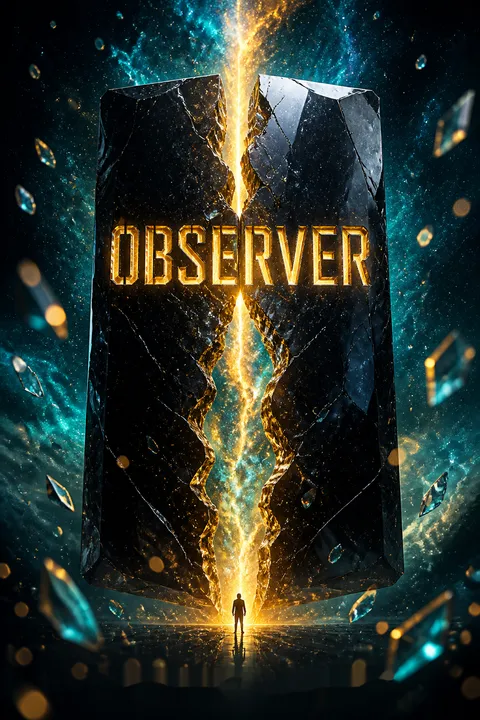


Plot Summary
Prologue
Before Caro enters the story, physicist George Weigert learns that neurosurgeon David Weeks, a crucial member of the secret Cayman Brac project, has drowned while diving.
Samuel Watkins, the dying Nobel laureate financing the research, absorbs the loss without surprise for long: he has already anticipated what the project may lose. With the experiment now short a surgeon and Watkins running out of time, he summons his lawyer to prepare a contingency plan.
The opening makes death both a personal fact and a logistical threat. Weeks’s drowning costs the project an irreplaceable surgeon, while Watkins immediately turns toward contingency rather than mourning. His response establishes the danger in his governing instinct: human limits appear to him as obstacles to an idea important enough to justify extraordinary measures. The scene also plants the novel’s central tension before Caro arrives: a project designed to challenge death is already making decisions under the pressure of real, irreversible loss.
Fairleigh Turns Against Caro
Neurosurgeon Caro Soames-Watkins reports that her superior, Paul Becker, groped her at a hospital party. At the disciplinary hearing, colleague Maisie denies knowing what happened, and the committee sides with Becker.
Caro loses her chance of a job at Fairleigh Memorial, the research hospital where her training and ambitions belong. Then online attackers seize on the dispute, distort her accusation and threaten her; a protest outside the hospital deepens her fear that no institution will hire her.
Her sister Ellen steadies her, though Ellen is already overwhelmed caring for Angelica, a severely disabled child, and raising Kayla. When their great-uncle Samuel Watkins offers Caro a highly paid neurosurgery post in the Cayman Islands, the suspicious offer becomes her only credible route forward.
Caro’s professional identity rests on competence and self-command, but the hospital’s decision shows how little either can protect her when institutional reputation outweighs a junior surgeon’s testimony. The online pile-on extends that injury beyond the workplace, making public judgment feel as immediate and bodily as a threat in a corridor. Ellen offers a contrasting survival style: she absorbs disorder without pretending it is fair. Caro’s new opening arrives through family privilege she did not know she had, yet it also demands that she enter a world whose terms she cannot verify.
The Cayman Compound
Caro flies to Cayman Brac expecting a private hospital and finds a walled research compound with few patients, heavy surveillance and an unexplained need for a physicist. Her great-uncle, Samuel Watkins, is terminally ill; physicist George Weigert and software founder Julian Dey describe a theory in which consciousness helps create reality.
Their equipment maps brain activity, while a programmed chip is meant to let an implanted person enter a branch of the multiverse. Julian shows Caro a recording of himself in a detailed alternate version of the compound, but she cannot rule out a powerful, computer-shaped hallucination.
His suggestion that the work might defeat death alarms her. After Caro walks into a poisonous maiden-plum tree and needs treatment, the project’s people become more human, but its purpose remains uncertain.
The compound’s walls, sealed research wing and evasive staff turn scientific curiosity into a problem of trust. Caro’s doubts are not simple resistance to a strange idea: she is a surgeon asked to distinguish a breakthrough from an elaborate illusion before cutting into healthy volunteers. Her first brush with the island’s poisonous plant reverses her usual role as doctor and makes her depend on the very people she is assessing. The story places her professional ethics in a landscape where knowledge is partial and even the meaning of reality is contested.
A Loan Without Strings
When Child Protective Services places Kayla in foster care after a difficult school morning, Caro realizes that Ellen needs legal help immediately. Caro asks Weigert for money, and he lends it personally so the research corporation cannot make her feel obligated to stay. The lawyer helps restore Kayla to Ellen, but the family’s poverty and Angelica’s constant care leave no stable future.
Caro also learns that the online campaign has helped close other hospital doors. She chooses to remain on Cayman Brac long enough to understand the work, while insisting that she will decide for herself whether to operate. The choice is not yet belief in Weigert’s theory; it is a way to help her family without surrendering her judgment.
The loan matters because it separates help from recruitment. Weigert understands that financial desperation could make Caro’s consent look purchased, and his personal offer preserves a distinction between choosing the project and being trapped by it. Caro’s decision is still shaped by money, debt and care for her nieces, but she does not confuse those pressures with scientific conviction. The scene also reveals how public shaming has narrowed her options so thoroughly that a remote, secretive compound can appear safer than the institution that trained her.
Lorraine Leaves the Flower
Caro begins operating by implanting Lorraine Dey, Julian’s mathematically trained sister, with a chip that connects her to the project’s computers. Lorraine’s first session does not produce the flamboyant alternate world Caro expects.
Instead, the recording shows her kneeling in the compound courtyard, touching a small flower and weeping. Afterward Lorraine describes feeling inseparable from the flower, the ground and the people around her. Caro and neuroradiologist Barbara Mumaw examine the brain imagery and find no clear signs of epilepsy or the usual pattern associated with mystical experience.
The data offer valuable material for a research paper, but they do not explain what Lorraine felt. Caro’s own childhood memory of merging with the world returns, troubling the certainty she had used to dismiss it.
Lorraine’s quiet experience disrupts the project’s expectation that an implanted observer will deliberately design a new reality. Her session appears to happen to her rather than to be constructed by her, opening a gap between the team’s technical model and the subject’s account. Caro responds by turning toward measurable brain activity, a familiar defense against experiences that cannot yet be categorized. But the absence of a neurological explanation does not settle the matter; it links Lorraine’s report to Caro’s own buried memory and makes skepticism more personally costly.
Clarby Takes the Code
As the project’s next operations approach, cybersecurity worker Ben Clarby helps Caro identify island plants after her maiden-plum exposure. Soon Aiden Eberhart becomes violently ill, and doctors eventually suspect poisoning by rosary pea, a plant Ben knew how to identify.
While Aiden is away receiving treatment, Ben uses privileged security access to copy the project’s software, chip programming and recordings, then disappears from the compound. The theft leaves the research intact but exposes its most dangerous knowledge to an unknown buyer.
Caro’s team cannot prove that Ben poisoned Aiden, and Watkins refuses to involve local police. The episode changes the project from a secret experiment protected by money and walls into a vulnerable operation with a missing insider and no idea who now possesses its methods.
The betrayal grows out of the compound’s own design: security depends on a small circle of trusted people, so a single insider can bypass the walls from within. Ben’s familiarity with the island’s poisonous plants turns an earlier practical lesson into a disturbing clue, but suspicion cannot yet become proof. Watkins’s refusal to contact police protects the experiment’s secrecy while leaving a possible crime unaddressed. The project’s pursuit of knowledge has created a second responsibility, safeguarding what that knowledge makes possible.
A Surgeon From the Front
Trevor Abruzzo arrives as Caro’s replacement backup surgeon, bringing experience from Doctors Without Borders and a history that includes a failed attempt to save a dictator’s daughter. He has come because he wants to test Weigert’s theory through direct experience, not because he is convinced.
Caro admires his candor and the way he treats her as a colleague rather than as a prize, though she remains wary of intimacy after Becker and Julian. Meanwhile, Caro and Barbara analyze the implant images, and Caro performs further operations as the schedule advances.
Trevor’s combination of humor, moral seriousness and openness unsettles Caro’s habit of keeping desire separate from trust. Their growing connection gives her a personal stake in the research even while she continues to question its claims.
Trevor’s arrival gives Caro a relationship that does not depend on professional hierarchy or easy persuasion. His wish to be implanted arises from a search for meaning, but he refuses to pretend that wanting an experience proves its truth. That makes him a useful counterweight to Julian’s certainty and to Caro’s reflexive dismissal. Their attraction develops through reciprocal disclosure rather than rescue or status, testing whether Caro can remain self-protective without mistaking emotional distance for control.
Angelica’s Empty Chair
Angelica suffers a seizure and dies, leaving Ellen unable to speak or care for herself and nine-year-old Kayla frightened and alone. Caro returns to Fairleigh, arranges a memorial and takes Ellen to a psychiatric hospital. Julian then offers long-term care for Ellen and Kayla if Caro agrees to implant Watkins, despite the danger to his frail body.
Caro accepts the bargain only with a year of care secured in escrow and Watkins scheduled after Weigert. At the hospital, she tells Ellen that an implant may let her see Angelica in another universe. Ellen strikes Caro, then recognizes her sister and begins to respond. Caro has offered hope before she can prove what it means, and accepts that risk because Ellen is close to giving up.
Angelica’s death makes Caro’s usual belief in skill and planning useless: there is no operation that can restore the child in this world. Julian exploits Caro’s responsibility for her family, but the care agreement also becomes a concrete safeguard for Ellen and Kayla rather than a vague promise. Caro’s appeal to Ellen crosses a line she had defended as a doctor, because she offers an unverified possibility to someone in acute despair. The choice comes from love, but love does not remove the ethical danger of promising what science has not established.
Rose Beyond the Door
After Caro implants him, Weigert enters a session built around the home he shared with Rose, his wife who died years earlier. The recording shows him embracing her in a carefully remembered room; afterward he describes familiar sounds, textures and scents, and believes she continues to live in that branch of reality.
Before Watkins’s operation, Caro visits Ellen again and finds her still consumed by grief, so she returns determined to give her sister a chance at the experience.
Caro then implants Watkins, whose fragile health and an unexpected brain tumor make the surgery especially dangerous. Watkins survives the operation, but Julian later takes him for a session while he is still critically ill. Watkins dies during the experiment, leaving Caro unsure whether the procedure contributed to his death.
Weigert’s reunion with Rose gives the theory emotional force that equations alone could not supply, while still leaving the reader unable to independently verify his account. His certainty is inseparable from grief: the session restores a relationship that ordinary time seemed to have ended. Watkins’s operation then turns that hope into a medical risk Caro must personally bear. His death, occurring during a session against her judgment about his readiness, makes the boundary between consolation and recklessness impossible to keep abstract.
Murder for Sale
The FBI arrives after Ben is found murdered in New York. Investigators show the team a Dark Web advertisement built from stolen project data: customers can enter designed universes and commit shootings, torture or sexual violence there.
The acts appear to harm real people in those branches, even if the user returns unharmed. Caro is sickened by the possibility that work meant to study consciousness can enable cruelty without immediate consequences for its author. The FBI later arrests a hired killer in Ben’s murder and links the investigation to the illegal service.
George, who believes his theory could deepen empathy, is devastated that it has been used to market violence. Caro and Trevor comfort him, but no one can yet account for how the stolen system will be contained.
The Dark Web operation gives the novel’s speculative premise an ethical test that laboratory success cannot answer. If alternate worlds contain people with their own continuity, then the user’s return does not erase what was done to them. George’s moral distress follows directly from his hope that shared consciousness would produce compassion; the technology instead magnifies the user’s power without requiring recognition of others. Caro’s response is less theoretical: she must treat the consequences as real enough to demand safeguards, even while the ontology remains disputed.
A Child in the Courtyard
Once doctors clear Ellen for surgery, Caro and Trevor implant her. In her first session, Ellen finds Angelica healthy and playing in the compound courtyard, then joins her and Kayla in a game. The experience helps Ellen recover from her collapse and reconnect with the daughter still alive beside her.
Later, Ellen tells reporters about the project because she wants other grieving people to know they might see loved ones again. Her disclosure helps turn a sensational Florida article into a major New York Times story, bringing reporters, skepticism and attention to the Dark Web violence.
Caro protects Ellen from the press rather than sacrificing her as a source, while Julian hires public-relations help. The family’s consolation has become public evidence in a controversy the team cannot control.
Ellen’s session works as emotional repair regardless of whether the alternate world is metaphysically independent: she returns able to care, relate and imagine a future with Kayla. Her decision to tell the press grows from the same generosity that once kept her caring for Angelica, but good intentions do not control how information travels. Caro’s choice to protect her sister contrasts with Julian’s instinct to manage exposure. The episode makes publicity an ethical problem, not merely a communications failure: private hope can become a promise offered to strangers.
Five Dots From Sam
To counter hostile coverage, the project recruits Stephanie O’Malley, a war correspondent and Trevor’s old colleague, to experience a session and speak on 60 Minutes. O’Malley meets her dead lover in the alternate courtyard and emerges convinced the encounter was real.
Before the broadcast airs, the session computer unexpectedly displays five dots. Julian explains that he and Watkins had built a Morse signal into Watkins’s chip; the pattern means Watkins has managed to communicate from his branch.
The message turns a private hope into a possible testable claim. Caro, still uncertain but unwilling to dismiss the evidence, commits to another year at the compound. After the broadcast, crowds gather outside seeking implants, while Julian asks her to help take the project public.
O’Malley brings public credibility, but her private encounter is still testimony rather than proof. Watkins’s coded signal changes the problem: it appears to cross the boundary between branches, though its source and mechanism remain difficult to establish. Caro’s commitment is therefore not a conversion so much as a decision to stay where the most consequential evidence may emerge. Public demand arrives before the science or ethics are settled, repeating on a larger scale the book’s warning that technology and its social consequences develop at different speeds.
The Missile at Dusk
A domestic extremist group, the Prophets for the End Times, targets Weigert because it regards his science as an assault on religious doctrine. Its members fire a military-grade missile at the compound courtyard. Trevor is killed beside Caro, who is badly injured and demands an implant before collapsing from internal bleeding. Surgeons save her long enough to implant her, but sepsis stops her heart.
Weigert orders the team to connect her to the session machinery before brain death; the screen briefly shows a human figure, and Ellen recognizes her sister. Caro then wakes in the branch universe, where Trevor is alive and waiting. The attack destroys her ordinary future, but the experiment gives her a world in which she can meet him again.
The attack turns the project’s abstract dispute into bodily consequence: belief, hatred and technology converge in a missile aimed at a physicist rather than at a machine. Caro’s demand to be implanted is made under grief and mortal injury, but it also completes the reversal of her role: the surgeon who questioned every claim becomes the subject whose survival depends on them. Weigert’s intervention is an act of faith grounded in urgency, not certainty. The ending grants reunion without resolving whether Caro has entered an independent universe or a final experience of consciousness.
Epilogue
Years later, Kayla speaks at the dedication of the George J. Weigert Research Center on behalf of Ellen, whose stroke has left her speech impaired. Kayla uses an algorithm named for Lorraine to experience the world as a seagull carrying a starfish, sensing the island from a bird’s perspective before returning to the ceremony.
She tells the crowd that the technology has changed how people understand reality and death. The future has made the once-secret experiment public, but its deepest promise remains personal: the chance to experience connection beyond the limits of one body.
The epilogue transfers the story’s central question from the founders to the next generation. Kayla does not merely repeat Weigert’s ideas; she uses an algorithm to experience a different form of perception, making the theory part of daily life rather than a claim confined to a laboratory. Ellen’s impaired speech reminds us that technological consolation does not abolish bodily loss. Yet Kayla’s flight as a gull gives the book a final image of identification across species, echoing Lorraine’s Oneness and leaving the reader with an experience rather than a proof.
Analysis
Observer is structured around a conflict between what can be measured and what people need to believe. Caro begins as a surgeon who trusts the visible, workable body: a tumor can be mapped, a lead placed, a complication treated. The project unsettles that confidence not by disproving medicine, but by making subjective experience potentially consequential. Its recordings and brain scans offer data, yet cannot settle the largest question: whether the worlds subjects describe exist independently or are exceptionally coherent experiences generated by the implant.
The family story gives this uncertainty emotional weight. Caro’s care for Ellen and Kayla is loving but also controlling; she assumes that being useful is the surest way to remain necessary. Angelica’s death defeats that strategy. Ellen’s recovery and eventual independence make Caro confront a form of loss that is not death: the possibility that people she loves can live without her rescue. Trevor’s affection offers another challenge, because intimacy requires a trust that cannot be secured through professional competence.
The novel also treats invention as an ethical act before it is a public product. The same technology that gives Weigert contact with Rose and offers Ellen a way to meet Angelica can be adapted for violent entertainment. The Dark Web service makes consequence-free violence plausible only if the people in alternate worlds are denied the moral status granted to people here. That is precisely the denial the theory challenges. Yet the book does not let its own hopeful answer become conclusive: each revelation arrives through experience, testimony or a signal that remains open to interpretation.
Caro’s development is therefore not a conversion from science to faith. She learns that intellectual caution need not mean closing herself to experience, and that love may require acting before certainty is available. The ending offers reunion as a lived possibility, not a laboratory proof. Its most lasting question is not simply whether consciousness creates reality, but what duties follow if another person’s reality is as real to them as ours is to us.
Review Summary
Observer is a thought-provoking science fiction novel exploring consciousness, reality, and the multiverse. While praised for its intriguing concepts and character development, some readers found the scientific explanations repetitive and the plot slow-paced. The story follows neurosurgeon Caro Soames-Watkins as she joins a secretive research project in the Cayman Islands. Many reviewers appreciated the book's blend of quantum physics and neuroscience, while others struggled with the writing style and character depth. Overall, opinions were divided, with some hailing it as a captivating read and others finding it disappointing.
People Also Read





Characters
Caroline Soames-Watkins
The skeptical brain surgeonCaro is a gifted neurosurgeon whose discipline comes from years of learning to keep emotion outside the operating room. She is loyal to her younger sister Ellen and her nieces, Kayla and Angelica, often taking responsibility before anyone asks her to. That protectiveness is both generosity and a way to manage guilt: she measures herself by what she can fix. Professionally, she needs evidence and resists accepting the project’s claims simply because its founders are brilliant. Her curiosity, however, is genuine, and her own unexplained childhood experience complicates her skepticism. Caro’s central tension is not science versus faith, but whether she can remain ethically rigorous while admitting that some experiences may exceed her current explanations.
Julian Dey
The charismatic technologistJulian is a wealthy software entrepreneur who helped build the compound and its brain-computer system. His intelligence is matched by social fluency: he reads people quickly, adapts his manner and can make an improbable project sound inviting. He is also accustomed to arranging outcomes, a habit that blurs persuasion with manipulation. His relationship with his sister Lorraine reveals a more intimate loyalty beneath his managerial confidence, while his partnership with Watkins binds him to a project larger than personal profit. Julian wants the research to succeed and the public to understand it, but he often treats others’ feelings and choices as variables to manage. His charm is real; so is the control hidden inside it.
George Weigert
The grieving physicistWeigert is a British physicist whose theory places consciousness at the center of reality. He is meticulous with ideas, awkward with social conventions and sincerely eager to explain difficult science to anyone willing to listen. His friendship with Samuel Watkins dates to their Oxford years, and his love for his late wife, Rose, gives the theory its most intimate motive. Weigert is not merely seeking professional recognition; he wants a framework in which grief does not mean absolute disappearance. His gentleness makes him the project’s moral counterweight to Watkins’s urgency and Julian’s strategic instincts. Yet his faith in the theory can also expose him to consequences he did not anticipate.
Ellen Kemp
Caro’s resilient younger sisterEllen is Caro’s younger sister and the mother of Kayla and Angelica. She is warm, physically sturdy and inclined to meet hardship with humor, but that brightness is not proof that she is untouched by strain. Caring for Angelica demands nearly all her time and energy, while poverty leaves little room for rest or independence. Ellen and Caro love each other deeply, though Caro often takes the rescuer’s role and Ellen accepts more help than she wants to need. Her generosity extends beyond family: she wants other grieving people to know about possibilities that comforted her. Ellen’s character explores the difference between resilience and invulnerability.
Trevor Abruzzo
The searching field surgeonTrevor is an experienced neurosurgeon shaped by humanitarian work in dangerous settings. He has seen the limits of medicine firsthand, including situations where skill cannot undo war’s damage, and carries both compassion and anger about that failure. He comes to the compound because he wants to test Weigert’s ideas through experience, while remaining honest about his uncertainty. Unlike Julian, Trevor does not use charm to steer Caro toward a decision; he offers attention, humor and candor instead. He is drawn to Caro’s intelligence and loyalty, and his openness invites her to risk being known. His search for spiritual meaning coexists with a practical surgeon’s respect for evidence.
Samuel Watkins
The dying project founderWatkins is a Nobel laureate and pharmaceutical millionaire whose earlier scientific work made him extraordinarily wealthy. He is brilliant, impatient and accustomed to directing people toward his goals. His long friendship with Weigert grounds the project in shared intellectual history, while his illness sharpens his determination to see its central experiment completed. He values truth, but often assumes the importance of his purpose justifies pressure on others. His need for control sits uneasily beside his physical dependence on nurses and doctors. Watkins embodies the project’s most urgent question: what risks may a person choose when confronting death, and what responsibilities fall on the people asked to help?
Lorraine Dey
The mathematician and implanteeLorraine is Julian’s sister, a mathematician whose exuberant clothes and theatrical manner make her seem less serious than she is. She has enough independence and intellectual confidence to enter the project without needing to be one of its founders. Her relationship with Julian combines family familiarity with a willingness to challenge his assumptions. Lorraine’s personality suggests that performance can conceal uncertainty, and that flamboyance is not the opposite of thoughtfulness. She becomes an important test case for the project’s claims about how consciousness interprets reality.
Kayla Kemp
The watchful nieceKayla is Ellen’s school-age daughter and Caro’s niece. She is imaginative, talkative and sensitive to the strain that Angelica’s care places on their household. Her young age makes adult decisions confusing, especially when she is separated from her mother during a crisis. Kayla can be funny and affectionate, but grief and uncertainty sometimes emerge as anger or silence. She watches how the adults handle loss and independence, gradually forming her own understanding of family rather than simply accepting Caro’s protective explanations.
Angelica Kemp
Ellen’s medically fragile childAngelica is Ellen’s young daughter, born with severe cystic fibrosis and profound brain injury. She cannot speak or walk and needs constant, intimate care, which shapes the daily lives of Ellen, Kayla and Caro. Her limited ability to communicate does not make her an abstraction to her family: they recognize her responses to touch, comfort and familiar voices. Angelica represents both the practical labor of caregiving and the fierce attachment that can survive when ordinary conversation and independence are impossible.
Aiden Eberhart
The cybersecurity specialistAiden is Julian’s young chief cybersecurity assistant, recruited for his technical ability and trusted with sensitive systems. He is earnest, ambitious and visibly pleased by recognition from senior colleagues. His work makes the project possible, but its dependence on digital security also places him in a vulnerable position. Aiden’s loyalty to Julian and the compound is tested by the gap between protecting a system and understanding all the ways it might be used.
Barbara Mumaw
The careful neuroradiologistBarbara is the project’s neuroradiologist and Caro’s scientific collaborator. Reserved, observant and dryly funny, she helps turn the implantees’ unusual reports into brain-imaging data that can be examined rather than merely celebrated. Her friendship with the more exuberant Molly gives her room for affectionate banter, while her professional judgment remains steady. Barbara is willing to consider the project’s claims without abandoning the need to study what the images actually show.
Molly Lewis
The irreverent anesthesiologistMolly is the anesthesiologist whose wit and conspicuous confidence help ease the compound’s tension. She is socially bold, talks openly about her romantic life and often pushes past conversational boundaries. Beneath the comedy, she is a skilled clinician who knows when a patient needs care rather than a joke. Molly becomes one of Caro’s first female friends in years, offering companionship that does not depend on professional competition.
Ben Clarby
The insider with accessBen works in cybersecurity and is among the first people Caro meets on Cayman Brac. His bland, unremarkable manner makes him easy to underestimate, while his technical role gives him access to the compound’s most sensitive systems. He knows the island and its hazards, and he does not share the founders’ medical or scientific perspective. Ben’s presence embodies the danger of assuming that access and loyalty are the same thing.
Stephanie O’Malley
The war correspondentStephanie, known as Step, is a veteran journalist whose reporting has taken her into conflict zones. Tough, skeptical and accustomed to danger, she is not easily impressed by institutional claims or polished presentations. Her history with Trevor gives her a personal connection to the compound, but she arrives with an independent professional identity. Step’s willingness to investigate the technology makes her a bridge between private experience and public scrutiny.
Lyle Luskin
Watkins’s candid physicianLuskin is the oncologist responsible for Watkins’s care. He speaks plainly about medical limits, refuses to promise a prognosis he cannot know and resists pressure to treat a dangerous operation as inevitable. His clinical caution places him between Watkins’s urgency and Caro’s surgical judgment. Luskin’s commitment is to the patient’s condition, even when the project’s founders would prefer a faster answer.
Camilla Franklin
The uncompromising head nurseCamilla is a nurse practitioner and the compound’s head nurse. She is brisk, practical and one of the few people willing to refuse Watkins directly. Her insistence that he eat, rest and follow medical instructions can look like defiance, but it comes from long familiarity and genuine devotion to patient care. Camilla anchors the project in the bodily needs its grand theories can overlook.
James Warner
The compound’s majordomoJames oversees household staff, meals and daily life in the compound. Formal, energetic and attentive to practical details, he maintains a semblance of domestic order amid experimental surgeries and security alarms. He cares about the people under his roof, even when his concern takes comic forms, and his work makes the isolated facility feel less like a laboratory and more like a community.
DeVonne Lainhart
Caro’s trusted colleagueDeVonne is a cardiologist and Caro’s longtime friend from medical school. He warns her when the online backlash begins and offers support without demanding that she manage his feelings. His presence reminds Caro of the professional community she has lost and of the possibility of rebuilding it.
Paul Becker
The powerful department chiefBecker leads neurosurgery at Fairleigh Memorial and is celebrated for exceptional surgical skill. His stature helps explain why colleagues hesitate to challenge him and why the hospital treats Caro’s complaint as a threat to its own reputation. He represents the danger of confusing professional brilliance with moral reliability.
Rose Weigert
George’s remembered partnerRose is George’s late wife and the person who knew how to steady his restless, analytical mind. Their marriage remains central to how he thinks about love, memory and what may survive death. In George’s recollections, she is both a source of affection and the imagined listener with whom he continues to work through difficult questions.
Ethan Soames-Watkins
Caro’s lost brotherEthan is Caro and Ellen’s brother, whose early death deepens the family’s existing fractures. Caro’s memories of him are bound to grief, maternal favoritism and the words spoken at his funeral. His absence helps explain why she struggles to forgive herself for events she could not control.
Mrs. Foster
The neighborhood organizerMrs. Foster is one of Ellen’s neighbors, a practical woman who organizes help when the family faces a crisis. She coordinates meals, looks after Kayla and arranges Angelica’s memorial. Her care is direct and unsentimental, showing how a local community can provide support that formal services do not.
Plot Devices
The Primacy of the Observer
Consciousness shapes realityWeigert’s theory proposes that the world as people experience it depends on observation and the mind’s interpretation of sensory information. The team extends this idea to space, time and the multiverse, arguing that consciousness can help create alternate branches. The theory supplies the project’s intellectual premise, but it also functions as a deliberate uncertainty: characters can study the underlying physics and still disagree about whether sessions reveal independent realities or produce highly controlled hallucinations. That unresolved divide lets the story examine grief, scientific evidence and belief without reducing them to a single answer.
The Brain Implant
A gateway into branch worldsA surgeon inserts a programmed chip and leads into an implantee’s brain, then connects the implant to software and imaging equipment. A deep-image reconstruction system records the person’s visual experience during a session. The technology lets Julian, Lorraine, Weigert and others encounter alternate settings shaped by their memories and expectations. Its dual purpose drives both the scientific plot and the ethical conflict: the procedure creates useful brain-mapping data, but it exposes healthy people to surgical risk and gives users access to experiences the team cannot fully control.
The Deep-Image Recording
Makes private visions inspectableThe reconstruction equipment turns brain activity into a visual record that other researchers can inspect. It gives the team something more concrete than a subject’s account, allowing Caro and Barbara to compare the sessions and analyze the brain regions involved. Yet the recording cannot settle whether a vivid scene is an independent universe or an internally generated experience. Its limits preserve the story’s central ambiguity even as the images become increasingly detailed. Later, the system also makes the technology legible to outsiders, including people who want to exploit it.
Alternate Mayhem
Turns access into weaponized fantasyAfter Ben steals the project’s software and chip programming, an anonymous Dark Web service advertises access to alternate worlds where paying users can commit acts of violence. Its promotional recording depicts a mass shooting in a branch universe, raising the possibility that the people harmed there are real within that world. This device reveals the practical danger of building powerful technology before its consequences are understood. It also connects Ben’s disappearance and murder to the larger investigation, forcing the researchers to confront uses that contradict their hopes for empathy and consolation.
Morse-Code Signal
Tests communication between branchesWatkins and Julian place extra code on Watkins’s implant, with a short Morse pattern chosen as a signal he might send if he could communicate from another branch. After Watkins’s death, the session computer displays the agreed pattern. Julian and Weigert interpret it as evidence that Watkins continues to exist and has found a way to send information back. The signal converts the project’s most private hope into a potential scientific claim, but it does not remove uncertainty about the event or its mechanism. Its appearance gives Caro a reason to keep investigating rather than accept either certainty or dismissal.
About the Author

Download PDF
Download EPUB
.epub digital book format is ideal for reading ebooks on phones, tablets, and e-readers.








