

Key Takeaways
Treat speech as already structured by writing, not pure presence.
A wider definition. Derrida calls this general structure arche-writing: the spacing, repeatability, and differences that let signs work, including spoken signs. This is not a claim that alphabets historically preceded speech. It means that a spoken word can be repeated when its speaker is absent and recognized as different from other words. Even the spaces between written words, with no matching sound, help organize meaning.
Speech inherits a system. The voice may feel immediate, but its words rely on conventions and intervals that no speaker invents alone. Writing in the narrow sense makes that dependence visible because it can circulate without its author. Derrida therefore treats speech and script as different cases of a more general structure, rather than as an original and its copy.
What's striking is how this shifts attention from the historical question of which came first to the conditions that make communication possible. Cognitive development and distributed cognition likewise emphasize that thought depends on shared signs, learned distinctions, and external supports. That connection strengthens Derrida's point without making speech literally identical to script. Spoken interaction has timing, gesture, and feedback that written marks do not. The useful claim is narrower: neither mode offers unmediated access to meaning, and each depends on repeatable patterns that exceed an individual speaker.
Meaning arises through differences, with no final signified to stop them.
Meaning is relational. Saussure argues that a sign gains value through its differences from other signs, not through a natural bond between a word and a thing. Derrida extends this idea: a sign points through other signs, so meaning is not secured once and for all by a final, self-present foundation.
Differance names the movement. Spelled with an a, differance names both the production of differences and the deferral of settled meaning. It is not an entity hidden behind words. For example, a dictionary definition leads to other words, which require further definitions. This does not make communication impossible. It means that meanings become usable within contexts without becoming perfectly self-contained.
The account resembles network theories of meaning, where a term is defined by its relations to other terms rather than by an isolated essence. It also anticipates a practical fact about dictionaries, law, and scientific classification: definitions can stabilize use locally, but they depend on a surrounding vocabulary. Derrida's point is not that any interpretation is as good as another. Context, convention, and evidence constrain readings. The challenge is to distinguish practical stability from the stronger claim that meaning rests on an entirely independent foundation.
Question the voice's privilege without simply crowning writing instead.
A hierarchy to inspect. Phonocentrism is the preference for speech as the most immediate expression of thought. Logocentrism is the broader habit of grounding truth in an authoritative presence, such as a fully self-aware speaker or a divine word. Derrida traces these assumptions through writers including Aristotle, Saussure, Rousseau, and Hegel.
Do not reverse the ranking. Derrida does not argue that writing is pure and speech corrupt. He asks how the hierarchy is built and why writing becomes its rejected outside. Saussure, for instance, calls writing external to language yet uses written systems to explain how linguistic differences work. The excluded term is already doing necessary work inside the account that excludes it.
The distinction matters because an easy reversal would leave the old structure intact, merely switching which side wins. Research on inner speech also complicates the idea that hearing oneself think proves a private, self-originating mind: inner language draws on learned social forms. That does not erase the special capacities of spoken conversation, including tone and immediate response. It does suggest that voice is not evidence of an untouched interior. Derrida's strongest move is to examine the hierarchy's dependence, rather than declare one medium superior.
Read a text's contradictions from within, not as outside errors.
Follow the internal strain. Deconstruction is a way of reading that inhabits a text's own concepts and tracks where its argument relies on what it dismisses. It does not destroy a structure from the outside or treat every contradiction as proof of failure.
Look for reliance. Saussure presents writing as an external representation, yet turns to written examples to explain linguistic difference. Rousseau condemns writing as a threat while describing speech as dependent on spacing, substitution, and signs. These tensions reveal limits in the texts' claims about origin and presence. The reading remains accountable to details, context, and the argument's actual language rather than inventing a hidden message.
This method has an affinity with close legal interpretation: a rule's exceptions and boundary cases can reveal assumptions that its broad wording conceals. But a contradiction alone is not a discovery. It may be a simple mistake, a change in context, or a deliberate qualification. A strong reading shows precisely what the text excludes, where it relies on that excluded element, and why the tension matters. That discipline keeps deconstruction from becoming a license to find instability wherever a reader wants it.
A supplement fills a lack and exposes the origin's dependence.
Addition and replacement. A supplement is something added to complete what seems present, yet it can also take the place of something missing. Derrida develops this double sense through Rousseau. A nurse supplements the mother; education supplements nature; writing is described as an addition to speech.
The original is not self-sufficient. If speech needs writing as a substitute when the speaker is absent, speech was never simply complete in itself. Likewise, Rousseau's account of education assumes that nature's gifts require cultural help, even while he treats that help as a dangerous departure. The supplement is not merely an outside repair. Its necessity reveals a lack already at work in what was supposed to need nothing.
The concept travels well to prosthetics and other technologies: an aid can compensate for a limitation while also changing what counts as an ordinary capacity. That does not mean every tool exposes a hidden defect, or that dependence is always harmful. The sharper question is who gets to define the supposedly complete original and who controls the supplement. Derrida's analysis makes room for both sides: additions can enable life, yet they can also reorganize authority and make dependence appear natural.
Treat every origin as something reconstructed through signs.
The trace marks an absence. Derrida uses trace for the difference that lets something be recognized while preventing it from appearing as complete presence. An origin can be described only through signs available afterward, so the description both points toward and reshapes what it calls the beginning.
Rousseau's state of nature illustrates the problem. He describes a supposedly pre-social human condition from within language and society. The story is not therefore simply false or invented. Rather, no direct return to an untouched origin is available: the account is built from later concepts that cannot leave their own mark behind. The trace names this condition of finding an origin through what has already displaced it.
This has a useful parallel with autobiographical memory: remembering is not a replay of an intact recording but a present reconstruction shaped by available cues and later knowledge. The analogy should not collapse philosophy into psychology. Derrida is making a claim about the conditions of reference, not merely about memory errors. Its practical value is methodological: accounts of beginnings deserve scrutiny for the categories they import. That scrutiny need not deny that past events occurred; it asks how claims about them become legible.
Writing can organize authority before anyone masters its alphabet.
A lesson in power. In Lévi-Strauss's account of the Nambikwara, people given paper and pencils first draw lines resembling the anthropologist's writing. Their chief then uses a page as if it were a list, directing the distribution of goods. He appears to understand writing's social authority before he understands its literal operation.
The example widens the definition. Derrida argues that writing's effects cannot be limited to alphabetic literacy. Naming, classification, genealogies, and the organization of exchange can perform a writing-like function. The incident therefore challenges the idea that a society without familiar script lacks writing, history, or social complexity. It also makes the anthropologist's role in the encounter part of the question.
What's striking is that the scene makes writing legible as an instrument of authority before it becomes a technology of reading. Contemporary institutions also depend on records, categories, and procedures that shape outcomes even when people cannot inspect the systems behind them. Still, one ethnographic episode cannot establish a universal history of writing. The account is filtered through the anthropologist's perspective, which Derrida's reading helps expose. The useful lesson is to examine both the power of the record and the power of whoever describes it.
Do not mistake alphabetic lines for writing's only structure.
A limited model. Alphabetic writing presents language as a line of sounds, but Derrida argues that this is only one historical form. The book discusses nonlinear symbolic systems, which Leroi-Gourhan calls mythograms, as well as spacing, mathematical notation, and other nonphonetic elements that carry meaning.
Linearity has consequences. Linear script helped organize knowledge, administration, and accumulation, but it never captured every feature of language. Mathematics itself often uses signs that do not reproduce speech. The book's title about the end of the book does not predict that books disappear; it questions the book's model of a bounded, complete body of meaning and asks readers to notice what is written between its lines.
The distinction is timely in a world organized by databases, diagrams, and software, where information is structured in ways that do not resemble ordinary speech. Such forms can make patterns visible, but they also decide what is countable and what disappears. Nonlinear representation is not automatically liberating; it can intensify surveillance or simplify complex lives. Derrida's contribution is a demand to inspect the format itself. The medium does not merely carry knowledge; its structure influences what knowledge can become.
Use the incest taboo to unsettle the nature-culture boundary.
A rule at the boundary. Reading Lévi-Strauss, Derrida focuses on the prohibition of incest because it appears both universal and socially regulated. It is treated as a rule of culture, yet its reach seems to exceed any single society. The example therefore complicates a clean division between what is natural and what is instituted.
Categories depend on one another. Rousseau's account likewise makes pity seem natural while requiring imagination to activate it as a human relation. What looks like a pure origin is already shaped by social and linguistic conditions. These arguments do not show that nature and culture are identical. They show that the boundary is produced through practices that borrow features from both sides.
The case is valuable because it makes a broad philosophical distinction answer to a concrete social rule. Contemporary anthropology also warns that kinship categories vary and that a universal claim can erase local differences. That caution does not cancel Derrida's point: even a rule described as universal is encountered through particular institutions and meanings. The best use of this example is not to declare a single answer about human nature, but to ask how a society makes its own distinctions appear timeless.
Build a science of writing without pretending to stand outside it.
A reflexive science. Grammatology is Derrida's name for the study of writing in its widest sense. It cannot simply become a neutral, positive science because writing helps make scientific objects, records, and methods possible in the first place.
Evidence still matters. The book does not dismiss empirical research into scripts. It asks researchers to examine the inherited distinctions that organize their work, including nature and culture, speech and writing, and form and substance. Mathematics and other technical notations show that scientific practice already exceeds phonetic writing. A study of writing must therefore describe its evidence while also noticing how its own terms and methods are historically formed.
This is a strong version of methodological reflexivity: measurement systems and classification rules shape the objects they claim merely to record. In contemporary science, metadata and analytic categories can influence what becomes visible to researchers and institutions. But reflexivity should not slide into the claim that evidence is only rhetoric or that every account is equally valid. The productive task is double: make methods and assumptions explicit, then test claims with disciplined evidence while acknowledging that no method occupies a view from nowhere.
Analysis
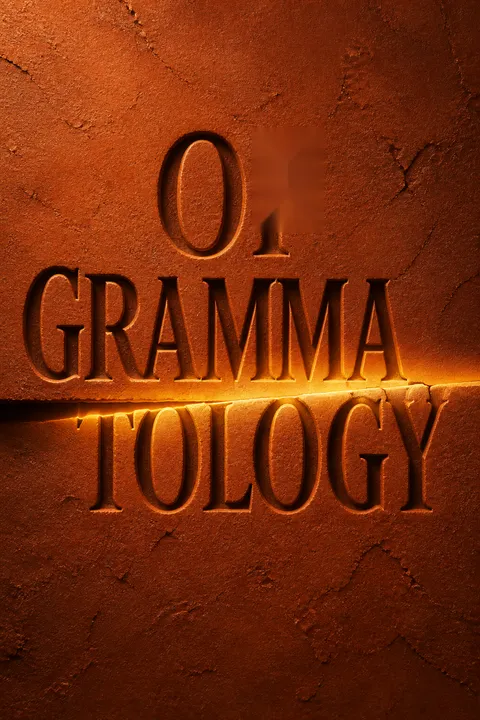
Of Grammatology is difficult to summarize because it does not offer a single doctrine and then illustrate it. It performs its method through readings of Saussure, Rousseau, Lévi-Strauss, and others. Its central claim is easily misstated: Derrida is not arguing that alphabetic writing historically came before speech, or that writing should simply replace speech at the top of a hierarchy. He argues that both depend on repeatability, spacing, and difference, so speech cannot serve as an untouched foundation for meaning.
The book is strongest when it turns an author's own distinctions against their apparent self-sufficiency. Saussure's dismissal of writing sits uneasily beside his reliance on written analogies; Rousseau condemns supplements while describing the ways nature, speech, and education require them. The Nambikwara episode makes the argument vivid by showing that writing can function as authority without mastery of alphabetic literacy. Together, these readings offer a practical discipline: identify a hierarchy, locate what it excludes, and test whether the argument secretly depends on that excluded element.
The ambition also creates risks. Claims about a unified Western logocentrism can flatten differences among philosophical traditions, and an ethnographic episode cannot bear the weight of a universal account of writing by itself. The concept of differance can also become too elastic if every contradiction is treated as confirmation. A careful reader should therefore distinguish a structural argument from a historical claim and ask what evidence supports each. Derrida's account is most useful not as a substitute for empirical history, but as a way to expose the assumptions that organize historical and scientific descriptions.
The book remains relevant because contemporary institutions rely on records, categories, databases, and code that shape social reality while presenting themselves as neutral tools. Derrida's question persists: what must a system exclude in order to appear complete, and how does that excluded element continue to operate within it? His answer is not that knowledge is impossible. It is that knowledge becomes more responsible when it examines the forms through which it speaks.
Review Summary
Reviews of Of Grammatology are sharply divided. Many praise it as a foundational, transformative work that introduced deconstruction and reshaped Western philosophy, literary theory, and cultural criticism. Admirers acknowledge its difficulty but argue the struggle yields profound rewards. Critics, however, find the prose needlessly impenetrable, dismissing it as pretentious or hollow. Several reviewers note that Derrida's concepts—différance, logocentrism, and the supplement—become clearer with patience and supplementary reading. The book's influence on postmodern thought is largely undisputed, even among detractors.
People Also Read








Glossary
arche-writing
General structure of inscriptionDerrida's name for the conditions that make signification possible before writing is understood as alphabetic marks on a page. It includes spacing, difference, repeatability, and the possibility that a sign works when its speaker or referent is absent. It does not claim that script historically preceded spoken language.
differance
Differing and deferringDerrida's term, spelled with an a, for the movement through which signs acquire differences and meaning remains deferred across relations among signs. It is not a hidden substance or a final explanation. The spelling marks a difference visible in writing but not audible in speech, emphasizing language's dependence on inscription and spacing.
trace
Mark of absent relationThe trace names the mark through which something becomes legible without appearing as a complete, self-present origin. A sign carries relations to other signs and to what is absent, so reference is possible but never a simple return to an untouched beginning. The trace is a condition of meaning, not merely a footprint left by a fully present thing.
logocentrism
Meaning grounded in presenceThe tradition Derrida identifies in which truth and meaning are grounded in an authoritative logos, such as reason, divine speech, or a fully present subject. Logocentrism treats signs as secondary vehicles for a meaning that exists independently. Derrida examines how this ideal depends on the very systems of difference and inscription it subordinates.
phonocentrism
Privilege granted to speechThe preference for spoken language over writing because the voice seems to give immediate access to a speaker's thought. In Derrida's account, this preference supports the belief that meaning is fully present in speech and only secondarily represented in writing. He challenges the hierarchy without simply reversing it.
supplement
Addition that replacesA supplement both adds to something that seems complete and takes the place of something missing. Rousseau's examples include writing as an addition to speech and education as an aid to nature. Derrida emphasizes that the supplement's necessity reveals that the supposed original was never entirely self-sufficient.
deconstruction
Reading a structure from withinA practice of close reading that identifies how a text relies on distinctions it also tries to control or exclude. It works within a text's vocabulary and arguments rather than attacking them from an imagined position outside. By tracing internal tensions, it shows how the text's claim to stable meaning is limited.
grammatology
Study of writing in generalDerrida's proposed name for an inquiry into writing understood more broadly than alphabetic script. It studies the conditions of inscription that also make speech, signs, and scientific objects possible. Because these conditions are involved in the production of knowledge, grammatology cannot simply present itself as a neutral science standing outside its subject.
mythogram
Multidimensional symbolic writingA term used in the book for a symbolic structure that is not organized as a single linear sequence. Drawing on Leroi-Gourhan, Derrida contrasts such forms with the phonetic line of alphabetic writing. The concept helps show that meaning can be organized through spatial relations and multiple dimensions, not only through ordered speech sounds.
metaphysics of presence
Priority of present beingThe philosophical tendency to treat being, truth, or meaning as most reliable when fully present to a subject. Derrida connects this tendency to the privileging of speech, consciousness, and origins that seem self-identical. His analysis asks how these forms of presence depend on differences, absences, and representations that they cannot fully control.
Download PDF
Download EPUB
.epub digital book format is ideal for reading ebooks on phones, tablets, and e-readers.








