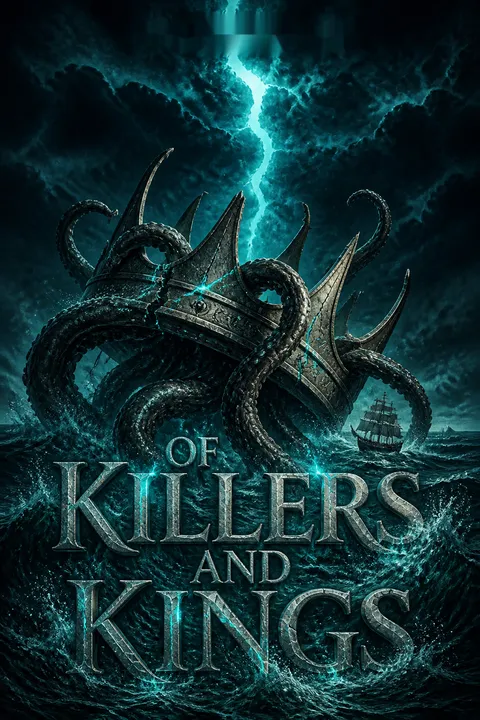


Plot Summary
Prologue
Before dawn, Karson and twenty patriots ambush Calder Marten, the young Steward they believe is a false Emperor. Karson’s family died in the riots after the true Emperor’s death, and a voice of hatred has turned his grief into certainty that Calder must die.
The attack kills guards and patriots alike, but Calder survives Karson’s musket and breaks the young man’s sword. Reading the shadow that has fed Karson’s rage, Calder discovers an Elder parasite in his mind and burns it away. He orders the survivors imprisoned rather than executed. Karson leaves furious, but the voice that made his hatred feel righteous is gone.
The ambush gives the political conflict a human face before the larger cosmic threat takes over. Karson is not simply a fanatic: grief has made him vulnerable to a voice that converts personal loss into a total explanation of history. Calder’s choice to spare him distinguishes authority from revenge, but the imprisonment still carries a cost, especially when Calder sends the survivors to a prison whose reopening pains him. The scene also establishes that Elder influence can operate inside a person’s thoughts, making certainty itself dangerous. Calder’s mercy is real, but it does not make the system he commands harmless.
A Crown From Afar
Calder watches his coronation from across the Capital, hidden because Imperialists fear assassins and Elder cultists. As Steward, he has a title but little command: the Guild Heads debate negotiations with the Independent faction as if he were only their public emblem.
Calder presses for talks because the black tear in the sky demands human cooperation. A meeting with his imprisoned wife, Jerri, brings a more intimate crisis. Jerri admits that she has secretly learned from the Sleepless, who study Elders rather than worship them, and says Kelarac urged her to use the Emperor’s throne to speak with the Great Ones.
She also warns that Shera, the new Consultant Guild Head, is identified in prophecies as the Killer. Calder leaves with affection still alive beneath his anger, but no settled trust.
Calder’s coronation stages the difference between symbolic authority and effective power. His double receives the crown while the real Steward is kept safe, and the Guild Heads conduct policy around him. The private meeting with Jerri repeats this split at the level of marriage: affection survives, but shared knowledge has not. Jerri’s account complicates the easy division between scholarship and cultism, since her claims are persuasive precisely because Calder has already dealt with Elders himself. The danger is not simply contact with alien beings. It is the confidence that one can control the terms of contact while withholding the truth from those who must bear its consequences.
Petal Keeps the Secret
Four years earlier, Petal slips into an alchemy lecture because her former master has blocked her from official study. A demonstration about extracting Champion strength from blood sends her imagining treatments that might permanently alter the body.
On her way back to the ship, she finds Jerri surrounded by men beside an alley that seems to open into a cave. Petal panics, then acts: she blinds two men with an irritant and knocks them unconscious with a sedative. Jerri reappears unharmed and explains that the passage came from Elder knowledge.
She tells Petal that their bond makes them family and asks her not to tell Calder. Petal recognizes the risk, but remembers how often she has had to steal access to alchemical learning herself. She promises silence.
Petal’s discovery links two forms of illicit learning. She trespasses into a lecture because institutions have excluded her, while Jerri crosses into Elder practice because she believes conventional knowledge is insufficient. Petal’s promise is compassionate, not naïve: she understands the motive behind Jerri’s secrecy and recognizes her own hunger for forbidden expertise in it. Yet the scene shows how solidarity can become complicity. Petal helps preserve a secret without knowing what it will cost Calder or the crew. Her improvised defense also marks her as more capable than her timidity suggests. Fear governs her first response, but it does not prevent her from choosing action.
The Missing Crown
Three years earlier, Navigator Guild Head Cheska Bennett assigns Calder to find the Emperor’s missing gold crown. Captain Tommison’s ship, The Reliable, was carrying it when a roaming island seized the vessel.
Other Guilds and Elder interests are already moving toward the relic, so Calder takes The Testament with Urzaia, Andel, and Jerri, while Petal stays aboard and Foster mans the guns. Jerri receives a separate order from the Sleepless to bring the crown to their hidden leaders, though she believes it should ultimately serve a different purpose.
On the island, Calder finds The Reliable trapped among ordinary vines, evidence that someone engineered the island to capture it. Inside, the crew is gone, their belongings abandoned, and the ship’s safe empty. A watchtower inland offers their only lead.
The crown begins as a transport problem and quickly becomes a contest over who may claim the Empire’s authority. Calder sees a chance to recover a relic, reduce his debt, and perhaps fulfill the prophecy he fears. Jerri sees the same object through the Sleepless’ strategic ambitions, but keeps her purpose from the person who is leading the expedition. Her divided loyalty is not yet an open attack; it is a private conviction that she can direct events toward a better outcome. The island’s artificial appearance also prepares the larger story’s central uncertainty: whether danger is a natural force, a deliberate design, or both.
The Crown Beneath Chains
At the tower, Calder finds Tommison and two surviving crew members, Lakiri and Goss. Jerri discovers Tommison has been trying to send the crown to the Sleepless, then ignites stored explosives to destroy the route and remove him. The blast kills Tommison and eliminates The Reliable as an escape option.
At dawn, Calder leads the survivors through a jungle crawling with Othaghor’s Slithers. The creatures swarm them, and a huge frog-like Elder swallows Andel and the crown. Urzaia tears after it while Calder bargains with the Lyathatan beneath The Testament, promising sharks in exchange for protection.
Urzaia kills the creature’s pursuit, retrieves Andel alive, and recovers the locked crown. Lakiri and Goss die from the attack and its poison; Calder hides the crown in the Lyathatan’s chains and reports it lost.
The island forces every character’s private intention into the open, even when others cannot see it. Jerri destroys Tommison’s plan, but her chosen method also removes a witness and strands the crew. Calder’s command decisions, by contrast, become a sequence of imperfect rescues: he saves some people, loses others, and survives through bargains that bind him more tightly to Elder power. Urzaia’s rescue of Andel turns the expedition away from total disaster, while the crown’s concealment lets Calder keep a path open to his own ambitions. The episode makes survival morally complicated: the crew returns alive, but its account of what happened is deliberately false.
Peace Breaks at Rose Tower
In the present, the Imperialists and Independents meet to negotiate a truce while the Great Elders’ tear still hangs over the world. Both sides store their weapons and Soulbound Vessels under Witness supervision. Calder wears the Emperor’s gold crown to assert his claim, then asks the factions to cooperate against the Elders.
The meeting turns when Estyr Six notices the burned handprint Kelarac left on Calder. She identifies it as a mark of ownership and declares him the Great Elder’s servant. Teach and Kern defend Calder, but Estyr attacks before they can convince her.
Her blows smash through the tower, and the negotiations collapse into open combat. Calder escapes the upper room while the two Guild Heads remain to face a Regent whose power has been deliberately restrained only by the treaty’s fragile rules.
The meeting fails because its participants cannot agree on what evidence means. Calder treats his mark as the trace of a dangerous bargain he has survived; Estyr reads it as proof that he belongs to Kelarac. Both interpretations have grounds, but the setting offers no process capable of testing them without violence. Disarming before talks is meant to signal trust, yet it also makes the first attack catastrophic. Calder’s crown helps him claim authority, but it cannot substitute for mutual confidence. The episode therefore turns political symbolism into physical vulnerability: the participants have built a ceremony of peace without a shared account of the danger they face.
The Crown Commands Retreat
Calder reaches the Rose Tower’s storage room and orders the guardians to release the sealed Vessels, but Champion Twelve refuses without approval from the Witnesses. Kern crashes through the floor, defeats her, and retrieves his helmet and maces. He sends Calder to clear the area, then launches himself into the fight above.
Calder uses the Emperor’s crown to make both armies retreat from the tower, though his broad command also sends some allies scrambling away. He reaches Bliss, whose unstable Spear of Tharlos is reacting to the battle, just as Estyr regains her three skull Vessels and subdues Teach and Kern outside.
Calder uses the crown’s authority to stop Estyr briefly, giving Kern time to strike her. Jorin arrives with a corrupting sword; Teach blocks his attack and appears to die. Estyr’s body disappears, while Kern later dies of his wounds.
Calder’s first effective use of royal authority is neither clean nor comprehensive. The crown makes commands feel real, but it cannot distinguish the obedience he wants from the panic his words produce. He learns to treat power as a responsibility requiring precision, not merely intensity. Kern and Teach embody the cost of that lesson: their loyalty gives Calder a chance to act, but exposes them to forces his title cannot control. Jorin’s sudden arrival further destabilizes any simple account of the fight, since a supposed ally attacks the Steward. Victory becomes impossible to measure by who stands last. The immediate consequence is a factional vacuum, not peace.
The Prison Has a Warden
After the battle, Calder finds Teach gravely injured and sees the remaining Champions and Guild Heads recoil from the Empire’s collapse. The Optasia, the Emperor’s world-spanning Reading device, is too dangerous for Calder to approach alone; its Intent floods him with horror.
Bliss later helps him enter it behind Elder wards. He finds Shera and other leaders preparing moves in Rainworth, then looks through the tear in the sky and encounters Ozriel, an armored being beyond the world. Ozriel explains that the Great Elders are prisoners seeking escape into another world, where they could spread, and that he will erase this world if they succeed.
Calder learns that weakening the Elders’ power could let the sky heal, but Ozriel cannot intervene directly without worsening the breach. Calder sends sealed warnings to the leaders, believing they will act on them.
The revelation changes the scale of Calder’s task without making his political problems irrelevant. He must stop the Elders, but he must also prevent the being assigned to contain them from destroying everyone preemptively. Ozriel’s explanation resists a comforting division between protector and threat: his purpose may save other worlds, yet his method would erase this one. Calder receives knowledge that could guide the whole Empire, but the Optasia makes knowledge physically dangerous and politically difficult to transmit. The scene recasts Reading as exposure rather than mastery. To perceive the larger system is to become visible to forces that can act on the observer.
The Messages Never Arrive
Calder’s warnings fail to reach the Regents and Independent Guilds. Governors answer his calls for stronger Elder defenses with requests for authority and resources, while a Bareius agent burns one message and other couriers vanish. The official Witness report also threatens to undermine Calder’s legitimacy by recording Estyr’s accusation.
As Consultants kill Champions Trip and Oleana, then disappear Interion, Calder concludes that the Gardeners are weakening his defenses before targeting him. He asks Rosephus and Tyria, the two Champions still beside him, to act as his hook when he publicly offers himself as bait.
Before the address, he visits Rojric Little, a magically disguised double with his face, and prepares a security trap for the expected attackers. Their plan depends on catching the assassins inside the Emperor’s Stage rather than letting them vanish into the city.
Calder’s isolation is produced by ordinary mechanisms as much as supernatural ones. Messages are intercepted, public records shape reputation, and assassins exploit the protective routines meant to keep a ruler safe. Each institution acts on incomplete information, leaving Calder with the appearance of authority but little ability to coordinate it. His decision to become bait is therefore both strategic and psychologically revealing: he would rather risk his own life than remain a ceremonial figure while others die around him. Yet the plan also repeats his central weakness. He assumes that anticipating an enemy’s move is close to controlling it, a confidence the Gardeners are about to punish.
The Double Takes the Knife
During Calder’s public address, the Consultants enter the Emperor’s Stage and his Awakened lock seals the building. He expects Shera to face the Champions, but the mist of Bastion’s Veil disorients the Guards and separates them. Shera reaches Rojric first and kills him, then finds Calder.
The Emperor’s armor deflects her initial attack, but her dagger pierces it from behind and drains his strength. She leaves him apparently dead as the fighting continues. The armor keeps his body alive long enough for Tyria to carry him away, while Petal notices a faint breath and refuses to accept the death verdict.
Foster’s history makes the rescue possible: years earlier, a gang forced him to build a gun, and he Awakened it as Oath to Eternity, a weapon shaped by his vow to punish those who abused his family. Now he joins Petal and Andel to save Calder.
The failed assassination trap reverses Calder’s intended staging. He wants the public address to make him visible and therefore protect the Empire’s claim to legitimacy; instead, visibility makes him easier to locate. Rojric’s death exposes the human cost of using a double as a shield, even when the double knowingly accepts the risk. Calder’s survival then depends on relationships he has treated as temporary or secondary. Petal’s attention, Foster’s weapon, and Andel’s willingness to return become more decisive than palace security. Foster’s backstory gives the rescue a moral inheritance: an object forged under coercion can be redirected toward protection, though its violent purpose remains embedded in it.
A Body Rebuilt by Friends
Calder’s friends discover that the Emperor’s armor is preserving his life, but removing it would leave his wounded body too weak to survive. Petal adapts her research on Champion blood into a permanent strengthening treatment, while Foster pushes the alchemists to use it despite the danger.
Andel combines the healing power of his own White Sun medallion with a second Beacon, accepting the risks of becoming Soulbound and estranged from the Luminian Order. The armor comes off only after the elixir has strengthened Calder enough to endure the surgery and healing.
He wakes with greatly increased strength and a lifelong need for medicines that prevent his altered body from failing. While he recovers, Jerri, still imprisoned, summons Kelarac. The Great Elder gives her the restored Heart of Nakothi and orders her to awaken Urg’naut, warning that the Creeping Shadow may not be controllable.
Calder’s return is a collective achievement, not a reward for his title or a miracle of the crown. Petal’s research, Foster’s practical judgment, and Andel’s costly change each address a different limit in the body keeping Calder alive. The rescue also makes his survival morally indebted: he owes his continued life to people who choose risk without expecting political power in return. Jerri’s parallel decision darkens that hope. Her willingness to serve Kelarac grows from a belief that humanity needs Elder knowledge, but the mission she accepts releases the very danger she hopes to manage. Both groups act out of care for the world, with radically different estimates of what it can survive.
Urg’naut Breaks the Sky
Calder returns to the Capital disguised in a crate and learns that Jorin has taken control. He reaches a damaged Optasia statue with his crew, hoping to use it to strengthen defenses and recover leverage. As darkness spreads across the horizon, he hesitates, then directs the statue’s power through Hightower’s White Sun and the city’s old protective charms.
The light helps Jorin fight Urg’naut, but the Elder takes human form and attacks with power that erases streets, buildings, and sea. Calder resists the blow by drawing on the Emperor’s Intent in his armor, yet Urg’naut destroys the statue and shatters the sky.
Calder loses himself in the Elder’s darkness until the Emperor’s stored Intent steadies his mind. He then holds back another wave of annihilation long enough to survive, but cannot stop the Great Elder from escaping into the void.
Calder’s decision to use the damaged Optasia is a gamble made after his earlier experience taught him exactly how dangerous it is. His intervention saves lives in the Capital, but the partial success cannot be mistaken for control: Urg’naut still reaches human form, erases part of the city, and escapes. The Emperor’s Intent functions as both shield and inheritance, preserving Calder’s identity when his own perceptions collapse. Yet it does not grant him the Emperor’s accumulated strength. Calder survives by borrowing conviction, not by becoming invulnerable. The broken sky makes the limit of personal courage unmistakable: one person can delay catastrophe, but cannot resolve a world-scale crisis alone.
The Crew Reclaims Its Captain
As Urg’naut withdraws toward the broken sky, the Lyathatan tries to abandon The Testament and return to the sea. Calder leaps onto the Elder and uses its binding chains to remind it that their contract still holds, forcing it to carry him rather than escape.
He then reaches Loreli, the Luminian Regent, and brings her back toward the Capital. Loreli clears the corrupting power from Teach, whose Kameira heart has transformed her, and Calder helps her regain her identity. In the throne room, the surviving Guild leaders gather with Jorin and Loreli.
Shera and Estyr return, forcing Calder to face the woman who killed him and the Regent who nearly did. Loreli vouches that Calder is himself, not Kelarac’s puppet. The leaders agree to confront Kelarac at sea, where the battle will do less damage to the Capital.
Calder’s authority becomes credible through acts of reciprocal dependence. He cannot order the Lyathatan as though it were a ship, so he must invoke a bargain and accept that the creature has interests of its own. He cannot simply command Teach back to life; he must reach the person beneath her altered instincts. Loreli’s testimony similarly restores Calder to public action without erasing the evidence that makes others distrust him. The coalition is pragmatic rather than reconciled. Shera and Estyr remain dangerous, and old injuries remain present, but the leaders recognize that refusing cooperation would hand the Elders an easier victory.
Jerri Chooses the Host
The combined fleet sails to meet Kelarac, with Calder aboard The Testament and his crew refusing to leave him. Jerri arrives amid Kthanikahr’s worms and urges Calder to let Kelarac share his body, arguing that the Great Elder can help defeat the Outsider threatening their world.
Calder rejects the bargain. When Jerri attacks, he fights through the worms and wounds her, believing he is stopping his wife from surrendering humanity to the Elders. He knocks her over the rail into the Aion Sea.
Kelarac rises moments later in Jerri’s body, healed and wearing the steel blindfold that marks his possession. The Great Elder’s transformation removes Calder’s last possibility of giving himself up to stop Kelarac, while revealing that Jerri’s final choice has delivered the enemy a human host.
The confrontation compresses the marriage’s unresolved conflict into physical action. Jerri sees accommodation as a survival strategy; Calder sees it as surrendering the authority humans must retain over their own future. Neither argument is abstract to them. Each is shaped by years of secrecy, failed trust, and a real threat from beyond the world. Calder’s violence is therefore both resistance and tragedy: he prevents Jerri from persuading him, but does so by attacking the person whose motives he still cannot fully separate from his memories of love. Kelarac’s appearance turns the scene’s uncertainty into a fresh emergency rather than a settled moral victory.
The Sky Seals Shut
Kelarac battles the Regents through bronze copies of their own Vessels while attacking Calder’s crew. Petal traps him in expanding gel, Andel’s Beacon weakens him, Foster fires Oath to Eternity, and the Lyathatan strikes, but Kelarac survives each assault and burns Foster overboard.
Calder wrestles him in Jerri’s body until Shera emerges from Bastion’s Veil and drives her emerald dagger into Kelarac. The Elder’s power ruptures, but Nakothi’s dead force advances, and Calder takes The Testament to Candle Bay.
There he enters the Optasia wearing the gold crown and meets the Emperor’s preserved Intent. They combine their Reading, locate the Elders’ power sustaining the rifts, and sever it through the world’s network of statues. The sky closes. Calder collapses into a coma, leaving the survivors uncertain whether he will wake.
The climax refuses a solitary-hero solution. Shera delivers the decisive wound, but the opening made it possible for Calder to use the Optasia, and the network of human investment supplies the scale needed to repair the sky. The Emperor’s echo matters not because it replaces Calder, but because the two minds can correct each other’s weaknesses: the older ruler lends resolve, while Calder’s humility makes their combined power serve a shared purpose rather than one person’s permanence. The world is saved through cooperation among imperfect actors, including former enemies. Calder’s coma preserves the cost of the repair. The sky can be restored without promising that the people who saved it emerge unchanged.
Epilogue
One year later, the Empire has become the Aurelian Alliance, a loose agreement among Guilds and regional governors already struggling over power. Foster, now using a wooden leg, entertains dockside children with embellished versions of the battle.
He, Andel, and Petal have refused new Guild positions and bought a modest ship called The Woodsman. Calder remains unconscious. Bliss continues visiting, convinced that he may wake, while Shuffles escapes its cage and tries the word it has heard the humans hope for. Calder’s fingers twitch. The book ends on a small movement, not a certainty.
The epilogue declines a clean political or personal restoration. The Empire that Calder tried to preserve is gone, replaced by an alliance whose cooperation is already fragile. His companions make a quieter choice of their own: rather than return to the institutions that failed them, they build a life at sea together. Foster’s comic storytelling converts trauma into public memory, though the wooden leg keeps its cost visible. Shuffles’ attempt to wake Calder offers hope without turning it into fact. The ending’s scale contracts from the fate of worlds to one finger moving, suggesting that survival is meaningful even when recovery remains unresolved.
Analysis
The novel’s deepest conflict is over who has the right to decide what survival requires. Calder wants a mortal government that can be corrected by living people, while the Regents rely on ancient power and the Elders offer knowledge or prosperity in exchange for forms of submission. Ozriel adds a final, chilling alternative: preserve the wider order by erasing the threatened world. None of these positions is morally effortless. Even Jerri’s willingness to cooperate with the Elders begins in a desire to make human suffering meaningful, while Calder’s resistance risks becoming the same paternal certainty he criticizes in the old Emperor.
The story repeatedly tests authority through relationships. Calder’s title fails him when the Guild Heads ignore him, but his crew’s loyalty persists without institutional reward. Petal’s scientific improvisation, Foster’s painful craft, and Andel’s chosen commitment save Calder because they trust one another’s judgment, not because a ruler commands them. The contrast between the Emperor’s relics and this crew is especially sharp: the relics preserve the will of a powerful individual, while the crew distributes responsibility across people who can challenge one another.
Reading makes that theme concrete. Objects remember how people use them, so intention can outlast the person who formed it. Yet inherited will is not the same as wisdom. Calder must borrow the Emperor’s resolve without surrendering his own judgment, and the two can repair the sky only when they act together. The novel’s resolution therefore favors neither isolated heroism nor unquestioned tradition. It imagines survival as a cooperative practice: imperfect people share risk, revise their plans, and refuse to let either fear or promised reward make their choices for them.
People Also Read
Characters
Calder Marten
Reluctant mortal stewardA former Navigator Captain elevated to Imperial Steward, Calder wants government to serve ordinary people rather than preserve the Emperor’s personal supremacy. He is quick-witted, curious, and capable of decisive courage, but his confidence often outruns his authority. He relies on Reading, bargains, and carefully improvised plans, yet can mistake preparation for control. His crew keeps him connected to practical consequences, while his complicated marriage to Jerri tests whether intimacy can survive concealed convictions. Calder’s central psychological struggle is not simply whether he can rule, but whether he can exercise power without becoming the isolated figure he resents.
Jerri Tessella
Conviction behind a veilCalder’s wife is warm, adventurous, and more politically committed than her modest role on The Testament first suggests. She believes humanity can learn from the Great Elders and that knowledge might allow a negotiated future rather than inevitable destruction. Her loyalty to Calder is genuine, but she often treats honesty as a luxury she can postpone until her plans succeed. This makes her persuasive and dangerous in equal measure. Jerri’s deepest motive is to give meaning to the sacrifices made by her father and herself. She wants a world transformed by what she has learned, even when that ambition places her closest relationships under strain.
Petal
Nervous alchemical innovatorPetal is an exceptionally inventive alchemist whose shyness and social anxiety conceal a stubborn appetite for learning. When formal institutions refuse her access, she finds lectures, texts, and teachers by unconventional means. Her work draws on observation and experimentation rather than status, which allows her to imagine treatments other alchemists dismiss. She is easily frightened by confrontation, yet repeatedly acts when someone she loves is in danger. Petal’s bond with Calder’s crew gives her a chosen family, while her tendency to retreat into research lets her contribute without needing to dominate a room.
Dalton Foster
Gunsmith with a grudgeThe Testament’s gruff gunner is a master craftsman, a Soulbound whose floating tools help him build and repair weapons. Foster distrusts sentimentality and refuses to flatter Calder, but his bluntness is a form of care: he tells the Captain what authority and confidence cannot. His past as a celebrated gunsmith is shadowed by estrangement from his family and by the violence that forced him to make a weapon. He carries both pride in his craft and regret about what he valued too late. On the ship, practical loyalty matters more to him than titles.
Andel Petronus
Steady shipboard conscienceCalder’s quartermaster and former Luminian Pilgrim is observant, orderly, and quietly funny. Andel manages the ship’s practical needs while serving as a moral counterweight to the Captain’s impulses. He rarely raises his voice, but his restraint is not passivity; he will challenge Calder when a plan endangers the crew or ignores their counsel. His faith is expressed through care, service, and attention to what people need rather than through institutional allegiance alone. Andel’s calm presence helps the crew remain a community even when the world beyond the deck becomes incomprehensible.
Bliss
Unsettling Blackwatch leaderThe Head of the Blackwatch is a Soulbound whose Spear of Tharlos grants her a power that can alter matter and location. Bliss is brilliant, socially eccentric, and often literal, with a scientific fascination that can make other people feel like specimens. Beneath that unsettling manner is a disciplined commitment to studying Elders so humanity can resist them. She trusts Calder more than she trusts most people, though her concern rarely appears in conventional forms. Her childhood in an alchemical facility has left her wary of anyone who assumes authority over her identity or body.
Shera
Consultant assassin and strategistShera is a feared Gardener who becomes Head of the Consultants, skilled at concealment, precise violence, and reading the practical shape of a conflict. She is reserved and guarded, preferring action to declarations of trust. Her history with Calder is marked by repeated clashes, and she regards sentiment as a poor substitute for evidence. Yet her work is not driven by cruelty for its own sake. Shera makes hard choices in service of survival and the obligations of her Guild, while remaining alert to the possibility that an enemy may become a necessary ally.
Jarelys Teach
The Emperor’s iron guardianTeach leads the Imperial Guard and carries Tyrfang, an Awakened executioner’s sword. She is disciplined, blunt, and intensely devoted to protecting the Empire, often treating personal feeling as a distraction from duty. Her Kameira-enhanced body makes her formidable, but her loyalty is not merely obedience: she has a fierce conception of what the Empire ought to protect. Her relationship with Calder begins in suspicion and command, since she considers his safety her responsibility even when he resists her decisions. Under pressure, her hard exterior reveals a capacity for sacrifice and attachment.
Baldezar Kern
Gentle Champion powerhouseThe Head of the Champion’s Guild is enormous, stoic, and difficult to intimidate, but his private life shows a tender patience with his young children. Kern judges leaders through their decisions rather than their titles, and he offers Calder practical respect without pretending the Steward already commands the Guild. His armor and Vessels turn him into a devastating fighter, yet his ordinary habits remain visible in his care for family and his unshowy manner. Kern represents strength disciplined by responsibility, a contrast to the more absolute authority associated with the Regents and the old Emperor.
Cheska Bennett
Irreverent Navigator chiefCheska heads the Navigators and captains The Eternal, a flame-trailing ship. She is irreverent, disorganized in appearance, and adept at reading people beneath their formal roles. Her humor can make serious matters seem lighter, but she carries the burdens of a Guild stretched thin by political upheaval. Cheska values her people and the freedom of the sea, while her practical instincts make her an important broker between factions. She recognizes Calder’s potential before he fully trusts himself, though she does not confuse affection or loyalty with unquestioning agreement.
Urzaia Woodsman
Fearless Champion cookUrzaia is a Champion who serves as The Testament’s cook, bringing immense strength, an easy laugh, and a generous appetite to the crew. He approaches danger with the directness of someone who trusts his abilities, but he is not careless about the people around him. His affection for Jerri and loyalty to Calder give warmth to the ship’s rough life. Urzaia’s combination of domestic skill and battlefield power makes him a reminder that a person need not choose between gentleness and force.
Jorin Curse-breaker
Pragmatic Regent rebelJorin is one of the ancient Regents and a formidable fighter whose sword carries the power of death and corruption. He distrusts Calder’s claim to rule and often acts in ways the Steward finds obstructive. Yet Jorin’s skepticism is grounded in responsibility for the Empire’s survival, not in a simple hunger for power. He is strategic, dryly humorous, and willing to take the field himself when threats become immediate. His presence forces Calder to confront the difference between being opposed and being betrayed.
Loreli
Luminian master strategistLoreli is a Regent and founder of the Luminian Order, known for strategic patience and a calming presence. She regards protection as both a physical task and a moral responsibility, and her Beacon embodies the Order’s commitment to healing and warding off Elder influence. Loreli is careful in her judgments, particularly when others are quick to treat suspicion as proof. She can recognize the limits of force and the value of restoring an injured ally, even while the wider crisis makes every delay costly.
Estyr Six
Ancient unmatched RegentEstyr is a legendary Soulbound Regent, a peer of the first Emperor and one of the strongest fighters in the Empire. Her three orbiting skull Vessels advertise a power that needs little explanation. She is direct, confident, and impatient with political performance, having known the old Emperor personally. Estyr’s instincts lean toward decisive action when she sees a threat, even when that certainty leaves little room for others to explain themselves. Her authority rests on both experience and overwhelming ability, making disagreement with her physically dangerous.
Nathanael Bareius
Alchemist and ruthless financierBareius is the wealthy Head of the Alchemist’s Guild, an elegant businessman who treats alliances as negotiations and rarely lets discomfort disturb his polished manner. His fortune comes from expanding alchemy’s reach across the Empire, and he understands the power of institutions, information, and public opinion. Beneath his smooth presentation is a willingness to treat people as investments. His history with Bliss gives their encounters a particularly personal tension, while his dealings with other Guilds show how commerce can shape political decisions as forcefully as weapons.
Kelarac
Collector of human bargainsKelarac is a Great Elder associated with collection, possession, and bargains. He communicates through a steel blindfold fixed over his face and approaches humans as beings with whom one can negotiate, though his conception of a person is far from human. He honors agreements in a literal and unsettling way, which makes him more tempting than an openly destructive enemy. Calder has dealt with him repeatedly, creating a dangerous familiarity between them. Kelarac’s offers appeal to genuine human needs, including security, prosperity, and recognition, while concealing the scale of what he intends to own.
Urg’naut
The Creeping ShadowUrg’naut is a Great Elder whose presence embodies darkness, absence, and annihilation. Even at a distance, his Intent can overwhelm a Reader’s senses and turn perception into despair. Unlike a conventional opponent, he threatens not only people but the conditions that allow the world to exist. His influence can work through shadows and through those whose grief or hunger for vengeance leaves them vulnerable. Urg’naut’s nature gives the story’s smallest acts of resistance unusual weight, because preserving light, memory, and human choice becomes a direct refusal of his power.
Ozriel
Warden beyond the skyOzriel is an enigmatic armored being Calder encounters through the Optasia. He explains the larger danger posed by the Great Elders and the limits on his own intervention. His humor and casual manner coexist with an absolute willingness to destroy a world if he believes the alternative threatens others. Ozriel is therefore neither a simple savior nor a conventional villain. He represents a scale of responsibility so vast that individual lives risk becoming abstractions, a perspective Calder must understand without accepting as the only possible moral answer.
The Emperor
Absent ruler’s living legacyThe former Emperor ruled for centuries and left his Intent embedded in armor, crown, and the Optasia. He is remembered as the founder who protected humanity from the Elders, but his authority also trained him to believe that no one else could be trusted with the Empire. His presence persists as an echo rather than a conventional character, offering Calder access to knowledge, confidence, and accumulated memory. The Emperor’s legacy is therefore both a defense and a temptation: Calder can borrow his strength, but risks inheriting the isolation and arrogance that accompanied it.
Shuffles
Bellowing Elder companionShuffles is a small, strange Elderspawn with leathery wings, tentacles, and a voice far louder than its body suggests. The creature attaches itself to Calder’s crew and behaves like a pet with its own emphatic opinions. Shuffles is comic without being merely decorative: its presence makes the boundary between human companions and Elder beings less tidy than the Guilds would prefer. Its loyalty is expressed through proximity, noise, and an instinctive sense of danger.
Karson
Grief turned into a weaponKarson is a young patriot whose family died in the riots after the Emperor’s death. He enters the story convinced that Calder’s rule will betray the Empire, but the certainty driving him has been strengthened by an influence he does not recognize. His anger is sincere, rooted in personal loss, and therefore easy for others to exploit. Karson shows how political violence can begin not with abstract ideology but with grief given a target.
Rojric Little
Magically disguised doubleRojric is a performer whose inherited disguise lets him convincingly appear as Calder. He approaches the dangerous assignment with professionalism and courage, aware that a double must absorb risks meant for the person he imitates. His resemblance to Calder carries an eerie family resonance, but Rojric treats the work as a role he can choose to accept rather than an identity imposed on him.
Plot Devices
Intent and Reading
Will made visibleEvery deliberate use of an object leaves Intent in it, and Readers can sense the purpose, history, and emotional force that have accumulated. Skilled Readers can also direct Intent, strengthen an object, or Awaken its latent function. This system gives ordinary things narrative weight: a crown can carry authority, a chain can enforce a bargain, and a handmade weapon can inherit its maker’s anger. Reading is not neutral observation, however. The Emperor’s relics can overwhelm a weaker mind, while direct contact with an Elder’s Intent can distort identity or destroy the ability to perceive ordinary reality. The device makes power intimate, but never free of psychological cost.
The Emperor’s relics
Authority with a willThe gold crown represents the Emperor’s public authority and can reinforce commands, while his armor was invested to protect and preserve its wearer. Both objects contain layers of the Emperor’s Intent and memories. Calder uses the crown to make people obey during the Palace battle, and the armor keeps his wounded body alive long enough for his friends to attempt a rescue. The relics are more than equipment: they carry the habits of a ruler who believed his will should govern the Empire. Their protective power makes survival possible, but their accumulated personality can press into Calder’s thoughts and threaten to shape the person who wears them.
The Optasia
A world-spanning lensThe Optasia is a Reading device built into a steel framework in the Emperor’s chambers and linked to invested statues across the world. It magnifies a Reader’s awareness far beyond ordinary limits, allowing information to be gathered from places and objects across the Empire. The same reach can expose the user to the Great Elders and flood the mind with more Intent than it can safely contain. Calder first uses it to learn what waits beyond the sky, later channels its power through protective objects, and finally relies on its network to alter the forces maintaining the rifts. The device turns knowledge into both the means of action and a severe physical risk.
Soulbound Vessels
Human bodies channel Elder powerA Soulbound is linked to an Awakened object infused with the Intent of an Elder or Kameira. The Vessel grants a human access to a supernatural ability, but its power can influence the bearer and may transform the person over time. Teach’s sword carries lethal force, Bliss’s spear changes matter and location, and the Regents’ Vessels define their distinctive powers. Vessels can be confiscated, damaged, or used as leverage, making them central to both political security and personal identity. Their existence reflects the Empire’s uneasy strategy of turning inhuman forces into tools, a practice that can protect humanity while binding it more closely to what it fears.
Elder bargains and prophecies
Promises steer the crisisThe Great Elders make agreements with humans, while surviving prophecies describe roles such as the Rebel, the Killer, and the King. A bargain can yield real assistance, as Calder’s dealings with Kelarac and the Lyathatan demonstrate, but the Elder’s definition of a promise may differ radically from a human’s. Prophecies can likewise describe a future or help bring one about by directing people toward it. Calder must decide whether his apparent destiny is a prediction, an engineered outcome, or a mixture of both. These devices keep choice active under pressure: a person may inherit a role, but still has to decide what to do when the promised moment arrives.
The Elder Empire: Shadow Series
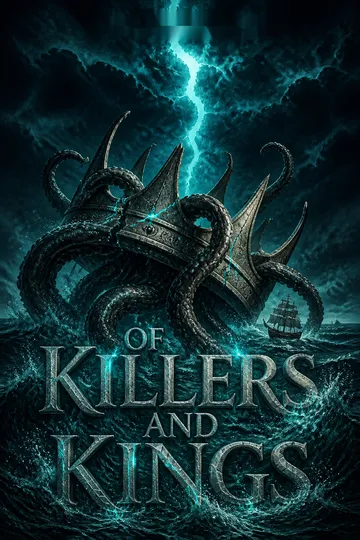

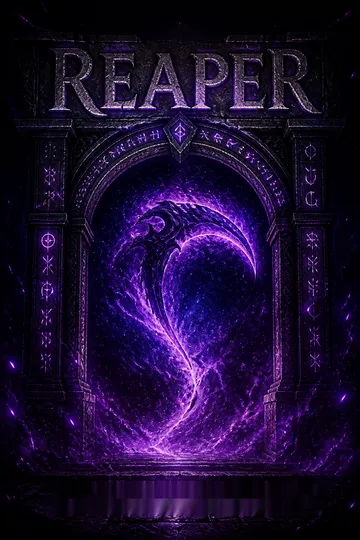


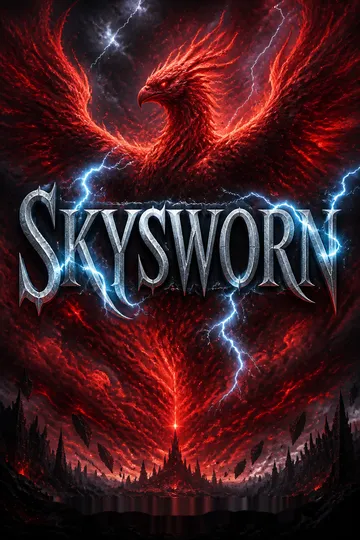

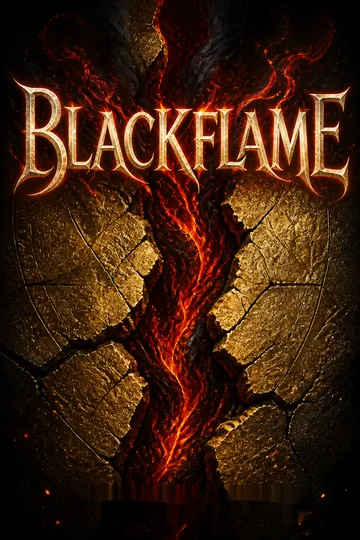

Download PDF
Download EPUB
.epub digital book format is ideal for reading ebooks on phones, tablets, and e-readers.








