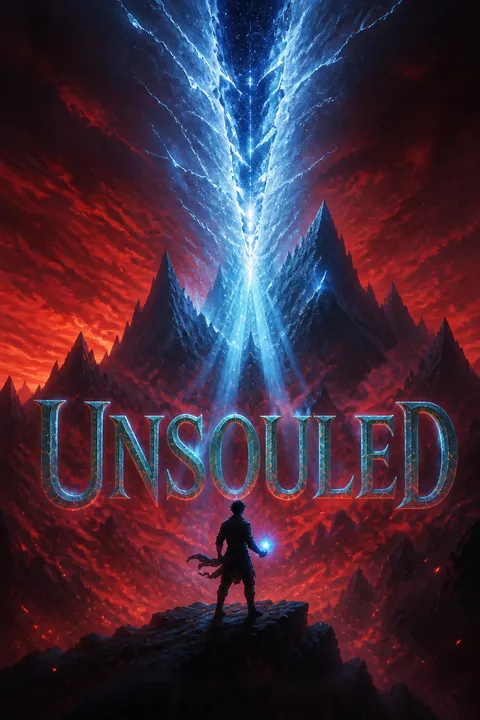


Plot Summary
The Empty Wooden Badge
In Sacred Valley, children discover their spiritual talent by placing a hand in a bowl of madra. Wei Shi Lindon longs to become a Forger like his mother, but the water stays still. The elders label him Unsouled and give him an empty wooden badge, marking him as a shame rather than a child with a future.
Lindon tries again with his mother’s blood, then secretly scripts the testing table to force a response. The trick earns him the same empty emblem. Years later, while his peers advance through the sacred stages, fifteen-year-old Lindon still wears it. His clan permits him basic cycling, but denies him a Path, training, and any real chance to rise.
Lindon’s first injury is social before it is spiritual. The clan turns a test of aptitude into a verdict on personhood, and his empty badge makes that judgment publicly legible. Yet his attempts to alter the test reveal an early pattern: he answers exclusion with research, improvisation, and persistence rather than accepting the category assigned to him. That ingenuity does not erase the real limits placed on him. It does, however, establish the tension that drives the story: Lindon has been taught that a Path is granted by nature, while his character keeps searching for ways to make one.
Fruit From a Fallen Tree
Hoping an ancestral orus fruit might strengthen his spirit, Lindon searches the forest and scripts a tree on the edge of advancing. Wei Mon Teris, a Copper from Lindon’s clan, catches him there while hunting a forbidden snowfox. Teris smashes the tree, releasing a powerful Remnant.
Lindon traps the spirit in a script circle, then lures it with a crystal flask and snatches the fruit from its branches, breaking his arm in the attempt. His mother restores the spirit-fruit, but his family plans to divide it among Lindon’s father, sister Kelsa, and mother. Lindon argues that he found and risked his life for it. Kelsa supports him, and he wins half, his first hard-earned resource for advancement.
The fruit is both a literal resource and an early test of how Lindon understands fairness. His family sees it through clan utility, especially Kelsa’s upcoming festival match; Lindon sees the labor and danger that produced it. He does not win by force or inherited status. He marshals evidence, makes his case, and persuades Kelsa to recognize his claim. The scene complicates his hunger for power: he wants strength to escape humiliation, but he also insists that effort should count for something. His broken arm makes that insistence costly, while the fruit gives his ambition its first tangible foothold.
A Path Must Be Made
After the First Elder hears how Teris abandoned Lindon before the tree-Remnant, Teris is publicly punished for cowardice. The elder then warns Lindon that the clan cannot protect someone it considers worthless and advises him to stay hidden. Instead, Lindon climbs the long stairs to feed Elder Whisper, the ancient five-tailed fox who founded the Wei Path.
Whisper tells him that sacred practice has no final limit and that a traveler may need to make a road where none exists. The advice gives Lindon a choice between safety and self-determination. When the Mon family challenges him to fight ten-year-old Eri, Lindon accepts, knowing either outcome could humiliate his family. He begins searching the clan archive for a way to survive.
The First Elder and Whisper offer competing forms of realism. The First Elder accurately reads the political danger Lindon faces and recommends concealment; Whisper reframes limitation as a reason to explore rather than a reason to withdraw. Neither offers easy comfort. Lindon chooses the more dangerous counsel because mere survival would preserve the very life he wants to escape. The public challenge sharpens that choice: honor is not an abstract virtue here but a social weapon, wielded by the Mon family to shift attention from Teris’s failure. Lindon’s acceptance marks the moment when his private hunger becomes a public risk.
The Empty Palm
In the archives, Lindon finds Heart of Twin Stars, a neglected manual describing a technique that splits the practitioner’s core. Its account of the Empty Palm gives him and Kelsa enough theory to attempt a version of the move. Kelsa repeatedly strikes Lindon’s core with her White Fox madra until he learns to deliver a focused pulse of pure madra.
At the public duel, Lindon challenges Mon patriarch Keth instead of Eri. His Empty Palm disrupts Keth’s spirit, and an ordinary follow-up punch makes the Iron stumble. Lindon immediately concedes, preserving his life while exposing Keth’s embarrassment. He later persuades the First Elder to grant him a copy of the Path of the White Fox if he proves himself at the Seven-Year Festival.
The Empty Palm succeeds because Lindon’s supposed defect gives him an unusual advantage. His madra has not been shaped by an aspect, so it can disrupt another person’s spirit in a way trained White Fox madra cannot. The technique turns his exclusion into tactical knowledge, but the duel also shows the limits of that reversal: Lindon cannot overpower Keth, and he must use rules, timing, and an immediate surrender to escape. His new opportunity remains conditional. Recognition arrives not as acceptance of his worth, but as a bargain that requires him to produce public results.
Seven Years of Preparation
As the Festival approaches, Kelsa reaches Iron, earning elixirs and public recognition for the Shi family. Lindon trains with her and prepares another unconventional advantage: he bargains with intelligent hornet Remnants, offering them a crystal flask of his madra in return for attacking an opponent later.
Meanwhile, his mother, Seisha, investigates the Li clan’s unusual hunt for Remnants associated with spatial movement. At the Festival, Lindon wins several Foundation matches with the Empty Palm, while Seisha follows the Li elders into the forest.
She witnesses them combine three spatial Remnants through a tiled script, opening a passage for the ancient Li Grand Patriarch, Li Markuth. His return is not a routine clan maneuver. The Gold intends to seize Sacred Valley, and he heads toward the arena.
Two forms of preparation converge here. Kelsa’s advancement represents the clan’s familiar system: talent is cultivated, rewarded, and displayed. Lindon’s hornet bargain and Seisha’s investigation show a less settled kind of intelligence, built from experiment and suspicion. The Li clan’s spatial project transforms that suspicion into a threat that local rivalries cannot contain. Its elders believe they are recovering a powerful ancestor, but the act exposes the valley to a scale of power beyond its own customs. Lindon’s resourcefulness is real, yet the arrival of Markuth makes clear that cleverness has limits when the opponent can change the terms of the world.
The Gold Arrives
Li Markuth descends into the arena wearing a gold badge and wings. He kills Wei Patriarch Sairus, then announces that the Wei clan must pay for an ancient wrong. Lindon recognizes his mother’s head among those Markuth carries, and he attacks the Gold with the Empty Palm, though it cannot affect him. Markuth tears Lindon in half and leaves him dead beside the stage.
The Jade elders prepare to fight, but an immense blue light stops time and restores the dead. Suriel, an immortal from beyond the valley, arrests Markuth and reverses his attack. The arena returns to its earlier state, with the Festival apparently uninterrupted. Everyone else will forget the disaster. Lindon alone is offered a choice about keeping the memory.
The sudden catastrophe destroys the protective illusion that Sacred Valley is the whole world. Markuth’s revenge treats entire families as extensions of their ancestors, while Lindon’s instinct is to act even when he knows the gap between them is impossible. His death is not a triumph of courage; it is the physical consequence of a scale of power he cannot yet comprehend. Suriel’s intervention then introduces a radically different order, one in which death and time can be reversed. The rescue does not make Lindon powerful. It gives him knowledge and a choice, transferring the story’s central question from whether he can survive to what he will do with a second chance.
Fate Opens the World
Suriel shows Lindon the life he would have lived without her intervention: marriage, children, advancement, and eventual death when a giant creature destroys Sacred Valley. She explains that fate is a direction, not an unchangeable future, but Lindon cannot accept the valley’s destruction.
To give him a chance, she takes him beyond the mountains in an instant and shows him powerful sacred artists whose abilities dwarf anything he has seen. She tells him he must leave the valley and begin again among them.
Then she reveals Yerin, a scarred young disciple of the Sword Sage, cornered by Heaven’s Glory fighters on Mount Samara. Yerin can help Lindon escape. Lindon chooses to remember Suriel’s intervention and receives a glass token by which she can find him again.
Suriel’s vision makes Lindon’s ambition morally larger without making it less personal. He does not merely want to overcome the insult of his badge; he has seen his family and home erased, and now understands that staying safe inside the valley may leave him helpless against its eventual fate. The future shown to him is deliberately double-edged: a rich life, but one ending in catastrophe. Suriel refuses to promise success and instead presents commitment as the common feature of powerful people. Lindon’s decision to retain his memories accepts both the burden of foreknowledge and the loneliness of knowing what others cannot.
Hornets Beat the Heir
Back in the restored Festival, Lindon finishes the Foundation tournament, then faces Wei Jin Amon, the Iron grandson of the Wei Patriarch. Amon’s spear and superior advancement leave Lindon badly outmatched. Lindon releases the hornet Remnants he buried beneath the stage; while they swarm Amon, Lindon takes the spear and pushes him out of bounds.
The Heaven’s Glory School must honor its promise to accept Lindon, though its elders make clear that he has little standing there. His family expects him to return soon, but Lindon keeps Suriel’s warning and token to himself. He leaves for Mount Samara, prepared to use the school’s resources while he searches for a way to reach Yerin and leave Sacred Valley.
Lindon’s victory is a strategic achievement, not proof that he can yet meet Amon on equal terms. He combines preparation, a bargain with the Remnants, and an opponent’s moment of distraction, turning a contest of strength into a contest of planning. The win also creates an uneasy social result: the school has to admit him, but its promise does not imply respect or safety. Lindon’s silence about Suriel separates him from his family even before he leaves. He is pursuing their shared protection, but the knowledge that motivates him cannot be shared without making his ordinary goodbye impossible.
The False Ascent
Heaven’s Glory requires new disciples to climb a dangerous staircase filled with hostile Remnants. Lindon cannot survive the full trial, so he disguises himself as an injured herb gatherer and persuades a junior disciple to carry him most of the way in the school carriage. He climbs the final stretch himself, reaching the summit before sunset and earning a token for the Lesser Treasure Hall.
There, Elder Rahm guides him through weapons, elixirs, and constructs. Lindon chooses seven White Fox boundary banners, tools that can distort an enemy’s senses when carefully placed. When Kazan Iron Deret challenges him, Lindon lures him into the formation and leaves him trapped in an illusion. The victory proves useful, but not safe.
The ascent turns the school’s test of resolve into a test of interpretation. Whitehall invites the candidates to use any means available, and Lindon takes the instruction literally, exploiting the carriage rather than attempting a suicidal climb. His choice is neither simple cheating nor a conventional display of merit: he accepts the goal while refusing the school’s assumption about what the test must measure. The banners extend the same logic. Lindon cannot match Deret physically, so he reshapes the space in which Deret fights. Yet each clever solution depends on time, preparation, and a specific environment, exposing the gap between tactical success and lasting security.
Deret Takes the Elixirs
The next morning, Deret ambushes Lindon outside the Outer Disciple Hall, steals his Clearblood pills and dawnfruit, and beats him until other disciples carry him to the Medicine Hall. While recovering, Lindon overhears an injured Heaven’s Glory student describe a black-clad swordswoman who has defeated wave after wave of the school’s Irons.
The account matches Suriel’s vision of Yerin. Lindon forces himself to cycle a painful healing pill rather than surrender to exhaustion, then leaves the Hall of Healing that night with his pack and boundary banners. He searches the snowbound slopes around Mount Samara, following the location Suriel showed him. In a narrow chasm, he finds Yerin waiting with a sword at his throat.
Deret’s attack strips away the idea that admission to a school automatically means protection. The elders tolerate violence as long as it keeps disciples competing, and Lindon’s weakness makes him an easy target even after a public victory. His response is not to retreat home, although the offer of safety is emotionally tempting. Instead, the beating clarifies that he has to act while the chance remains. The healing pill makes that decision bodily costly: his progress depends on enduring pain without mistaking endurance for invulnerability. He goes looking for Yerin because she is his route out, but the meeting begins with mutual danger rather than trust.
An Oath in Snow
Yerin distrusts Lindon because he wears Heaven’s Glory robes, but he explains that Suriel revealed her name and hiding place. She tests his claim by demanding a soul oath: he must help her escape the school’s pursuit, and she must guide and protect him beyond Sacred Valley. Before they can plan, Yerin’s alarm formation warns that seven fighters are approaching.
Lindon proposes hiding, but Yerin prepares to meet them, following the hard lessons of her absent master. One attacker spots Lindon in the chasm. It is Deret, who jumps down to take revenge. Lindon uses the White Fox banners again, buying time, but the fight quickly becomes more dangerous than his prepared illusion can contain.
The oath turns a strange encounter into a binding partnership, but it does not create easy intimacy. Yerin needs evidence and protection for herself; Lindon needs a guide beyond a place he has never left. Their agreement is reciprocal, yet the imbalance in strength remains plain. Yerin’s instinct is to meet danger directly, while Lindon tries to control it through concealment and planning. Neither approach is sufficient on its own. The hunters’ arrival forces their methods into contact before trust has had time to mature, making the oath less a guarantee of harmony than a rule that obliges them to keep negotiating under pressure.
The First Blood
When Deret’s attack disrupts the boundary formation, Lindon realizes the Iron will kill him if he hesitates. He grabs a discarded spear and stabs Deret repeatedly, killing him. The victory leaves Lindon shaken; he had imagined combat as a test of prowess, not a desperate struggle against a blinded enemy. Above the chasm, Yerin fights Elder Whitehall and several Irons.
She wounds the elder badly enough to force him to retreat, then helps Lindon escape the immediate danger. They return to Lindon’s room, where exhaustion overtakes them. By morning, Lindon understands that Heaven’s Glory will hunt them and that Yerin will not leave until she retrieves her master’s Remnant and belongings. He chooses to stay and help her.
Lindon’s first killing breaks the clean story he had attached to strength. He survives because he acts decisively, but survival does not feel like proof of superiority. His revulsion is important: he is learning that tactical necessity and emotional victory are different things. Yerin’s fight offers a contrasting model of competence, but her violence is not effortless or consequence-free; she is already exhausted and carrying grief. Lindon’s decision to remain with her is therefore more meaningful than simply obeying the oath. He recognizes that her purpose cannot be reduced to his escape plan, and begins treating the partnership as an obligation he has chosen as well as one he swore.
The Treasure Hall Heist
Yerin reveals that she needs spirit-seals to claim the Remnant of her master, the Sword Sage. Lindon knows the seals are in the Lesser Treasure Hall, so the two break in. Yerin slices the security script before it can activate, then holds off Elder Rahm and his constructs while Lindon gathers the seals, a flying sword, a Starlotus, a Sylvan Riverseed, a parasite ring, and a Thousand-Mile Cloud.
Yerin uses the Sword Path’s resonance to disable Rahm’s weapons and constructs. They flee on the cloud before the school can surround them. At the Ancestor’s Tomb, Yerin explains that the elders poisoned and attacked her master. The Tomb door suddenly splits from within, revealing that his powerful Remnant was waiting, not imprisoned.
The theft makes Lindon and Yerin collaborators in a more consequential way than the oath alone. Lindon supplies knowledge of the school’s protections and acts as a practical scavenger; Yerin supplies the force and precision required to break them. Their different competencies produce a working alliance, though not a frictionless one. Lindon’s delight in the stolen resources also exposes the temptation his master’s phrase about dragon fever names: he can become absorbed in what power costs and what it might buy. The Tomb interrupts that calculation. The Sword Sage’s Remnant turns the objective from retrieval into a confrontation with the legacy Yerin has been trying to reclaim.
The Tomb's Living Sword
The Sword Sage’s liquid-metal Remnant attacks Yerin with six blades, while Whitehall strikes at the duel to claim the Sage’s treasures. Lindon circles the fight on the cloud and wounds Whitehall with a halfsilver dagger, but the elder overpowers him and hurls him toward the combatants.
Yerin uses a devastating sword technique to drive spirit-seals into the Remnant, weakening it enough to gain control. Whitehall then tries to destroy Lindon’s core.
Lindon activates Heart of Twin Stars at the last instant, splitting his core so Whitehall’s strike misses both halves. He lifts the child-bodied elder and throws him from the broken Tomb wall. Yerin claims her master’s Remnant and sword, reaching Gold as Heaven’s Glory arrives too late to stop her.
The climax pays off the story’s most important forms of preparation: the spirit-seals, the cloud, the halfsilver dagger, and the neglected core-splitting manual. None makes Lindon a match for Whitehall in direct combat. Instead, he survives by changing the target his enemy believes he is striking, then using his physical size against an elder trapped in a child’s body. Yerin’s victory is equally costly and particular: she confronts the Remnant of her teacher and takes up the legacy he left her. The scene joins ingenuity to inheritance without equating them. Lindon makes an unexpected path; Yerin continues a difficult one.
Two Stars Leave Home
With Heaven’s Glory closing in, Lindon begs Yerin not to leave him behind. She breaks from her impulse to keep fighting and carries him out on the cloud. He has taken half the Starlotus, directing its power into one of his two cores while the other remains untouched. As they fly beyond Mount Samara, he explains the Heart of Twin Stars and the assumptions built into Sacred Valley’s spirit test.
Yerin tells him the test identifies a person’s strongest starting discipline, not the only discipline they can ever learn. Lindon realizes he was never truly without a Path: he had already been developing one. He opens the manual and names it the Path of Twin Stars. Together, he and Yerin enter the dangerous wilderness beyond the valley.
The resolution changes Lindon’s understanding of his past without erasing its harm. The spirit test was not proof that he had no capacity; it was a narrow measure mistaken for a complete identity. That distinction restores possibility, but the years of exclusion remain real and have shaped his habits of secrecy, planning, and self-reliance. The split core makes his future harder as well as more flexible, since he must now cultivate twice the capacity. Yerin’s choice to leave rather than pursue one more fight shows a competing form of discipline: restraint in service of another person. They depart with no guarantee of safety, only a shared direction.
Epilogue
Lindon and Yerin leave Sacred Valley on the Thousand-Mile Cloud and plan to hide before crossing the forest, where immense sacred beasts roam. The report hints that an ancient ruin has risen nearby, drawing dangerous powers toward them. Elder Whisper watches them depart and, for the first time in centuries, allows himself hope that they might help the valley.
Other projected reports imagine the Heaven’s Glory School attacking the Wei clan, but Suriel rejects those branches as unrealized divergences. Her attention returns to a crisis beyond Cradle: worlds are colliding, and the Abidan need the missing Judge Ozriel. The small escape has opened onto a much larger instability.
The epilogue widens the story without undoing its intimate ending. Lindon and Yerin have escaped the valley, but the wilderness is not a promised refuge; the risen ruin and lurking beasts immediately complicate their freedom. Whisper’s hope makes their departure matter to someone still inside the valley, even though he cannot know what they will become. The branching reports also expose how fragile any prediction is: possible futures appear, then are dismissed rather than treated as fact. Suriel’s final crisis places Lindon’s journey inside a universe whose guardians are themselves failing. The book closes on two scales of uncertainty, the young travelers’ survival and the larger order they do not yet understand.
Analysis
Unsouled builds its central conflict around a mistake of measurement. Sacred Valley’s test can identify a child’s strongest early affinity, yet the clans treat its result as a complete account of that child’s capacity. Lindon’s empty badge is therefore more than bad luck. It is an institution converting one limited observation into a social destiny. The novel’s counterargument is practical rather than abstract: Lindon learns to script, bargain, observe, and exploit openings because the usual routes are closed to him. His early victories do not erase his weakness. They show that intelligence can alter the conditions of a contest, though it cannot make every opponent reachable.
The story also distinguishes ambition from mere appetite. Lindon wants resources and advancement, sometimes with a hunger that makes every useful object look insufficient. Yerin’s lesson about distraction gives that impulse a sharper test: power matters because of what it enables, not because accumulation is an end in itself. Her devotion to the Sword Sage and Lindon’s desire to protect Sacred Valley are different forms of commitment, and neither is cleanly noble or painless. Both can keep a person moving, and both can become dangerous when they leave no room for judgment.
Suriel’s intervention expands the scale of the book without resolving its immediate problems. Lindon learns that his home is small, that Gold is not the limit, and that even a good predicted life can end in disaster. The vision does not hand him a solution. It makes him responsible for choosing whether to act on knowledge that isolates him from his family. When he and Yerin finally leave, the achievement is not mastery but direction. Lindon has not escaped vulnerability; he has found a method for responding to it. The title’s implication changes accordingly: he is not empty of potential, but at the beginning of a path the valley cannot name.
Review Summary
Unsouled receives mixed reviews, with many praising its unique magic system, underdog story, and anime-like elements. Readers appreciate the protagonist's determination and cleverness. Some find the world-building intriguing, while others struggle with info-dumping and pacing issues. Many reviewers note that the series improves significantly in later books. Critics mention underdeveloped characters and predictable plot elements. Overall, the book is seen as a promising start to the Cradle series, with potential for growth and improvement in subsequent installments.
People Also Read
Characters
Wei Shi Lindon
The impossible climberLindon is the Unsouled son of Wei Shi Jaran and Wei Shi Seisha, and the younger brother of Kelsa. His clan treats his still spirit as a permanent deficiency, but he studies sacred arts obsessively and notices opportunities that stronger people overlook. He is physically imposing for his age, which often makes others mistake caution for aggression; in truth, he is anxious, observant, and highly practiced at reading power relations. His first instinct is often to bargain, plan, or find a loophole rather than confront an opponent directly. Lindon’s ambition is not simply to win respect. He wants enough strength to make his own choices and protect the people whose lives are tied to his.
Yerin
The scarred sword discipleYerin is the young disciple of the Sword Sage, a fighter with a sword Path and an unusually direct relationship to danger. She is guarded, blunt, and suspicious of promises, in part because her survival depends on judging threats accurately. Her scars and battered clothing testify to a life of hard training and recent pursuit, while her skill shows how much discipline she has already endured. Yerin values loyalty to her teacher and takes his unfinished work seriously. She and Lindon initially need one another for practical reasons, but their contrasting temperaments shape the partnership: she favors decisive action, while he searches for leverage and contingency. Beneath her severity is a capacity for care she does not grant easily.
Wei Shi Seisha
The clan's Soulsmith motherSeisha is Lindon and Kelsa’s mother, a respected Soulsmith and Forger whose technical knowledge makes her valuable to the Wei clan. She approaches the sacred arts as a field to investigate, taking notes, examining Remnants, and testing explanations rather than relying on custom. Her support for Lindon is real, though she often weighs his needs against the family’s limited resources and the clan’s priorities. She teaches him scripting and practical knowledge, giving him tools to experiment despite the restrictions placed on him. Seisha’s combination of intellectual curiosity and maternal concern helps Lindon imagine competence as something learned and built, not merely bestowed at birth.
Wei Shi Jaran
The wounded clan fatherJaran is Lindon and Kelsa’s father, a former fighter whose injuries left him limping with a cane and unable to pursue the Path he once imagined. His pride in past strength makes him impatient with weakness, including his own, and his frustration can spill into harsh criticism of Lindon. Yet he is not indifferent: when Lindon takes a dangerous stand, Jaran recognizes the courage beneath the recklessness and offers affection in the language he knows. His relationship with his son is shaped by both disappointment and a stubborn family bond.
Wei Shi Kelsa
A stubborn Iron sisterKelsa is Lindon’s older sister, a talented sacred artist on the Wei clan’s White Fox Path. She is disciplined and fair-minded, and unlike many of her relatives, she takes Lindon’s arguments seriously even when she cannot give him everything he wants. Her training can be severe, but it comes from a genuine determination to help him survive and defend the family’s honor. Kelsa balances ambition with generosity, while her natural advantages make her a living reminder of what Lindon has been denied.
Elder Whisper
The valley's ancient foxElder Whisper is an ancient five-tailed snowfox and the founding teacher of the Wei clan’s White Fox Path. He lives in a tower and is both a respected power and a source of mystery, watching clan life from a position that is physically and politically separate. His manner is indirect: he tests Lindon with questions and offers principles rather than instructions. Whisper understands that a sacred Path cannot be reduced to one inherited technique, and his view gives Lindon permission to imagine a future beyond the clan’s accepted limits.
The First Elder
The Wei clan's realistThe First Elder is a senior Wei leader who enforces clan discipline and understands how little protection the clan affords its weakest members. He is stern with Lindon, warning him that the Unsouled label makes him vulnerable to anyone stronger. His advice to hide is harsh but grounded in political reality, not personal cruelty. He can recognize courage and ability when Lindon demonstrates them, yet he remains responsible for a system that measures worth through advancement and service.
Wei Mon Teris
The discredited Copper cousinTeris is a young Copper Enforcer from the Wei clan, confident in the strength his advancement gives him. He hunts a forbidden snowfox and dismisses Lindon until his own actions destroy an ancestral tree. His response to danger and responsibility puts the clan’s public ideals of honor under pressure.
Wei Mon Eri
The Mon family's young challengerEri is a ten-year-old Foundation practitioner whose family uses her challenge to Lindon as a public test of honor. She is eager to fight and confident in her training, but the adults around her shape the contest for their own political purposes.
Wei Mon Keth
The Mon family patriarchKeth is head of the Mon family, an Iron practitioner whose authority rests on physical power and public standing. He defends Teris by redirecting blame toward Lindon and accepts a duel that he believes will demonstrate his own strength. His pride makes him vulnerable to a carefully framed challenge.
Wei Jin Sairus
The Wei clan's powerful patriarchSairus leads the Wei clan and embodies its ideal of a sacred artist who pursues advancement above ordinary responsibilities. He rarely attends routine clan affairs, but his presence at the Festival signals that Lindon’s performance has become politically important. He values the clan’s standing and is willing to protect its public image, even when that conflicts with Lindon’s future.
Wei Jin Amon
The Wei heir with a spearAmon is Sairus’s grandson, an Iron practitioner and promising candidate for Heaven’s Glory. His polished appearance and spear training distinguish him as one of the Wei clan’s favored young artists. He enters the Festival with the confidence of someone accustomed to being treated as a future leader, and his presence raises the stakes for Lindon’s public challenge.
Li Markuth
The Li clan's ancient patriarchMarkuth is a former Li patriarch who returns with power far beyond the ordinary hierarchy of Sacred Valley. He sees the valley through the lens of old grievance and entitlement, treating its current inhabitants as heirs to a debt they did not personally incur. His arrival exposes how provincial the clans’ rivalries are beside forces from the wider world.
Suriel
The immortal rescuerSuriel is an Abidan Judge associated with healing and restoration, whose immense authority places her outside the valley’s sacred-art hierarchy. She comes to address an intrusion, but Lindon’s decision to act despite certain defeat changes what she chooses to do. Suriel is compassionate without being sentimental: she offers him knowledge, a token, and a difficult direction rather than guaranteeing success. Her attention opens Lindon’s imagination to a world his clan has taught him does not exist.
Yerin's master
The absent Sword SageKnown as the Sword Sage, Yerin’s teacher came from beyond Sacred Valley and trained her in the Path of the Endless Sword. His influence survives in her techniques, judgments, and fierce devotion to his unfinished work. To Lindon, he represents the possibility of a teacher whose knowledge exceeds the valley’s narrow traditions.
Elder Whitehall
Heaven's Glory's ambitious elderWhitehall is a high-ranking Heaven’s Glory practitioner whose childlike body disguises an experienced and ambitious spirit. He is intensely concerned with the school’s status and with securing powerful resources for himself. His pride makes him reluctant to intervene in conflicts that might lower his standing, but opportunity can overcome that hesitation. He regards talent as something to control and exploit.
Elder Rahm
The treasure hall's mentorRahm is an elderly Heaven’s Glory Jade who oversees the Lesser Treasure Hall. He is amused by Lindon’s ambition and offers practical guidance rather than dismissing him for his wooden badge. Rahm believes a sacred artist should want more, but also values wisdom and loyalty over cleverness alone. His position lets him act as one of Lindon’s few relatively fair contacts in the school.
Kazan Ma Deret
The Kazan's resentful discipleDeret is an Iron disciple of the Kazan clan, trained on the Path of the Mountain’s Heart. He takes Lindon’s success as a personal insult and uses his greater advancement to intimidate him. His fixation on status and retaliation makes him dangerous, especially in a school that permits students to settle many disputes through force.
Plot Devices
The Empty Badge
A social verdict in woodSacred Valley tests children by exposing their spirits to a bowl of madra. Clinging, retreating, rising, or freezing identifies the child’s strongest starting discipline and earns a badge for Enforcer, Striker, Ruler, or Forger. Lindon’s bowl does nothing, and the elders give him an emblem meaning empty. The badge makes his exclusion visible, affecting his access to training and how others treat him. Later, Yerin explains that the test measures a starting affinity rather than the full range of what a person can learn. The device therefore operates both as a magical assessment and as a social institution that turns limited information into a lasting identity.
Pure Madra
The weakness that disruptsBecause Lindon has not absorbed an aspect from the natural world, his madra remains pure. It cannot perform the specialized feats of a trained Path, but it can activate scripts and directly unsettle another person’s spirit. Lindon and Kelsa use this property to develop the Empty Palm, a close-range strike that disrupts an opponent’s core. The move lets Lindon compete against stronger artists who leave themselves open, though it is not a general solution to his lack of power. Its unusual effectiveness comes from the very condition the clan interprets as a total absence of ability.
Heart of Twin Stars
A second core's hidden useThe neglected manual describes how to divide one spiritual core into two, originally as a defense against techniques that disable a core. Lindon studies its cycling method while preparing for his duel, but the full split remains an emergency option rather than an ordinary training plan. During a later attack, he activates the technique at the instant an elder tries to overwhelm his core. The division allows the strike to miss both centers and gives Lindon the opening he needs to respond. The manual’s deeper promise is that two cores might support two different kinds of madra, though doing so will demand substantially more work.
Scripts and Remnants
Power shaped by preparationScripts guide vital aura through patterns, allowing a skilled user to create barriers, traps, light, or broader boundary formations. Remnants are spirits left behind by powerful sacred beings, and their behavior follows their nature closely enough that Lindon can sometimes bargain with them. He uses a script to trap the ancestral tree’s spirit, then makes a deal with hornet Remnants to attack Amon during the Festival. Later, White Fox boundary banners distort Deret’s perception and buy Lindon time. These devices let a weaker character influence a fight, but only when he understands the materials, placement, and limits involved.
Suriel's Glass Token
A thread beyond the valleySuriel leaves Lindon a glass bead containing a steady blue flame after showing him a world far larger than Sacred Valley. He cannot use it to call for help, but Suriel can sense it across worlds and time. The token gives Lindon a physical reminder that his encounter was real after the Festival is restored and everyone else forgets what happened. It also becomes useful in an improvised deception when Lindon rolls its light into an enemy’s field of view. Its primary function is not rescue on demand, but connection to a larger order that Lindon has only begun to understand.
Cradle Series

About the Author

Download PDF
Download EPUB
.epub digital book format is ideal for reading ebooks on phones, tablets, and e-readers.








