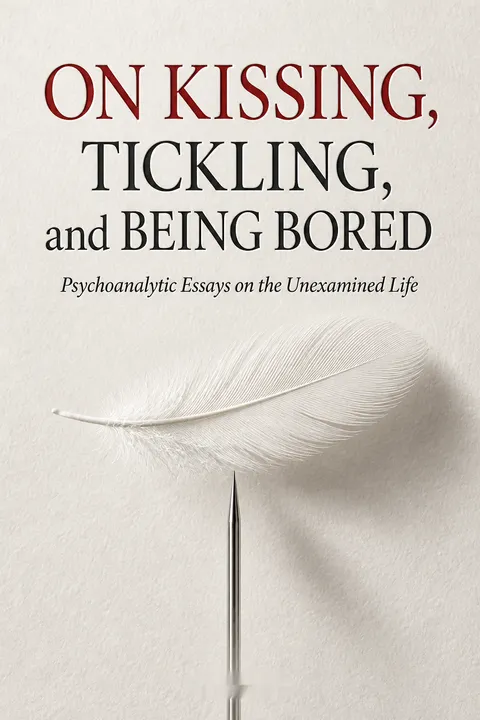


Summary Unavailable
This book is not suitable for a summary (it may be a textbook, workbook, cookbook, reference book, or collection). However, you can still explore the FAQs, about author, and other metadata below!
Key Takeaways
Keep psychoanalysis curious instead of letting it dictate the good life.
Curiosity before certainty. Freud first described psychoanalysis through medical analogies: analysis could clear away obstacles, as surgery might prepare conditions for healing. Phillips questions the assumption that this makes analysis a science with a single definition of recovery. A life is not a standard pattern to restore. Psychoanalysis is most useful when it helps people find new ways to describe what troubles them and consider what they want from life.
A conversation, not a verdict. Phillips favors a plural, improvisational practice that borrows ideas from different fields without treating any one theory as the final authority. If a patient simply learns to speak in approved psychoanalytic terms, the conversation may have closed down rather than opened up.
This view resembles a strength of good scientific modeling: a model earns its place by helping people notice something, not by becoming reality itself. Phillips also makes room for an ethical question often hidden inside treatment: what kind of life does this interpretation encourage? The challenge is that an open-ended conversation can become vague or self-confirming. Interpretive freedom needs discipline too, including attention to whether a description helps the person think and act differently.
Notice when shared pleasure turns painful, and insist on a trustworthy stopping point.
Pleasure needs a boundary. A child cannot tickle themself in the same way another person can. The pleasure depends on someone else finding the right spot, creating surprise, and controlling the action. That dependence makes tickling a small but revealing scene of trust: the child becomes helpless with laughter and relies on the adult to stop before pleasure becomes distress.
The stopping matters. Phillips notes that tickling has no natural climax that resolves the excitement. It must end through a decision, often at the moment the child is becoming overwhelmed. The same touch can feel affectionate or humiliating depending on whether the person doing it notices and respects the other person's limit.
Tickling offers a vivid way to think about consent as ongoing attention, not a single yes or no. In play, each person reads signals, adjusts intensity, and checks whether the other is still enjoying the exchange. The analogy has limits: a child's laughter does not prove comfort, and a power imbalance can make refusal difficult. The scene is useful precisely because it shows that delight and distress can be close together, not because tickling is automatically harmless.
Treat phobias as protective stories that shrink curiosity and choice.
Terror organizes experience. Phillips compares William James's evolutionary account of phobia with Freud's emphasis on personal memory and desire. Both treat fear as meaningful, even when its apparent target seems harmless. A phobia can turn an open space, a theater, or an insect into a fixed danger, protecting the person from exploring what the situation might mean or make possible.
A symptom can speak indirectly. One teenage patient feared spiders and behaved provocatively at school. Phillips wondered whether the spider helped her locate anger that she otherwise struggled to express. After she described a dream about one, she connected the fear with a moment when she had complied with a teacher despite feeling insulted. This is one possible reading, not a universal explanation of phobias.
The idea that symptoms can protect a person from a difficult choice is a strong interpretive lens. It shifts attention from asking whether fear is irrational to asking what the fear makes possible or prevents. But a plausible story is not proof of a cause. Cognitive and behavioral approaches can also help people test feared predictions and reduce avoidance. For severe or disabling phobias, meaning-making should complement, not replace, appropriate clinical care.
Build solitude by trusting what lies beyond your control.
Aloneness can be supported. Phillips draws on Winnicott's idea that a child's capacity to be alone develops in the presence of a dependable caregiver. Solitude is not simply separation or self-sufficiency. It can grow from having experienced a relationship reliable enough that the other person need not remain constantly in view.
Trust can involve risk. A teenage patient recalled being afraid of water until he learned that he could float. He had felt safer where he could stand, but discovered that deeper water could support him. Phillips uses the story to describe a developmental risk: relying on something beyond deliberate control. The body, like the water, can become a place to entrust oneself rather than an object that must be managed every second.
This account usefully distinguishes chosen solitude from isolation. Attachment research similarly emphasizes that confidence in relationships can support exploration, rather than compete with independence. The swimming story also suggests that trust is learned through experience, not merely argued into existence. Still, solitude is not always evidence of security: it may reflect exclusion, depression, or lack of support. The relevant question is not whether someone is alone, but whether aloneness feels chosen and livable.
Let composure protect desire without hardening into a permanent defense.
Self-control has a history. Phillips contrasts Freud's picture of the ego managing disruptive bodily impulses with Winnicott's idea of holding, the care that helps a person feel integrated. Composure can protect someone from being overwhelmed, but it can also become a performance of self-sufficiency that hides need and desire.
The mind can compensate. Winnicott suggests that a child facing unreliable care may develop mental functioning too quickly, using thought to manage what dependable care would otherwise help contain. Phillips connects this to a polished, detached manner that keeps other people at a distance. Composure is not necessarily a problem. Its cost appears when the person cannot relax it, even in a setting where spontaneity might be safe.
The distinction between regulating emotion and suppressing it is useful across psychology. Regulation allows a person to remain engaged while feeling strongly; suppression can preserve social control at the cost of awareness and connection. Phillips's account encourages attention to what composure is doing, rather than treating calmness as automatically healthy. Yet not every guarded manner comes from childhood care, and composure can be a sensible response to unsafe or discriminatory environments. Context matters.
Ask what your worries preserve, and whom they recruit.
Worry can do a job. A ten-year-old patient described worries as bodily failures and called them something he could save. Phillips learned that the boy feared running out of worries because they gave his mother a problem she could solve. The worry was not only about its stated subject; it also helped the child maintain a particular relationship with his mother and imagine himself as useful to her.
Look beyond the topic. Phillips suggests asking what a worry does, who hears about it, and whether it keeps a more difficult feeling out of view. Worry can turn diffuse unease into a familiar, manageable concern. That function does not mean the concern is imaginary. It means the worry's emotional and relational uses may matter alongside the practical problem it names.
This perspective adds a social dimension to worry: anxious thinking can be a way of seeking reassurance, maintaining connection, or postponing a decision. Cognitive models also describe worry as repetitive preparation that can create a sense of control without resolving uncertainty. The two accounts can sit together. Still, interpretation should not discredit real risks or imply that a worrier secretly wants distress. Asking what worry does is a supplement to asking what needs action.
Give boredom room to reveal desire instead of rushing to fill it.
A pause can be productive. In Winnicott's observation of infants, a baby hesitates before reaching for a shiny spatula. The adult does not force it into the baby's hand; the pause gives the child time to develop interest and act from desire. Phillips sees ordinary boredom as a related interval: a person may feel restless before knowing what would genuinely engage them.
Distraction can interrupt discovery. One boy told Phillips he was not allowed to be bored. When asked what might happen if he were, he feared he would no longer know what he was looking forward to. His busyness kept uncertainty away. Phillips argues that boredom can sometimes be a developmental achievement, provided it is supported rather than treated as a failure that must immediately be corrected.
In a culture built around instant entertainment, this account makes waiting feel less like wasted time and more like a condition for noticing preference. It also cautions against adults turning every quiet moment into a managed activity. The counterpoint is important: persistent boredom can accompany depression, exhaustion, or difficulty sustaining attention. A pause can be fertile, but it can also signal a need for help or a change in circumstances.
Read obstacles as clues to desire, not merely barriers to remove.
The barrier can reveal the aim. A mother told Phillips that her toddler was always in her way. Asked where she would go if he were not clinging to her, she admitted she did not know. The obstacle may have been helping her avoid recognizing an uncertain desire of her own.
Wanting can need a rival. A man seeking therapy said he repeatedly fell for women who already had partners. Phillips suggested that their unavailability might make desire feel safer. The partner could protect the woman from him while keeping his longing alive. These examples do not mean every barrier is secretly wanted. They show why it can be useful to ask what an obstacle protects, postpones, or makes possible.
This is a productive inversion of the usual problem-solving instinct. A barrier may be external, but the way a person organizes around it can still reveal fear, ambition, or attachment. In design and decision-making, constraints can expose priorities by forcing choices. The caution is that some obstacles are structural, such as poverty, discrimination, or caregiving demands. Treating them as unconscious inventions would blame people for conditions they did not create.
Let kissing hold appetite and tenderness together without promising self-sufficiency.
The mouth remembers dependence. Freud's account of development begins with feeding and sucking, where pleasure and nourishment overlap. Later, pleasure becomes separable from eating; the child uses parts of their own body for comfort, then seeks another person's mouth. Phillips presents kissing as a meeting point between these histories: it can express appetite while also preserving the other person as a separate presence.
A kiss carries a small drama. It may suggest intimacy, reciprocity, and a wish to overcome distance, yet it cannot make one person fully self-sufficient or erase difference. Phillips notes how a young patient described his frustration with a girlfriend by saying she did not kiss properly. The complaint about technique became a way to approach a larger question about love and desire.
Kissing is a compact example of how physical behavior communicates more than intention alone. It involves timing, attention, and mutual adjustment, much like conversation, but its meaning depends on the people and culture involved. Phillips's psychoanalytic account is suggestive rather than a universal developmental law. Freud's sequence can illuminate how intimacy revisits early dependence, but it should not be mistaken for settled biological fact or a complete explanation of anyone's sexuality.
Use theories as tools, not idols that claim to know the whole person.
Models can overreach. British psychoanalysts often used mothering as a model for the analyst's role: the analyst would hold, understand, and support the patient's development. Phillips values the care in this analogy but warns that it can predetermine what the patient needs and make the analyst's interpretation feel like an authority imposed from outside.
Knowledge has limits. Freud kept ancient figurines in his consulting room while developing a method that questioned religious belief. Phillips uses this tension to explore how psychoanalysis can criticize idolatry while becoming an object of devotion itself. Dreams, too, may contain an experience that cannot be reduced to a neat interpretation. A theory can open inquiry, but it should not claim ownership of what another person is or means.
The analogy between interpretation and idolatry is a sharp reminder that expertise can turn into certainty, especially when a professional's framework shapes what counts as evidence. Models of care remain valuable, but maternal metaphors can quietly assign women a universal role and make that role seem natural. A more plural practice treats theories as revisable maps. Its difficulty is tolerating uncertainty without retreating into either dogma or the claim that every interpretation is equally useful.
Analysis
Phillips's essays are held together less by a single psychological theory than by a question about authority: who gets to say what an experience means? Tickling, phobia, worry, boredom, kissing, and solitude appear ordinary, even trivial. Phillips treats them as compact scenes where dependence, desire, power, and self-protection become visible. Their ordinariness is central to the method. Instead of beginning with an abstract system and fitting life into it, he begins with a detail and tests how many descriptions it can sustain.
That method produces the book's strongest contribution: symptoms need not be meaningless defects, and interpretations need not function as diagnoses of a person's hidden essence. A worry might preserve a relationship; a phobia might make an unmanageable feeling safer to approach; boredom might mark a pause before desire becomes legible. These readings shift the question from what is wrong with someone to what a pattern accomplishes. They also make treatment less like returning a person to a prescribed track and more like expanding the stories available to them.
The same method creates a risk. Psychoanalytic interpretation can explain almost anything after the fact. A spider, a kiss, or a pause may acquire a persuasive meaning because the analyst supplies a narrative that organizes scattered details. Persuasiveness is not proof. Phillips's own emphasis on uncertainty helps resist this danger, but readers should distinguish a useful possibility from an established cause. The book's interpretations work best as invitations to examine experience, not as universal claims about development.
The essays also expose an unresolved tension in care. Winnicottian ideas of holding and maternal presence offer a humane alternative to coercive expertise, yet the mother can become another idealized model that determines what good care must look like. Phillips's challenge to psychoanalytic authority therefore applies to his own preferred language as well. The lasting lesson is methodological: use concepts to increase curiosity, notice what they exclude, and leave room for a person's experience to exceed the explanation.
Last updated:
Report IssueReview Summary
On Kissing, Tickling, and Being Bored receives mixed reviews (3.75/5 stars). Readers appreciate Phillips' exploration of overlooked psychological states like worry and boredom, finding "tasty nuggets of insight" amid dense psychoanalytic theory. Many praise his eloquent, thought-provoking style and unique perspectives drawing on Freud and Winnicott. However, critics find the essays overly academic, lacking coherence, and heavily reliant on citations rather than original thinking. Several note the book requires substantial psychoanalytic background knowledge. Some Turkish reviewers criticize both the translation and the fundamental psychoanalytic approach itself.
People Also Read





Glossary
holding
Reliable care that supports developmentIn Winnicott's account, holding is the dependable physical and emotional care that helps an infant feel integrated and safe enough to develop. Phillips also applies the idea to psychoanalysis: the analyst provides a reliable setting and presence that can support the patient's experience without taking it over or dictating its meaning.
False Self
Adaptation that hides spontaneityWinnicott's term for a way of organizing the self around the demands of an important other, especially when care is unreliable or intrusive. The False Self can appear compliant and capable while protecting more spontaneous feelings and wishes. Phillips uses the idea to describe adaptations that preserve connection but may leave a person feeling absent from their own life.
True Self
Protected spontaneous experienceWinnicott's term for the spontaneous, personal core of experience that can develop when a person's environment does not impose too much on them. Phillips emphasizes both its vulnerability and its privacy: the True Self is not simply a hidden object for an analyst to uncover, because part of its value lies in remaining beyond complete knowledge.
transitional object
A bridge between inner and outerWinnicott's term for an object involved in the intermediate area between a person's inner experience and external reality. It helps a child manage the fact that the caregiver is separate, rather than either fully controlled by the child or entirely absent. Phillips connects transitional experience with the possibility of tolerating difference without collapsing into merger or isolation.
period of hesitation
A pause before desire takes shapeWinnicott's name for the interval in which an infant considers a spatula offered during an observation. The child may pause, watch, or withdraw before desire becomes clear and action begins. Phillips uses this moment to understand boredom as potentially meaningful: an adult's restraint can allow interest to emerge instead of imposing an activity.
dreaming experience
The process beyond the dream reportMasud Khan's term for the broader experience of dreaming, which Phillips distinguishes from the remembered dream as a reportable text. In this view, dreaming can involve a person's self-experience in ways that cannot be fully translated into an analyst's interpretation. The analyst's role is less to claim mastery of the dream than to support the conditions in which it can be experienced.
transformational object
An object associated with changeChristopher Bollas's term for an object sought for its capacity to transform a person's experience of self. The earliest example is the caregiver whose presence changes the infant's state. In adult life, a person, place, event, or idea may be sought for a similar promise of transformation, even when its significance is not known in advance.
benign circle
Desire followed by repairWinnicott's description of a developmental sequence in which an infant's forceful desire is followed by recognition of imagined harm, concern, and an attempt at reparation. The caregiver must survive the child's intense feelings and receive the reparative gesture. Phillips stresses that this model also raises a question about whether concern and repair can sometimes restrict spontaneity.
obstacle-relations
Relationships organized around barriersPhillips's term for examining how a person relates to what stands between them and a desired object. Obstacles may block access, preserve distance, or make desire easier to sustain. The idea extends object-relations thinking by treating barriers themselves as meaningful parts of a relationship, while still allowing that some obstacles are real external constraints.
About the Author
The author information provided appears to contain an error, as it describes someone from Hope, Arkansas with Southern roots—biographical details that don't match Adam Phillips, the actual author of this psychoanalytic work. Phillips is a British psychoanalyst and essayist known for his literary approach to psychoanalysis. He has written extensively about Freud, Winnicott, and contemporary psychological theory. His writing style blends philosophical inquiry with clinical insights, making complex psychoanalytic concepts accessible while maintaining intellectual rigor and exploring everyday human experiences through a psychoanalytic lens.
Download PDF
Download EPUB
.epub digital book format is ideal for reading ebooks on phones, tablets, and e-readers.








