

Key Takeaways
When feelings have no words, behavior may tell the story instead.
Actions can speak. Peter survived early violence but could not describe it. As an adult, he abruptly quit jobs and relationships, then faked his own death. Grosz gradually understood these shocks as a way Peter communicated pain and helplessness he could not put into words. Learning the truth about his infancy helped Peter connect his frightening behavior to a past he had not known.
Notice the pattern. A different patient, Tom, found that tiny daily decisions, such as whether to remove his shoes before lying on his analyst's couch, revealed an assumption that others were ready to scold him. The details looked trivial; the rule beneath them shaped his life. In both cases, repeated actions offered clues to an unspoken inner story.
The idea that behavior carries meaning resembles narrative approaches to psychology: people do not only describe their lives, they enact patterns in relationships. That can make seemingly senseless conduct more understandable without excusing its consequences. The crucial safeguard is uncertainty. A behavior may have several causes, including present circumstances, learned habits, or illness. Treating interpretation as a question to explore, rather than a hidden truth the analyst has discovered, preserves the person's authority over their own story.
Replace automatic praise with attention that helps children think.
Praise can narrow effort. In a 1998 experiment, psychologists Carol Dweck and Claudia Mueller gave 128 children aged ten and eleven either intelligence-focused praise or effort-focused praise after simple math problems. When the work became harder, children praised for effort were more willing to try new approaches. Those praised for being clever were more anxious about failure and more likely to choose familiar tasks. Some even exaggerated their scores afterward.
Show that you noticed. Charlotte Stiglitz, a remedial reading teacher, responded to a child's drawing by noticing its blue areas. The child then explained the pond and added more detail. The point was not to withhold warmth, but to show sustained interest in the child's thinking. Specific attention can affirm that the child matters without turning every activity into a performance for approval.
This distinction anticipates a useful principle from education: feedback is most informative when it identifies controllable strategies, rather than fixing a child's identity to a label. Attention also invites curiosity, which helps children develop their own standards for judging work. The argument should not be reduced to a ban on praise. A sincere, specific compliment can encourage connection; empty, constant evaluation is the problem. The adult's task is to respond to the child, not merely to reward an outcome.
Treat emotional pain as information, not an enemy to silence.
Numbness removes warnings. Matt, a young man adopted after neglect and instability, behaved recklessly but seemed unconcerned about the danger. When asked what he felt, he often described other people's anger rather than his own. He had learned to disconnect from emotion so thoroughly that he struggled to recognize when he was at risk.
Pain protects the body. Physician Paul Brand observed that leprosy patients suffered severe injuries partly because they could not feel pain. Grosz uses this as an analogy for Matt: without emotional pain, a person may not know what needs attention. Matt did not return for treatment, but the encounter illustrates a broader cost of numbing. Feeling distress can be difficult, yet it can also signal a boundary, a loss, or a danger that calls for care.
Emotions are not always accurate descriptions of external reality, but they are valuable data about a person's internal state. Contemporary work on emotional awareness similarly treats naming feelings as a step toward choosing a response rather than being driven by an unnamed reaction. The distinction matters: listening to pain does not mean obeying every impulse or romanticizing suffering. It means using discomfort as a prompt to investigate what is happening and what support may be needed.
Ask what a defense protects before judging the story it creates.
A defense solves something. One patient repeatedly imagined an ideal farmhouse in France, complete with a magic door that could rescue him from danger. The house did not exist. It offered an escape from separation and recalled a childhood marked by parental violence. Another patient, returning alone to a cold, empty flat, imagined that terrorists had planted a bomb there. The frightening fantasy briefly made her feel targeted rather than forgotten.
Disowning has a cost. Grosz calls one defense splitting: placing feelings a person cannot tolerate in someone else, while preserving an image of oneself as wholly good. Abby's father cut her off for marrying a Catholic man, then had a long affair with a Catholic woman. These stories suggest that fantasies and accusations can manage unbearable feelings, but may also obscure the person who is having them.
Defenses are often better understood as improvised coping than as simple irrationality. That lens encourages compassion while still asking whether an old solution now limits a person's choices. The same fantasy can be comforting in one moment and disruptive in another. Interpretations also require humility: a frightening thought can reflect real danger, not merely an inner conflict. The strongest approach holds both possibilities open and tests meaning against the person's lived circumstances.
A lie can preserve intimacy when honest dependence feels unsafe.
The lie had an audience. Philip invented grand stories, from claiming a connection to a famous composer to pretending he could speak French. His lying became harder to ignore when his young daughter recognized that he had deceived her. In therapy, the pattern continued: he avoided paying his bill with increasingly implausible explanations.
Silence kept a bond alive. Philip remembered wetting his bed as a child and hiding the damp clothes. His mother quietly washed and folded them, but neither discussed the problem. After her death, he began telling outrageous lies and waiting for others to say nothing. Grosz understood this as an unconscious recreation of their private arrangement: a secret shared without words. The lying damaged trust, yet it also served Philip's longing to preserve a form of closeness.
This account shows how a behavior can carry two opposing functions: it can push people away while testing whether they will remain present. In attachment terms, the lie becomes a risky bid for connection rather than a transparent attempt to deceive. That explanation does not erase the harm done to others, especially a child. Understanding the need beneath a behavior can help make repair possible, but accountability remains part of rebuilding trust.
Do not prescribe couplehood to someone who experiences closeness as erasure.
A standard ideal can mislead. Michael called off his wedding because he feared discovering too late that he was gay, although he had no sexual attraction to men. Years of analysis helped him describe a different fear: when someone became close, he felt he was disappearing. In relationships, he managed distance by withdrawing just as dependence grew. He did not want therapy to make him want a conventional partnership.
There is more than one outcome. At seventy-one, Professor R. disclosed that he was gay after a lifetime of concealing it. He wanted to remain with his wife while continuing to see a boyfriend, if his wife could accept that arrangement. Their stories resist a single prescription. Therapy may help a person understand a choice, negotiate honestly, and face its consequences, rather than steer everyone toward the same model of love.
A healthy account of intimacy must make room for variation in desire, identity, and preferred distance. Otherwise, helping can quietly become normalization: the therapist treats a culturally familiar relationship structure as proof of health. At the same time, personal preference should not automatically shield a person from examining avoidance or harm. The useful distinction is between a chosen life that fits the person and a defensive pattern that leaves them feeling trapped.
Ask what a refusal protects before pushing someone toward change.
Resistance may guard desire. Sarah wanted marriage and children but declined a weekend away with a promising boyfriend. Grosz connected her refusal to earlier losses: falling in love felt like risking her identity and independence. Persuading her to go would have addressed the surface decision while missing the fear underneath.
Fantasy can delay reality. Helen spent nine years believing a married lover would eventually return to her, despite repeated broken promises. Her certainty protected her from facing loneliness and the time she was losing. Grosz uses Scrooge's transformation in A Christmas Carol to show how change can begin when avoided losses become emotionally real. Understanding refusal does not mean endorsing it. It means asking what feeling the refusal helps a person avoid, and what it costs to keep avoiding it.
This approach resembles motivational interviewing, where pressure can intensify resistance and curiosity can uncover a person's mixed motives. It also distinguishes a meaningful boundary from a fear-driven retreat; the same outward no can express either. The therapist's job is not to make every hesitation disappear. It is to help the person see the trade-off clearly enough to decide whether the protection still serves them.
Expect success to cost something, or you may sabotage the prize.
Leaving can be harder than staying. After the first plane struck the World Trade Center's north tower, people in the south tower often waited for more information or returned for belongings. Many died. Grosz uses the delay to illustrate how people cling to familiar routines, even when danger is clear, because an exit means entering an unknown situation.
Winning can unsettle identity. Architect Daniel won a major competition, then lost his wallet, missed his celebratory dinner, and could not feel pleased even after the wallet was found. He feared colleagues would resent his success and dreaded the travel it required. The book also describes a teacher distressed by becoming headmaster because moving meant leaving his life behind. A gain may carry real losses, and ignoring them can turn achievement into self-sabotage.
Behavioral research on emergencies often emphasizes that people look to others and seek confirmation before acting. The book extends that observation inward: familiar patterns can feel safer than an uncertain improvement. Success, too, changes relationships and self-image, not just income or status. This is a useful corrective to simplistic advice to celebrate every win. It also does not mean every disappointment is unconscious sabotage; practical costs and external pressures deserve equal attention.
Treat a child's symptom as a family signal, not a solo defect.
The child carried a role. Emily, ten, was described by her parents as clumsy and not very bright, although testing showed above-average intelligence and normal motor skills. After a baby brother arrived, she began wetting the bed and having accidents. In therapy, she spoke about losing small rituals of care, such as having her mother prepare her toothbrush.
The whole system shifted. Emily's accidents briefly stopped after her first session, then returned when her parents wanted to end therapy. Over a year, she gained confidence and did better at school. A receptionist noticed that the rest of the family seemed more disheveled as Emily improved. Her parents eventually discussed their own marital difficulties. The case suggests that a child's symptom can organize attention around the child while other family tensions remain unaddressed.
Family-systems thinking adds an important layer here: a symptom can affect relationships, routines, and the distribution of attention, even when no one consciously intends that result. The insight helps clinicians avoid blaming a child for distress that involves the household. It must not be used to blame parents automatically either. A child's difficulties may have multiple causes, and careful assessment matters before interpreting improvement or relapse as evidence about family dynamics.
Notice when protection masks envy of a child's open future.
Care can contain envy. Amira's mother repeatedly invoked a blessing whenever her daughter described plans for marriage and travel. Amira experienced this as a refusal to recognize her own effort and happiness. Grosz suggests that the mother's protective language may also have covered sorrow about her own lost opportunities and widowhood.
Envy can shrink a relationship. A father may call a child showy or ungrateful; a parent may ruin a treasured possession by accident. Such moments can disguise resentment toward the child's freedom, vitality, or future. Stanley, an elderly widower, complained about his adult children until they withdrew. His grievances gradually displaced tenderness and confirmed his belief that they did not care. Recognizing envy can help a parent enjoy a child's success without turning it into a comparison.
The idea is emotionally demanding because it complicates the comforting assumption that parental love is always free of rivalry. Naming envy can make room for more honest affection, especially across generations with unequal opportunities. But ordinary frustration should not be diagnosed as envy on thin evidence. The most useful question is not whether a parent has ever felt a sting, but whether that feeling repeatedly leads to belittling, control, or withdrawal.
Mourn the future you imagined; grief does not require closure.
Loss includes possibility. Jennifer's father had died, yet she was also postponing a decision about a partner who did not want marriage or children on her timetable. She pictured a future wedding and family life, which made it harder to face what was absent in the present. Grosz urged her to grieve the future she had expected, not only her father's death.
There is no final stage to reach. Alice still felt her dead infant was protected from every danger; Edmund felt ashamed that anger about his father's suicide had not ended. Grosz challenges the promise of closure, arguing that grief can ease and return throughout a life. Remembering the dead is not failure to recover. It is one way love remains connected to a person who is gone.
The chapter's challenge to closure is valuable because it counters the pressure to turn mourning into a timed project with a clean finish. Grief research likewise recognizes varied, non-linear responses, though people differ in how they carry loss. The idea of mourning an imagined future also applies to divorce, illness, and unrealized plans. Acceptance need not mean resignation; it can make room to choose a present that no longer depends on a promised future.
Sometimes staying present in silence is the most truthful care.
Silence can hold a relationship. Anthony was diagnosed with HIV in 1989, when treatment options were limited and his initial prognosis was frightening. As he faced fear and grief, he sometimes spent sessions silent or asleep. Grosz first tried to interpret the silence, then recognized that speaking could feel intrusive. The quiet became a shared space in which Anthony could feel looked after without being pushed to explain.
Presence made death speakable. Anthony worried about dying alone and wanted to know that Grosz would stay with him if he entered hospital. Their conversation helped him describe how he hoped to face death. Effective medication later changed his medical outlook, and his health improved. The silence had not meant only one thing: it held sadness, trust, distance, and a wish to stop time. Its meaning emerged through their relationship.
The story distinguishes attentive silence from neglect. In caregiving, presence can reduce the demand that a frightened person produce the right explanation before receiving support. The account also shows why silence should not be assigned a universal meaning: it can signal trust, overwhelm, refusal, or exhaustion. The listener's task is to remain responsive, checking whether quiet feels containing to this person rather than assuming that stillness is always therapeutic.
Analysis
The book is a sequence of compact clinical narratives rather than a step-by-step manual. Its central claim is that people often repeat, dramatize, or defend against experiences they cannot yet describe. Grosz makes that claim tangible through patients whose lies preserve a lost bond, whose jokes soften anger, or whose apparent indifference protects them from abandonment. Across these cases, change depends less on advice than on making an unspoken pattern thinkable in the presence of another person.
The book's strongest method is literary: each story begins with an odd detail, follows it patiently, and lets a new interpretation emerge. The result makes psychoanalytic attention vivid and reminds readers that behavior has context. It also provides a limit. Individual case histories can illuminate a plausible explanation, but they cannot prove that the interpretation is the only one, or that it applies broadly. The analyst's feelings may offer useful clues, yet those feelings can also reflect the analyst's own history or expectations. Grosz is most persuasive when an interpretation is tested through dialogue and gains meaning for the patient, rather than presented as a hidden fact.
This is not a book of universal diagnoses. It asks readers to replace quick judgment with inquiry: What does this behavior protect? What loss is being avoided? What is happening between the people in the room? Its most practical promise is modest but powerful. Once a person can recognize an old pattern as a pattern, rather than as the whole of reality, a small degree of choice becomes possible. The book's compassion rests on that distinction: explanation neither erases harm nor guarantees change, but it can make change imaginable.
Review Summary
The Examined Life receives mixed reviews. Many praise Grosz's storytelling and insights into human behavior, finding the case studies compelling and relatable. Some appreciate the accessible approach to psychoanalysis, while others criticize the lack of theoretical context and depth. Readers often connect personally with the stories, finding them thought-provoking and emotionally resonant. Critics argue the book oversimplifies complex issues and relies too heavily on psychoanalytic interpretations. Overall, it's seen as an engaging, if sometimes superficial, exploration of the human psyche through brief therapeutic encounters.
People Also Read




Glossary
Splitting
Disowning intolerable feelingsA defense in which a person separates off feelings or traits they cannot accept in themselves and experiences them as belonging to someone else. This can preserve a preferred image of oneself, but it can also make other people seem wholly bad or threatening. Grosz illustrates it through a father who condemns his daughter for marrying outside his religion while having a similar relationship himself.
Passion for ignorance
Working to avoid knowingA pattern in which someone appears to encounter evidence of a troubling reality while also avoiding the steps that might clarify it. Grosz describes a woman who notices signs that her husband may be unfaithful but resists investigating them. The avoidance can protect a familiar life from disruption, while leaving the person caught between suspicion and denial.
Negative therapeutic reaction
Resistance to improvementA psychoanalytic term for a pattern in which a person's condition or engagement worsens as help or progress becomes possible. In the book's discussion of refusal, the behavior is not treated simply as stubbornness. It may protect against feared consequences of change, such as dependence, emotional surrender, or loss of a familiar identity.
Countertransference
The analyst's emotional responseThe feelings an analyst experiences in response to a patient and the work between them. Grosz sometimes treats his own boredom, anger, or disengagement as possible clues to what a patient is communicating. Such feelings can help generate questions, but they require reflection because they may also arise from the analyst's own concerns.
The Dweck and Mueller study
Praise and children's persistenceA 1998 experiment involving 128 children aged ten and eleven. After children completed simple math problems, researchers praised some for intelligence and others for effort, then gave them harder problems. The effort-praised group showed greater persistence and willingness to try new approaches, while the intelligence-praised group showed more concern about failure and preference for familiar tasks.
Closure
An imagined end to griefGrosz uses closure to mean the hoped-for point at which grief is permanently finished. He argues that this expectation can add shame to mourning when sadness or anger returns. Grief may become less intense over time, but it can resurface around memories, anniversaries, and new losses. Continuing to feel grief does not mean a person has failed to recover.
FAQ
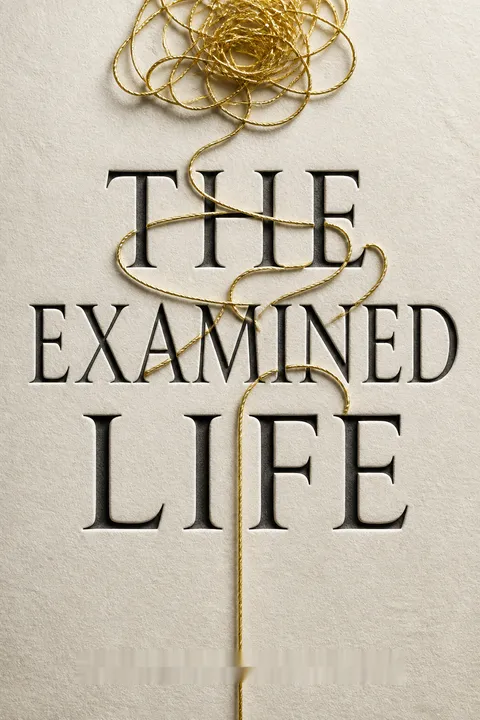
1. What is "The Examined Life: How We Lose and Find Ourselves" by Stephen Grosz about?
- Collection of Case Studies: The book is a series of real-life stories from Stephen Grosz’s 25 years as a psychoanalyst, exploring the inner workings of the human mind.
- Focus on Change and Loss: It examines how people become trapped by their own thoughts, behaviors, and histories, and how change is deeply connected to experiences of loss.
- Everyday Psychoanalysis: Grosz uses accessible language and relatable examples to show how psychoanalytic insights apply to everyday life, not just the therapy room.
- Themes of Communication: The book emphasizes the importance of telling our stories, being listened to, and understanding the “walls” that both separate and connect us.
2. Why should I read "The Examined Life" by Stephen Grosz?
- Insight into Human Nature: The book offers profound insights into why we behave the way we do, making it valuable for anyone interested in psychology or self-understanding.
- Relatable and Compassionate: Grosz’s stories are compassionate, often moving, and written in a way that makes complex psychological ideas accessible to all readers.
- Practical Wisdom: Readers gain practical advice on dealing with change, loss, relationships, and emotional pain, applicable to their own lives.
- Literary and Engaging: The writing is praised for its clarity, elegance, and narrative drive, making it as enjoyable as it is enlightening.
3. What are the key takeaways from "The Examined Life" by Stephen Grosz?
- Change Requires Loss: True change is always accompanied by some form of loss, and understanding this is crucial for personal growth.
- The Power of Storytelling: When we cannot tell our stories, our stories “tell us”—manifesting in dreams, symptoms, or self-defeating behaviors.
- Importance of Being Present: Attentiveness and presence, rather than praise or criticism, are what truly build confidence and connection.
- Facing Difficult Emotions: Avoiding pain, anger, or sadness often leads to greater suffering; acknowledging and working through these feelings is essential for healing.
4. How does Stephen Grosz use psychoanalysis in "The Examined Life"?
- Real-Life Case Studies: Grosz draws on thousands of hours with patients, using their stories to illustrate psychoanalytic concepts in action.
- Focus on Listening: He highlights the importance of listening not just to words, but to silences, gaps, and emotional undercurrents.
- Everyday Relevance: The book shows how psychoanalytic thinking can help us understand everyday problems—relationships, parenting, grief, and self-sabotage.
- No Jargon, Just Stories: Grosz avoids technical language, making psychoanalysis approachable and relevant to a general audience.
5. What are the main themes explored in "The Examined Life" by Stephen Grosz?
- Change and Resistance: The struggle to change, and the unconscious forces that keep us stuck, are central to many stories.
- Loss and Mourning: The book explores how we deal with loss—of people, dreams, or parts of ourselves—and the myth of “closure.”
- Communication and Secrets: The importance of telling the truth, keeping or breaking secrets, and the impact of what remains unsaid.
- Relationships and Intimacy: How we connect, disconnect, and sometimes sabotage our closest relationships, including love, envy, and hate.
6. What are some of the most memorable case studies or stories in "The Examined Life"?
- Peter’s Fake Suicide: A patient fakes his own death, revealing how untold stories can possess and control us.
- Lily’s Laughter: A woman uses humor to numb herself from parental neglect, showing how jokes can both protect and limit us.
- The Gift of Pain: The story of Matt, who cannot feel emotional pain, illustrates the dangers of emotional numbness.
- The Safe House: A man’s obsession with an imaginary house reveals how childhood trauma shapes adult coping mechanisms.
7. How does "The Examined Life" by Stephen Grosz address the concept of change and why is it so difficult?
- Change Means Loss: Grosz argues that all change involves losing something—an identity, a relationship, or a way of being—which can be deeply unsettling.
- Resistance to Change: People often cling to familiar pain or dysfunction because the unknown is more frightening than the known.
- Stories That Trap Us: When we can’t articulate our stories, we act them out, making change even harder.
- Small Steps Matter: The book suggests that even small shifts in awareness or behavior can be significant, and that psychoanalysis helps by making the unconscious conscious.
8. What does "The Examined Life" say about the role of storytelling in understanding ourselves?
- Stories Give Meaning: Grosz believes that we make sense of our lives through the stories we tell about ourselves and our experiences.
- When Stories Can’t Be Told: If we can’t find words for our pain, it emerges in symptoms, dreams, or destructive actions.
- The Analyst as Listener: The psychoanalyst’s role is to help patients find and voice their stories, enabling healing and change.
- “Our Story Tells Us”: The book’s central insight is that unspoken stories can control our lives until we find a way to tell them.
9. How does Stephen Grosz in "The Examined Life" explain the impact of praise, criticism, and being present—especially in parenting?
- Praise Can Backfire: Research and case studies show that praising children for being “clever” can undermine confidence and motivation.
- Being Present Matters Most: Attentiveness and genuine engagement with a child’s experience are more valuable than praise or criticism.
- Praise vs. Thankfulness: Grosz suggests thanking children for effort or patience, rather than praising them for ordinary achievements.
- Building Confidence: True confidence comes from feeling seen and thought about, not from empty praise.
10. What unique psychological concepts or terms are introduced or explained in "The Examined Life"?
- Splitting: The defense mechanism of projecting unwanted feelings onto others, as in “the bigger the front, the bigger the back.”
- Paranoia as Defense: Paranoid fantasies can protect us from the more painful feeling of being forgotten or unloved.
- Negative Therapeutic Reaction: The tendency to resist help or improvement, even when it’s wanted, due to unconscious fears.
- Mourning the Future: The idea that we must grieve not just the past, but also the future we imagined but may never have.
11. What are the best quotes from "The Examined Life" by Stephen Grosz and what do they mean?
- “When we cannot find a way of telling our story, our story tells us—we dream these stories, we develop symptoms, or we find ourselves acting in ways we don’t understand.”
- This highlights the importance of self-understanding and the dangers of unspoken pain.
- “Change and loss are deeply connected—there cannot be change without loss.”
- Grosz emphasizes that growth always involves letting go of something.
- “Being present builds a child’s confidence because it lets the child know that she is worth thinking about.”
- The value of genuine attention over superficial praise.
- “Closure is just as delusive—it is the false hope that we can deaden our living grief.”
- Challenges the popular idea that grief can be “finished” or “closed.”
12. How can readers apply the lessons from "The Examined Life" by Stephen Grosz to their own lives?
- Embrace Self-Reflection: Take time to examine your own stories, feelings, and patterns, especially those that are difficult to face.
- Accept Loss as Part of Change: Recognize that growth often requires letting go, and that mourning is a natural part of life.
- Value Presence Over Praise: In relationships, especially with children, focus on being attentive and genuinely engaged.
- Seek Understanding, Not Perfection: Healing and change come from understanding ourselves, not from achieving closure or erasing pain.
Download PDF
Download EPUB
.epub digital book format is ideal for reading ebooks on phones, tablets, and e-readers.








