

Key Takeaways
Treat anxiety as an alarm, not as proof of danger
An old system, new alarms. Anxiety is the body’s threat response: it mobilizes attention and energy when danger seems possible. That system helped human ancestors notice predators, but modern alarms can be triggered by imagined failure, social rejection, work pressure, or bodily sensations. The body may react similarly whether the threat is an animal or an important meeting, even though the stakes differ sharply.
Doubt demands attention. The book describes anxiety as protective but sometimes overactive. A racing heart is real; the feared catastrophe it seems to predict may not be. The task is not to shame the alarm or assume it is always wrong, but to notice its warning and assess what is actually happening before obeying its demand to escape or solve everything immediately.
This framing makes anxiety easier to understand without treating it as a character flaw. It also resembles an alarm system in engineering: a sensitive detector can catch genuine hazards, but too many false alarms make people either hypervigilant or inclined to ignore it. The useful question is not whether anxiety is rational in the abstract, but whether its response fits the present evidence. Some threats are real, as Levi’s abusive home life shows. Reassurance that every alarm is harmless would be as misleading as believing every alarm.
Approach feared situations before avoidance writes your life
Fear shrinks through practice. Exposure therapy means approaching situations or sensations that fear has taught someone to avoid, in a planned way. Zahra’s first panic attack at a medical conference led her to flee, then to monitor her body and avoid more situations in case panic returned. In therapy, she first rode an elevator despite intense fear, then practiced driving toward her workplace. Her anxiety remained present, but she discovered she could act while feeling it.
Change the lesson. Avoidance can bring immediate relief, yet it also prevents a person from learning that the feared situation may be manageable. Zahra’s exposures were not tests of toughness; they were ways to practice tolerating uncertainty and shifting attention away from constant symptom-checking. The book stresses taking steps that fit the person and the problem, rather than forcing a dramatic confrontation.
The strength of exposure is that it changes learning through experience, not argument alone. Zahra could understand panic as a doctor and still fear an elevator; knowledge became more persuasive when she stayed in the elevator and saw what followed. Learning theory also suggests that exposure does not have to erase fear to be useful. A person can learn that fear and action coexist. The important qualification is that exposure should be appropriately planned, especially where trauma, medical concerns, or genuine external danger require careful assessment.
Do not mistake intrusive thoughts for intentions
Unwanted thoughts can feel incriminating. Obsessive-compulsive disorder, or OCD, is often caricatured as a preference for neatness. Fletcher describes it as a disabling condition that can involve intrusive thoughts: unwanted, involuntary, distressing images or ideas. Levi, an intimidating nightclub security chief, feared taboo thoughts about harming people he loved. He interpreted them as evidence of possession and inflicted severe injuries on his back to neutralize them.
Stop feeding the cycle. After assessment and referral to a specialist, Levi began exposure-response prevention, or ERP. This treatment asks a person to face a feared thought or situation without performing the ritual meant to cancel it. Levi gradually looked at family photos and spent time caring for his granddaughter, while allowing anxiety to rise and fall. The distinction between thought and intent matters, but the book also shows why risk assessment and medical care cannot be skipped.
Levi’s story offers a humane correction to the assumption that disturbing mental content reveals a person’s character. In OCD, efforts to suppress or neutralize a thought can make it more central, because the mind treats the struggle as evidence that danger matters. ERP interrupts that reinforcement. Still, a thought’s unwanted quality alone cannot establish safety in every case. The book is strongest when it pairs compassion with assessment, and when it recognizes that severe self-injury or complex needs may require specialist support.
Choose therapy by fit, not by one disappointing attempt
Therapy is not one product. A modality is a school of therapeutic practice. The book names cognitive behavioral, person-centered, psychodynamic, transactional analysis, and metacognitive approaches, among others. They differ in what they focus on and how active the therapist is. The client also needs a workable connection with the therapist. Fletcher compares deciding that therapy never helps after one mismatched experience to rejecting all sports after trying one activity once.
Ask before committing. A prospective client can ask what training the therapist has, what the therapy aims to do, and how progress will be discussed. Fletcher argues that anxiety disorders may respond better to approaches designed for them, while a supportive therapeutic relationship matters across approaches. If a therapist is unprepared, unprofessional, or simply a poor match, changing therapists is not a personal failure. Each attempt can still teach someone what kind of help they need.
The analogy to trying one sport captures a real problem: the word therapy hides substantial variation in methods, goals, and therapist behavior. Asking about training and treatment rationale gives clients a way to make an informed choice rather than treating the first match as a verdict. At the same time, fit should not become an excuse to abandon treatment at the first discomfort. Productive therapy can feel difficult. The distinction is whether the difficulty serves a clear purpose within a respectful, collaborative relationship.
Step outside your own frame before offering comfort
People see from where they stand. Fletcher calls each person’s perspective a frame of reference: the lens shaped by their experience, beliefs, and fears. A listener who turns every story back toward themselves may be well-intentioned, but the speaker can still feel unseen. Therapists train to enter a client’s frame without assuming that their own interpretation is the correct one.
Curiosity beats mind-reading. Levi first appeared to Josh as a threatening, muscular bouncer. As Josh listened, the man’s defensiveness gave way to fear, shame, and distress. Daphne, a famous actor, also had to be met as a person rather than as a public image. The therapist’s inner voices, including anxiety, judgment, empathy, and intuition, are presented as competing reactions. His practice is to notice them, then choose the response that serves the client.
Perspective-taking is more than imagining what another person feels; it includes being willing to revise an initial story about them. That is particularly valuable where status, gender, or a conspicuous appearance can invite snap judgments. The frame metaphor also has a limit: empathy cannot provide direct access to another person’s experience. Its best form remains provisional, checked through listening and questions rather than presented as certainty. The book’s self-aware therapist models that discipline by showing his own reactions instead of pretending they do not exist.
Question the inherited rules that define your worth
Old lessons can feel like facts. An introjection is a belief absorbed from experience or authority and adopted as one’s own, sometimes without questioning its accuracy. A child repeatedly praised only for perfect results may learn that love depends on achievement. A child told not to cry may equate emotional silence with strength. Such beliefs can later shape anxiety, self-criticism, and people-pleasing.
Trace the belief, then test it. Daphne realized that her mother’s affection often arrived when she performed successfully, leaving her unsure who she was outside her public role. Noah, raised amid abuse and rejection, came to believe he was unlovable and powerless. Therapy helped him compare those conclusions with his present choices, including building a life in a new city and seeking help. Understanding where a belief came from does not make it true or excuse harm; it makes the belief available for examination.
The idea connects personal identity to social learning: people often absorb standards before they have the distance or power to evaluate them. That can make a belief feel like self-knowledge when it is partly a record of how others treated someone. Tracing its origin can loosen that grip, but origin stories should not become monocausal explanations. A person’s present circumstances, temperament, and material constraints also matter. The practical value lies in testing whether a once-protective rule still serves the adult who carries it.
Make self-care fit your life, not an Instagram template
Care is personal, not performative. Fletcher argues that self-care is whatever a person experiences as nurturing and wholesome, not a standardized list of wellness products or routines. Exercise, sleep, and nourishing food can matter, but yoga, meditation, gratitude journals, or supplements are not universal cures. Zahra had spent money on quick fixes because she wanted panic to stop; the purchases did not resolve the fear cycle.
Choose what restores you. Fletcher’s own examples range from walks, reading, and baths to video games, late nights with friends, and holiday food. The point is not that every pleasurable choice is restorative in every circumstance. It is that self-care should not become another perfectionistic assignment, complete with guilt for failing to perform it correctly. Rest, boundaries, and ordinary enjoyment can all be part of caring for oneself.
This challenges a market that often turns wellness into consumer identity: the person is encouraged to buy a solution, then blamed for not feeling transformed. Defining care by its actual effect helps distinguish restoration from imitation. Yet personal preference is not the only measure; a habit that feels soothing immediately can undermine health over time. Fletcher’s account is most useful when paired with honest reflection about both short-term comfort and longer-term consequences, rather than with a moral ranking of conventional and unconventional routines.
Boundaries protect care when therapy becomes emotionally complicated
Care has limits for a reason. Therapy involves unequal roles, confidentiality, and responsibilities that do not disappear when strong feelings arise. Fletcher describes referring clients when their needs exceed his competence. When Noah disclosed sexually assaulting a young man, Josh explained that serious crime could not remain confidential and contacted the care team. With Levi, he recognized possible coercive abuse and had to weigh safeguarding against the risk of losing the client’s trust.
The therapist is human too. Josh became attracted to Zahra while she was grieving and ended their work when his feelings interfered with his judgment, recommending specialists instead. That decision protected the client, though the book also shows how difficult it was to recognize the problem in time. Boundaries are not proof of indifference; they help keep professional care from becoming a relationship that serves the therapist’s needs.
These cases make ethics concrete rather than ceremonial. Confidentiality supports candor, but it is not absolute; safety, law, and professional competence can impose limits. The book also shows that ethical decisions are not always cleanly resolved by a checklist, particularly in coercive relationships where disclosure may increase risk. The attraction storyline is a useful warning about power and self-deception: good intentions do not guarantee sound judgment. Supervision, consultation, and timely referral are essential safeguards, not signs of professional weakness.
Let grief emerge when panic no longer fills every corner
Emotions do not arrive on schedule. Zahra’s panic had occupied so much attention that grief for her murdered father remained largely untouched. As her fear eased, she could speak about his influence, her anger at her brother, and the guilt of their final disagreement. She described missing his guidance and presence, not just the circumstances of his death. Talking did not undo the loss, but it helped her make room for the feelings she had been avoiding.
Grief has no tidy finish. Josh’s younger brother Harry died of cancer after a long illness. The book depicts the family’s hope, fear, and final vigil, and later shows Josh drinking heavily on Harry’s birthday to escape the sadness. The contrast matters: emotional pain deserves expression, while attempts to numb it can deepen harm. Remembering someone can hurt and comfort in the same life.
The account resists the demand that grief be converted quickly into a lesson or a recovery milestone. It also shows how one form of distress can crowd out another: when panic recedes, sorrow may become newly noticeable rather than newly created. The author’s drinking scene adds a candid warning about avoidance, but grief itself is not a disorder simply because it lasts or returns. Support should make room for individual and cultural differences in mourning, not impose a single timetable or style of emotional expression.
Use therapy as a focused human relationship, not a friendship
The relationship is part of the work. Fletcher presents therapy as a protected space in which a trained professional listens, uses empathy, and keeps the client’s concerns central. Carl Rogers’s term unconditional positive regard describes accepting a person without reducing them to a mistake or a disagreement. This does not mean the therapist must agree with everything or become a friend. Clear roles allow the client to be vulnerable without taking responsibility for the therapist’s emotional needs.
Endings are part of care. Some of Fletcher’s clients leave with gratitude; others leave amid uncertainty or unfinished problems. He argues that clients can question the work, change therapists, or end therapy without managing the therapist’s feelings. Good therapy may complement support from friends and family, but it offers a distinct, focused relationship. Its value lies not in a guaranteed happy ending, but in a trustworthy place to think and work.
A paid, bounded relationship can create a rare kind of attention: the client is not expected to reciprocate by comforting the professional. That structure is not coldness; it is what allows the therapist to keep returning focus to the client. Still, the book’s emphasis on empathy and acceptance should not be mistaken for a guarantee that therapy will help everyone or that every therapist is competent. Its most useful standard is practical: clients should be able to ask what the work is for, raise concerns, and leave without being shamed.
Analysis
The book’s distinctive achievement is to make therapy visible from both sides of the door. Its four composite client stories teach recognizable psychological ideas, while the therapist’s internal debate exposes the gap between professional knowledge and human reaction. The result is not a textbook with anecdotes attached, but a memoir that uses clinical encounters to ask what care requires when the clinician is anxious, tired, attracted, shocked, or simply unsure.
That structure carries an important tension. The book explains anxiety as a threat system that can mistake uncertainty for danger, then shows Levi facing a different reality: his home and community may contain actual coercion and harm. This contrast prevents the advice to tolerate fear from becoming a universal command. The crucial distinction is between tolerating internal discomfort and submitting to external danger. Assessment, context, and competent referral matter as much as courage.
The narrative also declines the tidy arc of a therapist who fixes people. Zahra makes progress, Noah’s story forces a painful ethical rupture, and Levi leaves while still in a dangerous situation. Harry’s death makes clear that psychological understanding does not abolish grief. These unresolved endings lend credibility to the book’s argument that therapy is a process, not a promise of rescue.
Some explanations simplify complex science for accessibility. The amygdala and stress-jug accounts are useful teaching images, but they should not be mistaken for complete biological models or precise explanations of every person’s symptoms. Likewise, emotional disclosure can help, but it is not universally sufficient or appropriate without regard to timing and support. The book’s best safeguard against overclaiming is its own humility: the therapist’s inner voices disagree, the work has limits, and good care sometimes means admitting that another professional is better placed to help. Its central invitation is therefore less about mastering feelings than approaching them with curiosity, context, and appropriate support.
Review Summary
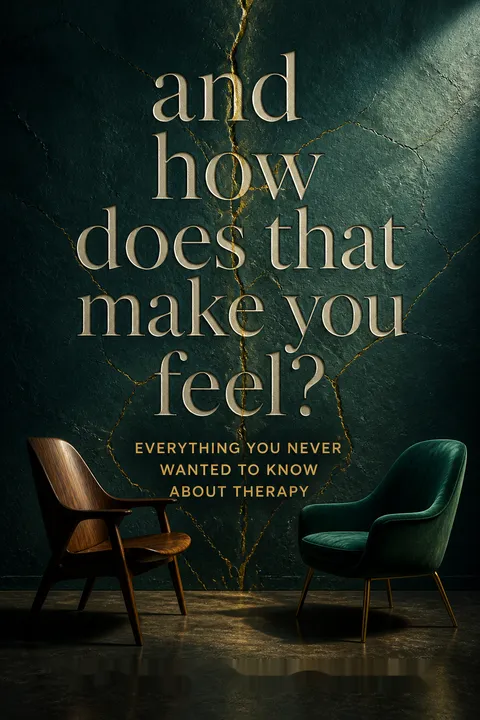
And How Does That Make You Feel? received mostly positive reviews, with readers praising its candid insights into therapy and the author's humorous approach. Many found it engaging and relatable, appreciating Fletcher's vulnerability and the book's educational value. Some critics felt it lacked depth or raised ethical concerns about client confidentiality. Overall, readers recommended it for those interested in therapy or mental health, though some suggested it may be more suitable for those new to therapy.
People Also Read





Glossary
Threat response
The body’s danger alarmThe physical and mental system that responds when a person perceives a possible threat. In the book, it can mobilize fight, flight, freeze, or fawn reactions, and can trigger doubt, bodily symptoms, and scanning for danger. The perceived threat may be immediate physical danger or a modern concern such as rejection, failure, or panic itself.
Panic cycle
Fear that feeds on fearA repeating pattern in which a frightening panic attack leads someone to fear another attack. They may monitor bodily sensations, interpret them as signs of catastrophe, seek reassurance, or avoid situations. These responses can keep panic central and strengthen the belief that its sensations are dangerous.
Internal threat monitoring
Scanning inside for dangerThe habit of repeatedly checking internal sensations, thoughts, or signs of anxiety for evidence that something is wrong. Zahra, for example, checked her body and interpreted palpitations as possible illness. In the book’s account of panic, this self-focused surveillance can make ordinary sensations feel more threatening.
Exposure therapy
Practice facing feared situationsA therapeutic approach that gradually brings a person into contact with situations or sensations they fear and avoid. The aim is to help them learn that anxiety can be tolerated and that feared situations are not always dangerous. The book presents exposure as planned practice, not as forcing someone into an overwhelming or unsafe situation.
Exposure-response prevention
Face fear without ritualsOften abbreviated as ERP, this treatment for OCD involves facing feared thoughts, images, or situations while refraining from compulsions used to neutralize anxiety. For Levi, this meant looking at family photographs and spending time with loved ones without performing self-punishing rituals. The book describes ERP as a specialist treatment requiring appropriate assessment and knowledge.
Introjection
An absorbed beliefA belief taken in from relationships, authority figures, or culture and treated as one’s own, often without examining whether it is accurate. A child praised only for achievement might conclude that affection must be earned. Introjected beliefs can be helpful or harmful; therapy can help identify and reconsider those that constrain a person’s life.
Frame of reference
A person’s experiential perspectiveThe perspective through which an individual understands events, shaped by personal history, beliefs, and feelings. The book uses the term to explain why people can experience the same situation differently and why a listener should not assume their own interpretation fits someone else. In therapy, attending to the client’s frame helps the client feel understood.
Unconditional Positive Regard
Acceptance without hasty judgmentA term associated in the book with Carl Rogers. It describes an attitude of accepting and valuing a person as a whole, rather than making their worth depend on agreement, achievement, or the absence of mistakes. It does not require approval of every action. In therapy, it supports honest exploration without reducing the client to a problem or failure.
Stress jug
A metaphor for stress capacityA teaching metaphor for the pressures a person is carrying and their capacity to manage them. Life events such as grief, work demands, health worries, and relationship conflict add to the imagined contents. When pressure exceeds capacity, anxiety may intensify. The metaphor helps identify contributing stressors, but it is an explanatory image rather than a literal biological container.
Fight, Flight, Freeze, or Fawn
Four threat-response patternsA description of common reactions to perceived threat. Fight involves confronting it, flight involves escaping, freeze involves shutting down or becoming unable to act, and fawn involves appeasing others to reduce conflict. The book connects these reactions to fear and learned beliefs, while noting that people may respond differently across situations.
Download PDF
Download EPUB
.epub digital book format is ideal for reading ebooks on phones, tablets, and e-readers.








