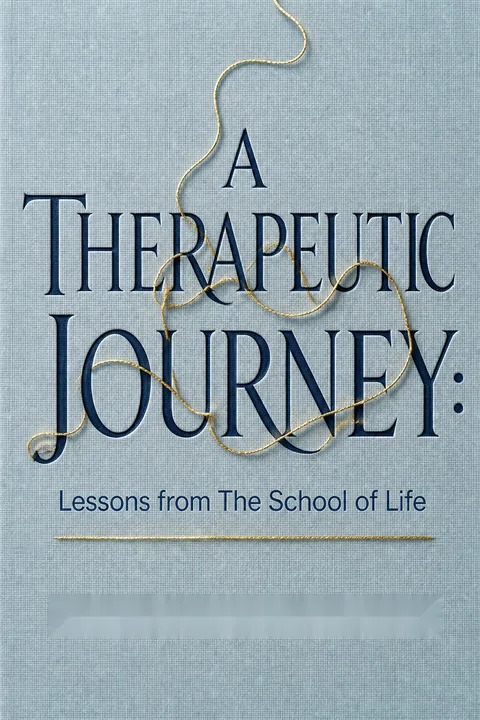


Key Takeaways
Call a breakdown illness, not proof that you are defective
A crisis has a history. Mental distress can build beneath an outwardly competent life until a work failure, a breakup, or sheer exhaustion makes coping impossible. The book’s opening image is a man collapsing in a diner, captured by photographer Henri Cartier-Bresson. His private anguish becomes visible in a public place, a reminder that despair is not a rare personal disgrace.
Treat symptoms as signals. Anxiety, self-hatred, and catastrophic thoughts may point toward pain that has never been understood, but they cannot explain their own origins. Recovery calls for patient investigation, often with professional help, rather than shame or a demand to snap out of it. The first useful move is to admit that something is wrong and accept care.
The illness framing counters a familiar moral trap: people often interpret impaired functioning as laziness or weak character, adding blame to distress. It also legitimizes seeking help before a crisis becomes dramatic enough for others to notice. The idea that symptoms contain clues is valuable, but not every symptom has a hidden psychological message; medical, social, and biological factors can matter too. Compassionate curiosity works best alongside appropriate clinical assessment, not as a substitute for it.
Translate childhood memories into feelings, not tidy summaries
Facts are not felt memories. Saying a parent was distant or school was unhappy can describe an event while leaving its emotional force untouched. The book argues that people may need to revisit what childhood actually felt like, including fear, shame, anger, and grief, rather than relying only on a polished account of the past. Children absorb emotional rules about trust and worth before they can examine them.
Notice inherited voices. An adult may hear an inner command to avoid risk or expect rejection without realizing it resembles a caregiver’s outlook. Photographer Chino Otsuka’s project, which places her adult self beside her younger self in old photographs, offers a vivid image of bringing adult understanding to a child’s loneliness. Therapy can help identify such patterns without treating every present problem as a simple replay of childhood.
The language-learning comparison makes early experience easier to grasp: children absorb emotional habits before they can name them, much as they learn grammar without explicit lessons. Revisiting memories can also distinguish what happened from what a child concluded about themselves. Still, memory is reconstructive, not a perfect recording, and childhood is not the only source of adult difficulty. The strongest use of this lens is exploratory: it opens questions about old assumptions without forcing a predetermined blame story.
When panic takes over, borrow a steadier mind before deciding
Distress distorts judgment. In a severe episode, thoughts may race while perspective, proportion, and self-kindness disappear. A minor mistake can feel like total ruin; nighttime worries can seem more convincing simply because the person is exhausted. The book calls for skepticism toward sweeping conclusions made in such states, especially decisions that cannot easily be undone.
Make room for another view. Pause, rest, and ask what the fear is really about, why it feels so threatening, and what compassionate response might help. A trusted friend or therapist can serve as a temporary second mind, offering perspective when the sufferer cannot find it alone. Therapy also gives frightening thoughts room to be spoken and examined. Severe or immediate danger calls for professional support, not solitary reflection.
This advice resembles cognitive offloading: when working memory and emotional regulation are strained, another person can help organize information and slow impulsive conclusions. Delaying major choices during acute distress is a useful safeguard, provided it does not delay action needed for immediate safety. The distinction between a thought and a reliable assessment of reality can be liberating. It should not become blanket distrust of one’s perceptions; outside input is most helpful when it is informed, respectful, and responsive to actual risks.
Treat love as patient, practical care, not praise for performance
Care is often ordinary. The book presents love during illness not as a clever argument for someone’s worth, but as reliable presence: bringing a familiar drink, keeping company, making gentle conversation, or listening without forcing a confession. This matters especially when a person believes they must earn affection through achievement and feels worthless once work or status falls away.
Isolation deepens the wound. In Ferdinand Hodler’s painting The Disappointed Souls, several distressed figures sit close together yet remain emotionally separate. The image captures how suffering can make people feel uniquely unacceptable, even when others are nearby. Repeated contact with trustworthy friends or peers can challenge that isolation. Such companionship supports recovery, but it does not make professional treatment, medication when appropriate, or practical safety planning unnecessary.
The emphasis on dependable presence aligns with a broad finding in human development: distress is often easier to regulate in the presence of a trusted person. Practical help can communicate acceptance more convincingly than abstract reassurance. The community point also pushes against the expectation that one romantic partner must meet every emotional need. Care does have limits, however. Friends and relatives need boundaries and support themselves, and no companion should be cast as the sole treatment for serious mental illness.
Make intimacy safer by welcoming vulnerability and repairing small hurts
Love is a practice. Lasting intimacy depends less on perfect compatibility than on how partners handle flaws and hurt. Each needs room to show fear or awkwardness, hear feedback without treating it as rejection, and respond to the other with tenderness and curiosity. The book’s therapeutic approach asks partners to wonder what history might sit behind a difficult reaction, rather than reducing someone to their worst moment.
Small grievances deserve attention. A forgotten plan or a dismissive remark may seem trivial to one person yet accumulate into resentment for the other. Calmly raising and hearing such disappointments can preserve warmth and admiration. This does not mean agreeing on every taste or merging every part of life. A relationship can be simpler and more satisfying when both people reliably offer respect, honesty, and care.
This account treats intimacy as a setting for learning, not merely a reward for finding the right person. That shift makes repair more plausible: conflict becomes information about needs and histories, rather than proof that the relationship is doomed. The approach is strongest when curiosity is mutual and paired with accountability. Searching for a sympathetic explanation should never excuse coercion or repeated harm. Tenderness and clear limits are compatible; understanding why someone behaves badly does not require accepting the behavior.
Build routines that reduce mental strain before willpower runs out
The body shapes the mind. Sleep loss can make worries and self-criticism feel unusually persuasive, so the book advises treating rest as part of mental care, not a reward for finishing everything. It also recommends modest supports: simple food, a warm bath, a short walk, quiet, and manageable household tasks. These are not presented as cures, but as ways to make a difficult day less punishing.
Allow convalescence. Mental recovery may take a long time and move unevenly, with hard days even after progress. The book compares this to recovering from a physical injury: a person may need to reduce demands, protect their energy, and accept help. Its suggested routines are invitations to adapt, not universal rules. Persistent or severe symptoms warrant qualified medical care, even when ordinary habits also help.
The practical strength here is its refusal to separate emotional life from sleep, movement, surroundings, and daily structure. These conditions can affect attention and emotion, making it easier or harder to use psychological tools. Small tasks can restore a sense of agency without demanding a dramatic transformation. Yet routines should support care, not become another standard against which an unwell person judges themselves. Individual health conditions, work demands, and treatment needs vary, so flexibility matters more than perfect adherence.
Use art and attention to find reasons for staying in the ordinary
Beauty interrupts the loop. Distress can shrink attention until the mind seems to contain the whole world. Art offers another focus and, at its best, makes private sadness feel shared rather than strange. The book uses Muqi Fachang’s Six Persimmons to model patient looking: spend time with six ordinary fruits and their differences become visible. The point is not to admire one approved object, but to relearn attention.
Notice rather than escape. A familiar walk, a cup on a windowsill, or rain stippling a river can offer a brief reason to stay engaged with life, even when larger problems remain. The book also suggests that novelty can stretch subjective time: seeing a known place with fresh eyes makes a day feel less blurred. Small pleasures do not solve grief, but they can interrupt its claim to occupy everything.
This is more than an argument for gratitude. Focused attention can loosen rumination by giving perception a concrete task, while art lets a person encounter emotion indirectly and at a manageable distance. The persimmons make the practice memorable because they resist spectacle: the viewer has to do some of the work. Still, appreciation should not be demanded from someone in deep pain. A small pleasure can coexist with despair; its value lies in offering a moment of contact, not in disproving suffering.
Reject borrowed measures of success and protect your own inner freedom
The culture has its pressures. The book argues that limitless ambition, meritocratic blame, constant comparison, compulsory cheerfulness, and nonstop media can make ordinary lives feel like failures. If success is assumed to be deserved, failure can look like a personal verdict. The alternative is not passivity, but a deliberate choice to value peace, close relationships, and work that feels worthwhile over applause from strangers.
Make a smaller plot your own. Kamo no Chomei, once prosperous, lived in a modest hut and found satisfaction in its beauty, free time, and distance from status competition. Voltaire’s garden offers a related image: focus effort on a manageable patch of life instead of trying to repair the whole world. Listening to boredom and setting warm, clear boundaries can help identify where borrowed expectations have taken over.
The book’s critique connects emotional strain to social structures, especially the moral pressure created when unequal outcomes are treated as proof of unequal merit. Its answer is a form of selective attention: care about what can be influenced, and stop treating public approval as a reliable measure of human value. This can protect energy, but retreat should remain a choice rather than a prescription. Some people need collective action or material change, not simply a quieter attitude toward unfair conditions.
Build recovery for relapses, not just one triumphant return
Progress is not a clean ending. The book describes recovery as ongoing management: notice early warning signs, repeat helpful practices, keep trusted people close, and avoid decisions made from the grip of despair. It urges readers to recognize small gains, such as a calmer week or accepting kindness, rather than dismissing them because life is not fully repaired.
Find reasons that fit now. After disgrace and political ruin, Richard Nixon still found ordinary sources of contentment in family life and gardening. His story does not erase his actions; it illustrates that a damaged reputation need not eliminate every possible good. The book’s hope is deliberately modest: if old ambitions or relationships no longer sustain life, other reasons may be built from friendship, care, nature, work, art, and daily pleasures.
A relapse-aware model is more credible than treating mental health as a permanent victory, and it encourages preparation instead of panic when symptoms return. Marking small gains also makes progress observable, which can counter the mind’s tendency to remember only failure. Nixon’s example usefully separates a person’s future capacity for ordinary contentment from public absolution. The larger lesson is not that every loss can be repaired, but that a life can remain worth protecting even when its original plan has failed.
Analysis
This anthology is organized less like a clinical manual than like a companion through changing weather. It begins with breakdown, searches backward through childhood and relationships, turns outward to art and society, then gathers practical reasons to keep going. Its recurring method is to make an abstract emotional claim tangible through an image: the collapsed diner patron, a child beside an adult self, six persimmons, an isolated row of mourners, or a hut in the hills. These examples make the book unusually memorable, though they are illustrations rather than evidence that a particular intervention works for everyone.
Its central contribution is a change in moral interpretation. Anxiety, retreat, dependence, and the need for comfort are not automatically signs of defective character. They may be understandable responses to old learning, current pressures, or illness. This shifts the question from how to force oneself back to normal toward what conditions might make life bearable. Love, community, therapy, routine, and art are treated as different forms of support, not competing answers.
The most important limitation is the pull toward psychological explanation. Early relationships can shape adult expectations, but not every distressing experience should be decoded as a childhood wound, and memories are not neutral records. The book also sometimes gives love and reflection a sweeping role that may obscure the importance of diagnosis, medication, material security, or structural change. Its own recognition of medication and social pressures helps, but the reader should not mistake literary persuasion for a complete treatment plan.
The adaptation’s strongest reading is therefore both tender and practical: take suffering seriously, investigate without assuming, borrow perspective when judgment falters, and build a life from supports that can actually be reached. The goal is not invulnerability. It is a durable, revisable set of reasons to remain in the world, including on days when the reasons are small.
Review Summary
A Therapeutic Journey receives mixed reviews, with ratings ranging from 1 to 5 stars. Readers appreciate its philosophical approach to mental health, relatable content, and use of art as therapy. Many find it comforting and thought-provoking, praising de Botton's writing style. However, some criticize it for being overly privileged, dry, or lacking practical advice. The book's structure and focus on childhood experiences are debated. Overall, it resonates with those seeking a compassionate perspective on mental health, while others find it repetitive or unrealistic.
People Also Read







Glossary
false self
Protective social personaA term associated in the book with psychoanalyst Donald Winnicott. It describes the compliant, socially adjusted presentation a person may develop to meet others’ expectations or avoid disapproval. Social adaptation is necessary, but problems can arise when this persona overwhelms contact with genuine feelings, wishes, and needs.
primary parental delight
A child feels deeply wantedThe book’s phrase for a child’s experience of being welcomed and valued simply for existing. It is conveyed through repeated attention, affection, play, and reassurance. The author argues that a lack of this early affirmation can contribute to lasting feelings of shame, unworthiness, and difficulty trusting that care is available.
reflective listening
Paraphrase to show understandingA listening technique described as repeating the meaning of another person’s concern in fresh words, rather than rushing to reassure, contradict, or solve it. The paraphrase demonstrates active attention and can help the speaker feel understood. The aim is companionship and emotional recognition, especially when no practical solution can remove the source of distress.
therapeutic attitude
Curiosity about behavior’s historyA way of approaching difficult behavior by asking what past experiences, fears, or defenses might help explain it. In close relationships, this means replacing instant condemnation or diagnosis with patient questions and mutual self-examination. It encourages understanding, but does not require excusing harmful conduct or abandoning boundaries.
second mind
Borrowed perspective in crisisThe book’s image for relying temporarily on a trusted person’s judgment when severe distress has weakened one’s own perspective. A friend or therapist can help assess worries, challenge catastrophic conclusions, and postpone decisions made under emotional strain. It is a form of support, not a claim that another person should control someone’s life.
internal exile
Mental distance from social pressureThe author’s phrase for continuing to live in modern society while privately questioning its demands and values. Rather than physically withdrawing from the world, a person creates an inner refuge from pressures such as status competition, constant media, and compulsory optimism, and chooses standards more compatible with psychological well-being.
samsara
Cycle of rebirthIn Hindu traditions discussed in the book, samsara is the repeated cycle of birth, death, and rebirth. The text presents it as an exhausting continuation of individual existence, shaped by karma, from which spiritual liberation offers release. This glossary description reflects the book’s account, not the full diversity of Hindu thought.
moksha
Liberation from samsaraA Hindu concept of spiritual liberation from the cycle of rebirth. In the book’s presentation, moksha involves seeing beyond the illusion of complete separation between the self and the wider universe. This shift loosens attachment to ego and personal status and is associated with release from samsara.
FAQ
What's A Therapeutic Journey about?
- Journey of Recovery: The book narrates a path from mental breakdown to recovery, focusing on resilience and self-understanding.
- Mental Health Focus: It delves into mental illness, self-acceptance, and the healing roles of love and community.
- Art and Connection: Discusses art's therapeutic power and the importance of human connection in overcoming despair.
Why should I read A Therapeutic Journey?
- Practical Guidance: Offers valuable advice for those facing mental health challenges.
- Empathy and Understanding: Provides a compassionate view on mental illness, fostering a sense of community.
- Encouragement for Resilience: Emphasizes resilience and self-compassion, urging readers to find beauty in life.
What are the key takeaways of A Therapeutic Journey?
- Importance of Vulnerability: Highlights vulnerability in relationships as a path to deeper connections.
- Role of Love in Healing: Love is crucial for recovery from mental illness, acting as a healing force.
- Self-Compassion and Acceptance: Encourages self-kindness and acceptance to improve mental well-being.
What are the best quotes from A Therapeutic Journey and what do they mean?
- "Love is a weapon against despair.": Love combats hopelessness and provides strength.
- "We cannot allow terror, self-hatred, and sadness to have their victories over us.": Encourages resisting negative emotions and seeking joy.
- "Art is a tool with which to alleviate a sense of crushing isolation.": Art connects us to emotions and others, reducing isolation.
What is the significance of community in A Therapeutic Journey?
- Shared Experience: Community helps alleviate isolation by connecting individuals with similar struggles.
- Support Systems: Provides essential support for recovery and fosters resilience.
- Collective Healing: Encourages sharing experiences for mutual healing and understanding.
How does A Therapeutic Journey address the concept of self-compassion?
- Foundation of Healing: Self-compassion is crucial for mental health recovery.
- Overcoming Self-Hatred: Discusses combating self-hatred to improve self-confidence.
- Practical Exercises: Offers exercises to cultivate self-compassion and shift focus from criticism to acceptance.
What role does art play in A Therapeutic Journey?
- Emotional Expression: Art allows for creative emotional exploration and processing.
- Connection to Others: Fosters connections by sharing struggles and finding common ground.
- Beauty in Everyday Life: Encourages finding beauty in ordinary moments to enhance well-being.
What therapeutic techniques are discussed in A Therapeutic Journey?
- Reflective Listening: Promotes understanding in relationships by paraphrasing feelings.
- Processing Emotions: Emphasizes airing emotions to maintain warmth and affection.
- Gentle Communication: Advocates softening language to reduce defensiveness in discussions.
How does A Therapeutic Journey define resilience?
- Ability to Endure: Resilience is enduring and recovering from difficulties.
- Creative Problem-Solving: Involves thinking creatively to cope with challenges.
- Support from Others: Strengthened by loving relationships and community support.
What is the relationship between love and mental health in A Therapeutic Journey?
- Love as a Healing Force: Essential for mental health, addressing deficits of love.
- Mutual Support: Provides a safe space for vulnerability and healing.
- Transformative Power: Encourages confronting fears and insecurities for personal growth.
How can I apply the lessons from A Therapeutic Journey in my life?
- Practice Self-Compassion: Treat yourself with kindness and reflect on your feelings.
- Engage with Art: Use art for emotional expression and connection.
- Build Community: Seek supportive communities and engage in open mental health conversations.
About the Author
Other books by Alain de Botton









Download PDF
Download EPUB
.epub digital book format is ideal for reading ebooks on phones, tablets, and e-readers.








