

Key Takeaways
Treat muscle as the body’s engine for thought, agency, and survival.
Muscle does more than move. Skeletal muscle lets us act at will, while cardiac muscle beats the heart and smooth muscle moves blood and food without conscious direction. Together, they keep the body working. Skeletal muscle also makes up about 40 percent of body weight and communicates with the brain, challenging the idea that muscle is merely physical and thought belongs only to the mind.
The evolutionary story makes the point vividly: the sea squirt uses its brain while swimming, then digests much of its nervous system after settling permanently in one place. Movement makes a nervous system useful. Human bodies are more complex, but the same basic link remains: muscle enables us to engage with the world, and movement helps shape how we think and feel.
What's striking is the reversal of the usual hierarchy: muscle is not a servant waiting for the brain's commands, but part of the system through which agency becomes real. This is a useful corrective to screen-centered accounts of human life, where thought can seem disembodied. The sea squirt is a sharp illustration, though it should not be mistaken for proof that every mental function exists only to produce movement. The broader insight is stronger and more defensible: cognition and action are deeply coupled, so caring for one while neglecting the other gives an incomplete picture of health.
Train strength before society decides what your body is allowed to do.
Potential needs permission. Jan Todd was a fast, athletic girl, but her school offered no track team, and adults discouraged her from developing muscular legs. Her future husband, strength historian Terry Todd, helped her discover what training could unlock. After deadlifting 225 pounds on her first try, she trained for powerlifting and set a women’s two-handed lifting record of 394.5 pounds in 1975.
In 1979, she became the first woman to lift Scotland’s Dinnie Stones, a pair of boulders weighing 733 pounds together. Her feats did not prove that every person can reach the same level. They exposed how often opportunity, practice, and social approval determine which abilities get tested at all. The body may contain potential that neither its owner nor the surrounding culture has learned to recognize.
Todd’s story illuminates a selection problem: societies often treat observed achievement as evidence of innate capacity, while overlooking people who were never invited to train. Her accomplishments also show why representation matters. A visible example can revise what others consider possible, and can make new opportunities seem legitimate. That argument does not erase average biological differences between groups, or the enormous variation among individuals. It instead asks a more precise question: which limits are physiological, and which are reinforced by rules, expectations, and unequal access?
Judge muscles by what they enable, not by how closely they fit an ideal.
Beauty has a history. Ancient Chinese medical maps often focused on the body’s vital energy rather than visible muscle. Greek artists, meanwhile, sculpted defined physiques before they fully understood anatomy. These traditions show that the muscular body is not a universal ideal; cultures decide which features signal health, virtue, or power.
Modern images keep teaching those decisions. Male superheroes are commonly drawn with broad shoulders and prominent arms. Female superheroes may be strong, but their bodies are more tightly constrained by familiar ideals of breasts, hips, and a narrow waist. The same bias appears in assumptions that a defined stomach proves fitness, even though leanness does not automatically mean strength. Looking at how a body functions, rather than only how it appears, offers a better measure of what muscle can do.
The contrast between different traditions makes aesthetics visible as a cultural choice rather than a biological verdict. That matters because images shape not only personal confidence but also whose bodies seem credible in medicine, sport, and public life. Function is a valuable counterweight to appearance, although it is not a complete answer: bodies also carry identity, pleasure, and personal style. The strongest conclusion is not that appearance should never matter, but that one narrow visual template should not be mistaken for a neutral measure of health or capability.
Move to change your mood, not just to improve your body.
Motion feeds the mind. During the pandemic, Chicagoan Dan O’Conor began jumping into Lake Michigan each day. The leap offered a brief break from worry, and the ritual grew into a gathering with music and other jumpers. Watching him became mood-lifting for people who followed his videos, too. The movement carried a recognizable message of energy and delight.
Contracting muscles release signaling proteins called myokines, which travel through the body and affect systems including the brain. Exercise also stimulates chemical processes associated with well-being, learning, and memory. That helps explain why movement can change a mental state, not merely burn energy or build strength. It need not mean a punishing workout: a jump, a swim, or a few minutes of rope-skipping can make movement feel less like a chore and more like a way back into the day.
O’Conor’s ritual joins two powerful routes to well-being: movement and social connection. Its appeal is not reducible to fitness metrics; a small, repeatable act can give a difficult day shape and invite other people into it. The biological account gives this experience a physical basis, but it should not be stretched into the claim that exercise cures depression or replaces care. A practical lesson is more modest: when mood feels stuck, movement can be one accessible input to the body-brain system, with pleasure and companionship making it easier to return to.
When movement changes, rebuild connection instead of declaring the body lost.
A body can remain present. After a car accident left yoga teacher Matthew Sanford paralyzed from the chest down, he was repeatedly told to disregard sensations below his injury. Yoga helped him attend instead to subtle signals and to feel his body as a connected whole. He adapted poses to different abilities, emphasizing alignment, breath, and awareness rather than a single standard of movement.
This approach does not restore lost function or promise a cure. It changes what participation can mean. Sanford helped a young student with paralysis reconnect with the memory of a basketball jump shot, and adapted a rhythmic leg movement for a man with ALS. In each case, movement became a way to share sensation, support agency, and recognize the person beyond the body’s current limits.
This account broadens rehabilitation beyond a simple return-to-baseline model. When a condition cannot be reversed, attention, adaptation, and shared movement can still support a person’s sense of continuity and choice. That is not a substitute for medical treatment, nor should it imply that disability is primarily a problem of attitude. Its value lies in resisting the idea that a change in physical capacity erases bodily experience or personhood. The approach also makes care relational: another person’s presence can help movement remain possible, even when independent movement is limited.
Exercise now, because muscle keeps a molecular record of past training.
Training can leave a trace. Muscle memory usually means the body can repeat a learned movement, such as riding a bike. Researchers have also found a cellular form: after strength training, changes in gene activity can persist, helping muscle respond more quickly when training resumes. These changes do not alter the genes themselves. They affect how readily some genes are switched on.
Muscle loss with age, called sarcopenia, often begins in a person’s thirties and accelerates later in life. Inactivity makes the decline faster, while strength training can help preserve or rebuild muscle. The book describes early research into whether muscles may also retain a record of atrophy, but potential treatments based on that work remain experimental. The everyday implication is already clear: past training may help, but current practice still matters for balance, strength, and independence.
The molecular account gives a concrete reason to think of exercise as an investment rather than a temporary appearance change. A previous training history can make rebuilding easier, while inactivity can leave muscles less prepared for ordinary demands. Still, epigenetic findings should not be confused with a guarantee of permanent protection, and the research on recovering from muscle wasting is not yet a ready-made therapy. The practical case does not depend on those promises: maintaining strength is valuable because it supports daily function, and the body remains adaptable across a wide span of age.
Give endurance a purpose, and shared effort can turn pain into remembrance.
A run can carry history. At eight years old, Frank Quinn escaped the Stewart Indian School in Nevada and ran about fifty miles home to his family. The school was part of a system that forcibly removed Native children from their communities. Quinn made the journey three times. Decades later, his great-grandson Ku Stevens ran the same route in a Remembrance Run, joined by people who wanted to honor survivors and children who never returned.
The event was not just an athletic test. Participants ran or walked as much as they could, with support stops and no one left behind. Their physical effort gave them time to learn, talk, and remember together. The run could not reproduce Quinn’s experience or undo the school’s harms. It made the history harder to dismiss, and helped carry it into classrooms and public conversation.
The run works as a form of public memory because participants encounter the route with their bodies, not only through a written account. That encounter can deepen attention and create bonds among people who arrive with different histories. It cannot make an outsider’s discomfort equivalent to a child’s forced separation, and suffering alone does not guarantee understanding. The event’s ethical strength comes from its stated purpose, the community that guides it, and the knowledge it carries beyond the route. Physical effort becomes meaningful when it serves remembrance rather than spectacle.
Make repeated movement a language for belonging, especially when words fail.
Practice holds relationships. The author’s father taught his children to exercise, draw, and play; even after distance strained their relationship, those shared practices remained a way to recognize one another. When they reunited as adults, they boxed, painted, and walked together. After a serious brain injury, her father’s return to jokes about exercise became a sign that he was recovering. Movement had become part of their family’s vocabulary.
The book ends with the ordinary push-up, an exercise that asks a person to lower and raise their own body. Its value is not a claim that repetition solves every problem. Rather, repeated movement can hold memory, skill, and attention. A swim, a stretch, or a set of push-ups can connect past and present, and sometimes connect people who cannot easily say what they mean.
The family story gives the book’s science an intimate scale: movement is not only something a body performs, but something people learn together and remember together. Repetition can preserve a shared practice even when conversation or proximity falters. That does not make exercise a universal route to reconciliation; some relationships remain painful or distant, and physical practice cannot replace direct communication. Its quieter contribution is to offer a concrete setting for presence. Shared action can make affection legible when language is awkward, sparse, or simply not enough.
Analysis
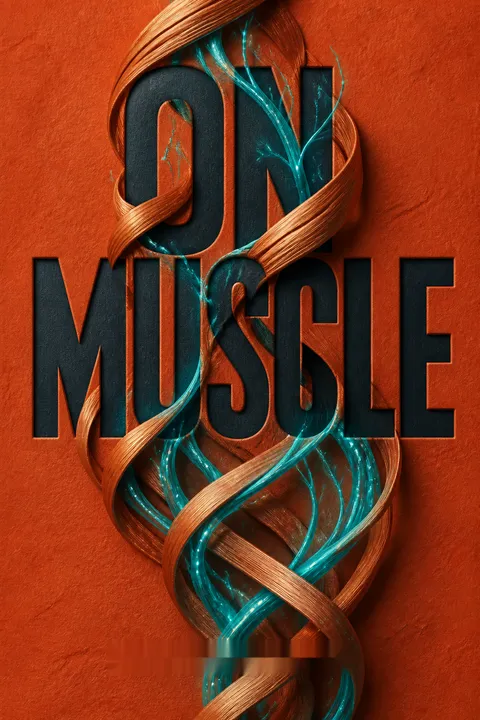
On Muscle is science, sports history, cultural criticism, and family memoir braided around a deceptively simple claim: muscle is not decoration or mere machinery, but a medium of agency. Its structure follows qualities associated with muscle, including strength, form, action, flexibility, and endurance. That organization lets the book move from anatomy to gender politics, disability, aging, Indigenous history, and the author’s relationship with her father without pretending these subjects are identical.
The narrative’s distinctive achievement is to treat bodily experience as evidence while remaining curious about what it cannot prove. Jan Todd’s lifting records expose how opportunity shapes the public record of strength. Matthew Sanford’s adaptive yoga shows that bodily connection can matter even when function cannot be restored. Ku Stevens’s run makes physical effort a vehicle for historical attention. The author’s own family story gives these ideas emotional continuity, but also keeps the inquiry from becoming a generic fitness manifesto.
The book’s strongest scientific claims concern adaptation: muscle responds to use, communicates with other systems, and can retain traces of training. Some claims, especially those about emerging research on muscle wasting and possible interventions, are necessarily provisional. The narrative sometimes places laboratory findings beside metaphor and personal meaning, so readers should distinguish biological mechanism from interpretive analogy. That distinction does not weaken the central argument. It clarifies it.
A broader implication is that strength should be understood as capacity in context, not as a single visible measurement. Health advice that prescribes movement without considering disability, safety, time, resources, or pleasure can turn an invitation into a demand. This book is more useful when read as an expansive account of bodily possibility than as a universal prescription. Its enduring question is not how to build the most impressive body, but how movement helps people act, adapt, remember, and remain connected to others.
Review Summary
On Muscle explores the science, culture, and personal significance of muscles through a blend of research, interviews, and memoir. Readers appreciate Tsui's engaging writing style and diverse perspectives, from weightlifting to yoga. While some found the book's structure disjointed or lacking focus, many were moved by its emotional depth and unique insights. Critics praised the balance of scientific information and personal anecdotes, though some desired more scientific content. Overall, the book offers a thought-provoking examination of muscles' role in human life, inspiring readers to reconsider their relationships with their bodies.
People Also Read




Glossary
Hysterical strength
Emergency strength responseA term for reported episodes in which people display extraordinary strength during immediate danger or extreme stress. The phrase has a gendered history: stories about women performing unexpected feats were often linked to emotion or irrationality. In the book, such accounts raise questions about the body’s reserve capacity and about whose strength society finds believable.
Myokines
Muscle signaling proteinsProteins released by skeletal muscle during contraction and other activity. They travel through the body and can affect other tissues, including the brain. The book uses myokines to explain one route by which exercise may influence mood, cognition, metabolism, inflammation, and tissue repair, making muscle an active signaling organ rather than simply a structure that moves the skeleton.
Phenotypic plasticity
Change through experienceThe capacity of an organism’s observable traits to change in response to environment, activity, or experience, without requiring a change in its underlying genes. In the book, this concept helps explain how training can alter muscle characteristics over time. A person’s starting biology matters, but it does not completely determine the physical traits that develop.
Peripersonal space representation
Sensed space around the bodyThe brain’s integrated representation of the body and the space immediately around it, informed by movement, vision, touch, and internal bodily signals. The book discusses how this sense can be disrupted by paralysis or injury and how active or assisted movement may help restore bodily awareness. The precise mechanisms of recovery remain an active area of research.
Interoception
Sensing the body internallyThe ability to register signals arising inside the body, such as pain, temperature, pressure, hunger, fatigue, or breathing. These signals help the brain track the body’s condition and regulate its responses. In the book, interoception is important to adaptive yoga because attention to subtle internal sensations can help people reconnect with parts of the body affected by injury or paralysis.
Sarcopenia
Age-related muscle lossThe gradual loss of skeletal muscle mass and strength associated with aging. It can reduce balance and physical capacity, increasing vulnerability to falls and related injuries. The book notes that the process can begin in adulthood, accelerates with age, and tends to progress faster with inactivity. Strength training and continued movement can help slow or counter some of this decline.
Persistence high
Reward from continuing effortA term used in the book for the psychological reward people may experience from staying with a difficult physical effort. The benefit is not defined only by speed, distance, or performance. In the Remembrance Run, participants describe meaning and satisfaction in continuing together despite discomfort, while the book also makes clear that pain alone does not create insight.
Motion gestalt
A person’s movement patternThe book’s phrase for the distinctive pattern made by a person’s small movements, gestures, posture, and shifts through space. Rather than treating one gesture as a reliable personality test, the idea points to the whole impression created by how someone moves. Such patterns can express emotion and character, though they should not be treated as definitive psychological diagnoses.

Download PDF
Download EPUB
.epub digital book format is ideal for reading ebooks on phones, tablets, and e-readers.








