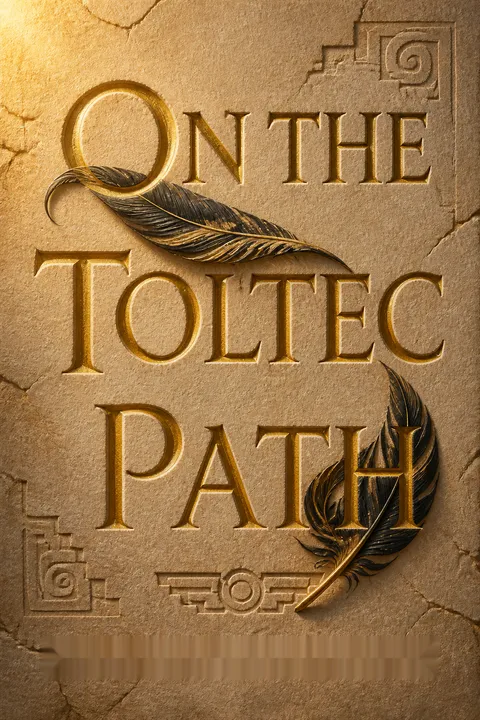


Key Takeaways
Treat every worldview as a map, not the territory you must defend.
A map shapes sight. Eagle Feather argues that what people call reality is partly organized by their expectations, habits, and shared assumptions. He calls this package of beliefs an inventory: it helps people interpret experience, but also filters out what does not fit. His account begins with a personal story. Daily practice of Castaneda’s methods helped him recover from a bleeding ulcer, then brought him into contact with don Juan, whom he regarded as a teacher. The experiences persuaded him that ordinary reality was only one perspective, not the whole of existence.
Experience is the starting point. The book’s central proposal is that people can explore perception directly, rather than merely inherit a worldview. Eagle Feather presents the energy body, an asserted field of human awareness beyond the physical body, as part of this model. He asks readers to test practices and observe results, not simply accept his claims.
The strongest, most widely usable insight is that perception is shaped by prior expectations. Cognitive science likewise studies how predictions and attention influence what people notice, although that does not establish the book’s claims about energy bodies or other dimensions. The distinction matters: a model can prompt useful self-observation without proving its metaphysics. Readers can ask what their assumptions help them see, and what they routinely dismiss, while keeping unusual experiences open to ordinary explanations as well.
Pursue expanded awareness with discipline, not hunger for extraordinary powers.
Power can become a trap. The book describes Toltec history through successive cycles. In its account, an earlier tradition pursued elaborate rituals and personal power, then collapsed amid invasion and social upheaval. The next generation of seers responded by emphasizing sobriety, adaptability, and ethical restraint. Eagle Feather treats this history as a lesson: unusual abilities do not equal wisdom, and a compelling new worldview can become another prison.
Adventure needs a compass. The author says power plants once helped some practitioners force shifts in perception, but could strain the body and encourage dependence on dramatic experiences. He contrasts those temporary effects with the slower work of discipline. His preferred standard is freedom: does a practice make perception more flexible and relations with others more balanced, or does it fuel control and self-importance?
This is a useful distinction between capacity and character. In many fields, from scientific research to organizational leadership, increased capability can magnify the motives already present. The historical narrative also resembles a familiar cycle of innovation: a method delivers striking results, its prestige invites excess, and reformers add safeguards. The book’s account of Toltec history is not independently established by the material presented, so its value here is more ethical than evidentiary: power needs limits, and its effects on other people matter.
Use tracking for steadiness and dreaming to explore beyond familiar perception.
Two modes work together. Tracking is the disciplined management of attention and behavior in ordinary life. Dreaming, as the book uses the term, is deliberate exploration of unfamiliar or dreamlike states. The author treats them as complementary: tracking supplies direction and stability, while dreaming supplies expansion. Without tracking, unusual experiences can become disorienting; without dreaming, practice may simply reinforce what is already familiar.
Perception has a marker. The focal point is the book’s name for the meeting of internal and external energy patterns, a point said to indicate how a person is perceiving. Within this model, shifting the pattern shifts the perceived world. Eagle Feather applies the idea broadly: a routine, a social interaction, or a dream can all be occasions to notice how attention is organized. He presents focused intent as the force that gives such practice direction.
The pairing has a practical analogue in learning science: exploration generates possibilities, while reflection and feedback help people consolidate them. Neither mode is sufficient alone. Unstructured novelty can overwhelm, whereas excessive routine can produce rigidity. The model’s energy vocabulary is not scientific evidence for literal energy fields, but it offers a memorable way to ask whether an experience is being explored carefully or merely chased for its intensity. The useful test is whether a shift improves attention and judgment in everyday settings.
Learn a system deeply, then question the assumptions that make it feel complete.
Inventories both guide and limit. An inventory is the set of categories, expectations, and agreements through which a person recognizes the world. Eagle Feather says a Toltec student first builds a detailed inventory so unfamiliar experiences have context, then learns not to mistake that context for final truth. He compares it to a map: useful for finding a route, misleading if treated as the landscape itself.
Notice how beliefs reproduce themselves. The author discusses selective attention, expectation, social consensus, and the tendency to ignore evidence that conflicts with a favored view. He also recommends examining contradictions rather than rushing to explain them away. The point is not to reject reason or every shared standard. It is to make one’s framework visible, use it deliberately, and stay willing to revise it when experience does not fit.
This is a strong account of metacognition, the ability to observe how one is thinking. It also guards against a common misuse of skepticism: rejecting unfamiliar evidence automatically rather than evaluating it. Yet the book’s invitation to suspend assumptions needs a counterweight. Not every unusual perception is reliable, and not every contradiction signals a deeper reality. Open-minded inquiry works best when paired with independent checks, clear definitions, and a willingness to accept ordinary explanations.
Build a path around what gives your life energy and direction.
Find a path with heart. Eagle Feather uses this phrase for a life direction grounded in genuine predilections, not merely status, fear, or other people’s expectations. Such a path gives practice a reason to continue and helps a person recover balance when unfamiliar experiences become distracting. The author suggests examining which activities consistently draw attention and vitality, then arranging daily life to give them room.
Let mortality clarify priorities. Don Juan’s teaching, as presented here, uses awareness of death as an advisor. The exercise is not to become gloomy, but to ask whether an action deserves the limited time available. The book also warns against self-importance, which it treats as energy spent defending an image of oneself. A purposeful life, in this account, is not a performance of spiritual achievement but a more deliberate way of living.
The path-with-heart idea joins values clarification with behavioral commitment: a value becomes meaningful when it changes how time and effort are allocated. Mortality can sharpen that inquiry, much as end-of-life reflection often clarifies what people consider important. But a chosen path should not become a new identity cage. Responsibilities, health, and the needs of others can legitimately change priorities. The most durable direction is one that remains meaningful while making room for revision.
Approach lucid dreaming as a practice requiring purpose, patience, and grounding.
Dreaming is a progression. The author describes development from recognizing that one is dreaming, to navigating dreams, becoming aware of a dreaming body, and attempting more deliberate movement between locations or states. He presents these as stages of practice, not guaranteed outcomes. In his framework, the dreaming body is awareness experienced beyond the ordinary physical perspective, often with a recognizable form and emotions.
Purpose steadies exploration. Eagle Feather recommends relaxation, persistence, and a clear reason for entering a dream. He recounts experiences of disorientation and fear during transitions, then interprets them through the book’s model of shifting perception. He also stresses the importance of maintaining a stable daily life and not mistaking extraordinary sensations for proof of supernatural events. The book’s more dramatic claims, including teleportation, are personal or tradition-based assertions, not demonstrated results.
Lucid dreaming is a useful meeting point between contemplative practice and sleep research, though this book’s metaphysical interpretation goes considerably further than the evidence it supplies. Its most responsible advice is procedural: be patient, keep a clear purpose, and remain grounded. The more extraordinary the interpretation, the more valuable independent verification becomes. Anyone whose sleep, mood, or sense of reality is being disrupted should prioritize wellbeing over intensifying the practice.
Revisit old experiences to recover perspective, not to rehearse resentment.
Recapitulation reviews the past. This is the book’s term for deliberately recalling important encounters and experiences, examining them, and releasing the attention or emotional energy still tied to them. Eagle Feather describes both an organized review of people and periods in one’s life and a more spontaneous return to memories as they arise. He recounts revisiting his time in Vietnam after a landscape triggered memories, and says the process helped him feel less burdened by them.
The goal is present freedom. The practice is meant to loosen automatic reactions, not erase history or deny harm. In the author’s framework, the breath and focused attention help a person re-enter a memory without becoming lost in it. He also uses the exercise to examine recurring expectations and unresolved feelings. The practical question is what a memory continues to shape, and whether that influence still serves the life being lived now.
Structured reflection can help people notice patterns and make meaning from experience. That benefit should not be confused with a proven mechanism for reclaiming literal energy, nor with a substitute for trauma treatment. Memory is reconstructive, and repeated review can sometimes intensify distress rather than resolve it. The useful principle is measured reflection: return to experience with enough safety and support to learn from it, and stop if the process becomes destabilizing.
Keep spiritual ambition answerable to ordinary ethics, evidence, and human needs.
Human life remains the test. Eagle Feather argues that spiritual systems should serve human development, not demand unquestioning loyalty. He describes Toltec teams as groups with different temperaments and complementary strengths, while also noting that individual independence can help resist cultlike conformity. His phrase “human first” grounds expansive metaphysical claims in everyday relations and responsibilities.
Impeccability means responsible use. In the book, this specialized term means using one’s energy and abilities with integrity rather than for self-display or control. The author’s ultimate ideal, the Fire from Within, describes a claimed transformation in which awareness expands beyond ordinary human perception. Yet the book also insists that power-seeking can reproduce the abuses it criticizes. Its most practical safeguard is to ask whether a belief or practice increases freedom, respect, and responsibility, rather than dependence or domination.
The ethical emphasis is essential because intense spiritual experiences can create authority, hierarchy, and vulnerability. A community that prizes questioning and preserves personal autonomy is safer than one that treats doubt as failure. Still, the book’s admiration for teachers who use deception or pressure sits uneasily beside its warning against coercion. Ethical practice requires more than noble intent: consent, accountability, and attention to concrete consequences. Extraordinary claims deserve especially careful scrutiny.
Analysis
On the Toltec Path is a practical-spiritual guide arranged as a journey: first a worldview, then an account of how perception is shaped, then disciplines for tracking, dreaming, and intent. Its narrative anchor is Eagle Feather’s account of meeting don Juan and interpreting personal experiences as apprenticeship. The structure makes abstract ideas memorable because each is tied to an alleged practice or episode.
The book’s most durable contribution is its warning that a worldview can become self-sealing. A framework gives experiences meaning, but can also train people to ignore what it cannot explain. The author’s prescription is paradoxical: learn the system carefully, use it to explore, and then loosen your attachment to its categories. Tracking and dreaming give this argument a practical shape, joining everyday discipline with deliberate exploration of unfamiliar states.
A key limitation is epistemic. The author treats visions, dreams, and personal encounters as confirmation of an energy-body model, while the text does not provide independent methods for distinguishing external phenomena from expectation, memory, or altered states. The book acknowledges that perception is shaped by belief, but does not consistently apply that skepticism to its own claims. Its reported abilities, including movement between dimensions and the transformation called the Fire from Within, should therefore be understood as claims within the tradition, not established findings.
There is also a tension between freedom from authority and reliance on teachers who use pressure or trickery. The book recognizes the danger of cult behavior, yet its idealized apprenticeship can blur consent and accountability. Its emphasis on personal responsibility and restraint helps, but does not resolve that tension.
The most grounded use of the book is as a set of questions: Which assumptions shape attention? Which routines drain energy? What purpose deserves sustained effort? Can a new belief tolerate criticism? Readers can use those questions and low-risk reflective practices without accepting the metaphysical system wholesale. That distinction preserves the book’s invitation to curiosity while keeping discernment intact.
Review Summary
On the Toltec Path receives mixed reviews, with an average rating of 3.80 out of 5. Positive reviews praise the book for its comprehensive explanation of the Toltec path and systematic approach to Castaneda's teachings. Critics argue that the author's claims and interpretations may not be entirely accurate. Some readers find the book insightful and transformative, while others consider it derivative. The author's renaming of certain concepts is controversial among readers. Overall, the book is seen as a valuable resource for those interested in exploring shamanic wisdom and spiritual growth.
People Also Read






Glossary
Energy body
Awareness beyond the physicalIn Eagle Feather’s framework, the energy body is a field of awareness that surrounds and permeates the physical body. It is associated with the unknown and with perceptions that ordinary waking awareness may not register. The book presents it as part of human nature, but its proposed anatomy is a metaphysical claim, not an established scientific finding.
Focal point
Marker of perceptual alignmentThe focal point is the place where internal and external energy patterns are said to meet in the energy body. Its position marks the pattern through which a person perceives. Eagle Feather argues that changing this alignment changes awareness and the experienced world. The concept organizes the book’s account of perception, but is not a recognized physiological structure.
Tracking
Discipline for directing perceptionTracking is the practice of stabilizing and directing attention through deliberate behavior, self-observation, and disciplined engagement with everyday life. In the book, it helps a practitioner manage energy, remain oriented, and integrate unfamiliar experiences. Eagle Feather contrasts it with dreaming, while emphasizing that the two modes are intended to support each other.
Dreaming
Exploration of unfamiliar awarenessDreaming refers not simply to ordinary sleep dreams, but to deliberate exploration of dreamlike states and what the author calls the second energy field. It includes lucid dreaming and experiences described as awareness beyond the physical body. Eagle Feather presents it as a way to expand perception, while treating discipline and purpose as safeguards against becoming disoriented.
Inventory
Framework for recognizing realityAn inventory is the collection of assumptions, categories, memories, and shared agreements through which a person interprets experience. It makes a world intelligible but also filters what can be noticed. Eagle Feather recommends learning a system’s inventory well enough to use it, while resisting the temptation to treat it as a complete account of reality.
Intent
Force aligning awarenessIntent is the book’s name for an impersonal, underlying force that directs energy and shapes perception. Eagle Feather distinguishes it from ordinary wishes: desire may express personal preference, while intent is described as a deeper alignment with a person’s essential nature and Spirit. The term is central to the metaphysical system and is not used here as a scientific mechanism.
Path with heart
Life direction grounded in purposeA path with heart is a direction in life shaped by genuine interests and enduring sources of meaning, rather than primarily by fear, ambition, or social approval. In the book, it sustains discipline, provides a reason to continue, and helps integrate challenging experiences. It is presented as a personal guide, not a fixed program prescribed for everyone.
Recapitulation
Structured review of experienceRecapitulation is a practice of recalling significant people and events, revisiting their emotional impact, and seeking to release lingering reactions. Eagle Feather describes both a systematic review of one’s history and a more spontaneous method. He presents it as a way to free attention and support further practice, not as a replacement for professional care.
Impeccability
Integrity in using personal energyImpeccability means acting with integrity and making the best responsible use of one’s available energy. In Eagle Feather’s account, it requires commitment to decisions, reduced self-importance, and restraint in the use of unusual abilities. The term functions as both a personal standard and an ethical limit on practices that might otherwise become self-serving.
Fire from Within
Claimed total expansion of awarenessThe Fire from Within is the tradition’s name for an ultimate transformation in which a practitioner’s awareness is said to extend through the entire energy body and beyond ordinary human perception. Eagle Feather presents it as the culmination of tracking, dreaming, and intent. The book describes this as a spiritual claim, not a demonstrated physical event.
FAQ
1. What is On the Toltec Path by Ken Eagle Feather about?
- Practical guide to Toltec teachings: The book explores the Toltec philosophical system, drawing from don Juan Matus, Carlos Castaneda, and other Toltec seers, and presents a metaphysical path for personal growth and expanded awareness.
- Focus on energy and perception: It introduces the Toltec Way as a method for managing perception, shifting awareness, and aligning with Spirit, emphasizing the role of energy fields and the focal point.
- Personal journey and structure: Ken Eagle Feather shares insights from his own apprenticeship, dividing the book into sections on tradition, tracking, dreaming, and intent, with both theory and practical exercises.
2. Why should I read On the Toltec Path by Ken Eagle Feather?
- Accessible introduction to Toltec wisdom: The book makes complex Toltec concepts understandable and applicable, offering a unique metaphysical perspective on reality and consciousness.
- Practical tools for transformation: It provides actionable exercises and methods for managing perception, developing personal power, and expanding awareness, grounded in the author’s direct experience.
- Relevance to modern life: The teachings are presented as universally applicable, bridging ancient wisdom with contemporary challenges and encouraging ethical, responsible living.
3. What are the key takeaways from On the Toltec Path by Ken Eagle Feather?
- Energy and perception as reality: Reality is seen as energy, and perception is the alignment of energy fields, with the focal point determining what is experienced.
- Personal transformation through practice: Mastery of tracking, dreaming, and intent leads to expanded awareness, personal power, and ultimately, freedom.
- Ethical and responsible path: The Toltec Way emphasizes impeccability, humility, and ethical use of power, warning against dogma and misuse of energy.
4. How does Ken Eagle Feather define the Toltec Way compared to "sorcery" or "warrior"?
- Terminology for clarity: The author replaces terms like "sorcery" with "Toltec Way," "stalking" with "tracking," and "warrior" with "ranger" to avoid negative or misleading connotations.
- Focus on perception and energy: These changes highlight the Toltec emphasis on managing perception and energy, rather than conflict or manipulation.
- Alignment with don Juan’s approach: The redefined terms help readers avoid cultural biases and better understand the essence of Toltec practice, consistent with don Juan’s evolving language.
5. What are the core concepts of energy fields and the focal point in On the Toltec Path?
- Three energy fields: The first field is the known (physical world), the second is the unknown (dreaming and psychic energies), and the third is the unknowable (Spirit or the abstract).
- Energy body and focal point: The energy body is a luminous sphere surrounding the physical body, and the focal point is where internal and external energies intersect, determining perception.
- Shifting perception: Moving the focal point allows access to different realities and expanded awareness, which is central to Toltec practice.
6. What is the role of the "Eagle" and its emanations in the Toltec worldview according to Ken Eagle Feather?
- Eagle as source of creation: The Eagle represents the ultimate source of all creation and energy, not as an entity but as a condition or force.
- Emanations shape awareness: The Eagle’s emanations carry the patterns for life and perception, with human awareness existing within a narrow band of these emanations.
- Personal alignment: Each person relates uniquely to the Eagle’s emanations, and Toltec practice aims to align with them to expand awareness and achieve freedom.
7. How are tracking and dreaming defined and practiced in On the Toltec Path by Ken Eagle Feather?
- Tracking as self-observation: Tracking involves managing energy and perception in the known world, developing discipline, and stabilizing the focal point.
- Dreaming as exploration: Dreaming is the practice of shifting awareness into nonordinary realities, using the dreaming body to explore other dimensions and expand perception.
- Complementary practices: Mastery of both tracking and dreaming is essential for shifting cohesion, developing a natural energy field, and progressing on the Toltec path.
8. What is the significance of intent in On the Toltec Path and how is it cultivated?
- Intent as universal force: Intent is described as the silent power behind all creation and perception, a pure energy that guides the Toltec path.
- Unbending intent: Cultivating single-mindedness and a clear purpose, free from personal desires, is essential for stabilizing the focal point and manifesting goals.
- Alignment with Spirit: Mastery of intent involves aligning personal will with Spirit, using ethical behavior and impeccability to handle power responsibly.
9. What are the stages of awareness and personal growth described in On the Toltec Path?
- Five-stage model: The stages are orientation (initiate), training (apprentice), craftsmanship (ranger), artistry (person of knowledge), and mastery (seer), each representing deeper integration of the energy body and perception.
- Barriers to overcome: Each stage has specific challenges—fear, clarity, power, and old age—that must be transcended for growth.
- Role of will and intent: Activating will marks a key transition, with the ultimate goal being the Fire from Within, or total awareness and freedom.
10. How does On the Toltec Path describe the dreaming body and the levels of dreaming?
- Dreaming body defined: The dreaming body is an exteriorized form of consciousness, often resembling the physical body or power animals, and is key to exploring nonordinary realities.
- Levels of dreaming: The book outlines seven levels, from lucid dreaming and interdimensional travel to creating a double, teleportation, and achieving the Fire from Within.
- Preparation and challenges: Developing the dreaming body requires sobriety, commitment, and balancing daily life, with exercises and advice provided for safe navigation.
11. What practical exercises and tools does Ken Eagle Feather recommend in On the Toltec Path?
- Tracking exercises: Practices include self-observation, nonattachment, recapitulation (reviewing and releasing past energy), and using death as an advisor to manage energy and reduce self-importance.
- Dreaming techniques: Methods such as gazing, energy passes, visualization, and specific postures help enter and control dreaming states.
- Advanced practices: Energy dances, body knowledge, and managing internal dialogue are introduced to deepen awareness and personal power, with an emphasis on persistence and ethical use.
12. What ethical considerations and warnings does Ken Eagle Feather provide in On the Toltec Path?
- Avoiding dogma and misuse: The book warns against fundamentalism and using power to limit others’ freedom, defining black magicians as those who restrict perception.
- Caution with power plants: While acknowledging their historical use, the book cautions about the risks of substances like datura and emphasizes modern Toltecs’ de-emphasis on them.
- Impeccability and responsibility: Practitioners are urged to act with impeccability—using energy wisely and ethically—balancing abstract awareness with concrete human values and responsibility.
Download PDF
Download EPUB
.epub digital book format is ideal for reading ebooks on phones, tablets, and e-readers.








