

Key Takeaways
Treat horror as an emotion, not a shelf, and tell truths through the impossible.
Horror crosses categories. Joyce Carol Oates argues that the Gothic can expose truths that a purely realistic story may avoid: the uncanny is part of human experience, not an escape from it. Kafka, Poe, and Lovecraft can all confront the terrible, though bookstores may sort them differently. Horror can entertain while examining death, irrationality, cruelty, and the gap between appearances and reality.
Make the lie credible. Stephen King describes fiction as invented events that must still reflect how real people might behave. In a disaster, characters are more likely to blurt an unpolished reaction than deliver a noble speech. If the ordinary behavior rings true, readers are more willing to accept the impossible event surrounding it.
What's powerful here is the shift from asking whether horror is respectable to asking what it can reveal. Speculative fiction can make private anxieties visible by giving them bodies, rooms, and consequences. That capacity links horror to tragedy and social criticism, not just suspense. Still, calling horror an emotion rather than a genre does not erase useful distinctions among styles and audiences. The wider definition is best treated as permission to experiment, not a reason to ignore the craft traditions readers bring with them.
Read beyond your favorite monsters before trying to make one new.
Know the tradition. Robert Weinberg's suggested starting shelf spans Frankenstein, Dracula, M. R. James's ghost stories, Lovecraft, Richard Matheson, Ray Bradbury, and Stephen King. The point is not to imitate a famous writer, but to notice how familiar materials acquire new force through different characters, settings, structures, and tones. Ramsey Campbell began by emulating Lovecraft, then found his own subjects by writing about what personally disturbed him.
Read outside horror, too. Campbell recommends studying writers such as Nabokov and Graham Greene for skills that a horror specialist may not supply. Jeanne Cavelos makes the related case that a broad reading life gives writers more ingredients to recombine. Without that knowledge, a supposed twist may simply repeat a story an editor and its readers already know.
Originality is less like inventing from nothing than learning a tradition well enough to alter its patterns deliberately. This resembles how scientific breakthroughs often emerge: researchers master existing models before discovering where they fail. A broad reading diet also makes influence less slavish, because no single author dominates the writer's imagination. Yet familiarity alone cannot guarantee freshness. The decisive step is to ask what a borrowed convention means now, and whose perspective it has left out.
Turn a spark into a premise that can sustain people, plot, and a market.
Test the premise. J. N. Williamson defines a useful premise as an idea that feels fresh enough to develop, suits the writer's abilities, and has a plausible market. A vampire, haunted house, or killer can still work, but the premise needs a distinctive angle, credible characters, and a story suited to its intended form. A clever ending cannot rescue a tale that has wandered away from its central promise.
Make room for discovery. Williamson describes drawing story material from the hypnagogic state, the brief, dreamlike territory around falling asleep or waking. After preserving a detailed nightmare in notes, he developed it into a novel that eventually brought him an agent. He also describes deliberately relaxing his attention to invite images. This is one writer's method, not a guarantee or a substitute for revision.
The three-part test usefully connects inspiration to execution and audience, where many writing guides treat them as separate concerns. It also recognizes that a premise must be inhabitable: a writer needs enough understanding to make its people convincing. The dream method offers a practical lesson in capturing ideas before they evaporate, whether or not the writer uses hypnagogic imagery. Market awareness can be helpful, but it should guide submission choices rather than flatten a story into whatever seems easiest to sell.
Let characters make the plot choices readers would actually believe.
Build people before machinery. Tina Jens warns that characters become lifeless when they exist only to carry out a prearranged plot. Start with the threat and its purpose, then develop the people most likely to confront it. Their jobs, habits, loyalties, fears, and flaws shape what they notice and what they do. A character sketch can help, but its real purpose is to learn the person well enough to stop forcing every choice.
Let behavior create events. Nicholas Kaufmann shows how a protagonist's attachment to a precious object can explain why she does not flee a rising, dangerous presence at once. The object gives her a believable reason to take a risk, creating suspense without making her foolish. Side characters may also alter the plan: Jens found that two minor figures took over a story and produced a better solution than her outline had supplied.
Character-driven plotting is a safeguard against the familiar horror shortcut in which sensible adults walk alone into obvious danger because the story needs them there. It also resembles behavioral models in which action follows a person's goals, beliefs, and perceived options. Detailed backstory matters most when it changes a present decision, not when it becomes an information dump. The useful test is not whether every character detail appears on the page, but whether the writer can feel its influence on the choice.
Root the impossible in ordinary places readers recognize with their senses.
Make normal life specific. Mort Castle argues that a supernatural premise asks readers for one imaginative leap. The rest of the world should feel dependable. A familiar suburb, hospital, or street gives the reader a stable reference point; when something impossible invades it, the contrast sharpens the fear. Wayne Allen Sallee similarly drew on Chicago's streets, transit, and news reports to build atmosphere from observed detail rather than exotic scenery.
Use place as more than backdrop. Joe Lansdale found that East Texas's heat, language, landscape, and cultural mix shaped both his characters and his prose. Historical horror calls for comparable attention to local facts. Richard Gilliam researched Civil War communities, regional wildlife, and Cherokee beliefs, correcting some details while consciously adapting others to serve the story. Research makes invention more persuasive when the writer knows what is being changed.
Setting works most strongly when it behaves like a social environment, not a scenic photograph. Weather, architecture, work, and local history influence what people regard as normal and what they fear losing. This is why a routine neighborhood can unsettle more than a castle already labeled dangerous. There is a balance to strike: research can deepen credibility, but displayed research can slow a story. Concrete details earn their place when they affect mood, action, or the reader's understanding of a character.
Build suspense from one conflict, escalating choices, and an earned ending.
Enter near the trouble. In a short story, Kaufmann advises beginning close to the central conflict, then allowing enough time for dread to grow. Each scene should change the situation or the reader's understanding of it. A scene that pauses the escape for an unrelated errand is probably expendable. The protagonist's reasonable next move must also advance the danger, so the plot neither resolves instantly nor depends on reckless behavior.
Make the ending belong. The climax should grow from the conflict's established rules, and the aftermath should show what the encounter cost. A sudden unrelated revelation may surprise, but it feels like a trick if the story has not prepared it. Short fiction usually has room for one main struggle, not a parade of extra monsters. Tight focus helps the ending resolve the story's real pressure rather than merely stop the action.
The advice treats suspense as a problem of controlled information and constrained choices. Each new obstacle matters because it narrows the protagonist's options while clarifying what is at stake. This is close to the logic of a well-designed game: choices feel meaningful when the rules are legible, but outcomes remain uncertain. Surprise still matters, though surprise is strongest when it changes the meaning of earlier clues. Unprepared randomness can shock for a moment, but it tends to weaken the reader's trust in the story's world.
Make prose control the reader's pulse, not merely report the monster.
Fit the language to the fear. Bruce Holland Rogers argues that style is a tool for drawing readers into a particular story, not a permanent personal signature. Studying a passage slowly, even by imitating its structure as an exercise, can reveal how sentence length, detail, and rhythm shape feeling. Jay Bonansinga applies that principle to action: narrow the time scale, filter events through the endangered character's senses, and use the environment as part of the danger.
Choose what to show. David Morrell recommends lean dialogue, with few unnecessary names, speech tags, adverbs, or exclamation marks. Douglas Winter warns that explicit shock can limit the reader's imaginative participation; a carefully placed glimpse may linger longer. Jack Ketchum offers the counterweight: when violence is central, research its physical details and connect suffering to character and loss.
These approaches are not contradictory so much as different controls on attention. Suggestion leaves interpretive space; precise physical detail can make an experience immediate and embodied. The writer's task is to decide which effect the scene needs, rather than confuse intensity with a higher volume of gore or punctuation. Research on reading and narrative often emphasizes simulation: readers mentally model bodies, spaces, and intentions. That makes point of view and sensory selection powerful, but excess detail can numb as readily as it can disturb.
Refresh monsters by testing old rules against present-day fears.
Keep the recognizable, revise the rest. Karen Taylor advises writers to learn a monster's inherited rules before altering them. A vampire may gain a new weakness or social role, but the story must remain consistent about what makes this creature recognizable. W. D. Gagliani demonstrates how a werewolf can become a hero rather than a villain, while its struggle with transformation carries a coming-of-age theme.
Find the fear beneath the mask. Contributors point toward contemporary material in biotechnology, social violence, mental illness, and historical injustice. A monster can embody those concerns without turning a diagnosis into shorthand for evil. Clinical psychologist Tracy Knight distinguishes schizophrenia from dissociative identity disorder and stresses that a character's behavior should make sense from that person's perspective. The impossible becomes more persuasive when it is anchored in human motives, not just a label or a special effect.
Monsters endure because they are adaptable metaphors, but adaptation works best when it changes the story's assumptions rather than applying modern decoration. A werewolf can speak to self-control, while laboratory horror can probe the power and limits of scientific ambition. Ethical accuracy matters, especially when fiction borrows from real disorders or marginalized histories. At the same time, realism should not become a demand that every horror image be medically or scientifically possible. The craft lies in making the invention coherent without disguising prejudice as diagnosis.
Protect your craft with research, critique, contracts, and deliberate market choices.
Get useful feedback. Tom Monteleone sold his first story after a workshop helped him revise it. Before that, he had sent more than twenty stories out over two years and mostly received form rejections. A workshop can reveal how readers interpret character, dialogue, and structure, and can train writers to edit their own work. Its value depends on participants who can explain a problem and offer actionable criticism.
Treat publication professionally. Bev Vincent cautions against assuming that exposure, unpaid online publication, or vague royalty promises will build a career. Posting a story publicly can use its first serial rights, limiting future sales. Agree in writing on payment, rights, and publication deadlines. Study magazines, anthologies, and small presses before submitting; a market's fit and editorial standards matter as much as its label or apparent prestige.
Feedback functions like peer review: it exposes assumptions that remain invisible to a writer working alone. The comparison is useful, though creative judgment is not a laboratory measurement, and groups can reinforce fashionable tastes as easily as identify genuine weaknesses. The publishing advice is equally about power. Rights and payment terms define who can use the work and for how long, so professionalism protects both the writer and the relationship. The book's named websites and market conditions date from its 2006 edition; its method of verifying current terms remains valuable.
Write for each medium's mechanics, not just its story world.
Translate, do not transplant. A comic script must communicate visually and guide an artist; audio drama must use sound and dialogue to make place and action imaginable. Stage horror has to fit the available cast, set, lighting, and effects. A role-playing game supplies possibilities for players and a game master, while a video game must account for the player's possible actions. In each form, the writer shapes an experience rather than merely moving prose into a new container.
Know the working arrangement. Tie-in novels may be produced on short deadlines from a screenplay or an approved outline, and are commonly work-for-hire projects with limited rights and few or no royalties. Game and theater writing also involve collaborators and practical constraints. Learning the medium's conventions before submitting helps writers deliver material that editors, artists, producers, and players can actually use.
Medium-specific writing is a lesson in affordances: every form makes some experiences easy and others costly. Audio can exploit uncertainty because listeners cannot inspect the room; comics can control emphasis through panel composition; games make agency part of the tension. Collaboration also changes authorship, since a script becomes a shared production. The creative opportunity is real, but so are deadlines, permissions, and technical limits. Writers should understand both the artistic possibilities and the contract before treating a recognizable property as a simple shortcut.
Analysis
On Writing Horror is not a single-author course with one theory of fear. It is an anthology of practitioners, critics, teachers, and professionals, so its strength is productive disagreement. Some contributors favor restraint and implication; others argue that truthful physical detail requires looking directly at pain. Some praise formal education, while others reject rigid rules about schedules, workshops, and career paths. The common ground is more useful than any universal formula: readers must believe the people, the world, and the consequences, even when the central event is impossible.
The book's most durable model is a chain of craft decisions. Read widely enough to recognize inherited conventions. Select a premise that can support sustained conflict. Build characters whose motives generate believable choices. Make setting concrete, then let the extraordinary disturb it. Shape pace, style, and point of view to control what the reader feels and knows. Finally, revise for the medium and submit with professional care. This sequence explains why the book gives so much attention to character and research: plausibility is not a decorative layer added after the monster. It is the mechanism that makes the monster matter.
Its account of horror as an emotion also challenges the boundary between popular and literary fiction. The challenge is valuable, but the genre's commercial history and reader expectations still matter. Likewise, the advice on markets, online publication, and specific presses reflects the publishing world of the 2000s and should not be mistaken for current listings. The enduring lesson is to verify conditions rather than romanticize the business.
The collection's ethical edge is especially significant. Horror can examine violence, social power, science, and mental illness, but shock alone is not insight. Accuracy, compassion, and a character's interior logic keep difference from becoming a cheap signal of menace. The most persuasive horror does more than frighten: it makes an ordinary human assumption feel newly unstable.
Review Summary
On Writing Horror receives mixed reviews, with an average rating of 3.85/5. Readers appreciate the insights from established horror authors but note the book is somewhat dated. Many find certain chapters helpful for understanding the genre and improving their writing. However, some criticize the small font size, lack of cohesion between essays, and outdated publishing advice. The book is seen as a good introduction to horror writing, though more experienced writers may find it lacking in depth.
People Also Read

Glossary
useful premise
A workable story foundationWilliamson's term for a story concept that has not been exhausted recently, that the writer can develop with credibility, and that has a plausible audience or publication market. It is more than an intriguing image: it must support a coherent plot and suit the writer's abilities.
hypnagogic state
The threshold around sleepThe brief, dreamlike period associated with falling asleep or waking, when images and ideas may arise outside deliberate conscious planning. Williamson describes using this state to capture story premises, sometimes by remaining still after waking and writing down remembered dream material. He presents it as a personal creative method, not a guaranteed technique.
waking dream
An immersive fictional experienceA phrase used in the book for fiction that feels experientially real while the reader remains awake. The reader temporarily inhabits the story's setting, time, and emotional perspective, much as a dream feels present during sleep. Horror writing seeks to turn this immersive effect toward dread and unease.
negative space
Meaning shaped by absenceA film technique in which empty or surrounding areas of an image help define an important subject. Applied to horror prose, it means suggesting a threat through its effects on a house, a character, or a scene rather than fully describing the threat itself. The reader supplies part of the frightening image.
internal logic
Consistent story-world rulesThe rules governing what can happen in a story, including one with surreal or supernatural events. A narrative may depart from ordinary reality, but its characters, causes, and consequences must remain consistent enough for readers to follow. Strange events feel intentional when they serve the story's emotional or thematic design.
first serial publication rights
Rights to publish firstThe right to publish a story for the first time in a particular form, such as a magazine or anthology. The book warns that making fiction publicly available online may count as using those rights, reducing the story's appeal to editors seeking unpublished work. Writers should clarify rights, duration, and publication terms in a contract.
FAQ
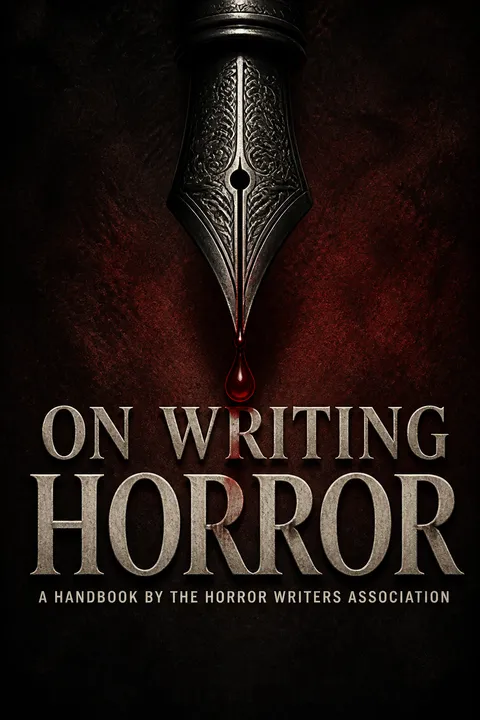
What is On Writing Horror: A Handbook by the Horror Writers Association about?
- Comprehensive resource: The book is a collection of essays and advice from established horror writers, edited by Mort Castle, offering a thorough guide to writing horror fiction.
- Covers art and business: It addresses both the creative craft and the business side of horror writing, including history, theory, practical techniques, and marketing strategies.
- Diverse contributors: Features insights from notable authors like Stephen King, Joyce Carol Oates, Joe R. Lansdale, and many others, providing a wide range of perspectives.
Why should I read On Writing Horror by the Horror Writers Association?
- Expert guidance: The book compiles wisdom from award-winning horror writers, sharing their personal experiences, philosophies, and practical advice.
- Up-to-date insights: The 2006 edition reflects changes in the horror genre, such as the rise of small presses, e-publishing, and increased literary respect for horror.
- Inspiration and motivation: It not only teaches mechanics but also encourages writers to explore their own fears and creativity, helping them craft stories that truly engage and scare readers.
What are the key takeaways from On Writing Horror by the Horror Writers Association?
- Character-driven horror: Emphasizes the importance of believable, three-dimensional characters whose reactions drive the story.
- Grounded settings: Stresses the need for credible settings and reality-based details to make supernatural elements more effective.
- Innovation and originality: Encourages writers to avoid clichés, read widely, and combine influences in new ways to stand out in the genre.
- Practical craft tips: Offers actionable advice on dialogue, action scenes, and the depiction of pain and violence.
What are the most memorable quotes from On Writing Horror and what do they mean?
- “You’ve got to make us give a damn.” Highlights the necessity of emotional investment in characters and story for effective horror.
- “Horror is not a genre. It is an emotion.” Urges writers to focus on evoking genuine fear and dread, not just following genre conventions.
- “You can forgive virtually anything—any perversion, any nastiness—if it’s really done with style.” (James Herbert) Suggests that skillful writing can make even the most extreme horror compelling.
- “The secret is staying a writer.” (Harlan Ellison) Emphasizes persistence and adaptability as keys to a lasting writing career.
How does On Writing Horror by the Horror Writers Association define the craft of horror writing?
- Emotion at the core: Horror is described as an emotion, not just a genre, and effective stories evoke real fear and suspense.
- Balance of reality and mystery: The book advises grounding horror in reality while embracing mystery and unanswered questions to maintain tension.
- Meaningful suffering: Great horror fiction features suffering that resonates emotionally and thematically with readers.
What advice does On Writing Horror give about creating original horror ideas and avoiding clichés?
- Seek fresh premises: J.N. Williamson defines a useful premise as new, underused, and comfortable for the writer, with market potential.
- Avoid imitation: The book warns against copying commercial horror novels or films, as this leads to forgettable stories.
- Tap into subconscious: Encourages accessing the hypnagogic state (between wakefulness and sleep) for vivid, original ideas.
How does On Writing Horror by the Horror Writers Association approach characterization in horror fiction?
- Love your characters: Stephen King stresses that readers must care about the characters for horror to be effective.
- Three-dimensional personalities: Writers are urged to create unique, flawed, and motivated characters, not stereotypes or stock types.
- Characters drive perception: The story should unfold through the characters’ perceptions, making the horror more immersive and believable.
What is the role of setting in horror stories according to On Writing Horror?
- Setting as reality base: Mort Castle emphasizes that well-researched, believable settings make extraordinary elements more credible and frightening.
- Use familiar environments: Joe R. Lansdale suggests writing about regions and places the writer knows to create authentic voices and atmospheres.
- Setting as character: The environment can influence mood, tone, and emotional impact, sometimes becoming a character itself in the story.
How does On Writing Horror recommend handling dialogue in horror fiction?
- Keep it natural: David Morrell advises against melodramatic speech tags and overuse of names, focusing on realistic, concise exchanges.
- Simple tags and action: Use “said” and “asked” for speech tags, and let action or description convey tone and emotion.
- Avoid clichés: Limit slang, colloquialisms, and phonetic spellings to maintain clarity and prevent dialogue from sounding dated or gimmicky.
What guidance does On Writing Horror provide for writing action scenes and depicting violence?
- Establish dynamic rhythm: Action scenes should have a rhythm that builds tension and mirrors the character’s experience.
- Immerse in character POV: Writing from the perspective of the character in peril intensifies suspense and reader immersion.
- Honest depiction of pain: Jack Ketchum stresses realistic, unflinching portrayals of pain and violence, supported by accurate research.
How does On Writing Horror by the Horror Writers Association address horror tropes and monsters?
- Know the rules: Writers should research traditional rules of monsters (vampires, werewolves, etc.) to maintain believability.
- Thoughtful innovation: Traditional rules can be bent or broken, but consistency within the story is crucial.
- Humanize monsters: Giving monsters relatable traits and motivations makes them more compelling and the horror more effective.
What does On Writing Horror say about subtext, social commentary, and the broader purpose of horror fiction?
- Reflects real fears: Great horror fiction mirrors the anxieties and sociopolitical themes of its time, often embedding deeper meaning beneath the surface.
- Subtext enriches stories: Using subtext can update traditional horror imagery and add contemporary relevance.
- Horror as subversive: The best horror challenges societal norms, critiques conformity, and exposes hidden terrors within society.
Download PDF
Download EPUB
.epub digital book format is ideal for reading ebooks on phones, tablets, and e-readers.








