


Plot Summary
The Train Turns Hostile
Fourteen-year-old Amy Cahill and her eleven-year-old brother, Dan, are racing from Paris to Vienna because they believe Mozart’s music hides the next of the 39 Clues, the family treasure hunt begun by their late grandmother, Grace.
Their au pair, Nellie Gomez, keeps them moving on a budget, while their cat, Saladin, refuses his food. On the slow train, their powerful cousins, the Holt family, find them and demand the clue. Amy knocks out the Holts’ father with a hockey stick, but the family captures the children and searches their luggage.
Saladin has shredded the original Mozart score. As the Holts flee the train to avoid the conductor, Dan reproduces the music from memory, preserving their only lead and proving his photographic recall can be more than a party trick.
The train encounter makes the contest’s danger physical before its promise can become abstract. Amy’s fear is sharpened by her knowledge that the Holts are family, not strangers, while Dan treats pressure as a reason to improvise. Their different responses are already useful: Amy protects them through decisive action, Dan through memory and nerve. The destroyed score also turns Saladin’s comic hunger strike into a genuine setback, then lets Dan’s overlooked ability repair it. The siblings are not powerful because of inherited status; at this stage, they survive through complementary skills and a fragile trust in each other.
A Diary Above the Chandelier
In Vienna, the preserved Mozart score differs from the version online: three added lines seem to connect Mozart and Benjamin Franklin. At the Mozarthaus, Amy discovers that Mozart’s gifted sister, Maria Anna, known as Nannerl, kept a diary, but the volume has vanished.
A television appearance by teen celebrity and rival Jonah Wizard gives Amy a theory: Jonah’s father used the press conference as cover to steal it. Nellie helps the children enter Jonah’s hotel suite, where they find the diary hidden in a chandelier.
A crash brings hotel security, and Nellie is detained while Amy and Dan escape. Russian rival Irina Spasky offers to help in exchange for what they took. Dan gives her a Jonah action figure instead of the diary. Nellie soon returns, released after police mistake her for an overzealous fan.
The diary theft is a moral hinge, not merely a clever caper. Amy decides that winning may require crossing the line Nellie hoped would protect the children, while Nellie stays beside them without surrendering her own judgment. The hotel’s wealth also makes inequality concrete: the rivals can buy access and security, while the Cahills improvise with a laundry cart and nerve. Dan’s decoy trade shows how his comic attention to pop culture can serve as strategy. At the same time, their success depends on a risky assumption that they can control the consequences of theft, an assumption the contest repeatedly punishes.
A Song Names Salzburg
Nellie translates Nannerl’s diary, but its pages contain no obvious clue. Amy notices that several leaves have been cut out, so she turns back to the extra lines in Mozart’s score. In the hotel lobby, she plays the unfamiliar passage on a piano.
An Austrian woman recognizes it as a folk song whose meaning points to the place where its composer was born. Amy identifies that place as Salzburg, Mozart’s birthplace, and the three set out by car. The discovery gives Dan’s memorized copy a purpose beyond merely replacing the damaged original.
Nellie drives the unfamiliar manual car through the Alps, while the siblings argue over Mozart and the dangers of being tracked. Near Salzburg, they spot their elderly cousin Alistair Oh and decide to follow him.
This turn rewards attention rather than force. The clue is hidden in the difference between an authentic score and its public copy, then unlocked by listening to a local person rather than treating Vienna as a museum of facts. Amy’s persistence turns her imperfect piano playing into a tool, while Dan’s earlier memory makes the experiment possible. Nannerl’s absence from the solution is meaningful: her diary matters not because it immediately explains everything, but because its missing pages create an unanswered question. Salzburg shifts the siblings from passive tourists to active investigators, yet following Alistair shows how quickly their own search can become surveillance of another relative.
The Cave Closes In
Amy and Dan follow Alistair to St. Peter’s Archabbey, where Mozart’s sister is buried, then enter the mountain catacombs after seeing Alistair’s tour group disappear inside. They also glimpse the black-clad man who has appeared near earlier disasters.
When the lights fail, a blast brings rocks down and seals the passage behind them. A faint glow leads the children to a hidden chamber containing barrels and an old handwritten formula. They escape through a grate into the monks’ dormitory, prompting a furious chase across the abbey grounds.
Nellie drives them away and translates the parchment: it is the Benedictine monks’ secret drink recipe, not a clue. At a veterinarian’s office, she also learns that a tracker under Saladin’s collar caused his scratching. Their rivals may have been following them all along.
The catacombs turn the children’s search into a crisis of trust in their own senses. Amy’s fear threatens to immobilize her, while Dan’s practical mapping of the tunnel gives them a procedure to follow. Their escape depends on recognizing light as evidence, not reassurance. The parchment’s anticlimax then matters: effort and danger do not guarantee that a discovery is relevant. Meanwhile, the tracker transforms their repeated bad luck into a plausible pattern of surveillance. Saladin’s discomfort, previously comic, becomes evidence that even the family’s pet has been drawn into the contest. The chapter links physical vulnerability with informational vulnerability: they are exposed because someone else knows where they are going.
Alistair's Cane Holds Venice
After learning that their movements may be tracked, the Cahills locate Alistair at another Mozart museum in Salzburg. While he sleeps on a bench, Amy opens his hollow walking stick, slips out an old document bearing Mozart’s name, and places the tracker inside the cane.
Nellie recognizes the document as an Italian concert announcement from 1770. Its reference to Venice and to a merchant named Fidelio Racco gives the children a new destination.
The plan also turns their pursuers’ device against them: instead of simply destroying the tracker, Amy uses it to make Alistair appear to be the trail worth following. Alistair wakes without noticing the missing paper. Amy and Dan leave Salzburg with the lead, while Nellie and Saladin continue to keep their small team intact.
Amy’s theft of Alistair’s document is a quieter mirror of the hotel burglary. She has learned to treat information as both clue and leverage, and the tracker lets her redirect the contest’s surveillance rather than merely endure it. Yet the act is not uncomplicated: Alistair is a relative with his own history, not just a target, and Amy takes advantage of his age and fatigue. The scene also extends the book’s motif of containers: a cane hides a paper, a collar hides a transmitter, and family relationships conceal motives. Each revelation forces the children to ask not only what an object contains, but who placed it there and for whom.
Below the Record Shop
In Venice, Amy, Dan, and Nellie spot Jonah Wizard and his father slipping away from a pursuing television crew. They follow the pair into a small record shop, where Jonah and his father seem to vanish. While Nellie distracts the clerk, the children discover that a Mozart recording activates a concealed chute.
It carries them into an underground complex filled with paintings, performance spaces, and artifacts. The broadcasts and exhibits identify it as a Janus stronghold, a hidden home for the Cahill branch associated with artistic achievement.
Amy and Dan realize that Jonah belongs there and that they do not. They also find a gallery devoted to Mozart and Nannerl, including the pages cut from her diary. Before they can decide how to reach them, Jonah arrives with his father and a Janus guide.
The Janus stronghold enlarges the contest from a hunt for scattered objects into a glimpse of a society organized around inherited talent. Its secret gallery is both sanctuary and power center: art is preserved, but access is controlled by family membership and security systems. Amy and Dan are fascinated by the possibility that they belong to this branch, yet their lack of artistic confidence keeps that hope uncertain. Jonah’s easy access exposes the contrast between celebrity and exclusion. Nellie’s improvised theft diversion also shows that belonging to the team is no longer measured by family blood. She has become a participant in the children’s decisions, even when those decisions are illegal.
Red Paint, Stolen Pages
Jonah uses his Janus access to retrieve Nannerl’s missing pages from a locked display, but Amy and Dan cannot let him leave with them. Rather than fight the surrounding artists, Amy grabs red paint and threatens a priceless portrait of George Washington.
The Janus guide values the painting enough to order Jonah to surrender the pages. As the Wizards and guide are blinded by the paint, Dan takes the papers and the children run. They escape deeper underground, then use an air-lock chamber connected to Venice’s canals to reach the surface.
Jonah and the Janus pursue them by boat. Dan hides the pages in a waterproof cushion aboard a moored vessel, the Royal Saladin, just before the larger boats close in. Their borrowed launch is wrecked, and the Kabra siblings pull them aboard their yacht.
Amy’s threat works because she understands what the Janus protect most. She turns the stronghold’s reverence for art into leverage, but the choice costs her innocence about the contest: she is willing to endanger a masterpiece to keep a clue out of a rival’s hands. Jonah’s hesitation suggests that even a confident celebrity can be caught between family loyalty and personal judgment. Dan’s quick decision to hide the pages on the Royal Saladin continues the siblings’ pattern of improvisation, though it leaves their evidence outside their control. The escape makes victory provisional. They have the pages, but survival and possession are now separate problems.
A Canal Becomes a Trap
Aboard the yacht, Ian and Natalie Kabra accuse Amy and Dan of stealing from the Janus and search them, but the diary pages are safe on the Royal Saladin. Ian also reveals that the Kabras manipulated Alistair into setting the Salzburg explosive, which he believed would only frighten the children.
The siblings deny having the papers, and the Kabras order their captain to throw them into the cold canal. Amy and Dan reach shore and make their way, soaked and exhausted, back to the record shop, where Nellie has waited with Saladin.
They change clothes and return to the church beside the Royal Saladin’s mooring. The boat is gone. Dan’s hiding place has protected the pages from the Kabras, but now the children do not know whether the vessel, or their lead, will ever return.
The Kabras’ confession reframes the cave-in as an intentional act whose consequences exceeded even its planner’s expectations. Alistair’s compromised judgment and the Kabras’ manipulation show how easily family loyalty can be weaponized. Ian and Natalie treat the children as disposable, making their survival depend on a clue hidden beyond their reach. Nellie’s vigil then restores a more dependable form of care: she does not demand proof that the children deserve help before staying. The missing boat leaves Dan’s ingenuity open to doubt, but not to dismissal. His plan has preserved the pages; the uncertainty lies in whether he can recover them.
The Wedding Boat Returns
Amy and Dan refuse to leave the church, and after hours of waiting the Royal Saladin returns carrying a wedding party. The best man dances with the cushion containing Nannerl’s pages, then leaves it aboard. Once the guests enter the church, the siblings retrieve the papers.
Nannerl’s account describes Mozart’s growing debt and his costly imports of unusual ingredients. It also records his connection to Benjamin Franklin and Marie Antoinette, who carried messages between them.
In the margins, Grace has left two cryptic notes, one beside the name Fidelio Racco, the Venetian merchant named on Alistair’s concert program. The siblings connect the diary to Racco’s collection and decide to search his house. Nannerl’s pages have shifted the question from where Mozart went to what he was trying to obtain.
The wedding boat gives the children a reprieve through an ordinary human celebration, an event that briefly interrupts the machinery of pursuit. The cushion becomes a comic dance partner, but it also carries the only evidence they have recovered from the Janus. Nannerl’s diary gives historical figures private motives: Mozart is not only a genius but a man vulnerable to debt, while Nannerl is a witness whose observations survived where fame favored her brother. Grace’s marginal notes bind the present hunt to a grandmother who prepared clues the children could not yet interpret. The family past is not a finished archive; it is an active conversation across generations.
The Harpsichord's Hidden Key
At Fidelio Racco’s Venetian collection, Amy and Dan find the harpsichord Mozart played at Racco’s home. They hide inside the closed museum, but Ian and Natalie catch them at night. Ian sits to play Mozart’s familiar piece, unaware that Grace’s note marks a dangerous key.
Amy knocks him away before he strikes it, but the booby-trapped harpsichord explodes. The keyboard survives. Amy plays the added notes from Dan’s copy, and a concealed floor compartment opens to reveal two Japanese swords made with the rare alloy Mozart sought.
Dan recalls Grace’s mention of wolfram; together they connect it to the coded word in the diary and identify tungsten as the next ingredient. Back at the hotel, Saladin finally eats. Amy, Dan, and Nellie prepare to travel to Tokyo, while the other teams remain behind.
The climax gathers the book’s separate forms of knowledge into one sequence: Amy reads the marginalia, Dan remembers the score, and their shared history lets them act before Ian triggers the trap. Their success depends on collaboration rather than a single inherited genius. The harpsichord’s destruction is a sharp cost of discovery, but the intact keyboard preserves the information that matters. The swords turn an abstract ingredient into material evidence and point toward the next stage of the hunt. Saladin’s return to eating offers a small domestic release after the contest’s escalating violence. Their departure is not a victory over the family, only proof they can keep moving.
The Tracker Finds Mozart
In Salzburg, William McIntyre, the lawyer overseeing the contest, follows the signal from the tracker that had been hidden under Saladin’s collar. The device has stopped moving, and he finds it attached to a statue of Mozart.
Alistair confronts him, believing McIntyre placed the homing pin in his cane and stole the document hidden there. McIntyre denies it and realizes the children have redirected the signal, leaving him unable to follow them. At a nearby café, he meets the black-clad man whose presence has frightened Amy in earlier encounters.
McIntyre admits that he has lost track of the children and acknowledges that Grace may have underestimated how resourceful they would become. A jet crosses the sky toward the east, as Amy, Dan, and Nellie head toward Japan.
The final scene refuses the comfort of a completed victory. Amy and Dan have solved the Mozart sequence, but the adults who should oversee the contest remain entangled in suspicion, surveillance, and hidden agendas. McIntyre’s loss of the signal suggests the children have outgrown the protection and control he once exercised over their journey. Alistair’s accusation also shows how easily a planted device can make one relative suspect another. The man in black’s quiet appearance keeps the danger unresolved rather than explaining it away. The children’s movement eastward becomes a measure of independence: they are still being watched, but no longer simply following someone else’s map.
Analysis
One False Note makes historical genius useful without treating history as a finished list of famous men. Nannerl’s diary matters because it restores a woman’s perspective to a family story organized around Mozart’s fame. Her observations do more than correct an omission: they help Amy and Dan solve a present-day puzzle, so historical recognition becomes practical agency.
The siblings’ own partnership also resists a simple hierarchy. Amy is attentive and cautious; Dan is irreverent and impulsive. Each can mistake the other’s strength for a flaw, but the score, the catacombs, and the harpsichord require both of them. Their success comes not from becoming alike, but from learning when to rely on different forms of intelligence.
The contest repeatedly blurs kinship and danger. Cousins attack, deceive, and surveil one another, while Nellie, who is not a Cahill, proves more dependable than many blood relatives. The contrast gives the family’s claim to power a moral test: inheritance supplies access and history, but it does not guarantee care or wisdom.
Objects throughout the story hold layered information. The score is both music and message; a diary preserves both memory and code; a walking stick conceals a document; a cat’s collar becomes a tracking device. The children must learn to read not only artifacts but motives, asking who made each object useful and who benefits from its concealment. Their ingenuity lets them advance, but every discovery costs safety, trust, or a piece of the past. By the end, they have secured the tungsten clue and chosen to continue, while the unresolved watcher and McIntyre’s lost signal make clear that knowledge has not made them safe.
Review Summary
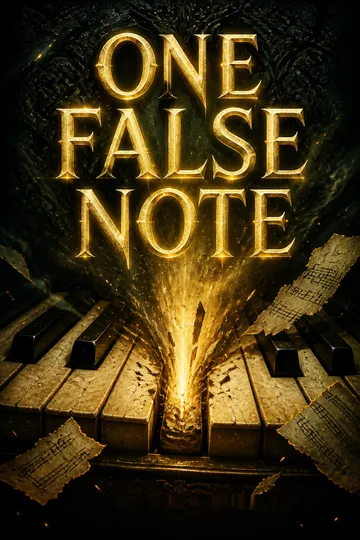
One False Note continues the 39 Clues series, following Amy and Dan Cahill's quest for clues across Europe. Readers enjoy the fast-paced adventure, historical elements, and puzzles, though some find the writing style inconsistent between authors. The book appeals to middle-grade readers with its mix of action, humor, and educational content. While not as strong as the first installment for some, it maintains interest in the overall series. Criticisms include flat characters and unrealistic plot points, but many find it an engaging, quick read.
Characters
Amy Cahill
The watchful clue-readerFourteen-year-old Amy is Dan’s older sister and the more cautious half of their team. She reads closely, remembers what her grandmother taught her, and often sees connections before she can prove them. Crowds and enclosed spaces frighten her, but she keeps moving when the stakes reach beyond her own comfort. Amy carries grief over her parents and Grace alongside a fierce belief that the contest may give the siblings a place in a family history they never knew. Her instinct is to plan and protect, sometimes so intensely that she underestimates Dan’s judgment. The search continually tests whether caution is a strength, a shelter, or both.
Dan Cahill
The restless improviserEleven-year-old Dan is Amy’s younger brother, quick with jokes, restless around museums, and much more observant than he likes to admit. His photographic memory, appetite for technology, and willingness to try an unlikely solution repeatedly help the siblings escape danger. He resists being treated as a child, especially by Amy, and often disguises worry with sarcasm. Dan is less inclined than his sister to dwell on the Cahills’ enormous history or on their losses, but he is deeply attached to the family they still have. His impulsiveness can create new risks, yet it also supplies the action Amy sometimes hesitates to take.
Nellie Gomez
The loyal adult allyNellie is the Cahill siblings’ au pair, an older teen who has put her own plans aside to accompany them across Europe. Practical, outspoken, and musically curious, she handles travel, translation, and the adult responsibilities the children cannot safely manage alone. She is not a Cahill and does not share their certainty that winning justifies every risk. That difference gives her a moral voice within the group, though her affection for Amy and Dan keeps her from abandoning them when they cross dangerous lines. Nellie’s humor is a form of steadiness: she can complain about the cost, the driving, or the cat and still remain the person who comes back for them.
Saladin
The stubborn Egyptian MauSaladin is the Cahills’ Egyptian Mau and a beloved reminder of their late grandmother, Grace. Accustomed to better food than the traveling children can afford, he refuses cat food and makes the journey harder for Nellie. His scratching around the collar eventually draws attention to a hidden device. Saladin is not merely a mascot: his habits create small practical crises, and his presence gives the children a living connection to the home and family they have lost.
Grace Cahill
The absent family architectGrace is Amy and Dan’s late grandmother, the woman whose will launched the 39 Clues contest. She was close to Amy and left both children with memories and knowledge whose importance only becomes clear during the search. Grace’s choices remain difficult for them to interpret: she gave them a dangerous opportunity without explaining everything they would face. Her presence in the story is felt through the contest, the clues she left in old documents, and the siblings’ separate ways of grieving her.
Jonah Wizard
The celebrity rivalJonah is a fifteen-year-old Cahill, internationally famous as a performer and business mogul. He moves easily through press events and public attention, but his celebrity does not erase his dependence on his family or his place within the Janus branch. Jonah wants to remain the best at whatever he enters, including the clue contest. His practiced confidence can make him seem untouchable, yet the hidden Janus world complicates the image he presents to the public.
Ian Kabra
The calculating rivalIan is Natalie’s brilliant older brother and a member of the Lucian branch. He prizes intellect, strategy, and control, and he can mistake cleverness for good judgment. His rivalry with Amy and Dan is sharpened by his confidence that his family’s resources and planning give him the advantage. Ian is especially sensitive to being outmaneuvered, which makes his composure less secure than he wants others to believe.
Natalie Kabra
The composed co-conspiratorNatalie is Ian’s younger sister and a Lucian competitor. More socially perceptive than her brother, she often notices when his pride is interfering with his reasoning. She is poised, observant, and willing to use politeness as a weapon. Natalie’s calm manner does not make her harmless; she shares her family’s determination to win and understands how to pressure an opponent without appearing rattled.
Alistair Oh
The weary veteranAlistair is an elderly Cahill cousin with a stiff posture, a diamond-tipped walking stick, and a past as a successful inventor. He enters the contest hoping for renewed wealth and importance, but his age and fatigue make the long pursuit difficult. Beneath his ambition is a conscience that still responds to the danger facing Grace’s grandchildren. Alistair’s experience makes him a capable rival, though his trust in other competitors can leave him vulnerable to manipulation.
Irina Spasky
The ex-KGB competitorIrina is a Russian Cahill and a formidable rival rumored to have worked for the KGB. She speaks and acts with the economy of someone accustomed to danger, and she treats favors as transactions rather than gifts. Her reputation makes even a brief offer of help difficult for Amy and Dan to refuse. Irina’s methods suggest that the contest has drawn in people whose skills were shaped by a more dangerous world.
William McIntyre
The guarded contest lawyerMcIntyre is the lawyer responsible for the contest and one of the few adults who knows how much is at stake. He warns Amy and Dan not to trust anyone, yet his own role remains hard for them to assess. He carries himself with professional restraint, but the children’s safety troubles him. McIntyre represents the uneasy gap between adult authority and actual protection: he knows more than he shares, while the siblings are forced to solve immediate threats themselves.
The man in black
The unexplained watcherThe black-clad man appears near dangerous moments in Amy and Dan’s journey. His age and unsettling presence make Amy fear that he is connected to the hidden Madrigals, but the children have little reliable information about him. He functions as a persistent reminder that the contest includes forces beyond the rival teams they can name.
Maria Anna Mozart
The overlooked Mozart sisterMaria Anna Mozart, usually called Nannerl, was Wolfgang Mozart’s older sister and a gifted musician in her own right. The expectations placed on girls in her era kept her from receiving the same training and public recognition as her brother. Her diary offers a personal record of Mozart’s life and of the family’s connections. Through it, Nannerl emerges not as a footnote to a famous man but as an observant witness with her own perspective.
Wolfgang Amadeus Mozart
The musical clue-makerMozart is the celebrated composer whose music guides Amy and Dan from Vienna to Salzburg and beyond. The children learn that his work was connected to Benjamin Franklin and that a private score can carry information absent from public copies. Nannerl’s account presents him as a brilliant but financially troubled young man, making the historical icon feel more complicated than his reputation alone suggests.
Fidelio Racco
The merchant with a collectionFidelio Racco was an eighteenth-century merchant, collector, and Cahill cousin whose wealth came from international trade. Mozart performed at his home, and Nannerl’s diary connects him to the unusual materials Mozart sought. His Venetian collection preserves objects from across the world, reflecting both his commercial reach and his Janus interest in art.
Eisenhower Holt
The Holt family commanderEisenhower leads the Holt family’s effort to win the contest. He thinks in sports and military terms, values physical strength, and views other Cahills as obstacles to overcome. His confidence in force makes him a dangerous opponent despite the comic bluster of his family’s traveling style.
Mary-Todd Holt
The fond Holt matriarchMary-Todd is Eisenhower’s wife and the mother of Hamilton, Madison, and Reagan. She tempers the family’s rough competitiveness with a fond, practical manner, but she remains committed to the Holts’ place in the contest.
Hamilton Holt
The imposing Holt sonHamilton is Eisenhower and Mary-Todd’s strong, broad-shouldered son. He is quick to use his physical advantage and helps his family pursue Amy and Dan. His size makes him intimidating, though the Holt family’s bickering gives their aggression a lopsided comic edge.
Madison Holt
The combative Holt twinMadison is one of the Holt twins. She is forceful, competitive, and quick to turn family teasing into a physical challenge. Like her relatives, she sees the contest as a chance to prove the Holts belong among the most powerful Cahills.
Reagan Holt
The defiant Holt twinReagan is Madison’s twin and another member of the Holt team. She gives as readily as she gets in their rough sibling rivalry and shares the family’s athletic confidence. Her presence reinforces the Holts’ belief that strength and teamwork can carry them through the hunt.
Broderick Wizard
Jonah's watchful fatherBroderick is Jonah’s father and constant companion, a non-Cahill who manages business and keeps close to his famous son. He is protective of Jonah’s interests and uneasy with the Janus branch’s restrictions, especially when those rules place his son in a secondary position.
Cora Wizard
Jonah's influential motherCora is Jonah’s mother and a member of the Janus high council. Though she does not appear directly, her status gives Jonah access to the Janus stronghold and shows how family membership can open doors unavailable to Amy and Dan.
Aunt Beatrice
The distant legal guardianAunt Beatrice is Amy and Dan’s legal guardian in Massachusetts. The siblings’ strained relationship with her, and their fear of being returned to Social Services, help explain why the contest feels like more than an inheritance. To Dan especially, she represents an unwanted adult authority and a home in which he felt little understood.
Plot Devices
The 39 Clues contest
A family-wide treasure huntGrace Cahill’s will sets competing branches of the powerful Cahill family searching for 39 hidden clues, with the family’s greatest secret and influence at stake. The contest drives Amy and Dan across Europe and turns relatives into rivals. Because each team has different resources, the hunt also makes character traits into practical advantages: the Holts have strength, the Kabras have strategy and money, Jonah has fame, and the siblings rely on memory, observation, and teamwork. The contest’s secrecy gives every alliance a short life and makes even helpful adults difficult to trust.
Mozart's altered music
A melody conceals directionsA surviving sheet of Mozart’s music contains extra lines absent from the public version. Dan’s photographic memory saves the piece after Saladin destroys the original, and Amy recognizes that the passage is not just music. A woman in Vienna identifies it as an Austrian folk song, sending the siblings to Salzburg. Later, playing the added notes on Mozart’s harpsichord activates a hidden compartment. The score links historical research, listening, memory, and physical action, so the clue can only be solved by combining the siblings’ different abilities.
Nannerl's diary pages
A historical record hides codesNannerl Mozart’s diary first seems to be a missing historical artifact rather than a clue. Its stolen and later recovered pages reveal details about Mozart’s debts, his imports, and his contact with Benjamin Franklin and Marie Antoinette. Grace’s faint notes in the margins give Amy and Dan new problems to decode, including a reference to the word Marie Antoinette used for cake and a warning about a harpsichord key. The diary matters because Nannerl’s overlooked perspective preserves information absent from the public story of her famous brother.
Saladin's hidden tracker
A beacon exposes surveillanceA tiny transmitter hidden under Saladin’s collar causes the cat to scratch and allows someone to follow Amy and Dan’s movements. Nellie discovers it at the veterinarian, turning their repeated encounters with rival teams into evidence of surveillance. Rather than simply discard it, Amy uses the beacon to misdirect attention toward Alistair. The tracker connects the children’s vulnerability to the adults’ competing schemes, and its shifting location eventually leaves William McIntyre unable to follow the siblings.
The tungsten trail
A rare alloy points eastNannerl’s account of Mozart’s costly imports leads Amy and Dan to Racco’s collection and the rare steel alloyed with wolfram. Grace’s coded notes and the harpsichord mechanism help the siblings identify tungsten as the next ingredient in the larger formula. Two Japanese swords provide physical evidence of the material, while Racco’s travel history points toward Japan. The ingredient transforms the search from a sequence of historical riddles into the assembly of something larger, though this book ends before the children learn what the completed formula will do.
FAQ
Synopsis & Basic Details
What is One False Note about?
- A Global Scavenger Hunt: One False Note plunges Amy and Dan Cahill, two orphaned siblings, into a perilous worldwide quest for the 39 Clues, a treasure hunt initiated by their late grandmother, Grace. The prize is immense power, and they must outwit ruthless relatives from various Cahill family branches.
- Mozart's Hidden Legacy: The story centers on the siblings' journey to Vienna and Venice, where they believe the second clue is hidden within the life and works of Wolfgang Amadeus Mozart. They uncover a secret message in his music and delve into his sister Nannerl's diary.
- High-Stakes Espionage: Accompanied by their au pair, Nellie, and their cat, Saladin, Amy and Dan face constant danger, including train chases with the Holts, a daring heist from Jonah Wizard, and capture by the cunning Kabras, all while trying to decipher cryptic messages and avoid being caught by authorities.
Why should I read One False Note?
- Thrilling Global Adventure: Readers seeking a fast-paced, high-stakes adventure will be captivated by the constant chases, narrow escapes, and international settings, making it a compelling read for fans of mystery and espionage.
- Intriguing Historical Puzzles: The novel cleverly weaves historical figures like Mozart, Benjamin Franklin, and Marie Antoinette into a modern-day treasure hunt, offering a unique blend of fiction and historical intrigue that educates as it entertains.
- Relatable Sibling Dynamics: At its heart, the story explores the evolving relationship between Amy and Dan, showcasing their strengths, weaknesses, and unwavering loyalty to each other amidst extraordinary pressure, providing a strong emotional core to the action.
What is the background of One False Note?
- Post-Grace's Will: The narrative immediately follows the events of The Maze of Bones, where Amy and Dan learned of their powerful Cahill lineage and the existence of the 39 Clues. They are still reeling from Grace's death and the initial shock of the contest.
- European Cultural Hubs: The primary settings are Vienna, Austria, and Venice, Italy, both historically significant European cities renowned for their art, music, and architecture. This backdrop provides a rich cultural context for the Mozart-centric clues.
- Cahill Family Branches: The story deepens the understanding of the Cahill family's four main branches—Lucian (strategists/spies), Tomas (brawn/athletes), Janus (artists/creators), and Ekaterina (scientists/inventors)—and introduces new competitors, highlighting the diverse talents and ruthless rivalries within the family.
What are the most memorable quotes in One False Note?
- "Trust nobody -- and that includes him.": William McIntyre's chilling warning to Amy and Dan (Chapter 4) encapsulates the pervasive theme of betrayal and suspicion within the Cahill family, forcing the siblings to question everyone's motives, even those who seem to help them.
- "This contest is too huge for us to worry about being the good guys. A chance to influence human history -- we could change the whole world!": Amy's declaration (Chapter 4) reveals her growing maturity and the immense pressure she feels, highlighting the moral compromises the quest demands and the high stakes involved in the pursuit of power.
- "We're still in this thing!": Amy's internal thought (Chapter 20) after deciphering the tungsten clue, while holding Dan's hand amidst the harpsichord's wreckage, powerfully summarizes their resilience, unity, and determination to continue the quest despite overwhelming odds.
What writing style, narrative choices, and literary techniques does Gordon Korman use?
- Fast-Paced, Action-Driven Narrative: Korman employs a brisk, engaging pace with frequent cliffhangers and immediate transitions between action sequences, keeping readers on the edge of their seats. This style is evident in the train chase (Chapter 2) and the canal pursuit (Chapter 15).
- Alternating Perspectives & Humor: While primarily from Amy and Dan's third-person limited perspective, Korman occasionally shifts to other characters (e.g., Holts, Kabras, Alistair, McIntyre) to build suspense and reveal their motivations. Dan's sarcastic humor and internal monologues often lighten the tension, providing comic relief amidst the danger.
- Symbolism and Foreshadowing: Korman subtly uses recurring motifs, such as Saladin's scratching (foreshadowing the homing device in Chapter 6) and environmental descriptions (e.g., the "immense, silent creature" of the catacombs in Chapter 8), to add layers of meaning and hint at future plot developments, enriching the One False Note analysis.
Hidden Details & Subtle Connections
What are some minor details that add significant meaning?
- Saladin's Persistent Scratching: The cat's compulsive scratching around his neck and ears (Chapter 4, 6) is initially dismissed as fleas but is a subtle, recurring detail that foreshadows the discovery of the homing device. This seemingly trivial pet behavior becomes a critical plot point, revealing the constant surveillance the Cahills are under and the ruthlessness of their competitors.
- Jonah Wizard's "Modesty": Jonah's offhand remark about the Grand Duke of Luxembourg staying in the same hotel (Chapter 4) is a clever piece of misdirection. It subtly guides Amy and Dan to the wrong royal suite (1700) before they realize Jonah is in the one below (1600), highlighting the cunning nature of even the "artistic" Janus branch.
- Grace's Faint Pencil Notes: The barely visible pencil lines in the margin of Nannerl's diary pages (Chapter 18), later identified as Grace's handwriting, are a profound detail. They reveal Grace's active involvement in the Clue hunt long before her death and her deliberate "training" of Amy and Dan, underscoring her complex legacy and foresight in the themes in One False Note.
What are some subtle foreshadowing and callbacks?
- Amy's Catacomb Flashbacks: Amy's intense dread and flashbacks to the Paris Catacombs (Chapter 8) when entering the Salzburg Catacombs subtly foreshadow the claustrophobic and terrifying experience she and Dan will endure when trapped by the cave-in, amplifying the sense of impending danger.
- "D > HIC" as a Warning: Grace's cryptic note "D > HIC 156" (Chapter 18) is a brilliant piece of foreshadowing. It initially appears as a random code but is later revealed to be a direct warning about the booby-trapped "D above high C" key on the harpsichord (Chapter 20), showcasing Grace's protective yet enigmatic guidance.
- The "Man in Black" Sightings: The recurring, fleeting appearances of the "man in black" (Chapter 6, 8, 21) serve as consistent, ominous foreshadowing. His presence at critical junctures (Franklin Institute, Salzburg Catacombs, and later with McIntyre) hints at a larger, unseen force at play, keeping readers guessing about his true identity and allegiance in the One False Note analysis.
What are some unexpected character connections?
- Mozart and Marie Antoinette's Childhood Bond: Nannerl's diary reveals that Mozart and Marie Antoinette met as children and that Marie Antoinette later served as a "go-between" for Franklin and Mozart (Chapter 18). This unexpected connection highlights the deep, interwoven history of the Cahill family and their influence on major historical figures and events.
- Fidelio Racco as a Cahill Cousin: The discovery that Fidelio Racco, the merchant who allegedly drove Mozart into debt, is also a Cahill cousin (Chapter 18) adds a layer of familial betrayal to the historical narrative. It reinforces the idea that internal conflict and exploitation are deeply ingrained within the Cahill family, even among those of the same branch (Janus).
- William McIntyre's Hidden Alliance: The ending reveals William McIntyre, the executor of Grace's will, in a secluded meeting with the "man in black" (Chapter 21). This unexpected alliance suggests that McIntyre is not merely an impartial administrator but an active player with his own agenda, deepening the mystery surrounding his William McIntyre motivations and the true nature of the contest.
Who are the most significant supporting characters?
- Nellie Gomez: The Unsung Guardian: Nellie transcends her role as an au pair, becoming the pragmatic, fiercely loyal protector of Amy and Dan. Her willingness to engage in a "heist" (Chapter 4), endure arrest, and provide emotional stability makes her indispensable, embodying unwavering support in the face of overwhelming odds.
- Saladin: The Unwitting Spy: Grace's Egyptian Mau cat, Saladin, initially appears as a pampered pet but becomes a crucial plot device. His persistent scratching leads to the discovery of the homing device (Chapter 10), making him an accidental informant and a symbol of the constant surveillance the Cahills face.
- Nannerl Mozart: The Overlooked Genius: Maria Anna "Nannerl" Mozart, Wolfgang's sister, is a posthumous but profoundly significant character. Her diary and story highlight themes of gender inequality and unrecognized talent (Chapter 7), while her writings provide critical clues, making her a voice from the past guiding the present quest.
Psychological, Emotional, & Relational Analysis
What are some unspoken motivations of the characters?
- Amy's Drive for Parental Legacy: Beyond winning the contest, Amy is deeply motivated by a subconscious desire to understand her parents' deaths and validate their lives, especially after the thought that the fire "might have been deliberate" (Chapter 19) crosses her mind. This unspoken quest for truth fuels her determination, connecting her personal grief to the larger Cahill mystery.
- Dan's Need for Validation: Dan's impulsive actions and occasional bravado, particularly his insistence on being taken seriously (Chapter 18), stem from an unspoken need to prove his worth to Amy and himself, especially in the shadow of his older sister's intelligence and his own fading memories of their parents. His Dan Cahill motivations are rooted in a desire for recognition and agency.
- Jonah Wizard's Fear of Failure: Despite his outward confidence and celebrity status, Jonah's internal monologue reveals a deep-seated fear of losing and becoming a "loser" (Chapter 6). His Jonah Wizard motivations are driven by a need to maintain his "top banana" status, hinting at the immense pressure he faces from his powerful mother and the entertainment industry.
What psychological complexities do the characters exhibit?
- Amy's Battle with Anxiety and Courage: Amy struggles with profound anxiety, manifesting as a stammer under stress (Chapter 1) and a fear of crowds (Chapter 13). However, she consistently pushes past these fears for Dan and the quest, demonstrating a complex interplay of vulnerability and immense inner strength, showcasing her Amy Cahill psychological analysis.
- Dan's Mask of Immaturity: Dan often acts like a typical eleven-year-old, making jokes and complaining about boredom (Chapter 3, 7). Yet, beneath this facade lies a sharp intellect (photographic memory, quick thinking in crises) and unexpected courage, revealing a complex character who uses humor and apparent immaturity as coping mechanisms for the overwhelming dangers they face.
- Nellie's Moral Dilemma and Loyalty: Nellie, initially a reluctant participant, grapples with the moral implications of the Cahills' actions (e.g., stealing in Chapter 4). Her internal conflict between her personal ethics and her growing loyalty to Amy and Dan highlights her complex character, ultimately choosing to protect the children over strict adherence to rules.
What are the major emotional turning points?
- Amy's Leap of Faith: Amy's decision to jump from the second-story balcony (Chapter 6), overcoming her paralyzing fear of heights, marks a significant emotional turning point. It's a moment where her love and loyalty to Dan, and her commitment to Grace's legacy, override her deepest anxieties, demonstrating her growth and resolve.
- Dan's Outburst at the Canal: Dan's angry outburst at Amy after losing the Royal Saladin (Chapter 18), accusing her of treating him like a "stupid baby," is a raw emotional turning point. It reveals his deep-seated frustration and desire for respect, forcing Amy to acknowledge his contributions and their equal partnership.
- The Tungsten Revelation: The moment Amy and Dan decipher the "gateau minus the music" clue to reveal "tungsten" (Chapter 20), amidst the harpsichord's wreckage, is a powerful emotional climax. It brings a sense of triumph, validation, and a deeper understanding of their parents' potential connection to the clues, solidifying their bond and purpose.
How do relationship dynamics evolve?
- Amy and Dan: From Bickering to Unbreakable Team: Their relationship evolves from typical sibling rivalry and Amy's protective, sometimes condescending, older sister role to one of mutual respect and reliance. Dan's bravery and Amy's acknowledgment of his intelligence (Chapter 19) forge an unbreakable partnership, essential for their survival and success in the 39 Clues analysis.
- Nellie and the Cahills: Au Pair to Family: Nellie's role transforms from a paid caregiver to a fiercely loyal, almost parental figure. Her willingness to risk her freedom and safety for Amy and Dan (Chapter 4, 6, 18) demonstrates a profound emotional bond, highlighting the theme of chosen family and unwavering support.
- Cahills and Competitors: Shifting Alliances and Deepening Animosity: The initial, fragile alliance with Alistair Oh (Chapter 8) quickly dissolves into renewed suspicion, while the rivalry with the Holts, Kabras, and Jonah Wizard intensifies. These evolving dynamics underscore the cutthroat nature of the contest and the constant threat of betrayal, shaping the relationship dynamics in One False Note.
Interpretation & Debate
Which parts of the story remain ambiguous or open-ended?
- The Man in Black's True Identity and Role: The "man in black" remains a mysterious figure throughout the book, appearing at critical moments but never fully identified. His final scene with William McIntyre (Chapter 21) leaves his allegiance and ultimate purpose ambiguous, sparking debate about whether he is a benevolent protector, a rival, or an agent of a larger, unknown force.
- William McIntyre's Ultimate Agenda: While he provides crucial warnings and information, McIntyre's actions, particularly his use of a homing device and his meeting with the man in black, suggest a deeper, more manipulative role than a simple executor. His true William McIntyre motivations and whether he is genuinely helping or merely orchestrating events for his own benefit remain open to interpretation.
- The Full Scope of Grace's Involvement: Grace's posthumous influence, through her notes and the contest itself, is undeniable. However, the extent of her knowledge about the dangers, her precise intentions for Amy and Dan, and her connection to the Madrigals (Chapter 17) are left somewhat vague, inviting readers to question her full legacy and the moral implications of her choices.
What are some debatable, controversial scenes or moments in One False Note?
- Amy's Threat to the George Washington Painting: Amy's decision to threaten to deface a priceless historical painting (Chapter 14) to retrieve the diary pages is a morally ambiguous act. It sparks debate about whether the ends justify the means in the high-stakes contest, forcing readers to consider the ethical boundaries the Cahills are willing to cross for the clues.
- Alistair Oh's Tunnel Explosion: Alistair's internal confession that he set off an explosive in the Salzburg Catacombs (Chapter 10), intending only to "scare Amy and Dan away," is a controversial moment. It highlights the extreme measures competitors take and raises questions about the line between competitive strategy and outright harm, especially given his later remorse.
- Dan's Deception of Irina Spasky: Dan's quick thinking to give Irina Spasky the Jonah Wizard action figure instead of Nannerl's diary (Chapter 6) is a moment of clever deception. While it saves Nellie and the clue, it involves tricking a dangerous ex-KGB agent, prompting discussion about the morality of lying and manipulation, even against a ruthless adversary.
One False Note Ending Explained: How It Ends & What It Means
- The Tungsten Clue & Formula Assembly: The One False Note ending explained reveals that the second clue is "tungsten," derived from Grace's cryptic note "gateau minus the music" and Mozart's interest in wolfram steel (Chapter 20). This confirms Amy's theory that the 39 Clues involve assembling a formula of rare ingredients, hinting at a powerful, perhaps alchemical, creation as the ultimate prize.
- Renewed Determination and Unity: Despite the constant threats and near-death experiences, Amy and Dan emerge from Venice with the second clue, a deeper understanding of their family's history, and a strengthened bond. Their shared triumph and Amy's internal thought, "We're still in this thing!" (Chapter 20), signify their unwavering commitment to the quest and their growing confidence as a team.
- The Unseen Hand of the Madrigals/McIntyre: The final scene with William McIntyre and the "man in black" (Chapter 21) reveals that Amy and Dan have successfully evaded their handlers, proving their resourcefulness. This ending suggests that there are powerful, shadowy forces (possibly the Madrigals) monitoring the contest, and that the children are now truly "lost" to them, setting up a new layer of mystery and danger for future books in the 39 Clues analysis.
The 39 Clues Series Series
About the Author
Other books by Gordon Korman




Download PDF
Download EPUB
.epub digital book format is ideal for reading ebooks on phones, tablets, and e-readers.








