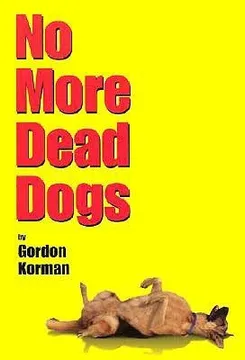


Plot Summary
The Review That Costs Saturdays
Wally Wallace grew up watching his father invent heroic stories, and answered those lies by making blunt honesty his rule. After his parents divorce, Wally carries that rule into eighth-grade English, where Mr. Fogelman assigns a review of Old Shep, My Pal. Wally argues that the book’s dead dog ending is predictable and its characters sound false.
Fogelman hears contempt for his favorite childhood book, not an honest response, and assigns detention until Wally submits a proper review. The punishment reaches beyond English: school rules bar detained students from teams and clubs, so Wally cannot play in the Giants’ opening game. He refuses to soften his opinion just to keep his place on the football team.
Wally’s honesty is both a defense and a blunt instrument. His father’s fabrications taught him that affection can coexist with deception, but Wally responds by treating literal truth as the only trustworthy form of contact. The detention tests whether that principle is a pose or a commitment. Crucially, the cost is not abstract: it removes Wally from football, the community that has mistaken one lucky touchdown for evidence of greatness.
Detention Joins the Drama Club
Rachel Turner, president of the drama club, meets Wally in the gym and assumes the football player has come to help with the production. Instead, he is there to serve detention while the cast rehearses Fogelman’s adaptation of the same book he criticized. Rachel defends the play and its director; Wally points out that the characters speak unnaturally.
When Fogelman rejects Wally’s first review, Wally brings a longer list of objections, then begins suggesting simpler lines as actors ask for help. Vito adopts one of his revisions, and Trudi Davis, Rachel’s friend, eagerly requests more. Rachel sees an outsider disrupting their work, while the cast starts discovering that his plainspoken instincts make the old-fashioned script livelier.
The gym turns punishment into an unlikely apprenticeship. Wally does not join the drama club out of admiration; he begins editing because the dialogue irritates him and because the task gives his restless attention somewhere to go. Rachel’s resistance protects a serious investment in theater, yet her first judgments are colored by school status. The cast responds to practical results before it accepts Wally as one of its own.
A Bench Becomes a Headline
Wally misses the Giants’ first game, and the team loses. Quarterback Rick Falconi blames the absence, while Wally’s former best friend, Steve Cavanaugh, needles him over the championship touchdown that made Wally famous despite his usual place on the bench. At school, student reporter Parker Schmidt turns the detention into a more sensational story, claiming Wally is holding out for better grades.
The article gives the team a false explanation and makes Wally look vain. Cavanaugh uses the rumor to provoke him, while Rachel’s cast sees Wally’s refusal to write the assigned review as proof of arrogance. Wally will not correct the story by pretending he is a star, leaving other people to fill the silence with their own versions.
The school newspaper converts a private disciplinary dispute into public identity. Parker’s mistake is comic, but its effect is serious: classmates interpret Wally through a story that flatters him and angers his teammates. Cavanaugh’s resentment also has a history. The championship celebration elevated Wally through a fluke, leaving the more skilled Cavanaugh with the blame for the fumble and little credit for his own talent.
Pepper in the Wings
Someone spray-paints an insult about Old Shep across the scenery, and the cast immediately suspects Wally because he dislikes the book. He denies doing it and submits an essay explaining his objections, but Fogelman still refuses to end detention. Wally continues correcting lines when actors ask, despite Rachel’s growing frustration.
Then the drama club’s cables are knotted into a giant snarl, and a bucket of pepper drops over the cast during rehearsal. Wally catches Nathaniel Spitzner when the boy stumbles from the stage, and the shaken cast erupts into laughter and applause. Fogelman, desperate to restore their enthusiasm, agrees to try Wally’s idea for showing the accident that injures the dog.
The sabotage makes suspicion feel easy because Wally has motive, opportunity, and an abrasive manner. Yet the story keeps evidence distinct from proof. His practical help complicates the cast’s judgment: the same outsider they blame can also rescue a rehearsal by understanding what an audience needs to see. Fogelman’s concession follows a concrete change in the room, not a sudden conversion to Wally’s taste.
A Moped Takes the Stage
The revised opening becomes a moving spectacle. Laszlo Tamas rides a moped as Rory Piper, a skilled rollerblader, plays a dogcatcher chasing Old Shep on a remote-control car. When the scene works, the actors push for more changes. Parker’s reports and rumors keep suspicion alive, including an accusation that Wally is secretly spying for the principal.
The play grows anyway: the Dead Mangoes join as its band, and Fogelman, a former musician, takes up his keyboard with them. Seeing Wally’s influence as a threat to his control, Fogelman finally ends the detention and sends him back to the Giants. Wally is free, but the cast has become a community he did not expect to care about.
The production changes from a faithful adaptation into a showcase for the actual students: skating, a moped, remote controls, and a live band. Fogelman’s reluctant participation matters because it shifts authority from defending a text to directing the people in the room. His decision to release Wally is less a reward than an attempt to reclaim control, which leaves Wally to decide what the drama club has come to mean to him.
The Pep Rally Exit
On the day Fogelman releases him, marbles spill across the rehearsal stage and send the rollerblading cast tumbling. Wally runs after the suspected saboteur, but a crowd at the Giants’ pep rally blocks his search. The team cheers his return, and Wally joins the celebration long enough to see how little trust remains between them.
The drama students had welcomed him even when they thought he was guilty; his teammates have treated him as a cause of their losses. Wally surprises himself by announcing that he is leaving football to keep working on the play. Rick and Feather Wrigley protest, but Wally accepts the hurt his choice causes rather than returning to a team where he no longer feels at home.
The marbles attack occurs at the precise moment Wally can leave the drama club behind, making his response a test of allegiance rather than convenience. He has not solved the sabotage, and the pep rally offers an easy route back to status. Instead, he chooses the people who gave him work and trust. The decision is not a rejection of football itself; it is a judgment about how the Giants have treated him.
Friends Change Sides
Parker publishes Trudi’s careless claim that she is Wally’s girlfriend, adding another false explanation for Wally’s departure. The rumor angers the Giants and embarrasses Trudi, while Rachel watches her friend enjoy the attention. When the drama cast learns Wally is planning to rake his mother’s yard, they arrive in force to help.
Cavanaugh shows up too, mocking Wally for trading football fame for theater, and Wally defends the cast’s hard work. Later, Coach Wrigley tells Wally that his honesty brings out the best in people. Rick returns Wally’s belongings and rejects their friendship, blaming the season and the newspaper stories. Wally loses much of his old circle even as the drama club makes room for him.
The false romance shows how quickly other people turn Wally’s choices into a story that suits them. Trudi wants proximity to glamour; Parker wants a headline; the Giants want someone to blame. Against that noise, the yard work offers a quieter measure of belonging: the cast gives time without expecting athletic glory. Coach Wrigley recognizes Wally’s social influence, but Rick is still too hurt to accept that reading.
The Jersey on the Scripts
Four days before opening night, the cast finds forty-five scripts shredded onstage, along with a Giants practice jersey bearing Wally’s name. The evidence seems to confirm every suspicion, and Fogelman bans Wally from rehearsal and the performance. Rachel begins to doubt him only after she remembers how often she accused him before proof existed.
She visits Giants practice to ask about the shirt, catches a football pass by accident, and confronts Cavanaugh. He explains that Wally’s jersey could have passed through many hands after the championship celebration, then insists that Wally would not lie. Rachel understands that the shirt proves ownership, not who placed it there. She has a reason to reconsider, but no culprit to name.
The planted jersey is persuasive because it fits a story the cast has already rehearsed about Wally. Rachel’s change begins when she recognizes her own role in making suspicion feel like certainty. Cavanaugh’s testimony carries weight precisely because he has spent much of the story antagonizing Wally. His knowledge of Wally’s character does not solve the case, but it gives Rachel a way to separate evidence from expectation.
Opening Night Goes Up
Before the performance, the cast decides to change the ending so Old Shep survives. Wally sneaks into the gym, fearing another attack, and catches Rick in a hallway with a camera; Rick had meant to take pictures for him, not sabotage the show. Their search of a championship video confirms that someone once took Wally’s jersey, but does not identify the person.
Backstage, they find Rachel’s little brother, Dylan, hiding beside a cherry bomb meant for the dog. The cast’s new ending brings Old Shep back, and Wally dives onto the stuffed animal as the bomb explodes. Rachel pulls him clear. To protect Dylan, Wally falsely claims responsibility, while the audience mistakes the smoking, burning finale for a brilliant comic effect.
The climax forces Wally to choose between the rule that has defined him and the person Rachel loves. His lie is not a new belief that truth does not matter; it is a deliberate act of protection, made at a cost to his reputation. The improvised performance also turns disaster into communal theater: the cast keeps singing, the audience laughs, and Wally’s sacrifice becomes part of the show.
The Bench He Chooses
Rachel’s family grounds Dylan after learning what he did, while Wally keeps the blame on himself. Rachel visits him, recognizes that he lied to shield her brother, and apologizes for treating him as guilty before she had proof. Wally admits that the lie unsettled him, but asks whether they might spend time together.
Trudi, no longer chasing Wally, arrives with Cavanaugh, whose old friendship with Wally begins to thaw. Rachel and Wally agree to join them for a movie. Parker’s latest report turns Wally’s leap onto the exploding dog into another heroic image, but Wally no longer needs the school to decide whether he is a football star. When the Giants leave his bench open, he accepts the place he actually wants.
The ending repairs relationships through specific acts rather than a sweeping absolution. Rachel acknowledges her part in the false accusation; Wally accepts that honesty can include a protective choice; Cavanaugh and Trudi redirect their attention toward each other. Wally’s return to the Giants’ bench is deliberately modest. He can belong to football without pretending to be its hero, just as he can belong to theater without needing to become an actor.
Analysis
No More Dead Dogs uses a school production to ask who gets to decide what counts as good work. Wally sees the play’s stiffness because he approaches it as an audience member rather than a custodian of the book. The cast’s experiments succeed not because every change is automatically better, but because they make room for the students’ actual skills: Rory’s skating, Laszlo’s moped riding, Everton’s control of the toy dog, and the Dead Mangoes’ music. Fogelman’s growth comes from learning to direct those abilities instead of defending his adaptation from them.
The story also tracks how reputation becomes a substitute for evidence. Wally is first praised for a lucky touchdown, then blamed for football losses, and finally condemned by a jersey that could have been planted. Parker’s articles accelerate each shift, but the deeper cause is the school’s readiness to believe whichever story confirms its loyalties. Rachel’s change begins when she notices that she helped build the case against Wally before proof appeared.
Wally’s choice at the climax complicates the simple virtue of honesty. His lie protects Dylan and Rachel, but it also costs him the trust he has worked to earn. The ending does not make deception harmless; it shows that moral responsibility can require attention to another person’s vulnerability, not just fidelity to a rule. Wally’s modest return to the Giants’ bench completes that change. He no longer needs to be called a hero to know where he belongs.
Review Summary
No More Dead Dogs receives mostly positive reviews for its humor, quirky characters, and engaging plot. Readers appreciate the protagonist Wallace's honesty and the book's critique of predictable "dead dog" stories. Many find it a fun, lighthearted read suitable for middle-grade audiences. Some criticize the characters' maturity levels and wish for more depth. Overall, reviewers praise Korman's writing style and ability to create entertaining stories that resonate with young readers.
People Also Read


Characters
Wallace Wallace
Unbending truth-tellerWally is an eighth-grade football player whose one championship touchdown has made him more famous than his actual skills warrant. Raised amid his father’s elaborate lies, he treats blunt honesty as a moral necessity, even when it hurts people or makes him seem arrogant. His practical eye for natural language and staging surprises the drama students, while his loyalty to friends is often quieter than his arguments. He is most comfortable resisting inflated praise, and his challenge is to understand that truthfulness, belonging, and responsibility do not always fit neatly together.
Rachel Turner
Theater-minded club presidentRachel leads the drama club and takes acting seriously, hoping to build a future onstage. She is proud, sharp-tongued, and protective of the work her group has put into its production. Her judgments of Wally are shaped by her loyalty to the director and her suspicion of football culture, though she can reconsider when facts challenge her assumptions. Rachel’s ambition makes her sensitive to whether others respect the play, while her fierce commitment to her friends gives her a strong sense of responsibility.
Trudi Davis
Romantic drama enthusiastTrudi is Rachel’s longtime friend and a performer who enjoys crushes, attention, and the imagined glamour surrounding popular boys. Her enthusiasm for Wally begins with his looks and grows as she sees his confidence and creative talent. She often acts before considering the consequences, including when she feeds Parker a rumor. Beneath her comic self-absorption, Trudi is loyal to the drama club and capable of supporting the people she admires.
Mr. Fogelman
Protective play directorFogelman is the English teacher directing Old Shep, My Pal, a book he loved as a child. He wants students to appreciate its themes and initially mistakes criticism of the adaptation for disrespect toward him. His experience as a writer and theater director gives him pride, but the production tests his need for control. He cares about the cast and learns to value their particular abilities, even when their ideas pull the play far from his original plan.
Rick Falconi
Hopeful Giants quarterbackRick is Wally’s close teammate and a quarterback whose confidence exceeds his grasp of football strategy. His invented expressions and elaborate plays bring humor, but his attachment to the Giants is sincere. He wants Wally back because he believes the team needs him, and he struggles when Wally chooses another community.
Steve Cavanaugh
Talented former best friendCavanaugh is the Giants’ gifted receiver, kicker, and captain, as well as Wally’s estranged former best friend. His sarcasm hides resentment over the championship fumble that made Wally a hero and left Cavanaugh carrying blame. He is highly disciplined about football and appearance, and his pride makes it difficult for him to show how much the friendship matters.
Coach Wrigley
Practical football coachCoach Wrigley leads the Giants and is Feather’s father. He understands that football depends on effort beyond game day, from training diets to learning plays. He respects school rules but sees Wally more clearly than the team does, recognizing how Wally’s honesty affects the people around him.
Feather Wrigley
Celery-fueled teammateFeather is a large, earnest Giants player and Coach Wrigley’s son. He follows a celery-heavy diet to improve his speed and often acts as a sympathetic bridge between Wally and the team. His loyalty is genuine, though he still hopes Wally will return to football.
Dylan Turner
Rachel’s football-loving brotherDylan is Rachel’s younger brother, a fearless fifth grader who idolizes Wally and the Giants. He collects football memorabilia and approaches school life with more enthusiasm than caution. His devotion to the team can make him resentful when Wally’s choices disappoint him.
Parker Schmidt
Rumor-prone student reporterParker, nicknamed Porker Zit by classmates, runs the school newspaper and its online page. He wants scoops and treats guesswork as reporting, repeatedly turning incomplete information into confident stories. His work creates real social consequences despite its slapdash reputation.
Nathaniel Spitzner
Anxious drama regularNathaniel is a drama club member who fears that football players will take over the school’s arts spaces. He is quick to suspect Wally and eager to defend the original production. His anxiety and rigid sense of authority often clash with the cast’s growing appetite for experimentation.
Vito Brundia
Enthusiastic cast memberVito is an affable actor who begins in the play for practical reasons but becomes invested in making his scenes work. He readily tests Wally’s more natural dialogue and helps build the production’s physical comedy. His enthusiasm often draws others into a new idea.
Laszlo Tamas
Moped-riding exchange studentLaszlo is a cheerful Hungarian student repeating eighth grade while improving his English. At sixteen, he can legally ride the moped needed for the play’s opening accident. His warmth and willingness to join in make him an unexpected asset to the production.
Joey Quick
Young bandleaderJoey is a Bedford student and musician who sees the drama production as a chance for his band to perform. He is energetic, ambitious, and quick to recognize that live music could transform the show. He helps bring the Dead Mangoes and Fogelman together.
Owen Quick
Older band guitaristOwen is Joey’s older brother and a guitarist in the Dead Mangoes. He helps the band join the school production and contributes to its musical arrangements.
The Void
Veiled band drummerThe Void is the Dead Mangoes’ drummer, a teenager who hides much of his face behind long bangs. He prefers his stage identity to his given name and supplies the band’s forceful percussion.
Leticia Ogden
Rapping student veterinarianLeticia plays the veterinarian in Old Shep, My Pal. Her role becomes one of the production’s musical showcases, and she contributes to the cast’s willingness to make the script more playful.
Kelly Ramone
Resourceful set designerKelly oversees set design and helps the drama club turn limited school resources into effective scenery. She is practical, collaborative, and willing to rebuild the Lamont house as the production evolves.
Everton Wu
Young stagehandEverton is a shy fifth-grade stagehand who helps operate the remote-control dog and handle backstage tasks. His technical work gives the production its central visual trick.
Rory Piper
Fearless rollerbladerRory is a fast-talking seventh grader whose rollerblading skill makes him an ideal performer in the play’s new opening. His speed and confidence bring physical spectacle to the stage.
Mrs. Wallace
Wally’s supportive motherWally’s mother raises him after her divorce and encourages him to complete his schoolwork without asking him to lie. She recognizes that his principles can make ordinary life difficult, but she respects his independence and keeps their household running with good humor.
Dr. Chechik
Straightforward principalDr. Chechik is Bedford Middle School’s principal. He investigates the damage to the play and questions Wally directly, valuing clear answers over the school’s rumors.
Plot Devices
Wally’s honesty
Truth as both rule and riskWally’s strict commitment to truth drives the conflict over his book review, makes school rumors especially difficult to correct, and shapes how others interpret his denials. It also sets up the climax, when he deliberately tells a lie to protect someone he cares about. The device tests whether honesty is merely factual accuracy or also a form of responsibility toward other people.
Old Shep, My Pal
A play inside the storyFogelman’s adaptation gives Wally a reason to attend drama rehearsals and gives the students a shared project to reshape. Its dated dialogue and expected tragic ending provoke Wally’s criticism, while the actors’ talents gradually transform the production. The play’s fictional dog also supplies the story’s central question: whether a familiar tale must preserve its bleak conclusion.
The school newspaper
Rumor turned into public factParker’s newspaper and website repeatedly turn fragments of information into false explanations for Wally’s choices. The stories influence how the Giants, drama club, and wider school see him, showing how an unreliable account can gain power through repetition even when classmates know the reporter is careless.
The old Giants jersey
Evidence that invites a false verdictA practice jersey bearing Wally’s name appears among the shredded scripts, seemingly linking him to the sabotage. Its presence is persuasive because it matches existing suspicions, but the jersey circulated after the championship celebration and could have passed through many hands. It demonstrates the gap between an object’s history and the story people attach to it.
The remote-control dog
A small engine for spectacleA toy car hidden beneath a stuffed dog lets the students stage the motorcycle accident without a real trained animal or dangerous stunt. The device makes Wally’s theatrical ideas possible and becomes central to the production’s opening and altered ending. It also turns the final performance into a physical crisis when the dog becomes the target of Dylan’s explosive prank.
About the Author
Other books by Gordon Korman




Download PDF
Download EPUB
.epub digital book format is ideal for reading ebooks on phones, tablets, and e-readers.








