

Plot Summary
The Runner Who Passed
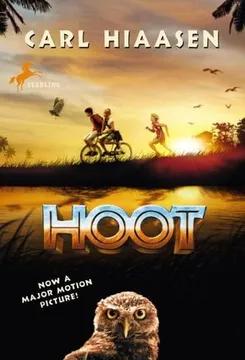
New in Coconut Cove and tired of being the kid who never stays anywhere, Roy Eberhardt tries to keep his head down at Trace Middle. On his first school-bus ride, bully Dana Matherson pins Roy against the window, forcing him to notice a barefoot boy sprinting past the waiting students.
The boy vaults a dog and vanishes into a thicket without slowing. Roy cannot stop wondering who he is or what he is running from. Across town, Officer David Delinko investigates repeated disturbances at the future site of a Mother Paula’s pancake restaurant.
Survey stakes have been pulled up, holes carefully refilled, and burrows left in the ground. The foreman dismisses the owls living there, but Roy’s unanswered question and the threatened habitat now share the same landscape.
The opening links two kinds of invisibility. Roy is a transient child accustomed to disappearing into new schools, while the burrowing owls are treated as absent because the construction project’s adults prefer not to see them. The runner attracts Roy precisely because he refuses the ordinary route into school; his movement suggests a life organized outside adult systems. Delinko’s first encounter with the empty-looking lot establishes the opposing pressure: bureaucratic attention arrives only when property or schedules are disrupted. The story begins with curiosity, but beneath it lies a conflict over who gets to define what counts as present.
The Golf Course Knockout
After several fruitless mornings watching for the barefoot boy, Roy finally sees him again and lunges for the bus door. Dana clamps down on Roy’s throat, so Roy punches him hard enough to break his nose, then jumps off and chases the runner across yards and a golf course.
A stray golf ball knocks Roy unconscious before he reaches the trees. At school, Vice-Principal Viola Hennepin accepts that Dana choked him but punishes Roy by removing him from the bus and requiring an apology.
Roy keeps the pursuit secret from his parents. The tall girl with red glasses, who nearly got knocked over as he bolted past her, later corners him in the cafeteria and warns him to stop asking about the boy. Her warning confirms that Roy is not the only one watching.
Roy’s first consequential choice is not a heroic plan but a refusal to remain passive. He acts against Dana to escape immediate danger, then accepts a much larger risk because the runner has become more compelling than his own safety. The school’s response demonstrates how institutions can recognize harm and still misassign responsibility: Dana’s violence is acknowledged, but Roy receives the formal penalty. The red-glasses girl’s warning changes the mystery from a private curiosity into a guarded secret. Roy’s restraint with his parents also matters. He is not simply rebellious; he is trying to protect a fragile connection he has not yet earned.
Camp Beneath the Thicket
Roy follows the running boy’s route to the golf course and pushes through the scrub, where he finds a hidden camp, discarded clothes, and a bag of cottonmouth snakes with glittering tails. A voice orders him still; the boy pulls him away, hooding and binding him before escorting him out.
He gives Roy only the nickname Mullet Fingers and disappears again. Later, Roy brings sneakers to the junkyard where Beatrice Leep has been hiding him. She admits Mullet Fingers is her stepbrother, a runaway repeatedly sent to military schools by his mother, Lonna.
Beatrice agrees to deliver the shoes only if Roy stops searching. Instead, she lets him see the boy’s hidden shelter and shares enough of the family history to make clear that he has nowhere dependable to go.
The discovery of the camp revises Roy’s picture of the runner. What looked like reckless flight is also deliberate self-sufficiency: Mullet Fingers has made a shelter, stored necessities, and learned to manage danger. His snakes serve as both protection and a test of Roy’s nerve, while the hood keeps control of identity in his own hands. Beatrice’s reveal complicates her earlier hostility. She was not protecting a prankster from curiosity for its own sake; she was guarding a brother who has been repeatedly rejected by adults. Roy’s gift of shoes becomes a tentative offer of care, not a demand that the boy become conventional.
Burrows Under Bulldozers
Back at school, Dana resumes tormenting Roy and later traps him in a janitor’s closet. Beatrice breaks in, leaves Dana tied to the school flagpole, and takes Roy to help her injured stepbrother. Mullet Fingers has infected bites from the guard dogs at the construction site.
While Roy bandages him, the boy explains that he planted cottonmouths there to frighten the dogs, taping their mouths shut and marking their tails so he could retrieve them safely. The distraction failed to spare him a bite. He then leads Roy to burrows and places ground meat nearby. A small owl emerges, and Roy finally understands why Mullet Fingers has been sabotaging the pancake-house project: the land is home to the birds and their nests.
This section turns the apparent vandalism into an improvised defense of vulnerable life. Mullet Fingers accepts bodily risk, but his aim is not cruelty: even the snakes are handled so they will not harm the dogs. Roy’s first aid gives their alliance a practical foundation, while the owl’s emergence supplies direct evidence that the lot is inhabited. Beatrice’s rescue of Roy echoes her protection of her brother, though she now draws Roy into the same responsibility. Dana’s attack and the guard dogs’ bite show two kinds of force used to control movement. The children answer them by protecting one another and making the hidden animals visible.
The Hospital Impostor
As Mullet Fingers’s fever worsens, Beatrice and Roy carry him toward medical help. Afraid that a real name will bring his mother or the authorities, the boy refuses to identify himself, so Roy registers him under Roy’s own name.
Dr. Gonzalez treats the dog bites but recognizes that the story they give her is false. Mullet Fingers escapes through a hospital window before the Eberhardts arrive, leaving a torn green shirt behind. When Roy’s parents find an empty bed and discover that their son was not the patient, Roy admits what he did and explains the boy’s plight.
His father warns that the construction company may be acting legally; Roy challenges the assumption that legality settles whether the owls should be displaced. His parents hear both the lie and the compassion behind it.
The false identity is a sharp moral test because it makes Roy’s loyalty legible through an act that can also be condemned. He does not lie for excitement or personal gain; he lies because the official intake process threatens to expose a sick child to the very household he fears. Yet the consequences are real: his parents are frightened, and the doctor must treat an unnamed patient without reliable history. Roy’s father introduces the distinction between legal ownership and ethical responsibility, while Roy refuses to treat that distinction as a reason for silence. The scene marks his shift from investigation to commitment, even though he still lacks a workable strategy.
Dana’s Cigarette Bait
Roy tries to make peace with Dana, but the bully promises more violence, then attacks him in the school closet. Beatrice rescues Roy, and the following day he visits Dana at home; another attempt at reason fails. Instead, Roy invents a stash of cigarettes inside the construction trailer and directs Dana there.
Curly, the site foreman, has laid rattraps around the trailer. Dana steps into them, struggles with Curly, and flees until Officer Delinko catches him and takes him into custody. Dana claims Roy’s identity, but Delinko recognizes the lie.
With Dana detained, Roy is relieved to have escaped the daily threat, yet he knows the arrest has not solved the owl problem. The police mistakenly treat Dana as the likely site vandal, while Mullet Fingers remains free and the bulldozing deadline approaches.
Roy’s deception here differs from his hospital lie. He uses Dana’s greed and aggression against him, turning the bully’s expectation of easy profit into a trap. The tactic works, but its success is morally uneasy: Roy has borrowed the same logic of manipulation that has made Dana dangerous. Delinko’s recognition of Roy prevents the mistaken arrest from becoming a false resolution, yet the officer and the foreman still lack the actual saboteur. Dana’s removal offers Roy temporary breathing room, not closure. By separating the bully subplot from the environmental conflict, the episode shows that escaping one immediate threat does not automatically equip a person to confront a larger institution.
The Missing Permit File
Roy visits Mullet Fingers in the junkyard and learns that the boy has watched Coconut Cove’s wild spaces disappear for years. Mullet Fingers shows him a dismissive company reply to Beatrice’s letter and asks him to join another night of sabotage. Roy hesitates, then researches Florida’s burrowing owls and learns they are protected.
At City Hall, he requests the pancake-house permits, but the crucial file has been checked out. He releases crickets through the fence to feed the owls and sees Curly deny their existence. Meanwhile, Beatrice shelters at Roy’s house after a violent argument between Lonna and her father. Roy understands the boy’s isolation more clearly, but chooses evidence and public scrutiny over another illegal stunt.
Roy’s growth becomes strategic rather than merely brave. Mullet Fingers has experience acting outside the law because he expects institutions to fail him; Roy begins to see that direct action without evidence can be dismissed as mischief. The missing file is a crucial absence: the city’s records should clarify whether the company has addressed the wildlife, but the absence itself raises suspicion. Curly’s denial makes the conflict openly epistemic, a contest over whose account of the land will be believed. Beatrice’s arrival at Roy’s home reveals that her toughness is also a response to instability. In offering shelter, Roy practices the care he wants adults to extend to Mullet Fingers.
The Camera and the Crowd
Roy borrows his mother’s camera and presents Mullet Fingers with a lawful alternative: photograph an owl so officials cannot pretend the burrows are empty. The boy rejects the plan at first, unwilling to risk Roy and Beatrice, but keeps the camera. Roy then tells his history class that the groundbreaking will put the owls’ nests at risk and invites students to witness it.
His teacher allows him to attend with parental permission. At home, Roy’s father supplies the note, and Beatrice secures one from her own father. Mullet Fingers returns the camera with photographs taken at the site. On the night patrol, Delinko sees a parent owl circling a fledgling and begins to understand what the construction schedule could destroy.
The camera represents a change in the terms of conflict: the children need evidence that can travel beyond the lot and withstand official denial. Mullet Fingers’s initial refusal is protective rather than dismissive; he has learned that involving others may expose them to punishment. Roy answers by widening the circle of responsibility, speaking to classmates instead of trying to out-sabotage the company. His parents’ notes make that civic action possible without requiring a break from school rules. Delinko’s encounter with the owl family parallels Roy’s earlier recognition, but carries a new cost: the officer must weigh professional ambition against the consequences of doing his assigned job.
A Boy in the Owl Hole
At the ceremony, Roy and Beatrice arrive to find classmates, parents, and soccer teammates gathered at the fenced lot. Roy challenges the company’s claim that no owls live there, but Mullet Fingers’s photographs are too blurry to prove it.
Then the boy appears with his head emerging from a burrow and warns that the owls cannot be buried without burying him. He displays a bucket of cottonmouths, which Roy knows are rubber, but Chuck Muckle attacks them with a ceremonial shovel before discovering the trick.
As Muckle moves toward the boy, Roy, Beatrice, Garrett, and the other students link arms around him. Delinko refuses to arrest Mullet Fingers, and the crowd holds its ground. A burrowing owl finally lands on the boy’s head as cameras record the demonstration.
The climax succeeds not because the children produce perfect evidence, but because they force the public to witness what the official story excludes. Mullet Fingers’s body becomes an unmistakable sign of the burrow’s occupancy, while the rubber snakes expose Muckle’s reflex to use force before checking what is real. Roy’s failed photographs could have ended the protest; instead, the visible solidarity of the students changes the balance of power. Delinko’s refusal to arrest the boy is a small but consequential break with institutional convenience. The owl’s landing is not a legal ruling, but it transforms an abstract habitat dispute into a living scene that cameras and spectators can carry away.
The File That Wasn’t There
The morning after the protest, Roy’s father gives him a copied set of the construction records he had borrowed from City Hall. He has consulted environmental lawyers and found that the file contains no Environmental Impact Statement, a document required for a project of this kind.
Roy passes the material to Gazette reporter Kelly Colfax, who recognizes the significance of the omission. Her reporting turns the missing paperwork into a public question the company cannot answer with denials.
Roy’s role changes once more: he is no longer only the boy who saw the owls or the one who called a crowd together. He helps bring the official record into view, while his father uses professional knowledge to give the children’s protest a durable legal and journalistic path.
The missing document converts moral outrage into institutional accountability. Roy’s father does not simply endorse his son’s judgment; he supplies a form of evidence that can challenge the company on its own procedural ground. This matters because the conflict has never been only about whether the owls exist. It is also about who knew, what was recorded, and why the record vanished. Kelly Colfax’s reporting connects local witness to public scrutiny, while Roy’s handoff shows how civic action often depends on cooperation across generations and professions. The victory is prepared through the earlier failed camera, the absent permit file, and the adults who finally choose to treat the children’s observations as credible.
Epilogue
The investigation uncovers an Environmental Impact Statement documenting three pairs of burrowing owls and cash hidden with Councilman Bruce Grandy’s copy of the records. Mother Paula’s abandons the site and promises to preserve it as an owl sanctuary. Mullet Fingers briefly returns to his family, then escapes again; he uses Dana as a decoy, and Dana is caught while the barefoot boy disappears.
Roy cannot find him, but later, at a hidden creek, Roy tries to catch a mullet by hand and fails. He discovers a tiny fish tied safely inside his shoe and releases it into the water. The small, unmistakable prank tells Roy that Mullet Fingers is still nearby, choosing when to be seen.
The ending refuses to equate institutional victory with personal repair. The owls gain protected ground because the missing report exposes deliberate concealment, but Mullet Fingers does not suddenly become a secure, conventional child. His escape preserves the independence that helped him defend the birds, even as it leaves Roy without a clear goodbye. The final fish is an intimate message rather than a reunion: Mullet Fingers acknowledges Roy while retaining control over distance and identity. Roy’s failed attempt to catch one himself matters too. Belonging in Florida is no longer an idea he can borrow from Montana or another person; it is a skill he will keep practicing.
Analysis
Hoot builds its environmental conflict from a child’s act of attention. Roy notices a runner because he is already practiced at watching from the margins of new schools; that curiosity draws him into a struggle over land adults have classified as empty. The owls’ burrows become more than habitat. They expose how development depends on selective seeing: a site can be described as vacant when the people with authority choose not to count the lives beneath its surface.
The novel sharply distinguishes legality from justice without treating either as simple. Roy’s father initially points out that ownership and permits may allow construction, while Roy insists that permission cannot settle the moral question. The resolution comes not through a single righteous speech or flawless photograph, but through several kinds of evidence: the children’s witness, the public protest, the reporter’s scrutiny, and the missing environmental report. Civic action here is collective and procedural as well as passionate.
The children’s methods reveal their different histories. Mullet Fingers trusts improvisation because adults have repeatedly failed to protect him; his sabotage is a survival skill turned outward toward the owls. Beatrice’s fierceness grows from the same family instability, but she makes loyalty tangible by feeding, sheltering, and defending the people she loves. Roy begins as a boy trying not to attract attention and becomes someone willing to create it, while still worrying about the consequences for his parents and friends.
The adults are not divided into simple villains and heroes. Curly is squeezed by corporate demands, Delinko wants advancement, and Roy’s father must decide how to use his professional knowledge. Their choices show how harm can be sustained by ordinary incentives and convenient denials. The ending’s protection of the land is meaningful, but Mullet Fingers’s disappearance prevents a false sense of total repair. A place can be saved through public action even when the people who fought for it remain difficult to hold onto.
Review Summary
Hoot received mixed reviews, with an average rating of 3.84 out of 5. Many readers found it entertaining and praised its environmental message, likable characters, and humor. Some appreciated its portrayal of youth activism and Florida's unique setting. However, others felt it was merely average, with one-dimensional characters and an overdone plot. The book resonated particularly well with younger readers, while some adults found it less engaging. Overall, it was generally considered a quick, enjoyable read with important themes about nature conservation.
People Also Read




Characters
Roy Eberhardt
The observant newcomerRoy is a thoughtful middle-schooler whose family moves so often that he has learned to expect the next departure before he can feel at home. He watches closely, reads widely, and is drawn to the barefoot boy because the boy seems to live by rules unlike those of school or family. Roy is not naturally fearless; he weighs danger, worries about his parents, and can be embarrassed by his own impulsiveness. His instinct to investigate gradually becomes a capacity to organize others and to question adult explanations. The tension between his cautious judgment and his strong sense of fairness gives his choices their emotional weight.
Mullet Fingers
The feral defenderKnown by a nickname earned through his remarkable ability to catch mullet, Mullet Fingers is a resourceful boy who has spent much of his life outdoors. He trusts practical knowledge more than institutions, and his independence is both a source of competence and a shield against rejection. His fierce attachment to wild places extends to the animals he encounters, even when his methods are risky or illegal. He resists being named, managed, or drawn into other people’s plans, but he is not indifferent to companionship. His relationship with Beatrice rests on a hard-won loyalty, and his wary connection with Roy develops through shared acts of care.
Beatrice Leep
The fierce protectorBeatrice is a strong, athletic soccer player with a reputation that keeps classmates at a distance. Her bluntness and physical confidence conceal a protective loyalty, especially toward her stepbrother, whom she shields from a mother who has repeatedly tried to send him away. Beatrice is skilled at reading people and adults, and she can be both intimidating and unexpectedly tender. Her bond with Mullet Fingers is built from shared family history, while Roy earns her trust by speaking honestly and acting when someone is in danger. She is not simply a tough sidekick: she is managing her own unstable home while making space for others.
Officer David Delinko
The ambitious patrolmanDelinko wants to become a detective and sees the construction-site case as a chance to prove himself. He is earnest but inexperienced, vulnerable to embarrassment and eager for recognition from his superiors. His investigation begins with property damage and pressure from local officials, yet the small owls gradually become more than a detail in a case file. Delinko’s conflict is between professional advancement and the consequences of enforcing a plan that threatens the birds. His awkwardness often supplies comedy, but it also makes his eventual judgments feel like genuine choices rather than effortless heroism.
Dana Matherson
The bus bullyDana is a large, aggressive student who uses his size and the silence of bystanders to dominate the school bus. He treats intimidation as entertainment and interprets resistance as an insult that must be answered. His family offers little steady guidance, and his father’s defeated manner hints at a household that has stopped expecting much from him. Dana is not presented as secretly noble; his threats and selfishness cause real harm. His presence tests whether Roy will keep avoiding conflict or accept the cost of standing his ground.
Mr. Eberhardt
The measured fatherRoy’s father works for the federal government and brings a procedural, evidence-minded approach to family problems. He cares deeply about Roy but does not automatically endorse every risky decision his son makes. His instinct is to distinguish what is legally permitted from what can be proven, while Roy presses him to consider what is humane. He listens carefully, remembers details, and can offer expertise without taking the decision entirely away from his child. Their relationship gives Roy a model of adult authority that can be challenged without becoming hostile.
Mrs. Eberhardt
The protective motherRoy’s mother is attentive to his safety and unsettled by the instability of frequent moves. She wants him to avoid unnecessary trouble, especially because he is her only child, but she is capable of recognizing the compassion behind his choices. Her warmth makes Roy’s fear of worrying her concrete rather than abstract. She also notices when he is lonely and hopes his new friendships will give him a foothold in Coconut Cove. Her care is protective without being wholly controlling.
Garrett
The comic classmateGarrett is Roy’s first friendly contact at Trace Middle, a jokester known for elaborate fake-fart noises and a talent for spreading school gossip. His comedy can make him seem shallow, but he notices Roy’s danger and tries to help when Dana threatens him. He has access to information through his mother, a school guidance counselor, and he enjoys being in the middle of events. Garrett’s humor becomes useful in tense moments, showing that comic relief can also be a form of social courage.
Leroy Branitt, called Curly
The pressured foremanCurly supervises the pancake-house construction and is held responsible for every delay, despite having little power over company decisions. He is cranky, practical, and easily frightened by snakes, while also taking pride in his job and hoping to impress his employers. His comic misfortunes reveal how corporate pressure travels downward: executives demand progress, and Curly is left to manage the site and its hazards. He is not a mastermind, but his willingness to repeat the company’s claims helps the project continue.
Chuck Muckle
The corporate enforcerMother Paula’s vice-president for corporate relations, Muckle is polished when addressing the public and ruthless when protecting the company’s image. He views the groundbreaking as a publicity event and treats delays, bad press, and inconvenient facts as threats to be managed. His confidence depends on controlling the story, so challenges from children and reporters quickly expose his temper. He embodies the company’s distance from the actual land: the owls are less important to him than the franchise and the ceremony.
Lonna
The rejecting stepmotherLonna is Mullet Fingers’s mother and Beatrice’s stepmother. She wants her son’s behavior made conventional and responds to his resistance by sending him away to strict schools. Her strained relationship with him has left Beatrice acting as his practical ally. Lonna is also drawn to attention and appearances, which complicates her claims of concern. Her presence makes clear why Mullet Fingers distrusts adult promises and why Beatrice is vigilant about keeping his location secret.
Leon Leep
The distracted stepfatherBeatrice’s father is a former professional basketball player who has drifted into an undemanding routine since leaving the sport. He is not deliberately cruel, but his passivity leaves Beatrice carrying much of the household’s practical and emotional labor. He has little in common with Mullet Fingers and does not initially understand the boy’s outdoor life. His care for Beatrice is real, though it does not always translate into effective protection.
Viola Hennepin
The punitive vice-principalHennepin is Trace Middle’s severe vice-principal, quick to invoke school rules and slow to trust a student’s account. She treats Roy’s response to Dana as a disciplinary problem, even when evidence supports his version. Her rigid manner makes her a small but pointed example of an institution more comfortable managing behavior than confronting a bully.
Mr. Ryan
The attentive teacherRoy’s history teacher is a former college football player who takes his students seriously without surrendering his responsibility for school rules. He gives Roy room to explain an issue to the class, while reminding him to support claims with evidence. His measured response helps turn Roy’s concern into a public discussion rather than a private outburst.
Dr. Gonzalez
The skeptical physicianThe emergency-room doctor is observant enough to recognize that Beatrice and Roy are concealing details about her injured stepbrother. She treats the boy’s wounds while pressing the children for an account she can trust. Her medical judgment exposes the weakness of their cover story, but her restraint also shows that she understands the family situation may be more complicated than the children can safely explain.
Kimberly Lou Dixon
The reluctant mascotDixon is the actress hired to portray the grandmotherly face of Mother Paula’s in advertisements and at the groundbreaking. Her public image is manufactured through costume and makeup, while her off-camera manner is far less genteel. She is initially part of the company’s promotional machinery, but she retains an individual conscience beneath the role.
Kelly Colfax
The persistent reporterColfax is a local newspaper reporter willing to ask direct questions even when powerful people would prefer a tidy publicity story. She follows the protest beyond its spectacle and recognizes the importance of the missing environmental paperwork. Her reporting gives the children’s observations a public life beyond the construction site.
Bruce Grandy
The ambitious councilmanGrandy is a local councilman whose public support helps bring civic authority to the pancake-house project. He represents the political layer between a private developer and the town, where approvals and public trust can become entangled. His role is small in the day-to-day action but important to the way the project gains legitimacy.
Plot Devices
Burrowing owl colonies
The hidden living evidenceThe owls’ underground burrows make the construction lot seem empty to anyone who does not look closely. Mullet Fingers’s feeding routine and Roy’s direct sighting establish that the birds are present, while the danger to nests gives the children a concrete reason to act. The owls also test whether adults will accept visible evidence or rely on convenient claims that the land is vacant. Their protected status links a small local habitat to environmental law, and their emergence during the protest turns an abstract argument into a public encounter.
The escalating sabotage
Delay that exposes urgencyRemoved survey stakes, alligators in portable toilets, black paint on Delinko’s cruiser, glitter-tailed snakes, and missing construction seats repeatedly postpone work at the site. The pranks reveal the determination of the person defending the owls, but they also give the company a reason to tighten security and the police a reason to investigate. Their comic escalation keeps the mystery alive until Roy learns their purpose. The stunts buy time, but they cannot create lasting protection on their own, pushing Roy toward evidence and public attention.
The missing impact statement
An absence becomes proofRoy expects City Hall’s construction file to explain whether Mother Paula’s has addressed the wildlife on the property, but the file has been checked out and the impact statement is missing. The gap initially frustrates his attempt to prove the owls are protected. Once his father obtains a copy of the records and environmental lawyers examine them, the absent document becomes a clue to deliberate concealment. The device shifts the conflict from competing claims about what can be seen to a question about what the company and local officials knew, recorded, and failed to disclose.
Camera and public protest
Witnesses multiply the evidenceRoy offers Mullet Fingers a camera so the boy can document an owl before the groundbreaking. The resulting photographs are too blurred to persuade the crowd, forcing Roy to rely on what he has learned in class and to recruit students, parents, and Beatrice’s teammates. Mullet Fingers then makes his own body impossible to ignore by occupying a burrow. The camera’s failure becomes productive: the protest does not rest on one image but combines direct testimony, a living demonstration, public witnesses, and later documentary evidence.
About the Author




Download PDF
Download EPUB
.epub digital book format is ideal for reading ebooks on phones, tablets, and e-readers.








