

Plot Summary
The River Takes the Bridge
Sera Khoury, a student director who has spent two months avoiding Lucas Crane, finds him behind her on a miserable senior camping trip in the West Virginia woods. Their teasing carries the weight of a kiss she has refused to discuss. When their teacher, Mr. Walker, finds the trail bridge unsafe, he leads the students through the swollen river instead.
The current rises before the group can cross. Sera, Lucas, Jude, and Emily reach the far bank, but teacher Ms. Brighton and students Madison and Hayley are trapped on the other side as a flood-borne tree destroys the crossing. With no phone signal and no way to reach them, the separated groups must spend the night apart.
The flood does more than create a survival problem. It breaks the school group into a vulnerable four and a distant three, removing the adults’ shared control just as the students are forced to depend on one another. Sera’s unresolved attraction to Lucas is introduced alongside physical danger, but she responds to both by trying to manage what she feels. Her instinct to direct events, normally useful in theater, now meets a landscape that will not follow a script.
Words on Their Wrists
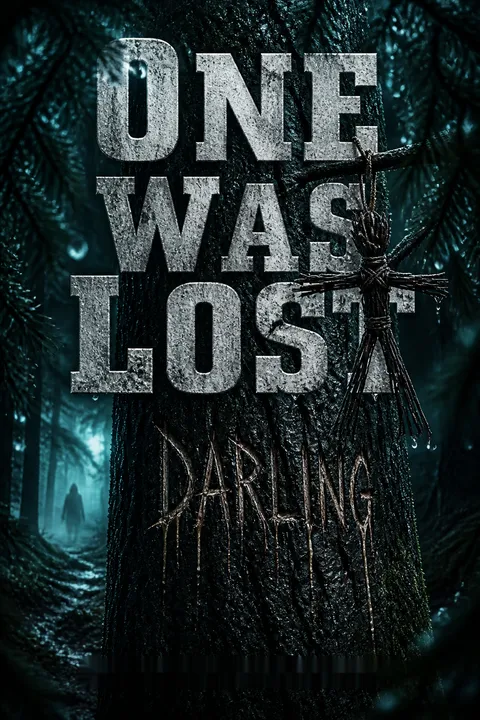
After a cold night in camp, Sera wakes late, feverish and disoriented, beside a heap of shredded backpacks, broken phones, and scattered supplies. Someone entered the tents while the students slept. Mr. Walker is alive but unresponsive, and Jude is vomiting. Each awake student finds a different word written on a wrist: Sera is marked Darling, Lucas Dangerous, Jude Deceptive, and Emily Damaged.
They find a carefully arranged number three near the teacher’s tent, matching the days they were meant to have left on the trip. The words feel disturbingly personal, while the ruined equipment has removed their easiest route to help. When Sera notices Mr. Walker’s empty bottles, she suspects someone drugged their water.
The personalized labels turn fear inward: each student is made to wonder whether an outsider knows them better than they know themselves. Because the words seem plausible, they become evidence in the group’s eyes, not merely threats. The missing day and wrecked phones also undermine ordinary explanations, while Mr. Walker’s incapacity removes the authority the students expected to rely on. Sera’s word is the only one that sounds affectionate, yet its apparent privilege quickly makes her suspect rather than reassuring.
A Finger Above the Flood
Sera, Lucas, Jude, and Emily follow the path back toward the river, hoping to find Ms. Brighton and the two stranded girls. The bridge is mangled, the current still too dangerous to cross, and their calls toward the tents on the ridge bring no reply. When they search the bank, they discover a severed finger with Ms. Brighton’s purple nail polish hanging above the water.
The sight sends all four running into the forest. Sera cannot accept Lucas’s plan to abandon the other side, but he and Jude leave to head north for a road. She and Emily return to the camp, staying with the unconscious Mr. Walker and hoping they can find supplies or wake him.
The finger converts an unexplained disappearance into evidence of deliberate violence, but it offers no reliable account of who is hurt or alive. Sera’s refusal to leave the teacher and the missing students shows compassion, though it also reflects her need to remain responsible for everyone. Lucas and Jude choose movement over waiting, a decision shaped by the immediate threat rather than certainty. Their split leaves Sera and Emily isolated, and makes their next choices depend on trust under conditions designed to destroy it.
Water Becomes a Gamble
While Sera and Emily sort the wreckage, they find a few scraps of food but no GPS. They also discover sealed bottles of water in Mr. Walker’s tent and a cloudy bottle beside him, suggesting someone has drugged him again. Before they can decide what is safe, Lucas returns carrying Jude, who has collapsed from dehydration after vomiting.
Jude chooses the clean-looking water over the contaminated river, and Emily feeds him slowly. When he improves, Lucas and then Sera drink too. Relief comes with a cost: they have accepted supplies left by the unseen intruder and cannot know what else may be in them. As evening approaches, the four survivors reunite around Mr. Walker’s tent, still without a reliable plan.
Thirst strips away the luxury of certainty. The group must weigh a possible poison against the very real danger of dehydration, and Jude’s worsening condition turns that calculation into a collective decision. Emily’s care gives her practical authority despite her quiet manner, while Sera’s concern for Jude makes the danger personal. The water also functions as a coercive gift: whoever left it can shape the students’ behavior by controlling the conditions under which they survive.
Vultures Mark the Ridge
Sera and Lucas return to the river to search for a phone or any sign that the others survived. The finger is gone, and turkey vultures circle above the ridge where the tents stand. Lucas tries to stop Sera from entering the current, but she insists on looking. She slips on a submerged rock and cuts her leg before he pulls her upright.
Across the water, flies gather over a dark shape near the tents, and Lucas sees enough to believe bodies are there. On the walk back, they overhear Jude accusing Lucas of drugging him and suspecting Sera because of her word and her feelings for Lucas. Lucas asks Sera to trust him; she does, though she remains wary of everyone.
The vultures offer a grim but incomplete answer, allowing fear to fill the gaps that sight cannot. Sera’s attempt to verify the scene is an act of moral responsibility, but her fall demonstrates how easily good intentions can add danger without changing the facts. Meanwhile, Jude’s accusations reveal how quickly the wrist labels have become a framework for interpreting ordinary conflict. Trust is no longer a stable bond; it is a choice the students must repeatedly make without proof.
The Bears Come to Camp
That night, a mother bear and her cubs forage around camp. Lucas leads Sera away rather than risk provoking them, and the two wait until morning beneath an oak. Emily later reports hearing Mr. Walker leave his tent during the encounter. Inside, the students find him unconscious again, a fresh water bottle, and a pill Emily identifies as a sedative.
Lucas finds Madison’s granola-bar wrappers scattered near the camp and trampled ground where someone may have watched them. The students build a rough sled from tent poles and rope so they can move Mr. Walker. As they set out north, they find a number two carved into a dead tree. The message confirms that the earlier three was a countdown.
The bear encounter makes the forest’s natural dangers indistinguishable from human interference: the animals are real, but the evidence suggests someone deliberately drew them close. The students now recognize that their choices are being watched and manipulated, yet they still cannot identify the watcher. Their decision to drag Mr. Walker rather than abandon him shows a fragile ethic of care taking shape. The carved number turns time itself into a threat, making delay feel like participation in someone else’s plan.
The Rescue That Loops
As the group struggles north with Mr. Walker on the sled, they hear what sounds like dirt bikes and people nearby. Lucas doubts the noise, but the others follow it, hoping to find a road and help. They reach a small fire, bottled water, and a cooler filled with food tailored to Sera’s tastes, including nut-free sunflower butter for her allergy.
The familiar choices make the food feel like a message meant specifically for her. Laughter and engine sounds keep repeating in the same pattern, revealing a wireless speaker hidden beside the fire. Sera switches it off. The sudden silence confirms that no rescuers were waiting. Someone built the scene to draw them away from their route.
The staged rescue exploits the group’s most reasonable hope: that other people are close enough to help. Its repeated sound exposes the difference between a genuine signal and a performance designed to produce movement. The personalized food narrows the threat further, showing that the intruder has gathered intimate knowledge of Sera rather than merely observing the group from a distance. Her theater experience helps her recognize the setup, but recognizing the staging does not yet tell her who is directing it.
The Dolls Name Killers
Near the fire, Jude and Emily uncover a shallow pit beneath the cooler containing four stick figures dressed with scraps from the students’ belongings. Sera’s doll lies apart in a pool of blood, while the other three appear to watch over it with stained hands. They interpret the arrangement as a threat that Sera will die and the others will be blamed for killing her.
Instead of following the intruder’s clues, Sera proposes changing the game: eat enough to regain strength, keep Mr. Walker under observation, and stop chasing every sound or gift. The group agrees and discards the dolls. They continue trying to wake their teacher, hoping his knowledge of the woods can help them escape before the countdown reaches its end.
The dolls turn the students into characters in a story they did not choose, assigning Sera the role of victim and the others the role of killers. Sera’s response is significant because she refuses both the threat’s authority and her own temptation to solve every clue immediately. Her theater skills shift from staging scenes to recognizing how staging controls an audience. The group’s decision to eat and stay together is a small act of agency, though it does not free them from the danger surrounding them.
Hannah’s Death Was Real
The students finally rouse Mr. Walker long enough to explain the destroyed gear, the words, the finger, and the dolls. He initially rejects their account, then admits that a girl named Hannah died in the woods years earlier after a poorly prepared trip with three other teenagers.
He insists the death was an accident, but his evasiveness and his presence in an old newspaper account deepen the students’ suspicion. They notice that small locks of their hair have been cut, and Jude points out that Sera’s doll wears clothes unlike hers. With Mr. Walker still ill and possibly involved, the four students decide to leave him food and water and escape north before dawn.
The historical death gives the present ordeal a possible motive, but Mr. Walker’s partial answers create more uncertainty than they resolve. The students use the past to explain the clues, even as their own fear makes them vulnerable to mistaken conclusions. Sera’s attention to the doll’s clothing shows her ability to distinguish a person from a role assigned by someone else. Their plan to leave the teacher balances self-preservation against care, keeping the question of his guilt open rather than settled.
Madison Returns at Night
As Sera, Lucas, Jude, and Emily begin their escape, they hear Madison calling through the dark and find her exhausted and bloodstained. She explains that she crossed the river on a zip line, but it broke when Hayley tried to follow. They reach Hayley near the stream, where she lies with a severe compound fracture in her arm.
Madison says Ms. Brighton is dead and accuses Mr. Walker of killing her, though she did not witness it. When Hayley wakes and sees Madison, she panics and screams. Sera suspects Madison may be involved, but Emily trusts her and refuses to leave Hayley. Jude stays with them; Sera and Lucas continue toward the road to get help.
Madison’s return overturns the group’s assumption that everyone across the river is dead, but the rescue brings a new problem rather than relief. Hayley’s injury makes escape a question of who can physically travel, while her terror at Madison complicates Madison’s account. Sera must decide whether to honor Emily’s judgment or act on her own suspicion. The separation is painful because it is practical, not a clean rejection: the people who leave carry the burden of trying to save the people who cannot.
Hannah’s Name in Print
Sera and Lucas press on through a mountain valley, searching for a way north. When a frightened voice calls for someone named Hannah, they find a bundle of newspapers marked with the number one and locks of the students’ hair. Each article appears to correspond to one of the wrist labels.
Sera’s article describes Hannah Grace Soral, a girl who died in these woods eighteen years earlier, and the photograph resembles Sera. The account names Peter Walker among those who knew Hannah and confirms that her death occurred the next day on the calendar. Sera fears the ordeal is reenacting that tragedy and that she has been assigned Hannah’s fate. Lucas insists that resemblance does not make her the dead girl.
The newspaper transforms an abstract countdown into a calendar deadline and gives the threat a historical face. Sera’s resemblance to Hannah makes the danger intimate, especially because she already fears being defined by her mother’s choices. The resemblance is powerful evidence for the antagonist’s story, but it is not proof that Sera belongs to that story. Lucas’s refusal to accept the assigned identity becomes a counterweight to the papers’ attempt to make the past dictate the present.
The Cave Behind the Rocks
Sera and Lucas find an abandoned camper and a four-wheeler, but Lucas falls from the broken steps and dislocates his shoulder. Sera takes the controls and drives them through the rough forest until they find a flare kit and a narrow stone passage. Leaving Lucas behind, she follows the tracks into a cave littered with their shredded packs, the doll-making materials, and other pieces of the staged ordeal.
She activates Mr. Walker’s missing GPS and sends an emergency signal. Then a sleeping bag shifts, revealing Mr. Walker alive, feverish, and bleeding. He gives Sera Hannah’s funeral card and warns her that a woman has trapped him and is coming for her. His words clear him of the students’ worst suspicions, but the danger is still close.
The cave reveals that the apparently supernatural pattern has a physical production space: stolen belongings, crafted figures, and the missing GPS all belong to a human operation. Sera’s use of the emergency signal breaks the isolation that had made the antagonist’s control possible. Yet the discovery arrives with a new cost, because Mr. Walker’s condition and warning leave little time to act. The scene also forces Sera to revise her judgment: the teacher’s suspicious behavior arose inside a larger trap, not from the role she had assigned him.
Ms. Brighton Comes Back
Mr. Walker’s funeral card identifies Hannah as his stepsister, and Sera understands that he mistook her for the girl he lost. Before she can get Lucas away, Ms. Brighton appears alive, with one finger missing and a knife in hand. She explains through her actions and delusions that she believes Sera and Lucas are reincarnations of Hannah and Brodie, the teenagers tied to the old tragedy.
She cut off her own finger and staged the apparent death, the bodies, the labels, and the countdown to force her version of justice. When she attacks Lucas, Sera uses the terrain to keep him out of reach, shoving him into a thorn thicket, then wrestles Ms. Brighton near the cliff. Ms. Brighton falls onto her own knife and dies.
Ms. Brighton’s scheme is driven by grief converted into certainty: she treats resemblance, rumor, and coincidence as proof that the past has returned for judgment. Her misuse of Cherokee spirituality makes the woods seem to authorize her private revenge, but the violence is hers, not the forest’s. Sera’s decisive resistance is not a rejection of love for Lucas; it is a refusal to let someone else declare that love guilty. She acts under pressure without accepting the identity the antagonist has imposed.
The Labels Wash Away
Sera reaches Lucas in the thorns and stays with him until a helicopter crew arrives. Rescuers free him, and the surviving students are found and treated; Hayley needs emergency surgery, while Mr. Walker has died. In the hospital, Sera, Lucas, Jude, and Emily try to scrub the words from their wrists. Sera explains that Ms. Brighton was Hannah’s stepsister and had mistaken them for people from the old tragedy.
Jude and Emily visit Sera later with supplies, and Lucas joins them to remove the remaining ink. When they discuss the labels, Sera rejects the idea that any word or resemblance can define her. Her father returns to her bedside, and she sees herself as Sera, not a reflection of Hannah or her absent mother.
The physical words linger after the danger, showing how easily an imposed label can outlast the event that created it. The students remove them together, turning a private act of cleansing into a final expression of solidarity. Sera’s conclusion is not that family history has no influence, but that influence is not destiny. Her father’s care offers a steadier model of love than the abandonment she feared repeating, while her connection with Lucas becomes something she can choose rather than flee.
Analysis
One Was Lost builds suspense by making interpretation itself a survival skill. The students face floods, thirst, injury, bears, and an inaccessible road, but the most persistent danger is their inability to distinguish observation from the story someone has arranged around it. A severed finger, personalized labels, a doll, and an old newspaper each seem to offer an answer, yet each also redirects attention. The students are repeatedly pushed to treat incomplete evidence as certainty, which turns suspicion into a weapon within the group.
Sera’s theatrical background gives the novel a precise metaphorical structure. She knows how scenes are assembled and how audiences are guided, but that knowledge does not make her immune to manipulation. The recorded laughter and engine sounds reveal a performance, while the more intimate clues tempt her to accept a role as Hannah. Her growth is not simply learning to solve the mystery. It is learning that resemblance, family history, and other people’s judgments do not determine identity. She can recognize the emotional inheritance of her mother’s choices without repeating them.
The wrist words make this problem social as well as personal. Lucas is treated as dangerous because of a past injury and his temper; Jude is read through assumptions about his private life; Emily’s quietness conceals both resilience and pain. The labels appear to explain these characters, but the crisis repeatedly exposes the gap between a trait and a whole person. Their eventual solidarity comes from actions: Jude helps, Emily tends the injured, Lucas stays, and Sera refuses to abandon them.
Ms. Brighton’s delusion gives grief a frightening form. She treats a past loss as a puzzle with a guilty party and uses spiritual language to make revenge feel like justice. The novel does not equate grief with violence; it shows what happens when sorrow is made immune to correction. Against that fixed story, Sera’s final self-definition is modest and hard-won. She is not a reincarnated victim or a copy of her mother. She is a person who can make choices in the present, accept care, and let love exist without surrendering her own identity.
Review Summary
One Was Lost receives mixed reviews, with an average rating of 3.78 out of 5. Readers appreciate the suspenseful plot and creepy atmosphere but criticize underdeveloped characters and predictable twists. Some find the romance subplot unnecessary and distracting. The book is praised for its fast pace and ability to keep readers guessing, though some felt it lacked originality. Many reviewers compare it to young adult slasher films, noting both positive and negative similarities. Overall, it's considered a quick, entertaining read for those seeking a light thriller.
Characters
Sera Khoury
The reluctant directorSera is a short, sharp-witted high school senior who directs theater productions and is accustomed to solving problems by organizing people and materials. She lives with her Lebanese father after her mother left, and her fear of repeating her mother’s romantic choices makes her wary of her attraction to Lucas. Sera notices practical details, reads the emotional temperature of a room, and often takes responsibility before anyone asks. Under pressure, she can confuse control with safety, but her compassion keeps her from treating other people as disposable. Her perspective filters the woods through theatrical images, yet she gradually learns that recognizing a role does not mean she has to play it.
Lucas Crane
The guarded protectorLucas is a tall, physically capable student with a quick temper, a teasing manner, and a reputation for trouble. He welds metal for the school theater, a craft that reveals patience and skill beneath his confrontational exterior. A soccer collision left another player badly injured, and the blame that followed helped Lucas accept the dangerous image others placed on him. His history with Sera is tender but unresolved because she withdrew after their first kiss. In crisis, he repeatedly makes room for her choices, even when he fears for her safety. His loyalty is practical rather than polished: he carries, builds, watches, and stays.
Jude
The guarded prodigyJude is a wealthy, talented cellist with an aloof manner, expensive habits, and a sharp instinct for exposing weakness in others. He attends the same school as Sera and Lucas and often meets Lucas’s aggression with deliberate provocation. Jude has two fathers and is cautious about allowing classmates to turn his private life into a subject for their curiosity. Under pressure, his self-protective sarcasm gives way to practical knowledge from his Civil Air Patrol experience and to concern for Emily. His development depends less on becoming agreeable than on choosing when to lower his defenses and let other people count on him.
Emily
The quiet first responderEmily is Sera’s tent mate, a soft-spoken student who initially seems anxious and difficult to read. She is attentive to other people’s physical needs and becomes a steady presence when the group faces illness, injuries, and fear. Her quietness should not be mistaken for passivity: she makes firm judgments, tends to Mr. Walker, and trusts her instincts about Madison. Emily reveals little about her home life and is alert to the risks of being misunderstood. Her bond with Jude develops through shared vulnerability and practical care, while her loyalty to Hayley helps shape the group’s decision to seek outside help.
Mr. Walker
The survival-minded teacherMr. Walker is the math teacher who organizes the senior wilderness trip and presents himself as an experienced planner, equipped with maps, a GPS, and emergency knowledge. His confidence can tip into stubbornness, and he expects students to follow his lead. His connection to the region’s history gives the trip a significance the students do not initially understand. When events overtake his authority, his knowledge remains valuable, but his vulnerability exposes the limits of adult control. He is a complicated figure whose carefulness and omissions leave students unsure how much they can trust him.
Ms. Brighton
The spiritual guideMs. Brighton is the younger teacher guiding the outdoor mission. She wears handmade, earth-toned clothes, speaks earnestly about nature and spirituality, and tries to keep the students optimistic through rain and discomfort. Her approach blends personal beliefs with stories about the forest, giving her a distinct presence among the more conventional adults. She is warm toward students and willing to improvise, though her confidence in spiritual explanations can obscure practical realities. To Sera, she first appears as a friendly counterpoint to Mr. Walker’s stern preparedness.
Madison
The attention-seeking classmateMadison is a student who signed up for the trip late and is openly drawn to Lucas. She often complains about the weather and difficulty of the hike, which makes her seem less prepared than the others. In a crisis, that first impression proves incomplete: she can act quickly, find a route across the river, and improvise care for an injured friend. Madison’s relationship with Lucas and the way classmates judge her make her a source of suspicion as well as concern. She is more capable and more complicated than her social performance initially suggests.
Hayley
Madison’s stranded friendHayley is one of the students stranded across the flooded river with Madison and Ms. Brighton. She often shares Madison’s complaints about the trip and appears to rely on her friend in the unfamiliar woods. Hayley’s physical vulnerability makes the group’s decisions about travel and rescue especially difficult. Her reactions carry weight even when she is exhausted or unable to explain herself clearly, reminding the others that fear can signal danger without immediately supplying a full account of it.
Sera’s father
The steadfast parentSera’s father is a caring, observant man who remains present after his wife leaves. He worries about sending Sera into the remote woods and has shared ordinary rituals with her, including cooking food for people in need. His quiet tenderness contrasts with Sera’s fear that love will always lead to abandonment. He does not dominate the adventure, but the thought of returning to him gives Sera a concrete reason to endure and a different model of commitment.
Hannah Grace Soral
The girl in the old storyHannah is the young woman whose death in the woods became a local story, repeated by students as a ghost tale. An old newspaper photograph makes her resemble Sera, drawing the present-day characters into speculation about the past. Her role in the narrative is shaped by what others believe happened to her, rather than by any direct knowledge the students possess.
Plot Devices
The wrist words
Labels that divide the groupThe students wake with individual words written on their wrists: Darling, Dangerous, Deceptive, and Damaged. The words appear to describe them closely enough to feel like judgments, and the students use them to assess one another when evidence is scarce. They invite paranoia by making ordinary traits seem like proof of guilt or innocence. Later, the group understands that the labels belong to a larger attempt to cast them in fixed roles. Their persistence after rescue gives Sera and her friends a final, tangible reminder of the harm caused by being reduced to a single word.
The carved countdown
A deadline cut into the woodsThe group finds a three near camp, then a two as they leave, and finally a newspaper marked with a one. The numbers turn an already frightening wilderness ordeal into a sequence with an apparent end date. Because the students do not know what will happen when the count reaches zero, each mark makes delay feel dangerous and encourages them to follow clues. The countdown is a psychological lever: it gives the antagonist’s staged events momentum while offering the students too little information to make safe decisions.
Drugged supplies
A weapon disguised as helpSedatives in the students’ water leave them unconscious for hours and keep Mr. Walker incapacitated for much longer. Later, bottles are left where the group can find them, forcing exhausted students to choose between possible contamination and dehydration. The pills, empty bottles, and Mr. Walker’s recurring illness provide clues that someone can approach camp and influence what the group drinks. Water is both an essential resource and a means of control, turning a basic survival need into a repeated test of judgment.
The staged wilderness
Clues that steer the survivorsThe destroyed packs, severed finger, bear bait, repeating speaker, personalized cooler, stick dolls, and marked newspapers make the woods feel like a succession of designed scenes. Each object pushes the students toward a new conclusion or destination, while obscuring who placed it and why. Sera’s experience as a theater director helps her recognize the speaker setup as a deliberate performance, but the clues still mislead her about the people involved. The device connects the book’s survival plot to its concern with how stories can manipulate an audience.
Hannah’s newspaper
The past becomes a scriptThe newspaper bundle links the wrist words to people connected with an earlier tragedy in the same woods. Sera’s article describes Hannah Grace Soral, whose resemblance to Sera makes the present danger feel prewritten. The old report supplies a date, a name, and a connection to Mr. Walker, but it cannot explain the true events by itself. Its purpose is to make the students interpret themselves through someone else’s history. The funeral card later clarifies the family connection that the articles only hint at.

Download PDF
Download EPUB
.epub digital book format is ideal for reading ebooks on phones, tablets, and e-readers.








