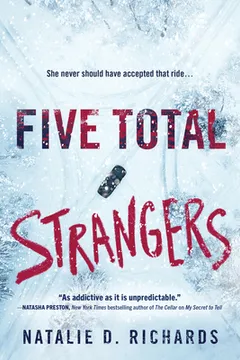


Plot Summary
A Ride Home at Any Cost
On Christmas Eve, high school senior Mira Hayes lands in Newark hoping to reach her mother, still grieving the death of her twin sister, Phoebe. The blizzard cancels every flight, and a call to her stepfather, Daniel, reveals he moved out two weeks earlier and is divorcing Mira’s mother.
Mira is furious that both Daniel and her biological father knew without telling her, but she hides the news from Mom, afraid of worsening her distress. Her seatmate Harper Chung has rented an SUV and offers to drive toward Pittsburgh with three other stranded passengers. Mira accepts because she believes Mom needs her. She also lets Harper assume she is in college, worried the truth might cost her a place in the car.
Mira’s urgency is rooted in care, but care has become a role she performs rather than a feeling she can share. She sees herself as the person who must stabilize her mother, even while hiding her own shock about Daniel’s departure. That pressure turns a risky ride into an apparent moral necessity. Her small lie about college also establishes a pattern: she edits the truth to preserve access and avoid conflict. The storm does not create Mira’s family crisis, but it physically traps her inside the same habit of concealment that will complicate her judgment on the road.
Windshield Full of Ice
Harper drives with Mira, Brecken, Josh, and Kayla as snow thickens around Newark. The four other passengers have only just met one another, despite their ease in the cramped SUV. When ice coats the windshield, Brecken gets out to help Harper clear a wiper blade. Harper cuts her finger, and before they can settle back inside, a Mustang slides across the median toward them.
It misses the group and strikes the divider, leaving everyone shaken. Brecken takes over driving while Harper tends her hand. Traffic slows, the snow deepens, and Mira’s earlier confidence fades. She tells herself the danger is manageable, but the first close call has turned this improvised trip into a journey where every road decision can injure them.
The scene converts weather from backdrop into an active constraint: visibility narrows, timing becomes uncertain, and ordinary competence is no longer enough. Harper’s cut is minor, yet it briefly divides attention at precisely the wrong moment, making vulnerability feel physical rather than abstract. Mira’s instincts register unease before she can name a cause, but she still trusts the group’s surface friendliness. That gap between bodily alarm and conscious explanation becomes central to the thriller. Danger arrives not as a deliberate attack, but as a chain of small distractions, bad conditions, and decisions whose consequences outpace anyone’s ability to control them.
The Wrong Mountain Road
At a lonely rest stop, Mira notices a silent man in a battered yellow cap, his hand scarred and his clothes carrying the sharp smell of disinfectant. By the time she rejoins the others, the parking lot is empty. Brecken finds the SUV’s snow chains pinched and unusable, though the damage may be accidental.
As the storm worsens, he argues that they should turn north toward I-80, while Mira warns that the mountain highway is dangerous. Harper and Kayla support the change, and Josh agrees. Mira yields. During the drive, she learns the passengers met only at the airport, and Harper confirms their unlikely gathering feels like chance. The yellow-hat stranger remains an unsettling detail she cannot explain.
This stretch teaches Mira and the reader to distinguish evidence from interpretation. The chains are visibly damaged, but there is no proof of sabotage; the stranger is memorable, but not yet a threat. In a crisis, people turn uncertainty into stories because a coherent explanation feels safer than randomness. The group’s vote also weakens Mira’s sense of agency: she voices a practical concern, then accepts the majority’s confidence. Her artistic habit of looking for a focal point becomes a form of attention, yet attention alone cannot tell her which details matter. The tension grows from that uncertainty, not from a confirmed villain.
The Bridge Pileup
On I-80, the SUV reaches a downhill bridge where dozens of cars have already collided. Brecken loses traction, scrapes the concrete barrier, then reverses and forces the vehicle through a narrow gap as a sliding tractor-trailer smashes into the wreck behind them.
They escape, but Mira watches the destruction recede, sickened by the thought of those still trapped. At a nearby gas station, the group learns that two enormous pileups have closed the highway. Their rental is damaged, phones are losing power, and tow services are likely overwhelmed.
They cannot continue on their planned route or simply wait for rescue. With Christmas night approaching and Mira still hiding the real situation from her mother, the stranded travelers choose to keep moving.
The bridge is the story’s first large-scale rupture: the group survives not through mastery but through a narrow opening in a disaster they cannot comprehend. Brecken’s driving saves them, yet survival leaves Mira with guilt rather than uncomplicated relief because others may not have escaped. The closure then strips away the illusion that the trip is a short detour. Their choice to continue is understandable, but it is also shaped by sunk costs and emotional urgency. Mira’s desire to reach her mother makes delay feel intolerable, even when stopping might be safer. The storm keeps converting private wishes into collective risk.
Forty Dollars of Trouble
At a cash-only station, the travelers discover they do not have enough money for the fuel Harper has pumped. The owner refuses to make an exception, and Brecken drives away without paying. The owner and his son, Corey, pursue them in a pickup. Josh uses his phone’s map to guide Brecken through back roads and into a closed campground, where Mira and Brecken sweep away the SUV’s tracks before the truck passes.
The escape leaves Mira frightened by Brecken’s exhilaration and uneasy about his habit of taking charge. Back in the vehicle, Harper’s wallet, Josh’s book, and Mira’s phone turn up missing. The small theft has become a larger question: someone among the strangers may be taking their belongings.
The unpaid fuel is a moral choice with immediate, material consequences. Brecken frames it as necessity, but the pursuit shows how one person’s expediency transfers danger to everyone in the car. Mira’s fear is sharpened by the mismatch between his charm and his willingness to force a decision on the group. The missing belongings then destabilize trust from within. Because the passengers are strangers, there is no shared history to help interpret behavior; every act can be recast as evidence. The novel uses scarcity, especially fuel and communication, to make suspicion practical. Whoever controls the car, the map, and the group’s attention holds power.
The Book in Brecken's Bag
The group searches every bag after Mira cannot find her phone. Josh and Harper have lost belongings too, while Brecken reports that his backup battery is missing. Kayla, the only one apparently untouched, resists being searched, then turns out to have misplaced something herself. When Brecken empties his carefully organized luggage, Josh’s missing Proust book appears inside.
Brecken insists someone planted it, and the others cannot prove otherwise. The discovery shifts suspicion but settles nothing. Kayla’s medical bracelet suggests her exhausted, shaky condition may have a health explanation, not simply the drug use the others suspect. With no reliable phone or map and no agreement about whom to trust, they continue toward a larger road.
The planted-looking book is a classic piece of evidence whose meaning depends on context, and the context is deliberately incomplete. Brecken’s earlier theft makes him a plausible culprit, but the book’s presence does not establish when or how it entered his bag. Each character now has a reason to protect themselves from an accusation, which makes even reasonable defenses sound strategic. Kayla’s bracelet complicates the group’s fast moral labeling: visible impairment does not disclose its cause. The episode asks how quickly people convert suspicion into certainty when frightened. Their search appears rational, but it produces no shared method for deciding what the evidence means.
Corey in the Snow
When the group stops at a roadside park, the station owner and Corey arrive in their pickup. Brecken confronts them while the others scramble toward the SUV. During the struggle, Corey grabs at Josh, and Brecken is punched by the older man. Brecken reverses the car to escape; with Josh also reaching for the wheel, the SUV strikes Corey and badly injures his leg.
The owner appears to reach for a weapon, so Brecken drives off instead of stopping. Mira watches the injured young man left in the snow and feels the moral weight of their flight. Their phones and charger soon fail, and the road map disappears, leaving them unable to call for help or easily navigate.
This is the point at which the group’s earlier choice becomes an ethical emergency. They did not set out to injure Corey, but accidental harm does not erase the obligation to help. The possibility of a gun complicates that obligation without resolving it, and the travelers leave under fear rather than certainty. Mira’s insistence on naming Corey matters: it resists turning an injured stranger into merely an obstacle in their escape. Then the map and charging failures make the practical consequences of their flight worse. The episode binds moral responsibility to survival, refusing the comforting idea that good intentions alone determine what a person owes others.
The Yellow Hat Returns
At the Cock ’N Bull bar, Harper reports the collision to police using the owner’s phone, though she omits Brecken’s theft of gas. A power failure forces the group outside before officers arrive. Mira spots the yellow-hat man again, and the others confirm he was at the earlier rest stop.
Before they leave, Harper explains why she is so determined to reach home: her father has been arrested in connection with his financial firm, and her family is frightened. Brecken overheard the call at the airport and has been trying to help her get back. The yellow-hat man approaches the travelers in the dark and makes clear they will regret refusing him a ride. Brecken drives away with the group.
Harper’s confession reframes her closeness with Brecken without making it proof that he is trustworthy. She has attached gratitude to his help at a moment when her family’s stability collapsed, so challenging him risks challenging the one person who made her feel less alone. The recurring stranger creates a different kind of pressure: recognition without explanation. Unlike the missing objects, his presence is witnessed by more than Mira, confirming that her unease is not simply a product of grief or exhaustion. Yet the group still lacks a reliable account of his motives. The threat intensifies the need to move while further narrowing their safe options.
A Knife in Mira's Seat
With the vehicle’s charging ports broken and the map gone, the group tries Mira’s laptop as a last way to power a phone. It falls and stops working. A search of the SUV uncovers a hunting knife hidden behind Mira’s seat, making her look suspicious because she sat there most often.
Kayla admits she stole the knife from the station and hid it when the group searched their bags, claiming she wanted protection. Before they can settle the argument, a snow-laden tree crashes across the road and forces them to turn back. The blocked route leaves them dependent on Harper’s cautious driving and Brecken’s familiarity with the car, even as suspicion among the passengers deepens.
Every failed device makes the group more isolated, while every new clue seems to implicate a different person. The knife’s location gives the accusation against Mira an apparent physical basis, but Kayla’s confession reveals how easily an object can acquire a misleading meaning. Kayla’s decision is defensive and selfish at once: she wanted protection but concealed a weapon from people already frightened of one another. The fallen tree then removes the route on which they were arguing, making the landscape itself an authority no one can negotiate with. Their choices are increasingly shaped by necessity, not trust.
A Name on the Envelope
After Brecken admits he may have to abandon the family’s long-standing expectation that he become a doctor, Harper turns the SUV around. They attempt a snowbound side road, slide into a ditch, and cannot free the vehicle. Mira spots lights below the slope and searches her spilled luggage for gloves.
Instead, she finds a padded envelope bearing her name, filled with her missing phone, Harper’s wallet, Josh’s book, Brecken’s battery, a road map, and a stack of unopened letters. The notes describe a person who has watched Mira for months and believes they share a destined bond. Mira recognizes references to her art shows but cannot remember the writer. She understands that someone in their group has been stalking her.
The cache changes the missing objects from a puzzle about petty theft into evidence of deliberate control. A phone, wallet, and map are not interchangeable valuables; together they restrict communication, movement, and accountability. Their placement beside the letters connects that practical sabotage to an intimate obsession. Mira’s paintings, which she once treated as records of grief and perception, have been read by the stalker as messages meant for him. This is a violation of interpretation as well as privacy. The reveal also exposes how little memory can serve as protection: a brief encounter made during bereavement may be vivid to one person and nearly absent to another.
The Wrong Man on the Hill
Mira asks Kayla to help her reach the houses below and get help for Josh, whose leg brace makes the slope difficult. Kayla agrees, but pushes Mira downhill, then accepts pills and another small item from a figure on the slope. Mira recognizes the man as Josh when he approaches without his limp.
He insists their earlier encounters meant they were destined to be together, though Mira barely remembers him. Josh grabs her and threatens her with the stolen knife. Mira fights back, suffers a deep cut to her arm, and kicks him away long enough to climb toward the road. She returns wounded and sees Harper facing her with a shovel, while Josh follows and tries to portray Mira as the attacker.
The revelation makes the novel’s earlier signs legible without making them feel inevitable in retrospect. Josh’s apparent injury concealed his capacity to move, while his gentle, bookish manner helped him pass as safe. His delusion treats Mira’s grief and politeness as consent, converting a moment of ordinary kindness into a private mythology. Kayla’s betrayal is smaller in scale but painfully transactional: her need for pills gives Josh leverage. Mira’s escape depends not on suddenly understanding every clue, but on acting under pressure and refusing his version of their relationship. The scene exposes how stalking can be sustained by a perpetrator’s certainty, not by any real reciprocity.
The Shovel Falls
Josh tries to seize the knife again and convince Harper that Mira is dangerous. As he bends for the blade, Mira reaches too, but he cuts her palm. Brecken arrives and strikes Josh in the head with the shovel, killing him. The yellow-hat stranger reaches the stranded group first and helps them explain what happened; Kayla has disappeared.
Police arrive, and Mira is taken to the hospital with twenty-three stitches in her arm. On Christmas morning, her mother sits beside her bed, steady and attentive. Mira admits she has been trying to stay strong for everyone. Her mother explains that she delayed telling Mira about Daniel because she feared adding to her grief. Mira begins to accept that needing help does not make her weak.
The climax resolves the immediate threat through intervention, but it does not restore the old sense that safety comes from correctly judging people. Brecken’s blow stops Josh, while the stranger Mira had repeatedly feared becomes a witness who helps rather than harms. The reversal matters because the story has trained suspicion to attach itself to appearances; it then refuses to replace one simple rule with another. In the hospital, Mira’s mother offers the emotional resolution the road could not provide. Both have tried to protect the other by withholding pain. Their reunion begins when Mira allows herself to be cared for instead of treating care as a task she alone must perform.
Analysis
Five Total Strangers turns a holiday trip into a test of how people judge one another when evidence is partial and the cost of delay feels intolerable. Mira’s initial lie to her mother and her silence about the separation are protective acts, but they also mirror the larger group’s concealments. Everyone edits what they disclose, and the resulting gaps invite others to supply motives. The novel repeatedly makes visible evidence ambiguous: the broken chains may be sabotage, the book in Brecken’s bag may be planted, and the knife behind Mira’s seat belongs to Kayla. Suspicion is not foolish, but certainty arrives too quickly.
Mira’s grief complicates this process. She has learned to be useful while her mother falls apart, so she mistakes composure for health and responsibility for intimacy. Her paintings register what she notices, but another person’s obsessive reading of them demonstrates that being seen is not the same as being understood. The stalker converts ordinary kindness and public artwork into proof of a relationship that exists only in his mind. His delusion is dangerous partly because he treats his interpretation as more authoritative than Mira’s own memory and refusal.
The storm’s practical pressures make the psychological conflict consequential. A closed highway, stolen fuel, dead phones, and an injured passenger repeatedly force the travelers to choose between movement and accountability. Their escape from Corey creates a moral debt they cannot resolve while fleeing, while their fear of the yellow-hat stranger shows that instinct can warn without accurately identifying the threat. The story resists a simple lesson to trust appearances or distrust them. Mira’s growth comes instead from acting when she recognizes danger, accepting help when she needs it, and returning to the family she thought she alone had to hold together. The final hospital scene answers the opening’s family crisis with a change in role: Mira can be loved without first proving she is strong enough to protect everyone else.
People Also Read




Characters
Mira Hayes
The watchful young artistMira is an eighteen-year-old high school senior and painter who travels between her mother’s home in Pittsburgh and her father’s home in San Diego. She notices visual details instinctively and thinks about people and places through color, light, and composition. Her aunt Phoebe encouraged her art and helped her attend a selective school, but Phoebe’s death has left Mira trying to honor that promise while worrying about her mother. Mira often manages distress by becoming useful to other people, and she edits the truth when she fears it will upset them. Her attention is a strength, though grief, guilt, and the wish to protect her family can distort what she believes those observations mean.
Harper Chung
The polished organizerHarper is an international relations and Asian Studies student at Pomona who responds to the airport shutdown by renting a car and gathering stranded travelers. She is poised, capable, and accustomed to planning ahead, but that composure is not invulnerability. A family crisis makes getting home feel urgent, and she becomes protective of people she believes need support, including Mira. Harper’s confidence can turn into control when events escape her plan. She values competence and loyalty, yet her instinct to defend someone who once helped her shows how gratitude can shape judgment as powerfully as evidence.
Brecken
The confident driverBrecken is a premedical student at UC Berkeley, raised in a family where medicine is more than a career choice. He is physically imposing, socially confident, and quick to take charge when the group needs a driver or a decision. His humor can be careless, especially when he feels challenged, and his confidence sometimes makes other people feel overruled. Beneath that bravado is a young man measuring himself against inherited expectations. His attempts to help Harper and his willingness to take risks for the group coexist with impulsiveness, giving Mira reason to question whether charm and good intentions are enough to trust.
Josh
The bookish passengerJosh is a Carnegie Mellon student on a business track, traveling with crutches and a knee brace. He reads serious literature, observes the group carefully, and often presents himself as calm and analytical when others are frightened. He is interested in how people make decisions and enjoys asking questions that reveal what they assume. His apparent reserve can feel thoughtful or superior, depending on how Mira reads it. Because he is physically vulnerable in the car and attentive to other passengers, the group often treats him as less threatening than the more forceful Brecken. His polished self-control shapes how others interpret his motives.
Kayla
The guarded travelerKayla is a pale, withdrawn young woman who sleeps through much of the drive and sometimes seems dazed or physically unwell. She can be sardonic and dismissive, but her sharp observations suggest she is tracking more than the others realize. She carries her late brother Jonah’s medical bracelet, connecting her to a loss she has not found an easy way to bear. Kayla resists being reduced to the group’s assumptions about her health or substance use. Her guarded manner keeps people at a distance, while her grief and vulnerability complicate the easy labels the other travelers place on her.
Mira's mother
The grieving nurseMira’s mother is a Pittsburgh nurse and Phoebe’s twin, still living with the loss of her sister while navigating the end of her marriage to Daniel. She has a cautious temperament and worries intensely about her daughter’s safety. Mira remembers her as warm, funny, and devoted to family traditions, though grief has made their relationship more guarded. Her instinct is to protect Mira by postponing difficult news, while Mira tries to protect her mother by hiding her own fears. Their mutual care is real, but it can become a reason not to speak honestly.
Phoebe
The artistic auntPhoebe was Mira’s aunt and her mother’s identical twin, a painter who recognized Mira’s talent and encouraged her to pursue art. She shared creative rituals with Mira, from experimenting with colors to making treats together, and remained a source of confidence during Mira’s formative years. Phoebe’s illness and death shaped the family’s first Christmas without her, as well as Mira’s sense of obligation to fulfill the future Phoebe wanted for her. Her influence persists in Mira’s artistic attention and in the way the family measures time against their former traditions.
Daniel
The steady stepfatherDaniel is Mira’s soft-spoken stepfather, an accountant who has been part of her mother’s household and family Christmas traditions. Mira sees him as steady and practical, especially in contrast with her more energetic biological father. He tends to answer when Mira calls and tries to handle difficult conversations gently. His separation from Mira’s mother forces Mira to confront how little she knows about the adults’ private lives, despite feeling responsible for their wellbeing.
Mira's father
The candid California parentMira’s biological father lives in San Diego, where Mira has spent part of the last year and a half. He is more energetic and easygoing than Daniel, and Mira trusts him to offer practical advice without immediately panicking. He knows about the separation between Mira’s mother and Daniel but has not told her, believing the immediate journey home matters more. His support gives Mira a calmer point of contact, even as his silence contributes to her sense of being excluded from family decisions.
Zari
Mira's distant best friendZari has been Mira’s best friend since childhood, and their families are connected through their mothers’ work at the hospital. She plays cello and has worked toward a place in the Pennsylvania Youth Orchestra. Mira’s move across the country and a missed audition strained their friendship, leaving them to rebuild through cautious calls and messages. Zari is quick-witted and familiar with Mira’s habits, offering the kind of easy back-and-forth Mira misses. Their planned reunion at a postholiday concert gives Mira another reason to make it home.
Corey
The gas station clerkCorey works at his father’s roadside gas station and has a wary, rough-edged manner. He helps enforce the station’s cash-only policy while the travelers struggle to pay for fuel. He is close enough in age to the stranded students that his presence unsettles Mira once the conflict turns physical.
Corey's father
The armed station ownerCorey’s father runs the isolated gas station and insists the travelers pay for the fuel they have taken. He is physically imposing, suspicious of the group, and protective of his business and son. A posted notice indicates that the station attendant is armed, making his anger especially frightening to Mira.
Joyce
The guarded bartenderJoyce tends bar at the Cock ’N Bull and is preparing to close early for Christmas. She is blunt with the stranded travelers and wary of their story, but she allows Harper to use the phone after Smitty intervenes. Her concern for the bar’s patrons shows in how closely she watches the silent customer at the end of the counter.
Smitty
The generous bar patronSmitty is a friendly regular at the Cock ’N Bull who offers the stranded travelers food, drinks, and access to a phone. His generosity contrasts with the group’s increasingly transactional encounters on the road. He treats their distress as a reason to help, though he remains wary when the story of the collision emerges.
The yellow-hat stranger
The recurring roadside manThis broad-shouldered traveler wears a battered yellow baseball cap and has a scarred, misshapen hand. Mira glimpses him at several roadside stops, and his quiet manner and association with a disinfectant smell make her uneasy. His appearances are brief, but they keep Mira questioning whether someone is following the group.
Jonah
Kayla's late brotherJonah was Kayla’s brother and had type 1 diabetes and a seizure disorder. Kayla keeps his medical bracelet, a private reminder of the sibling she lost. His absence helps explain the grief she carries, though Kayla rarely speaks openly about him.
Plot Devices
The Pennsylvania blizzard
The road as a trapThe storm cancels Mira’s flight and forces five strangers into a rented SUV. As snow reduces visibility, disables routes, and turns ordinary travel into physical danger, each detour leaves the group more dependent on one another. The blizzard also makes help scarce: highways close, phones lose power, and the travelers struggle to tell whether a road is passable. It is not merely weather in the background. It creates the conditions in which small decisions, such as choosing I-80 or leaving a gas station, produce escalating consequences.
The missing belongings
Evidence without certaintyHarper’s wallet, Josh’s book, Mira’s phone, Brecken’s battery, and the road map disappear at different points in the trip. Their losses appear unrelated, but each missing object limits the group’s options or redirects suspicion. A later search finds several of them together, linking the disappearances to a deliberate effort to isolate the travelers and obscure their route. Until that discovery, every passenger can plausibly be blamed. The device keeps suspicion active while demonstrating how control over ordinary tools can become control over movement, communication, and the group’s shared account of events.
The letters to Mira
A private delusion made visibleA stack of unopened letters addressed to Mira appears among her recovered belongings. Across months, the writer describes imagined connections formed through brief encounters and interprets Mira’s artwork as a coded expression of mutual devotion. The letters reveal how a stalker has transformed ordinary moments into a story of destiny. They also supply concrete clues, including dates and references to Mira’s gallery work, that help her understand the threat once she finds them. Because the writer’s tone presents obsession as romance, the letters expose the danger of treating persistence and certainty as proof of intimacy.
Mira's paintings
Grief framed in colorMira’s art gives her a way to focus on the emotional center of a scene, whether she is observing a stranger’s face or imagining a snowbound landscape. Her paintings also track her relationship to grief: after Phoebe’s death, Mira’s work grows darker and more concerned with shadows and time. Other people interpret the paintings differently, making art both a means of self-understanding and a surface onto which someone else can project meaning. The motif links Mira’s perception to the story’s central question of how observation can be vivid yet still misread.
The broken communications
Isolation by small failuresPhones run low, the SUV’s charging ports are damaged, Mira’s laptop fails, and the road map vanishes. Each setback removes a way to contact family, seek police assistance, or verify the group’s location. The losses become especially dangerous because they occur during a storm when outside help is already delayed. The travelers keep improvising, but every improvisation requires trust in someone whose motives they cannot confirm. The device makes technology concrete rather than magical: a phone is only useful when charged, a map only useful when available, and help only reachable when a signal or working line exists.
Download PDF
Download EPUB
.epub digital book format is ideal for reading ebooks on phones, tablets, and e-readers.








