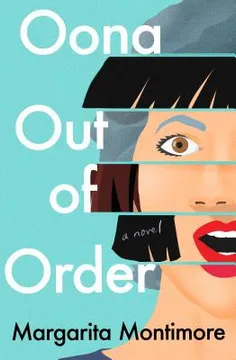


Plot Summary
Prologue
At a funeral, Oona studies her older reflection and feels the distance between her body and the memories she carries. Her life has not moved forward in a straight line: each birthday has sent her into a different year of her own life, sometimes older, sometimes younger.
On this day, grief threatens to swallow the good she has known. She turns instead toward a remembered New Year’s party, where she first fell in love and believed the future was hers to choose.
The opening makes age a problem of perception rather than a simple measure of time. Oona recognizes the body in the mirror but cannot treat its face as a reliable account of who she is, because her memories arrive from a life lived out of order. The funeral places loss at the threshold of the story, while her mental return to the party offers a counterweight: memory can wound, but it can also preserve a vivid moment of belonging. The prologue’s promise is not that Oona can undo grief, but that she can learn to inhabit the present even when it refuses to stay put.
The Party Loses Time
On New Year’s Eve 1982, eighteen-year-old Oona Lockhart hosts a Brooklyn basement party while weighing two futures: touring with Early Dawning, the band she shares with boyfriend Dale, or accepting a year abroad in London with childhood friend Pam. The tour excites Dale, but Oona worries about leaving school and about what either choice will cost her.
She also catches drummer Corey using cocaine and warns him to take the band seriously, then hides the London offer from Dale and her mother. Dale gives her a leather jacket as a kind of armor, and the couple join the countdown. At midnight, a violent sensation tears through Oona. The party vanishes, and her unresolved choices are left behind.
The first leap begins at a moment when Oona believes her life is difficult because she must choose between attractive futures. The supernatural rupture removes that ordinary form of agency: she does not get to make the decision, or even remain in the year where it matters. Her caution is rooted in more than indecision. Since her father’s death, she has tried to manage risk by anticipating consequences, while Dale’s confidence invites her to trust a shared plan. The jacket becomes a concrete emblem of that trust, but it cannot protect her from the force that rearranges her life. The story turns her wish to avoid choosing into a much harsher inability to choose where she stands.
Fifty-One Overnight
Oona wakes on New Year’s Day 2015 in the body of her fifty-one-year-old self, with memories only through age eighteen. Her assistant, Kenzie, explains that each birthday sends her into an unvisited year of her own life for twelve months, but she flees before she can absorb it.
She reaches Dale’s old home and learns he died in 1984, then reads a letter from her older self confirming the time shifts and warning her not to expose them. Internet searches show Pam became a judge, Wayne built a security business, and Corey went to prison, while Dale’s death leaves Oona bereft.
She retreats into bed, but Kenzie draws her back with music, walks, and help learning her fortune’s financial system. By year’s end, their friendship has steadied her enough to face another leap.
The revelation gives Oona knowledge without control. Her future self can explain the mechanism, but cannot tell her enough to make the coming year emotionally safe. The letter’s rules about privacy, photographs, and money convert a cosmic mystery into daily labor: she must learn technology, protect a fortune, and resist using information to intrude on other people’s lives. Her searches for Dale and her friends show how knowledge can intensify grief rather than relieve it. Kenzie’s practical care matters because he does not solve the existential problem; he helps her eat, learn, and leave the house. Adaptation begins as a series of small, embodied actions rather than sudden belief.
A Club Without Brakes
Oona arrives in 1991 as a twenty-seven-year-old woman with the mind of a twenty-year-old, disoriented at a New York club and thrilled by her younger body. A handsome stranger offers champagne and cocaine, and she has sex with him before finding a warning in her own handwriting: she came with her boyfriend Crosby and must not sleep with the stranger.
Crosby eventually finds her, worried and tender, but Oona cannot pretend she remembers their relationship. When he discovers the infidelity, he ends things.
She then reconnects with Cyn and a circle of Club Kids, using parties and drugs to escape guilt and loneliness. After a man attacks her for defending Cyn, Oona feels invulnerable instead of frightened and sinks deeper into the scene. Near year’s end, she tells Cyn how to invest, then leaves the party life behind.
The episode exposes the danger in Oona’s belief that a leap makes her actions belong to someone else. Intoxication, a changed body, and missing context give her a temporary sense of exemption, but Crosby’s hurt makes the consequences immediate. Her later recklessness is less an appetite for glamour than a method of avoiding the shame she cannot repair. The assault should puncture her fantasy of invulnerability, yet surviving it briefly strengthens that fantasy. Cyn becomes a more honest mirror than Oona’s own notes: she recognizes both the harm of the scene and the possibility of leaving it. Oona’s investment advice is a modest attempt to make her knowledge useful to someone she cares about.
Married to a Stranger
The next leap lands Oona in 2004, forty years old in body and twenty-one in memory, on a subway after an unexplained lapse. Edward Clary, a British chef, waits outside her home and reveals that they are married.
Oona reads her letter, then lets Edward make her toad-in-the-hole while she tries to reconcile his familiarity with her ignorance. He and Oona have built a restaurant together, and he is consumed by its opening. Their first night together restores some trust through physical tenderness, but his long hours leave her feeling like an outsider in her own marriage.
Oona also discovers paperwork showing that she has funded much of Edward’s ambition. She begins guitar lessons with Peter Han, a patient teacher whose love of music awakens a desire she had suppressed since her youth.
Marriage gives Oona a ready-made intimacy that she cannot experience as her own. Edward’s memories of their shared life place him in the role of guide, while she must decide whether attraction and affection can grow without the history that normally supports them. Money sharpens this imbalance: her financial support enables Edward’s dream, but also raises the uncomfortable possibility that provision is being mistaken for love. Peter’s lessons offer a different structure. He teaches a skill rather than asking her to resume a role, and the guitar lets her build continuity through practice. The contrast is not simply between two men. It is between inherited intimacy and a desire Oona can discover through her own choices.
The Restaurant Widows Her
As Clary’s Pub struggles to attract customers, Edward works longer hours and reacts defensively when Oona suggests ways to improve the business. Their arguments multiply; he dismisses her marketing ideas, while she resents paying for a dream in which she has little voice.
Peter’s guitar lessons become a place where Oona feels seen, and she joins him at a benefit concert for a child with cancer. Her performance raises money and earns his admiration, but it also clarifies her longing for a life less burdened by obligation.
Oona asks Edward for a divorce. He offers to sell the failing restaurant and start again, yet she refuses to keep forcing a marriage that feels lonely. They separate amicably, and Oona later asks Peter out, only to learn he has begun seeing someone else.
Oona’s decision is not a simple exchange of one man for another. The restaurant makes visible the uneven arrangement beneath her marriage: she supplies capital, Edward supplies labor and vision, and neither can easily hear the other once failure puts their identities at stake. Peter matters because music restores Oona’s sense of competence and pleasure, not because he guarantees romance. The benefit concert lets her experience herself as a performer again, with an audience responding to what she can do rather than what she can fund. Her divorce is therefore a difficult act of self-recognition. She gives up a marriage she cannot inhabit, while accepting that choosing herself does not automatically secure a new partner.
Egypt Brings Them Together
Oona’s next leap carries her back to 2003, where she nearly avoids Edward by changing seats on a Cairo-bound plane. She stays beside him, however, and their shared taste in music and films turns nervous conversation into an eleven-hour connection.
Edward is traveling to scatter his mother’s ashes near the pyramids; Oona joins him as they explore Egypt, and their attraction grows into a relationship. Back in New York, she supports his restaurant plans and eventually marries him, convinced their chemistry can survive the year’s end.
She also meets Kenzie, a grieving young man who has recently lost his mothers. He does not recognize her as someone he will one day know, and Oona cannot tell him why she feels compelled to help. His desire to travel leads her to encourage him toward Thailand.
Because Oona remembers a marriage that has already failed, meeting Edward at the beginning of their story places her in the unusual position of knowing both the promise and the ending. She chooses the beginning anyway, and Egypt makes the choice emotionally credible: shared grief, humor, and curiosity produce a relationship that feels alive rather than merely predetermined. Her knowledge remains partial, however. It cannot tell her whether this version of love will endure, nor can she explain her connection to Kenzie when they meet as apparent strangers. The encounter puts Oona’s two central dilemmas beside each other: whether she can love without controlling the ending, and whether she can help someone without revealing the future he does not yet know.
The Watch Comes Back
Before New Year’s Eve 2003, Oona quarrels with her mother, Madeleine, over Madeleine’s boyfriend Nathan and the assumptions Oona has made about her marriage. She also glimpses Edward touching Francesca, his restaurant consultant, and searches his office for proof before the next leap erases the year from her memory.
There she finds intimate photographs of Edward and Francesca, along with the silver watch Dale gave her, which she had believed stolen during a burglary. Edward admits he arranged the robbery to hide gambling debts and kept the watch.
He also confesses to an affair with Francesca. Oona refuses his plea for a fresh start, removes her wedding rings, and leaves. On the subway, she tries to write a warning for her next self, but a delay and a dropped notepad prevent her from finishing it.
The watch makes betrayal tangible. Unlike the marriage papers or Edward’s explanations, this object belongs to Oona’s past before Edward, and its return proves that his dishonesty reached into a memory she treasured. Her search is an attempt to avoid repeating the earlier mistake of acting on suspicion alone, but proof does not restore the relationship; it only removes her last excuse to doubt herself. The failed warning on the subway reinforces the limits of her private system of letters. She can prepare her future self, but not perfectly. Her attempt to control the next year is interrupted by the same contingency that governs the larger story.
Vietnam Opens the Map
Oona wakes in 1995 on a beach in Vietnam beside Madeleine, furious that Edward’s betrayal has happened and that she cannot undo it. She considers telling her mother Edward’s name so Madeleine can prevent the future marriage, but decides against it.
Together they travel through Vietnam, where the unfamiliar streets, food, and landscapes gradually loosen Oona’s fixation on the failed relationship. She takes a boat through Ha Long Bay despite her fear of water, then continues alone through Laos, Cambodia, and Thailand.
Along the way she gives to local hospitals, schools, and orphanages, plays guitar with travelers, and says yes to experiences she once would have avoided. The year does not erase her grief, but Oona returns to New York less interested in escaping fate and more willing to live inside the year she has.
Travel changes Oona’s relationship to uncertainty by making it something she can approach rather than merely endure. The boat is a particularly concrete test: she cannot make the water safe, but she can choose to board it. Her refusal to name Edward to Madeleine also marks a new restraint. Earlier, she treated foreknowledge as permission to interfere; now she recognizes that preventing pain for one person may create consequences she cannot see. Giving to people facing material hardship does not cancel her own sorrow, but it relocates her attention beyond it. The year’s growth is not a cure. It is a more flexible response to grief, built through movement, curiosity, and deliberate generosity.
A Son Named Kenzie
In 1999, Oona learns from Madeleine that Kenzie is not merely her trusted assistant from a later year: he is the son she had with Dale and placed for adoption. A letter sends her to Boston, where she takes a job at a record shop under the name Nancy and watches teenage Kenzie from a distance.
Music gives them a cautious connection, and Oona helps him get permission to attend a Garbage concert. At dinner with Kenzie and his adoptive mothers, Shivani and Faye, her tattoo reveals her identity before she is ready.
Kenzie feels deceived and orders her away. Oona leaves, then keeps her promise not to contact him, mailing him the wing-shaped ring he will later wear. The rejection costs her the closeness she hoped to build, but protects his life with the women raising him.
The revelation recasts earlier scenes without making them less emotionally real. Kenzie’s care for Oona was not only professional loyalty, and his guardedness in an earlier encounter gains a history she could not yet understand. Her attempt to meet him under a false identity comes from love, but love does not make deception harmless. Kenzie’s anger is justified because she has entered his life while withholding the fact that most changes its meaning. The ring she sends afterward becomes a form of care that does not demand access or forgiveness. Oona begins to understand that a parent’s desire to be known can conflict with a child’s need for safety and continuity.
A Family Without Pretending
Oona wakes in 2017 to find adult Kenzie beside her and Madeleine gravely ill with lymphoma. Kenzie welcomes Oona as his mother, and together they care for Madeleine through her final weeks. After Madeleine dies, Oona cannot cry until a broken plate sends grief spilling out over the kitchen floor.
She and Kenzie speak about his adoptive mothers, his anger after their deaths, and the painful Boston meeting; he tells her that their relationship has survived the deception.
Oona does not try to rewrite the past or prevent the losses that made their family possible. Instead, she accepts Kenzie’s help and begins to mourn with him. Their first meeting without either of them pretending becomes a fragile reunion, shaped by shared loss rather than a perfect repair.
The reunion offers intimacy without erasing injury. Kenzie’s forgiveness is not presented as proof that Oona’s actions were harmless; their conversation makes clear that trust required time and that the adopted family remains part of his emotional life. Madeleine’s illness also alters Oona’s familiar pattern of absence. The person who has repeatedly steadied her is now someone she must help, and Kenzie becomes a partner in that care. Oona’s delayed response to grief is psychologically credible: her numbness gives way through an ordinary accident, not a ceremonial speech. The scene shifts her from trying to master loss toward allowing another person to witness it.
Back to the Beginning
The next leap sends Oona to 1983, back into Dale’s arms at the party where her life first broke out of order. She recognizes the room, her leather jacket, and the friends she has spent years losing and finding again. Rather than pretending the future does not exist, she decides not to let it consume this night.
She tells Dale she will leave school to join the band, but also admits she hates playing keyboard and wants to play guitar. The band considers a new name, Stranger Candy, and Oona asks Dale to spend longer in Europe after their tour. He agrees to consider it, though he cannot promise more than the summer. Oona knows happiness will not last unchanged, but chooses to take part in it while it is here.
The ending returns Oona to the opening scene, but not to the same understanding of it. She still cannot prevent Dale’s death, the pregnancy that will follow, or the separations her life entails. What she can change is her conduct inside the present: she names a desire she previously subordinated, asks for a wider future, and accepts that Dale may not agree to every part of it. Her return is not a conventional reset, because the accumulated knowledge remains with her even when the people around her do not share it. The story’s resolution is therefore ethical rather than mechanical. Oona cannot put time in order, but she can meet the moment with more honesty.
Analysis
The novel’s central invention makes memory a social problem. Oona’s life is not simply scrambled for her own sake; the same leap gives other people a different version of her, one that may remember a promise or intimacy she cannot access. This creates an asymmetry of knowledge that she repeatedly mistakes for permission. A letter can explain what happened, but it cannot make another person’s experience available to her or erase the consequences of her choices.
The story repeatedly contrasts forms of control. Oona can make money through remembered market outcomes, keep a binder, and use letters to prepare for future selves. Yet she cannot secure love, prevent death, or guarantee that a person will be ready for her when she arrives. Her attempts to intervene in Madeleine’s relationships and Kenzie’s upbringing show the ethical danger of treating foreknowledge as authority. Knowledge can help her care, but only when she respects the agency of people who do not share it.
Music supplies a different model of continuity. Oona’s favorite artists and her eventual return to guitar persist across years, even when careers, marriages, and friendships shift. Playing is not a promise that nothing will change; it is an action she can inhabit in the moment. The same is true of travel, charitable giving, and the ordinary work of caring for Madeleine and Kenzie. These practices do not solve the time leaps, but they make a life within them.
By returning Oona to the 1983 party, the ending refuses a neat escape from grief. She knows the losses ahead, yet chooses to speak honestly about the instrument she wants to play and the future she wants to share. The novel’s answer to impermanence is neither denial nor perfect preparation. It is attention: taking joy seriously while it is present, accepting that love cannot be made permanent by foresight, and allowing other people to remain more than characters in a future Oona already knows.
Review Summary
Oona Out of Order receives mixed reviews, averaging 3.86 stars. Many readers praise its creative premise—a woman living her life one year at a time, out of order—calling it innovative, emotional, and thought-provoking. Fans highlight the compelling characters, pop culture references, and unique take on time travel. Critics, however, find the protagonist frustrating and immature, the plot repetitive, and the lack of explanation for Oona's condition unsatisfying. The audiobook narration by Brittany Pressley is widely praised.
People Also Read










Characters
Oona Lockhart
The out-of-order daughterOona is curious, cautious, and unusually alert to the consequences of her choices. Her father’s death in childhood leaves her inclined to plan carefully, while her mother urges her toward risk and spontaneity. Music gives her a lasting source of identity, especially when her age, memories, and relationships no longer line up. Oona can be generous and perceptive, but she also uses money, romance, travel, and intoxication to avoid painful feelings. Her central struggle is not simply adapting to a strange condition; it is learning when foreknowledge should guide her and when it becomes an excuse to control other people. She wants a coherent life, yet gradually learns to value acts of care and pleasure even when they cannot guarantee permanence.
Madeleine Lockhart
The daring motherMadeleine is Oona’s flamboyant, affectionate mother, a former flight attendant who now works as a travel agent. She prizes freedom, novelty, and the willingness to make mistakes, often pushing Oona toward experiences her cautious daughter would avoid. Her teasing can irritate Oona, but it also reflects a close, unusually candid bond. Madeleine is not merely carefree: she has learned that love sometimes requires restraint, and she carries difficult knowledge without turning it into a weapon. Her changing relationship with Oona asks her to mother someone whose inner age and needs shift unpredictably. She offers warmth and forgiveness, but she also has limits and a life of her own.
Kenzie
The loyal confidantKenzie is Oona’s younger personal assistant and close friend, a gay music enthusiast with sharp humor and a talent for making unfamiliar technology feel manageable. He is patient without being passive, and his steady presence helps Oona return to ordinary routines when grief tempts her to withdraw. His own history includes loss and loneliness, which makes him especially alert to the pain Oona tries to hide. Kenzie values connection but does not demand instant intimacy; he gives Oona room to struggle while remaining available. Music, travel, and his memories of family help define him as someone who can be wounded without becoming unkind.
Dale D’Amico
Oona’s first great loveDale is Oona’s boyfriend and bandmate, a confident aspiring musician with a strong vision for the future and an intense belief in their shared potential. His affection is exuberant and protective, and he often treats Oona as the person who makes his plans complete. That certainty attracts her, especially because she is unsure what she wants, but it can also crowd her own preferences. Dale loves music, performance, and the romance of building a life around a band. His relationship with Oona is formative not only because of its passion, but because it shapes the choices she later reconsiders about her education, her instrument, and the kind of partnership she wants.
Edward Clary
The ambitious chefEdward is a British chef with a gift for cooking, a love of music, and a consuming ambition to own a restaurant. He is charming, attentive, and capable of making Oona feel understood, particularly when they share travel, humor, and cultural interests. His professional drive is also a source of strain: he can become defensive when his work is questioned and let business needs dominate his relationships. Edward’s appeal is genuine, but so are his limitations. Through him, the story examines how romantic chemistry can coexist with unequal power, competing dreams, and failures of honesty.
Peter Han
The patient guitar teacherPeter is a talented guitarist and teacher whose own stage fright has kept him from pursuing the performing career he once wanted. He teaches Oona with patience and respect, helping her develop a skill she had long set aside. His affection for music is generous rather than possessive; he treats teaching as meaningful work, not a lesser substitute for fame. Peter’s warmth and careful listening give Oona a kind of connection different from the intense, prearranged intimacy she encounters elsewhere. His story also reflects the cost of choosing a life that feels true, even when that choice disappoints family expectations or unsettles romantic plans.
Crosby
The devoted boyfriendCrosby is Oona’s boyfriend in one of her younger years, an affectionate and thoughtful man with vivid blue hair and a gentle manner. He tries to respect her need for space and takes her safety seriously. His kindness makes Oona’s behavior toward him more painful, not less, because he offers the care she wants while she is unable to remember their shared history. Crosby represents the real human cost of Oona’s discontinuity: he cannot know why she seems suddenly unfamiliar, and he has no obligation to accept an explanation that sounds impossible.
Pam
The practical childhood friendPam is Oona’s childhood best friend, intelligent, earnest, and more conventional in manner than Oona’s fashionable circle. Their shared childhood dream of living in London gives Pam a clear sense of what the opportunity means. She is willing to challenge Oona when romance and music threaten to eclipse her education, but her advice comes from loyalty rather than judgment. Pam’s presence represents the stable life Oona might have chosen, and the friendship also shows how two close people can want different things without either being wrong.
Wayne Sumpter
The steady bandmateWayne is the bassist in Early Dawning and part of Oona’s close circle in Brooklyn. Stylish, sociable, and candid, he notices when Oona is hiding worry beneath the party’s glitter. He is invested in the band but willing to question its direction, including its name and sound. Wayne’s easy friendship gives Oona a connection to the life she shares with Dale that is not defined by romance alone.
Corey Balcerak
The volatile drummerCorey is Early Dawning’s drummer, a funny, impulsive friend whose energy can tip into recklessness. Oona catches him using cocaine and gives him the chance to take responsibility rather than immediately expose him to the band. His talent and loyalty are real, but so are his weaknesses. Corey reflects the tension between affection for a friend and the need to set boundaries when someone’s behavior threatens a shared commitment.
Cyn
The clear-eyed club friendCyn is a confident, stylish friend Oona meets through New York’s early-1990s club scene. She is funny, generous, and alert to danger, especially when Oona’s drug use and bravado put them both at risk. Cyn can enjoy the scene without pretending it is harmless, and she challenges Oona when her behavior becomes frightening. Their friendship gives Oona acceptance at a time when she feels untethered, while Cyn’s honesty helps her recognize that constant escape has diminishing returns.
Faye
A protective parentFaye is a hospital administrator and one of the caring adults in teenage Kenzie’s life. Warm and practical, she balances affection with ordinary parental caution, especially around concerts, school, and safety. Her relationship with Kenzie is marked by familiar routines and easy humor. Faye’s protective instincts are not a barrier to his independence so much as an expression of the responsibilities she accepts for him.
Shivani
A devoted caregiverShivani is a podiatrist and a steady presence in teenage Kenzie’s household. She is thoughtful, protective, and attentive to the small rituals that make a family feel secure. Her care is expressed through practical concern, shared meals, and watchfulness over Kenzie’s needs. Shivani’s caution around unfamiliar adults comes from responsibility, not coldness, and her character highlights the importance of the care a child receives day by day.
Francesca
The restaurant consultantFrancesca is a polished, ambitious consultant who helps Edward prepare his restaurant. She knows the food business and social scene, and she is confident enough to challenge Edward’s assumptions. Her professional closeness to him makes Oona feel peripheral, particularly when she is already struggling to find her place in the marriage. Francesca represents the entanglement of business and intimacy that complicates Edward and Oona’s shared venture.
Nathan
Madeleine’s polished suitorNathan is Madeleine’s boyfriend, a pharmacist whose grooming and easy confidence appeal to her. Oona distrusts him, reading his flirtation and comments as signs of deeper flaws. Their tense encounters reveal how fiercely Oona wants to protect her mother, and how easily that wish can become an attempt to control Madeleine’s choices.
Charles Lockhart
Oona’s lost fatherCharles is Oona’s father, a banker who gave her structure and introduced her to the logic of money through games and lessons. His death when she is young leaves Oona fearful of sudden loss and inclined to plan for every possible outcome. His memory remains a quiet measure of both security and grief.
Plot Devices
Birthday leaps
A life out of sequenceAt midnight on each birthday, Oona moves into her own body at an age she has not yet lived, then remains there for a year before leaping again. Her chronological age and her internal age can differ sharply, and memories from previous years travel with her. The mechanism has no known cause or reliable pattern, so Oona cannot use it to choose a time or return to a lost year. It turns ordinary relationships into unstable encounters: one person may remember a life together while Oona does not, or Oona may carry knowledge of someone’s future that they have not lived yet. The leaps structure the novel while forcing Oona to negotiate each year on its own terms.
Letters to herself
Advice across timeOona writes letters for the future versions of herself she expects to become. They explain the year, offer practical instructions, and try to warn her about painful events without spoiling every surprise. The letters are imperfect tools: some are lost, some contain too little, and Oona sometimes ignores their advice. Their changing tone traces her evolving understanding of control. Early letters try to manage risk; later ones encourage her to live rather than micromanage. Because the reader encounters each message alongside Oona, they also create suspense around what she has forgotten and what her earlier self chose not to disclose.
The investment binder
Foreknowledge made practicalA year-by-year binder records stock instructions, market events, and sporting outcomes that Oona has learned from the future. Her wealth grows through careful investing and remembered results, while Kenzie helps with taxes, research, and charitable giving. The binder gives Oona a rare practical advantage in a life where she cannot choose her age or year. It also demands discipline: she must protect her fortune, avoid publicity, and keep enough records to act correctly when she lands in an unfamiliar period. Its contrast with her relationships is deliberate. Markets can be researched and managed; love and grief cannot be secured by having the right information.
The clockwork keepsake
Memory made tangibleA necklace made from clock parts and a tattoo of an hourglass with the initials M.D.C.R. recur as clues to Oona’s history. The jewelry connects her to gifts and relationships from different periods, while the tattoo carries a meaning she cannot initially decipher. Other small objects, including a wing-shaped ring and souvenirs displayed in her bedroom, likewise preserve traces of people and choices whose origins she has not yet experienced. These objects make the out-of-order structure physical: Oona can encounter a keepsake before she knows who gave it to her, then later watch its story come into being.
Download PDF
Download EPUB
.epub digital book format is ideal for reading ebooks on phones, tablets, and e-readers.








