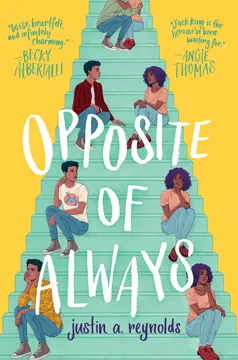


Plot Summary
Prologue
After Kate dies for the third time, Jack is pinned against a police car outside the hospital, his clothes wrong for the cold and a syringe hidden in his shoe. He has just forced an unknown substance into her body, hoping this desperate intervention will keep her alive.
The officers arrest him, but before they can understand what he has done, Jack’s body begins to convulse with the familiar violence of his time jumps. His cheek is against the cruiser again, and the night tears open beneath him. The story then rewinds to the first time he met Kate, leaving the reader to discover why he keeps returning to the same beginning.
The opening gives the novel its governing paradox before explaining its mechanics: Jack can revisit the past, but repeated effort does not guarantee rescue. His arrest makes love look, at first, like a force that has turned him reckless; the hidden syringe hints that his best intentions may be dangerous to the person he wants to save. By withholding the history behind this scene, the book makes suspense emotional rather than merely technical. The reader knows the cost of Jack’s devotion before knowing its source, and must watch ordinary flirtation acquire the weight of an impending emergency.
The Steps Become a Beginning
Jack King has spent three years loving Jillian, his best friend, while she dates their other best friend, Franny. At a Whittier campus party, Jack is sitting on the stairs watching Jillian when Kate, a sharp, curly-haired tour guide, teases him for blocking the way. Their jokes turn into an all-night conversation about family, ambition, and the futures they want.
Kate admits she has recently left a difficult relationship and is wary of starting another. Jack, who has just imagined a life beyond his crush on Jillian, feels drawn to her anyway. When Kate leaves for her dorm, he has no contact information, only her promise that they will meet again.
Jack’s first movement toward Kate is also a movement away from the identity he has built around almost getting what he wants. His affection for Jillian is genuine, but it has become an excuse to avoid risk: Franny’s goodness makes the friendship triangle feel morally untouchable, so Jack can hide his fear inside loyalty. Kate unsettles that arrangement by treating his hesitation as visible and changeable. Their ease does not erase his old attachments; it reveals that desire need not be a zero-sum betrayal. The stairs become a threshold where Jack briefly stops watching life and begins participating in it.
Prom's Empty Seat
Jillian helps Jack find Kate’s dorm, and he leaves his number with her before returning home. Kate later agrees to attend prom, though she warns him that her former boyfriend, Xander, remains part of her life. On prom night, Kate never arrives. Jack waits through the evening, then drives through heavy rain to her house, where she calls to say she cannot come but offers no explanation.
Days later, during the Kings’ anniversary celebration, Kate finally phones and admits she wants Jack beside her in her final hours. He races to the hospital, meets her mother, and sits with Kate as she grows weaker. After Kate dies, Jack falls down his own stairs while running to return to the hospital. The impact takes him backward in time.
The first loss grows from a familiar social wound into a collision with mortality. Jack initially interprets Kate’s silence through the emotional vocabulary he knows best: rejection, embarrassment, another near miss. The hospital forces him to revise that story, but too late to repair the harm caused by secrecy. His reassurance that Kate will be fine reveals a young person’s reflex to use optimism as protection, even when it denies another person’s reality. The fall converts grief into plot, yet it does not grant mastery. Jack receives a new beginning without receiving an explanation, making hope inseparable from uncertainty.
A Girl Without Memories
Jack wakes at the same party, on the same stairs, four months earlier. Kate approaches as a stranger, with no memory of their conversations, dates, or the hospital. He recognizes every detail, but keeps his hands to himself and introduces himself again. Jillian notices his interest and helps him locate Kate outside.
This time Jack follows her to the gorges, listens when she talks about dancing and the future, then shares a late-night run through a supermarket cereal aisle. He asks her to prom, and she accepts after a string of playful emails. Their connection gathers speed, but Kate’s messages also reveal her uncertainty about commitment and her lingering attachment to Xander.
The reset creates an asymmetry that is more ethically demanding than a simple second chance. Jack has intimate knowledge of Kate, while she has no reason to trust him; his memory can guide him, but it can also tempt him to treat her as a character whose responses he already knows. His restraint matters. He chooses to re-encounter her rather than claim a relationship that exists only in his private past. The cereal adventure gives their renewed bond a material, playful shape, reminding Jack that shared joy cannot be reproduced by information alone. He must build trust in the present, not merely remember having earned it.
Love Has a Diagnosis
At prom, Kate suddenly becomes ill and leaves Jack in distress. At the hospital she pushes him away, explaining that she cannot offer the relationship he wants and may return to Xander, who stayed beside her through previous crises.
Jack leaves heartbroken, then tries again after realizing how much his presence matters to her. Kate eventually tells him she has sickle cell disease, which can bring severe pain and dangerous interruptions to her oxygen supply. She explains that treatment is mostly management, while a promising experimental therapy is beyond her family’s means.
Jack’s mother, Nina, reveals that she carries the trait and describes a friend whose illness consumed months of her life. Jack researches the disease and contacts Dr. Sowunmi, determined to find Kate a chance at treatment.
Kate’s secrecy is not simply a barrier for Jack to overcome. It is a strategy for protecting her personhood in a world that can reduce her to symptoms, risk, and anticipated loss. Her refusal to let Jack fix her challenges his most comforting romantic fantasy: that devotion should make him useful enough to control an outcome. Nina’s personal history deepens the issue by showing how illness enters families and reshapes ordinary time, not just the patient’s body. Jack’s research is an expression of care, but it also risks turning fear into a rescue mission. The section makes that tension central rather than treating love as a cure in itself.
Mandrake Becomes the Wager
Dr. Sowunmi offers experimental gene therapy, but the treatment requires two injections separated by six or seven months, a span Jack fears he may never have.
He needs money quickly, so he sells collectibles and his car, then asks Franny’s estranged father, nicknamed the Coupon, to place a large bet on Mandrake University winning the basketball tournament. Jack knows the result from the future. The gamble succeeds, earning him enough to fund Kate’s evaluation and treatment.
He also tries to mend Franny’s family by urging the Coupon to show up for his son. But Jack cannot separate one rescue from another: he begins managing other people’s choices without asking what they want, and his efforts start to distort the friendships he means to protect.
The wager literalizes Jack’s belief that foreknowledge can turn uncertainty into a solvable calculation. He has a real informational advantage, but he mistakes prediction for control over the broader human consequences of acting on it. The money helps make treatment possible; the secrecy surrounding its source creates new liabilities. His attempt to repair Franny’s relationship with his father shows the same pattern in emotional form: Jack assumes that knowing what should happen gives him permission to arrange it. The novel distinguishes care from intervention by showing that a good outcome cannot retroactively make every method harmless. Chance remains present even when Jack knows the score.
The Cost of Being Late
As Jack pours his attention into Kate, he misses band practices, family plans, and a dinner meant to welcome the Coupon home. A flat tire delays him on the day Franny needs support, and the Coupon leaves to buy ice cream before a store dispute brings police and another arrest. Franny blames Jack for not being there when the fragile reunion collapsed.
In other repetitions, Jack’s attempts to influence the Coupon and Franny deepen the damage instead of healing it. He learns that Franny has long measured his father’s love through whether he shows up, while Jillian is also carrying fears about her family and her place in Jack’s life. Jack’s neglect turns his rescue mission into a source of loneliness for the people already beside him.
Jack’s failure here is not that he loves Kate too much, but that he treats attention as a scarce resource that must be diverted entirely toward the most urgent crisis. The novel makes this mistake concrete through missed practices, unanswered calls, and a late arrival at Franny’s house. These are small omissions with large relational meaning because Franny’s central wound is abandonment. Jack’s intentions cannot cancel the way his absence repeats that wound. Jillian’s family strain further complicates the friendship, showing that being loved does not make someone’s needs self-evident. Reliable care is less dramatic than a rescue, but it depends on showing up before the emergency.
Jillian Is Not a Shortcut
After repeated losses and failed attempts to save Kate, Jack returns to the party and decides he cannot endure another history with her. He kisses Jillian, who responds, and they begin a relationship while Franny is still her boyfriend.
Jack and Jillian hide behind the hope that their long friendship makes the choice understandable, but Franny experiences it as betrayal by the two people he trusted most. In this branch, Jack also secretly works with the Coupon, hoping to fund Kate’s care and repair the father-son bond.
When Franny discovers the deception, he cuts Jack off. Franny is later shot after a neighborhood resident mistakes his phone for a weapon during a call from his father. Jack’s choices have not spared him grief; they have multiplied it.
Choosing Jillian is not a neutral retreat from the pain of loving Kate. It converts Jack’s fear into a decision that harms two people he claims to cherish. The novel refuses an easy romantic hierarchy in which one pairing is automatically more authentic than another: Jillian is not a consolation prize, and Franny is not an obstacle. Their relationships have histories and obligations that Jack cannot erase by explaining his feelings. Franny’s shooting makes the consequences irreversible within this version of events, but the deeper rupture began earlier, with concealment and self-justification. Jack learns that escaping vulnerability does not prevent loss; it can make him an agent of it.
The Last Reset's Plan
Another reset returns Jack to the party, and this time he chooses Kate while trying to remain present for everyone else. He sells what he can, bets on Mandrake, and secures money for Dr. Sowunmi.
Rather than assume Franny’s father will change, Jack tells the man how deeply Franny has missed him and insists that he must keep showing up. He also listens to Franny and Jillian instead of abandoning their band and family commitments. To get Kate to the specialist, Jack invents a Whittier scholarship fund and persuades her mother to accept a paid consultation.
Kate begins the first injection and soon feels better. Jack’s revised effort is still imperfect and secretive, but it increasingly depends on practical help and sustained presence rather than simply trying to command the future.
This pass is not presented as Jack discovering a flawless sequence of moves. It is a change in his model of responsibility. He still uses knowledge from the future, but begins to pair it with attention to other people’s agency: he tells Franny’s father what his son needs, keeps faith with the band, and asks Kate to accept help rather than treating her as a problem to solve. His deception about the scholarship remains ethically uneasy, especially because Kate and her family cannot assess the arrangement honestly. The novel allows improvement without pretending that good intentions purify every choice. Growth means becoming more accountable, not becoming omniscient.
A Crisis He Recognizes
At the Kings’ anniversary celebration, Kate calls Jack in the night, frightened by a new sickle cell crisis. He reaches her after a car crash and a painful time jump, then learns that she is still alive in the next repetition. Remembering the pattern, Jack brings her to the emergency room before the crisis peaks.
The staff doubt his certainty and try to send them away, but he refuses to leave and blocks their exit until Kate’s symptoms become undeniable. The doctors test her, admit her for observation, and catch the danger early. Kate recovers. The victory is not a magical cure or proof that Jack can predict every outcome; it is the result of insisting that clinicians investigate a real warning before the emergency becomes irreversible.
The climax transforms Jack’s most troubling habit, his insistence that he knows what will happen, into a more disciplined form of advocacy. He cannot explain his foreknowledge, and his behavior frightens Kate and the staff, yet he has identified a genuine medical danger. The difference is that he now presses for examination rather than attempting to administer an unknown remedy himself. The doctors’ expertise, not Jack’s love alone, makes the immediate rescue possible. This distinction matters: care can demand persistence while still requiring other people’s knowledge and consent. Jack’s success is partial and contingent, which makes it more credible than a fantasy of total command.
A Future Made Together
After Kate stabilizes, Jack wakes beside her and finds a box of Cap’n Crunch on the hospital tray, a small sign that the cycle may finally have stopped. He later explains that the account covers only a few of more than three dozen repetitions, many of which brought Kate’s death or other losses.
In the successful course, the treatment works, Franny and his father begin repairing their relationship, Franny earns a place at Whittier, and Jack, Jillian, and Franny restore their friendship.
Kate remains at Jack’s side through graduation and his parents’ anniversary. In the final scene, Jack and Kate dance badly in her room, laughing rather than trying to make the moment perfect. Their future is not guaranteed, but they have chosen to meet it together.
The ending declines to turn survival into proof that suffering was necessary or that love can defeat every limit. Jack admits that he cannot account for the time loops and that he failed repeatedly, preserving the uncertainty that powered the story. What changes is his understanding of what counts as success: not controlling every outcome, but making choices that honor the people in front of him. Kate’s survival is joined to repaired friendships, family bonds, and ordinary celebration, so it is not isolated as Jack’s private prize. The final dance returns to the novel’s awkward humor. Imperfection becomes not a flaw to correct, but a way of being present.
Analysis
The novel treats time travel less as a puzzle to solve than as an ethical pressure test. Jack receives knowledge without authority: he remembers Kate’s illness, Franny’s pain, and the consequences of choices, but the people around him remain free agents with their own histories. His first instinct is to convert foreknowledge into control. He lies, overreaches, and neglects the friendships that make his life worth saving. The repeated returns expose the limits of a purely outcome-based morality. A successful bet can pay for treatment, but it cannot make secrecy harmless; a hoped-for reconciliation cannot be forced by a friend who believes he knows best. The romance is strongest when it resists the idea that love should erase Kate’s illness or Jack’s uncertainty. Kate insists on being understood as a person rather than a diagnosis, and Jack must learn that support is not synonymous with repair. Medicine remains uncertain, and Dr. Sowunmi’s caution is not an obstacle to romance but a necessary form of honesty. Jack’s most useful action is ultimately not a grand gesture. It is insisting that a medical crisis be examined, staying present, and accepting that professionals and Kate herself have agency.
Franny and Jillian prevent the central relationship from becoming the whole moral universe. Franny’s longing for his father makes reliability concrete: love has to show up, repeatedly, or it becomes another promise that leaves him waiting. Jillian’s own family instability makes her need for friendship just as real as Jack’s new romance. The book therefore refuses the familiar story in which friends are disposable once a couple forms. Its resolution depends on widening Jack’s attention, not narrowing it.
The loops finally change meaning. They do not certify that fate guarantees a happy ending; Jack admits that he cannot explain them and that he fails many times. What he learns is how to act without guarantees. The final dance is deliberately awkward, a small celebration of shared presence rather than perfected destiny. Time may remain undefeated, but Jack can still choose what he does with the moments he has.
Review Summary
Opposite of Always received mixed reviews, with praise for its diverse characters, heartfelt relationships, and unique time-travel premise. Many readers enjoyed the witty dialogue and emotional depth, particularly in the portrayal of family and friendships. Some found the repetitive nature of the time loops tedious, while others appreciated the exploration of consequences. Critics noted issues with pacing and character development. Overall, the book was commended for its fresh take on YA romance and its ability to blend humor with heartbreak.
People Also Read




Characters
Jack King
Hopeful, anxious storytellerJack is a witty, observant high-school senior who records his disappointments as evidence that he is destined to come up short. An only child raised by affectionate parents, he feels pressure to justify their faith in him and often hides insecurity behind jokes. He is loyal to Jillian and Franny, yet his fear of losing people can make him clingy, secretive, or convinced that he knows what others need. His interest in writing comes from wanting young readers to see lives like their own on the page. Jack’s central psychological struggle is learning that care is not the same as control, and that being present often matters more than finding a perfect solution.
Kate Edwards
Hopeful future architectKate is a Whittier student with a quick wit, a warm curiosity, and an independent streak sharpened by years of managing a serious inherited illness. She dreams of becoming an architect because she wants to make things that outlast their makers. Her family’s worry and disagreement about her care can leave her feeling responsible for other people’s pain, so she sometimes protects herself by withholding information or retreating from intimacy. Kate wants to be known as a whole person, not reduced to a diagnosis or treated as someone else’s project. Her humor and appetite for spontaneous pleasure are not denial; they are ways of claiming a life that illness would otherwise define.
Jillian
Protective best friendJillian is Jack’s longtime best friend, Franny’s girlfriend, and a capable, direct presence in their trio. She is academically driven and generous with her attention, often noticing when others are hurting before they admit it. At home, she carries quiet worry about her mother and an absent father, but she resists making her own needs the center of every room. Her closeness with Jack is genuine, which makes their boundaries emotionally complicated rather than simple. Jillian’s strength lies in telling people what they do not want to hear while still offering them a place to return. She values loyalty as an active practice, not merely a feeling.
Franny Hogan
Loyal, gifted athleteFranny is Jack’s other best friend, Jillian’s boyfriend, and a talented multi-sport athlete whose confidence often conceals a deep fear of being unwanted. Raised by his hard-working grandmother, he has learned to be dependable and to find humor even when his father disappoints him. Franny is generous with Jack and fiercely protective of the people he loves, but he does not mistake forgiveness for an obligation. His longing for his father is complicated by anger and the accumulated evidence of missed promises. Franny’s self-worth is tested by a parent’s absence, while his loyalty to friends gives him a chosen family that is real but not immune to betrayal.
Nina King
Jack's candid motherNina is Jack’s affectionate, perceptive mother, a small-business owner who combines warmth with firm expectations. She notices when Jack is evasive and insists that trust requires honesty, even when his reasons seem harmless to him. Her experience as a carrier of the sickle cell trait gives her a personal connection to Kate’s illness and helps Jack understand the family burden surrounding it. Nina and her husband remain openly devoted to each other, providing Jack with a lived example of love as repeated choice rather than effortless perfection.
Abe King
Affectionate, steady fatherAbe is Jack’s loving father, an English-minded family man who turns even a lecture into an elaborate explanation. He believes in responsibility and worries when Jack begins neglecting his family and friends. His marriage to Nina is affectionate, playful, and durable without appearing untouched by ordinary effort. Abe also welcomes Franny into the King household, offering him dependable care without demanding that he earn it. His support helps Jack see that a secure home is something to share, not a reason to ignore other people’s needs.
Franny's father, the Coupon
Unreliable returning fatherKnown to Franny by the old nickname the Coupon, his father is charismatic, impulsive, and burdened by a long record of letting his family down. He has spent years away from Franny, including time in prison, and his return brings hope tangled with understandable suspicion. He can be generous and perceptive, but his self-protective habits make consistency difficult. Beneath his bravado is shame about the damage he has caused and doubt that he can become the father Franny needs. His relationship with Franny asks whether remorse matters when it is not followed by dependable action.
Regina Edwards
Worried, devoted motherRegina is Kate’s caring mother, caught between wanting to protect her daughter and disagreeing with Kate’s father about how best to care for her. She tries to keep the family steady while managing the fear that comes with Kate’s recurring medical crises. Her tenderness toward Jack reflects how readily she recognizes his concern, though she is also alert to the risks of strangers and implausible offers of help. Regina’s worry is an expression of love, but the story also shows how easily protection can become another pressure Kate must carry.
Mr. Edwards
Protective, fearful fatherKate’s father is deeply protective and wary of anything that might add stress to her life. His caution comes from knowing how much she has endured, but it can lead him to make decisions for her rather than trust her judgment. He views a new romance as a potential danger and urges Jack to leave Kate alone. Beneath that sternness is a parent trying to preserve his daughter’s health with the limited control he has. His conflict with Kate reveals the painful distance between loving someone and being able to guarantee their safety.
Dr. Sowunmi
Cautious medical innovatorDr. Sowunmi is a specialist developing experimental treatment for sickle cell disease. He is careful about clinical risk and refuses to promise results, even when a patient or loved one urgently wants certainty. His own family experience with the disease makes him empathetic, but it also reinforces his respect for evidence and procedure. Jack’s persistence draws him into the story, while the doctor’s caution provides a necessary counterweight to Jack’s belief that determination can solve every problem.
Kira Edwards
Kate's stylish older sisterKira is Kate’s older sister, a successful stylist whose online following reflects her ambition and creative confidence. She is part of Kate’s close family circle and helps connect Kate’s private life to the wider world of music and performance.
Reggie Edwards
Watchful younger brotherReggie is Kate’s younger brother, a teasing, protective teenager who tests Jack with blunt questions and threats. His bluster is sibling theater as much as genuine suspicion, and his presence shows how closely Kate’s family watches over her.
Abuela
Franny's dependable guardianFranny’s grandmother raised him while working multiple jobs and taking on sewing work to keep their household afloat. She is loving, practical, and inclined to urge forgiveness, even when Franny has good reason to distrust his father. Her home offers Franny a foundation of care, though her hope for reconciliation can place emotional pressure on him.
Xander
Kate's complicated exXander is Kate’s former boyfriend, a familiar presence from the difficult period she has only recently left. Kate associates him with someone who remained nearby during illness, even though their relationship was not good for her. His place in her life makes her uncertainty about new intimacy understandable.
Plot Devices
The Repeating Four Months
A painful second chanceAfter Jack loses consciousness, he returns to the Whittier party where he first met Kate, retaining memories that everyone else has lost. The returns are triggered by extreme physical events and bring him back to the same narrow point in the calendar. They let him change choices but do not explain the mechanism or guarantee the results. Each repetition tests whether knowledge produces wisdom or merely gives Jack new ways to interfere. The device also makes emotional history uneven: Jack remembers intimacy that Kate has not yet experienced, so he must earn connection again.
Sickle Cell Treatment
Hope with a deadlineKate’s sickle cell disease causes red blood cells to stiffen and obstruct oxygen delivery, bringing severe pain and potentially life-threatening crises. Dr. Sowunmi’s experimental gene therapy offers a possible treatment, but it requires two injections separated by months and carries significant risk. This medical timeline presses against Jack’s repeating four-month window, creating a conflict that money alone cannot solve. The treatment forces the story to distinguish practical support from magical rescue: Kate needs medical expertise, informed participation, and a network willing to help, not a boyfriend who can simply will illness away.
Mandrake's Tournament Run
Future knowledge becomes moneyJack remembers the unlikely tournament victory of Mandrake University and bets on the team through Franny’s father. The underdog run converts his private knowledge of the future into funds for Kate’s treatment. It also binds Jack to the Coupon, whose gambling history and strained relationship with Franny complicate the apparently simple transaction. The wager’s success proves that events can repeat, but it does not prove that people will respond identically or that Jack can safely manipulate their lives. Its real cost is relational: secrecy around the money deepens mistrust even as the money opens a path to care.
Cereal and Shared Ritual
Ordinary joy made memorableCereal begins as the reason Jack and Kate reunite for a date, then becomes a recurring shorthand for the ease and ridiculousness they share. Their supermarket race, overloaded cart, and dorm-room feast create a private ritual that can be remembered but never simply duplicated, because Kate encounters each moment as new. The motif also counters the story’s medical and temporal machinery with ordinary appetite and play. At the ending, Cap’n Crunch on Kate’s hospital tray recalls their bond in a deliberately modest form. A small shared object signals a future that is still being lived, not secured by grand declarations.
Download PDF
Download EPUB
.epub digital book format is ideal for reading ebooks on phones, tablets, and e-readers.








